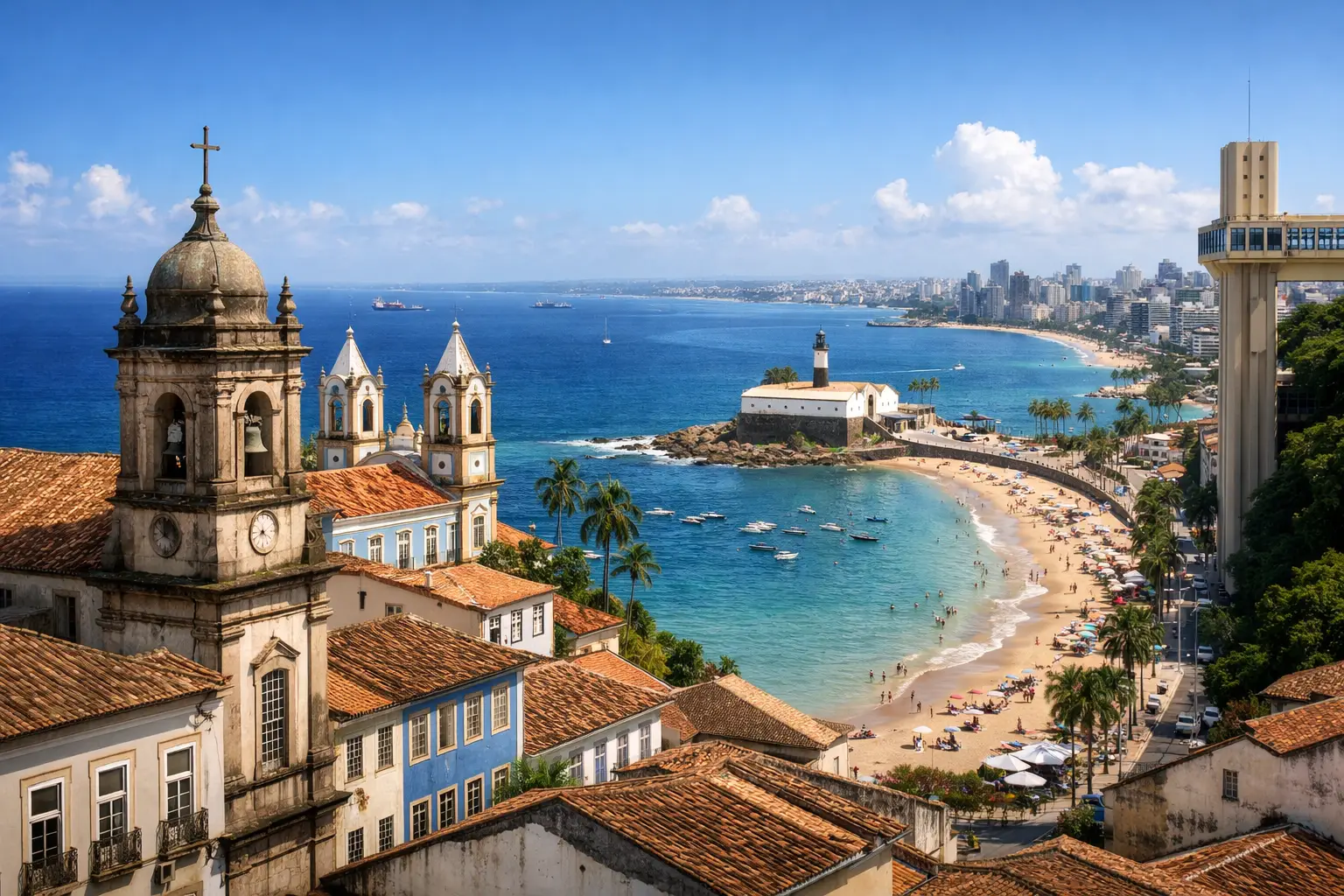
The first thing that hits many travelers in Salvador is the rhythm. It comes from church bells in the historic center, drumming in public squares, and waves breaking along the bay. If you are searching for things to do in Salvador Brazil, expect a city that feels deeply cultural, visually striking, and very different from Rio or Sao Paulo. Salvador is one of Brazil’s most distinctive destinations, with strong Afro-Brazilian heritage, colonial architecture, and a coastline that shifts from urban beaches to quieter stretches within a short drive.
For international visitors, Salvador works best when approached in layers. You can admire the postcard landmarks in a day or two, but the city becomes more rewarding once you slow down and mix historic sights with local food, music, and neighborhood life.
Best things to do in Salvador Brazil
Walk through Pelourinho
Pelourinho is the historic heart of Salvador and the city’s most recognizable area. Its steep cobblestone streets, pastel-colored colonial buildings, and baroque churches make it the natural starting point for a first visit. This is a UNESCO-listed district, but it is not just an architectural showcase. It is also one of the clearest places to understand Salvador’s cultural identity.
During the day, you will find museums, craft shops, churches, and photo-worthy plazas. In the evening, parts of the area become livelier with music and capoeira performances. The atmosphere can change block by block, so it is smart to stay aware of your surroundings and use registered taxis or rideshare at night rather than wandering too far on foot.
Visit São Francisco Church
Among Salvador’s many churches, São Francisco Church is one of the most impressive. From the outside, it already stands out, but the interior is what most visitors remember. Gold-covered decoration fills the walls and altars, creating a dramatic contrast with the colorful streets outside.
Even travelers who do not usually prioritize religious sites tend to appreciate this stop. It offers context for Salvador’s colonial past and shows how much wealth and artistry were concentrated in the city during the Portuguese era.
Ride the Elevador Lacerda
The Elevador Lacerda is both a practical connection and a landmark. It links the Cidade Alta, or Upper City, to the Cidade Baixa, or Lower City, and gives you a quick visual introduction to Salvador’s geography. From the top, the view over the Bay of All Saints is one of the city’s classic panoramas.
This is not a long activity, but it pairs well with a walking route through the historic center. If you like understanding how a city is laid out before exploring further, this short ride is worth doing early in your trip.
Browse Mercado Modelo
At the base of the elevator, Mercado Modelo is a useful stop for travelers interested in souvenirs, regional products, and a quick sense of local commerce. You will see handicrafts, decorative items, clothing, and food products that reflect Bahian identity.
It can feel touristy, and prices are not always the lowest in the city, but it is convenient and central. If you want to bring home something recognizable from Bahia without spending hours searching, this is one of the easiest places to do it.
Experience Salvador beyond the landmarks
Watch the sunset at Porto da Barra
Porto da Barra is one of Salvador’s most popular urban beaches and one of the easiest to enjoy without much planning. The water is usually calmer than on some Atlantic-facing beaches, and the setting is scenic, with old fortifications and a wide bay view.
Late afternoon is the best time to go. Locals and visitors gather for swimming, snacks, and sunset, giving the beach a social and relaxed feel. If you want a classic city beach experience, this is one of the strongest answers to what to do in Salvador.
Spend time on the beaches along the coast
If you want more beach time, Salvador offers options with different moods. Farol da Barra is good for combining coastline views with an urban setting. Flamengo Beach, farther from the center, tends to appeal to travelers looking for a longer sandy stretch and a less crowded feel. Stella Maris is another popular option, especially for those staying closer to the airport side of the city.
The trade-off is transportation time. Beaches outside the central area can be more relaxing, but they require more planning, especially if traffic is heavy. For a short trip, mixing one central beach with one farther-out beach usually works better than trying to cover too much.
See the Farol da Barra
The Barra Lighthouse is one of Salvador’s best-known landmarks. It sits inside a historic fort and marks the entrance to the bay, creating a memorable setting for photos and coastal walks. The area around it is easy to include in a half-day itinerary with the beach.
This is a good place to visit if you want scenery without committing to a full museum day. The value is as much in the location as in the monument itself.
Food, culture, and Afro-Brazilian heritage
Try Bahian food where locals eat
Salvador is one of Brazil’s essential food cities, and local cuisine is not a side attraction here. Dishes such as acaraje, moqueca, vatapa, and caruru reflect African, Indigenous, and Portuguese influences in ways that are central to the city’s identity.
Acaraje is the street food many travelers know first. It is a fried bean fritter split and filled with shrimp, salad, and spicy sauces. Moqueca, a seafood stew made with coconut milk and dendê oil, is another classic. If you are not used to rich flavors or seafood-heavy menus, ask about ingredients before ordering. Bahian food is memorable, but it can be intense for some palates.
Learn about Afro-Brazilian culture
One of the most meaningful things to do in Salvador Brazil is to engage with the city’s Afro-Brazilian heritage beyond surface-level sightseeing. Salvador has the largest Black population outside Africa, and this history shapes religion, music, cuisine, language, and everyday life.
You may notice references to Candomblé, capoeira, drumming traditions, and Bahian dress throughout the city. Museums and cultural centers can provide useful background, especially for visitors unfamiliar with Brazil’s racial and cultural history. Even without a formal tour, paying attention to these influences helps Salvador make more sense.
Look for live music and capoeira
Salvador is not a city that should be experienced only in daylight. Music is part of its social fabric, whether you hear samba, reggae, MPB, or percussion groups in public spaces and bars. Capoeira performances are also common in central areas, especially around Pelourinho.
This does not mean every night out needs to become a big event. Sometimes the best approach is simply choosing a lively square or a casual venue and staying for a set. If you prefer quieter evenings, go earlier, when the atmosphere is still active but less crowded.
Add a few smart side trips and practical stops
Visit Bonfim Church
Bonfim Church is one of Salvador’s most important religious landmarks and a major symbol of local faith. Many visitors know it for the colorful wish ribbons tied around the church area. It is an active place of devotion, not just a photo stop, and that makes the visit more interesting.
For travelers trying to understand the spiritual side of Bahia, this church adds a different perspective from the grand colonial churches in the historic center. It also connects to traditions that blend Catholic and Afro-Brazilian influences in ways that are specific to Salvador.
Take a boat trip on the Bay of All Saints
If your schedule allows, seeing Salvador from the water is worth considering. Boat trips on the Bay of All Saints can range from short scenic outings to longer excursions that include islands and swimming stops. The appeal is simple: the skyline looks different from the bay, and the city’s coastal setting becomes much clearer.
This option depends on weather, budget, and how much time you have. For some travelers, a bay trip is a highlight. For others, especially on a short city break, it may be better to focus on neighborhoods and culture on land.
Consider a day trip if you have extra time
If you stay more than three or four days, Salvador can also serve as a base for nearby escapes. Some travelers head north toward beach areas along the Coconut Coast, while others look for island settings or quieter towns outside the city. These trips can be rewarding, but they work best when you have already covered Salvador’s main attractions.
For first-time visitors, it usually makes more sense to give the city itself enough time. Salvador is not a destination to rush through between transfers.
Practical tips for enjoying Salvador
Salvador is rewarding, but planning matters. Choose your base carefully. Pelourinho is atmospheric and convenient for sightseeing, while Barra is often preferred by travelers who want easier beach access and a more relaxed day-to-day setup. Using rideshare or taxis for longer movements is often the simplest option.
Like in many large cities, safety requires common sense. Avoid displaying valuables, be cautious at night in quieter areas, and ask your hotel or host which routes are best on foot. Heat is another factor. The climate is warm most of the year, so light clothing, sunscreen, and hydration make a real difference.
A few words of Portuguese help, but many tourism workers in popular areas can assist international travelers. Salvador’s appeal is not about polished convenience at every moment. It is about energy, history, flavor, and a cultural depth that stays with you long after the trip.
If you give the city a little time and curiosity, Salvador usually gives back far more than a checklist of attractions.