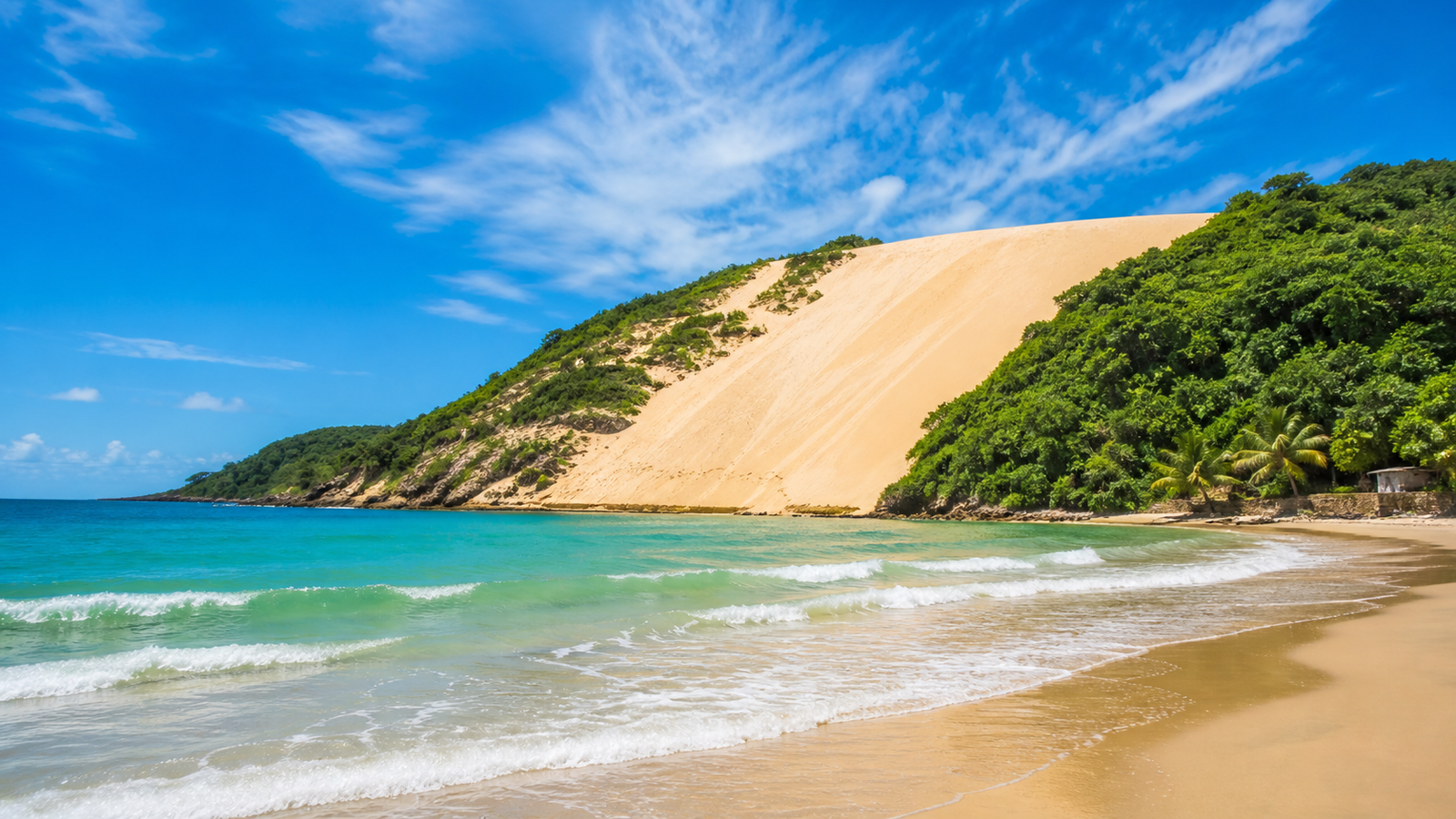
Rising dramatically where the golden sand plunges straight into the Atlantic Ocean, Morro do Careca is the defining postcard of Natal, Rio Grande do Norte. Towering approximately 107 meters over the southern end of Ponta Negra beach, this coastal landmark attracts thousands of visitors looking for stunning views, warm waters, and fresh ocean breezes.
However, many first-time travelers arrive with outdated assumptions—such as expecting to hike to the summit or getting confused by beachfront vendor pricing. Here is everything you need to know to experience Morro do Careca smoothly, affordably, and with zero hassle.
Can You Climb Morro do Careca? The Conservation Rule You Need to Know
The short and definitive answer is no. Climbing Morro do Careca has been strictly prohibited by Brazilian environmental authorities since 1997.
Before the ban, decades of visitors hiking and sandboarding down the dune caused catastrophic erosion, steadily flattening the sand hill into the sea and destroying the fragile native restinga and Atlantic Forest vegetation flanking its sides. To protect the landmark from disappearing, the area was declared an environmental preservation zone (ZPA-06) under the custody of IDEMA-RN and local police.
The boundary along the beach is clearly fenced and actively monitored by environmental police. Trespassing beyond the perimeter is a federal environmental crime carrying fines that can easily reach tens of thousands of reais. While you cannot hike to the top, exploring the landmark from the beach shoreline and the water is where the real magic happens.
The Best Spots to See and Photograph Morro do Careca
You do not need to step on the sand dune to capture breathtaking photos. Ponta Negra offers several distinct vantage points, each suited for different times of day:
- The Low-Tide Shoreline: During low tide, the receding water reveals a wide strip of firm sand right up to the protective barrier. This is the best spot for close-up, wide-angle photos framing the full 107-meter dune meeting the turquoise sea.
- The Ponta Negra Boardwalk (Calçadão): Walking south along the elevated pedestrian promenade gives you classic sweeping views of the entire beach crescent with the dune rising at the horizon.
- Alto de Ponta Negra: The upper streets and hillside restaurants overlooking the bay (such as along Rua Manoel Augusto Bezerra de Araújo) provide stunning elevated perspectives, especially in the late afternoon.
Morning light illuminates the front face of the dune with bright tropical clarity, while the late afternoon casts a warm golden glow across the bay as the sun dips behind the city hills.
Jangalancha Boat Tours: Is the Trip Around the Headland Worth It?
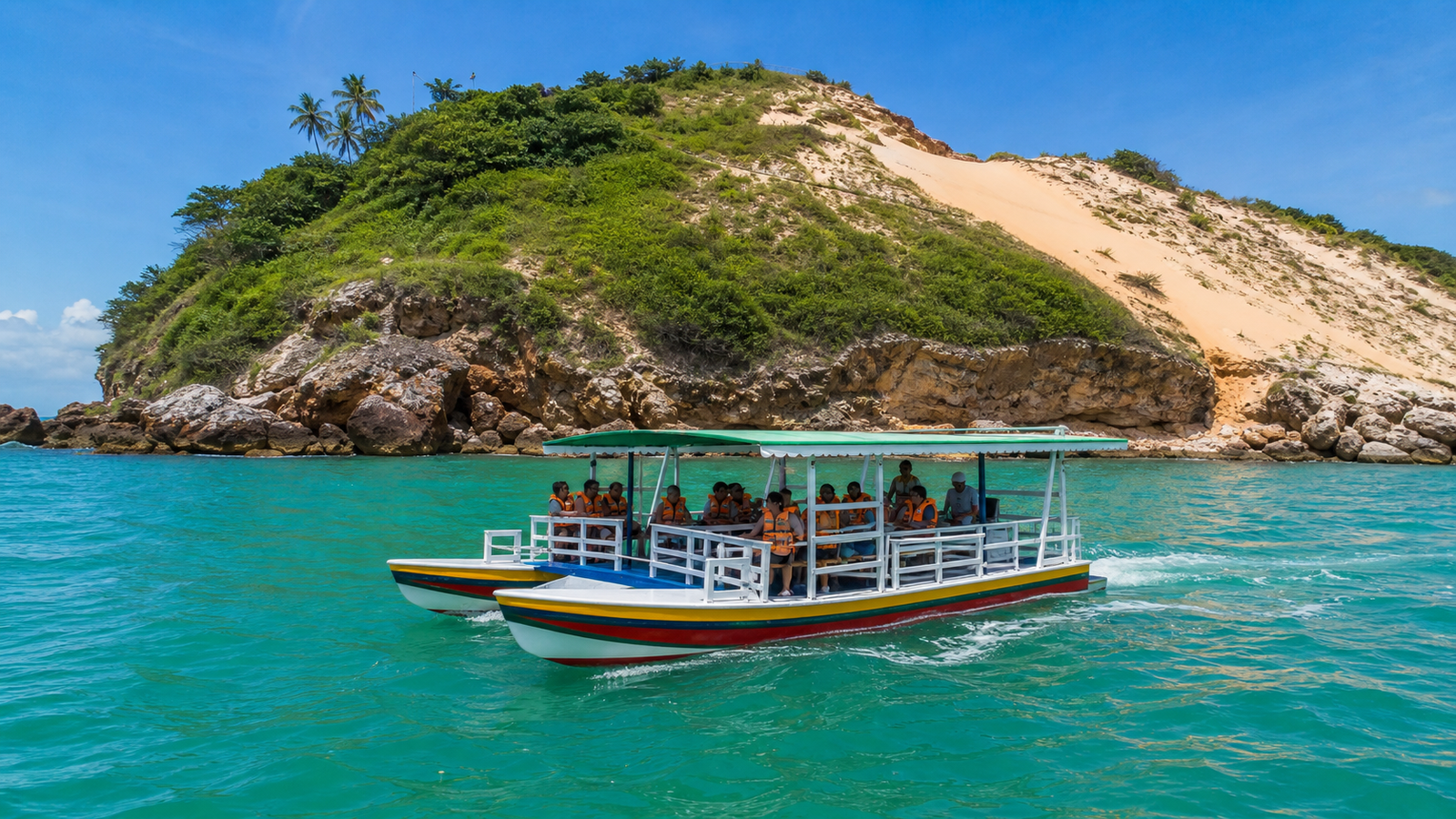
If you want to see the wild, hidden side of Morro do Careca, taking a local boat tour is the undisputed highlight of visiting Ponta Negra.
Local motorized catamaran boats—affectionately called Jangalanchas—depart directly from the beach near the base of the dune. The excursion takes you around the rocky headland of Morro do Careca to Praia das Tartarugas (Alagamar), a pristine, uninhabited coastal cove bordered by military reserve land where foot access is strictly forbidden.
Tours typically last between 75 and 90 minutes and cost approximately R$ 80 per passenger. The boat pauses in the calm waters of the bay for a 20-to-30-minute swimming and snorkeling break, with lifejackets provided. Along the route, passengers frequently spot sea turtles surfacing for air and pods of coastal dolphins playing near the headland.
Navigating Beach Chairs and Kiosks: How to Avoid Overpaying
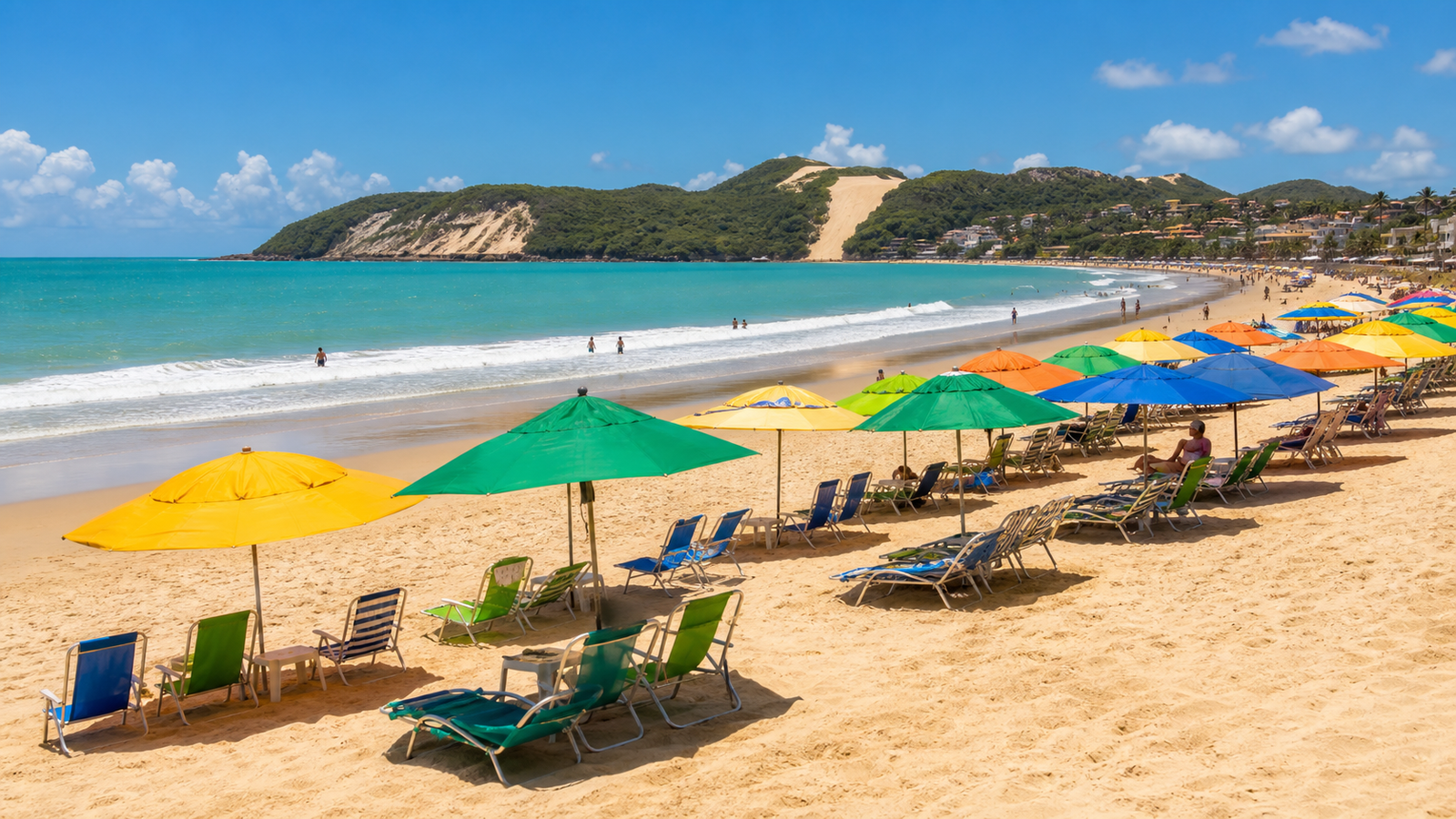
Spending a few hours relaxing under an umbrella facing Morro do Careca is quintessential Natal, but foreign travelers often feel unsure about how beach kiosk (barraca) pricing works.
Under municipal consumer regulations enforced by Procon Natal, kiosks are legally forbidden from demanding a mandatory minimum consumption (consumação mínima). Instead, kiosks operate on a simple, transparent standard:
- Chair & Umbrella Rental: If you only want to use the shade and seats without ordering substantial food, kiosks typically charge a flat rental fee between R$ 20 and R$ 50 for the set.
- Fee Waived with Food & Drinks: If you order lunch (such as fresh fried fish or shrimp) or several rounds of cold beverages, most kiosk attendants will happily waive the chair rental fee entirely.
The golden rule is to always ask and agree on the terms before sitting down. Ask politely: “A cadeira é paga ou consumação?” Attendants will clarify upfront. Credit cards, debit cards, and PIX are widely accepted along the beach, though keeping a few small cash bills is handy for passing coconut and snack vendors.
Practical Tips: Tides, Safety, and the Best Time to Visit
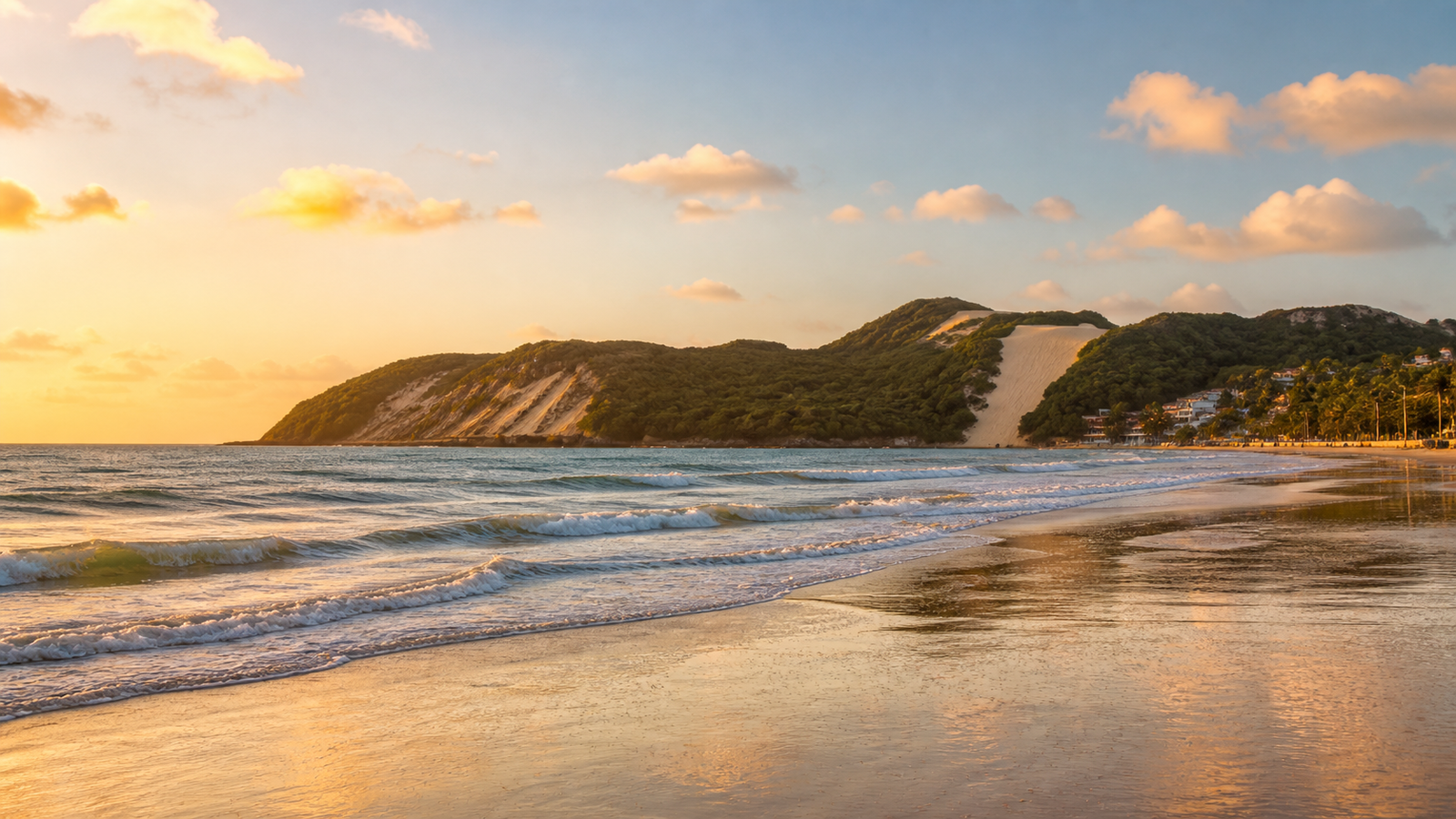
To ensure a seamless visit, keep these practical logistics in mind before heading out:
- Always check the tide table: A tide below 0.5m creates a vast sandy expanse ideal for walking and leaves warm, calm tidal pools near the dune base. At high tide, waves can reach the base wall and reduce walking space.
- Sun protection is non-negotiable: Natal sits close to the equator, and the tropical sun reflects intensely off the white sand and ocean. Bring high-SPF reef-safe sunscreen, sunglasses, and plenty of water.
- Beach safety essentials: Ponta Negra is generally a lively, family-friendly beach during daytime hours. Keep standard beach awareness: do not leave phones or wallets unattended on your towel while swimming, and stick to well-lit areas along the promenade after dark.
- Getting there: Ponta Negra is the main hotel district in Natal. If you are staying elsewhere in the city, ride-hailing apps like Uber are cheap, reliable, and drop you right at the beach boardwalk.
If you are planning your wider itinerary across the state capital, be sure to check our complete guide to explore more of Natal’s top sights and day trips.
Morro do Careca & Ponta Negra: Quick Visitor Breakdown
| Activity / Element | Approximate Cost | Best Timing | Insider Tip |
|---|---|---|---|
| Beach Walking & Photos | Free | Low tide / Early morning | Walk right up to the perimeter fence for the widest panoramic angle. |
| Jangalancha Boat Tour | ~R$ 80 per person | Morning to early afternoon | 75-90 min excursion around the headland to Tartarugas bay with a swim stop. |
| Beach Chair & Umbrella | R$ 20 – R$ 50 (or waived with food) | Anytime | Confirm pricing before sitting; mandatory minimum spends are prohibited. |
| Alto de Ponta Negra Viewpoints | Free (or cost of a drink) | Late afternoon / Sunset | Great elevated photography spot overlooking the entire beach crescent. |
Frequently Asked Questions About Morro do Careca
Can you climb to the top of Morro do Careca in Natal?
No. Climbing Morro do Careca has been strictly prohibited since 1997 to prevent severe sand erosion and protect native vegetation. The perimeter is fenced and monitored by environmental police, and trespassing carries heavy federal fines.
How much does a boat tour around Morro do Careca cost?
A standard Jangalancha boat tour typically costs around R$ 80 per person. The trip lasts approximately 75 to 90 minutes, sailing around the headland to the protected Praia das Tartarugas with stops for swimming and dolphin spotting.
Do I have to pay for beach chairs at Ponta Negra?
Beach kiosks usually charge between R$ 20 and R$ 50 for an umbrella and chair set if you do not order food. However, this fee is usually waived if you order meals or drinks. By municipal law, mandatory minimum spends cannot be enforced.
What is the best time of day to visit Morro do Careca?
Low tide is the best time for walking along the sand and swimming in calm shallows near the dune. Early mornings offer cooler temperatures and tranquil waters, while late afternoon provides gorgeous golden-hour lighting across the bay.
By pairing a morning low-tide stroll with a scenic Jangalancha boat excursion and a relaxed afternoon enjoying fresh seafood by the water, visiting Morro do Careca remains one of the most rewarding coastal experiences in Northeast Brazil.