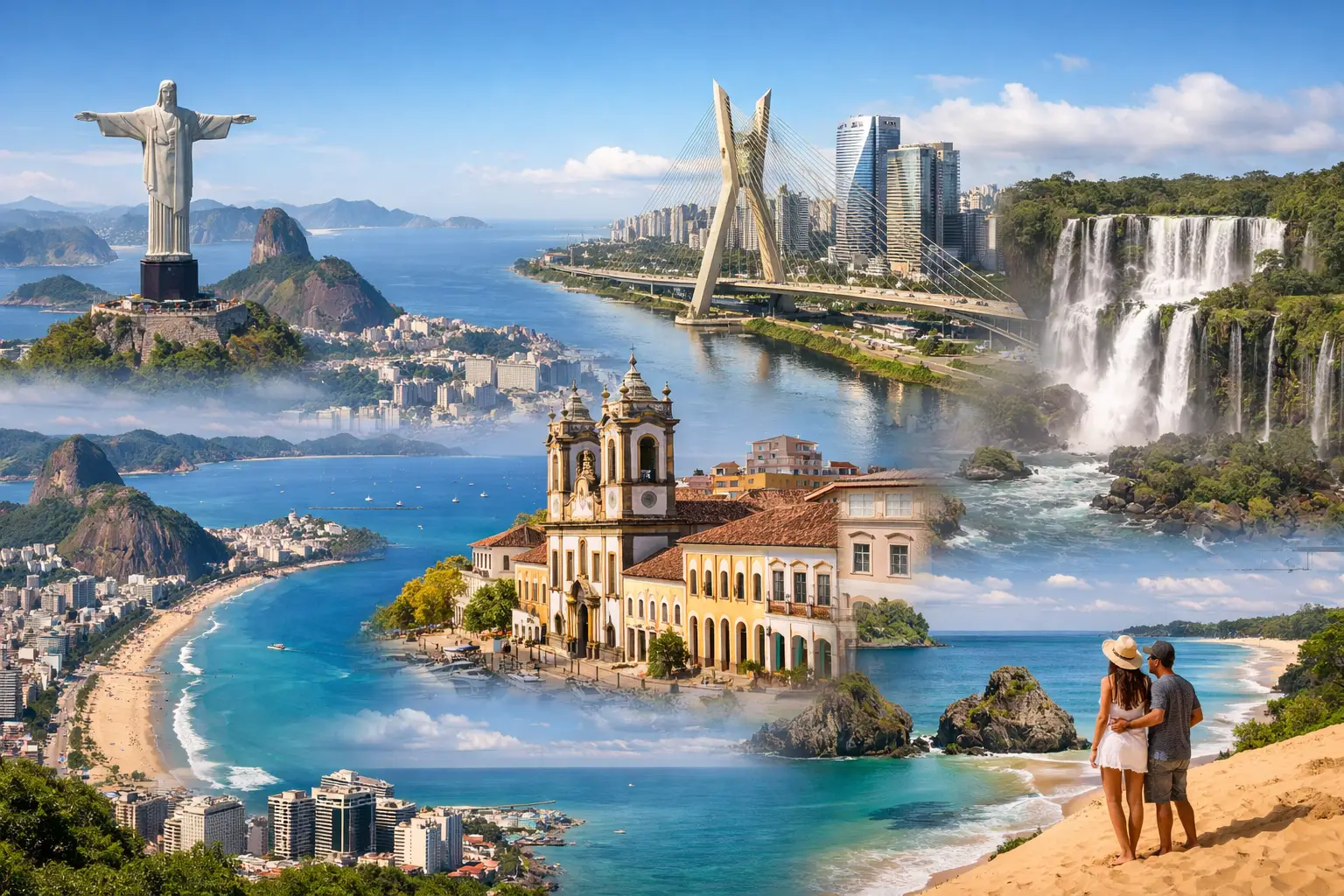
Choosing among the best cities in Brazil is less about finding one perfect destination and more about matching the country to the kind of trip you actually want. Brazil is continental in scale, and the experience changes dramatically from one city to the next – beach culture in Rio feels very different from Afro-Brazilian heritage in Salvador or big-city dining in São Paulo.
For international travelers, that is good news. Whether you want iconic landmarks, colonial streets, rainforest access, nightlife, family-friendly beaches, or a strong food scene, Brazil has a city that fits. The key is understanding what each place does best, along with the trade-offs in pace, budget, weather, and logistics.
12 best cities in Brazil worth considering
Rio de Janeiro
Rio de Janeiro is the classic first stop for a reason. Known as the Marvelous City, it combines postcard landmarks like Christ the Redeemer and Sugarloaf Mountain with beaches that are part of daily life, not just scenery. Visitors who want a first impression of Brazil that feels energetic, visual, and unmistakably Brazilian usually start here.
Rio works especially well for first-time visitors, couples, and travelers with limited time. The trade-off is that it requires more planning around neighborhood choice, transportation, and safety awareness than some smaller destinations. If you stay in well-located areas and plan your days clearly, Rio can be both manageable and unforgettable.
São Paulo
São Paulo is not Brazil’s beach city. It is Brazil’s biggest urban experience, with world-class restaurants, museums, nightlife, and a cultural mix shaped by immigration from Italy, Japan, the Middle East, and beyond. Travelers interested in food, art, architecture, and contemporary city life often find it more rewarding than they expected.
This is one of the best cities in Brazil for travelers who enjoy big metropolitan destinations such as New York, Mexico City, or London. It is less visually immediate than Rio, but stronger for dining, business travel, and neighborhood-based exploration. If your Brazil trip is short and you want beaches, it may not be the best fit on its own. If you want culture and cuisine, it is essential.
Salvador
Salvador delivers one of the country’s richest cultural experiences. As the historic capital of colonial Brazil and a major center of Afro-Brazilian culture, it stands out for music, religion, cuisine, and architecture. The Pelourinho district, with its colorful colonial buildings and steep streets, gives the city a strong sense of place from the moment you arrive.
Salvador suits travelers who want history and culture as much as beaches. The local food is a highlight, especially dishes influenced by Bahian and African traditions. Compared with some southern cities, the infrastructure can feel less polished, but that is part of what makes the experience more rooted and distinctive.
Florianópolis
Florianópolis, often called Floripa, is a favorite for beach lovers who want variety. Located in southern Brazil, the city spreads across an island and the mainland, with dozens of beaches ranging from calm family-friendly stretches to surf spots. It also has a more relaxed and organized feel than many larger coastal cities.
This is a smart choice for travelers who want nature, beach time, and a generally comfortable base. It is especially appealing for families, couples, and digital nomads. The main trade-off is seasonality. Summer is lively and beautiful, but also busier and more expensive, while winter is quieter and less beach-focused.
Recife
Recife combines urban energy with water, history, and strong regional identity. Its historic district, museums, and cultural institutions make it more than just a coastal stop, and it pairs naturally with nearby Olinda, one of Brazil’s most charming colonial towns. For many travelers, that combination is what makes Recife especially interesting.
It is a good fit for visitors exploring northeastern Brazil beyond the obvious choices. You get culture, city life, and access to the coast in one trip. Some beaches in the area require attention to local swimming guidance, so this is a destination where practical planning matters.
Fortaleza
Fortaleza is one of Brazil’s major beach cities and a useful gateway to the broader Ceará coast. The city itself offers urban beaches, nightlife, and seafood, while nearby day trips or onward travel open the door to famous dune and lagoon landscapes. If your priority is warm weather and a lively coastal atmosphere, Fortaleza deserves a look.
It tends to appeal to travelers who like active beach destinations rather than quiet retreats. Compared with smaller resort towns, it feels more urban and less intimate. That can be a plus if you want dining, services, and transportation options in a major city.
Curitiba
Curitiba is often overlooked by international visitors, which is a mistake. Known for urban planning, green spaces, and a more orderly rhythm, it offers a different side of Brazil. The city has attractive parks, a strong café scene, and easy access to one of the country’s most scenic rail journeys toward the coast.
Curitiba is a good option for travelers who value ease, organization, and a milder climate. It may not deliver the dramatic visual punch of Rio or Salvador, but it works well for those who prefer calmer cities with strong infrastructure. It is also a comfortable stop as part of a southern Brazil itinerary.
Belo Horizonte
Belo Horizonte is one of Brazil’s best food cities, yet it remains under the radar for many foreign travelers. Capital of Minas Gerais, it is known for bars, local dishes, and access to historic towns like Ouro Preto and Congonhas. The city itself feels lived-in and local rather than tourism-first.
For travelers interested in Brazilian cuisine and regional culture, Belo Horizonte is a rewarding choice. It does not have beaches, and it is not built around major international icons, so it works best for people who enjoy going deeper into a destination. If you want a more authentic urban stop between Rio and inland Minas, it makes a lot of sense.
Manaus
Manaus is the Gateway to the Amazon. For many travelers, the city is not the final destination but the launch point for river journeys, jungle lodges, and wildlife experiences. Even so, it has landmarks of its own, including the Amazon Theatre and the meeting of the waters, where two rivers run side by side without mixing immediately.
Manaus belongs on the list because it opens access to one of the world’s most important natural regions. The city itself is less polished than Brazil’s coastal capitals, and the climate is hot and humid year-round. Still, if your trip is about the Amazon, Manaus is the practical and cultural anchor.
Belém
Belém is another northern city that deserves more international attention. Located near the mouth of the Amazon, it is famous for market culture, riverfront life, and a food scene that feels distinct even within Brazil. Ingredients from the Amazon shape everyday eating here in a way few other cities can match.
Belém is ideal for travelers drawn to regional identity and culinary discovery. It is not the easiest city for a first-time Brazil itinerary if you want iconic landmarks and beach days, but it offers something rarer – a strong sense of place that feels specific, local, and deeply connected to the surrounding environment.
Brasília
Brasília stands apart from every other Brazilian city. Built in the modernist era as the national capital, it is defined by bold architecture, monumental scale, and a layout unlike traditional urban centers. For travelers interested in design, politics, or 20th-century planning, it can be fascinating.
This is not the city to choose for walkable historic streets or beach life. Distances are larger, and the experience is more conceptual than atmospheric. Still, for certain travelers, especially architecture enthusiasts, Brasília is one of the most interesting stops in the country.
Foz do Iguaçu
Foz do Iguaçu earns its place because it gives access to one of South America’s greatest natural attractions, Iguazu Falls. The city itself is practical rather than glamorous, but that is often enough when the main draw is so extraordinary. It also sits near the borders with Argentina and Paraguay, which adds a distinctive international feel.
For nature-focused travelers, families, and anyone building a multi-country itinerary, Foz do Iguaçu is an easy recommendation. You usually do not come for urban culture alone. You come because the falls are worth it, and the city makes that visit straightforward.
How to choose among the best cities in Brazil
The right city depends on your priorities. If you want Brazil’s most iconic trip, Rio de Janeiro is usually the starting point. If food, museums, and nightlife matter more than beaches, São Paulo will likely suit you better. For history and Afro-Brazilian culture, Salvador stands out. For beach variety and a more relaxed setup, Florianópolis is a strong option.
Regional planning matters too. Brazil is vast, and distances between cities can be significant even on domestic flights. Trying to combine Rio, Manaus, Salvador, and Foz do Iguaçu in one short trip often means spending too much time in transit. Many travelers have a better experience by focusing on one region plus one major city.
Budget and travel style also shape the answer. Big cities offer more flight connections and hotel choices, but they can also demand more decision-making. Smaller or more specialized destinations may feel easier once you arrive, though they can be harder to reach. Explora Brasil often sees travelers get better results when they choose destinations based on pace as much as attractions.
A smart first itinerary for Brazil
If this is your first visit, a balanced approach usually works best. Rio de Janeiro plus either São Paulo, Salvador, or Foz do Iguaçu creates a strong introduction without stretching your schedule too far. If you are returning to Brazil, cities like Belo Horizonte, Belém, Curitiba, or Manaus add depth and show how varied the country really is.
Brazil rewards travelers who choose with intention. The best city is not always the most famous one – it is the one that fits the trip you want to have, and leaves room for you to enjoy it well.