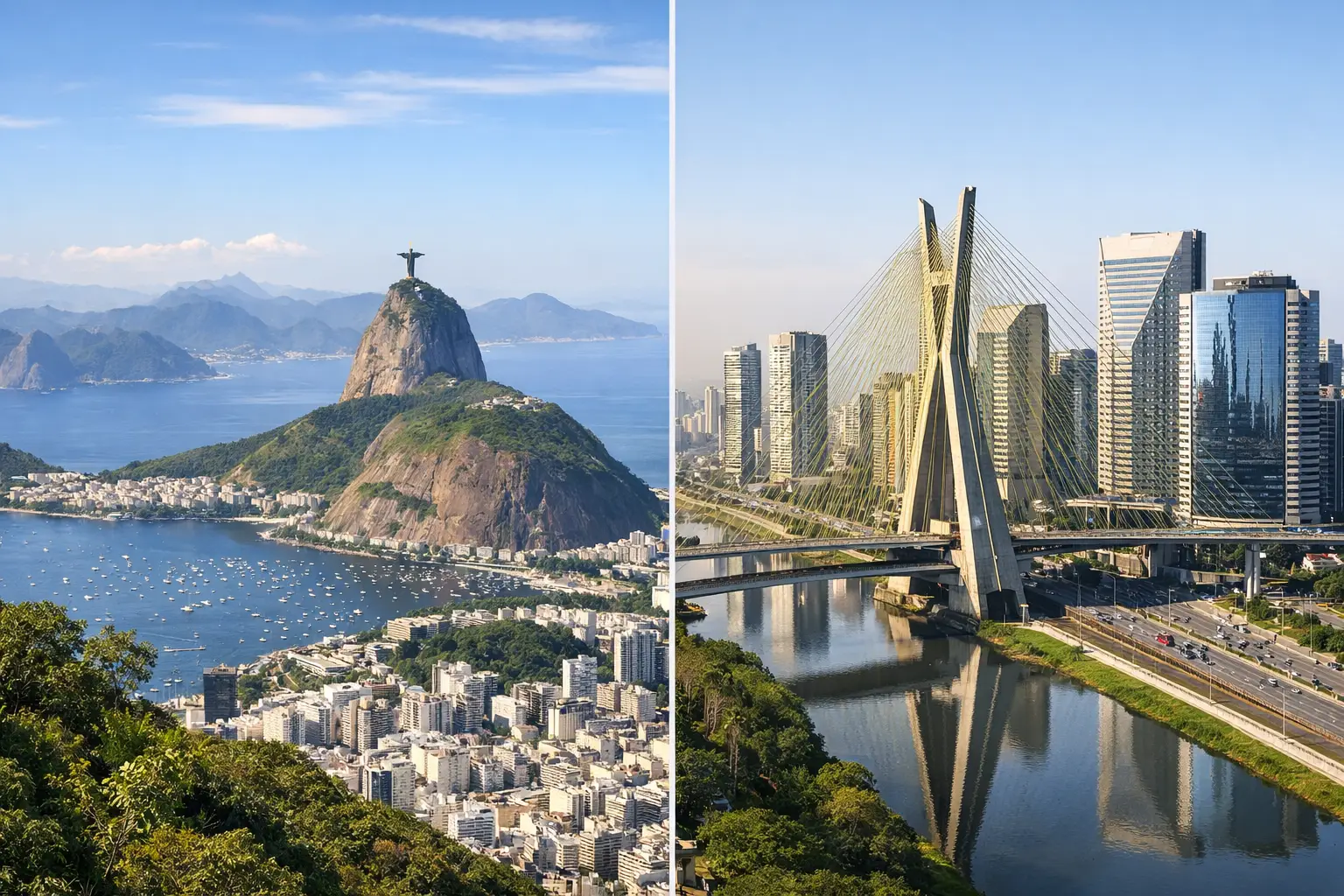
A lot of first-time visitors to Brazil ask the same question before booking flights: rio or sao paulo? It is a fair dilemma. These are Brazil’s two best-known cities, but they offer very different trips. One is framed by beaches and mountains. The other runs on food, nightlife, business, and big-city energy. Neither is better for everyone. The right choice depends on what you want your days to feel like.
If your image of Brazil includes ocean views, outdoor life, and iconic landmarks, Rio de Janeiro will probably feel more intuitive. If you want museums, restaurants, neighborhoods with distinct personalities, and a city that rewards curiosity, Sao Paulo may be the stronger match. Many travelers visit both, but if you only have time for one, the details matter.
Rio or Sao Paulo: the biggest difference
Rio is easier to understand at first glance. Its appeal is visible the moment you arrive. The coastline, Sugarloaf, Christ the Redeemer, and famous beaches like Copacabana and Ipanema create a strong sense of place. Even a short trip can feel complete because the city’s highlights are recognizable and relatively concentrated.
Sao Paulo is less immediate, but often more layered. It does not rely on postcard scenery. Instead, it stands out through scale, variety, and depth. This is Brazil’s largest city and financial center, with a huge restaurant scene, major art institutions, strong nightlife, and neighborhoods that can feel completely different from one another. It asks for more planning, but it can also give more range.
That is the core trade-off. Rio delivers visual impact and classic sightseeing more quickly. Sao Paulo offers urban variety and cultural density, especially for travelers who enjoy exploring a city beyond its landmarks.
Choose Rio if you want Brazil’s classic postcard trip
Rio is often the easier choice for first-time leisure travelers. You can combine beaches, scenic viewpoints, and major attractions without needing a complicated itinerary. The city feels active and outdoorsy. People spend time on the sand, walk along the waterfront, hike, watch the sunset, and move between neighborhoods with very different moods.
For many international visitors, that makes Rio a stronger vacation city. You can spend the morning at Christ the Redeemer, the afternoon at Ipanema Beach, and the evening in Santa Teresa or Lapa. Even when you are doing very little, Rio still feels memorable because the setting does so much of the work.
It is also a good fit for shorter stays. If you have three to four days in Brazil and want a trip that feels unmistakably Brazilian, Rio often makes more sense. You do not need to be a beach person to enjoy it, but it helps if you like scenic cities and time outdoors.
The trade-off is that Rio can feel more tourism-driven in its most famous areas. Prices in beachfront neighborhoods may be higher, and some visitors focus so heavily on the classic sights that they miss the city’s more local side.
Choose Sao Paulo if you want food, culture, and neighborhoods
Sao Paulo is a better match for travelers who like cities as experiences in themselves. You do not visit Sao Paulo for one single attraction. You visit for the combination of excellent dining, ambitious cultural programming, shopping, nightlife, architecture, and neighborhood discovery.
This is one of the best food cities in Latin America. You can find high-end Brazilian tasting menus, outstanding Japanese cuisine, classic Italian influences, lively markets, and casual spots that feel deeply local. For many travelers, the restaurant scene alone is a reason to choose it.
The city is also stronger than Rio for museums and contemporary culture. Avenida Paulista, Pinheiros, Vila Madalena, Liberdade, and Jardins each offer different rhythms and interests. Some are polished and upscale. Others are creative, busy, and more informal. Sao Paulo rewards travelers who like to browse bookstores, visit galleries, try new restaurants, and spend long afternoons moving from one district to another.
The trade-off is that Sao Paulo can be less intuitive for first-time visitors. Distances are larger, traffic can be tiring, and the appeal is not always obvious on day one. It helps to arrive with a plan and realistic expectations. This is not Brazil’s beach capital. It is Brazil’s urban powerhouse.
Beaches, weather, and overall atmosphere
If beaches are central to your trip, Rio wins easily. The city’s coastline is part of everyday life, not just a side attraction. Even travelers staying in central or historic areas often structure their days around the beach. The atmosphere is more relaxed, social, and outdoors-oriented.
Sao Paulo does not compete on that front. It is inland, dense, and built around urban experiences. You can take day trips or longer trips to the coast from Sao Paulo state, but that is a separate plan, not part of the city itself.
Weather also changes the experience. Rio is generally associated with sun, humidity, and open-air living, though rain can still affect travel plans. Sao Paulo’s climate is more variable, with cooler periods and a less predictable feel throughout the year. If warm-weather vacation energy is a priority, Rio usually aligns better.
Safety and ease for international travelers
Both cities require common-sense precautions. Neither should be treated casually, especially by first-time visitors unfamiliar with local dynamics. In both Rio and Sao Paulo, it is wise to avoid displaying valuables, use ride-hailing apps when appropriate, and research neighborhoods before booking accommodations.
Rio tends to raise more questions from international travelers because of its visibility in global media. The reality is more nuanced. Tourist areas can be very manageable with good planning, but street awareness matters. In Rio, where sightseeing often happens outdoors, travelers may feel more exposed if they are not used to urban environments.
Sao Paulo can feel more straightforward in some central neighborhoods because much of the trip revolves around restaurants, museums, and indoor venues. At the same time, its size can be overwhelming, and some areas are much better suited to visitors than others.
For either city, location matters more than broad reputation. Staying in a well-chosen neighborhood often shapes the trip more than the city choice itself.
Rio or Sao Paulo for nightlife, food, and culture
If you care most about food, Sao Paulo has the edge. It is broader, deeper, and more internationally diverse. If dining is one of the main reasons you travel, Sao Paulo can justify a full trip on its own.
If you care most about nightlife, the answer depends on your style. Rio offers bars with views, samba, street energy, and nights that feel tied to the city’s landscape and rhythm. Sao Paulo offers more variety in clubs, cocktail bars, live music venues, and late-night neighborhoods. Rio feels more atmospheric. Sao Paulo feels more extensive.
For culture, Sao Paulo is usually stronger in terms of museums, galleries, and event programming. Rio still delivers important cultural experiences, especially through music, Carnival traditions, and landmark institutions, but its appeal is more evenly split between culture and scenery.
Cost, transportation, and trip planning
Costs vary in both cities depending on neighborhood and season. Rio can become expensive in beachside areas and during peak periods such as New Year’s Eve and Carnival. Sao Paulo has a wider accommodation range, though upscale districts can also be costly.
Transportation is another factor. Sao Paulo has extensive public transit, but the city is so large that travel times can still be long. Rio is smaller in feel for visitors and often easier to structure around key sights, though moving across the city also takes planning.
If you are the kind of traveler who likes simple logistics and obvious highlights, Rio is easier. If you enjoy researching neighborhoods and building a flexible urban itinerary, Sao Paulo can be more rewarding.
Which travelers usually prefer each city
Rio tends to suit first-time Brazil visitors, couples, beach lovers, photographers, and travelers on shorter vacations. It also works well for anyone who wants a strong mix of sightseeing and downtime.
Sao Paulo tends to suit repeat visitors, food-focused travelers, art and design lovers, business travelers adding leisure days, and people who naturally gravitate toward large cities like New York, Mexico City, or Tokyo. It is less about checking off landmarks and more about discovering what each area does best.
There is no wrong answer here. There is only a better fit for your travel style.
If you want your Brazil trip to feel cinematic, start with Rio. If you want it to feel dynamic, layered, and deeply urban, start with Sao Paulo. And if your schedule allows both, even better – together they show just how broad and surprising Brazil can be.