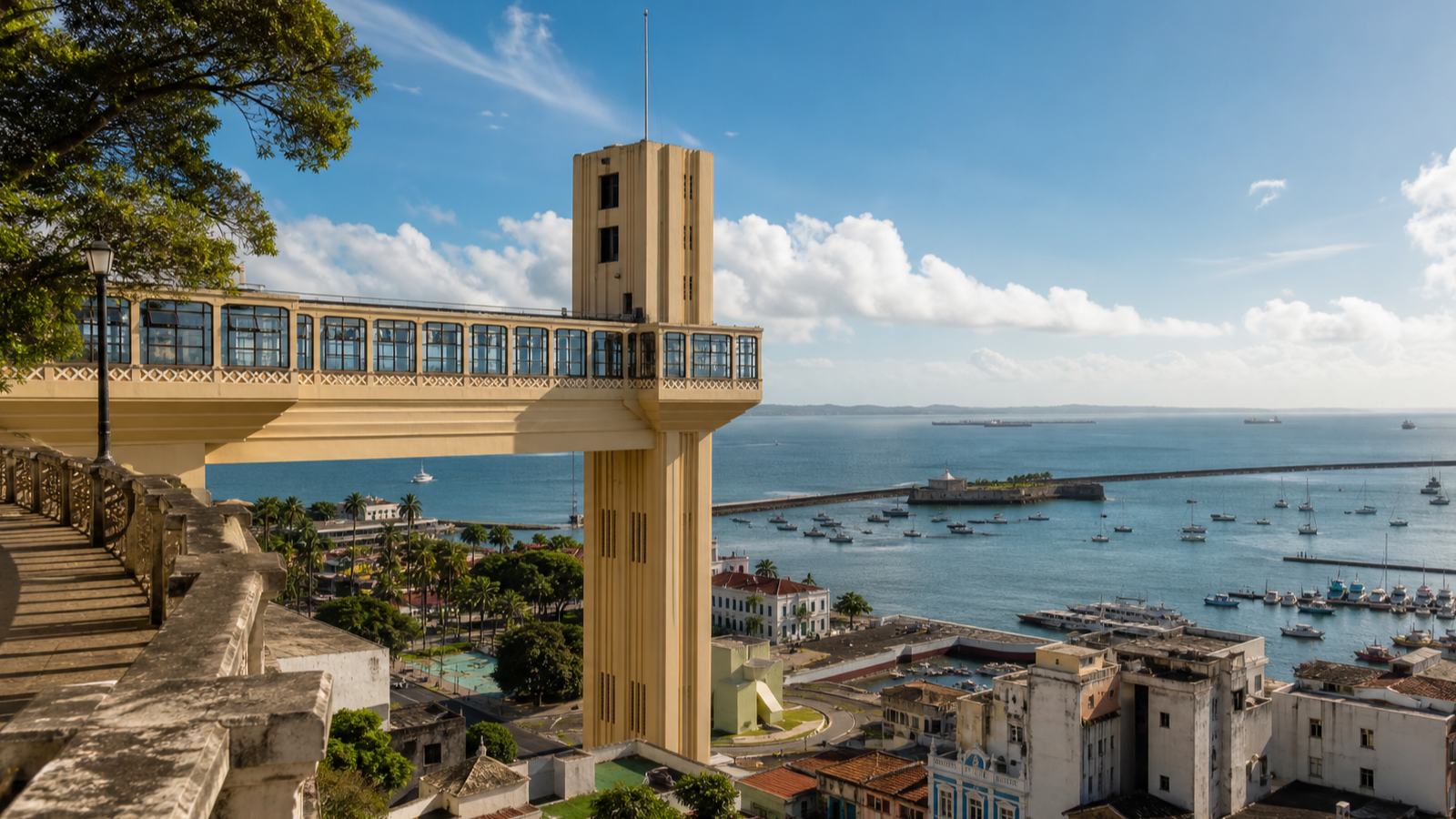
Yes, you can see Pelourinho and the Elevador Lacerda in a single outing. Plan for roughly 2.5 to 4 hours and, excluding food, a budget of around R$11 to R$31 per adult, depending on how many optional stops you add.
The two landmarks sit about 500 meters apart, connected by a short walk through Salvador’s historic core. What trips people up isn’t the distance – it’s outdated information. Several guides online still quote the elevator’s old fare, and at least one popular church that used to anchor this walk isn’t open anymore. Here’s what the route actually looks like right now.
Start in Pelourinho: What to See and What It Costs
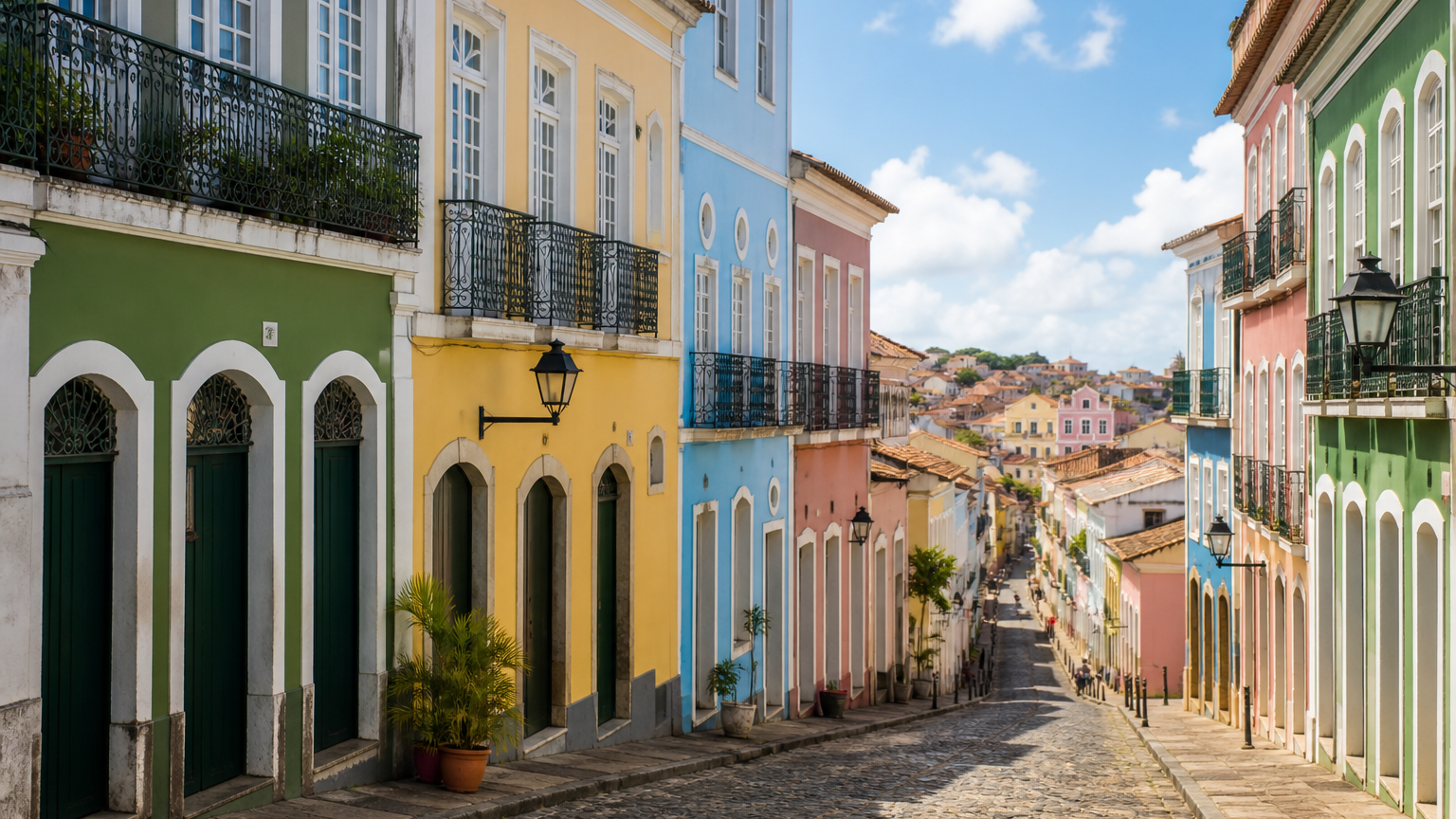
Pelourinho’s colonial streets are free to explore. Illustrative image.
Most visitors begin at Pelourinho’s main squares, Terreiro de Jesus and Largo do Pelourinho, where the colonial architecture is the main draw and doesn’t cost anything to walk through. Give this part 60 to 90 minutes if you want to actually look at the buildings instead of rushing past them.
For a paid stop, the Catedral Basílica de Salvador on Terreiro de Jesus charges R$10 for entry, with free admission for children up to 12. Hours vary by day – Monday from 10am to 4:30pm, Tuesday through Saturday from 9am to 4:30pm, and Sunday from 11:30am to 3pm – so it’s worth checking the day of the week before you plan around it.
One heads-up: the Igreja e Convento de São Francisco, long one of Pelourinho’s best-known paid attractions for its gilded interior, has been closed since a ceiling collapse in February 2025 and isn’t expected to reopen for several years. If you see it recommended elsewhere, skip it for now – the Catedral Basílica is the more realistic paid stop in this area.
The Walk From Pelourinho to the Elevador Lacerda
From the historic core, it’s about a 10-minute walk to the Elevador Lacerda. The most direct route runs via Rua da Misericórdia or Rua Chile, past Praça da Sé, ending at Praça Tomé de Souza, where the elevator’s upper station is located.
The streets are cobblestone and there’s a bit of a slope, so comfortable shoes make a real difference here.
Riding the Elevador Lacerda: Current Price and Hours
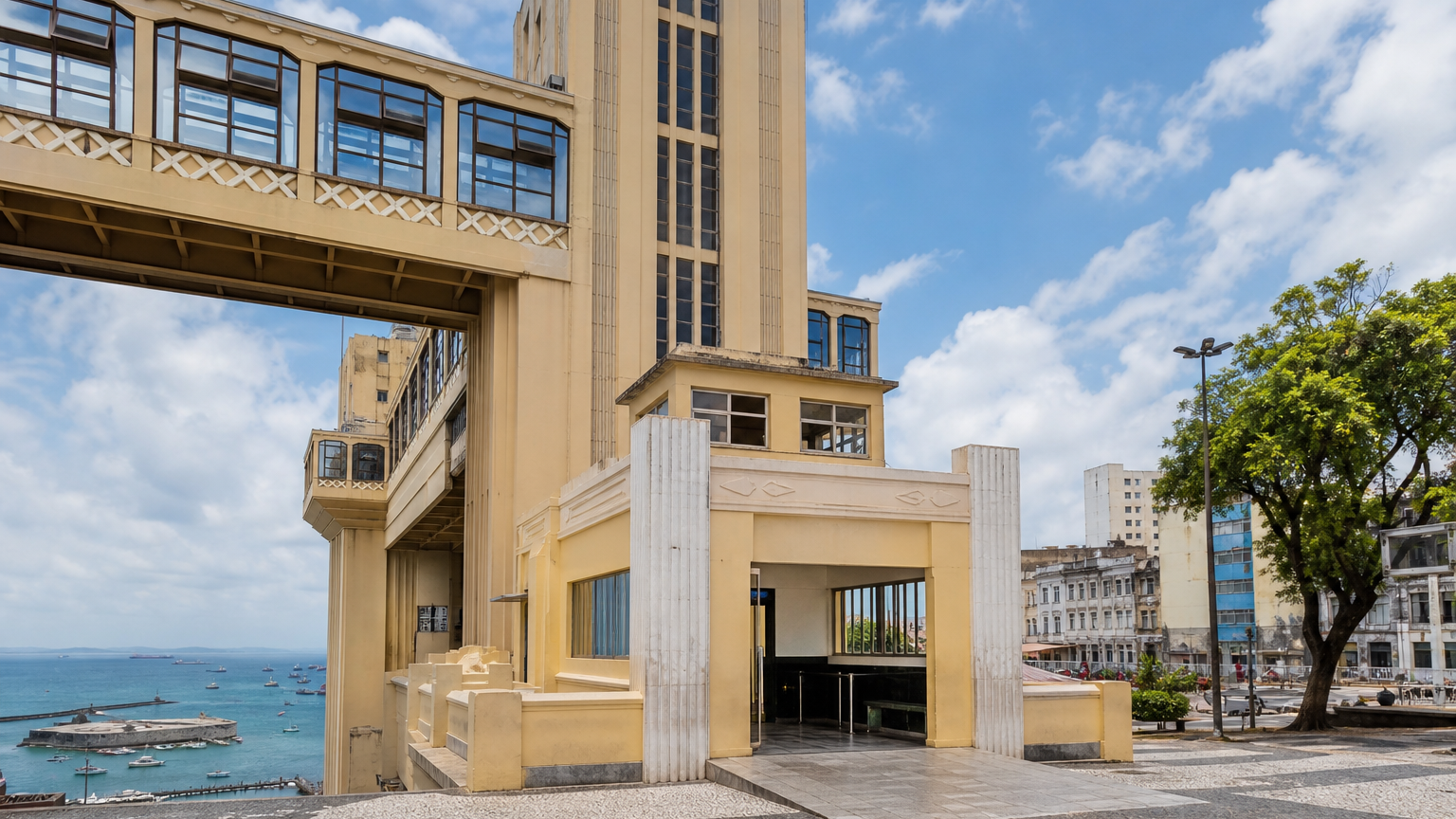
The elevator’s upper station at Praça Tomé de Souza. Illustrative image.
The Elevador Lacerda reopened in February 2025 after a ten-month renovation, and the fare changed along with it. As of its 2025 reopening, visitors pay R$1 per ride; Salvador residents with a SalvadorCard ride for free. Some official pages haven’t been updated since the renovation and may still show the old, much lower fare – go with what’s posted at the turnstile.
Operating hours announced at the reopening were approximately 6:30am to 9:30pm on weekdays and 7am to 9:30pm on weekends and holidays. Since transit fares and hours can shift, it’s worth a quick reconfirmation locally, especially if your visit falls on a holiday.
The ride itself takes under a minute, but the payoff is the view: a clear look over the bay as you drop from Cidade Alta to Cidade Baixa.
After the Elevator: Mercado Modelo
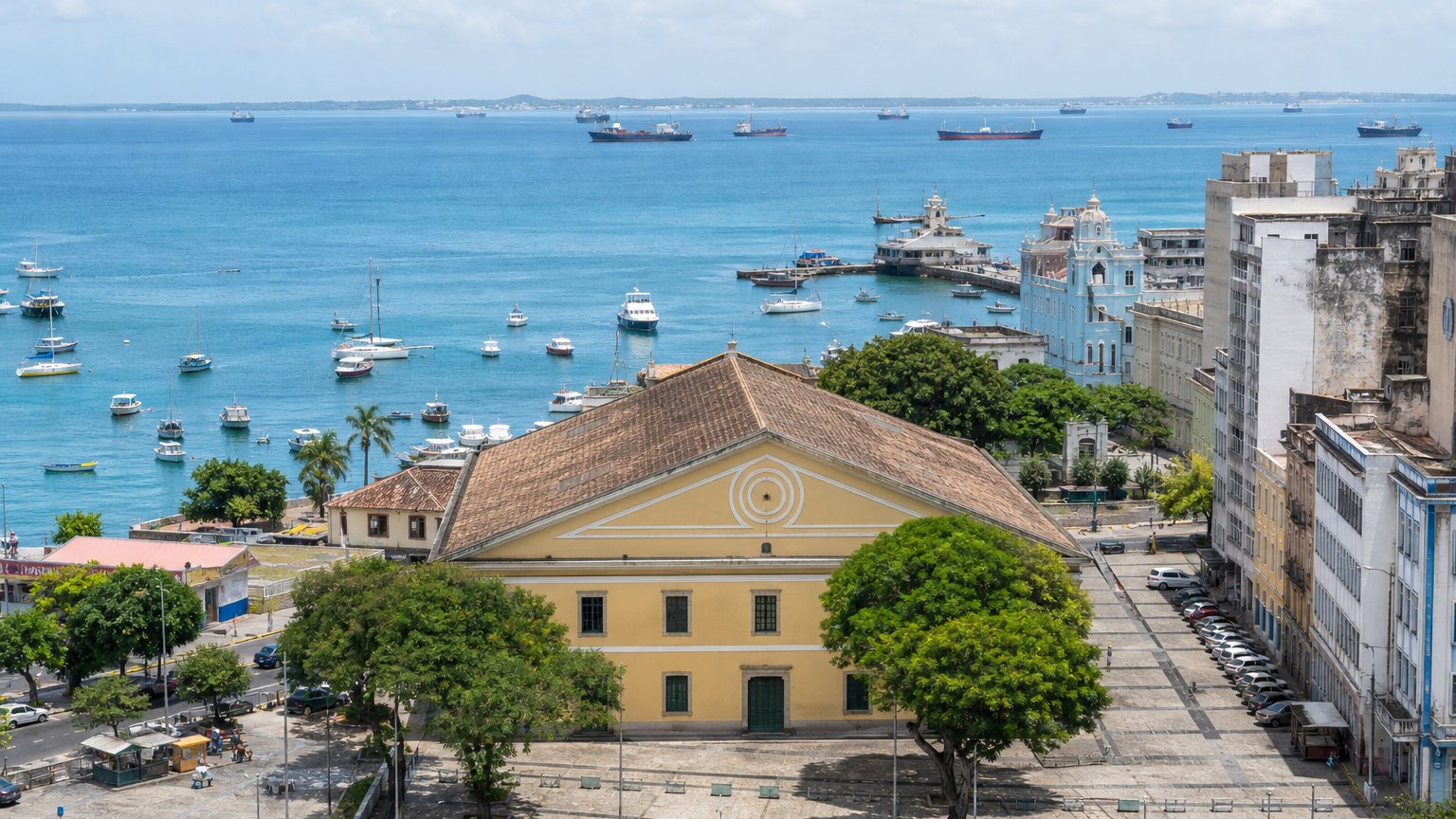
Mercado Modelo sits right at the bottom of the elevator. Illustrative image.
At the bottom, you’re a short walk from Mercado Modelo, a market housed in a 19th-century building near Praça Visconde de Cayru. Entry is free, and it’s open Monday through Saturday from 9am to 6pm, and Sunday from 9am to 1:30pm.
If you want to go further, the underground Galeria Mercado – a cultural space beneath the market – charges R$20 for full admission and R$10 for half-price tickets, with free entry on Wednesdays. It’s optional, but it extends the visit by another 30 to 45 minutes if you’re not in a hurry.
Time and Cost Summary
Here’s how the whole route adds up if you do every stop, based on the prices and times above:
| Stop | Approx. time | Cost (per adult) |
|---|---|---|
| Pelourinho streets (free wandering) | 60-90 min | Free |
| Catedral Basílica de Salvador | 20-30 min | R$10 |
| Walk to Elevador Lacerda | ~10 min | Free |
| Elevador Lacerda ride | <5 min | R$1 |
| Mercado Modelo | 30-45 min | Free |
| Optional: Galeria Mercado | 30-45 min | R$10-R$20 |
Skip the optional gallery and you’re looking at roughly 2.5 hours and R$11 total. Add it, and you’re closer to 3.5-4 hours and R$21-R$31.
Practical Tips for This Route
- Pelourinho is generally considered one of the more heavily policed, tourist-frequented parts of Salvador during the day. Standard precautions still apply: keep valuables out of sight and stay alert in crowded spots like the elevator and Mercado Modelo, where pickpocketing has been reported.
- After dark, avoid poorly lit side streets and use app-based transport instead of walking back to your accommodation.
- Wear comfortable, closed shoes – the cobblestones and slopes in this area are not flip-flop friendly.
- Prices and hours listed here reflect the most recent information available; it’s worth a quick local reconfirmation, especially for the elevator fare and church hours, since these can change.
Frequently Asked Questions
How much does the Elevador Lacerda cost?
As of its 2025 reopening, visitors pay R$1 per ride. Salvador residents with a SalvadorCard ride for free. Some official pages still show the old fare, so it’s worth confirming this on-site.
Is the Igreja de São Francisco open to visit?
No. It has been closed since a ceiling collapse in February 2025, and it isn’t expected to reopen for several years. Catedral Basílica de Salvador is the more realistic paid church stop in the area right now.
How long does it take to walk from Pelourinho to the Elevador Lacerda?
About 10 minutes, covering roughly 500 meters via Rua da Misericórdia or Rua Chile.
Is Mercado Modelo worth adding to this route?
Yes. It’s free, sits right at the bottom of the elevator, and fits naturally onto the end of this walk without adding much extra time.
Is Pelourinho safe for tourists?
It’s generally considered one of the safer, more heavily policed parts of Salvador during the day. Usual city precautions – watching valuables in crowds, avoiding dark side streets at night – apply here as they would in any historic center.
Planning the Rest of Your Salvador Visit
If you’ve got more than half a day in the city, this route pairs well with a broader look at Salvador’s attractions or a separate stop for a proper meal – Pelourinho’s food scene deserves its own visit rather than being squeezed into this itinerary.