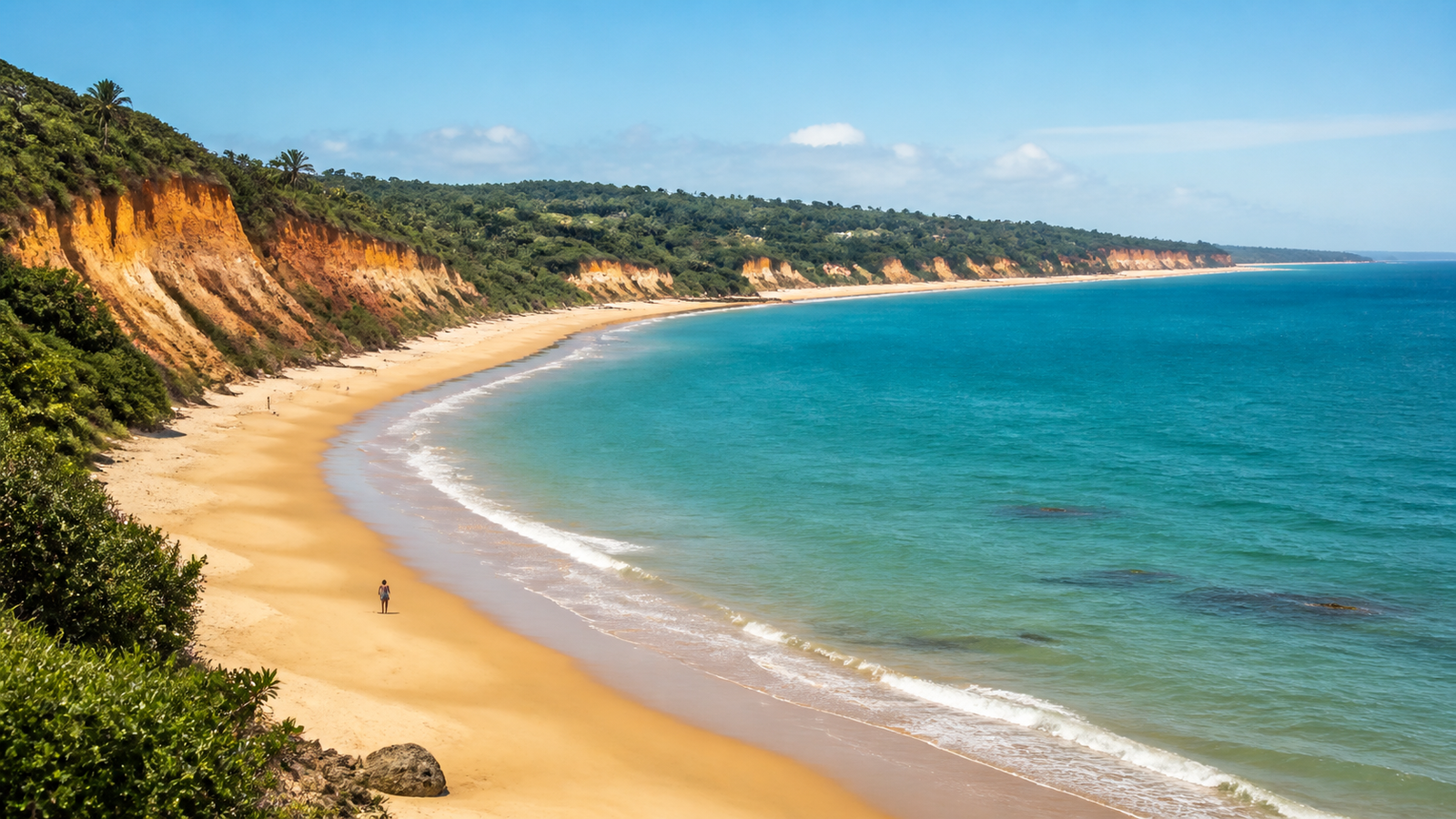
The best first day in Arraial d’Ajuda has three parts: begin in the historic center, choose one beach rather than racing along the whole coast, and return to Rua do Mucugê as the village shifts into evening mode. That sequence gives you the destination’s main contrasts without spending the day backtracking.
If you are coming from Porto Seguro, the usual route crosses the Rio Buranhém by ferry. The local destination portal describes the crossing itself as short and operating around the clock, but transport operations can change. Check the ferry situation on the day you travel, especially if you have a flight, luggage or a late return.
The route at a glance
| Time | Stop | Why it fits here |
|---|---|---|
| Morning | Praça da Igreja and the historic center | Cooler walking hours, open views and an easy introduction to the village |
| Late morning to afternoon | Mucugê/Parracho or Pitinga | One focused beach block, chosen according to tide, energy and scenery |
| Late afternoon and evening | Rua do Mucugê | Restaurants, shops and music make more sense when the village comes alive |
This is not a rigid timetable. Tide, heat and your starting point matter more than squeezing every beach into a single day.
Morning: start at Praça da Igreja
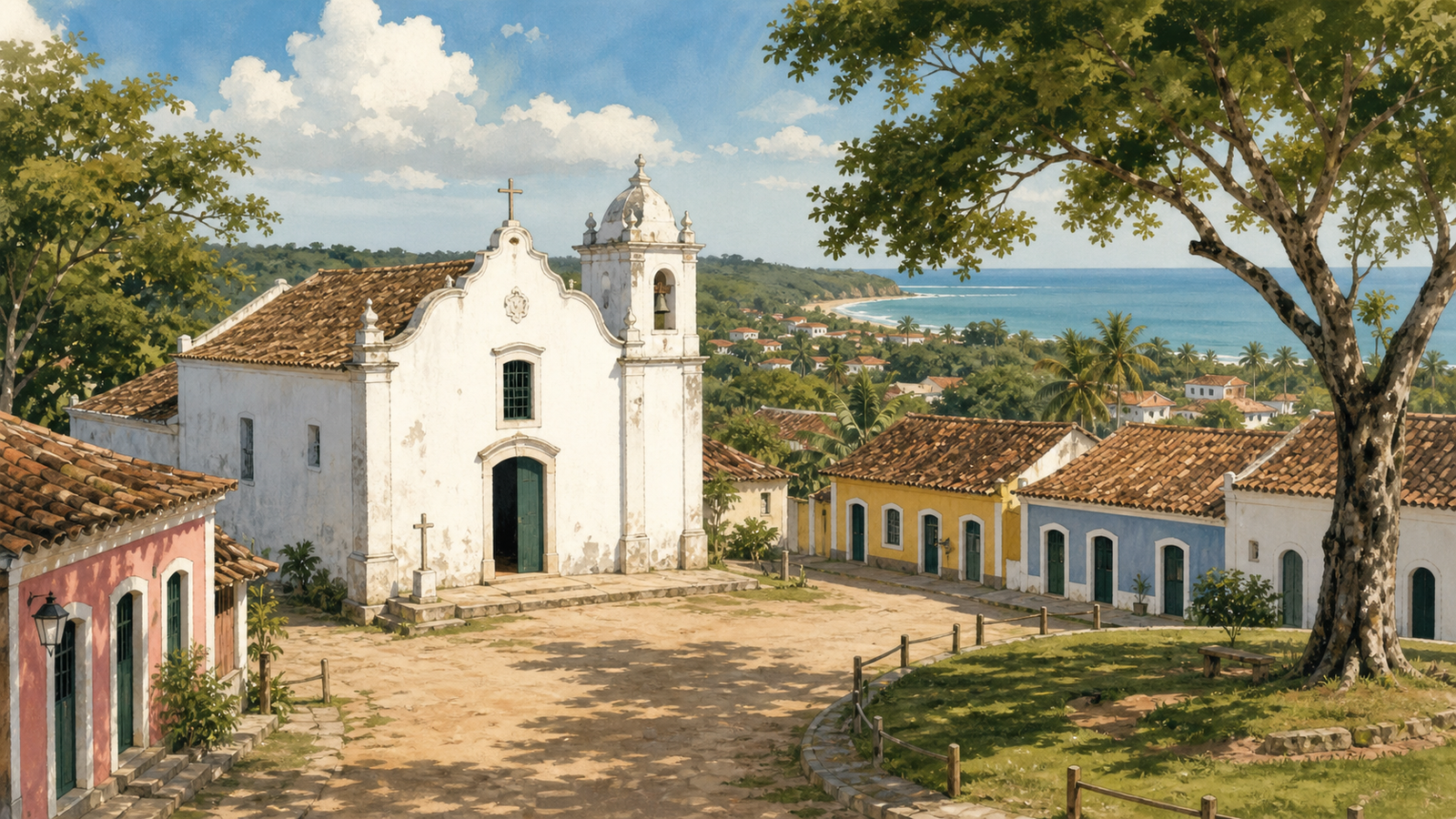
Praça da Igreja is the clearest place to understand Arraial d’Ajuda before heading to the sand. The square brings together the Igreja Matriz de Nossa Senhora d’Ajuda, a low historic streetscape and a viewpoint behind the church toward Estrada da Balsa, the Rio Buranhém and the coast.
Give yourself time to look rather than treating the square as a photo stop. Walk the lanes around the church, notice how the small-scale houses and trees shape the center, and use the viewpoint to understand why the village feels separate from Porto Seguro even though the two are closely connected.
The center is compact, but it is not completely flat. Travelers with limited mobility should check the exact route from their accommodation or drop-off point instead of assuming every lane is step-free. No current accessibility audit was available in the sources consulted.
From here, decide what kind of coast you want. That choice is more useful than following a list of beaches in order.
Choose one beach leg, not three
Arraial d’Ajuda’s coast includes Mucugê, Parracho, Pitinga, Taípe, Araçaípe and other beaches with different profiles. For a first day, the practical decision is usually between a more central Mucugê/Parracho block and a longer Pitinga outing.
Choose Mucugê and Parracho for the easier combination
Mucugê is the simplest beach to combine with the village center. The local beach guide places it among the most central options and links Mucugê and neighboring Parracho to natural pools during low tide.
The phrase during low tide matters. Natural pools are not a permanent, all-day feature, and sea conditions can change. Check a reliable tide table close to your visit and never treat a calm-looking generated image—or yesterday’s photo—as a live conditions report.
This option works best when you want beach time without turning the entire day into a transport exercise. It also leaves more energy for walking around the center later.
Choose Pitinga for cliffs and a longer coastal block
Pitinga is the stronger choice when the landscape is the point of the outing. The destination’s beach guide identifies it with its cliff-backed setting. Allow a longer block and confirm how you will arrive and leave; do not assume the trip will take the same time in every season or traffic condition.
Keep a respectful distance from cliff faces and follow any local warnings. Coastal erosion, tides and access conditions are physical realities, not decorative details.
Trying to add Taípe or another distant beach on the same first day can work with private transport and a specific plan, but it weakens the route for most visitors. If you have a second day, that is the better time to explore farther south.
Late afternoon and evening: Rua do Mucugê
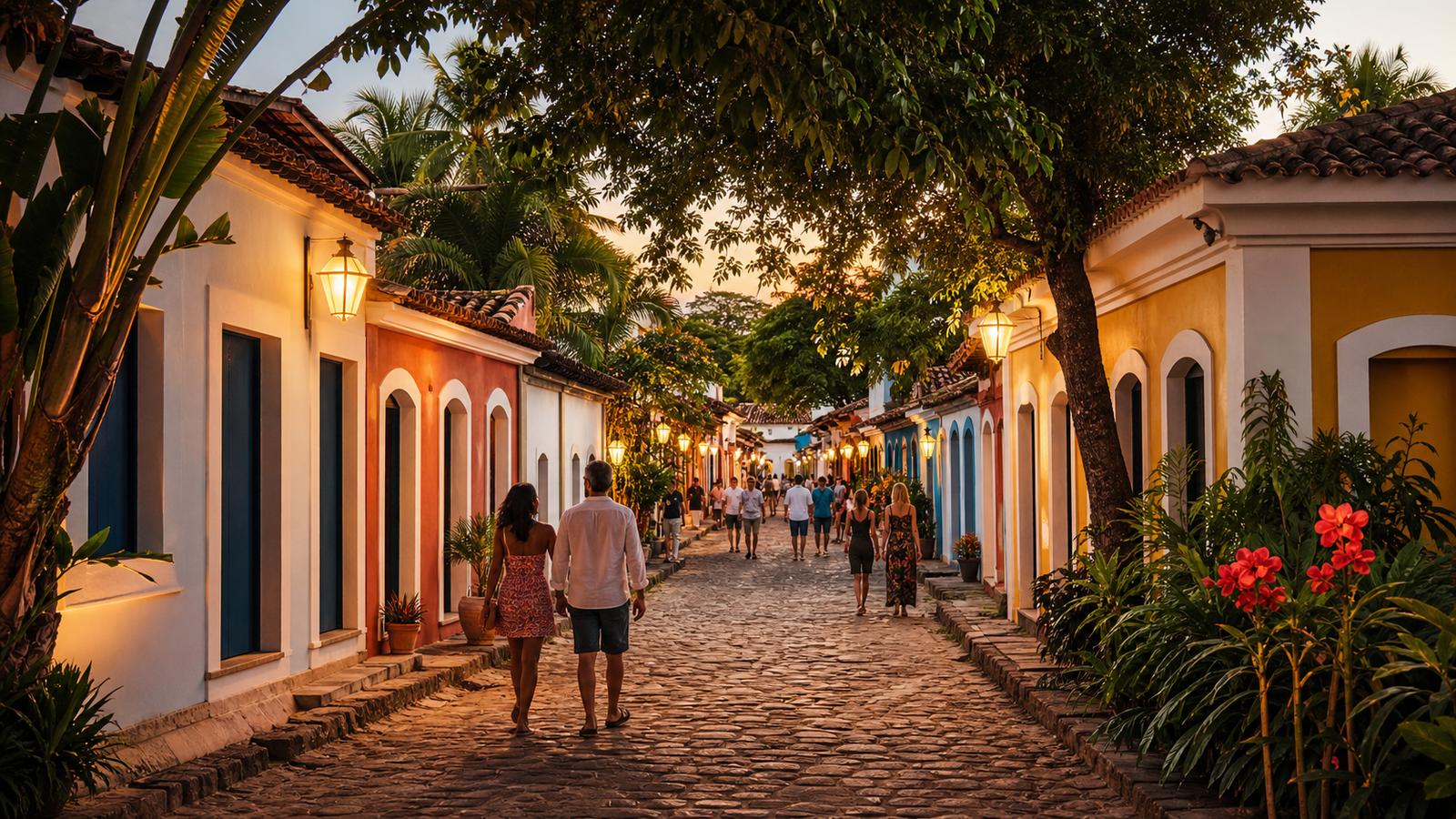
Rua do Mucugê is the natural return point after the beach. The local guide describes a pedestrian-scale street of cobblestones, colorful façades, restaurants, cafés, shops, craft retail and live music. Individual businesses change, so the useful fact is the street’s role—not a frozen list of venues.
Arriving before dinner lets you see the transition from a quieter shopping street to the evening center of the village. Browse first, then choose a restaurant based on the menu, current prices and atmosphere you can actually see that day.
If you skipped Praça da Igreja in the morning, the square is close enough to pair with this evening walk. The viewpoint is a different experience after dark, but stay aware of lighting, weather and your return route rather than relying on a blanket safety claim.
What to check before you leave
- Ferry operation: confirm the current crossing and any vehicle queues on your travel day. Do not build a flight connection around an old timetable.
- Tide: check the tide before planning natural pools at Mucugê or Parracho.
- Sea and cliff conditions: follow local flags, lifeguard guidance and temporary access restrictions.
- Venue hours: restaurants, music and shops may follow seasonal schedules.
- Walking and mobility: ask your accommodation about hills, paving and step-free alternatives if needed.
- Return transport: decide how you will get back before the evening becomes busy.
These checks are not fine print. They are what turns a good-looking itinerary into one you can actually use.
If you have a second day
Use the extra day to slow down rather than repeat the first. You can spend more time at Pitinga or another beach farther along the coast, or explore a nearby destination with its own dedicated plan. Trancoso, Praia do Espelho and Caraíva are not casual add-ons to a full Arraial day; each needs transport and time.
If you are also staying in Porto Seguro, the Cidade Alta walking guide and the guide to low-cost activities beyond the beaches can help you build a separate day without mixing two destinations into one rushed schedule.
Frequently asked questions
Can you visit Arraial d’Ajuda as a day trip from Porto Seguro?
Yes. Keep the plan compact—historic center, one beach and Rua do Mucugê—and check the Rio Buranhém ferry operation on the day of travel.
Which beach is easiest to combine with the center?
Mucugê and Parracho are the more central combination. Choose Pitinga instead when you want a longer beach block focused on its cliff-backed scenery.
Do the natural pools appear all day?
No. Their visibility depends on low tide and daily sea conditions, so check a reliable tide table close to your visit.
The simple decision that makes the day work
Start with the village, choose one beach for the conditions you actually have, and save Rua do Mucugê for later. One well-chosen coastal stop delivers more than a rushed collection of beaches—and leaves enough time to notice why Arraial d’Ajuda feels like more than an extension of Porto Seguro.