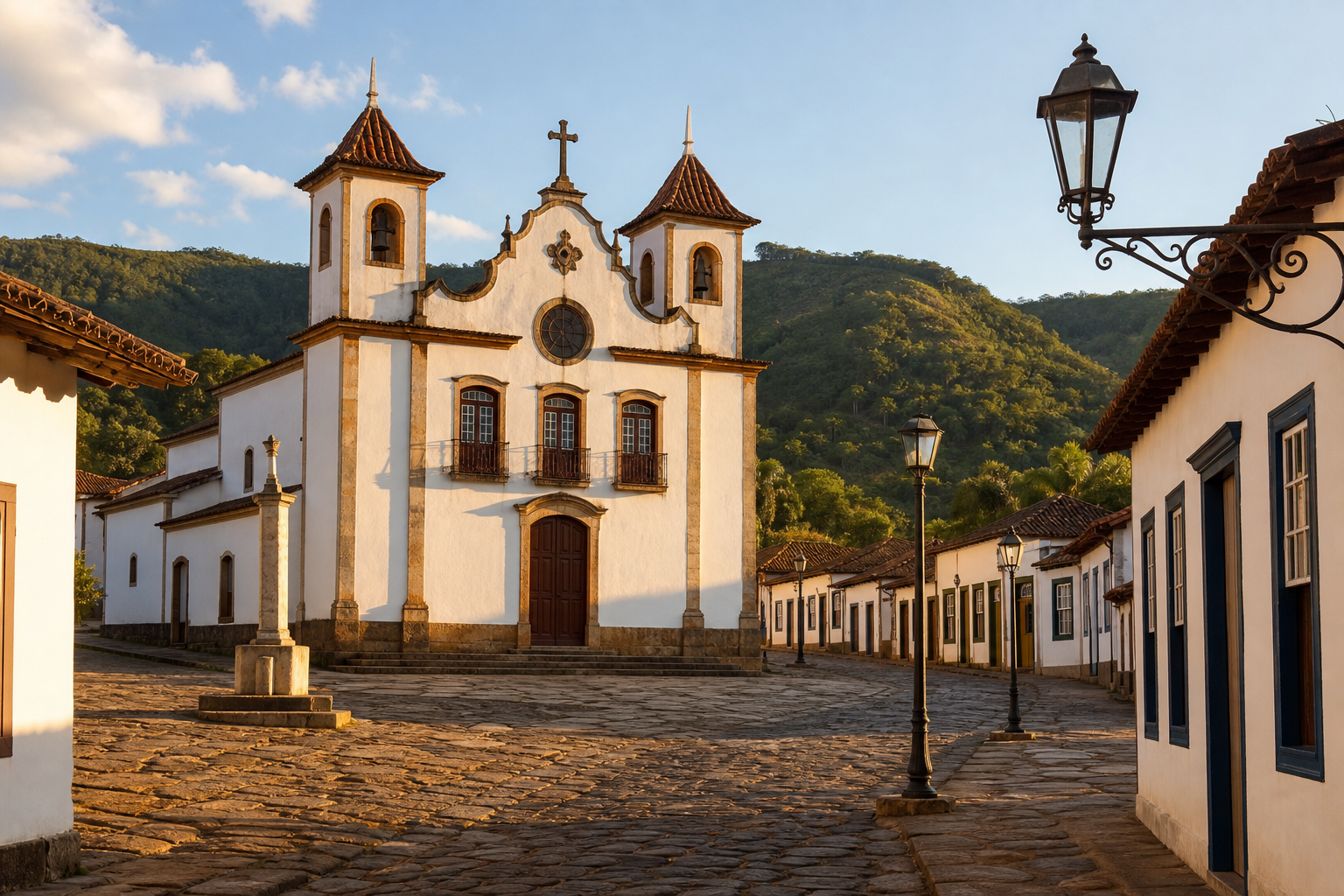
Pirenópolis is an 18th-century colonial mining town nestled in the rugged Serra dos Pireneus mountains of Goiás, located just 150 kilometers from Brasília and 120 kilometers from Goiânia. Declared a national cultural heritage site by IPHAN in 1989, the town—affectionately called “Piri” by locals and travelers—offers a rare combination of well-preserved Portuguese colonial architecture, lively candlelit evenings, and dozens of crystalline waterfalls flowing through the Cerrado savanna.
For first-time visitors, organizing a trip here can feel tricky. The historic town center is entirely walkable on foot, but the most rewarding waterfalls are scattered across private ecological reserves up to 40 kilometers away along unpaved dirt roads. Visiting without a clear plan often leads to backtracking, getting stuck in weekend traffic, or arriving at remote trailheads without the right footwear or entry cash.
This realistic three-day itinerary is designed to give you the perfect balance: active morning swims in natural waterfall pools, relaxed afternoon heritage walks, and memorable evenings enjoying Goiás cuisine on the vibrant Rua do Lazer.
Why Pirenópolis is Central Brazil’s Most Rewarding Weekend Trip
Pirenópolis stands out as the premier cultural and nature escape in Central-West Brazil because it pairs authentic colonial history with accessible ecotourism. Founded in 1727 by Portuguese bandeirantes during the regional gold rush along the Rio das Almas, the town preserved its whitewashed adobe buildings and quartz cobblestone avenues long after the mining boom ended.
Unlike more remote wilderness areas in Brazil, Pirenópolis is easy to reach. From Brasília’s international airport (BSB), the drive takes roughly two hours and 15 minutes heading west along highway BR-070. From Goiânia, it is an easy hour-and-fifty-minute trip via BR-153 and GO-431. This proximity makes Pirenópolis the ideal weekend addition for anyone visiting the federal capital or exploring the heart of Brazil.
The local climate adds to the appeal. The dry winter months from May to September bring clear blue skies, warm sunny afternoons, crisp mountain evenings, and optimum water clarity in the river basins. Even during the peak of the dry season, the mountain springs maintain a steady flow of pristine, refreshing water.
Day 1: Colonial Cobblestones, Historic Churches, and Rua do Lazer
Your first day in Pirenópolis is dedicated to finding your bearings, soaking up 18th-century heritage, and easing into the town’s slow-paced rhythm before hitting the mountain trails.
Morning: The Heart of the Centro Histórico
Start your walking tour at the Praça da Matriz, the town’s main square anchored by the magnificent Igreja Matriz de Nossa Senhora do Rosário. Built between 1728 and 1732, this is the oldest parish church in Goiás. After a devastating fire in 2002, the church underwent a meticulous four-year restoration led by IPHAN and master artisans, reopening in 2006 with its original adobe walls and Portuguese clay roof faithfully reconstructed. Take a few minutes to step inside and admire the wooden altars and colonial woodwork.
From the Matriz, stroll down the hilly cobblestone streets toward the Igreja de Nossa Senhora do Carmo (built in 1750), which sits on the banks of the Rio das Almas and houses the Museu de Arte Sacra. Cross the historic wooden and stone pedestrian bridge over the river, where you can watch the rushing waters that first drew gold prospectors nearly three centuries ago.
Afternoon: Local Crafts and Silver Jewelry
In the afternoon, explore the artisan shops along Rua Direita. In the 1980s, artisans established a vibrant tradition of handcrafted 950 silver jewelry in Pirenópolis, setting local crystals and gemstones into delicate filigree work. It is an ideal spot to pick up authentic, locally crafted souvenirs without aggressive sales pressure.
Evening: The Magic of Rua do Lazer
As the sun sets, head directly to Rua do Lazer (officially Rua do Rosário). Every evening and throughout the weekend, this central street is closed to vehicular traffic. Restaurants, craft beer bars, and bistros set wooden tables directly onto the cobblestones under hanging lanterns and vintage street lamps. Grab an outdoor table, order a cold regional beer or a local cachaça cocktail, and listen to acoustic MPB (música popular brasileira) as the street fills with warm conversation.
Day 2: The Iconic Waterfalls (Reserva Vargem Grande and Cachoeira do Abade)
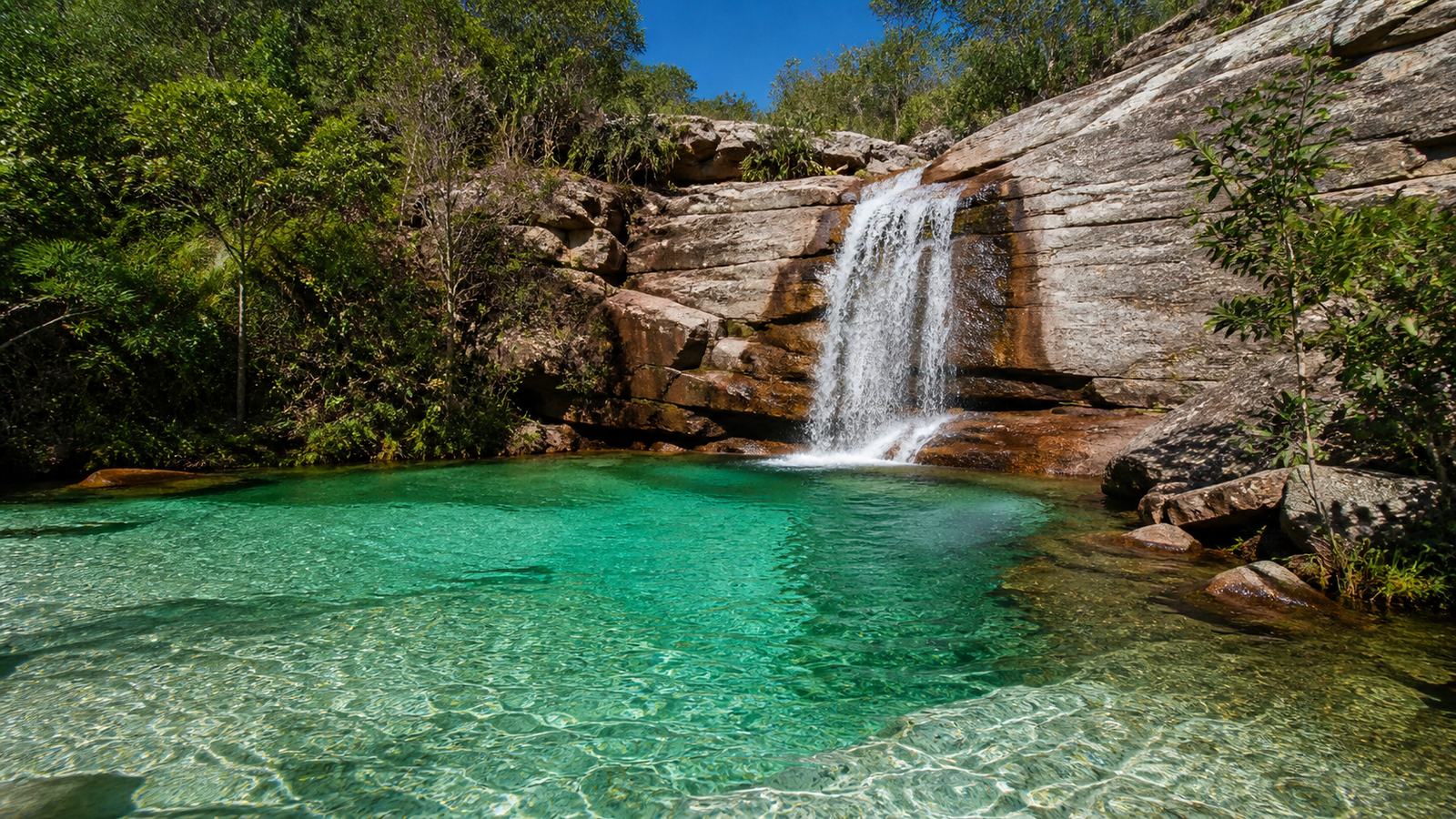
Day two takes you into the Serra dos Pireneus for Pirenópolis’ most famous natural attractions: two well-managed ecological reserves offering easy-to-moderate hiking, dramatic waterfalls, and refreshing swimming pools.
Morning: Reserva Ecológica Vargem Grande
Located about 11 kilometers from the town center along the Estrada dos Pireneus, Reserva Vargem Grande is home to two distinct waterfalls accessible under a single admission ticket. Arrive around 9:00 AM to enjoy the trails before midday visitors arrive.
- Cachoeira Santa Maria: A short, flat, 500-meter paved path leads directly to a wide sandy beach flanking an enormous natural swimming pool. The waterfall cascades gently over a cliff face into calm, shallow waters near the shore, making it the most relaxing and family-friendly swim in the region.
- Cachoeira do Lázaro: From the same central parking area, a 1.3-kilometer stone-paved trail winds through native Cerrado trees to a dramatic rock amphitheater. The waterfall plunges into a deep, dark freshwater pool ideal for confident swimmers.
Afternoon: Cachoeira do Abade
After lunch at a nearby country restaurant or the reserve’s snack pavilion, drive roughly 15 minutes further along the unpaved ridge road to Reserva do Abade (16 km from town). Cachoeira do Abade is one of the most complete eco-parks in Goiás, centered on an impressive 22-meter waterfall that drops into a wide, sandy lagoon.
Walk the 2.5-kilometer Trilha do Abade, which crosses suspended wooden footbridges—including the famous Ponte Pênsil da Amizade—perched high above the river canyon. The wooden walkways and observation decks provide safe, panoramic photo angles of the canyon and smaller secondary cascades like Cachoeira do Cânion and Cachoeira do Sossego. The reserve features restrooms, paved paths on key stretches, and a full-service restaurant.
Top Waterfalls in Pirenópolis at a Glance
To help you choose the best waterfalls for your travel style and fitness level, here is a quick comparison of the top natural attractions around Pirenópolis:
| Waterfall / Reserve | Distance from Town | Trail Difficulty | Key Highlight | Best For |
|---|---|---|---|---|
| Reserva Vargem Grande | 11 km | Easy (500m to 1.3 km) | Sandy beach & two distinct falls | Relaxing swims, families, beginners |
| Cachoeira do Abade | 16 km | Easy to Moderate (2.5 km) | 22m drop & suspension bridge | Scenic photography, walking paths |
| Cachoeiras dos Dragões | 40 km | Moderate to Difficult (4.5 km) | 8 waterfalls on Zen monastery grounds | Hikers, silence, full-day nature |
| Cachoeira do Bonsucesso | 5 km | Moderate (1.5 km loop) | Historic 18th-century gold mining trail | Quick trips close to town center |
Day 3: Zen Trails, Gold-Mining History, and Sunset at Pico dos Pireneus
Your third day offers a choice between an immersive full-day hiking experience or a historic nature trail close to town, followed by an unforgettable mountain sunset.
Option A: Cachoeiras dos Dragões (For Hikers and Nature Lovers)
Located 40 kilometers north of Pirenópolis on the grounds of the Eisho-ji Zen Buddhist Monastery, the Dragões circuit is widely considered the most pristine waterfall trail in Goiás. A 4.5-kilometer loop trail navigates through raw quartzite rock fields, natural spring pools, and gallery forests, stopping at eight separate waterfalls named after mythical dragons and Buddhist concepts. Because silence and conservation are strictly observed on monastery grounds, the atmosphere is serene and uncrowded. Plan on four to five hours for the complete trail, and bring sturdy hiking shoes and drinking water.
Option B: Cachoeira do Bonsucesso (For a Relaxed Morning Close to Town)
If you prefer less driving, head just 5 kilometers from town to Cachoeira do Bonsucesso. This property preserves a section of the historic Caminho do Ouro (Gold Trail), complete with 18th-century dry-stone walls built by enslaved miners. A series of six smaller waterfalls and natural plunge pools line the 1.5-kilometer trail, making it a pleasant morning excursion that leaves plenty of time for lunch in town.
Late Afternoon: Sunset at Pico dos Pireneus
End your trip at Pico dos Pireneus, the highest peak in the region at 1,385 meters above sea level, located inside the Parque Estadual da Serra dos Pireneus. The summit offers an unobstructed 360-degree panoramic view across the rolling Cerrado plateau. Watching the sun dip below the horizon while the quartzite rocks glow deep orange is the quintessential Pirenópolis experience. Note that the final 4 kilometers of access road are rough and rocky, so drive slowly and aim to arrive at least 45 minutes before sunset.
Where to Eat in Pirenópolis: From Empadão Goiano to Cozy Nightlife
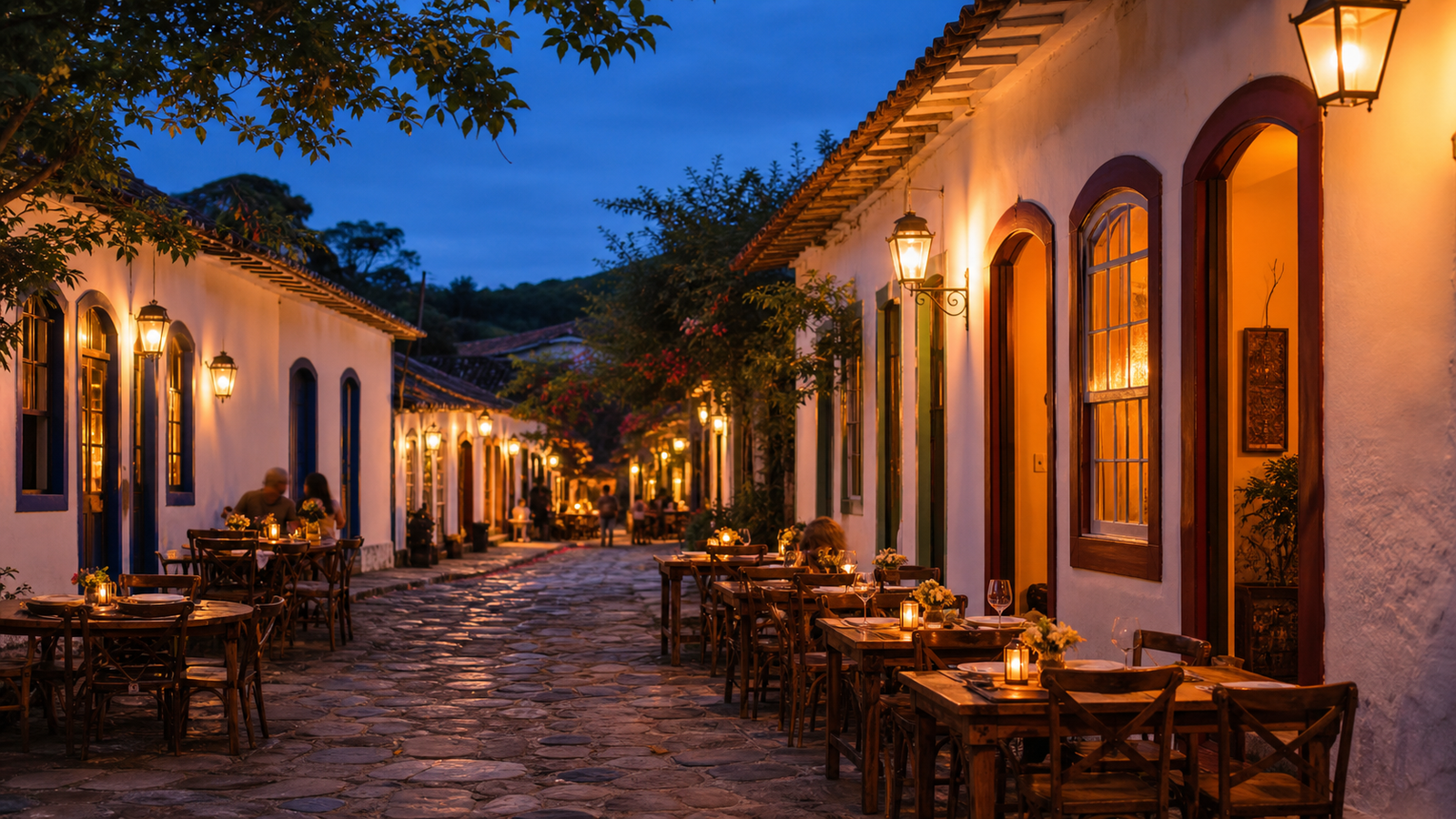
Pirenópolis is one of the gastronomic capitals of Goiás, celebrated for comforting, hearty dishes that reflect regional agricultural traditions and Cerrado ingredients.
Must-Try Regional Specialties:
- Empadão Goiano: The iconic dish of the state. This is a deep-dish, savory pie with a golden, flaky crust stuffed with shredded chicken, braised pork, spicy linguiça sausage, hard-boiled eggs, melted cheese, and guariroba (a pleasantly bitter native palm heart). Many versions also incorporate fragrant pequi fruit.
- Pastelinho de Pirenópolis: The town’s trademark sweet treat. These small, flower-shaped pastry cups are seasoned with a touch of cinnamon, filled with creamy doce de leite (milk caramel), and baked with a dusting of crystal sugar on top. Pick up a box at local bakeries near the Matriz.
- Galinhada com Pequi: Traditional saffron-seasoned rice cooked in a single pot with farm-raised chicken, herbs, and aromatic yellow pequi fruit.
For dinner, Rua do Lazer offers lively open-air dining with pasta, grilled meats, and craft pizza. If you prefer a quieter, more romantic atmosphere, explore the side streets near Rua Direita and Praça do Coreto, where charming bistros serve modern Brazilian fusion cuisine in restored colonial courtyards.
Essential Travel Tips: Getting There, Dirt Roads, and Cash Essentials

A little practical preparation ensures your trip to Pirenópolis goes smoothly without unexpected logistical hurdles:
- Transportation: A rental car is strongly recommended. While you can walk everywhere inside the historic center, there is no public transit to the waterfalls. Taxis and ride-hailing apps are scarce and cannot reliably pick you up from remote mountain reserves. Standard rental cars handle the main dirt roads during the dry season, but drive cautiously over loose gravel and speed bumps.
- Best Time to Visit: The dry season (May to September) offers the best combination of clear swimming water, warm sunny days (26–30°C), and negligible rainfall. During the rainy season (November to March), rivers run higher and waterfalls look dramatic, but dirt roads become muddy and flash floods (trombas d’água) occasionally force temporary trail closures.
- Footwear and Packing: Pack comfortable walking shoes with good grip for town cobblestones, along with rubber-soled water shoes or sturdy sandals for walking on slippery, submerged river rocks. Sun protection (hat, biodegradable sunscreen) and insect repellent are essential.
- Payments and Connectivity: Most restaurants and shops in town accept international credit cards and Brazilian PIX payments. However, cellular coverage drops completely once you drive into the mountain valleys. Always carry R$ 50 to R$ 100 in cash to pay for parking or entry fees if a reserve’s satellite payment terminal is temporarily offline.
- Weekend Crowds: Pirenópolis is extremely popular with weekenders from Brasília. If your schedule allows, visiting between Tuesday and Thursday offers near-empty waterfall pools and peaceful historic streets at lower accommodation rates.
Frequently Asked Questions About Visiting Pirenópolis
How many days do you need in Pirenópolis?
Two to three full days are ideal to explore the historic center on foot, spend two mornings visiting top waterfall reserves like Vargem Grande and Abade, and enjoy the evening dining scene without rushing.
Do you need a car to visit Pirenópolis?
Yes, a rental car is essential for visiting the waterfalls. While the colonial center is completely walkable, the waterfalls are located between 5 km and 40 km outside town along unpaved dirt roads without public bus service.
What is the best month to visit Pirenópolis?
The dry season from May to September offers blue skies, pleasant temperatures, and the clearest waterfall pools, making it the most reliable time for swimming and hiking.
Can you visit Pirenópolis as a day trip from Brasília?
Yes, Pirenópolis is roughly 150 km (a 2-hour and 15-minute drive) from Brasília along BR-070. However, staying at least two nights is recommended to experience the illuminated colonial streets and atmospheric dining on Rua do Lazer.