Recife is widely celebrated as the gastronomic capital of northeastern Brazil, where historic sugarcane traditions, coastal seafood, and sertanejo ranching heritage merge into one of South America’s most distinct culinary scenes. From sipping piping-hot shrimp broth on Boa Viagem beach for R$ 12 to dining under crystal chandeliers at Brazil’s oldest operating restaurant for R$ 95, eating well in Recife is remarkably accessible across every travel budget.
For international visitors, navigating this vibrant food culture requires understanding a few iconic regional specialties and knowing where locals actually eat. This guide breaks down Recife’s signature food rituals, essential savory dishes, vetted dining venues across three clear budget tiers, and practical safety advice for first-time travelers.
The Iconic Flavors of Pernambuco: Bolo de Rolo and Beachside Caldinho
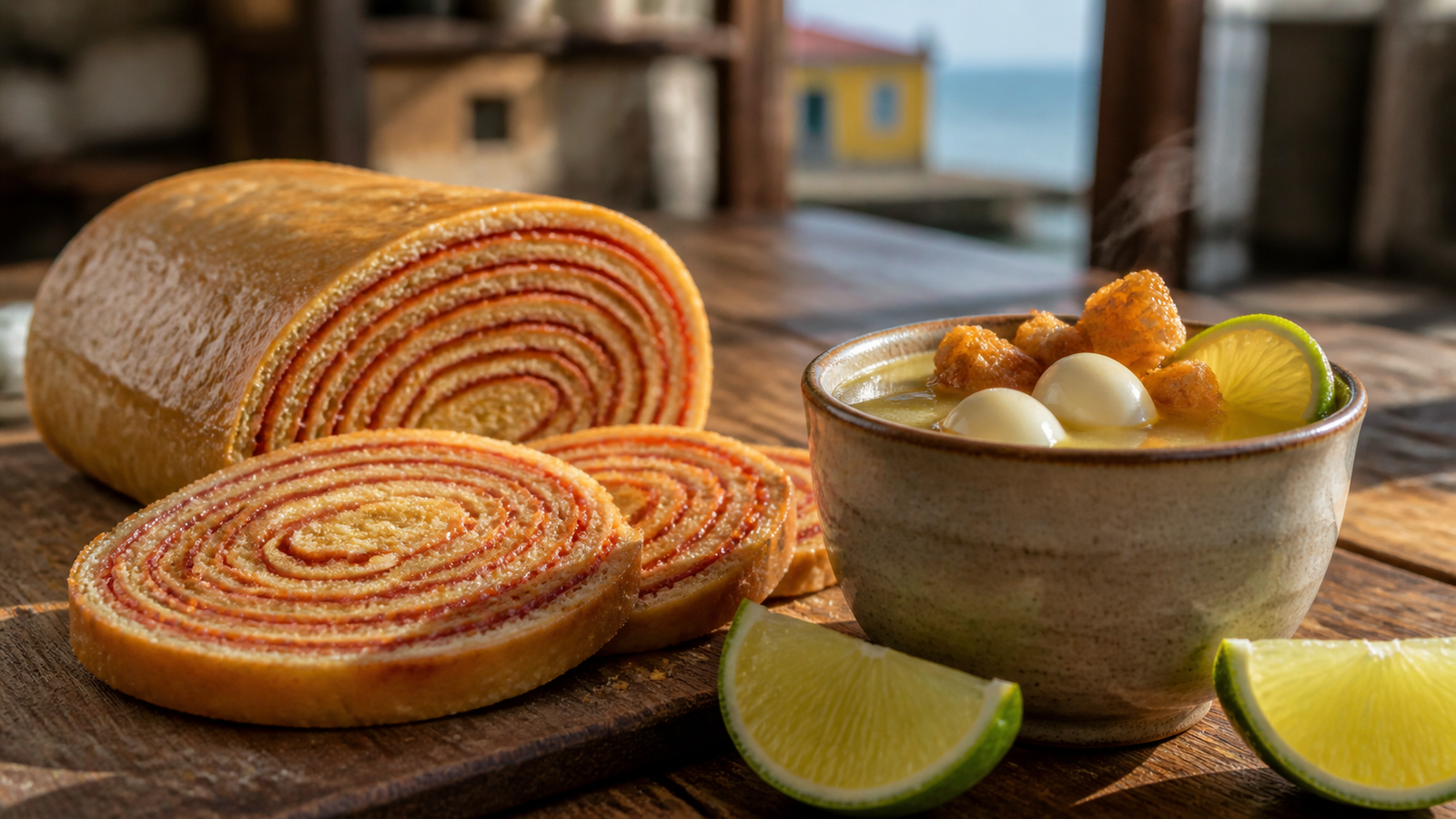
The two most defining culinary traditions in Recife are Bolo de Rolo, an intricately rolled guava pastry, and Caldinho, a steaming savory broth served with customizable toppings at beach umbrellas and neighborhood botecos.
Bolo de Rolo: Why Pernambuco’s Heritage Cake Is Not a Standard Swiss Roll
Bolo de Rolo is officially recognized as an Intangible Cultural Heritage of Pernambuco under State Law 13.436/2008, making it a legally protected culinary treasure. Unlike a conventional Swiss roll or Brazilian rocambole—which relies on a single thick layer of spongy cake—authentic Bolo de Rolo is crafted by spreading paper-thin sheets of butter-rich batter (each under 3 millimeters thick) and baking them for just three to four minutes. While still warm, the delicate sheets are spread with melted guava paste (goiabada) and rolled tightly into dozens of fine, concentric spirals.
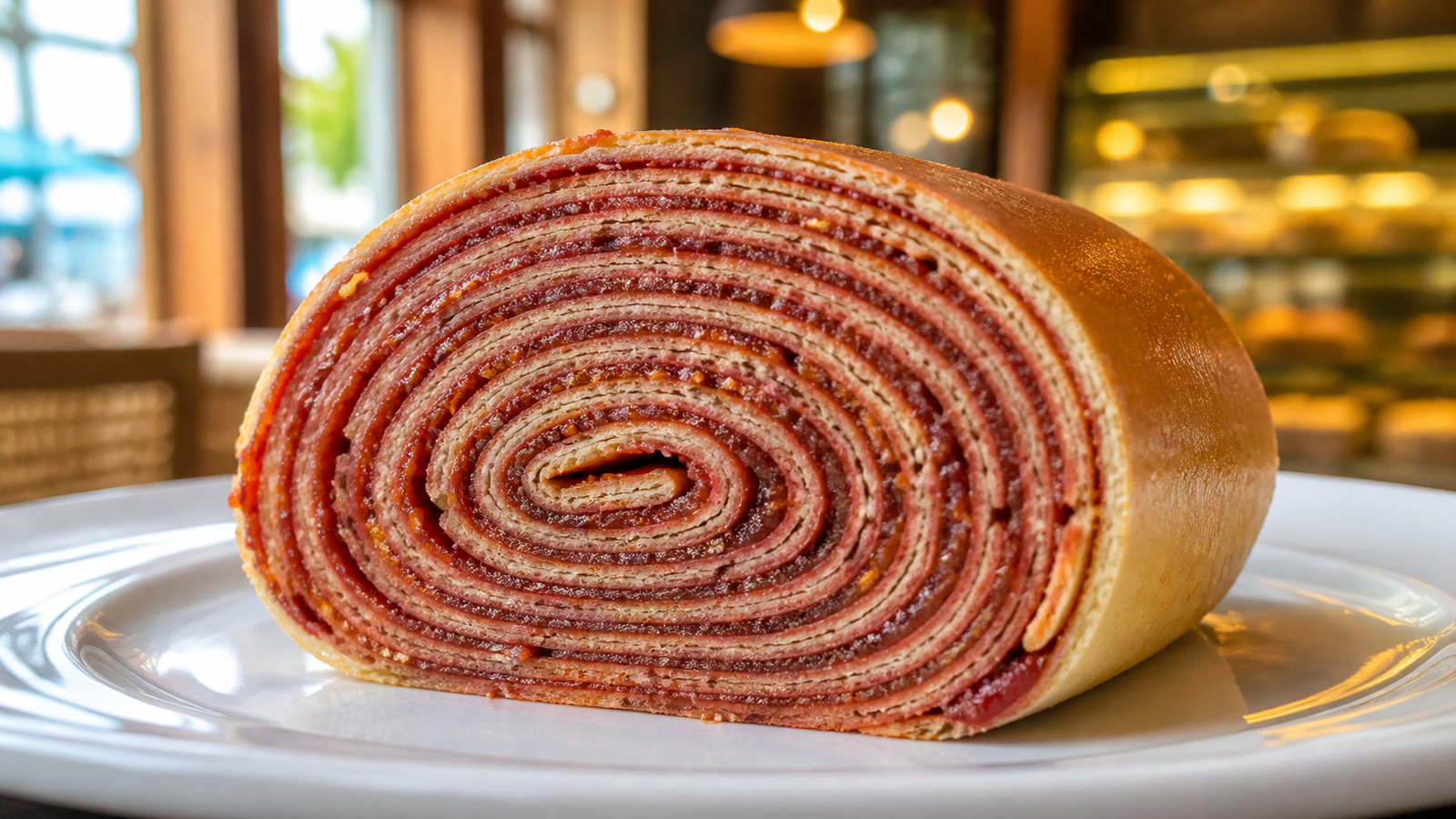
The dessert originated during colonial sugar mill days as an adaptation of the Portuguese almond cake known as colchão de noiva, substituting scarce European nuts with local guava. Today, the emporium Casa dos Frios (founded in 1957 in Recife) is widely credited with standardizing and popularizing the cake nationwide. You can order fresh slices with espresso at cafes across the city for R$ 10 to R$ 16, or purchase whole boxed cakes starting at R$ 25 to R$ 45 for smaller loaves and up to R$ 90 to R$ 120 for larger gift tins.
Beach & Boteco Caldinho: The Steaming Ritual of Boa Viagem
Caldinho is a rich, velvety broth served piping hot in small glasses (copinhos) directly on the sands of Boa Viagem beach and at lively corner bars throughout Recife. While travelers might not immediately associate hot soup with tropical beach weather, sipping a savory caldinho alongside an ice-cold beverage or fresh coconut water is Recife’s quintessential afternoon ritual.
Beach vendors carry insulated stainless-steel thermoses filled with broth—most commonly feijão preto (black bean), feijão mulatinho (brown bean), peixe (fish), or camarão (shrimp). When you order, the vendor presents a portable condiment tray with garnishes: boiled quail eggs (ovos de codorna), crispy pork cracklings (torresmo), shredded sun-dried beef (charque), sweet corn, and green olives. A cup costs between R$ 8 and R$ 18 depending on the protein base, and botecos like Caldíssimo in Boa Viagem and Caldinho do Nenen in neighboring Pina offer sit-down versions with extensive condiment platters.
Savory Staples and Sweet Endings: Arrumadinho, Carne de Sol, and Cartola
Traditional Pernambucan main courses are rooted in hearty, farm-style comfort food, characterized by cured meats, manioc roots, and artisanal cheeses, followed by tropical desserts featuring banana and cinnamon.
Arrumadinho and Carne de Sol: The Quintessential Sertanejo Comfort Food
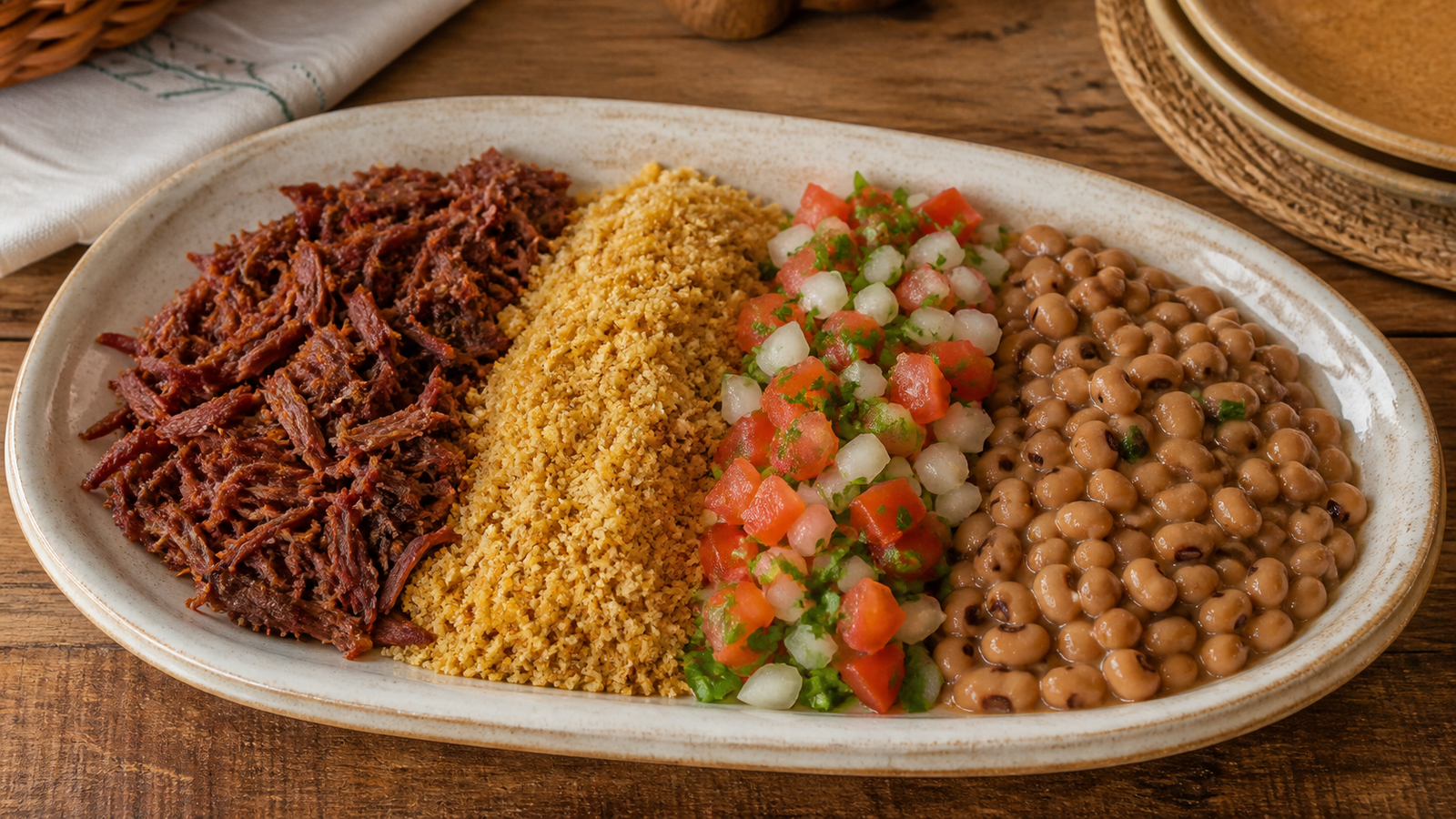
The most famous casual main dish in Recife is Arrumadinho, whose name translates to “neatly arranged.” A true Arrumadinho features four distinct components laid out side by side on a large platter: finely shredded, pan-fried charque or carne de sol (sun-cured beef), buttery toasted cassava flour (farofa), fresh vinaigrette salad (diced tomatoes, onions, and cilantro), and warm feijão macassar (black-eyed cowpeas or green beans). Diners mix the portions on their own plates to achieve the perfect balance of savory meat, creamy beans, and crunch.
Another regional staple is Carne de Sol com Macaxeira, consisting of tender cured beef steak grilled with clarified butter (manteiga de garrafa), accompanied by boiled or crispy fried cassava roots and thick slabs of seared queijo coalho (firm curd cheese).
Cartola: Fried Banana, Melted Cheese, and Cinnamon Sugar
No culinary trip to Recife is complete without tasting Cartola, Pernambuco’s signature warm dessert. Sliced ripe bananas (usually banana-da-terra or banana prata) are lightly pan-fried in butter, layered with thick melted slabs of queijo manteiga or queijo coalho, and generously dusted with ground cinnamon and granulated sugar. The contrast between the caramelized sweetness of the hot fruit, the mild saltiness of the stretched cheese, and the fragrant spice makes it a staple on every traditional menu across town, typically priced at R$ 15 to R$ 25.
Where to Eat in Recife by Budget: From Street Food to Historic Dining
Dining in Recife effortlessly accommodates all travel styles, spanning historic public markets, expansive per-kilo regional buffets, and grand 19th-century dining rooms.
Budget & Street Bites (Under R$ 30 / US$ 5–6)
For authentic flavors on a modest budget, head to Recife’s historic markets and coastal kiosks:
- Praia de Boa Viagem Beach Carts: Enjoy fresh caldinho (R$ 8–18) and grilled queijo coalho on skewers (R$ 8–12) right at your beach chair.
- Mercado de São José & Mercado da Boa Vista: These bustling heritage iron markets feature casual food stalls serving generous plates of Arrumadinho, fried fish with pirão, and regional breakfasts (tapioca and couscous with cured beef) for R$ 20 to R$ 30 per meal.
- Neighborhood Padarias (Bakeries): Stop at bakeries in Boa Viagem or Casa Forte for morning coffee paired with a fresh slice of Bolo de Rolo or Souza Leão cake for R$ 10 to R$ 16.
Casual & Regional Buffets (R$ 35–75 / US$ 7–15 per person)
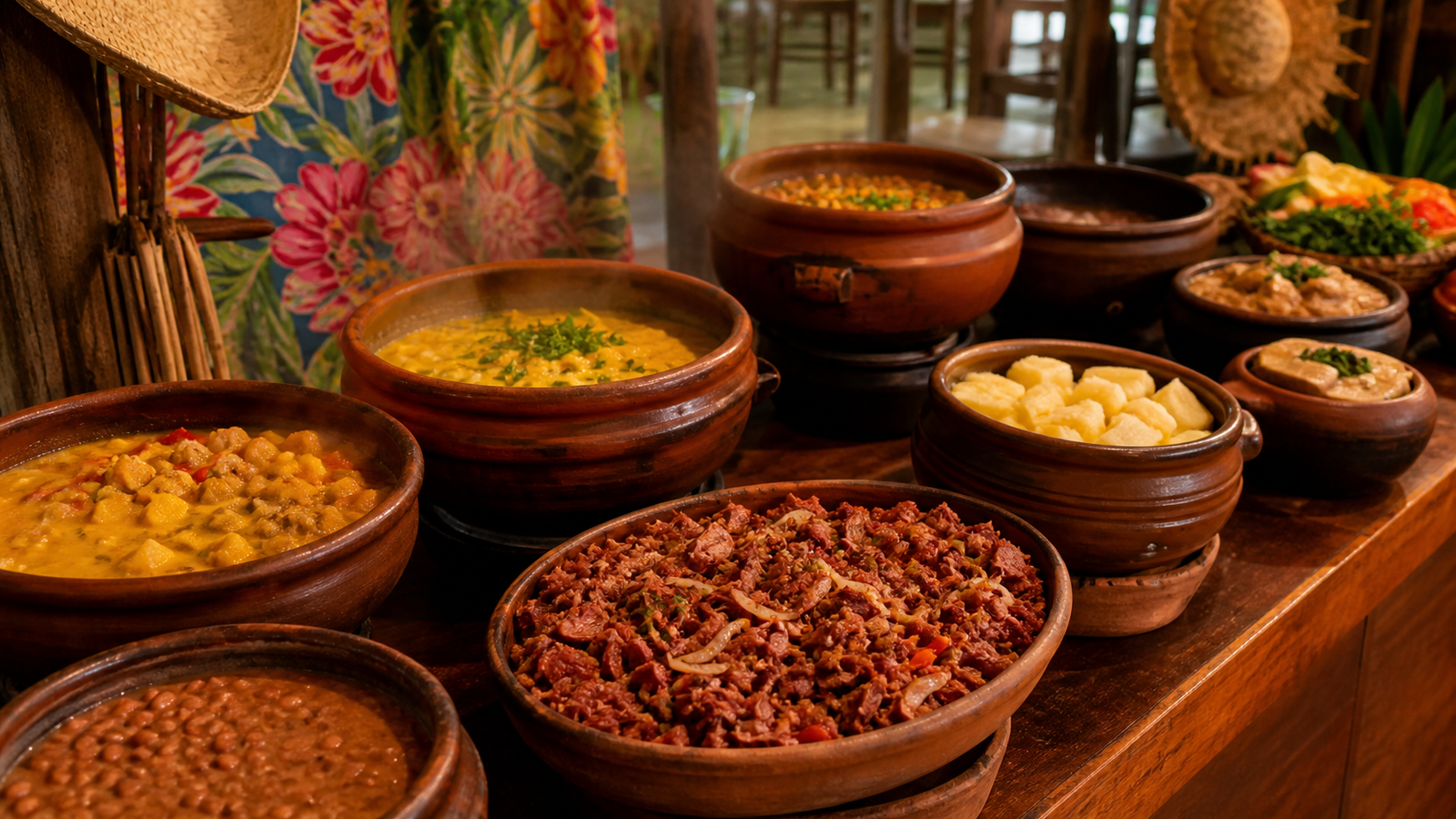
Mid-range dining in Recife offers incredible value, especially through high-quality per-kilo buffets and lively botecos:
- Parraxaxá (Boa Viagem & Casa Forte): The gold standard for northeastern self-service buffets. Decorated with rustic cangaço folk motifs, Parraxaxá offers over 60 traditional warm dishes—including carne de sol, feijão verde, baião de dois, and roasted goat—along with a massive regional dessert table. Expect to pay R$ 40 to R$ 65 for a very hearty plate.
- Entre Amigos o Bode (Boa Viagem & Espinheiro): Famous for its tender roasted goat (carne de bode) and generous family platters that easily feed two or three people, this lively venue is perfect for shared dinners (R$ 50–75 per person).
- Caldinho do Nenen (Pina): A classic Recife boteco near Boa Viagem serving signature seafood caldeiradas, fried crab pastéis, and chilled beer in an unpretentious neighborhood atmosphere (R$ 35–55 per person).
Historic & Traditional Upscale (R$ 80–160+ / US$ 16–32+ per person)
For fine dining with deep historical significance, Recife boasts exceptional heritage institutions:
- Restaurante Leite (Santo Antônio): Founded in 1882 in central Recife’s Praça Joaquim Nabuco, Leite is recognized as Brazil’s oldest operating restaurant. Featuring formal waitstaff in jackets and classic grand piano accompaniment, Leite specializes in traditional Portuguese bacalhau, jumbo prawns, and historic desserts. Main à la carte dishes range from R$ 80 to R$ 150, while weekday executive lunch sets often cost around R$ 70 to R$ 90.
- Casa dos Frios Delicatessen (Aflitos, Boa Viagem & Airport): The premier destination for gourmet food shopping, offering vacuum-sealed, travel-ready whole rolls of authentic Bolo de Rolo (R$ 45–120), artisanal cachacas, and regional cheeses.
Recife Food Budget Matrix
The table below summarizes typical price expectations, signature dishes, and top neighborhoods across Recife’s main dining categories:
| Dining Tier | Typical Price (BRL) | Signature Dishes | Recommended Venues | Best Neighborhood |
|---|---|---|---|---|
| Budget & Street | R$ 8 – R$ 30 | Caldinho (bean/shrimp), Arrumadinho, Tapioca, Bolo de Rolo slice | Boa Viagem Beach Carts, Mercado de São José, Local Padarias | Boa Viagem & Centro |
| Casual Regional Buffet | R$ 35 – R$ 75 | Carne de Sol, Feijão Verde, Baião de Dois, Cartola, Bode Assado | Parraxaxá, Entre Amigos o Bode, Caldinho do Nenen | Boa Viagem, Pina & Casa Forte |
| Historic & Fine Dining | R$ 80 – R$ 160+ | Bacalhau, Camarão VG, Packaged Gift Bolo de Rolo, Fine Seafood | Restaurante Leite, Casa dos Frios Delicatessen | Santo Antônio & Aflitos |
Neighborhood Dining Strategy: Where to Eat and Stay Safe
Choosing where to dine in Recife depends on the time of day, your sightseeing itinerary, and neighborhood atmosphere.
Boa Viagem and Pina: These southern coastal neighborhoods are where most international visitors stay. The beachfront along Avenida Boa Viagem is safe, lively, and highly walkable during the day and evening. It is packed with cafes, botecos, and buffet restaurants like Parraxaxá.
Recife Antigo and Santo Antônio: The historic port island and city center host cultural attractions like Marco Zero, Rua do Bom Jesus, and Restaurante Leite. Visit during active daytime hours to combine historic sightseeing with a traditional lunch. For evening dining in this area, travel by rideshare (Uber) directly to and from your venue entrance.
Casa Forte and Zona Norte: A charming, tree-lined residential district in the north zone filled with open-air dining pockets, specialty coffee shops, and the northern branch of Parraxaxá, ideal for a relaxed dinner away from coastal crowds.
Practical Ordering Tips: Service Fees, Payments, and Local Etiquette
Understanding basic Brazilian dining customs ensures a seamless, stress-free meal in Recife:
- Service Charge (10%): In sit-down restaurants, a 10% service fee (serviço) is standard and automatically calculated at the bottom of the bill (conta). You do not need to leave extra cash unless service was extraordinary.
- Payment Methods: Credit and debit cards (Visa, Mastercard) and contactless payments are accepted almost everywhere, including beach umbrella attendants and market stalls. Keeping R$ 20 to R$ 50 in small bills is handy for market tips or coconut vendors.
- How Buffets-by-Weight Work: At per-kilo spots like Parraxaxá, grab a plate at the buffet entrance, choose your items, and place your plate on the scale station. The attendant gives you a printed tally card that you settle at the cashier when exiting.
- Taking Bolo de Rolo on Flights: Boxed, sealed cakes from Casa dos Frios or airport gift stores are permitted in airline carry-on luggage and retain freshness for several weeks at room temperature.
Frequently Asked Questions
What is the difference between Bolo de Rolo and Rocambole?
Bolo de Rolo is made from micro-thin sheets of butter-rich batter (under 3mm thick) baked briefly and rolled tightly with hot guava paste into dozens of concentric layers. Rocambole is a single thick roll made from fluffy sponge cake.
How much does eating out in Recife typically cost in 2026?
A beach caldinho or market bite costs between R$ 8 and R$ 30 (US$ 2–6). A full regional buffet lunch at Parraxaxá costs R$ 40 to R$ 75 (US$ 8–15) per person. Historic fine dining at Restaurante Leite averages R$ 80 to R$ 160 (US$ 16–32) per main course.
Where is the best place to buy authentic Bolo de Rolo in Recife to take home?
Casa dos Frios (located in Aflitos, Boa Viagem, and Recife International Airport) is the premier source for packaged, whole travel-ready cakes. Fresh artisanal rolls are also available at local bakeries and markets across town.
Is it safe to eat street food and beach snacks in Recife?
Yes, beach caldinho and skewers from busy vendors along Boa Viagem with clean, covered containers and high turnover are widely enjoyed by locals and tourists alike.
What is the tipping custom in Recife restaurants?
A 10% service fee is automatically included on the final bill at sit-down restaurants in Recife. Additional tipping is optional.
Conclusion
Recife offers one of Brazil’s most rewarding culinary journeys, where historic recipes and beachfront rituals cater to every budget. For a perfect culinary day, start with a morning caldinho on the sands of Boa Viagem, explore the regional buffet at Parraxaxá for lunch, and pick up a boxed Casa dos Frios Bolo de Rolo before your flight home. To plan the rest of your trip, check out our guide to exploring Recife Antigo and Marco Zero.