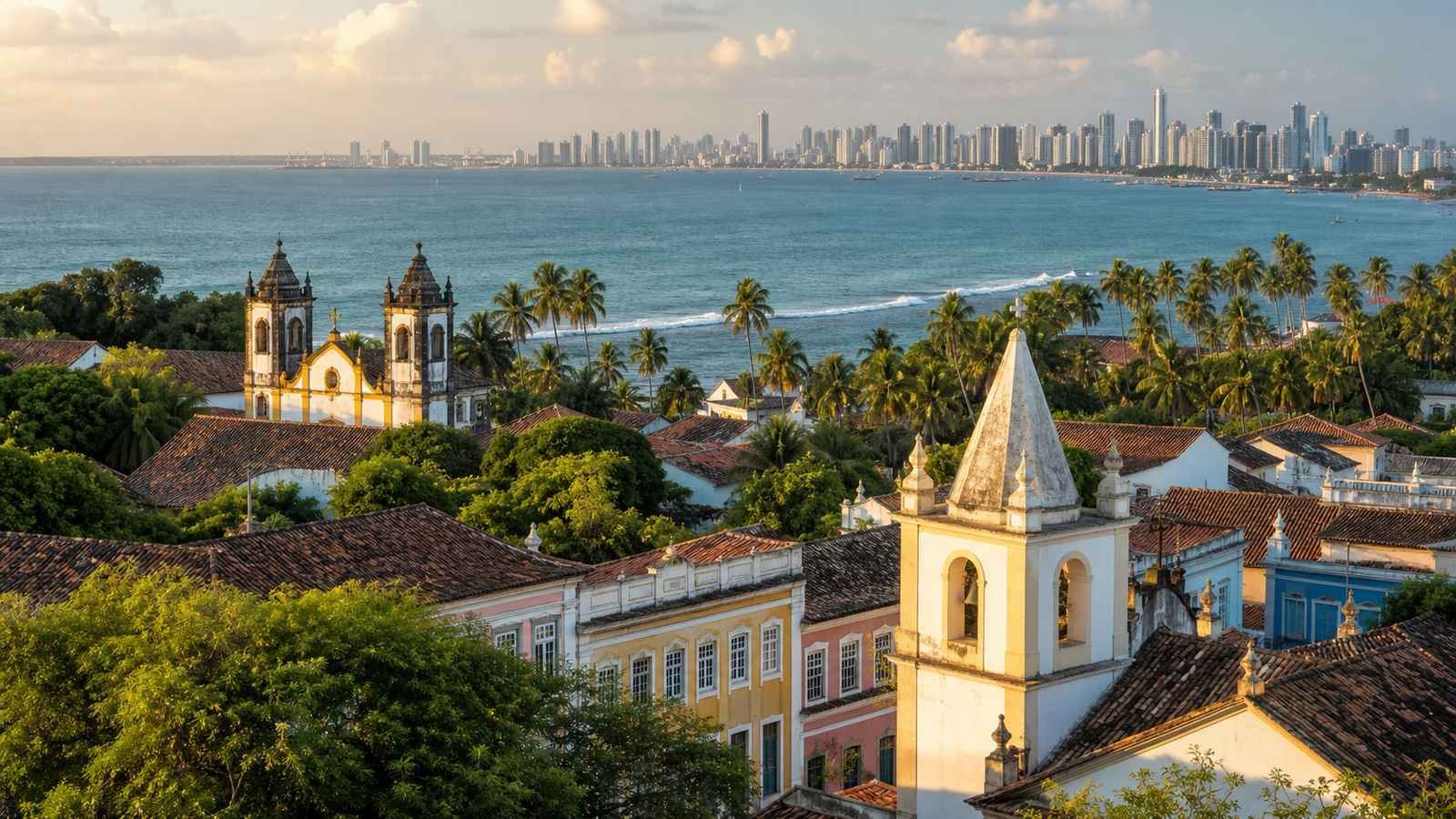
Most travelers experience Olinda through the tinted windows of a tour bus, rushing through a standard two-hour church circuit before heading back to the beaches of Recife. But the true soul of this UNESCO World Heritage town lies in its quiet side-slopes, where vibrant residential townhouses double as active art workshops, centuries-old printmakers carve local folklore into woodblocks, and elevated lookouts provide sweeping 360-degree views over coconut canopies and the Atlantic coastline.
Olinda was built on steep coastal hills overlooking the ocean, creating a natural amphitheater of baroque architecture and lush tropical greenery. Stepping off the crowded main thoroughfares reveals an authentic, living bohemian culture that has thrived for decades. Exploring these quieter streets allows visitors to meet resident creators, discover traditional Northeastern Brazilian crafts, and enjoy tranquil panoramic views at a relaxed, unhurried pace.
Rua do Amparo: The Living Bohemian Heart of Olinda’s Ateliês
Rua do Amparo is the primary artistic spine of Olinda’s historic center, home to a dense cluster of independent art studios, galleries, and cultural spaces that have flourished since the 1970s. Lined with colorful 18th and 19th-century colonial houses, this gently sloping street invites travelers to step directly into the working studios of painters, sculptors, and ceramicists who live and create under the same roof.
Unlike commercial souvenir shops, the ateliês along Rua do Amparo—such as the renowned studio of artist Iza do Amparo and numerous neighborhood collectives—feature open doorways where visitors can observe the creative process firsthand. Meeting local artists offers deep insight into Pernambucano folklore, carnival traditions, and coastal life. Purchasing artwork directly from resident creators ensures authentic provenance while providing direct economic support to the local historic preservation community.
Xilogravura and Cordel: Discovering Pernambuco’s Woodcut Masters
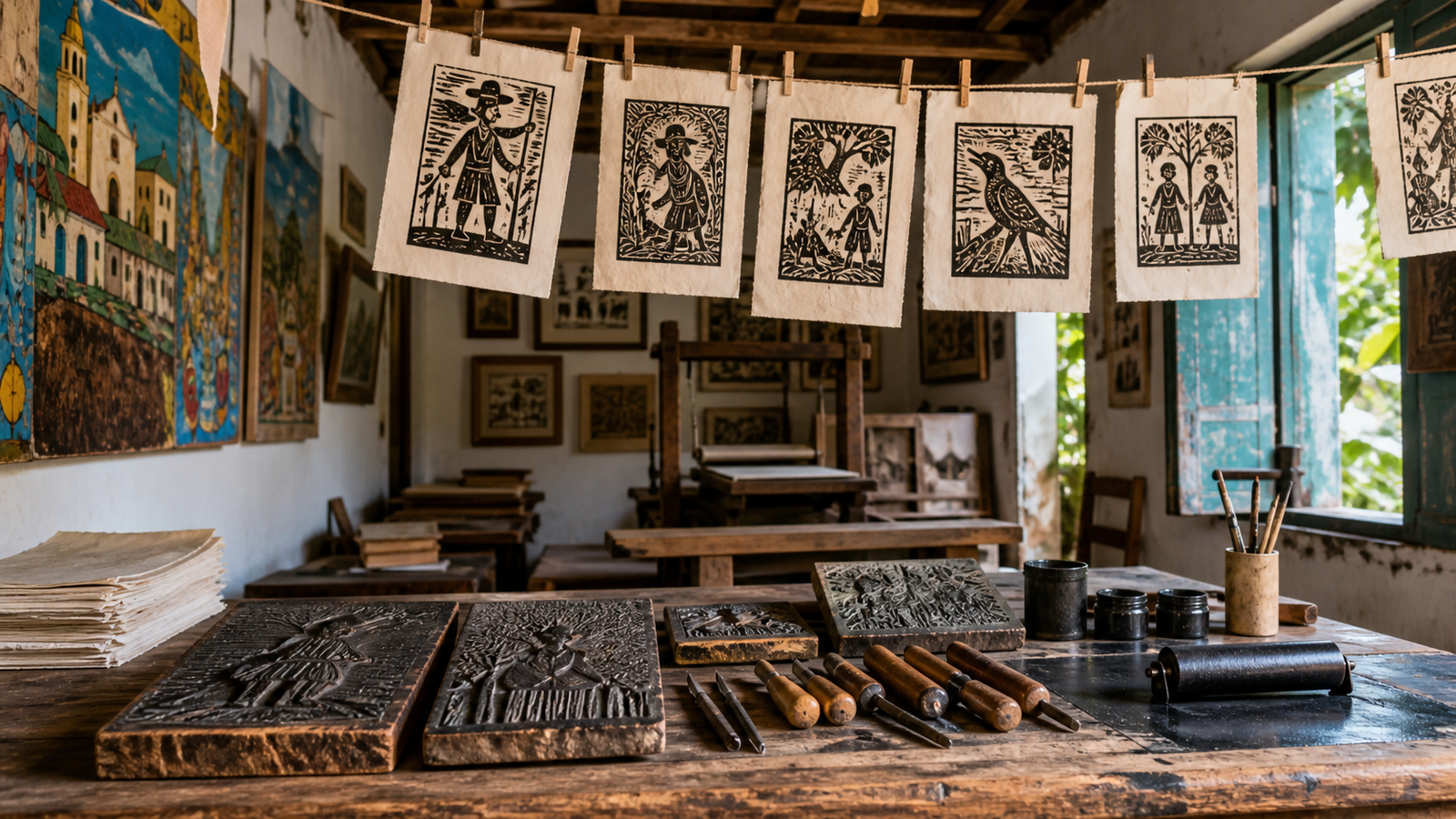
Xilogravura is the traditional woodcut relief printmaking technique that has illustrated Northeastern Brazil’s literatura de cordel (pocket-sized folk poetry booklets) for generations. In Olinda, this rich graphic tradition remains very much alive, celebrated as an essential pillar of Pernambuco’s cultural identity recognized by IPHAN (the National Institute of Historic and Artistic Heritage).
A prime location to experience this living heritage is the 17th-century Mercado da Ribeira on Rua Bernardo Vieira de Melo. Originally built as a colonial market, this historic structure with heavy stone arches became the headquarters for the pioneering Movimento de Arte da Ribeira in the 1960s, led by iconic primitivist painter Euclides Francisco Amâncio, known as Bajado. Today, master wood-carvers and printmakers continue to work within its arcades, carving intricate wooden blocks with gouges and rolling rich black ink onto handmade paper. These signed, original woodcut prints are lightweight, highly affordable, and make deeply meaningful cultural keepsakes.
Ladeira da Misericórdia & Quatro Cantos: Walking Olinda’s Most Scenic Slopes
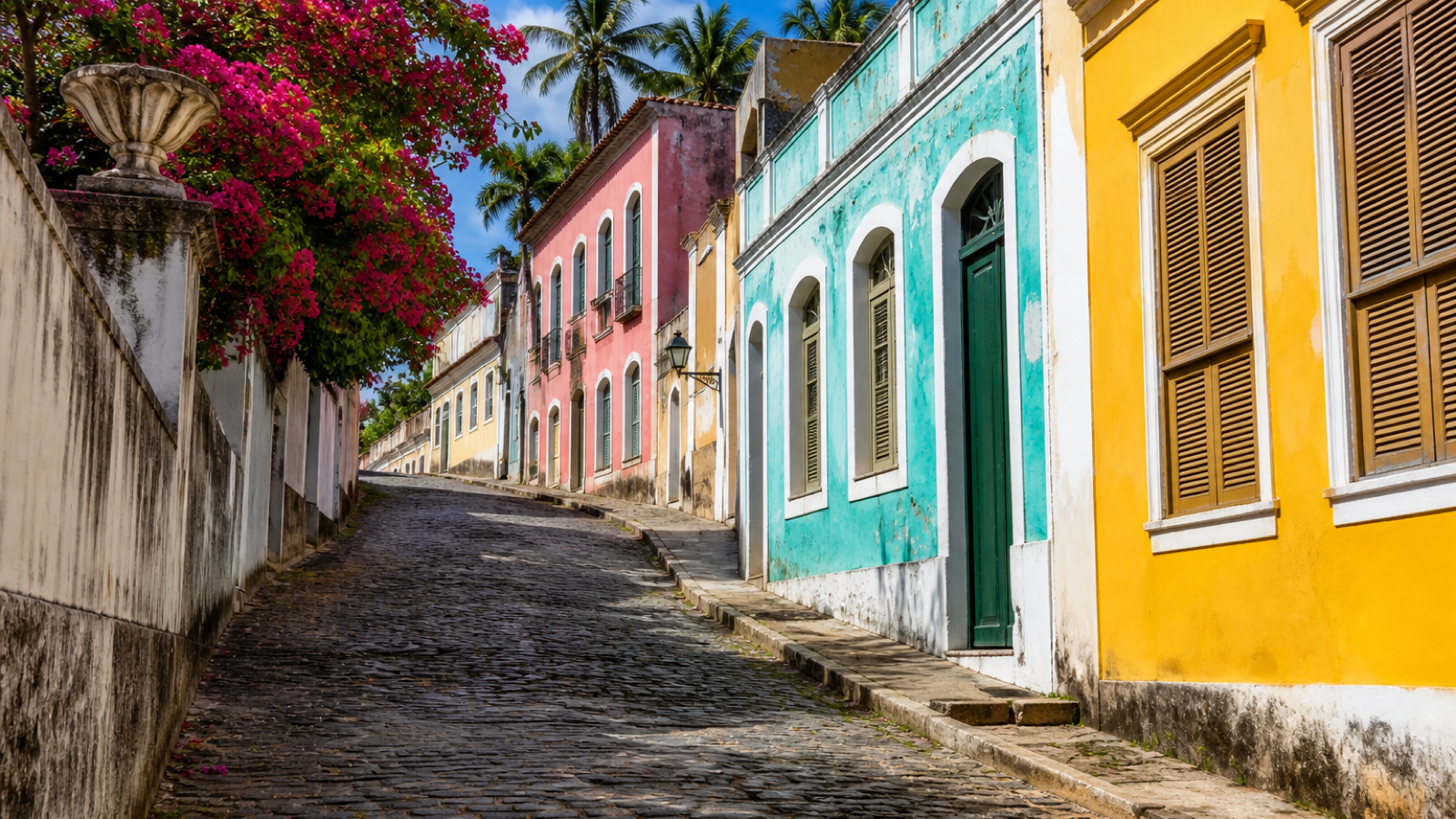
Ladeira da Misericórdia is widely recognized as Olinda’s steepest and most photogenic historic slope. Paved in irregular colonial cobblestones and framed by pastel yellow, turquoise, and terracotta townhouses draped in blooming bougainvillea, this iconic street connects the lower historic district to the 1599 Church of Nossa Senhora da Misericórdia and the heights of Alto da Sé.
Walking along Ladeira da Misericórdia leads to Quatro Cantos, the historic four-corner intersection where Rua do Amparo, Rua Prudente de Morais, Rua de São Bento, and Rua Bernardo Vieira de Melo converge. During Carnival, Quatro Cantos is the pulsing epicenter of street brass bands and giant puppets, but on regular weekday afternoons, it offers a peaceful, sun-drenched glimpse into colonial urban life. Because the historic stones are steep and can become slippery under humid coastal air, solid foot placement and supportive footwear make this scenic walk comfortable and safe.
Secret Viewpoints: 360° Panoramas from the 1934 Caixa D’Água and Church Terraces
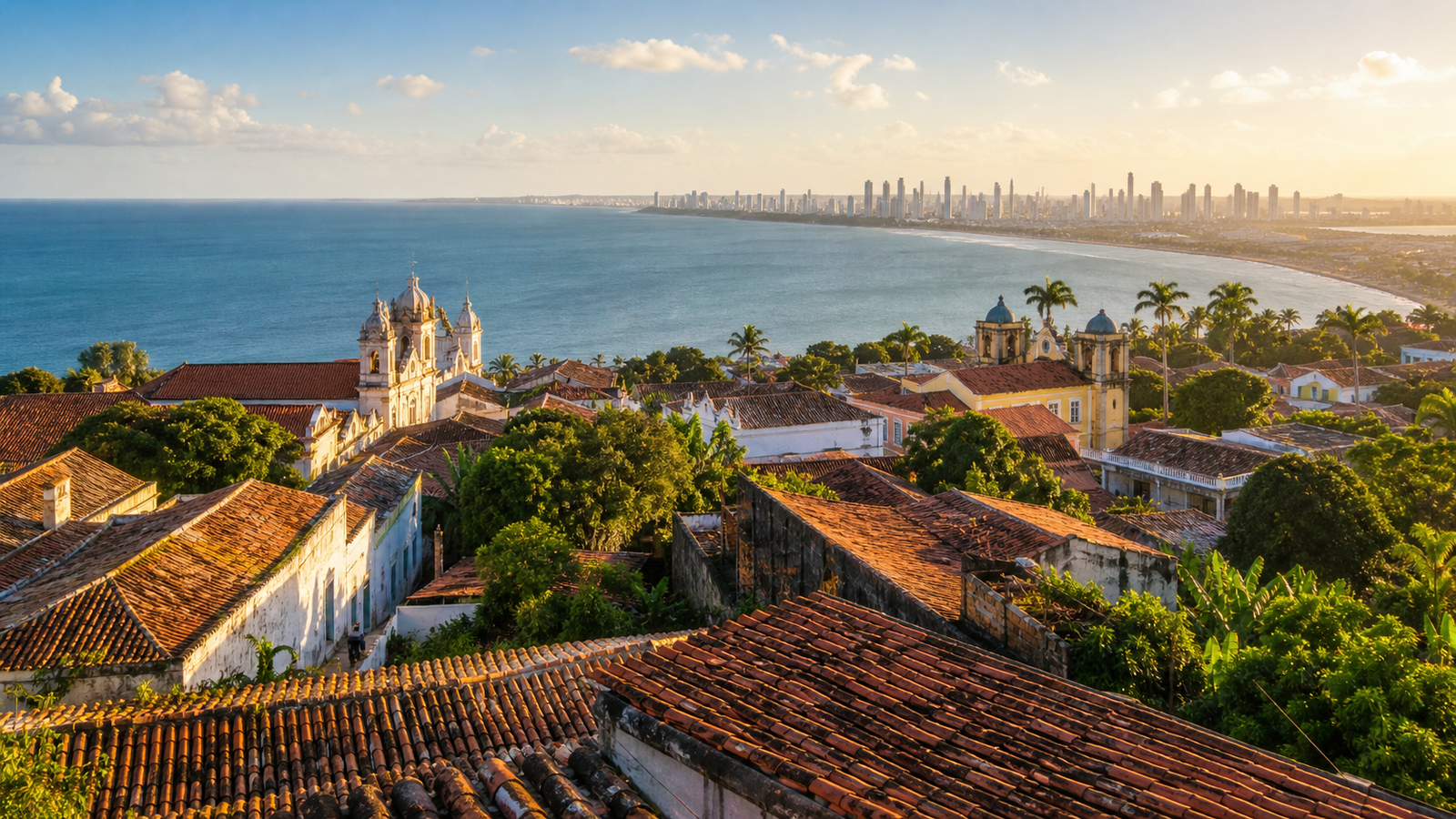
While the open plaza at Alto da Sé is famous for its cathedral view over Recife, Olinda hides several lesser-known elevated lookouts that offer far superior vantage points with significantly fewer crowds. The standout among these is the Mirante da Caixa D’Água, located on Rua Bispo Coutinho at Alto da Sé.
Constructed in 1934 and designed by architect Luiz Nunes, this modernist water tower was a pioneering Brazilian structure that popularized the functional and decorative use of cobogó (hollow ventilation bricks). A panoramic glass elevator carries visitors to the top observation deck, revealing an unobstructed 360-degree vista that spans from the terracotta rooftops and church steeples of Olinda across the blue ocean to the modern skyline of Recife. Additional tranquil viewpoints can be found on the breezy courtyard terrace of the Church of Misericórdia and the shaded rear patio of Mercado da Ribeira, which looks out over lush historic gardens and the lower coastal plain.
The Downhill Walking Strategy: Timing, Safety, and Footwear Tips
Exploring Olinda on foot is immensely rewarding when planned with elevation in mind. Following a few practical guidelines ensures a seamless and comfortable visit:
- The Downhill Route Hack: Take a ride-share (Uber) or taxi directly to the top of Alto da Sé, and then walk downhill through Ladeira da Misericórdia, Rua do Amparo, and down toward Carmo. This simple directional choice eliminates exhausting uphill climbs in the tropical heat.
- Footwear Matters: Wear flat, broken-in walking shoes or sneakers with durable rubber grip. Historic colonial cobblestones are irregular and become slick after brief tropical showers.
- Optimal Visiting Hours: Artist studios and workshops generally open their doors between 11:00 AM and 5:00 PM. Visiting in the early to mid-afternoon allows plenty of time to explore studios before heading up for late afternoon golden hour views.
- Payment and Studio Etiquette: Most independent artists accept debit/credit cards or PIX, but keeping small Brazilian Real cash notes (R$ 10, R$ 20, R$ 50) is helpful for smaller woodcut prints and cordel booklets. Always ask politely before taking close-up photographs inside private ateliers.
- Daylight Situational Awareness: Stick to daytime exploration when wandering quiet residential back-alleys, keep smartphones and cameras tucked into a crossbody bag when not actively taking photos, and return to main illuminated squares after dusk.
Olinda Viewpoints Comparison: Where to Catch the Best Vistas
| Viewpoint (Mirante) | Location | Key Highlight | Crowd Level | Best Time to Visit |
|---|---|---|---|---|
| Mirante da Caixa D’Água | Alto da Sé (Rua Bispo Coutinho) | 360° elevated panorama via elevator & modernist cobogó architecture | Low to Medium | Late afternoon (16:00–17:30) |
| Alto da Sé Cathedral Lookout | Alto da Sé Plaza | Classic postcard frame of church belfry and distant Recife skyline | High (especially sunset) | Early morning or sunset |
| Igreja da Misericórdia Terrace | Top of Ladeira da Misericórdia | Dramatic perspective looking down Olinda’s steepest colonial street | Low | Mid-morning for bright sunlight |
| Mercado da Ribeira Rear Patio | Rua Bernardo Vieira de Melo | Shaded garden perspective overlooking the lower coastal town | Low | Early afternoon during studio walks |
Frequently Asked Questions
Where are the best artist workshops in Olinda?
Rua do Amparo and the historic Mercado da Ribeira are the two main artisan corridors, featuring open ateliers with resident painters, ceramicists, and traditional xilogravura woodcut printmakers.
What is the best way to walk Olinda’s steep hills without getting exhausted?
Take a ride-share directly to the summit at Alto da Sé, then follow a descending walking route down through Ladeira da Misericórdia, Rua do Amparo, and into the lower town toward Carmo.
Is the Mirante da Caixa D’Água open to visitors?
Yes, the 1934 modernist water tower at Alto da Sé operates a panoramic glass elevator that whisks visitors to a 360-degree observation deck for a small nominal entrance fee.
What should I wear when exploring the historic streets of Olinda?
Lightweight breathable clothing and sturdy, flat walking shoes or sneakers with strong rubber traction are essential for navigating uneven and steep colonial cobblestones safely.