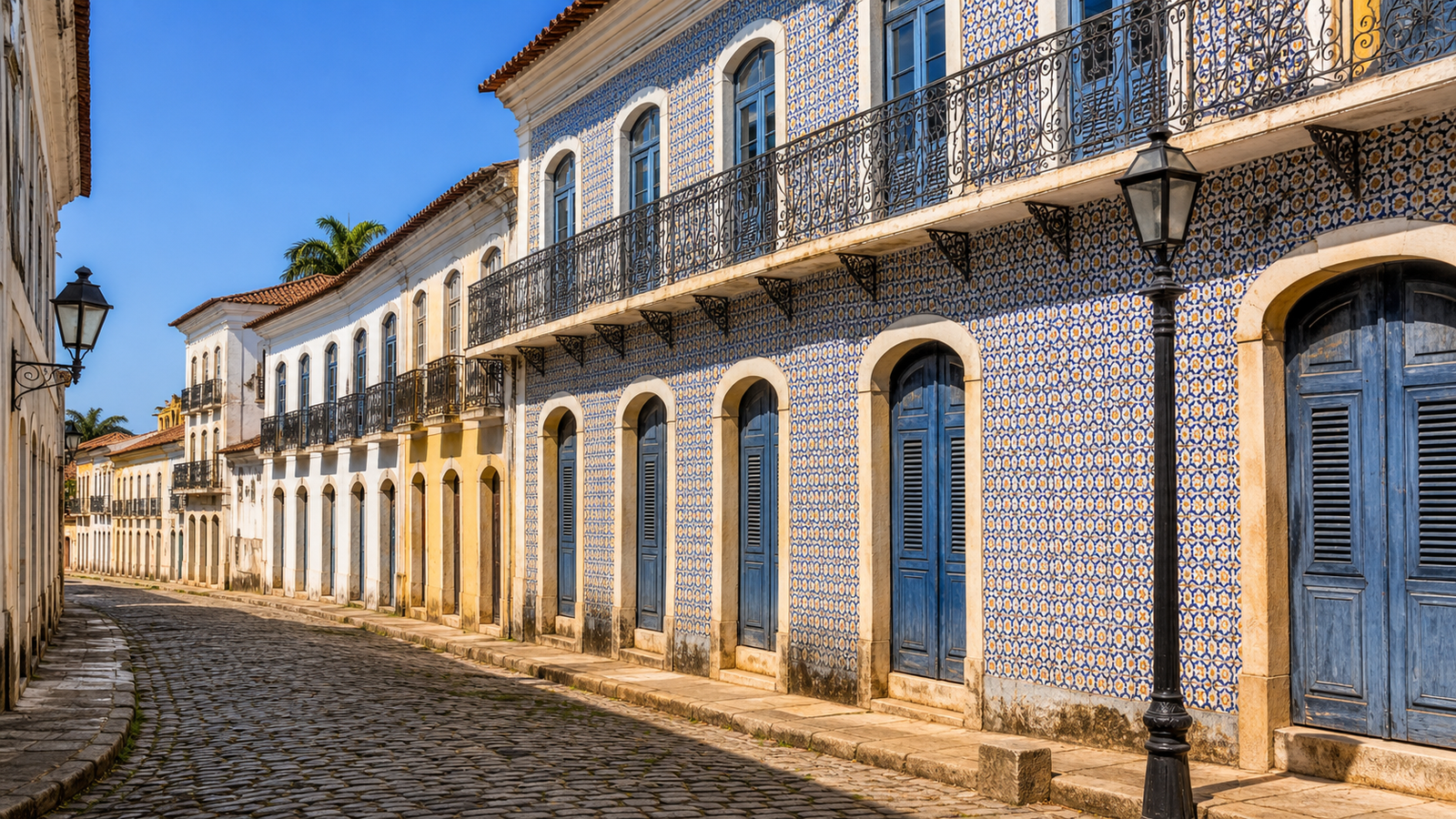
Exploring the historic heart of São Luís is one of the most rewarding and surprisingly budget-friendly cultural experiences in Northeast Brazil. Designated a UNESCO World Heritage site in 1997, the colonial district—known locally as Praia Grande and the surrounding slopes—is home to Latin America’s largest unified collection of Portuguese colonial buildings lined with glazed ceramic tiles (azulejos). Best of all, its grandest civic and religious landmarks cost zero Reais to visit.
Most travelers pass through São Luís purely as a transit hub on their way to the sand dunes of Lençóis Maranhenses. However, dedicating a morning or afternoon to a self-guided walking tour reveals a fascinating blend of French foundation, Portuguese maritime architecture, and vibrant Afro-Brazilian reggae culture. With this realistic 3-to-4-hour walking route, you can experience the top highlights on foot for under R$ 30 (about US$ 6) in total costs while avoiding steep climbs in the tropical heat.
The Half-Day Strategy: Start at the Top to Beat the Heat
São Luís sits just two degrees south of the equator, meaning daytime temperatures regularly exceed 30°C (86°F) with intense tropical humidity. The secret to an enjoyable self-guided walk is managing topography and daylight. The historic district is built across a ridge sloping down toward the river estuary (Baía de São Marcos).
To avoid climbing steep stone ramps under the blazing sun, take an Uber or taxi directly to Praça Pedro II between 8:30 AM and 9:00 AM. Starting at the top of the hill allows you to explore the elevated government palaces first and then walk entirely downhill into the shaded street canyons of Praia Grande. Plan your walk from Monday to Saturday; on Sundays, most local markets and independent shops close, leaving the streets quiet and shuttered.
Stop 1: Palácio dos Leões and Catedral da Sé (Free Admissions)
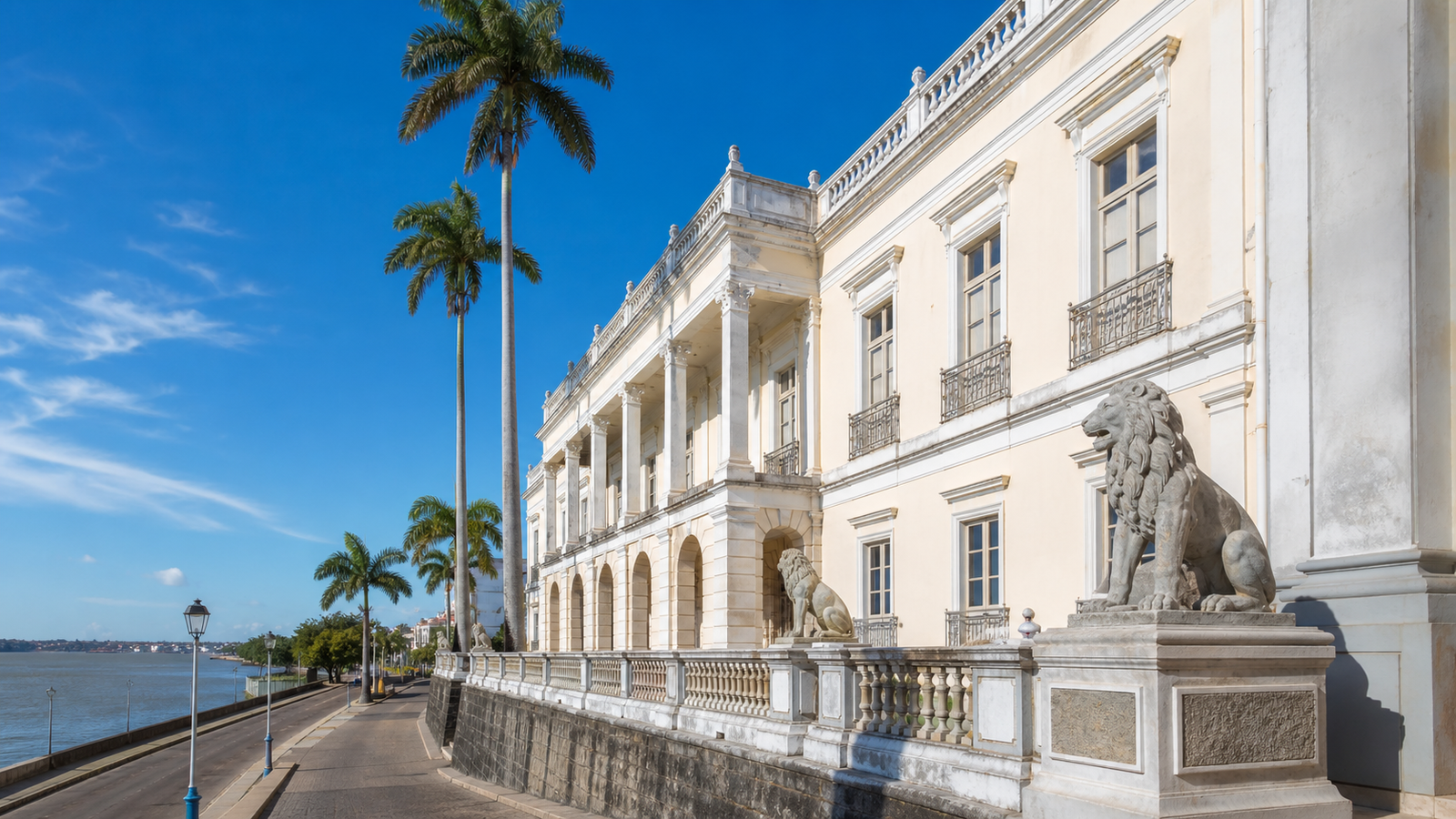
Your walk begins at Praça Pedro II, the historic high ground where a French expedition led by Daniel de La Touche built Fort Saint-Louis in 1612, naming the city after King Louis XIII. Today, the fortress site is occupied by the Palácio dos Leões (Lions Palace), the official seat and residence of the Governor of Maranhão.
The palace offers free guided public tours through its grand state wing, showcasing 18th- and 19th-century French furnishings, crystal chandeliers, porcelain collections, and an impressive gallery of paintings by Arthur Azevedo. From the palace’s open-air terrace, you will enjoy a sweeping panoramic view over the Baía de São Marcos and the Rio Anil estuary.
Right next door on the same plaza stands the Catedral Metropolitana de São Luís (Igreja da Sé). Originally constructed by Jesuit missionaries in 1699 and extensively remodeled in neoclassical style, the cathedral is free to enter and houses a magnificent 17th-century golden baroque wood-carved altarpiece (retábulo) that survived colonial reconstruction.
Stop 2: Rua do Giz and Rua Portugal (The World of Portuguese Tiles)
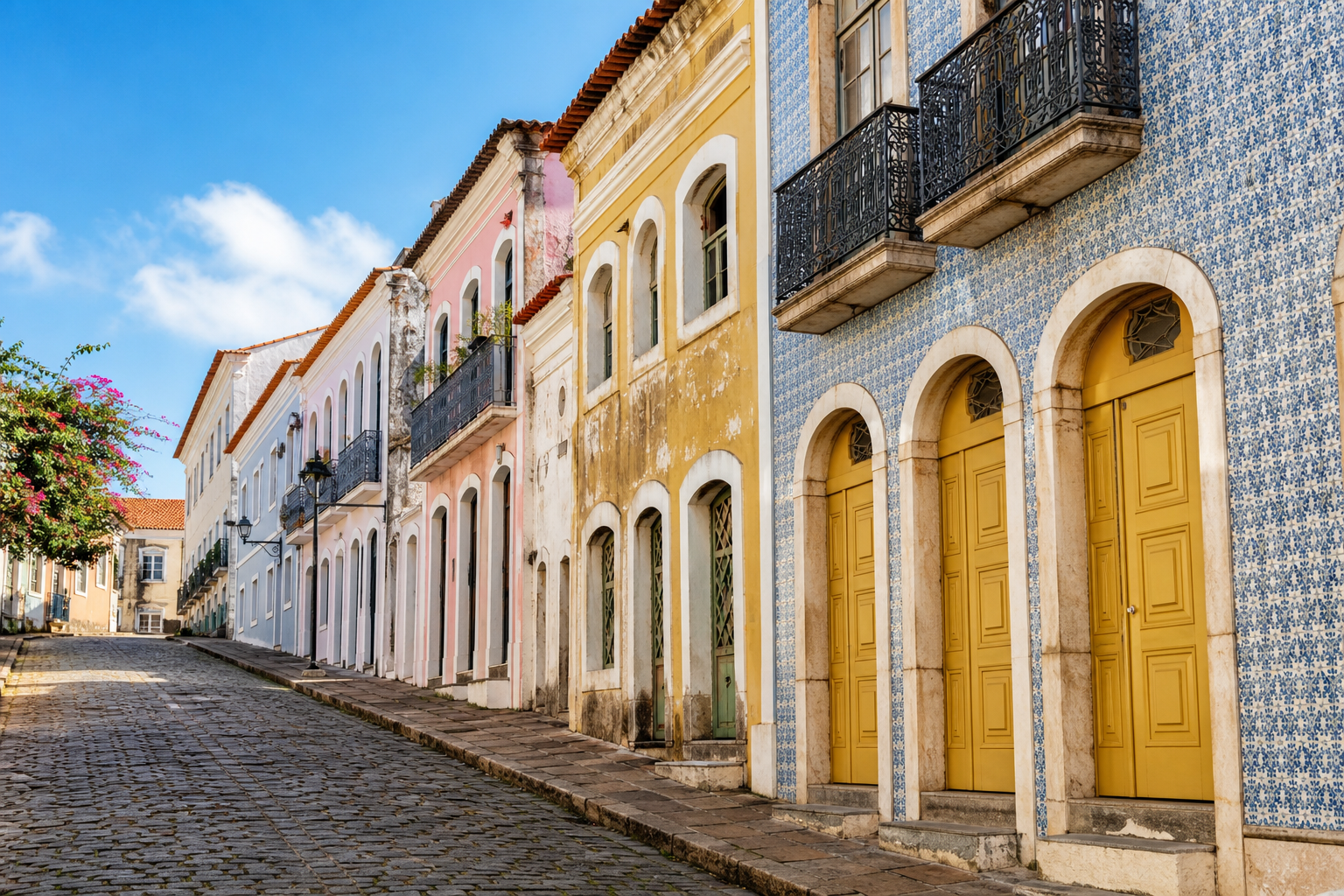
From the edge of Praça Pedro II, follow the wide stone steps downward into Praia Grande. You will arrive immediately at the top of Rua do Giz (Chalk Street), one of the most photographed colonial corridors in Brazil. This gently sloping cobblestone lane is framed by pastel-painted merchant homes, ornate wrought-iron balconies, and decorative ceramic panels.
At the bottom of the slope, turn onto Rua Portugal, the architectural crown jewel of São Luís. Here, entire multi-story solar mansions are sheathed from ground to roofline in glazed Portuguese ceramic tiles. During the 18th- and 19th-century cotton and sugar boom, wealthy merchants imported thousands of these tiles from Lisbon and Porto.
While the tiles served as a visual display of aristocratic wealth, they fulfilled a crucial engineering role: their glazed surfaces reflected the scorching equatorial sun to keep indoor rooms cool, while simultaneously creating a waterproof shield that protected porous clay-and-lime walls from the torrential downpours of the equatorial rainy season.
Stop 3: Casa das Tulhas (Tastings and Market Culture)
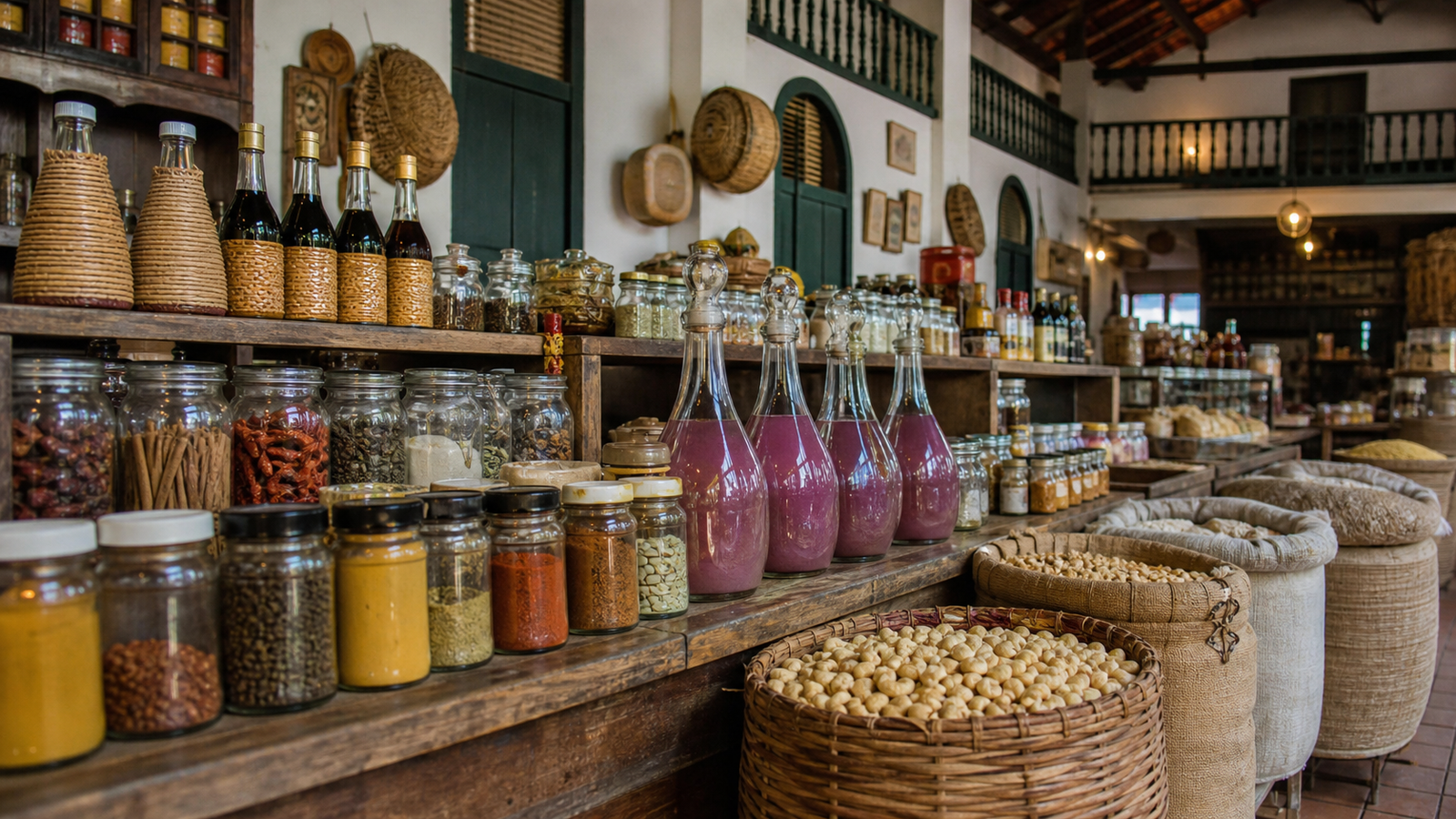
Continue along Rua Portugal until you reach the bustling entrances of Casa das Tulhas (also called Mercado das Tulhas or Feira da Praia Grande). Built in the 19th century as a central grain storage warehouse, this enclosed, square market block is the sensory heartbeat of São Luís’s culinary traditions.
Casa das Tulhas is open Monday to Saturday from 7:00 AM to 8:00 PM with completely free entry. Inside, narrow corridors are lined with wooden stalls brimming with regional flavors. Key local specialties to sample or buy include:
- Guaraná Jesus: Maranhão’s famous neon-pink soda, created by a local pharmacist in the 1920s, featuring a sweet, bubbly flavor of cinnamon and cloves (approx. R$ 5-8 a bottle).
- Tiquira: A traditional, artisanal distilled liquor made from manioc (cassava) root, famously infused with tangerine or local leaves to produce its signature vibrant purple color (approx. R$ 15-25 a flask).
- Castanhas de Caju: Freshly roasted, seasoned cashew nuts sold directly from burlap sacks at a fraction of airport prices.
- Farinha d’Água: Extra-crunchy toasted manioc flour, the indispensable accompaniment to every Maranhense fish stew and moqueca.
- Doce de Espécie: A delicate, traditional coconut pastry shaped like a crown, originating from the neighboring historic town of Alcântara.
Market vendors are welcoming and frequently offer small complimentary samples of cachaça, roasted nuts, or regional sweets before you buy.
Stop 4: Rua da Estrela and the Capital of Reggae
Exiting the market onto Rua da Estrela, you will immerse yourself in São Luís’s modern cultural identity. Known across Brazil as the Capital Brasileira do Reggae, São Luís has maintained a deep, unique affinity for Jamaican roots reggae since the 1970s, played on massive traveling sound systems known as radiolas.
On this street sits the Museu do Reggae do Maranhão (Rua da Estrela, 124), the first museum dedicated to reggae music outside of Jamaica. Inside, exhibits celebrate local vinyl culture, legendary DJ collectors, and Jamaican-Maranhense musical connections (tickets are either free or charge a nominal fee of R$ 5 to R$ 10).
Further along the street and nearby plazas, you will also spot the Casa do Tambor de Crioula, which preserves the vibrant Afro-Brazilian drumming and circular dance traditions honoring Saint Benedict. End your walking loop by resting in the shade of Praça Benedito Leite or grabbing a freshly squeezed tropical juice at a sidewalk café on Praça Nauro Machado.
Essential Practicalities: Safety, Footwear, and Costs
To make the most of your walking tour without unnecessary stress, keep these straightforward practical rules in mind:
- Daylight Safety Boundaries: Walking around the central, populated arteries (Praça Pedro II, Rua do Giz, Rua Portugal, Rua da Estrela, Praça Benedito Leite) during active daylight hours (8:30 AM to 5:30 PM) is safe and routine. Tourism police regularly patrol these historic streets. However, avoid wandering into unlit, deserted side alleys or exploring near the abandoned dock outskirts after sunset.
- Footwear Matters: Wear flat sneakers or rubber-soled walking shoes. The historic colonial cobblestones (calçamento pé-de-moleque) and smooth lioz stone stairways are uneven and become very slippery when wet. Avoid flip-flops or smooth leather dress shoes.
- Timing and Hydration: Carry a bottle of water and wear sun protection. Complete your outdoor sightseeing before midday to avoid the most punishing midday heat.
Here is a quick overview of costs, opening hours, and location details for each stop on the route:
| Landmark / Stop | Location | Entry Cost | Opening Hours | Key Highlight |
|---|---|---|---|---|
| Palácio dos Leões | Praça Pedro II | Free | Mon, Wed, Fri (14:00-17:30) | State halls, art collection & bay views |
| Catedral da Sé | Praça Pedro II | Free | Daily (Daylight hours) | Golden baroque altarpiece from 1699 |
| Rua do Giz & Rua Portugal | Praia Grande | Free | Open 24/7 (Best 8:30-17:30) | Highest density of Portuguese azulejos |
| Casa das Tulhas | Rua da Estrela / Portugal | Free entry (Snacks R$ 5-25) | Mon-Sat (7:00-20:00, Closed Sun) | Tiquira, cashew nuts & Guaraná Jesus |
| Museu do Reggae | Rua da Estrela, 124 | Free to R$ 10 | Tue-Sun (9:00-18:00) | Roots reggae history & sound system culture |
Frequently Asked Questions
Is it safe to walk around the historic center of São Luís on your own?
Yes, walking around the primary tourist corridors—such as Praça Pedro II, Rua Portugal, Rua do Giz, and Rua da Estrela—is safe during daylight hours between 8:30 AM and 5:30 PM when shops, museums, and street vendors are active. Practice standard urban awareness: keep your phone in your pocket between photos and avoid deserted side alleys or walking late at night.
How much time do you need to visit Centro Histórico in São Luís?
A self-guided walking tour takes between 3 and 4 hours. This provides ample time to tour the Palácio dos Leões, admire the tile architecture along Rua do Giz and Rua Portugal, sample local delicacies inside Casa das Tulhas, and visit a cultural museum.
What is the best time of day and week to visit Praia Grande?
The best time to visit is during the morning (8:30 AM to 12:30 PM) from Monday to Saturday. Temperatures are cooler, morning sunlight illuminates the tile facades, and the market stalls are fully open. Sundays are not recommended because most shops and market stalls remain closed.
Why are houses in São Luís covered in ceramic tiles (azulejos)?
Portuguese merchants installed ceramic tiles on exterior building facades during the 18th and 19th centuries for two vital practical reasons: the glazed surfaces reflected strong equatorial sunlight to keep interior rooms cool, while providing a durable waterproof barrier against heavy tropical rains.
By starting at Praça Pedro II and strolling downhill into Praia Grande, you can easily discover the architectural wonder and culinary soul of São Luís in a single morning. If you are continuing your journey across Maranhão, combine this historic walk with our comprehensive 1 to 2-day São Luís itinerary to explore coastal beaches and plan your transit to Lençóis Maranhenses.