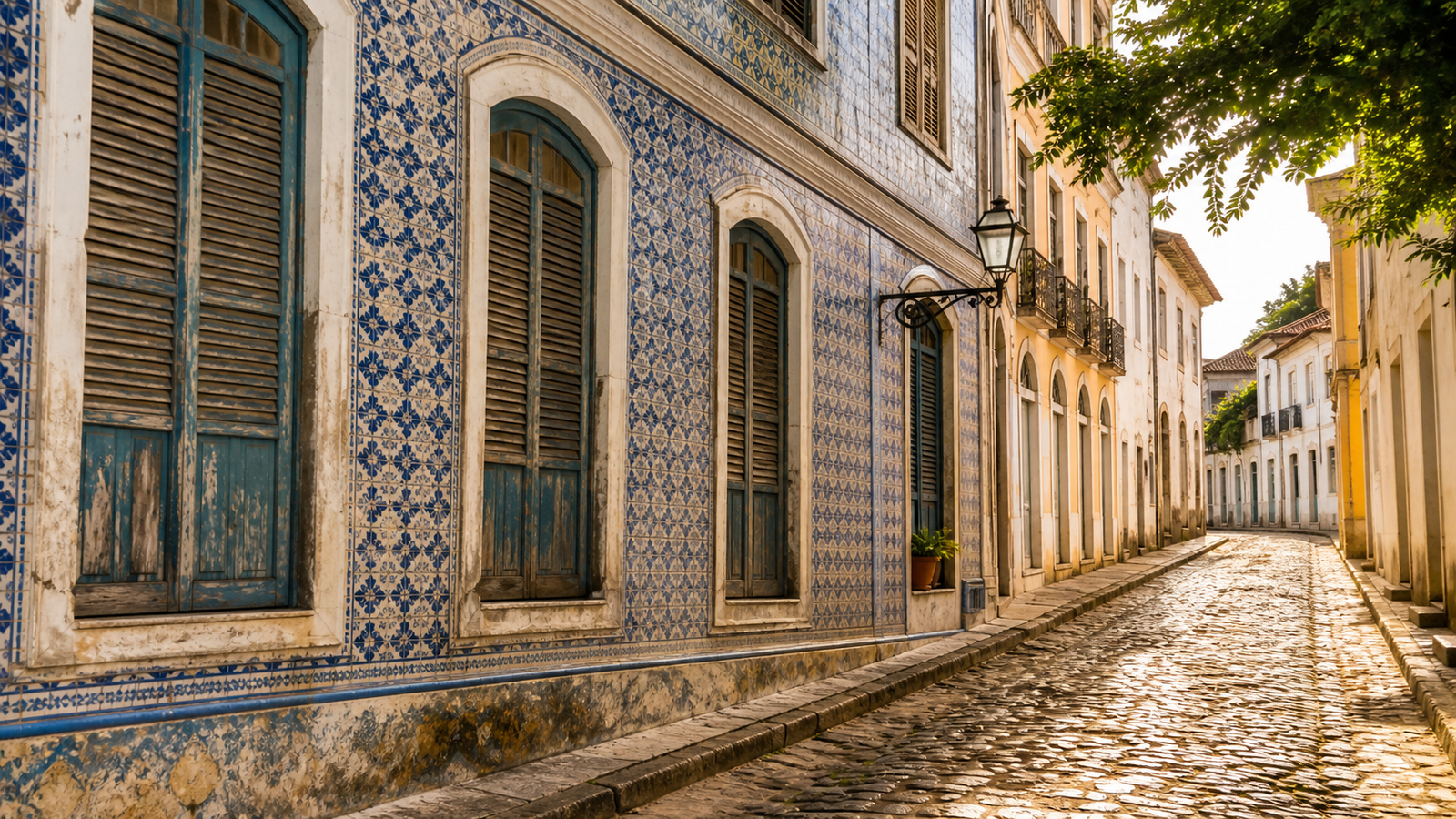
Most travelers visiting the historic center of São Luís head straight to Rua Portugal, snap a photo of its postcard-perfect facades, and assume they have seen the city’s colonial heritage. But the true soul of Maranhão’s capital is tucked away into steep cobblestone alleys (known locally as becos) and aristocratic mansions (casarões) that most tourists walk past without noticing.
Designated a UNESCO World Heritage Site in 1997, São Luís boasts Latin America’s largest collection of 18th- and 19th-century colonial urban architecture, with over 3,500 protected historic buildings. While European cities installed ceramic tiles (azulejos) indoors for churches and palaces, builders in São Luís adapted them for exterior facades. This was an ingenious response to equatorial weather: glazed ceramic surfaces reflected the blistering tropical sun to cool interior living quarters, while the vitrified finish formed an impenetrable barrier against torrential seasonal rains.
If you are exploring the city on foot, here is a curated self-guided walking route covering 5 remarkable hidden architectural gems, complete with their historical backstories and practical daytime visiting tips.
At a Glance: 5 Overlooked Historic Spots in São Luís
This compact walking loop covers five distinct architectural landmarks within comfortable walking distance of the central historic district.
| Historic Spot | Location | Key Architectural Feature | Why Visit |
|---|---|---|---|
| Beco Catarina Mina | Between Praça Pedro II & Praia Grande | 35 carved Portuguese lioz stone steps | Celebrates a famous 19th-century freed African merchant woman |
| Beco da Pacotilha | Between Rua da Paz & Rua do Giz | Steep cobblestone slope with green tile corner | Historic newspaper home with the quirky nickname ‘Quebra-Bunda’ |
| Rua do Giz & Escadaria | Praia Grande (Rua 28 de Julho) | 19th-century stepped slope with pastel sobrados | One of Brazil’s most picturesque stepped colonial streets |
| Palacete Gentil Braga | Rua Grande, 782 | Gothic-arched window frames & Chinese courtyard tiles | 1820s neoclassical mansion housing UFMA’s cultural center |
| Solar dos Belfort | Largo do Carmo, 37 | Three-story polychrome tile facade with rooftop mirante | Built in 1756 by influential Irish settler Lourenço Belfort |
1. Beco Catarina Mina: The Limestone Staircase of an Inspiring Merchant
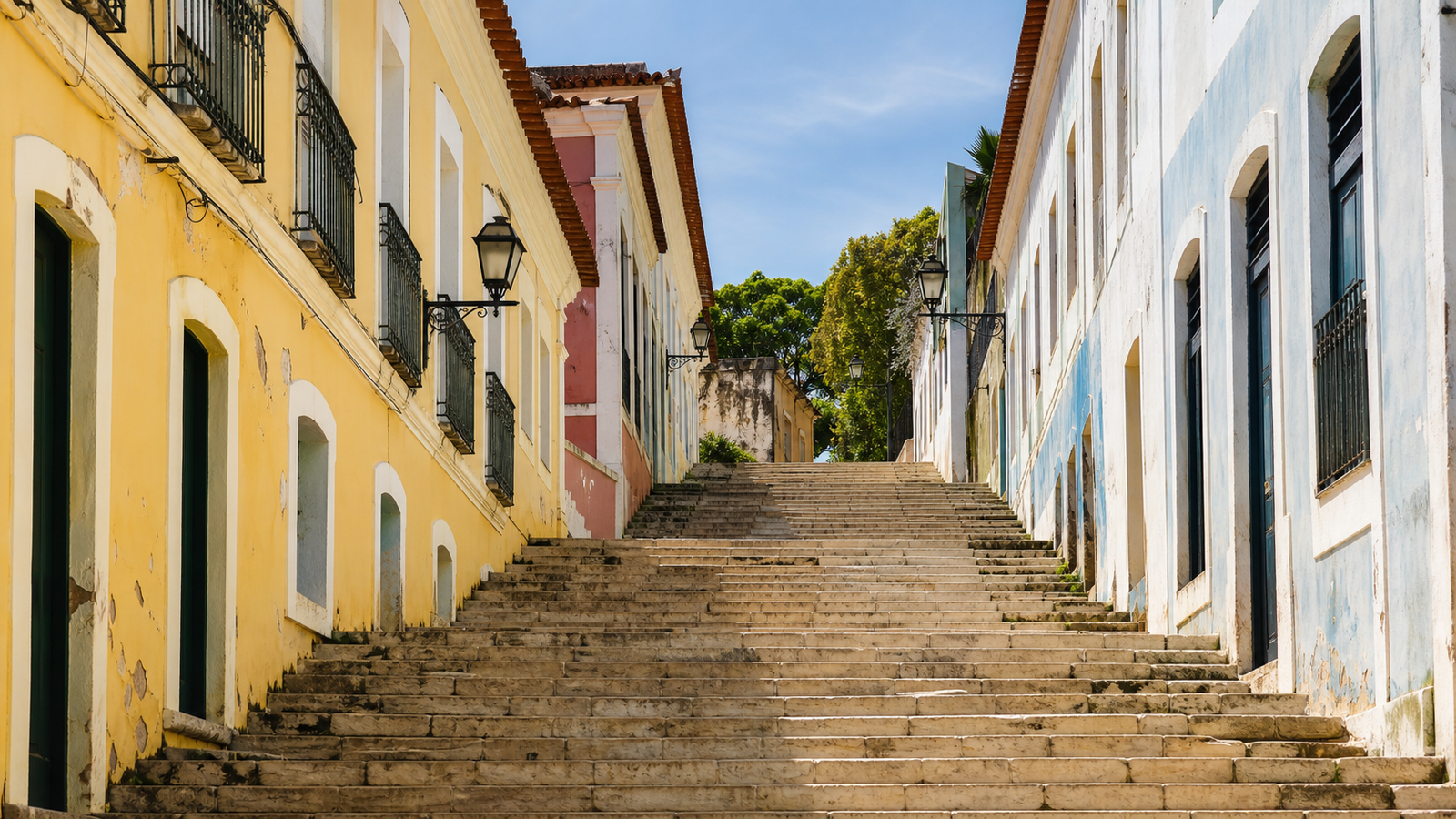
Beco Catarina Mina is a steep pedestrian alleyway featuring approximately 35 wide steps carved from imported Portuguese lioz limestone, linking the upper administrative district at Praça Pedro II with the bustling port streets of Praia Grande below.
The alley’s popular name honors Catarina Rosa Pereira de Jesus, known throughout Maranhão history as Catarina Mina. Born into enslavement, she accumulated financial resources through street trade, purchased her own freedom, and became one of the wealthiest and most influential independent merchants in 19th-century São Luís. Although officially renamed Rua Djalma Dutra in 1930, locals and travelers alike preserve her memory through the staircase’s traditional name.
When walking down the steps, pause halfway to look down toward the ocean breeze: the perspective frames colorful colonial facades on either side, making it one of the most atmospheric photography stops in the historic center.
2. Beco da Pacotilha: The Steep ‘Quebra-Bunda’ Alley
Beco da Pacotilha is a narrow, sharply inclined alleyway (officially named Rua João Victal de Matos) that connects Rua da Paz with the upper curve of Rua do Giz near Largo do Carmo.
The passage earned its primary name from A Pacotilha, an influential 1880 newspaper that operated out of a prominent green-tiled corner mansion at the intersection. However, 19th-century residents gave the alley a much more colorful nickname: Beco do Quebra-Bunda (or Quebra-Costas). The steep slope and smooth, rounded cobblestones became notoriously slick during São Luís’s sudden equatorial downpours, causing hurried pedestrians to slip and slide on their way down.
Today, the alley provides a quick, authentic shortcut between commercial streets. Take your time descending the stones and admire the weathered tilework adorning the surrounding upper-floor balconies.
3. Rua do Giz & Escadaria: Pastel Facades and 19th-Century Engineering
Rua do Giz (officially Rua 28 de Julho) is widely regarded as one of the most beautiful colonial streets in Brazil, famous for its historic stone staircase designed in the 19th century to soften the natural incline between São Luís’s upper and lower terraces.
The name Rua do Giz originates from the whitish clay soil that once characterized the hillside before urban paving. Lining both sides of the stepped street are grand two- and three-story sobrados (colonial townhouses) covered in soft yellow, blue, and white Portuguese tiles. In the 18th and 19th centuries, the ground floors served as bustling merchant storage, while aristocratic families resided on the ventilated upper levels.
The view looking uphill from the base of the staircase captures the rhythm of colonial rooflines, decorative wrought-iron railings, and glistening ceramic tile patterns against the equatorial sky.
4. Palacete Gentil Braga: Gothic Arches and Portuguese Tilecraft
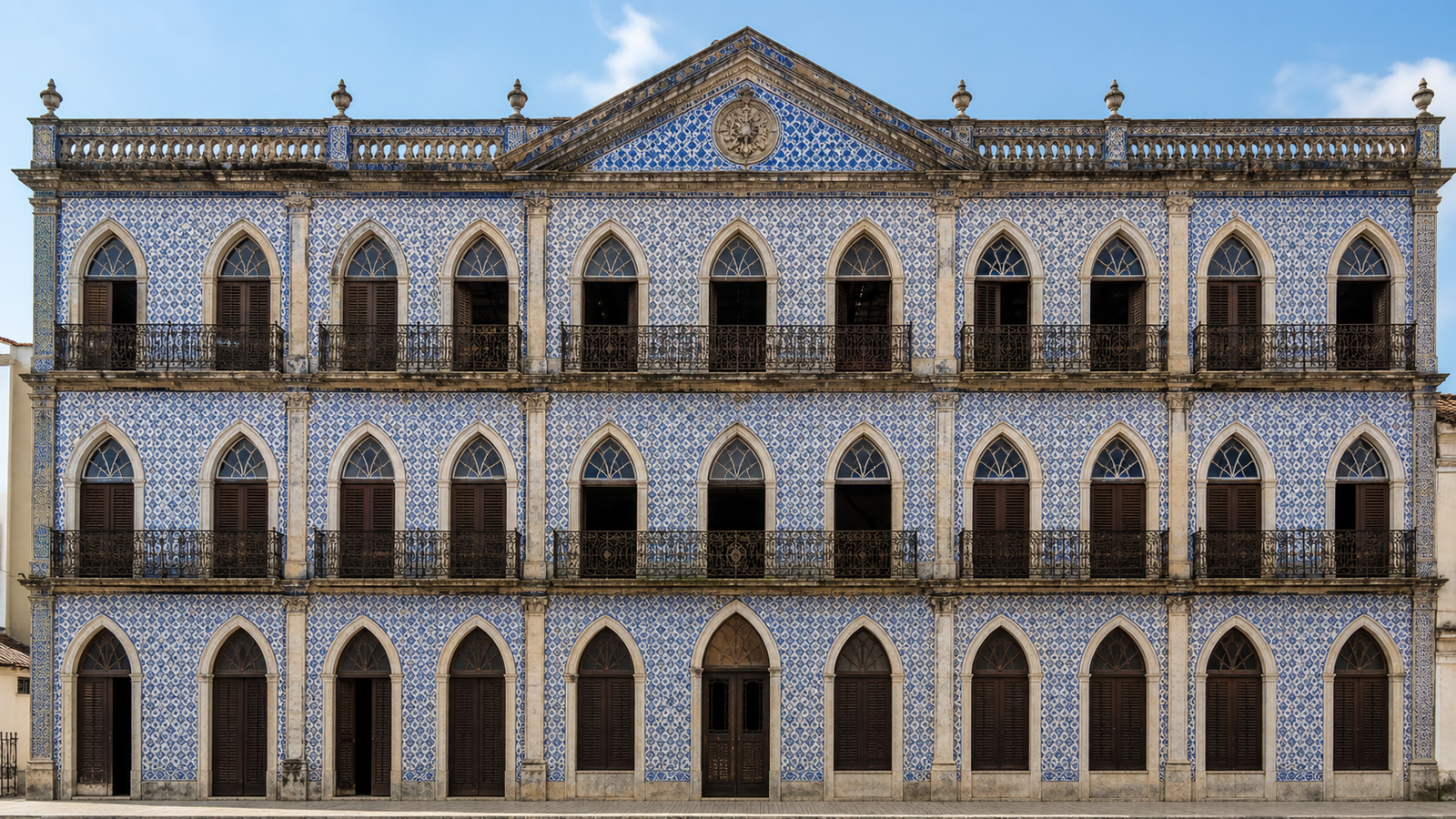
Palacete Gentil Braga is an imposing early 19th-century mansion situated at Rua Grande, nº 782, celebrated for its unique architectural fusion of Portuguese tile cladding, neoclassical symmetry, and rare gothic-arched window openings.
Constructed around 1820, the residence became a cultural epicenter in the 19th century as the home of poet and writer Gentil Homem de Almeida Braga. It hosted literary salons frequented by famous Brazilian figures such as Gonçalves Dias and Sousândrade. In 1976, the building was listed by IPHAN and incorporated into the Federal University of Maranhão (UFMA), which now operates its Department of Cultural Affairs (DAC) on the premises following a major restoration in 2017.
Beyond its striking exterior tiles and pointed window frames, the mansion features an interior courtyard with a veranda lined with polychrome Portuguese tiles depicting Chinese motifs, as well as a traditional rooftop tower mirante used in colonial times to watch ships enter São Marcos Bay.
5. Solar dos Belfort: Irish Heritage on Largo do Carmo
Solar dos Belfort, located at Largo do Carmo nº 37, is one of the oldest surviving aristocratic residences in São Luís, completed in 1756 by Lourenço (Lancelot) Belfort, an Irish immigrant who settled in Maranhão and became a prominent landholder.
The stately three-story building features elegant stone cornices and polychrome Portuguese ceramic tiles. Over the centuries, it served as the official town residence of the Barão de Coroatá (Manoel Gomes da Silva Belfort), hosted historic commercial offices, and housed the printing presses of the Pacotilha newspaper. The mansion underwent comprehensive structural recovery by IPHAN, preserving its historic grandeur on one of the city’s most important colonial squares.
Standing on Largo do Carmo, you can admire how the Belfort mansion anchors the plaza alongside the historic Carmo Church and the Convent of the Capuchins.
Practical Tips: Timing, Safety, and Footwear for Side Alleys
Exploring the quieter historic streets of São Luís on foot is straightforward and rewarding when you keep a few sensible guidelines in mind:
- Best walking window: Explore between 9:00 AM and 4:00 PM during daylight hours, when local stores, craft centers, and university cultural buildings are open and pedestrians are active on the streets.
- Wear non-slip footwear: Centuried-old Portuguese lioz stone steps and colonial cobblestones are worn smooth and can become very slippery when wet. Wear flat rubber-soled sneakers or sturdy walking sandals.
- Stay aware on side alleys: Stick to active routes during the day and avoid wandering into deserted side alleys on quiet Sunday afternoons or after dark when commercial activity shuts down.
- Sun and hydration: São Luís is hot and humid year-round. Carry a water bottle and wear sunscreen as you climb the stepped alleys.
Frequently Asked Questions
Why are there so many ceramic tiles on building exteriors in São Luís?
In São Luís, glazed ceramic tiles (azulejos) were installed on building exteriors in the 18th and 19th centuries as practical climate insulation: the light surfaces reflected intense tropical sunlight to cool interior rooms, while the waterproof glaze protected lime-and-stone masonry from heavy equatorial rain.
Who was Catarina Mina and why is the alley named after her?
Catarina Rosa Pereira de Jesus, known as Catarina Mina, was an enslaved African woman who achieved her freedom through commerce and became one of 19th-century São Luís’s wealthiest and most respected independent merchants. The iconic 35-step limestone staircase honors her historical legacy.
Is it safe to explore the historic side streets of São Luís on foot?
Yes, during active daylight hours between 9:00 AM and 4:00 PM when shops, cafes, and cultural centers are bustling. Travelers should wear non-slip shoes for steep cobblestones, keep valuables discreet, and avoid deserted side alleys on quiet Sunday afternoons or after dark.
How long does this 5-stop hidden architectural walking route take?
The entire 5-stop walking loop covers a compact area of the Centro Histórico and takes between 1.5 to 2.5 hours at a relaxed pace, including ample time for photographs and visiting open cultural spaces.
Making the Most of Your São Luís Walk
Exploring São Luís beyond its standard postcard avenues rewards you with an intimate look at how colonial builders, freed African traders, and European immigrants shaped one of South America’s most distinctive urban landscapes. By following this 5-stop route during daylight, you will experience the living history, climate ingenuity, and unforgettable architectural texture of Maranhão’s UNESCO-listed heart.