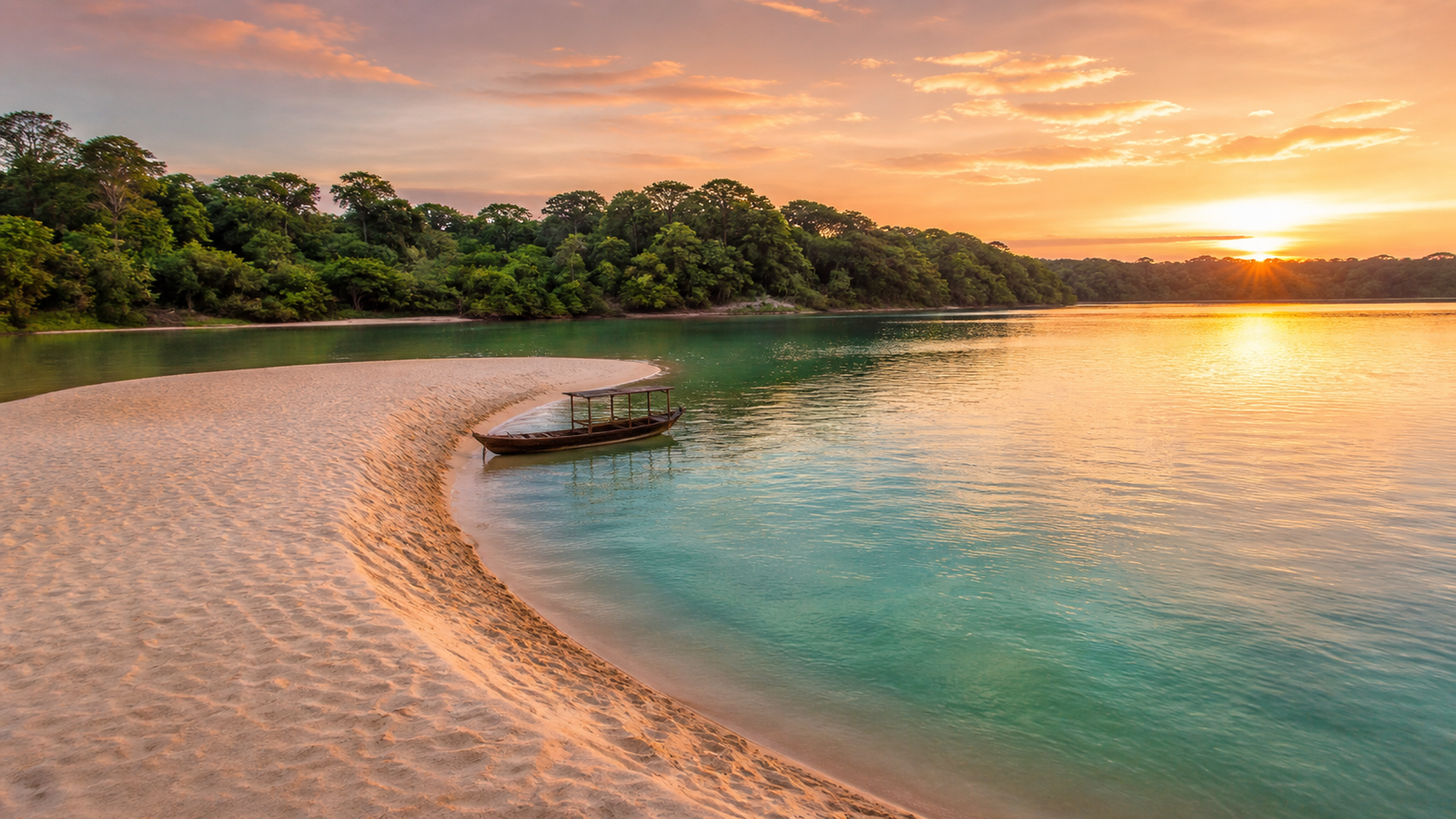
While Alter do Chão’s central Ilha do Amor receives the lion’s share of postcard fame, the true magic of this Amazonian haven lies 30 to 90 minutes away by boat along the Tapajós and Arapiuns rivers. Venturing beyond the main village waterfront unlocks expansive deserted sandspits, centuries-old rainforest giants in protected conservation reserves, and welcoming ribeirinho communities that practice sustainable forestry, turtle conservation, and traditional palm weaving.
To experience these off-the-beaten-path destinations without feeling rushed or overwhelmed, travelers should organize their excursions around three distinct navigable river corridors. Whether you are seeking peaceful sunset swims alongside wild river dolphins, trekking beneath towering Samaúma trees, or buying naturally dyed straw baskets directly from master artisans, this practical guide breaks down the six finest outer destinations, complete with verified boat logistics, realistic charter prices, and cultural etiquette.
The 3 River Corridors: How to Navigate Beyond Alter do Chão
The geography surrounding Alter do Chão is organized into three distinct navigable river corridors: the eastern and southern shores of the Rio Tapajós, the protected rainforest of FLONA Tapajós to the south, and the serene, blackwater Rio Arapiuns to the west.
Understanding regional seasonality is vital for any river trip in Pará. During the dry season (known locally as the vazante, running from August to December), water levels drop significantly, uncovering hundreds of miles of dazzling white freshwater sandbars and making boat navigation to remote beaches effortless. In contrast, during the flood season (the cheia, from January to July), river levels rise by up to seven meters, submerging the beaches and transforming the landscape into an enchanting network of flooded forests (igapós) best explored by motorized canoe.
Each river corridor offers a radically different experience, making it wise to dedicate at least one full day to each major route rather than attempting an impossible multi-river rush.
Corridor 1: The Best Quiet River Beaches Along the Tapajós
The eastern and southern banks of the Rio Tapajós feature some of the clearest, most expansive freshwater beaches in South America, ranging from wild, windswept sandspits to relaxed shores dotted with rustic thatched-roof cabanas.
Ponta do Cururu: Located just a 15-minute boat ride north of the village, Ponta do Cururu is a narrow, undeveloped sandspit that stretches hundreds of meters into the deep blue-green Tapajós. There are no beach kiosks, loud sound systems, or permanent structures here—only fine sand and tranquil water. It is renowned as the premier sunset viewpoint in the region, and as the afternoon cools, both pink river dolphins (boto-cor-de-rosa) and gray dolphins (tucuxi) frequently surface just meters from the shore to hunt in the shallows.
Ponta de Pedras: Approximately 35 to 45 minutes northeast by boat (or reachable via a 23-kilometer dirt road from Santarém), Ponta de Pedras stands out for its unique dark, sculpted rock formations and freshwater caves that contrast sharply with the soft sand. Rustic open-air beach stalls here specialize in freshly grilled regional river fish, particularly charutinho, served with toasted manioc flour and lime.
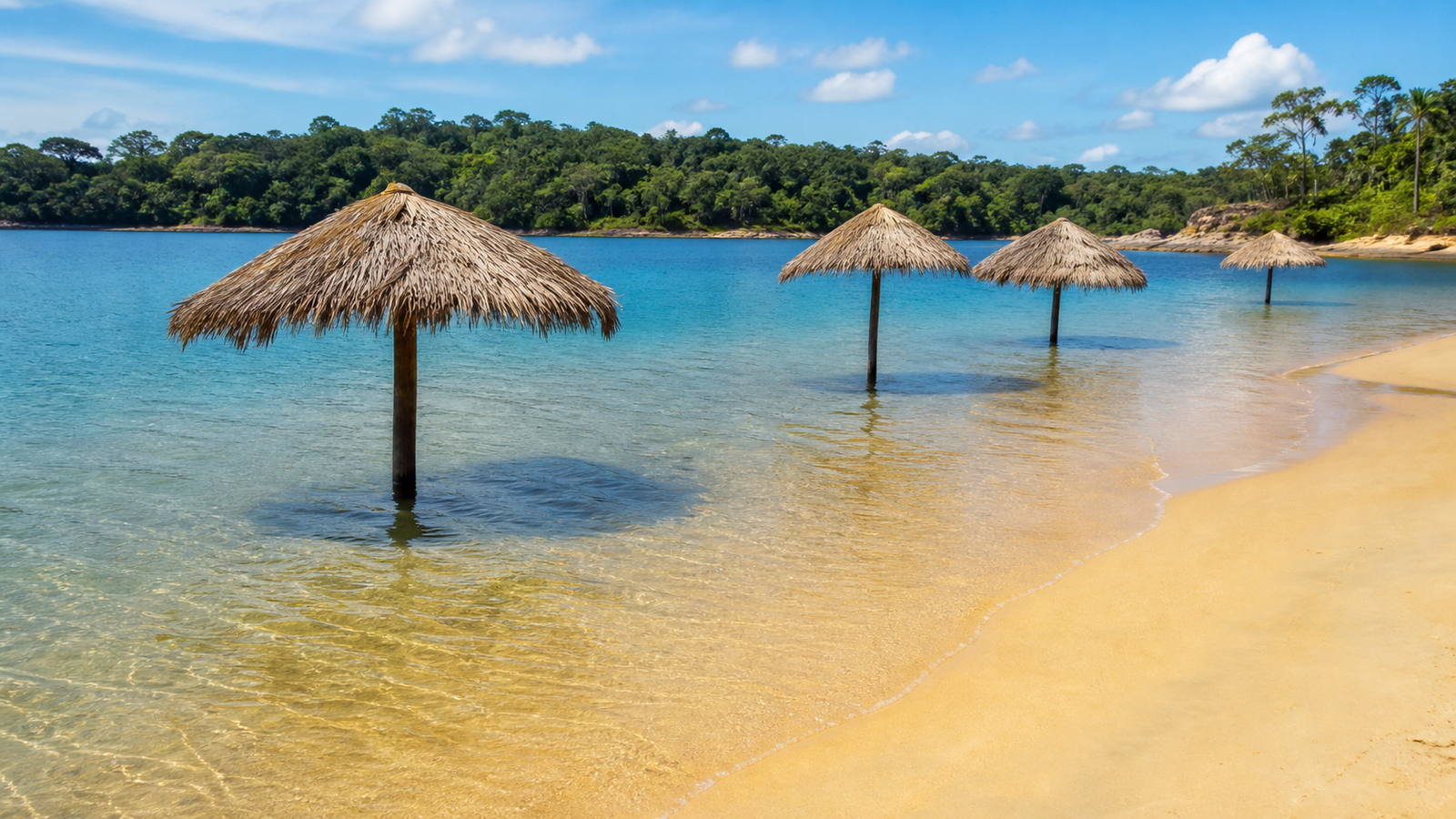
Praia do Pindobal: Situated roughly 12 kilometers south of Alter do Chão in the neighboring municipality of Belterra, Pindobal is famous for its long row of thatched straw umbrellas standing directly in the shallow, bath-warm water. It offers an ideal balance of gentle swimming, cold drinks, and peaceful afternoon lounging away from village crowds, accessible either by boat or by taxi along a dirt track.
Praia do Carapanari: Positioned closer to Santarém along the Tapajós, this quiet inlet offers powdery sand and calm waters, best known as the setting for celebrated Amazonian dining at Casa do Saulo, where travelers can enjoy fresh pirarucu fish while gazing across the river horizon.
Corridor 2: FLONA Tapajós & Jamaraquá Rainforest Expeditions
The Floresta Nacional do Tapajós (FLONA Tapajós) is a protected federal conservation unit encompassing over 527,000 hectares of primary Amazonian rainforest, where traditional ribeirinho communities partner with environmental agencies to lead world-class community ecotourism.
The most popular gateway for day visitors is the traditional riverside community of Jamaraquá, located approximately 60 to 75 minutes south of Alter do Chão by fast motorboat. Visiting FLONA requires registering with ICMBio and hiking exclusively in the company of an accredited local community guide.
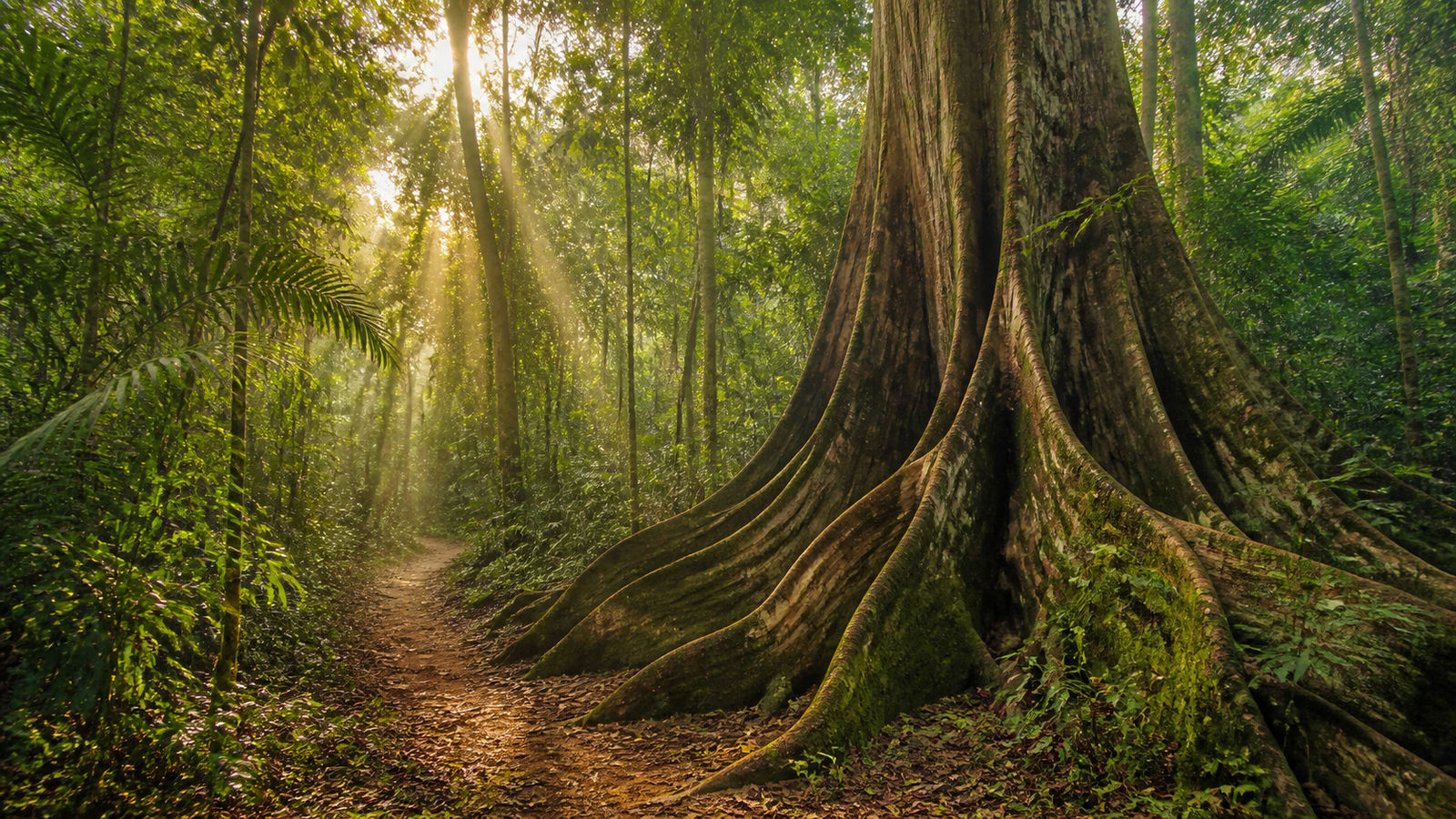
The highlight of Jamaraquá is the primary forest trail leading to the monumental Vovó Sumaúma (Grandmother Samaúma), an ancient rainforest giant estimated to be several centuries old. Its sprawling buttress roots (sapopembas) rise several stories high and were historically used by indigenous and ribeirinho hunters as acoustic drums to signal across long distances in the dense jungle.
Beyond trekking, Jamaraquá offers visits to sustainable craft workshops where community members extract natural tree latex to produce eco-friendly rubber crafts and bio-jewelry. Afterward, visitors can enjoy a hearty home-cooked lunch prepared with local river fish and seasonal produce, followed by a refreshing dip in the crystalline forest streams (igarapés).
Corridor 3: Rio Arapiuns & Sustainable Craft Communities

Crossing the wide expanse of the Tapajós brings you to the Rio Arapiuns, an extraordinary blackwater tributary characterized by soft, tea-colored waters, minimal mosquitoes, and blindingly white sandspits like Ponta do Toronó and Ponta Grande.
The Arapiuns river basin is celebrated throughout Brazil for its community-based tourism initiatives, where ribeirinho and indigenous villages welcome travelers with warm hospitality and profound environmental stewardship.
Comunidade de Coroca: A pioneering sustainable village located about 70 to 80 minutes by boat from Alter do Chão. Coroca manages an inspiring community-run conservation project dedicated to protecting the Amazonian freshwater turtle (tracajá). Visitors can learn about the turtle breeding and release cycles, tour native stingless bee apiaries (meliponários) that produce prized medicinal honey from Melipona bees, and walk along tranquil nature paths circling a freshwater lagoon.
Comunidade de Urucureá: Situated further up the Arapiuns (roughly 75 to 90 minutes by boat), Urucureá is internationally acclaimed for its master women artisans. Here, local weavers harvest fiber from the native tucumã palm and dye it using natural forest roots, leaves, and seeds to craft intricate, high-end decorative baskets and table mats. Purchasing these pieces directly from the community artisan center provides vital, direct income to local families while preserving ancestral knowledge.
At a Glance: Comparing Alter do Chão’s Outer Escapes
To help you choose the ideal destinations for your travel style and schedule, the table below compares travel times, primary attractions, and logistical highlights across the six top spots.
| Destination | River Corridor | Primary Highlight | Boat Time from Village | Best Suited For |
|---|---|---|---|---|
| Ponta do Cururu | Rio Tapajós (North) | Wild sunset sandbar & dolphin watching | 15–20 min | Sunset lovers, photography |
| Ponta de Pedras | Rio Tapajós (East) | Rock formations & fresh charutinho fish | 35–45 min (or road) | Foodies, families |
| Praia do Pindobal | Rio Tapajós (Belterra) | Thatched straw cabanas & calm swimming | 20–30 min (or road) | Relaxed beach days |
| Jamaraquá (FLONA) | FLONA Tapajós (South) | Giant Samaúma tree trek & latex crafts | 60–75 min | Rainforest hikers, eco-tourists |
| Coroca | Rio Arapiuns (West) | Turtle conservation & stingless bee honey | 60–80 min | Wildlife fans, families |
| Urucureá | Rio Arapiuns (West) | Master tucumã palm basket weaving | 75–90 min | Artisan craft lovers, culture |
Boat Charters, Prices, and Practical Planning Tips
Hiring a private boat charter is the most flexible and rewarding way to explore the river corridors surrounding Alter do Chão.
How to Book: Walk down to the Centro de Atendimento ao Turista (CAT) on the Alter do Chão waterfront. Registered boatmen operating through ATUFA (the local boatmen’s association) maintain an official price board listing standard circuit itineraries. Fast aluminum motorboats with sun canopies (voadeiras) typically accommodate between 4 and 8 passengers.
Typical Costs: Daily charter rates for an entire boat generally range from R$ 500 to R$ 900 depending on the distance, fuel consumption, and number of stops. Because prices are per vessel rather than per person, traveling with a small group of friends or joining fellow travelers significantly reduces individual costs.
Essential Cash Reminder: Always carry sufficient physical Brazilian Reais (cash). Remote ribeirinho communities on the Arapiuns and Tapajós rarely have reliable cellular signal for credit card terminals. Cash is required for community admission fees (typically R$ 20 to R$ 40 per person), local guide services, home-cooked communal lunches (R$ 40 to R$ 70 per plate), and artisan crafts.
What to Pack: Bring high-SPF biodegradable sunscreen, long-sleeved UV-protective swim shirts, a wide-brimmed hat, waterproof dry bags for electronics, plenty of drinking water, and sturdy closed-toe shoes or trail sandals for jungle hikes in FLONA Tapajós.
Frequently Asked Questions About Visiting Beyond Alter do Chão
Here are direct answers to the most common questions travelers ask when planning river excursions around Alter do Chão.
When is the best time of year to visit the river beaches and communities around Alter do Chão?
The best period for beach lovers is the dry season (vazante) from August to December, when river levels drop and expose expansive white sandspits. From January to July, the flood season (cheia) submerges the beaches, offering scenic opportunities for canoe excursions through flooded rainforests (igapós).
How do you hire a boat to visit outer beaches and communities in Alter do Chão?
You can hire licensed voadeiras directly at the Centro de Atendimento ao Turista (CAT) along Alter do Chão’s waterfront. Official price boards list rates for standard day routes, and charters can be shared among groups of 4 to 8 passengers.
Do I need cash when visiting ribeirinho communities on the Rio Tapajós and Rio Arapiuns?
Yes, always carry physical Brazilian Reais (cash). Remote communities like Jamaraquá, Coroca, and Urucureá generally do not have reliable cellular coverage for card machines. Cash is required for community admission, local lunches, guide fees, and handmade crafts.
Are the river waters safe for swimming around Alter do Chão?
Yes, the freshwater of the Rio Tapajós and Rio Arapiuns is warm, calm, and free of ocean currents or marine stingers. Swimmers should simply take standard freshwater precautions, such as shuffling their feet in shallow sandy areas to avoid freshwater stingrays and staying near designated beach zones.
Practical Summary & Responsible Travel Takeaway
Venturing beyond Alter do Chão’s central village beach transforms a simple holiday into a profound immersion in the living Amazon. By grouping your journeys into distinct river corridors—relaxing along the wild sandspits of the Tapajós, trekking among the ancient trees of FLONA Tapajós, and supporting the artisan women and conservationists of the Rio Arapiuns—you will experience the true depth and tranquility of Pará.
Head to the waterfront CAT kiosk early in the morning, speak directly with local boat captains, and embark on an unforgettable river journey that directly supports the communities preserving this extraordinary freshwater paradise.