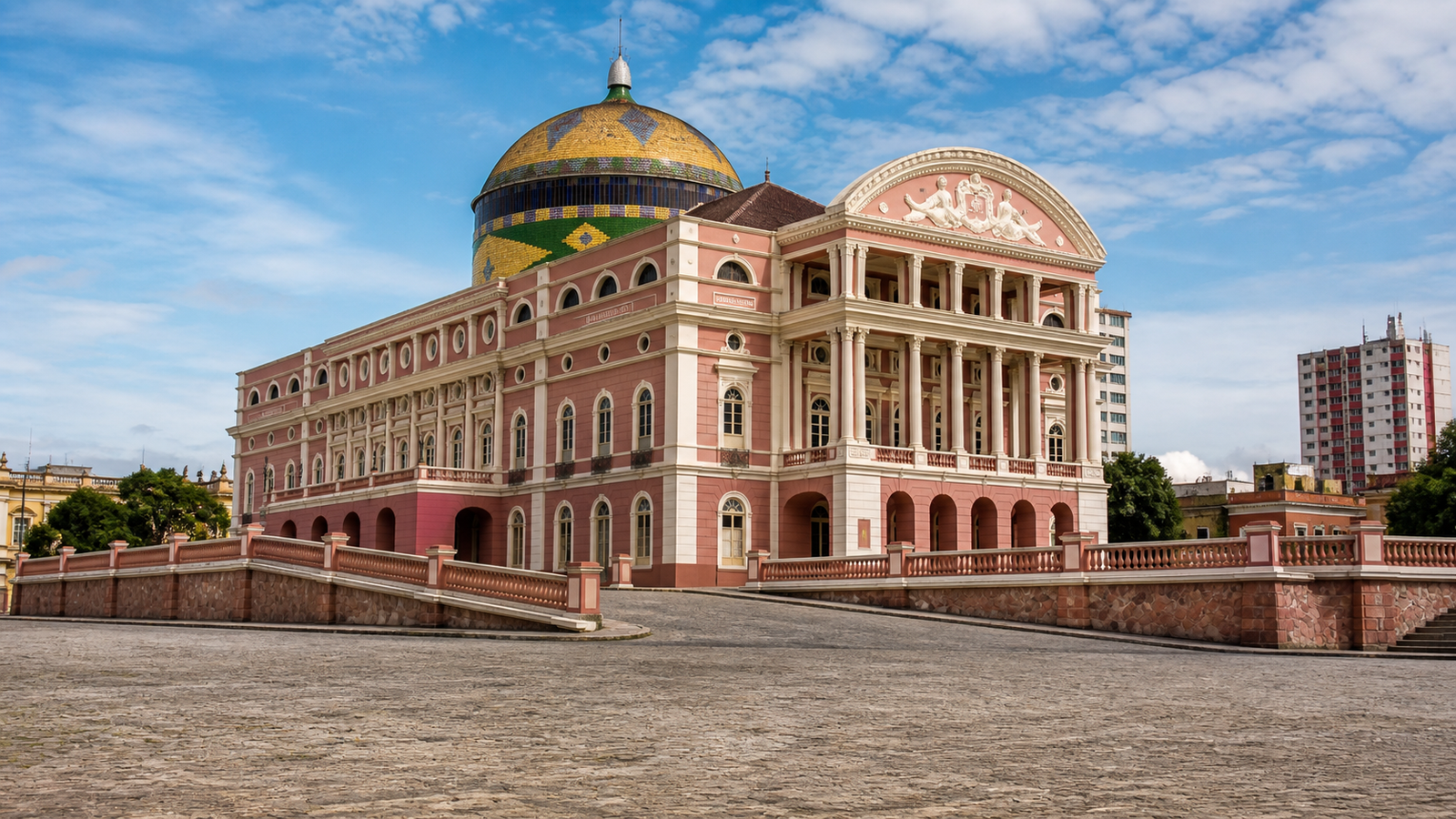
Rising out of the vibrant heart of the Brazilian Amazon, the Teatro Amazonas is one of South America’s most striking architectural marvels. With its glowing pink neoclassical facade and an ornate dome crowned by 36,000 enameled ceramic tiles imported from France, this 19th-century opera house looks like it was plucked straight from Belle Époque Europe and dropped right into the rainforest.
For international travelers landing in Manaus—often en route to a jungle lodge or river cruise—the theater is the city’s undisputed crown jewel. Yet many first-time visitors pay steep markups of R$ 150 to R$ 250 for generic tour agency transfers that simply drop them at the front doors. In reality, visiting Teatro Amazonas independently is remarkably easy, completely safe, and costs just R$ 20 (about $4 USD) for an official daytime guided tour. Better yet, catching a world-class symphony performance in the evening often costs less than a cup of specialty coffee.
Whether you have a single afternoon or a couple of days in town, here is the complete, practical guide to visiting Teatro Amazonas without wasting your time or money.
Daytime Tour vs. Evening Show: Why You Should Experience Both
The single biggest dilemma travelers face when visiting Manaus is choosing between taking a daytime historical tour or attending an evening performance. The secret that experienced travelers know is that you should ideally do both—because they offer two entirely different, complementary perspectives of the theater.
A daytime guided tour is all about history, architecture, and visual details. During the day, expert guides walk you through the empty, sunlit halls, pointing out imported Italian marble, hand-painted ceiling frescoes, and period dressing rooms. You can stroll right up to the stage, explore the museum exhibits, and take photos without disturbing a live audience.
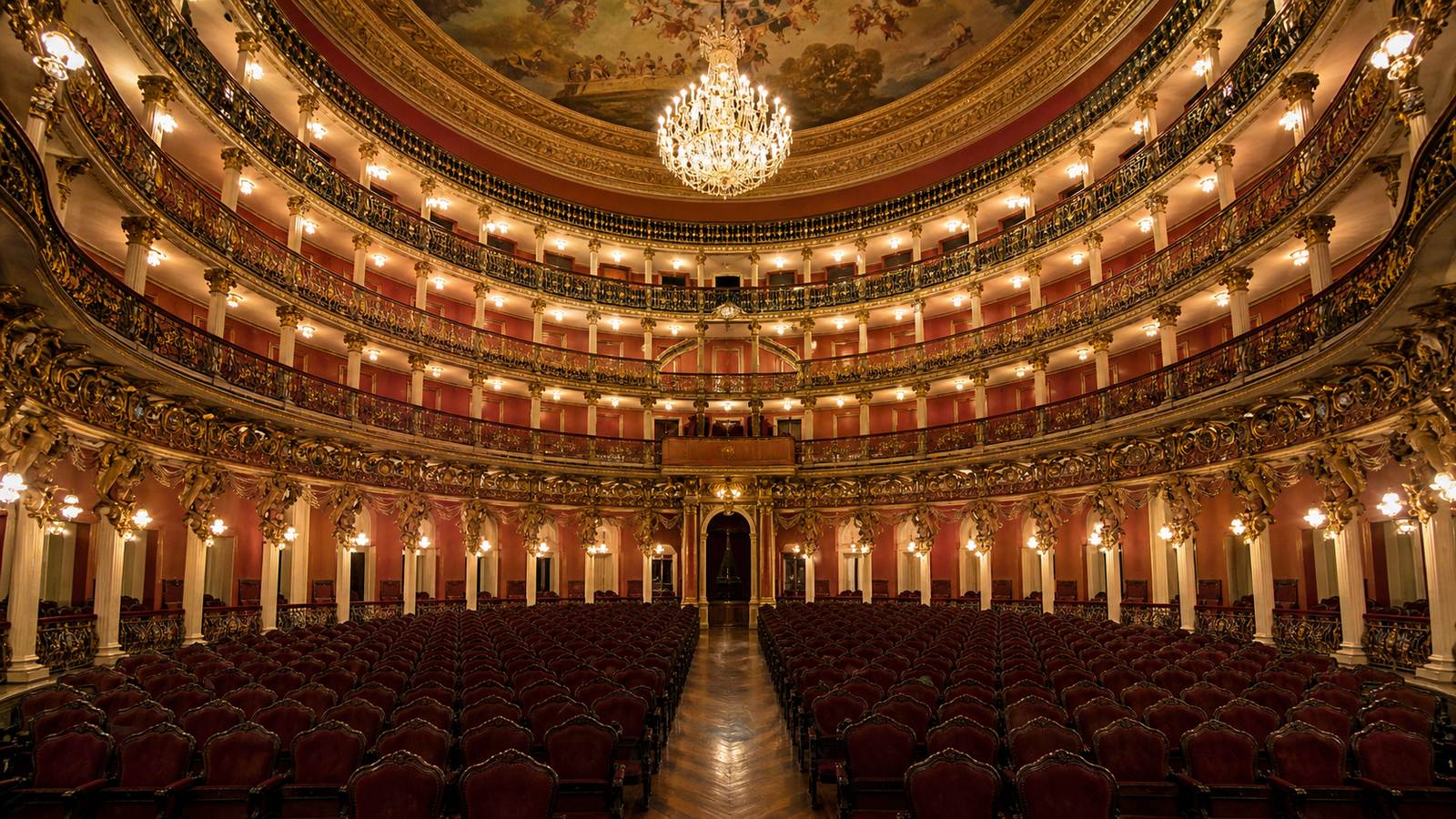
An evening performance, on the other hand, brings the building to life. The massive Murano crystal chandeliers are illuminated, the tiered private balconies fill with music enthusiasts, and the hall’s legendary natural acoustics resonate with live orchestra strings or operatic vocals. Because daytime admission is so affordable and many evening concerts are free or low-cost, combining a 45-minute daytime tour with an evening concert costs under R$ 50 ($10 USD) in total.
Daytime Guided Tours: Hours, Prices, and English Guides
Taking the official guided tour is straightforward and requires zero advance tour-agency middlemen. You can simply walk up to the box office on the day you wish to visit.
Operating Schedule:
- Tuesday through Saturday: 9:00 AM to 5:00 PM
- Sundays and Public Holidays: 9:00 AM to 1:00 PM
- Mondays: Strictly closed for maintenance and technical rehearsals.
Admission Prices:
- Full Price (Inteira): R$ 20.00 (approximately $3.50 to $4.00 USD)
- Half Price (Meia-entrada): R$ 10.00 (available for students, teachers, seniors 60+, and youth with valid ID)
- Free Admission: Children aged 10 and under, people with disabilities (PCD), and Amazonas state residents with photo ID.
Tickets can be purchased directly at the theater’s physical box office (bilheteria) using Brazilian cash, debit cards, or major international credit cards. Tours depart every 30 to 45 minutes and last roughly 45 to 50 minutes. Guided tours are conducted in Portuguese, English, and Spanish. When purchasing your ticket, simply inform the attendant that you would like an English-language tour, and they will assign you to the next available English-speaking guide group.
How to Catch a Live Performance or Concert on a Budget
Attending a live concert in the historic auditorium is one of the most memorable cultural experiences in Brazil. Teatro Amazonas is the resident home of the renowned Amazonas Filarmônica (Amazonas Philharmonic Orchestra), the Amazonas Chamber Orchestra, and the annual Amazonas Opera Festival (Festival Amazonas de Ópera).
To check what is playing during your visit:
- Visit the official cultural agenda on the Amazonas State Secretariat of Culture website (cultura.am.gov.br) or check their official social channels.
- Purchase tickets online directly via the state’s authorized ticketing platform, shopingressos.com.br, or buy them in person at the theater box office.
- Look for weekly symphony dates—regular season performances by the Amazonas Filarmônica frequently offer free admission on a first-come, first-served basis, or tickets priced between R$ 10 and R$ 50 depending on the seat tier.
Dress Code & Etiquette: Many foreign travelers assume attending an opera house in South America requires black-tie formal wear. In reality, the dress code for regular concerts and symphonies in Manaus is relaxed smart casual. A clean polo or collared shirt, neat jeans, and closed shoes or a casual dress are completely standard. However, sleeveless gym shirts, athletic tank tops, beach shorts, and rubber flip-flops are not permitted inside the main auditorium during evening performances.
Rubber Boom Extravagance: What to Look for Inside and Out
To truly appreciate Teatro Amazonas, it helps to understand the sheer wealth that created it. Between 1879 and 1912, the Amazon Rubber Boom turned Manaus into one of the wealthiest cities in the world. Rubber barons accumulated immense fortunes and sought to transform their remote jungle capital into the “Paris of the Tropics.” Construction began in 1884, and the theater was inaugurated with great fanfare on December 31, 1896.
Almost every material used in the theater’s construction was shipped across the Atlantic Ocean from Europe:
- The Iconic Dome: Crowned with approximately 36,000 glazed, enameled ceramic tiles imported from Alsace, France (manufactured by Maison Céramique de Choisy-le-Roi). The tiles are laid out in a swirling mosaic forming the green, yellow, blue, and red colors of the Brazilian flag.
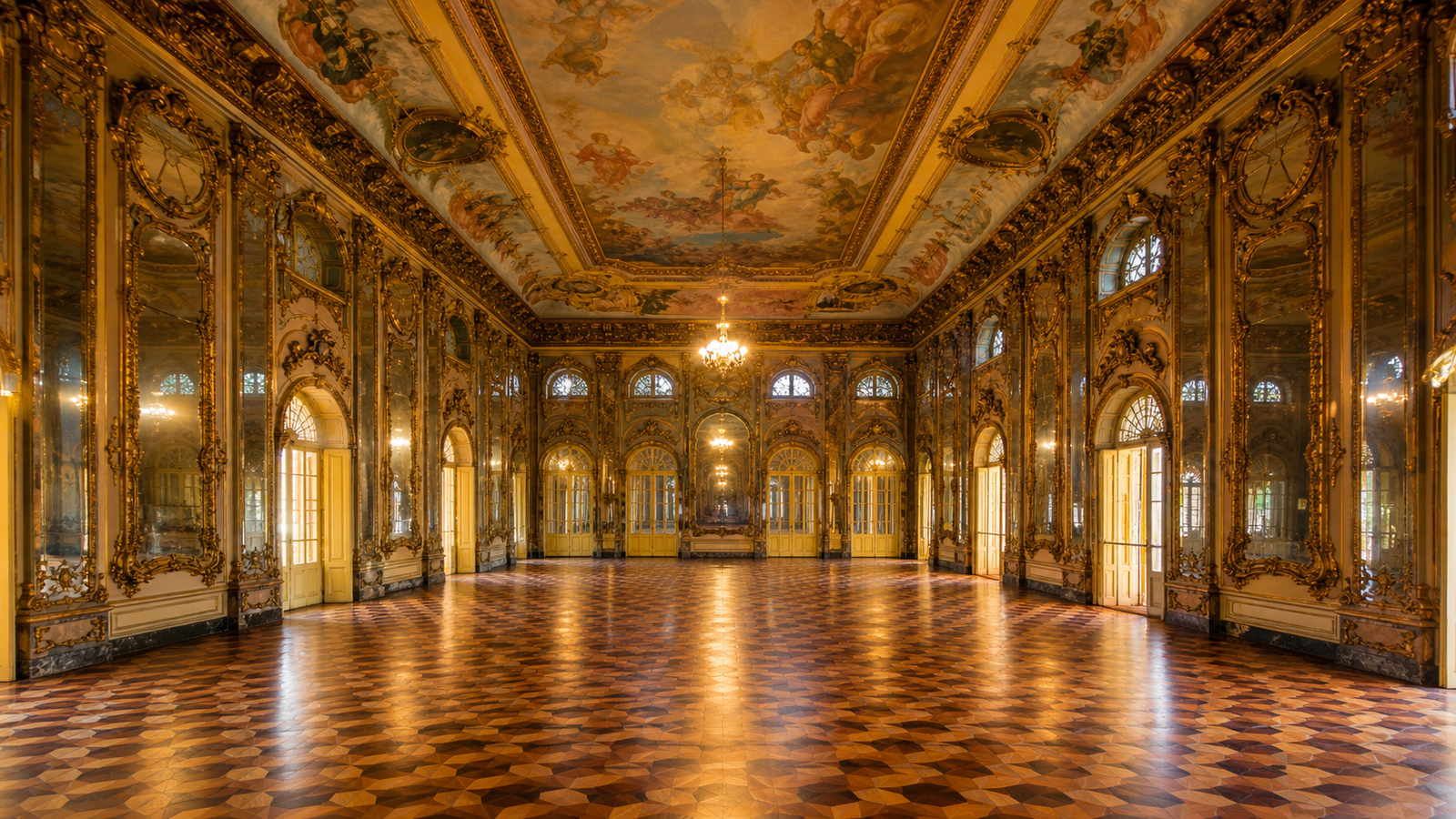
- The Noble Hall (Salão Nobre): The most opulent room in the building. Look up to see the breathtaking 1899 ceiling fresco titled “A glorificação das Bellas Artes da Amazônia”, painted by Italian artist Domenico de Angelis.
- The Geometric Parquet Floor: Look down in the Noble Hall to see 12,000 interlocking pieces of hardwood—blending Brazilian jacarandá and pau-amarelo with European timber—fitted together seamlessly without a single metal nail.
- The Auditorium: The main hall holds 701 seats across parterre, three tiers of gilded boxes, and an upper gallery. It features Scottish cast-iron columns cast in Glasgow and luminous Murano crystal chandeliers crafted in Venice.
Largo de São Sebastião: Food, Safety, and Essential Tips
Your visit to Teatro Amazonas should not end when you exit the building. The theater faces Largo de São Sebastião, a charming, tree-lined historic square paved with the famous black-and-white wavy cobblestone mosaic (the historical precursor to Rio de Janeiro’s Copacabana promenade). In the center of the square stands the marble Monument to the Opening of the Ports of the Amazon.
In the late afternoon and evening, the square transforms into a lively open-air gathering spot filled with locals and travelers enjoying regional street food and craft beer:
- Tacacá da Gisela: Located directly on the square, this is Manaus’s most famous stall for tacacá—a piping hot Indigenous broth made from fermented wild manioc root (tucupi), mouth-numbing jambu leaves, and dried salted shrimp.
- Regional Tapiocas & Sandwiches: Nearby cafes serve fresh tapioca crepes stuffed with creamy tucumã fruit and melted curd cheese (queijo coalho), as well as the classic X-Caboquinho sandwich.
- Amazonian Ice Cream: Cool off with artisanal ice creams made from native rainforest fruits like cupuaçu, taperebá, and fresh açaí.
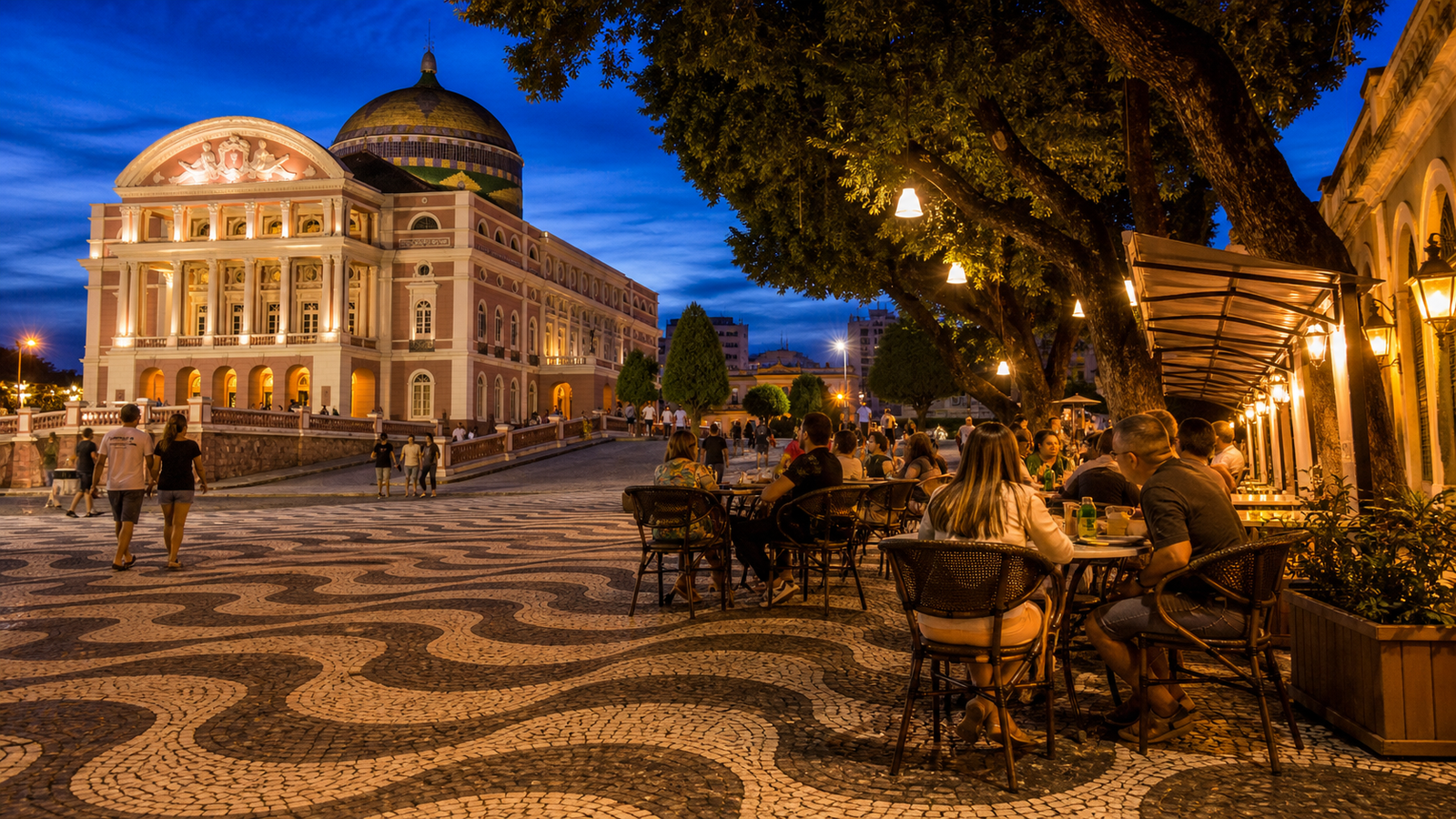
Safety & Practical Summary: Unlike some commercial areas in downtown Manaus that empty out after dark, Largo de São Sebastião is well-lit, bustling with outdoor cafe seating, and consistently patrolled by specialized tourist police (Polícia Turística). It is one of the safest and most pleasant areas in the city for an evening stroll.
| Feature | Daytime Guided Tour | Evening Live Performance |
|---|---|---|
| Best For | History, architecture, photography, empty halls | Live acoustics, full atmosphere, music lovers |
| Schedule | Tue–Sat 9:00 AM–5:00 PM, Sun 9:00 AM–1:00 PM (Closed Mon) | Showtimes usually 7:00 PM or 8:00 PM |
| Cost | R$ 20 full price / R$ 10 half price (~$2–4 USD) | Free to R$ 50 (~$0–10 USD) for most shows |
| Languages | Portuguese, English, Spanish (on rotation) | Musical performance (universal) |
| How to Book | Directly at theater box office on arrival | Box office or online via shopingressos.com.br |
| Duration | 45 to 50 minutes | 1 to 2 hours |
If you are planning your wider Amazon adventure, be sure to read our complete Amazon Brazil travel guide covering rainforest lodges, river cruises, and wildlife itineraries, as well as our guide to the best places to visit in Brazil for first-time travelers.
Frequently Asked Questions
Can I visit Teatro Amazonas without a guided tour during the day?
No. All standard daytime tourist visits are conducted as guided group tours lasting 45 to 50 minutes. This policy preserves the historical artifacts and ensures visitors understand the rich Rubber Boom context and art collections.
Are guided tours available in English?
Yes. English-speaking official guides are available on rotation throughout operating hours at no extra charge. When purchasing your ticket at the box office, simply let the attendant know you prefer an English tour.
What is the dress code for attending a concert at Teatro Amazonas?
Smart casual attire is standard for regular concerts and symphony dates. Clean jeans, polo shirts, collared shirts, and casual dresses are welcome. Flip-flops, athletic tank tops, and beach shorts are not permitted in the auditorium during performances.
Is the area around Teatro Amazonas safe at night?
Yes. Largo de São Sebastião is well-lit, active with outdoor diners and cafes, and heavily patrolled by dedicated tourist police, making it one of the safest nighttime areas in central Manaus.
How do I buy tickets for evening opera or orchestra concerts?
You can purchase tickets directly at the theater box office on Largo de São Sebastião or online through the state’s authorized portal at shopingressos.com.br. Many orchestra dates are completely free or cost under R$ 50.