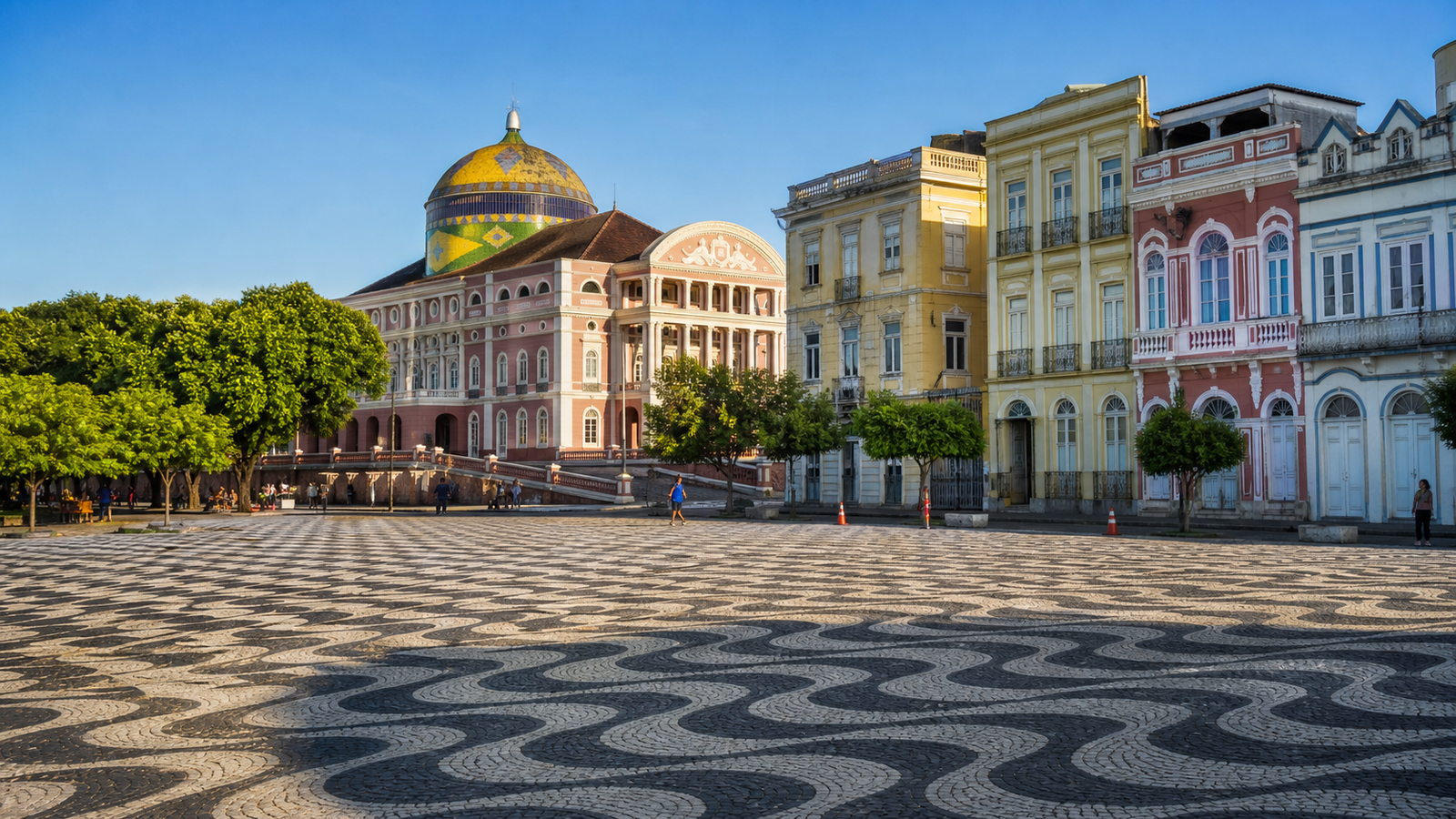
Deep in the heart of the Brazilian Amazon, surrounded by thousands of miles of dense equatorial rainforest, sits an unexpected architectural time capsule. In the historic downtown (Centro Histórico) of Manaus, cobblestone alleys and wide avenues are lined with ornate 19th-century European palaces, Scottish cast-iron pavilions, and Italian marble facades.
Most international travelers treat Manaus merely as an airport transit point on their way to an Amazon jungle lodge or river cruise. Skipping the city center, however, means missing one of South America’s most fascinating cultural phenomena: the extravagant remnants of the late 19th-century Amazon Rubber Boom (Ciclo da Borracha).
Exploring this historic district is remarkably simple and rewarding on foot. On a self-guided 3.5-kilometer (2.2-mile) morning circuit, visitors can comfortably walk from the cultural high ground of Largo de São Sebastião down to the bustling riverfront market in about 3 to 4 hours, discovering world-class museums that are completely free to enter.
Why Manaus’s Historic Center is Worth Exploring on Foot
Between 1880 and 1912, the global hunger for natural rubber transformed Manaus from a remote river outpost into one of the wealthiest cities in the Americas. Flush with unprecedented fortunes, rubber barons poured lavish sums into transforming their equatorial boomtown into the “Paris of the Tropics,” importing entire pre-fabricated buildings, marble statues, and decorative tiles directly from Europe.
Today, the core of this golden era is preserved within a compact, walkable perimeter in Centro. Because the main historical landmarks are clustered along a natural downhill slope leading toward the Rio Negro, navigating between major squares is intuitive and manageable without an organized tour.
Walking self-guided allows travelers to move at their own pace, step inside air-conditioned heritage palaces, and witness the vivid daily rhythm where 19th-century European elegance seamlessly blends with indigenous Amazonian river life.
Stop 1: Largo de São Sebastião and the Grandeur of Teatro Amazonas
The ideal starting point for your morning walk is Largo de São Sebastião, the cultural heart of historic Manaus. This spacious, tree-lined plaza is famous for its distinctive black-and-white stone mosaic pavement. Laid by Italian craftsmen in 1901, the swirling wave pattern represents the famous “Meeting of the Waters” (the dark Rio Negro and the pale Rio Solimões) and was installed years before Rio de Janeiro adopted a similar design along Copacabana beach.
Dominating the square is the crown jewel of Amazonian architecture: the iconic Teatro Amazonas. Inaugurated in December 1896, this Italian Renaissance-style opera house features an unmistakable dome covered with 36,000 vibrantly colored Alsatian ceramic tiles arranged in the pattern of the Brazilian flag.
While viewing the theater’s exterior from the square is free, guided tours of the lavish interior cost R$ 20 for non-resident adult visitors (running Tuesday through Saturday from 9:00 AM to 5:00 PM, and Sundays from 9:00 AM to 1:00 PM). Inside, visitors can marvel at Murano glass chandeliers, carved Portuguese woodwork, and ceiling murals painted by Italian master Domenico de Angelis.
Stop 2: Palácio Rio Negro — A German Rubber Baron’s Extravagant Mansion
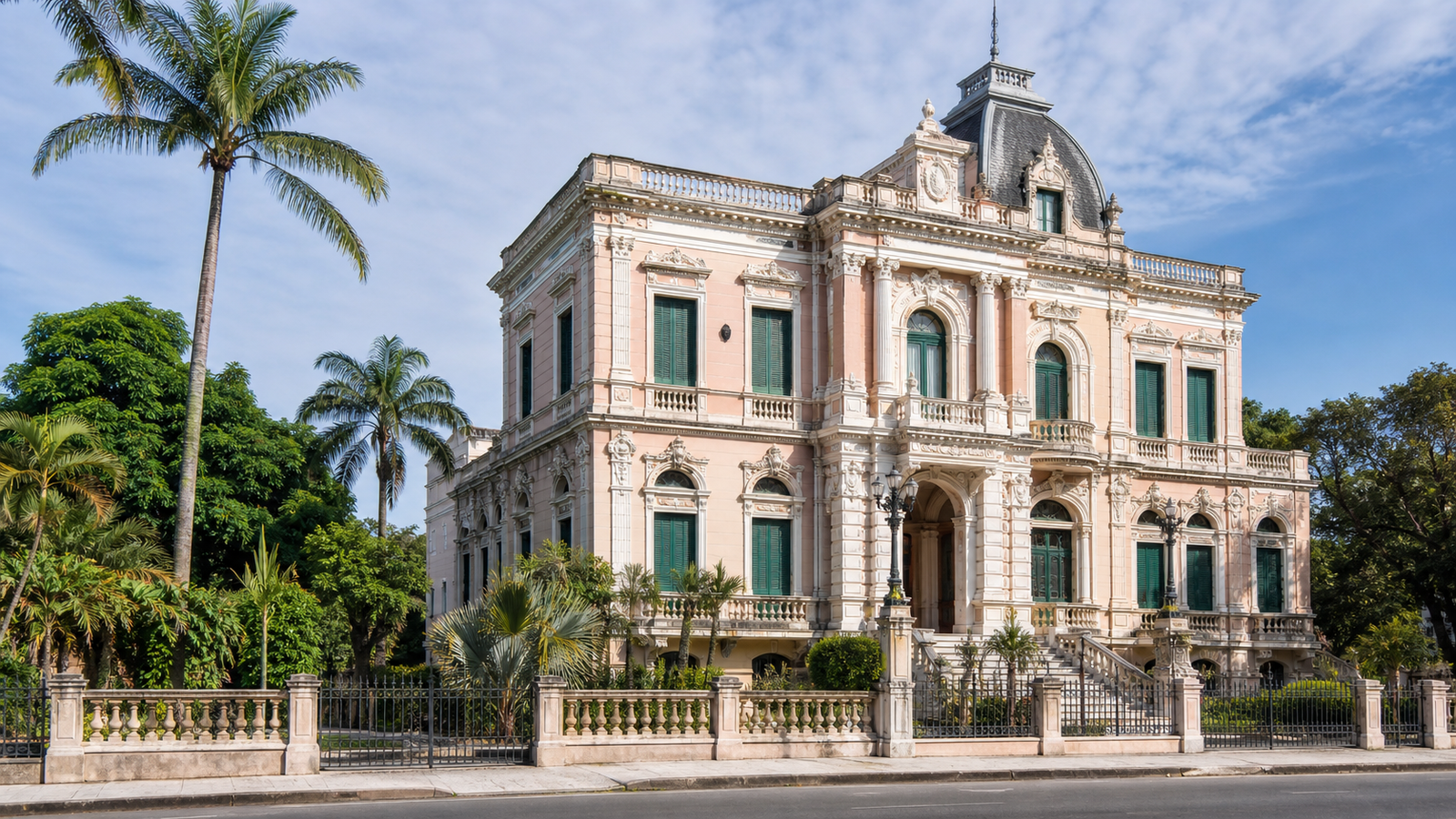
From Largo de São Sebastião, walk south along the tree-shaded Avenida Eduardo Ribeiro and turn onto Avenida Sete de Setembro to reach Palácio Rio Negro. Completed in 1903, this eclectic mansion was originally built as a lavish private residence for German rubber merchant Karl Waldemar Scholz.
Scholz spared no expense, importing European architectural elements and fine furnishings to display his immense wealth. However, when Asian rubber plantations undercut the Brazilian market around 1912, Scholz fell into bankruptcy, and the mansion was eventually acquired by the Amazonas state government, serving for decades as the official governor’s seat and residence.
Today, Palácio Rio Negro operates as a public cultural center with completely free admission (open Tuesday through Saturday from 9:00 AM to 5:00 PM). Visitors can wander through grand reception halls, admire restored vintage furniture, and climb the mansion’s viewpoint tower for a scenic look over downtown rooftops.
Stop 3: Palacete Provincial and Praça da Polícia
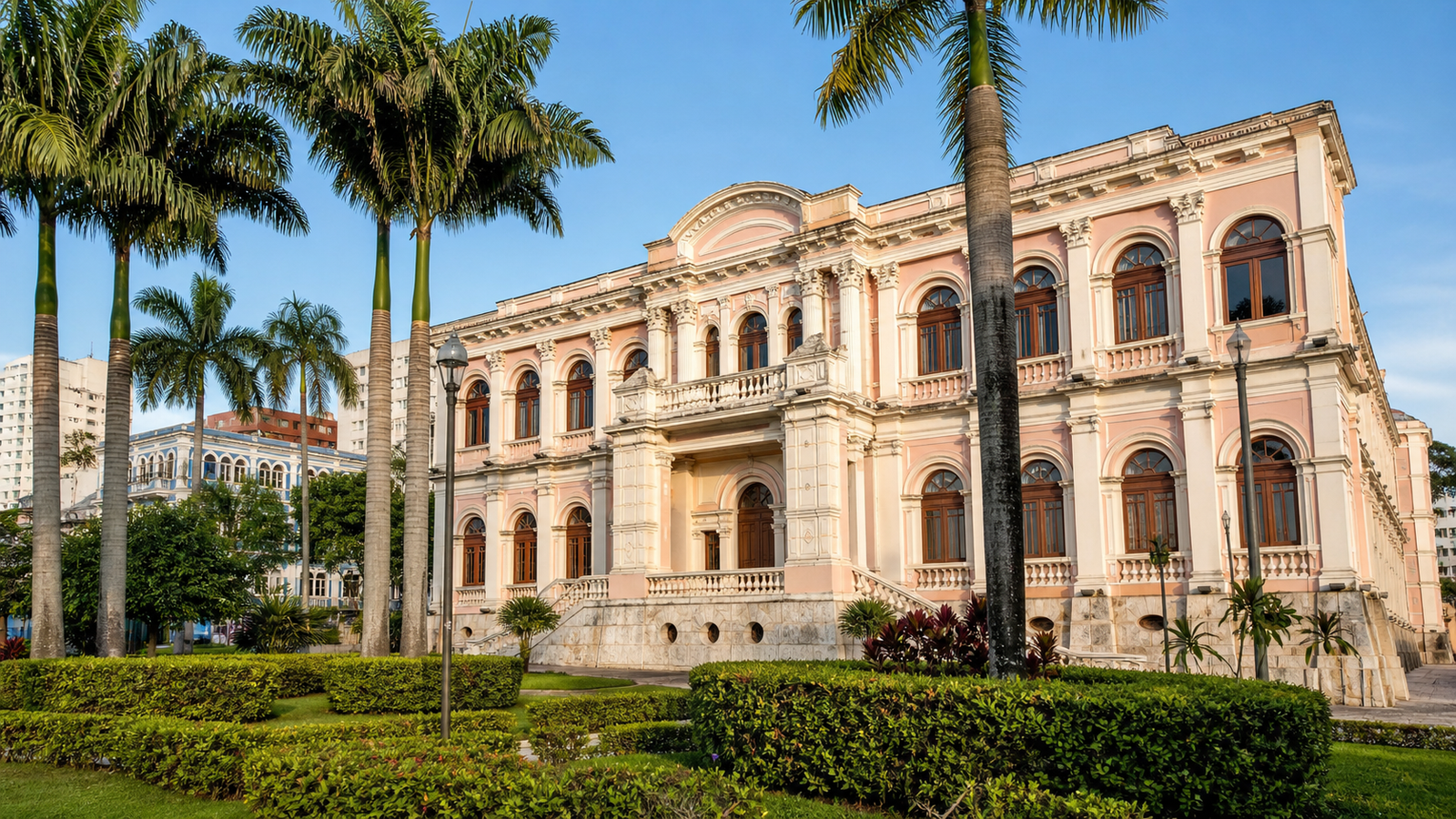
Continuing two blocks east along Avenida Sete de Setembro brings you to Praça Heliodoro Balbi, locally known as Praça da Polícia. Facing this tranquil palm-filled square stands the imposing neoclassical facade of the Palacete Provincial.
Originally constructed in 1874 to serve as the provincial government building and later the Military Police headquarters, the palacete underwent a major historical restoration and reopened in 2009 as an integrated state cultural complex. Like Palácio Rio Negro, admission to Palacete Provincial is 100% free, operating Tuesday through Saturday from 9:00 AM to 5:00 PM.
Inside, the building houses five distinct state collections under one roof:
- Pinacoteca do Estado do Amazonas: A superb art gallery highlighting Amazonian painters, regional landscapes, and historical portraiture.
- Museu de Numismática Bernardo Ramos: One of Latin America’s most extensive coin collections, displaying over 17,000 rare historical coins and medals.
- Museu da Imagem e do Som (MISAM): Preserving historic photographs, audiovisual archives, and recordings of 20th-century Amazonian life.
- Museum of Archaeology & Tiradentes Museum: Featuring pre-Columbian indigenous pottery and historical military police artifacts.
Stop 4: Mercado Municipal Adolpho Lisboa and the Floating Port
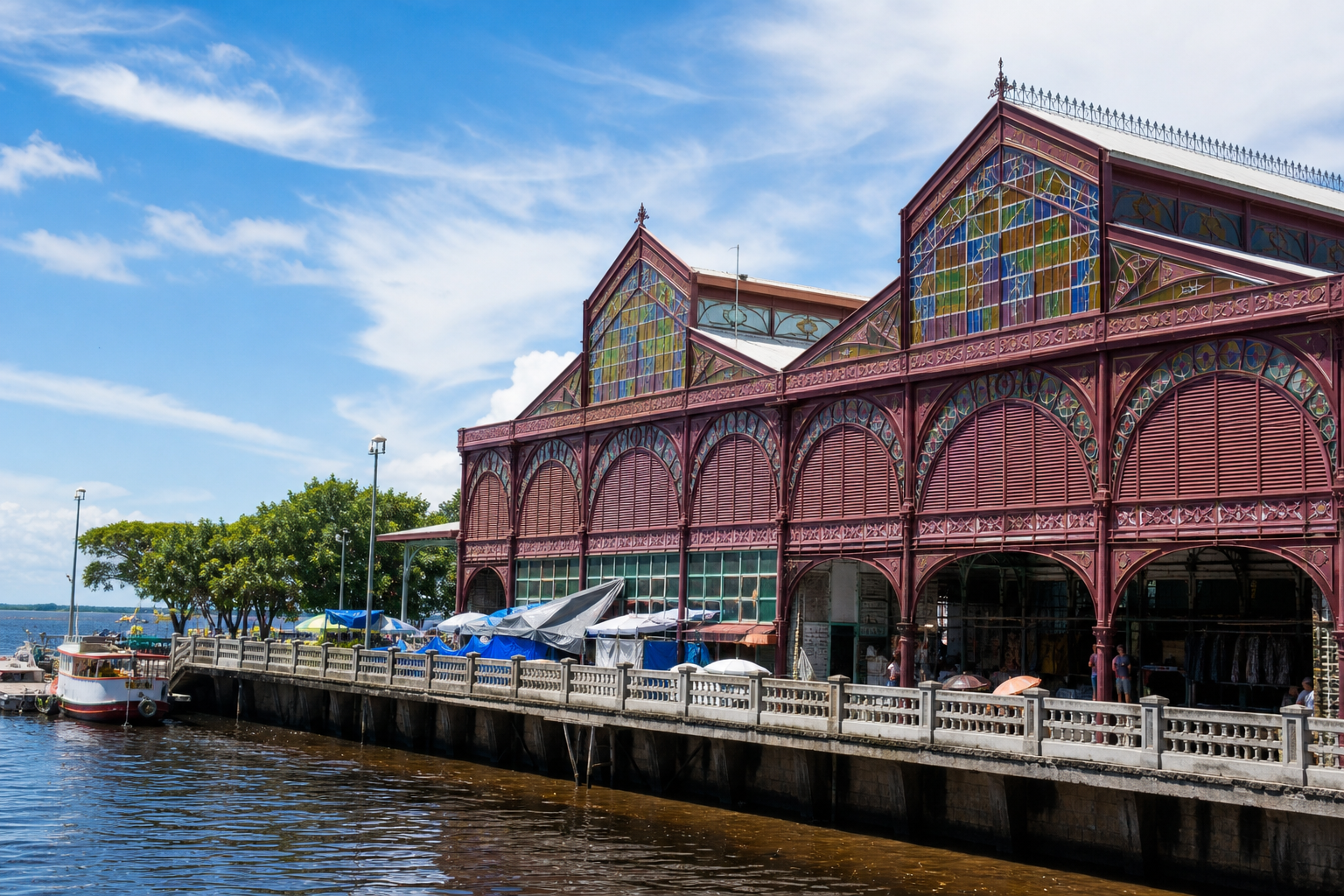
From Praça da Polícia, follow the gentle downhill slope along Rua dos Barés toward the Rio Negro waterfront to reach the bustling Mercado Municipal Adolpho Lisboa (affectionately called the Mercadão). Inaugurated in 1883, this designated national heritage landmark is one of Brazil’s finest surviving examples of cast-iron architecture.
The market’s ornate iron pavilions and stained glass panels were prefabricated in Europe—modeled directly after the famous Les Halles market in Paris—and shipped across the Atlantic to be assembled on the Amazonian shoreline. The market is open Monday through Saturday from 6:00 AM to 5:00 PM and Sundays from 6:00 AM to 12:00 PM with free entry.
Inside, the market offers a vibrant sensory feast. Visitors can explore aisles filled with massive Amazonian river fish (such as tambaqui and pirarucu), fresh açai, aromatic bottles of tucupi, Brazil nuts, and authentic indigenous woven crafts. Small food stalls inside the market serve freshly grilled river fish and traditional regional breakfast dishes at very reasonable prices.
Just behind the market along Rua Taqueirinha lies the historic Porto Flutuante (Floating Port of Manaus). Engineered between 1902 and 1907 by the British firm Manaos Harbour Limited, these massive floating steel piers were designed to rise and fall up to 14 meters (46 feet) with the dramatic seasonal floods of the Rio Negro, allowing deep-draft ocean vessels to dock in the heart of the jungle.
Practical Tips: Route Planning, Heat Management, and Safety
To ensure a safe, smooth, and comfortable walking tour of historic Manaus, keep the following practical logistics in mind:
- Start Early: Manaus is located just 3 degrees south of the equator, and daytime temperatures regularly climb above 34°C (93°F) with intense humidity. Beginning your walk around 8:30 AM allows you to complete the outdoor street sections before the midday sun peaks.
- Schedule for Tuesday Through Saturday: State-run cultural centers (including Teatro Amazonas, Palácio Rio Negro, and Palacete Provincial) are closed on Mondays for weekly maintenance. Sunday visits are possible, but most venues close early around midday.
- Stay Hydrated: Carry a refillable water bottle and take advantage of street vendors selling chilled fresh coconut water (água de coco) and fresh tropical fruit juices along the main squares.
- Daytime Safety Guidelines: Downtown Manaus is lively, commercial, and safe during regular daytime business hours, especially along major pedestrian thoroughfares like Avenida Eduardo Ribeiro and Largo de São Sebastião. Exercise standard urban precautions: keep smartphones in zipped pockets when navigating busy market crowds, avoid dangling expensive camera gear loosely, and use rideshare apps (Uber) or licensed taxis if traveling around the port area after sunset.
Manaus Centro Histórico: Key Sights at a Glance
| Stop / Attraction | Key Highlights | Admission Fee | Opening Hours | Recommended Time |
|---|---|---|---|---|
| Teatro Amazonas & Largo São Sebastião | Iconic opera house, 1896 Alsatian dome & 1901 wave mosaic pavement | R$ 20 (exterior free) | Tue–Sat 9:00–17:00, Sun 9:00–13:00 | 45–60 minutes |
| Palácio Rio Negro | 1903 rubber baron mansion, grand halls & tower viewpoint | Free entry | Tue–Sat 9:00–17:00 | 40–50 minutes |
| Palacete Provincial | Neoclassical complex housing 5 state museums (Art, Coins, MISAM) | Free entry | Tue–Sat 9:00–17:00 | 45–60 minutes |
| Mercado Adolpho Lisboa | 1883 Parisian-style cast iron market, crafts & Amazonian seafood | Free entry | Mon–Sat 6:00–17:00, Sun 6:00–12:00 | 45–60 minutes |
| Porto Flutuante (Roadway) | Historic British-engineered floating piers on the Rio Negro | Free (viewpoint) | Daily daylight hours | 20–30 minutes |
Frequently Asked Questions
Is Manaus’s Centro Histórico safe to walk around?
Yes, during regular daytime business hours, the central corridor between Largo de São Sebastião and Praça Heliodoro Balbi is bustling, active, and safe with normal travel precautions. Keep valuables tucked away in busy markets and use rideshare apps if traveling near the port area after dark.
How much time do you need for a walking tour of historic downtown Manaus?
A half-day (approximately 3 to 4 hours) is ideal to explore all major landmarks, tour the palaces, and enjoy lunch at Mercado Adolpho Lisboa.
Are museums in downtown Manaus open on Mondays?
No. Most state-administered cultural centers, including Teatro Amazonas, Palácio Rio Negro, and Palacete Provincial, are closed on Mondays for maintenance. Schedule your walking tour between Tuesday and Saturday.
What is the best way to handle the heat while walking in Manaus?
Start your walk early around 8:30 AM, wear lightweight clothing, carry water, and take regular air-conditioned breaks inside Palácio Rio Negro and Palacete Provincial.
Taking a half-day to walk through Manaus’s Centro Histórico transforms a routine Amazon layover into a rich, eye-opening cultural journey. From the opulence of the opera house to the bustling vitality of the waterfront iron market, downtown Manaus proves that the Amazon’s human history is just as extraordinary as its natural wilderness.