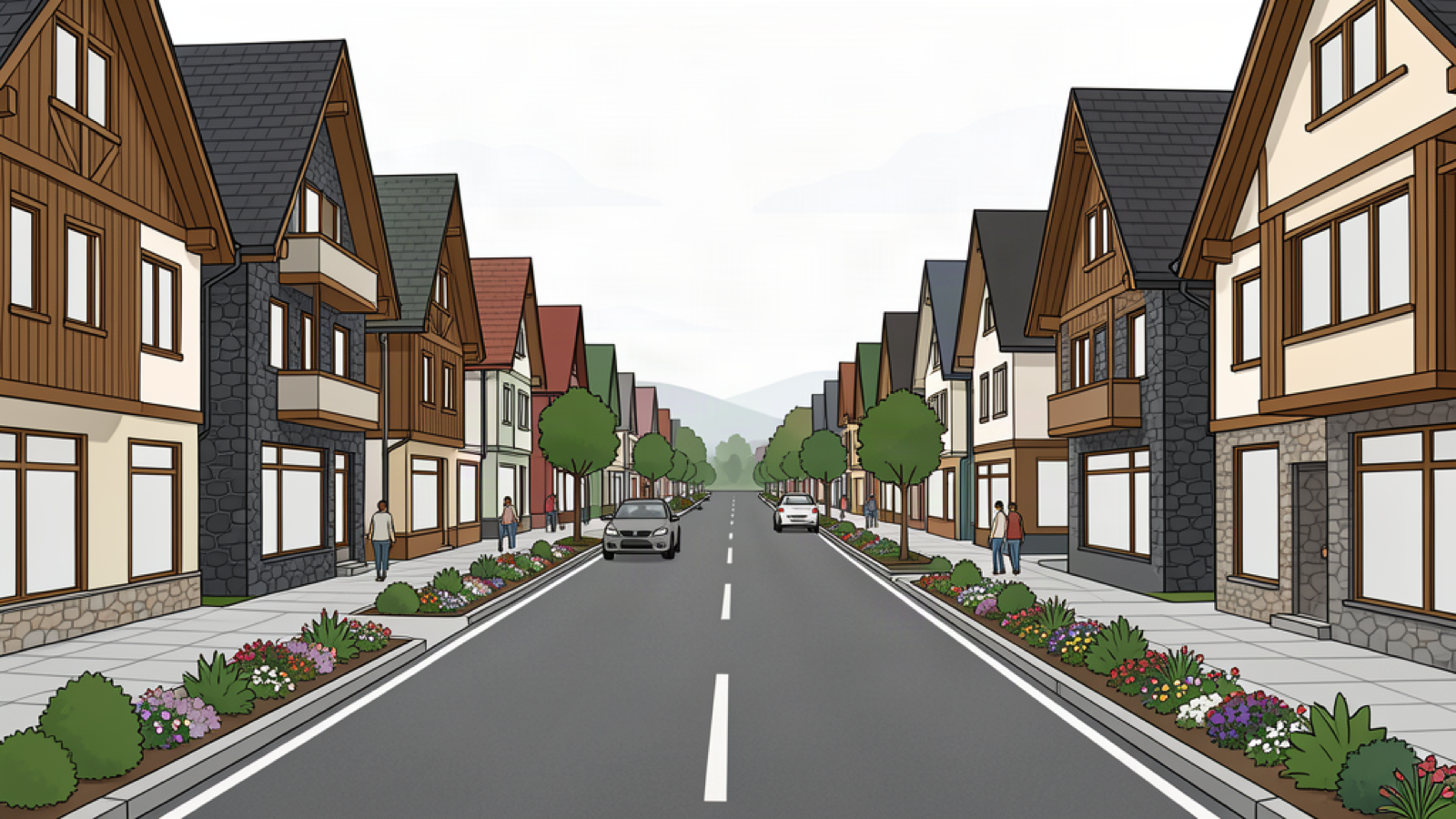
Avenida Borges de Medeiros is most useful as an orientation line through central Gramado. Around its compact tourist core, Praça Major Nicoletti, Igreja Matriz São Pedro, Palácio dos Festivais and the entrance to Rua Coberta sit close enough to make a simple walk feel coherent rather than scattered.
The key is not trying to cover the avenue from end to end. Focus on the central stretch, slow down around the landmark cluster, and add longer extensions only if the weather, your schedule and your mobility make sense.
Start with the compact central stretch
Official tourism material calls Borges de Medeiros Gramado’s main artery. The street includes part of the RS-115 corridor, but the visitor experience is concentrated in a much smaller downtown section. That distinction matters: “walking Borges” usually means exploring the central landmarks, sidewalks, squares and storefronts—not completing the full road.
A practical starting point is the central area near the intersection with Avenida das Hortênsias or around Praça das Etnias. From there, follow Borges de Medeiros toward the core around Praça Major Nicoletti. The exact starting point is flexible; the useful idea is to move in one direction and avoid bouncing between isolated stops.
The landmark cluster around Praça Major Nicoletti
Praça Major Nicoletti is the easiest place to understand central Gramado’s layout. Official tourism information places Igreja Matriz São Pedro, Palácio dos Festivais, Rua Coberta and Avenida Borges de Medeiros in the same close-knit group.
Igreja São Pedro stands at Avenida Borges de Medeiros, 2659. Its stone exterior and tall tower create one of the clearest visual anchors on the walk. Across the central area, Palácio dos Festivais sits at number 2697 and connects the avenue to Gramado’s cinema identity.
Rua Coberta is a short side street rather than the avenue itself. Its original name is Rua Madre Verônica, and it links Borges de Medeiros to Rua Garibaldi. Treat it as an optional pause for food, shelter or people-watching, not as the entire purpose of the route.
Why the avenue looks and feels different
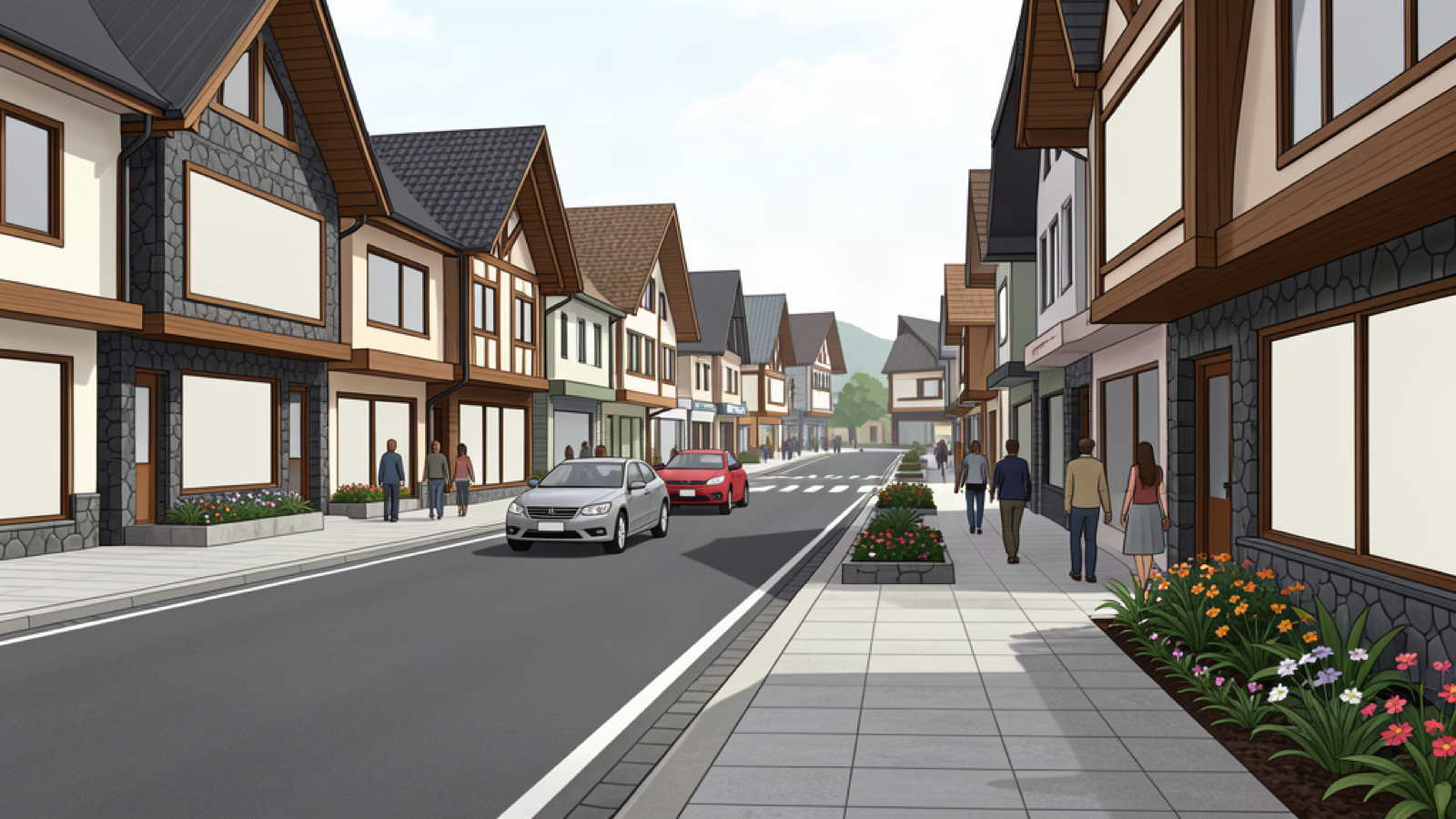
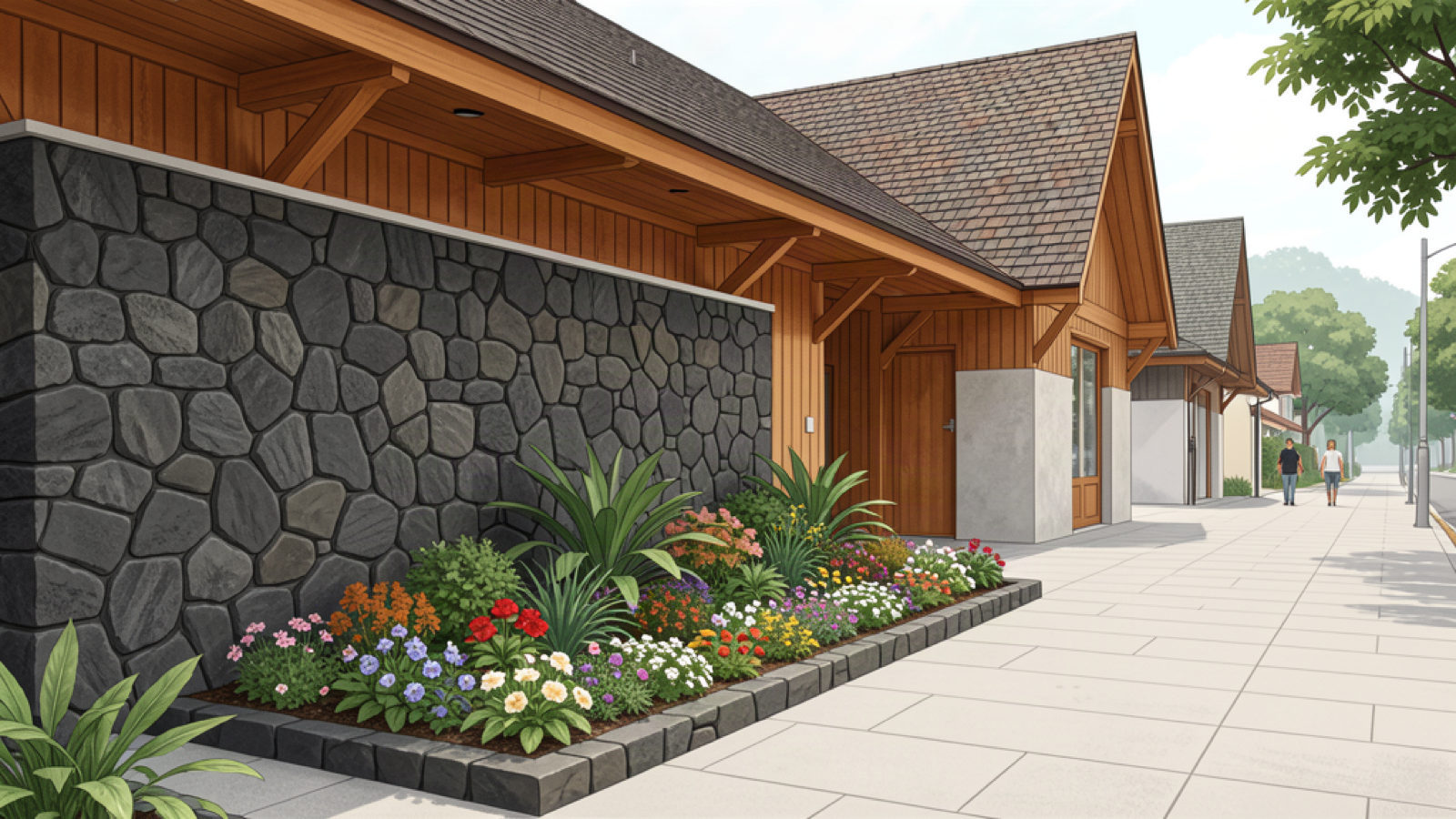
The appeal comes from concentration. Steep-roof buildings, landscaped public spaces, restaurants, shops and major civic landmarks share the same corridor. Official tourism describes the street as the place where much of Gramado’s urban movement, accommodation and visitor activity comes together.
The look is carefully staged, but it is not only decoration. Public squares create places to stop, while the landmark sequence gives the center a readable rhythm: plaza, church, cinema, covered side street, then another block of commercial façades and landscaping.
Official tourism also presents Borges de Medeiros as Gramado’s oldest road and recalls an earlier period of wooden buildings and resident-tended flowerbeds. That history is best treated as context supplied by the destination authority, not as a reason to expect an untouched historic street today.
A simple walking sequence
- Begin near the central tourist-information area or Praça das Etnias. Use this section to get oriented before the busiest landmark cluster.
- Walk toward Praça Major Nicoletti. This is the natural pause point for seeing how the central sights fit together.
- Circle Igreja São Pedro and Palácio dos Festivais. Both are on Borges de Medeiros and can be appreciated from the public-space network around the square.
- Step into Rua Coberta only as long as it suits your plan. A quick look is enough for orientation; dining or events can turn it into a longer stop.
- Choose an extension instead of forcing one. If you still have time and energy, continue toward Praça das Etnias and the northern visitor area; otherwise, finish in the central cluster.
This sequence is deliberately flexible. A short photo walk and a leisurely route with cafés are different experiences, so a single “correct” duration would be misleading.
Plan for weather, events and mobility
Gramado’s center invites walking, but conditions change the experience. Rain can make exposed sections less comfortable, while major events can alter traffic, pedestrian flow and access around the Palácio dos Festivais and Rua Coberta. Check current municipal or event information on the day of your visit.
Visitors with limited mobility should also plan conservatively. The central cluster reduces distance, but this article does not claim that every sidewalk, curb or crossing works equally well for every traveler. If needed, use Praça Major Nicoletti as the core and trim the extensions.
Most of the street-level sightseeing is public, but cafés, restaurants, shopping and event tickets are optional costs. Decide which stops matter before you arrive; the avenue is easier to enjoy when you are not treating every storefront as part of a mandatory checklist.
Use the avenue as a map, not a checklist
Borges de Medeiros earns its place in a first Gramado visit because it makes the center legible. Start with the Nicoletti–São Pedro–Palácio cluster, add Rua Coberta briefly, and extend the walk only when conditions suit you.
Before setting out, recheck event schedules and local access information. If Rua Coberta is a major part of your day, use a dedicated guide for that stop rather than stretching this avenue walk into another full-city itinerary.
Frequently asked questions
Is Avenida Borges de Medeiros easy to explore on foot?
The compact central tourist stretch is practical on foot for many visitors, but slopes, weather and individual mobility can change the experience. Keep the route around Praça Major Nicoletti if you want the shortest version.
Which sights are close together?
Praça Major Nicoletti, Igreja Matriz São Pedro, Palácio dos Festivais and the entrance to Rua Coberta form the most compact landmark cluster along the central avenue.
Do you need to walk the whole avenue?
No. The central visitor stretch delivers the main orientation value. Longer extensions are optional and should depend on your time, energy and the day’s conditions.