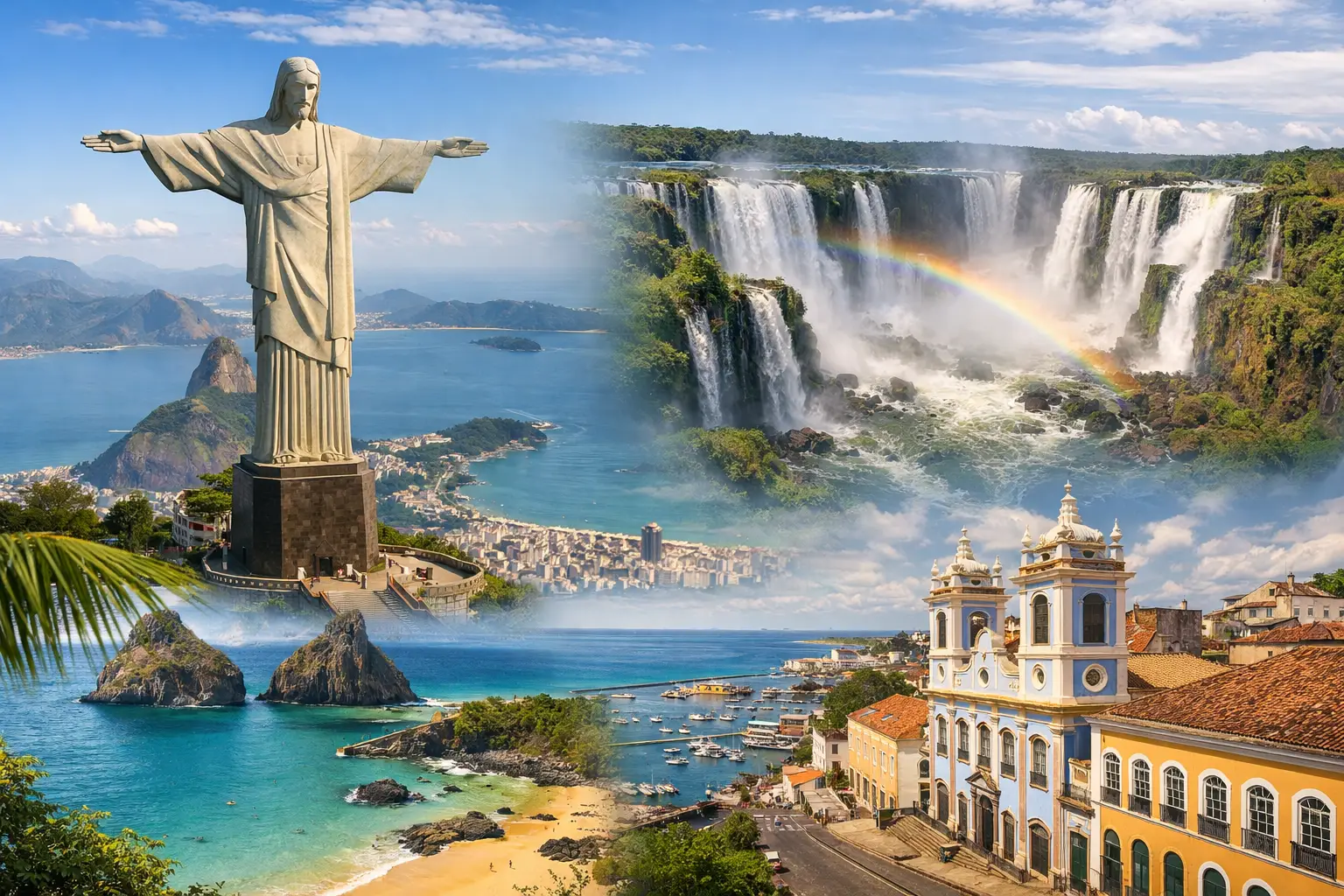
Brazil rarely fits into a single trip. A beach vacation, a wildlife journey, a city break, and a cultural itinerary can all happen in the same country, often within a few hours of each other. That is what makes choosing the best places to visit in Brazil both exciting and a little complicated for first-time travelers.
The right answer depends on what kind of trip you want. Some destinations are ideal for iconic landmarks and nightlife. Others are better for nature, food, colonial history, or a slower pace. If you are planning from abroad, it helps to think of Brazil by experience rather than trying to see everything at once.
Best places to visit in Brazil for first-time travelers
For many international visitors, the best starting point is a mix of one major city, one natural wonder, and one destination with strong cultural identity. Brazil is large, flight connections matter, and travel times can be longer than they appear on a map. A well-planned itinerary usually feels better than trying to cover too many regions in one trip.
The destinations below stand out because they represent different sides of the country and work well for a range of travel styles.
Rio de Janeiro
Rio de Janeiro is the classic first stop for a reason. Known as The Marvelous City, it combines landmarks, beaches, mountains, and urban energy in a way few destinations can match. Christ the Redeemer, Sugarloaf Mountain, Copacabana, and Ipanema are the postcard highlights, but the city also rewards travelers who want museums, live music, food, and neighborhood character.
Rio is especially strong for first-time visitors because it delivers a recognizable Brazil experience quickly. You can spend the morning at a famous viewpoint, the afternoon at the beach, and the evening in a samba bar or a restaurant in Botafogo or Santa Teresa. The trade-off is that Rio requires basic urban awareness. As in any large city, choosing well-located neighborhoods and using trusted transportation options makes a difference.
Sao Paulo
Sao Paulo is not the Brazil of beaches and tropical scenery, but it is one of the country’s most rewarding cities for travelers who care about food, art, and culture. It is the business capital of Brazil, yet its real appeal for visitors lies in its diversity. Museums, contemporary galleries, nightlife, global cuisine, and strong immigrant influences give the city a very different personality from Rio.
This is a good choice if you enjoy cities that reveal themselves gradually. Sao Paulo is less visual at first glance, but richer than many travelers expect. It also works well as an entry point because it has major international connections and excellent hotel options. If your priority is scenic relaxation, it may not be your first stop. If your priority is culture and dining, it belongs near the top.
Salvador
Salvador offers one of the clearest introductions to Afro-Brazilian history and culture. The historic center, Pelourinho, brings colonial architecture, churches, and plazas into one walkable area, while the city’s music, cuisine, and religious traditions create a cultural atmosphere that feels distinct from southern Brazil.
For travelers looking beyond the usual Rio-Sao Paulo route, Salvador is one of the best places to visit in Brazil because it gives context to the country’s identity. This is where you begin to understand how deeply African influences shape Brazilian food, music, and everyday life. The city also has beaches, though many visitors come primarily for culture rather than a pure beach holiday.
Iguazu Falls
On the border with Argentina, Iguazu Falls is one of South America’s great natural landmarks. The Brazilian side offers panoramic views of the falls, while nearby access to the Argentine side makes it possible to build a broader experience if your trip allows. Even if you visit only from Brazil, the scale and power of the waterfalls are impressive enough to justify the journey.
This is a relatively easy destination to add to a first itinerary because the visitor infrastructure is strong and the experience is straightforward. It suits couples, families, and travelers with limited time. The main thing to know is that Iguazu is a focused destination. You go for the falls, nature, and nearby attractions, not for an extended urban stay.
Florianopolis
Florianopolis, often called Floripa, is one of Brazil’s most accessible beach destinations for international travelers who want beauty without giving up comfort. Located in southern Brazil, it combines dozens of beaches with a cleaner, more relaxed urban feel than some larger coastal cities.
It works especially well for travelers who want a flexible beach trip. Some beaches are lively and developed, others are quieter and better for surfing or long walks. Renting a car can improve the experience because the island is spread out, but even without one, many visitors find the city easy enough to navigate. If your trip is in the Brazilian summer, expect higher prices and more domestic tourism.
Fernando de Noronha
Fernando de Noronha is Brazil at its most exclusive and visually striking. This protected island archipelago is known for clear water, dramatic landscapes, and strong conservation rules. It is one of the country’s best destinations for snorkeling, diving, and travelers who want a more controlled, nature-focused beach experience.
The trade-off is price and access. Noronha is not the place for a budget-first itinerary, and it takes more planning than a mainland beach destination. Still, if your priority is pristine scenery and marine life, few places in Brazil compete with it.
Best places to visit in Brazil for nature and wildlife
Brazil’s natural scale is one of its biggest travel advantages. If wildlife, remote landscapes, or outdoor adventure matter more to you than city life, these destinations deserve serious attention.
The Amazon, especially Manaus and the surrounding region
The Amazon is not a single destination so much as a region, and that matters for planning. Manaus, known as the Gateway to the Amazon, is the most common base for international travelers. From there, visitors can book river cruises, jungle lodges, and guided excursions focused on wildlife, forest ecology, and river life.
This is one of the most memorable experiences in Brazil, but expectations matter. The Amazon is less about quick sightseeing and more about immersion. You are there for the environment, the scale, and the experience of being somewhere genuinely different. A short stay can still be worthwhile, but two to four nights in the forest usually feels more rewarding than a rushed day trip.
Pantanal
If your main goal is wildlife spotting, the Pantanal may be a better choice than the Amazon. This vast wetland region is one of the best places in South America to see animals in the wild, including caimans, capybaras, giant otters, and, with luck, jaguars.
For many international travelers, the Pantanal is still underrated simply because Rio and the Amazon attract more attention. That makes it a smart option for repeat visitors or anyone building an itinerary around nature. The best experience usually depends on the season, since water levels affect access and wildlife visibility.
Chapada Diamantina
Inland Bahia offers a different version of Brazil. Chapada Diamantina is known for caves, waterfalls, hiking trails, and dramatic tableland scenery. It is ideal for travelers who want active days and cooler mountain landscapes rather than coast or rainforest.
This is not the easiest add-on for every first-time visitor, since it requires more logistics than a major city or beach destination. But for hikers and outdoor travelers, it can be one of the most satisfying stops in the country.
Cultural and coastal favorites worth considering
Some destinations do not always lead broad ranking lists, but they fit certain travelers extremely well.
Recife and Olinda
These neighboring destinations in Pernambuco combine colonial heritage, Carnival tradition, and access to the northeastern coast. Olinda is especially appealing for its colorful historic center and artistic character, while Recife adds an urban layer with museums, restaurants, and strong regional identity.
This area works well for travelers interested in history and culture with some beach time on the side. It feels less internationally saturated than Rio, which many visitors appreciate.
Paraty
Paraty is one of the most attractive small towns on Brazil’s coast, with preserved colonial streets, a scenic bay, and easy access to boat trips and nearby beaches. It is a strong choice for couples and slow travelers who want charm, history, and a more intimate pace.
Paraty is often best as part of a broader Rio de Janeiro state itinerary. On its own, it can feel quiet for travelers who prefer big attractions and nightlife.
How to choose the best places to visit in Brazil
If this is your first trip, start with your priority. For iconic sights, choose Rio de Janeiro. For culture and food, add Sao Paulo or Salvador. For nature, think Iguazu, the Amazon, or the Pantanal. For beaches, Florianopolis and Fernando de Noronha are very different but both excellent.
It also helps to respect geography. Brazil is continental in scale, and combining Rio, the Amazon, and the far northeast in one short trip can create more airport time than actual travel enjoyment. A smarter plan is to focus on one or two regions and leave space for the country to surprise you.
The best trip to Brazil is usually not the one with the longest checklist. It is the one that matches your pace, your interests, and the version of the country you most want to experience first.