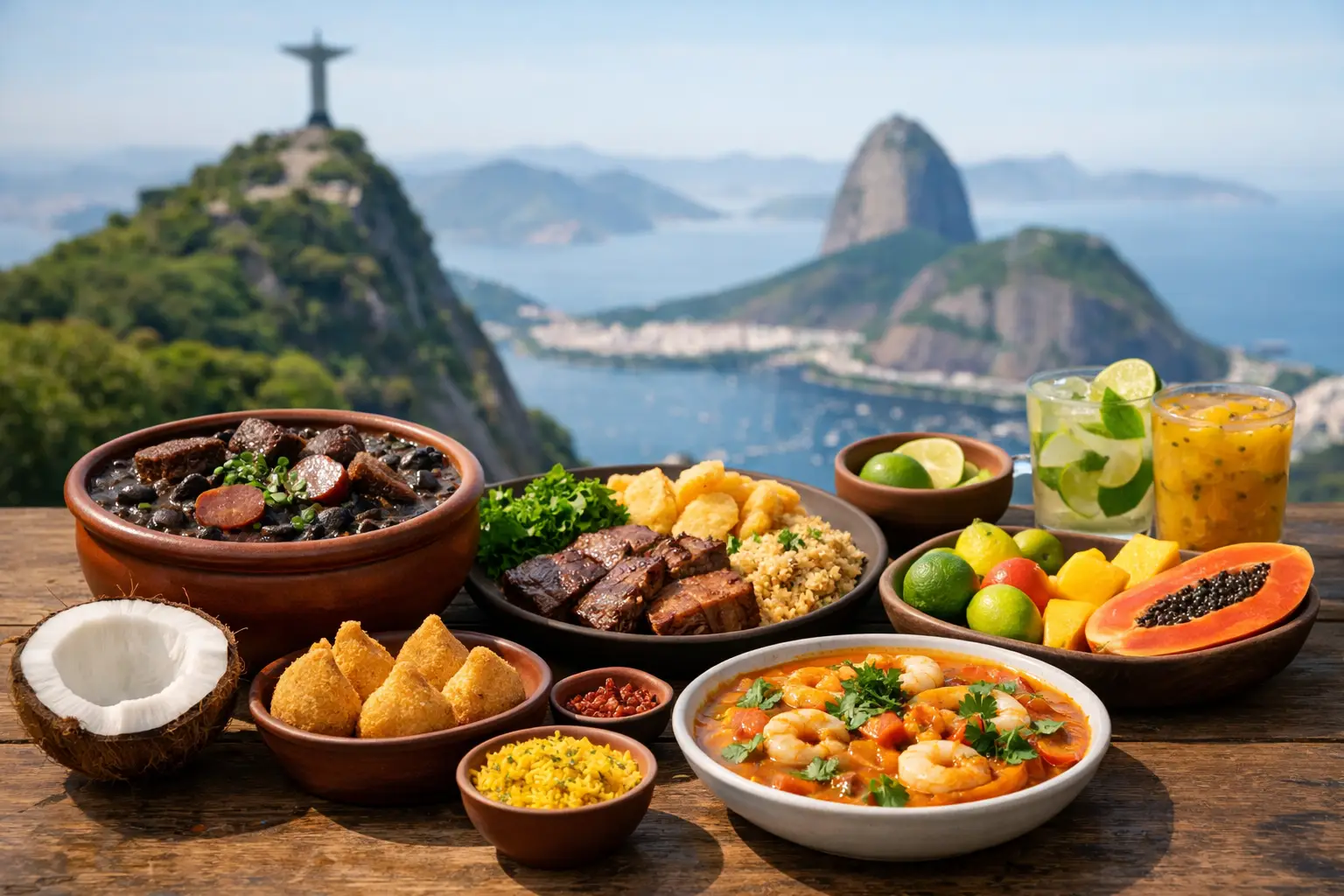
Landing in Brazil and opening a menu for the first time can be surprisingly confusing. You may recognize grilled meat, rice, or fried snacks, but many of the country’s best dishes come with names that reveal very little to international visitors. This brazil food guide for tourists is designed to make that first meal easier, whether you are arriving in Rio, Salvador, São Paulo, or heading somewhere less obvious.
Brazilian food is not one single cuisine. It changes a lot by region, with influences from Indigenous traditions, Portuguese cooking, African heritage, immigrant communities, and local ingredients that vary across a country of continental scale. That is why a good food plan for Brazil is less about memorizing a few famous dishes and more about understanding what to expect in different places.
How to use this Brazil food guide for tourists
If you are visiting more than one part of the country, expect the menu to shift with the landscape. In the Southeast, you will find a strong culture of bakeries, steakhouses, and everyday plate lunches. In the Northeast, seafood, dendê oil, coconut milk, and Afro-Brazilian flavors are more prominent. In the North, Amazonian ingredients shape the table, while the South is known for barbecue traditions and strong European influence.
For most travelers, the easiest strategy is simple: try one nationally known dish, one local specialty, and one street snack in every destination. That gives you a more accurate taste of Brazil than staying only with familiar international options.
The dishes most tourists should try first
Feijoada is the name many visitors know before arriving. It is a black bean stew usually made with pork and served with rice, collard greens, orange slices, and farofa, which is toasted cassava flour. In some restaurants it appears daily, while in others it is more common on Wednesdays and Saturdays. It is filling, rich, and better suited to a long lunch than a quick bite before sightseeing.
Pão de queijo is one of the easiest wins for first-time visitors. These small baked cheese breads are slightly chewy inside, naturally gluten-free because they are made with cassava flour, and sold everywhere from cafés to airport counters. They work for breakfast, a snack, or something light between activities.
Moqueca is another strong starting point, especially on the coast. It is a seafood stew, often made with fish or shrimp, cooked with tomatoes, onions, peppers, and herbs. But there is an important regional difference. In Bahia, moqueca usually includes dendê oil and coconut milk, which gives it a deeper and more aromatic profile. In Espírito Santo, the version is generally lighter and does not use dendê. Both are worth trying, but they are not interchangeable.
For quick street food, coxinha is one of the most common choices. It is a tear-drop-shaped fried snack filled with shredded chicken, and sometimes cream cheese. Pastel is another favorite – a thin, crispy fried pastry with fillings like cheese, beef, pizza-style tomato and mozzarella, or hearts of palm. These are easy entry points if you want something familiar in format but still distinctly Brazilian.
Regional flavors that matter
Northeast Brazil
The Northeast is one of the most exciting regions for food, especially for travelers interested in bold flavors and strong cultural identity. In Bahia, acarajé stands out. It is a deep-fried black-eyed pea fritter, usually split and filled with vatapá, salad, and shrimp. It is one of Brazil’s most iconic street foods, but be careful with spice and fillings if you have a sensitive stomach or seafood allergy.
You will also see vatapá and caruru, both strongly tied to Afro-Brazilian culinary traditions. These dishes may be unfamiliar at first glance, but they are central to understanding food in Salvador and the surrounding region. Seafood is common across the Northeast, and coconut appears often, especially in stews and sauces.
Southeast Brazil
In Rio de Janeiro and São Paulo, visitors get access to both classic Brazilian comfort food and a huge range of international dining. That makes the region easy for cautious eaters, but it can also distract from local specialties. Look for prato feito, often shortened to PF, a typical everyday meal with rice, beans, salad, fries, and a protein such as steak or chicken. It is simple, affordable, and one of the best ways to eat like a local.
In Minas Gerais, food becomes more rustic and deeply rooted in home cooking traditions. Expect dishes with pork, beans, cassava, local cheeses, and slow-cooked flavors. If you see tutu de feijão, frango com quiabo, or queijo minas on the menu, you are in a strong culinary territory. Minas is also one of the best places in Brazil for sweets and bakery culture.
South Brazil
The South is especially known for churrasco, the Brazilian barbecue tradition many travelers associate with the country. In some restaurants, meat arrives continuously at the table in rodízio style. This can be a great experience, but it is not always the best choice if you want a lighter or cheaper meal. Portions are generous, and the pace can be intense.
The region also has strong Italian and German influences, depending on the state and city. That means pasta, cured meats, pastries, and hearty comfort food can be surprisingly prominent. If you are traveling through smaller towns in Rio Grande do Sul or Santa Catarina, local dining may feel quite different from what you find in Bahia or the Amazon.
North Brazil
Northern Brazil introduces ingredients many international travelers have never tried before. This is where you may encounter tucupi, jambu, pirarucu, and açaí in forms very different from the sweet bowls popular abroad. In parts of the Amazon region, açaí is often served unsweetened and paired with savory dishes.
Food in the North can be the most unfamiliar, but also the most distinctive. If you enjoy trying ingredients tied closely to place, this is one of Brazil’s most rewarding culinary regions.
What to know before ordering in Brazil
A few practical details make dining much easier. First, lunch is often the main meal of the day, and many traditional restaurants are strongest at lunchtime. Dinner can start later than some US travelers expect, especially in larger cities.
Second, many casual restaurants offer food by weight, called comida por quilo. You serve yourself from a buffet, the plate is weighed, and you pay accordingly. For tourists, this is one of the best formats because you can sample different foods without committing to a full unfamiliar dish.
Third, black beans are common, but not universal. Rice and beans are a daily standard in much of Brazil, though the type of bean can vary. Farofa also appears often. It may look dry and plain, but it adds texture and is part of the meal rather than a side dish to ignore.
If you do not speak Portuguese, a few menu words help a lot. Frango means chicken, carne is meat or beef depending on context, peixe is fish, camarão is shrimp, queijo is cheese, and porco is pork. Sucos are fresh juices, which are often excellent in Brazil.
A few smart choices for cautious eaters
Not every traveler wants to begin with offal, spicy shrimp paste, or an Amazonian fish they cannot pronounce. That is fine. Brazil is easy to approach gradually. Start with grilled meats, rice, beans, pão de queijo, pastries, and simple seafood dishes. Then move toward moqueca, feijoada, or regional stews once you feel more comfortable.
Vegetarians can eat well in major cities, but options vary outside urban centers. Buffets by weight are often the easiest solution. Vegans need to pay closer attention because cheese, eggs, and hidden meat ingredients are common in traditional cooking. Gluten-free travelers may find naturally safe foods more often than expected because cassava is so widely used, but cross-contact depends on the kitchen.
Street food, safety, and common sense
Street food is part of the Brazilian travel experience, and in many places it is excellent. The basic rule is to choose stalls with steady turnover, freshly cooked food, and visible cleanliness. Busy stands are often a good sign.
Tap water practices depend on the destination and accommodation type, so many tourists prefer bottled water. Fresh fruit juices are a highlight, but if your stomach is sensitive, ease into richer dishes and fried snacks instead of trying everything on day one. Brazil rewards curiosity, but pacing matters.
A useful way to think about eating in the country is this: famous dishes matter, but local context matters more. The best meal of your trip might not be feijoada in Rio or churrasco in the South. It could be a simple beachside fish lunch, a bakery snack before a bus ride, or a regional dish you had never heard of until you saw it on the menu. That is where Brazil often feels most memorable – not only in what is delicious, but in what is unmistakably tied to place.