

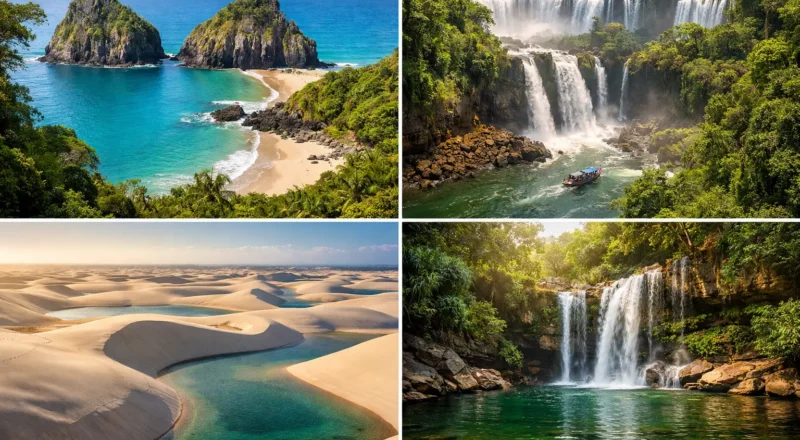
Brazil gets reduced too easily. Many first-time visitors plan around Rio, Iguazu Falls, and maybe the Amazon, then miss the places that give the country its range. The best hidden gems in Brazil are often the destinations that show a quieter, more local version of the country – less obvious, but not less memorable.
For international travelers, that matters. Brazil is vast, and choosing lesser-known stops is not only about avoiding crowds. It can also mean easier prices, more distinctive regional culture, and a trip that feels less interchangeable. The trade-off is that some of these places require more planning, a domestic flight, or a willingness to travel at a slower pace.
What makes hidden gems in Brazil worth planning around
A true hidden gem is not simply a place with fewer tourists. It is a destination that offers a strong sense of place without the global visibility of Rio de Janeiro, Salvador, or Florianópolis. In Brazil, those places might be colonial towns in the mountains, beach villages with limited development, or river cities shaped by Indigenous, African, and European influences.
For travelers coming from abroad, the main question is practical: are these places accessible enough to justify the effort? Often, yes. Many are easier to reach than they look on a map, especially when paired with a major gateway city. Others are better suited to travelers who have more time and want one destination to slow the pace of the trip.
10 hidden gems in Brazil to add to your itinerary
Alter do Chão, Pará
In the northern state of Pará, Alter do Chão is one of Brazil’s most surprising beach destinations – even though it sits on the Tapajós River, not the coast. During the dry season, pale sandbars emerge and create clear-water beaches that feel almost unreal in the middle of the Amazon region.
This is a strong choice for travelers who want Amazonian scenery without committing to a deep jungle expedition. You can combine boat trips, forest experiences, and relaxed beach time in one place. The best months are usually from August to December, when the beaches are most visible. In the rainy season, the landscape changes significantly, which is beautiful in a different way but less ideal if sand beaches are your priority.
São Miguel dos Milagres, Alagoas
Alagoas has some of Brazil’s most beautiful coastline, yet many international travelers only know nearby Maceió or Porto de Galinhas in Pernambuco. São Miguel dos Milagres stands out for its calm water, reef pools, and low-rise atmosphere.
It suits couples and travelers looking for a quieter beach base. This is not a party town, and that is exactly the point. The pace is slow, and accommodations tend to focus on small inns and boutique stays rather than large resorts. If you want nightlife every evening, look elsewhere. If you want long walks, warm water, and a more relaxed northeastern coast, this is an excellent fit.
Vale dos Vinhedos, Rio Grande do Sul
Brazil and wine are not usually mentioned in the same sentence by foreign visitors, but Vale dos Vinhedos should change that. Located in the Serra Gaúcha region, this area combines vineyards, rolling hills, and a strong Italian-Brazilian heritage.
The appeal here is not just wine tasting. It is the combination of rural scenery, local food, and a cultural landscape that feels very different from tropical Brazil. For travelers who enjoy food-driven itineraries, it works especially well. Winter brings a cozy atmosphere, while spring and summer are greener and more open-air. Either can work – it depends on whether you want fireplaces and red wine or vineyard views and mild weather.
Carrancas, Minas Gerais
Minas Gerais is full of rewarding inland destinations, and Carrancas is one of the easiest to overlook. Known for waterfalls, natural pools, caves, and hiking, it offers an outdoor-focused experience without the bigger profile of places like Capitólio.
This is a good stop for travelers who want nature and a small-town base. Roads and local access can be part of the challenge, so a rental car helps. The upside is a more independent style of travel and access to a scenic part of southeastern Brazil that many international visitors never see.
Paraty’s surrounding beaches and villages, Rio de Janeiro state
Paraty itself is no secret, but many travelers treat it as a quick colonial town stop and skip the surrounding coastline. That is a mistake. The region’s quieter beaches, island boat routes, and nearby villages reveal why this area is one of the most complete destinations in Brazil.
You get preserved architecture, Atlantic Forest scenery, and access to clear-water coves in the same trip. The hidden-gem angle here is not the town center but the broader region beyond the main historic streets. Staying an extra night or two changes the experience completely.
Ilha do Mel, Paraná
Off the coast of Paraná, Ilha do Mel feels intentionally low-key. Cars are restricted, the pace is unhurried, and the island mixes beaches, trails, and simple village life.
For international travelers, this can be a refreshing contrast after larger Brazilian cities. It is not ultra-luxury, and that is part of its charm. You come here for atmosphere, scenery, and a less commercial beach destination. Weather matters, though. Summer is lively and warm, while shoulder seasons can be quieter and more comfortable if you prefer fewer people.
Penedo, Alagoas
Set on the banks of the São Francisco River, Penedo is one of Brazil’s most interesting historic towns that still flies under the radar internationally. Its colonial architecture, river views, and cultural heritage make it a strong alternative for travelers who want history outside the usual circuit.
This is a destination for travelers who enjoy walking through old centers, visiting churches and museums, and understanding regional Brazil beyond the beaches. It pairs well with broader travel through Alagoas or Sergipe. If your trip is entirely beach-focused, it may feel like a detour. If you want depth and variety, it adds a lot.
Chapada das Mesas, Maranhão
Brazil has several famous national park regions, but Chapada das Mesas remains less known than it deserves. Located in southern Maranhão, it offers dramatic rock formations, waterfalls, swimming spots, and wide open landscapes.
The experience here is more about raw nature than polished tourism infrastructure. That can be a major plus for adventurous travelers, but it also means logistics require attention. Guided excursions are often the easiest way to see the main sites efficiently. If you want something that feels spacious and relatively untouched, this region delivers.
Pirenópolis, Goiás
Not far from Brasília or Goiânia, Pirenópolis combines colonial charm with waterfalls and a lively local culture. It is one of the most approachable hidden gems in Brazil for travelers looking to mix history, food, and nature in a compact destination.
The town has enough structure to be comfortable without losing character. You can spend one day in the historic center and another visiting nearby waterfalls and nature reserves. Weekends and holidays tend to be busier with domestic tourism, so midweek stays are often more pleasant.
São Miguel das Missões, Rio Grande do Sul
For travelers interested in history, São Miguel das Missões offers one of the most important heritage sites in southern Brazil. The ruins of the Jesuit mission tell part of the story of the region’s colonial and Indigenous past, and the setting gives the site an atmosphere that feels very different from Brazil’s coastal landmarks.
This is a thoughtful stop rather than a high-energy one. It works best for travelers building a southern Brazil itinerary and looking for places with historical weight. The reward is context – the kind of destination that helps you understand the country’s complexity, not just its postcard image.
How to choose the right hidden gem for your trip
The smartest approach is to match the destination to your travel style, not just to the promise of being undiscovered. If your priority is beach time, São Miguel dos Milagres, Ilha do Mel, and Alter do Chão all work, but they offer very different settings. One is tropical coast, one is rustic island life, and one is a river beach experience in the Amazon region.
If you prefer culture and architecture, Penedo, Pirenópolis, and São Miguel das Missões make more sense. For nature-focused itineraries, Carrancas and Chapada das Mesas are stronger choices. And if food and wine shape your trip, Vale dos Vinhedos stands apart.
Distance is the main trade-off. Brazil rewards curiosity, but it rarely rewards trying to do too much too fast. It is usually better to combine one hidden destination with a major hub than to add three lesser-known places that require constant transit.
Practical tips before visiting hidden gems in Brazil
Domestic flights can save significant time, but once you leave major capitals, ground transportation becomes more variable. In some destinations, a rental car gives you freedom. In others, especially islands or compact historic towns, it is unnecessary.
Seasonality also matters more than many visitors expect. River beaches, waterfalls, and road conditions can change with rainfall. Coastal villages may feel ideal in one month and much less convenient in another. Before locking in your route, check local weather patterns rather than relying only on Brazil’s national seasons.
Language is another factor. In less international destinations, English may be limited. That should not stop you, but it helps to prepare basic Portuguese phrases and keep your itinerary organized. This is where structured planning becomes valuable, especially for first-time visitors using a platform like Explora Brasil to compare regions and build a realistic route.
Brazil is at its best when you give it room to surprise you. The places you did not originally know how to pronounce may end up being the ones you remember most.