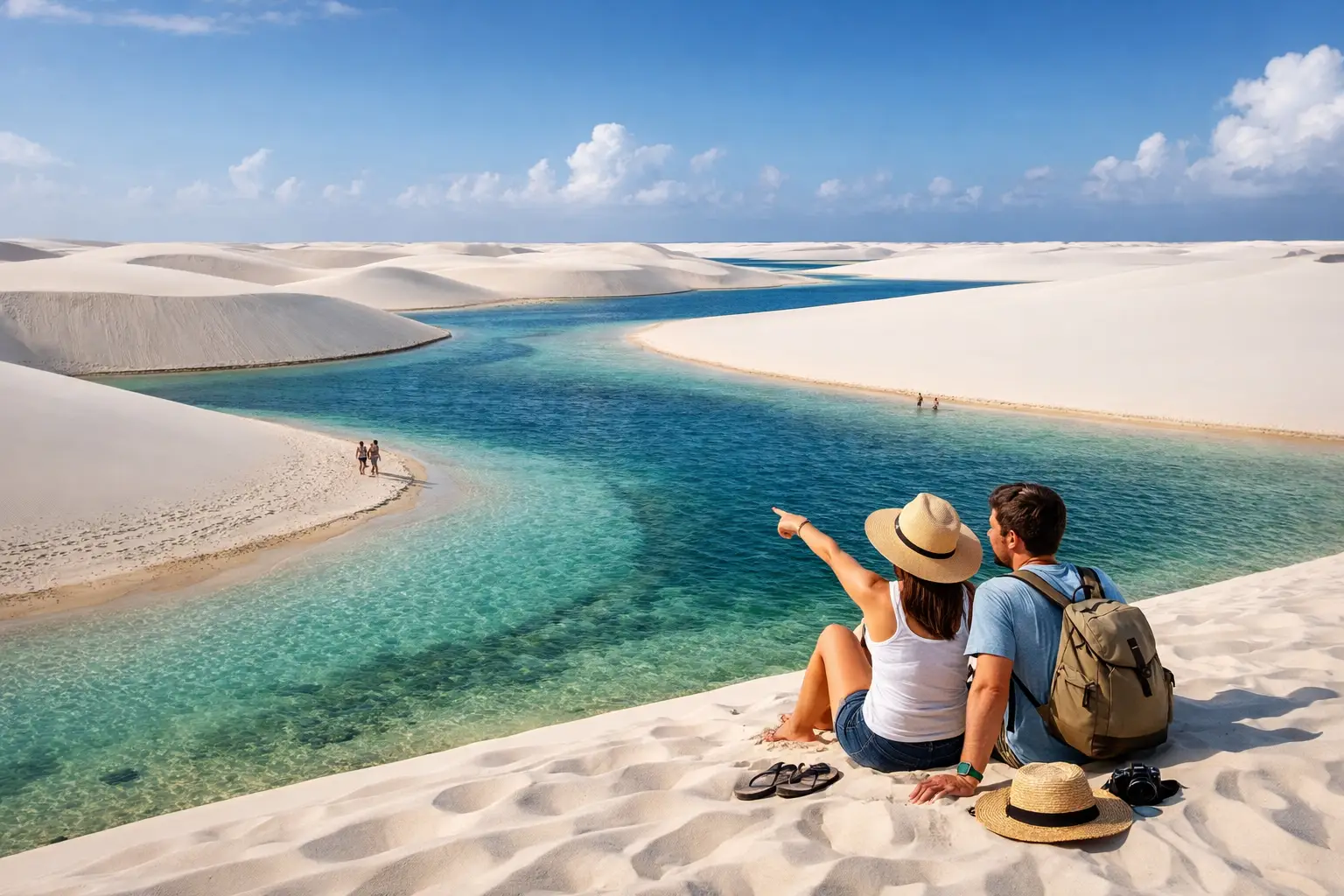
If you are researching how to visit Lencois Maranhenses, the first thing to know is that this is not a beach trip in the usual sense. The landscape looks surreal – miles of bright white dunes filled with fresh rainwater lagoons – and getting there takes more planning than many first-time visitors expect. That extra effort is exactly why the destination feels so special.
Lencois Maranhenses National Park is in the state of Maranhao, in northeastern Brazil. Most travelers use Barreirinhas as their main base, but Santo Amaro and Atins can also make sense depending on the kind of trip you want. Choosing the right base, the right season, and the right transfer matters here more than in many other Brazilian destinations.
How to visit Lencois Maranhenses without wasting time
The biggest mistake travelers make is treating Lencois Maranhenses as a quick stop that can be improvised at the last minute. It is possible to visit on a tight schedule, but the park rewards travelers who plan around weather, transport, and overnight location.
For most international visitors, the trip begins in Sao Luis, the capital of Maranhao. Sao Luis has the nearest major airport and is the main gateway to the park. From there, you continue overland to one of the towns near the dunes. Barreirinhas is the easiest and most structured option, with the widest selection of hotels, tour agencies, and transportation.
If you prefer a smoother logistics chain, Barreirinhas is usually the best choice. If you want a quieter atmosphere and easier access to some of the most impressive lagoons, Santo Amaro is often the better fit. Atins appeals to travelers who like a rustic, low-key setting with kitesurfing, simple inns, and a more remote feel.
Best time to visit Lencois Maranhenses
Timing changes everything. The dunes are there year-round, but the famous lagoons depend on seasonal rains. If you arrive at the wrong time, you may still see beautiful sandscapes, but not the full postcard version most people imagine.
In general, the best months are from June to August, with good conditions often extending into September. This is when the lagoons are usually full or near their best level after the rainy season. July is especially popular because the pools tend to be vibrant and the scenery is at its most dramatic.
From October onward, many lagoons begin to shrink. By the end of the year, some may be shallow or dry, depending on rainfall. Between January and May, the rains return. Travel is still possible, but weather can interfere with access and visibility, and the experience is less predictable.
If your dates are flexible, aim for late June through August. If your dates are fixed, it is still worth going, but set expectations based on the season rather than photos taken at peak lagoon levels.
Where to stay: Barreirinhas, Santo Amaro, or Atins?
Barreirinhas is the most popular base because it is the easiest to reach from Sao Luis and has the best visitor infrastructure. This is the practical choice for first-time visitors, families, and anyone who wants organized tours, restaurants, and a broader range of accommodations. It is also ideal if you only have two or three days.
Santo Amaro is smaller and less polished, but many travelers consider it the most rewarding base for direct access to the park. Some of the most striking lagoons are closer, and the setting feels more immersed in nature. The trade-off is that infrastructure is simpler and transport can be less straightforward.
Atins sits closer to the coast and has a more laid-back personality. It attracts travelers looking for a quiet, remote atmosphere rather than convenience. Roads can be sandy and transfers less predictable, but the destination has a strong charm, especially for couples and travelers combining dunes with beach time.
There is no single best answer. Barreirinhas works best for ease, Santo Amaro for scenery and access, and Atins for atmosphere.
How to get there from Sao Luis
Most travelers land in Sao Luis and continue by road. The journey to Barreirinhas usually takes around four hours, depending on traffic and road conditions. Shared transfers and private cars are the most common options.
If you stay in Barreirinhas, the process is relatively simple. You can arrange a transfer in advance and travel directly to your hotel. For Santo Amaro and Atins, the final stretch is usually more rugged, often involving 4×4 vehicles because of sandy or uneven roads.
This is one reason many visitors spend a night in Sao Luis before continuing. After an international or domestic connection, it can be more comfortable to rest first rather than immediately face a long overland trip. If your schedule is tight, same-day transfers are possible, but only if your arrival time lines up well.
Visiting the park: what tours are actually like
You do not usually explore the main dune areas independently. Access is typically done with licensed local transport, especially by 4×4, because the terrain is protected and difficult to navigate without local knowledge.
The most common excursions happen in the afternoon, when the light is softer and temperatures are lower. You are driven to the edge of the dunes, then walk across the sand to reach a series of lagoons. The walking is not technical, but it can feel demanding under strong sun, especially if you are carrying too much.
Swimming is a major part of the experience. The water in the lagoons is usually calm, clear, and surprisingly refreshing. Many tours are timed so visitors can also watch sunset from the dunes, which is one of the highlights of the entire trip.
Some travelers also take boat trips along the Preguicas River, especially from Barreirinhas. These outings often include small riverside communities and nearby coastal stops. They are a good addition if you want more variety, but they are different from the core dunes-and-lagoons experience.
How many days do you need?
Two full days is the minimum that makes the trip feel worthwhile. With less than that, transport starts to dominate the itinerary.
A good short itinerary is three nights: arrival in your base town, one afternoon lagoon tour, one additional full or half day for another excursion, and departure the next day. If you want to combine two bases, such as Barreirinhas and Atins or Santo Amaro and Barreirinhas, four to five nights is more comfortable.
Travelers coming from abroad often underestimate how large Brazil is and how much time regional transfers can take. Lencois Maranhenses is best enjoyed at a slower pace than a city stop like Rio or Salvador.
What to pack and what to expect
Pack for heat, sun, and simplicity. Light clothing, a swimsuit, sandals that are easy to remove, sunglasses, sunscreen, and a hat are essential. A waterproof pouch for your phone is useful, especially on boat transfers or when swimming.
You do not need heavy hiking gear. In fact, bulky shoes can be more annoying than helpful in the dunes. Many people walk barefoot on the sand for part of the visit, although this depends on temperature and personal comfort.
Bring cash as a backup, especially in smaller towns or for smaller purchases. Card acceptance has improved, but it is still smart not to rely entirely on it. Also expect internet service to be weaker in some areas, particularly if you choose a more remote base.
Practical tips for international travelers
Portuguese is the local language, and English is not widely spoken outside more tourism-focused settings. In Barreirinhas, you may find some service providers used to foreign visitors, but in smaller places, basic Portuguese or a translation app can make a difference.
This is also a destination where pre-booking helps. Transfers, hotels, and tours can fill up in peak months, especially around Brazilian vacation periods. Planning ahead reduces uncertainty and gives you better choices.
The climate is hot year-round, so try not to overload your daily schedule. A slower rhythm works well here. Early departures, shaded breaks, and afternoon excursions are often more pleasant than trying to do everything at once.
Is Lencois Maranhenses worth it?
Yes – if you want a destination that feels truly different from anywhere else in Brazil. It is not the easiest trip in the country, and that is part of the trade-off. You come here for a one-of-a-kind landscape, not for urban comfort or effortless logistics.
For international travelers planning Brazil beyond the obvious stops, Lencois Maranhenses stands out as one of the country’s most memorable natural experiences. Give it enough time, choose your base carefully, and travel in the right season. The result is the kind of place that stays with you long after the trip ends.