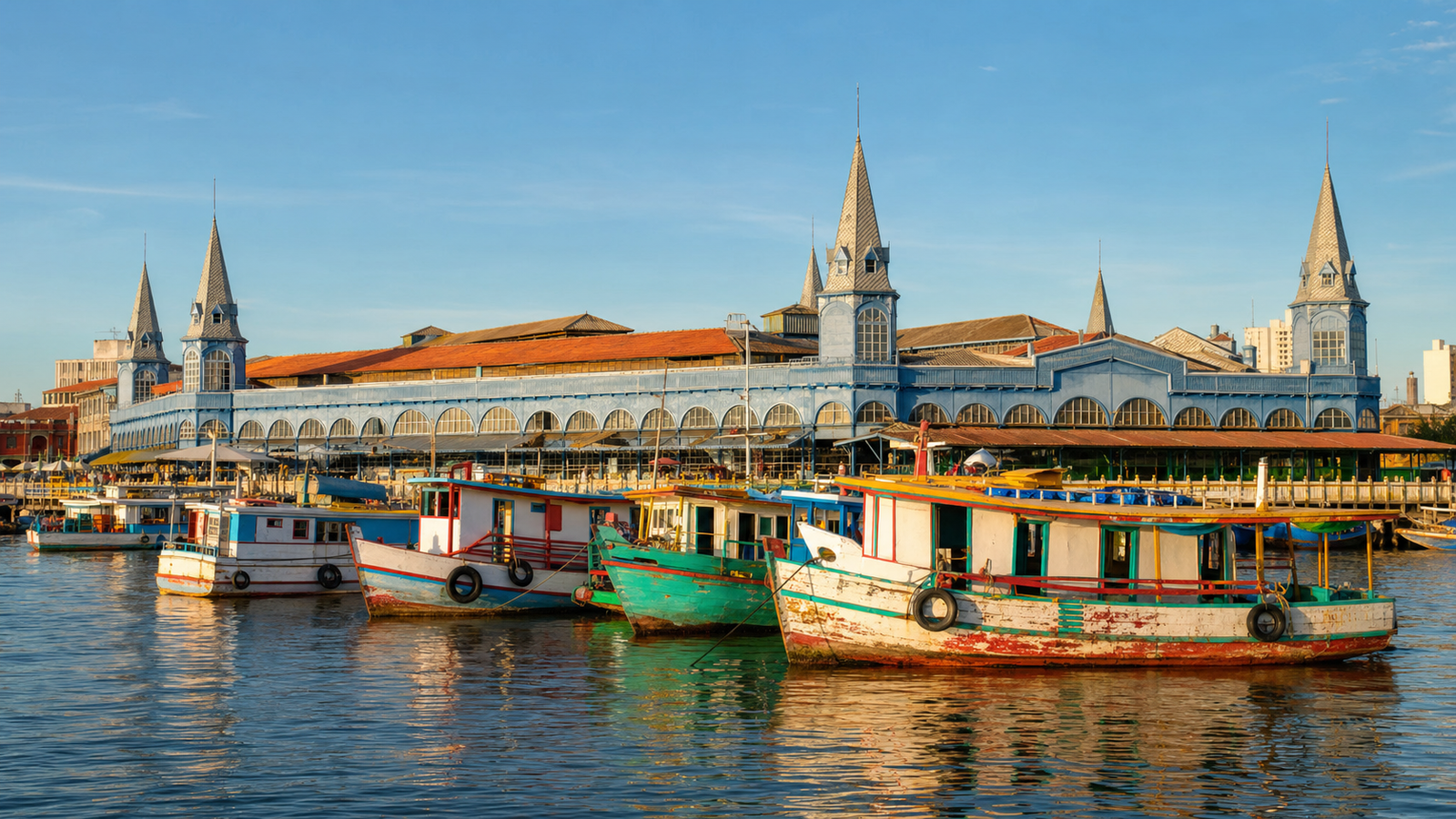
Step onto the waterfront promenade of Belém in the early morning, and your senses instantly wake up. The salty breeze from the Guajará Bay mixes with the rich aroma of steaming tucupi broth, pungent Amazonian medicinal herbs, and freshly fried river fish. Ahead of you rise the iconic blue iron turrets of the 1901 Fish Market, silhouetted against a skyline of painted wooden riverboats unloading their daily bounty. This is Mercado Ver-o-Peso, one of Latin America’s largest open-air markets and the beating heart of Pará.
For international travelers, Ver-o-Peso can feel like two completely different worlds. Arrive with a clear plan, and it is a vibrant, deeply authentic cultural masterclass where you can taste pure Amazonian açaí, browse folkloric perfumes, and witness centuries of river trade. Arrive unprepared in the sweltering midday heat, and it can quickly become an overwhelming maze of slippery walkways and aggressive sales pitches. Here is everything you need to know to explore Ver-o-Peso smoothly, safely, and deliciously without wasting time or money.
Why Mercado Ver-o-Peso Is the Cultural Soul of Belém
To understand Belém, you have to understand Ver-o-Peso. The market’s origins stretch back to the 1620s, when Portuguese colonial authorities established a fiscal post on the waterfront called the Casa do Haver-o-Peso (“Have-the-Weight House”). Its sole purpose was to weigh all goods brought by river from the Amazon basin and levy taxes for the Portuguese Crown.
During the rubber boom of the late 19th and early 20th centuries, Belém modernized rapidly. In 1901, the city inaugurated the Mercado de Ferro (the Iron Market), a prefabricated zinc and iron structure shipped directly from Europe and assembled on the docks with four distinctive corner turrets. Recognized in 1977 as National Cultural Heritage by IPHAN (Brazil’s National Institute of Historic and Artistic Heritage), the complex today sprawls over 25,000 square meters, connecting docks, historical halls, open-air stalls, and food pavilions into a living, breathing commercial powerhouse.
Timing Your Visit: Dawn Docks vs. Morning Stroll
Timing makes or breaks your experience at Ver-o-Peso. The complex never truly sleeps, but different hours cater to fundamentally different visitor profiles:
- The Dawn Wholesale Window (4:30 AM – 6:30 AM): If you are a dedicated early riser or photography enthusiast, dawn is when the famous Feira do Açaí and the Pedra do Peixe river docks operate at peak intensity. Boats arrive from river islands loaded with giant Amazonian fish and hundreds of wicker baskets (paneiros) filled with dark purple açaí berries. Note that this is a working port environment—floors are wet, porters move swiftly with heavy loads, and you should take a taxi or ride-hailing app directly to the dock entrance.
- The Prime Tourist Explorer Window (7:30 AM – 11:00 AM): For most travelers, this is the absolute sweet spot. The full market complex is open, daylight makes navigation easy and secure, morning temperatures are manageable, and all the craft, herb, fruit, and food stalls are in full swing.
- Afternoon & Midday (After 12:00 PM): As temperatures climb past 32°C (90°F) with high equatorial humidity, the outdoor energy wanes, fish stalls pack up, and the open-air heat becomes tiring. Plan to wrap up your market exploration before noon.
Sector-by-Sector: Navigating the Market Without Getting Lost
Ver-o-Peso is divided into several interconnected zones. To make the most of your morning, follow this natural walking route:
- Mercado de Ferro (Fish Market): Start inside the historic 1901 iron hall while catches are fresh. You will see monumental Amazonian freshwater giants displayed across tiled counters—including filhote (goliath catfish), pirarucu (the “Amazonian cod”), dourada, and tambaqui.
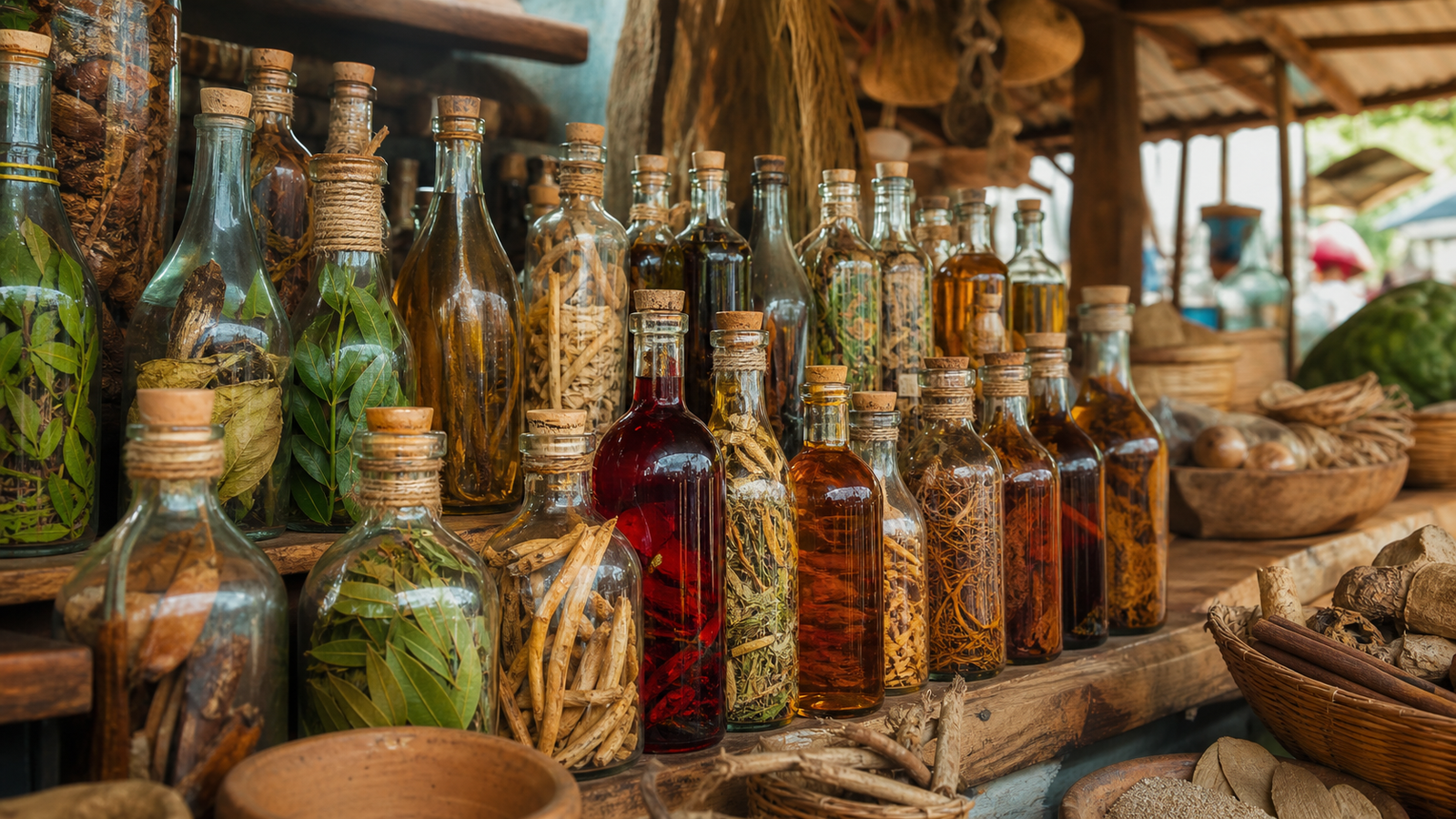
- Setor das Erveiras (The Herbalists): Move outside to the open-air plaza where traditional erveiras (herbalist women) sell centuries of Amazonian botanical wisdom. Glass bottles filled with colorful roots, barks, and aromatic waters promise everything from natural pain relief to good luck. The classic souvenir here is a small vial of Cheiro do Pará (an aromatic bath perfume) or Puxuri essence, typically costing between R$ 10 and R$ 25.
- Dry Goods, Flour, and Fruit Stalls: Wander through the corridors of yellow and white farinha d’água (crunchy toasted manioc flour), vacuum-sealed bags of fresh Brazil nuts (castanha-do-pará), and exotic fruits like cupuaçu, bacuri, and taperebá.
- Solar da Beira: End your sector tour at this restored 19th-century neoclassical building on the waterfront. It features air-conditioned galleries and verified artisanal shops selling Marajoara and Tapajônica indigenous pottery, woven straw goods, and regional crafts.
| Market Sector | What to See & Experience | Best Time | Typical Cost (BRL) |
|---|---|---|---|
| Mercado de Ferro | 1901 European iron architecture, fresh river giants (filhote, pirarucu) | 06:30 – 09:00 AM | Free entry |
| Setor das Erveiras | Botanical remedies, Cheiro do Pará perfumes, medicinal roots | 08:00 – 11:00 AM | R$ 10 – R$ 30 per bottle |
| Praça de Alimentação | Authentic peixe frito com açaí, tacacá, regional Amazon lunches | 10:00 AM – 01:00 PM | R$ 25 – R$ 35 per plate |
| Solar da Beira | Certified Marajoara ceramics, cultural exhibitions, crafts | 09:00 AM – 04:00 PM | Free entry (crafts vary) |
| Feira do Açaí (Docks) | Night & dawn wholesale trading of freshly harvested berries | 04:30 – 06:30 AM | Free (observation only) |
What to Eat: The Traditional Açaí with Fried Fish Experience
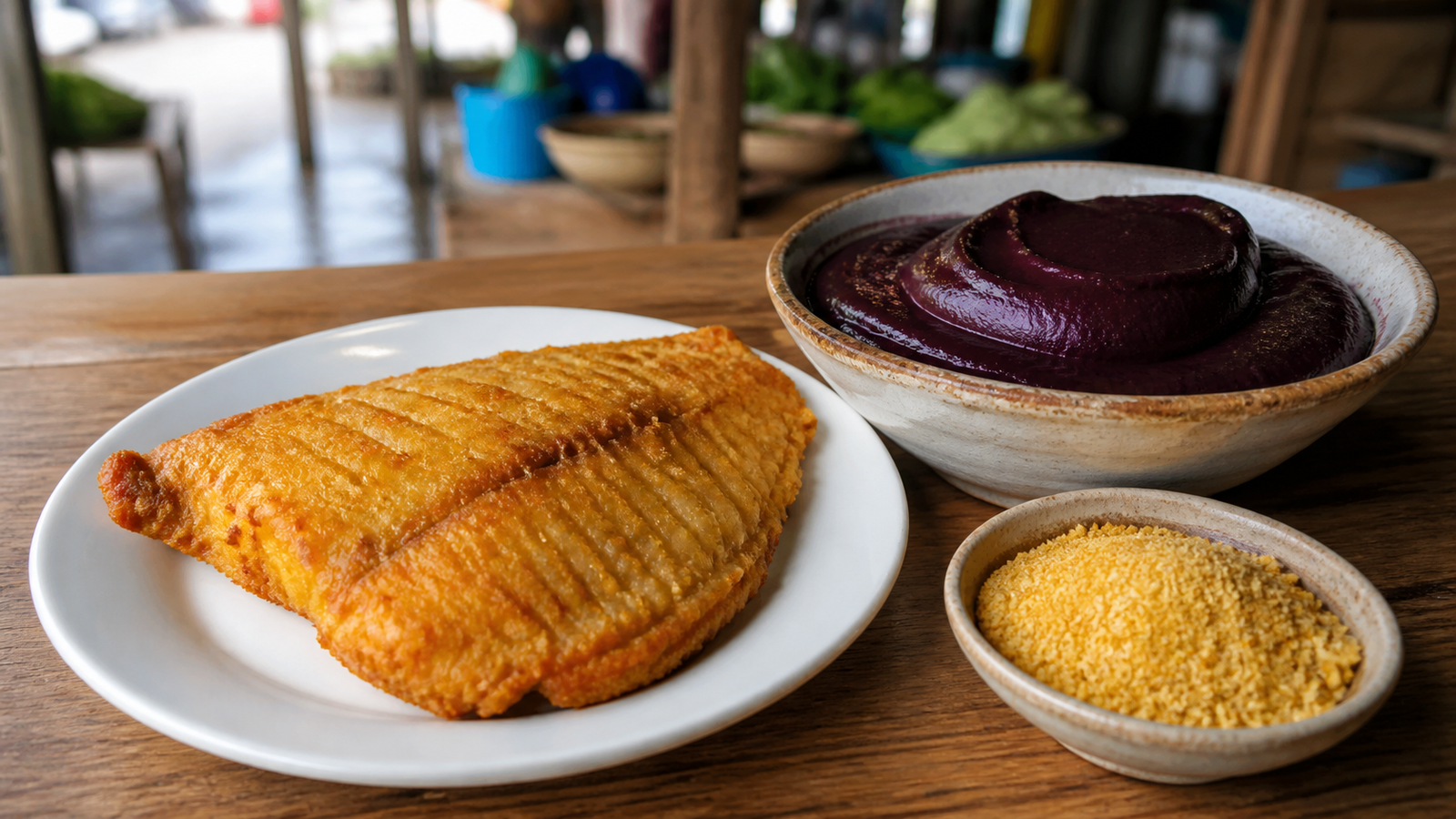
Forget the sweet açaí bowls topped with granola, strawberries, and sweetened syrup common in Rio or California. In Belém, açaí is a sacred, savory culinary staple eaten warm or at room temperature as a main meal.
Head to the covered Praça de Alimentação (food stall area) between 10:00 AM and 11:30 AM. Order the classic market combo: Peixe Frito com Açaí. You will receive a freshly fried fillet of golden river fish (usually filhote or dourada), a large bowl of thick, pure, deep-purple açaí, and a side of coarse farinha de tapioca or farinha d’água.
How to eat it like a local: Sprinkle a generous spoonful of crunchy farinha over the açaí to add texture. Take a bite of the hot, salted, crispy fried fish, followed immediately by a spoonful of the rich, earthy, unsweetened açaí. The contrast of hot and cool, crispy and smooth, salty and earthy is extraordinary. A generous plate at the market dining stalls typically costs between R$ 25 and R$ 35 (roughly $5 to $7 USD).
Other traditional market bites to look for include:
- Tacacá: A piping hot soup served in a traditional gourd (cuia), made with fermented manioc juice (tucupi), tapioca starch gum, dried salted shrimp, and fresh jambu leaves (the Amazonian herb that produces a gentle, pleasant tingling numbness on your lips and tongue). Expect to pay R$ 15 to R$ 25.
- Fresh Amazonian Juices: Refreshing cups of chilled cupuaçu, taperebá (cajá), or graviola juice for R$ 6 to R$ 12.
Practical Street Smarts: Safety, Payments, and Footwear
Because Ver-o-Peso is a high-density, bustling commercial hub, keeping a few straightforward precautions in mind guarantees a smooth visit:
- Keep Valuables Discreet: Carry your smartphone and wallet in zipped front pockets or a discreet crossbody bag worn in front of your chest. Avoid wearing flashy gold jewelry, luxury watches, or dangling heavy cameras loosely around your neck.
- Wear Closed, Rubber-Soled Shoes: Do not wear flip-flops or open sandals. The historic tiled floors around the fish hall and outdoor docks are frequently wet and slippery from melting ice and morning washes.
- Payment Options: Most established food stalls and craft vendors now accept credit cards and PIX. However, carrying R$ 50 to R$ 100 in small cash notes (R$ 10 and R$ 20 bills) is essential for buying fresh fruit, individual juices, or herbal bottles from street vendors.
- Stay Hydrated: Belém’s tropical humidity is intense. Carry a bottle of water and take air-conditioned breaks inside Solar da Beira when needed.
Beyond the Stalls: Connecting to Estação das Docas and Cidade Velha
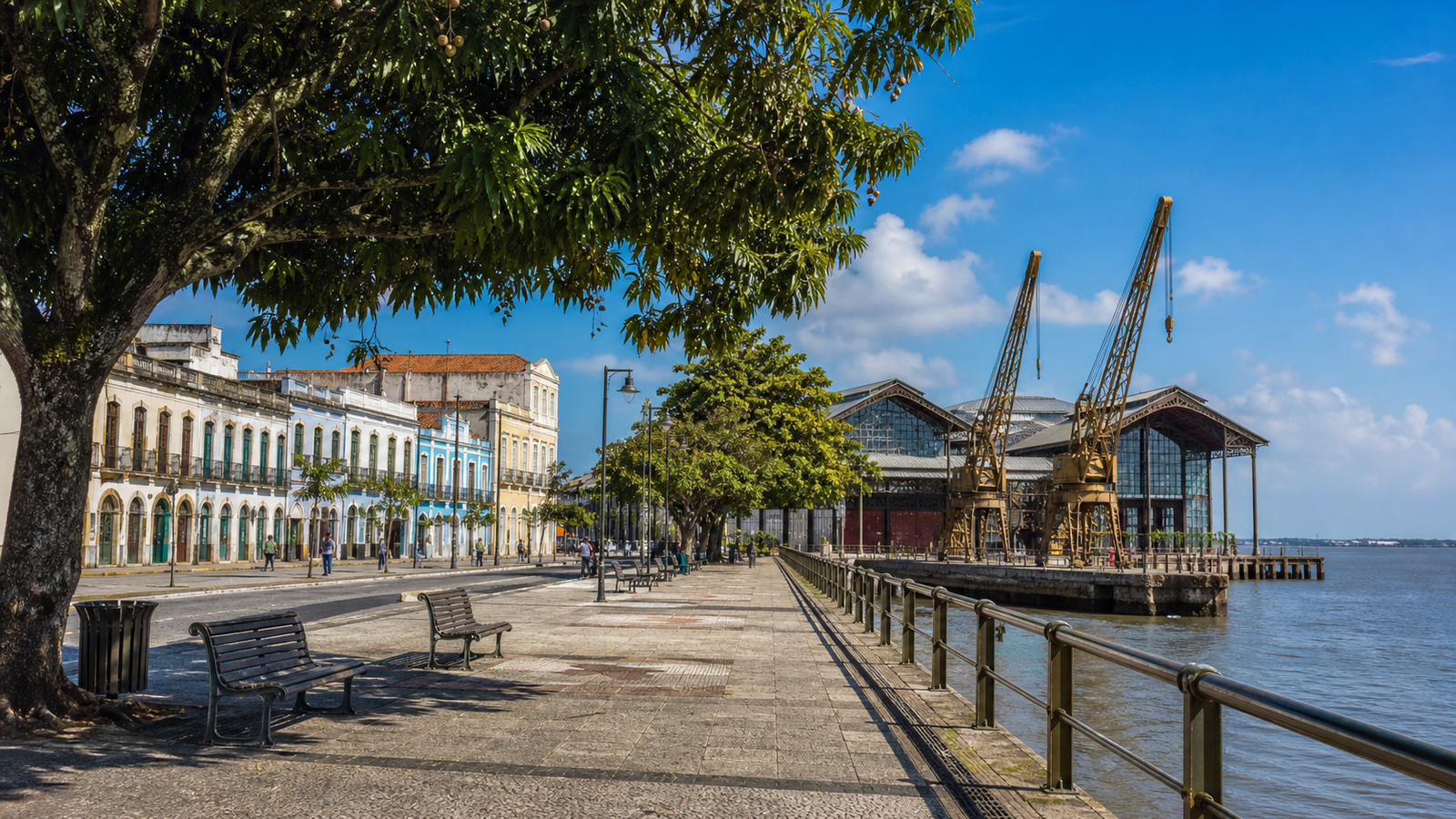
Ver-o-Peso is ideally situated along the bay, making it easy to combine your morning visit with neighboring historic attractions on foot:
Walking just 10 minutes south along Boulevard Castilhos França brings you to Estação das Docas, Belém’s restored 19th-century port warehouses. Here, you can cool off in air-conditioned comfort, sample Amazonian craft beer (like Amazon Beer’s bacuri-infused ale), or enjoy a scoop of regional fruit ice cream at the famous Sorveteria Cairu.
Walking 5 minutes north brings you into the heart of Cidade Velha (the Old City), where you can explore the 17th-century Forte do Presépio (the birthplace of Belém in 1616), the baroque Sé Cathedral, and the waterfront art center at Casa das Onze Janelas. Connecting these stops creates the ultimate half-day walking tour of historic Belém. For wider planning, check out our complete Belém travel itineraries.
Frequently Asked Questions
Is Mercado Ver-o-Peso safe for foreign tourists?
Yes, during regular morning daylight hours (7:30 AM to 11:30 AM) when thousands of locals and travelers visit daily. Practicing normal urban street smarts—keeping phones in front pockets, avoiding flashy jewelry, and staying aware of your surroundings—is all that is needed for a safe, enjoyable visit.
How much does a meal cost at Ver-o-Peso?
A full, freshly prepared plate of fried fish with pure açaí and farinha at the central food stalls costs between R$ 25 and R$ 35 (about $5 to $7 USD). A bowl of traditional tacacá costs between R$ 15 and R$ 25.
Is açaí in Belém sweet or savory?
In Pará, authentic açaí is served pure, thick, and completely unsweetened. It is eaten as a savory side dish paired with crispy fried river fish and crunchy manioc flour, rather than as a dessert smoothie bowl.
Can I walk to Ver-o-Peso from Estação das Docas?
Yes. Estação das Docas is located just 800 meters (a flat 10-minute walk) south along the waterfront Boulevard Castilhos França.