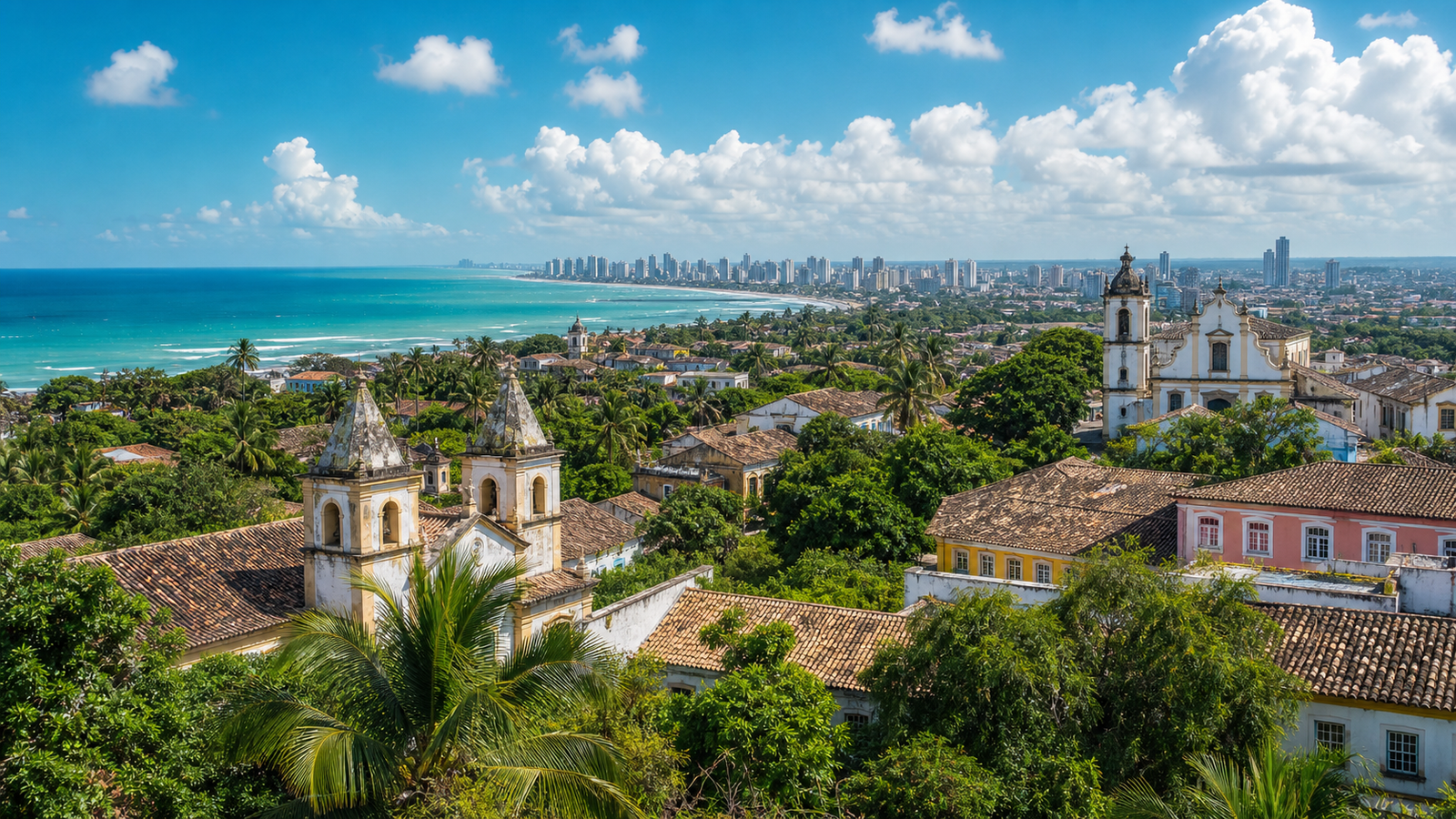
Olinda is one of Brazil’s most enchanting colonial treasures, renowned for its candy-colored 18th-century houses, baroque churches, and sweeping coastal panoramas. Yet first-time visitors frequently make a punishing mistake: arriving at the bottom of the town and attempting to hike uphill through tropical humidity and steep cobblestone slopes (ladeiras). Within an hour, exhaustion sets in, cutting short what should be a leisurely cultural day trip.
The secret to an unforgettable day in Olinda’s UNESCO-listed Sítio Histórico is starting at the summit and walking downhill. By taking an Uber or taxi directly to Alto da Sé at the hilltop, you unlock a scenic, gravity-assisted walking circuit that lets you experience every iconic church, vibrant artisan studio, and panoramic vista with minimal physical fatigue.
The Downhill Strategy: How to Tackle Olinda Without the Burnout
Inscribed as a UNESCO World Heritage site in 1982, the Sítio Histórico of Olinda preserves a unique 16th-century urban layout where Portuguese colonial architecture harmonizes with lush Atlantic gardens. Founded in 1535 as the capital of the Captaincy of Pernambuco, the town grew wealthy from sugar cane before being burned by Dutch invaders in 1631 and subsequently rebuilt during a golden era of baroque architecture.
Because the historic district is spread across rolling coastal hills, your route design makes all the difference. Arriving at the hilltop summit of Alto da Sé means every step of your walking tour moves downward through the central historic streets toward Quatro Cantos, Rua do Amparo, and Mosteiro de São Bento, ending comfortably in the lower town near Praça do Carmo.
Start at the Summit: Alto da Sé and Panoramic Views of Recife
Begin your morning at Alto da Sé, the highest geographic point in the historic center. Here, the terrace in front of the Catedral da Sé (also known as the Catedral de São Salvador do Mundo) offers the most famous panoramic postcard view in Pernambuco: historic terracotta roofs and swaying coconut palms in the foreground, framing the turquoise ocean and the modern high-rise skyline of Recife in the distance.
Before beginning your descent, take time to visit the cathedral, originally constructed in the late 16th century and restored with neoclassical and colonial elements. Surrounding the plaza, local artisans sell handmade lace, woodcarvings, and souvenirs, alongside stalls serving freshly pressed coconut water and traditional tapiocas. You can also catch the glass panoramic elevator at the former water tower (Caixa d’Água) for a 360-degree aerial perspective across the coastline.
The Cultural Crossroads: Quatro Cantos and Rua do Amparo
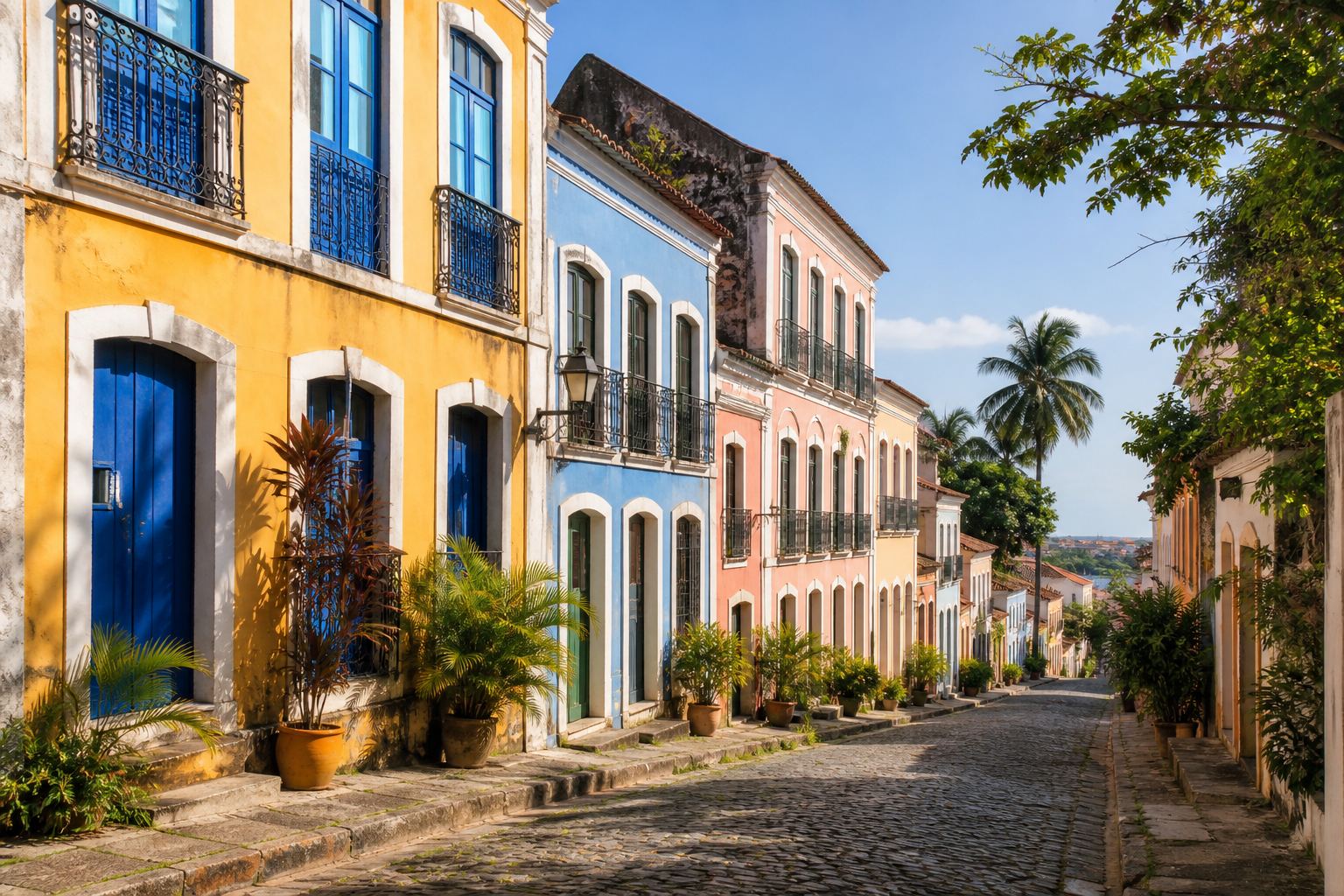
From Alto da Sé, begin your gentle descent down toward Quatro Cantos, the historic intersection where four famous colonial lanes converge: Rua do Amparo, Rua Prudente de Morais, Rua Bernardo Vieira de Melo, and the famously steep Ladeira da Misericórdia. During Carnival, Quatro Cantos is the pulsing heart of Olinda’s street celebrations, but on typical mornings, it serves as a peaceful gathering point surrounded by colonial facades and traditional watering holes like the historic Bodega de Véio.
Turn into Rua do Amparo, the cultural and bohemian spine of the Sítio Histórico. This stone-paved corridor is lined with pastel-hued townhouses featuring wooden shutters and Portuguese wrought-iron balconies. It is home to active artist workshops, independent galleries, the Museu Regional de Olinda (No. 128), and workshop spaces for the famous Bonecos Gigantes—the towering papier-mâché puppets celebrated during street parades.
Masterpieces of Faith: Mosteiro de São Bento and Convento de São Francisco
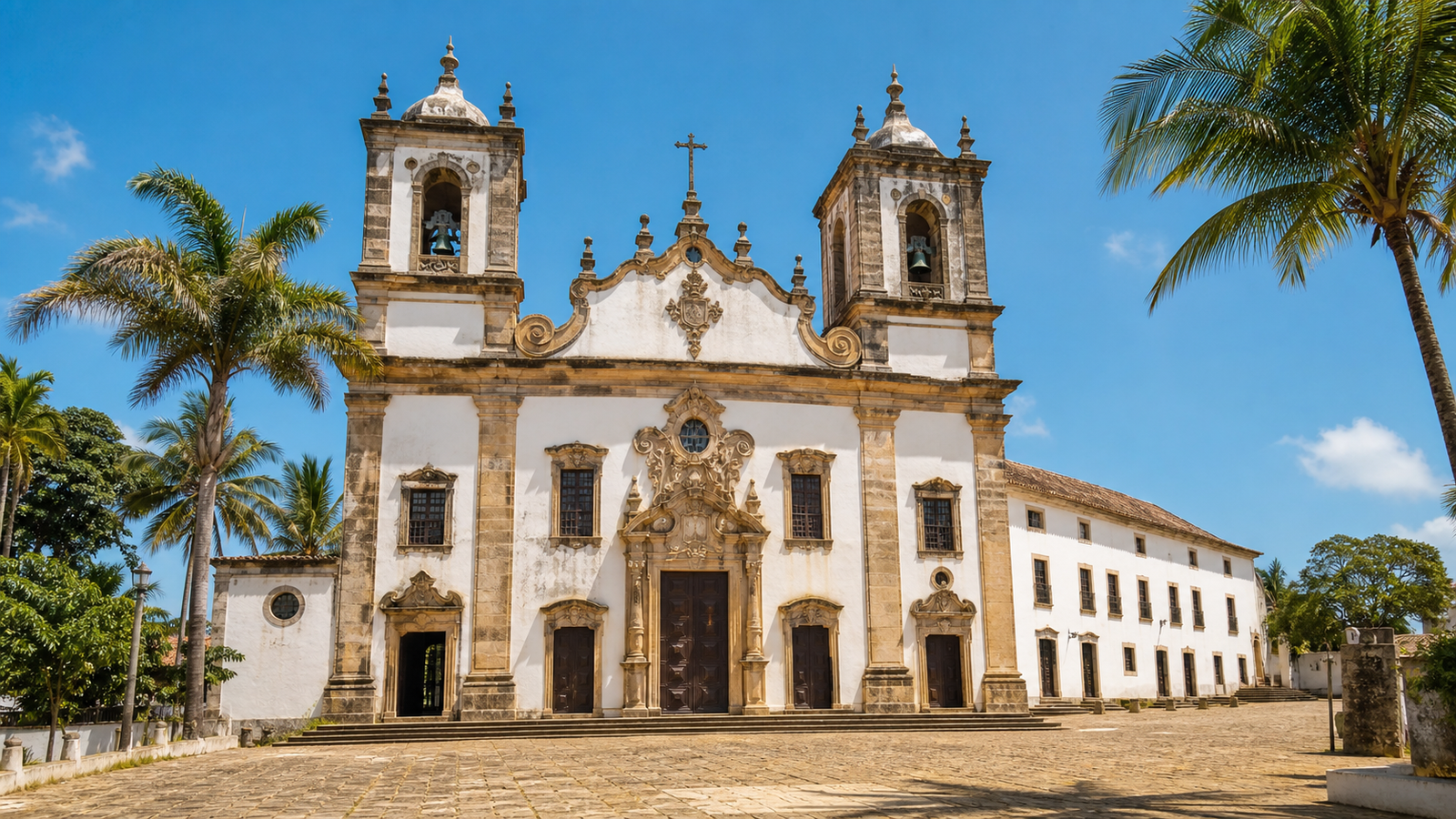
Olinda is celebrated for its extraordinary sacred architecture, but two religious complexes stand out as essential stops on your downhill circuit:
Convento de São Francisco (Convento e Igreja de Nossa Senhora das Neves): Established in 1585 as the first Franciscan monastery built in Brazil, this complex houses one of Latin America’s most valuable collections of 17th- and 18th-century blue-and-white Portuguese ceramic tiles (azulejos). The tiled panels lining the quiet cloister portray scenes from the life and death of Saint Francis of Assisi, offering an atmosphere of serene historic contemplation.
Basílica e Mosteiro de São Bento: Located toward the lower edge of the historic quarter on Rua de São Bento, this 18th-century Benedictine basilica contains one of the finest baroque masterpieces in the Americas: an awe-inspiring, 12-meter-tall high altar carved from cedarwood and completely gilded in gold leaf. (The altar is so celebrated that parts of it were disassembled and exhibited at New York’s Guggenheim Museum in 2001). If your visit falls on a Sunday morning, attending the 10:00 AM conventual mass lets you hear the Benedictine monks singing traditional Gregorian chant.
| Stop / Landmark | Location | Key Highlight | Recommended Time |
|---|---|---|---|
| Alto da Sé & Catedral | Hilltop Summit | Panoramic skyline view of Recife & historic cathedral | 30–45 mins |
| Quatro Cantos & Rua do Amparo | Central Quarter | Artisan ateliers, colonial facades & vibrant street life | 45–60 mins |
| Convento de São Francisco | Rua de São Francisco | 1585 Franciscan cloister & Portuguese tile panels | 30–40 mins |
| Mosteiro de São Bento | Rua de São Bento | 12-meter gilded baroque altar & Benedictine basilica | 30–40 mins |
Practical Tips for Walking Olinda: Footwear, Safety, and Timing
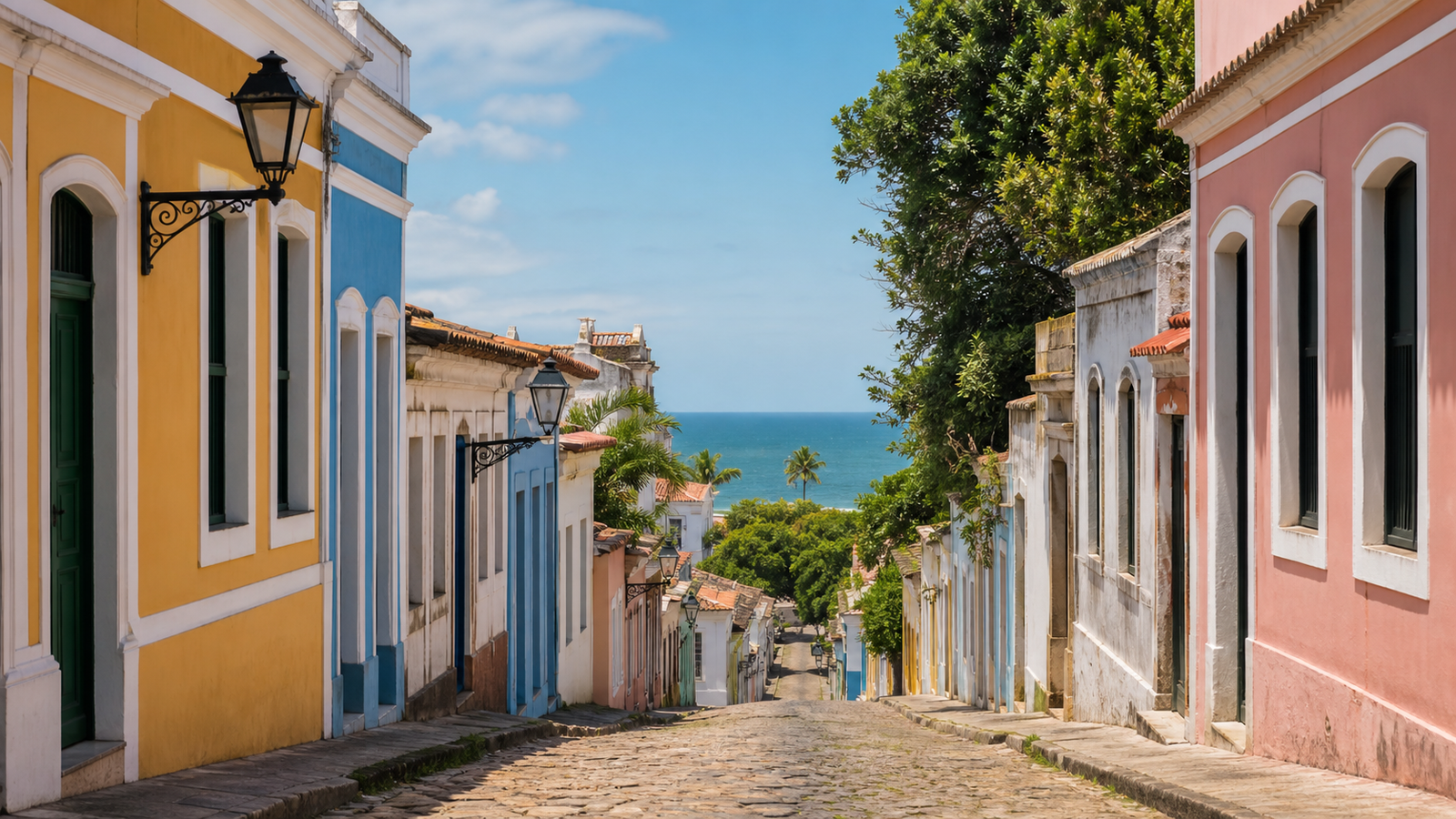
To ensure your self-guided walk through the Sítio Histórico remains enjoyable and safe, keep these practical rules in mind:
- Footwear Traction: Wear sturdy sneakers or walking shoes with strong rubber grip. Olinda’s centuries-old cobblestones (pedra sabão and colonial stones) are polished and can be surprisingly slick, particularly if caught in a sudden tropical shower. Avoid smooth-soled sandals or flip-flops.
- Beat the Midday Sun: Start your walk early, ideally around 8:30 AM or 9:00 AM, to explore the outdoor streets before peak midday heat. Alternatively, an afternoon walk starting around 2:30 PM allows you to finish your descent at São Bento before returning to Alto da Sé for sunset.
- Hydration and Sun Protection: The reflection of tropical sunlight off white and pastel colonial facades increases heat exposure. Carry a refillable water bottle, wear a wide-brimmed hat, and apply high-SPF sunscreen.
- Navigating Informal Guides: When you arrive at Alto da Sé or Quatro Cantos, local informal guides may approach offering walking tours. While many are friendly locals, agree explicitly on a fixed price before taking a tour, or politely decline with a clear, firm “não, obrigado” if you prefer exploring independently.
- Transportation: Rideshare apps like Uber operate reliably between Recife (Boa Viagem or Recife Antigo) and Olinda, taking roughly 20 to 30 minutes outside of peak rush hour. Set your drop-off destination to Igreja da Sé / Alto da Sé to begin at the top of the hill.
Frequently Asked Questions About Olinda’s Sítio Histórico
How long does it take to walk through Olinda’s Sítio Histórico?
A relaxed walking circuit covering the major churches, panoramic viewpoints, and artisan streets takes approximately 3 to 4 hours, leaving ample time for photos and a refreshment stop.
Why is starting at Alto da Sé better than Praça do Carmo?
Starting at Alto da Sé allows you to walk downward through Olinda’s steep colonial slopes instead of trekking uphill against the gradient in tropical humidity.
What should I wear for a walking day in Olinda?
Lightweight, breathable clothing paired with supportive sneakers or shoes with strong rubber traction is best for safely navigating cobblestone lanes.
Can I visit Olinda as a half-day trip from Recife?
Yes. Because Olinda is only 6 to 10 kilometers north of central Recife, it makes an ideal half-day morning or afternoon excursion.