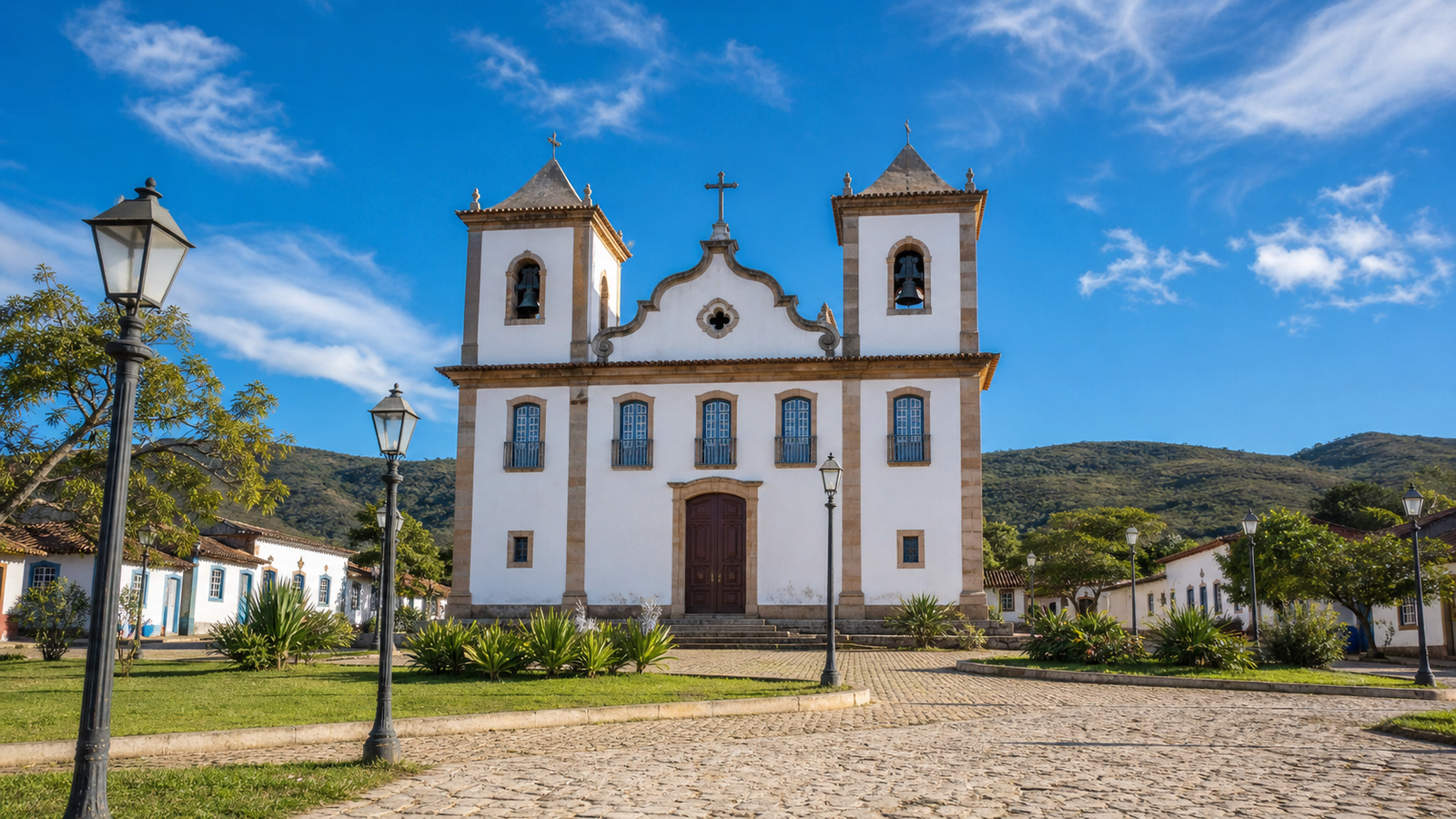
While most international travelers know the state of Goiás for the raw waterfalls and sandstone plateaus of the Brazilian savanna, the town of Pirenópolis holds one of the country’s most enchanting historical surprises. Founded in 1727 as Minas de Nossa Senhora do Rosário de Meia Ponte during the height of the Central Brazil gold rush, Pirenópolis preserved its colonial charm nearly intact after the gold deposits dried up and regional trade shifted elsewhere. Today, its entire historic center is protected as a National Historic Landmark by IPHAN (the National Institute of Historic and Artistic Heritage), offering travelers a walkable, picturesque window into 18th-century Brazil.
Exploring Pirenópolis on foot is remarkably rewarding. Unlike the steep, leg-burning mountain ascents of Ouro Preto or Olinda, Pirenópolis occupies a gentle valley along the Rio das Almas. A complete walking circuit covers roughly 2.5 kilometers (1.5 miles), easily completed in two to three relaxed hours with plenty of time for church visits, photography, and artisanal coffee.
Why Pirenópolis Historic Center Captivates Travelers
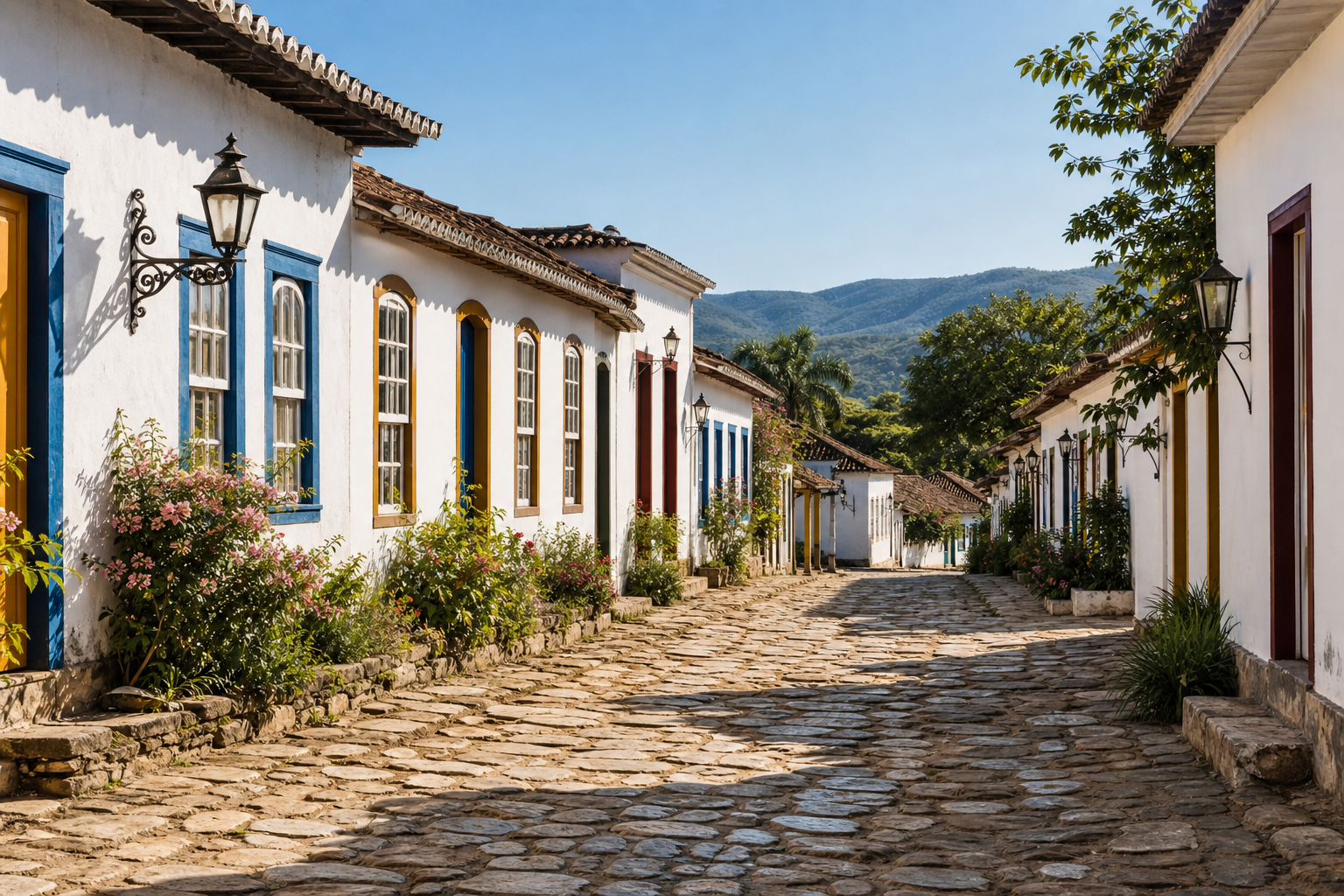
What makes Pirenópolis immediately captivating is its cohesive architectural landscape. The streets are framed by whitewashed colonial casarões with colorful wooden shutters, clay-tiled roofs, and ancient streetlamps, all paved with pale quartz cobblestones quarried from the surrounding Serra dos Pireneus mountains.
Because the town avoided rapid 20th-century modernization, you can walk along the exact street grid mapped out by 18th-century miners and Portuguese settlers. The historical core is clean, safe, and deeply peaceful in the morning hours, making it an ideal half-day cultural counterpart to afternoon dips in nearby waterfalls.
The Core Walking Route: A Step-by-Step 2.5 km Loop
To see all the major heritage monuments without unnecessary backtracking or walking uphill in the midday heat, follow this simple circular route:
- Stop 1: Praça da Matriz — Start at the central town square in front of the grand Igreja Matriz de Nossa Senhora do Rosário.
- Stop 2: Rua Direita — Walk downhill past preserved 18th-century mansions, art galleries, and traditional silver workshops.
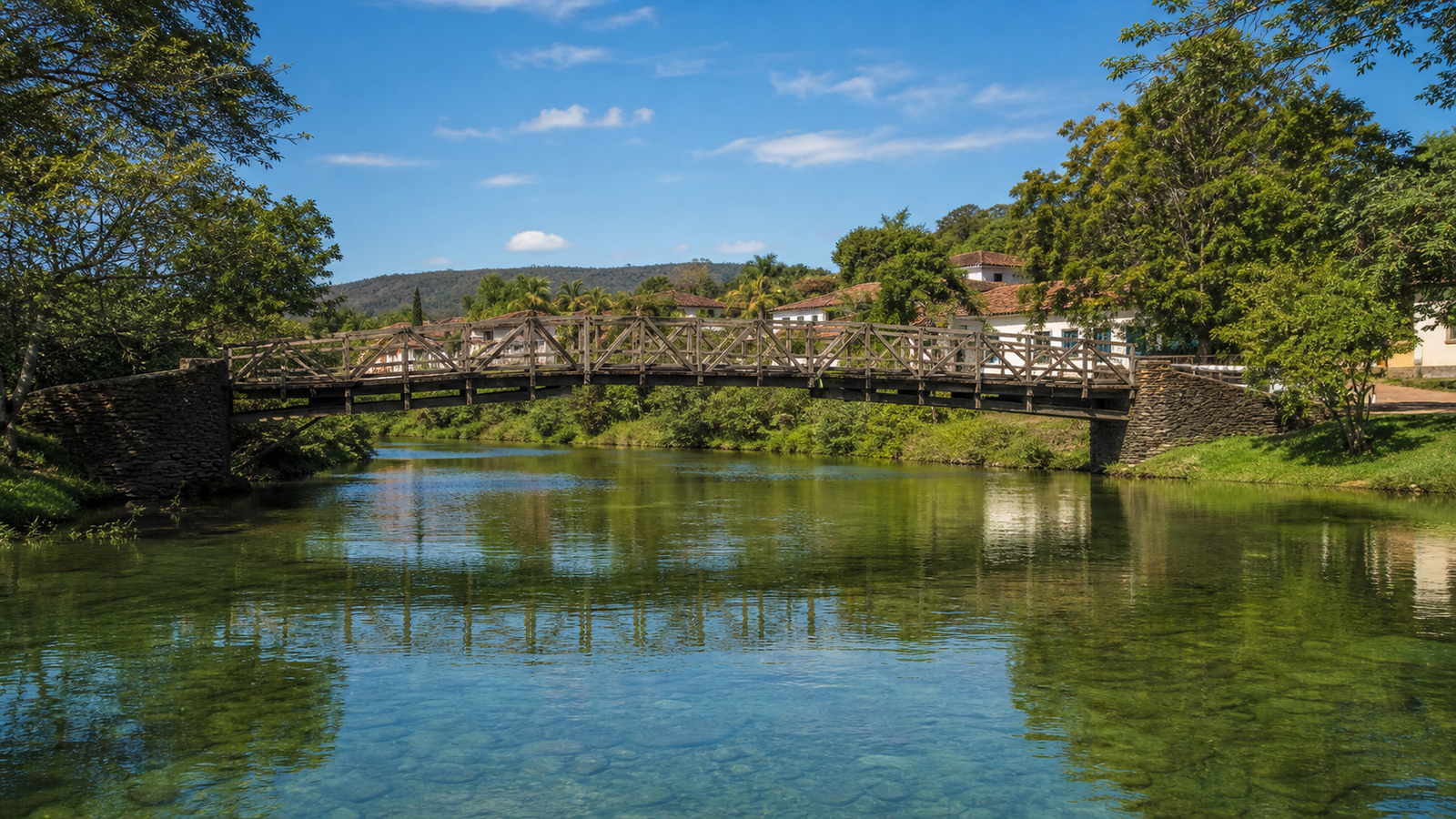
- Stop 3: Ponte Velha & Rio das Almas — Cross the scenic wooden bridge connecting the central core to the historic Carmo riverbank.
- Stop 4: Igreja de Nossa Senhora do Carmo — Visit the 1750 riverside church housing the Museum of Sacred Art.
- Stop 5: Cine Pireneus — Loop back toward Praça Emanuel Jaime Lopes to admire the striking 1936 Art Deco cinema facade.
- Stop 6: Rua do Bonfim & Igreja do Bonfim — Ascend the gentle cobblestone incline to the hilltop church for sweeping valley views.
- Stop 7: Rua do Lazer (Rua do Rosário) — Stroll back down into the main dining street to finish with regional food and cold drinks.
Igreja Matriz de Nossa Senhora do Rosário: The Crown Jewel
Rising above Praça da Matriz, the Igreja Matriz de Nossa Senhora do Rosário is widely recognized as the oldest and largest historic-religious monument in Goiás. Built between 1728 and 1732, the church was constructed using traditional colonial techniques, including thick rammed earth (taipa de pilão) walls and native hardwood timber framing.
The church also represents one of the greatest heritage restoration stories in South American history. In September 2002, a tragic accidental fire engulfed the interior, destroying the wooden roof, altars, and 18th-century artwork. Rather than using modern concrete, IPHAN and master artisans undertook a meticulous four-year historical reconstruction, reviving 18th-century carpentry, adobe crafting, and clay tiling methods. Reopened in 2006, the cathedral stands beautifully restored and open to visitors for a small conservation contribution (typically R$ 5 to R$ 10).
Down Rua Direita and Across the Historic Ponte Velha
From Praça da Matriz, head down Rua Direita, one of Pirenópolis’s oldest streets. In colonial times, this was the primary commercial axis where gold merchants and local elites resided. Today, the street is renowned for handmade 925 silver jewelry ateliers, a centuries-old artisanal craft unique to Pirenópolis.
At the base of the street, you will reach the Ponte Velha (Old Bridge) spanning the calm green waters of the Rio das Almas. The original bridge at this location was built in 1750. According to local lore, a massive 18th-century flood washed away the eastern section, leaving only “half a bridge” standing — giving the town its historical name, Meia Ponte (renamed Pirenópolis in 1890). Cross the wooden bridge to visit the Igreja de Nossa Senhora do Carmo (1750–1754), which now houses the town’s Museum of Sacred Art.
Cine Pireneus and the Hilltop Views at Igreja do Bonfim
Recrossing the river and heading slightly north, you will encounter a surprising architectural contrast: Cine Pireneus. Originally built in 1889 as a classical theater (Theatro de Pirenópolis), the building was remodeled in 1936 with an elegant Art Deco facade, creating a charming aesthetic clash against the surrounding colonial buildings.
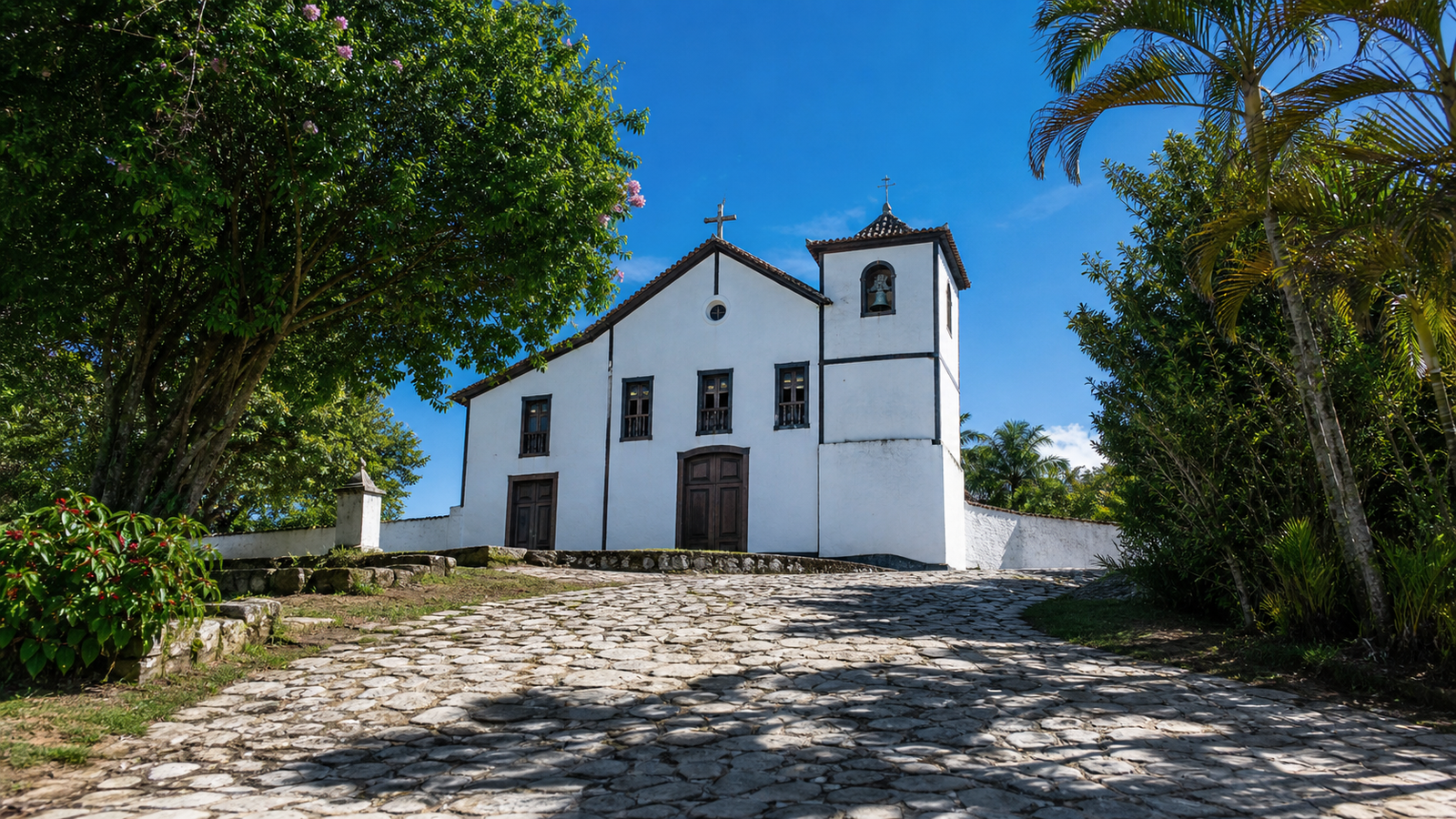
From Cine Pireneus, follow the picturesque cobblestones up Rua do Bonfim to the Igreja de Nosso Senhor do Bonfim (built 1750–1754). Perched on the highest point in town, this church was financed by wealthy mining patrons and houses an 18th-century wooden image of Christ brought all the way from Salvador, Bahia. The open churchyard offers an exceptional panoramic view over the red-tile rooftops and green hills of Pirenópolis.
Evening on Rua do Lazer: Where History Meets Dining
As the afternoon sun dips behind the mountains, head down to Rua do Rosário, famously nicknamed Rua do Lazer (Leisure Street). On weekends and peak holiday evenings, the entire street is closed to vehicle traffic, transforming into an open-air pedestrian dining promenade.
Restaurants, bars, and craft brewpubs set candlelit wooden tables beneath trees and vintage lanterns. It is the ultimate spot to unwind after your walking tour, sample hearty empadão goiano (a savory pie filled with chicken, pork, and local palm heart), or sip a craft beer brewed right in Goiás.
Practical Tips: Footwear, Timing, and Navigation
To make the most of your self-guided walking tour in Pirenópolis, keep these essential practical tips in mind:
- Footwear is Critical: Pirenópolis streets are paved with uneven quartz cobblestones known locally as pedra-pirenópolis or pé-de-moleque. Wear flat walking shoes, sneakers, or hiking sandals with strong rubber grip. Avoid smooth-soled shoes or high heels, as the stones can become very slick, especially when damp.
- Best Timing for Photos: Start between 8:00 AM and 10:00 AM for soft morning light on the colonial facades and quiet streets before tour groups arrive. Late afternoon (4:30 PM to 6:00 PM) offers gorgeous golden hour lighting around Praça da Matriz.
- Hydration & Sun Protection: In the Cerrado dry season (May to September), midday humidity can drop significantly while sunshine remains intense. Carry a water bottle and wear sunscreen.
- Safety: Pirenópolis is one of the safest destination towns in Brazil. Walking around with a camera or smartphone during daylight and evening dining hours is relaxed and standard.
Pirenópolis Historic Center Highlights at a Glance
| Landmark | Construction Date | Architectural Style | Key Feature | Location |
|---|---|---|---|---|
| Igreja Matriz do Rosário | 1728–1732 (restored 2006) | Colonial Baroque / Rammed Earth | Oldest church in Goiás; landmark restoration | Praça da Matriz |
| Ponte Velha | 1750 (rebuilt 1899) | Colonial Wooden Truss Bridge | Scenic river crossing; origin of “Meia Ponte” name | Rio das Almas |
| Igreja de N. Sra. do Carmo | 1750–1754 | Colonial Adobe | Houses the Museum of Sacred Art | Bairro do Carmo |
| Cine Pireneus | 1889 (remodeled 1936) | Art Deco | 1930s cinematic facade in colonial center | Rua Direita |
| Igreja do Bonfim | 1750–1754 | Colonial Timber Frame | Hilltop viewpoint and 18th-century Bahia statue | Alto do Bonfim |
| Rua do Lazer | 18th Century | Colonial Streetscape | Pedestrian dining corridor with nightlife | Rua do Rosário |
Frequently Asked Questions
Is Pirenópolis historic center safe to walk around?
Yes, Pirenópolis is one of the safest tourist destinations in Brazil, with a calm, welcoming, and family-friendly atmosphere. Standard travel awareness is recommended, but walking with cameras and exploring the streets both during the day and in the well-lit evening dining areas is very safe.
How long does it take to walk through Pirenópolis historic center?
The standard 2.5-kilometer circular walking route takes between two and three hours at a comfortable sightseeing pace. This provides ample time for interior visits to Igreja Matriz, photo stops along Rua Direita, and crossing the Ponte Velha bridge.
What shoes should I wear to walk in Pirenópolis?
Wear flat, sturdy walking sneakers or shoes with rubber traction. The streets are paved with historic quartz cobblestones (pedra-pirenópolis) that are uneven and can be slippery underfoot.
Can you visit the interior of Igreja Matriz?
Yes, Igreja Matriz is open for public tourist visits throughout the week for a modest maintenance contribution (typically R$ 5 to R$ 10). Entrance is free during active Catholic masses, during which tourist walkthroughs are paused out of respect for worshipers.