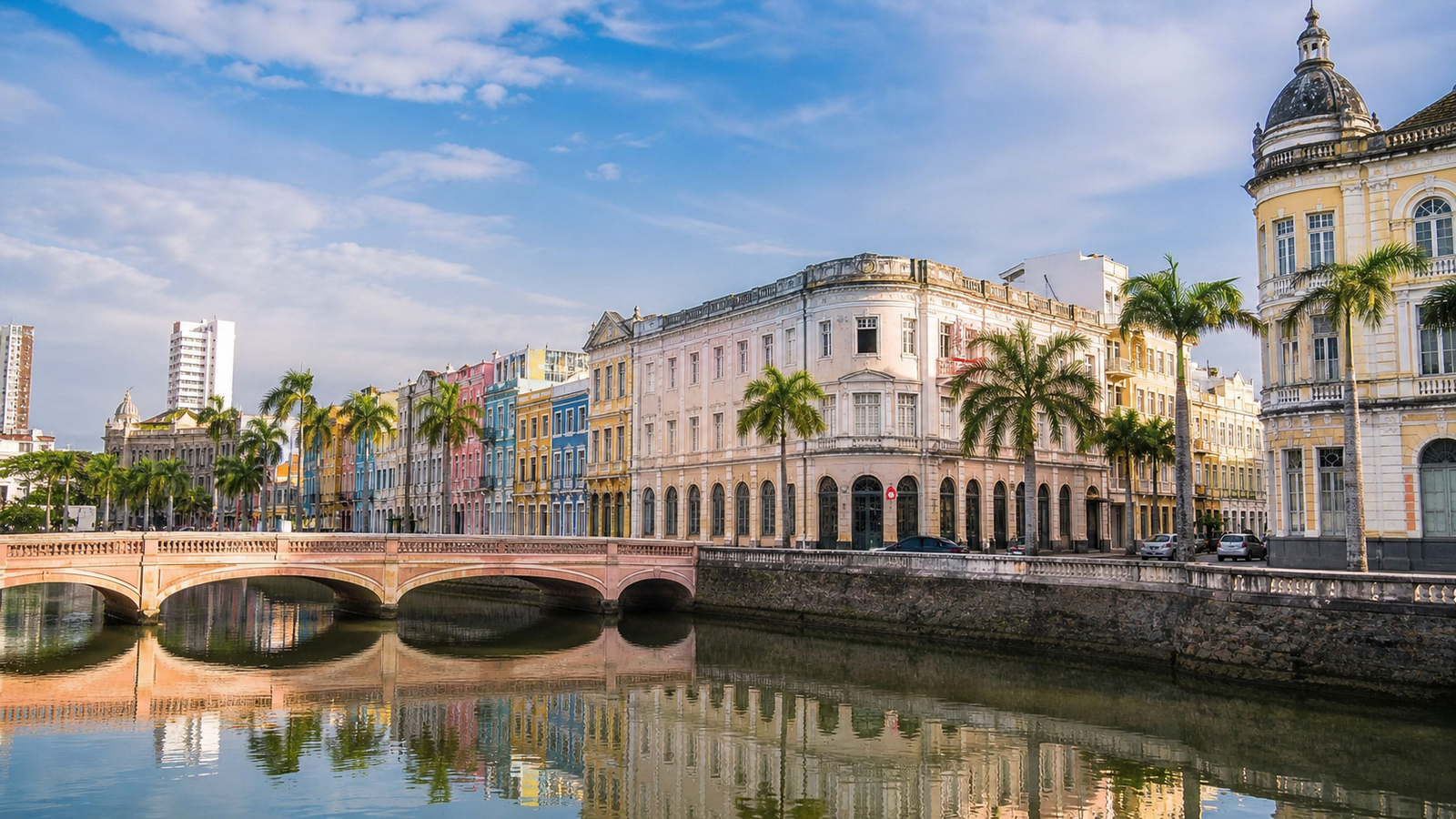
Recife earned its nickname as the “Brazilian Venice” not just because water cuts through the city, but because its history is built across a walkable web of rivers, bridges, and pastel-painted colonial islands. While many travelers get whisked straight from their hotels in Boa Viagem to distant beach resorts or private boat charters, the city’s most authentic cultural soul lives right along its historic streets—and exploring them costs zero reais in admission fees.
From 19th-century neoclassical row houses reflecting into the Capibaribe River to centuries-old stone fortresses built during the Dutch colonial era, downtown Recife is an open-air museum. Whether you are traveling on a budget or simply prefer wandering atmospheric cobblestone alleys over booking crowded tour buses, here are 6 historic streets, squares, and free cultural sights you should not miss.
Rua da Aurora: Neoclassical row houses and Capibaribe river reflections
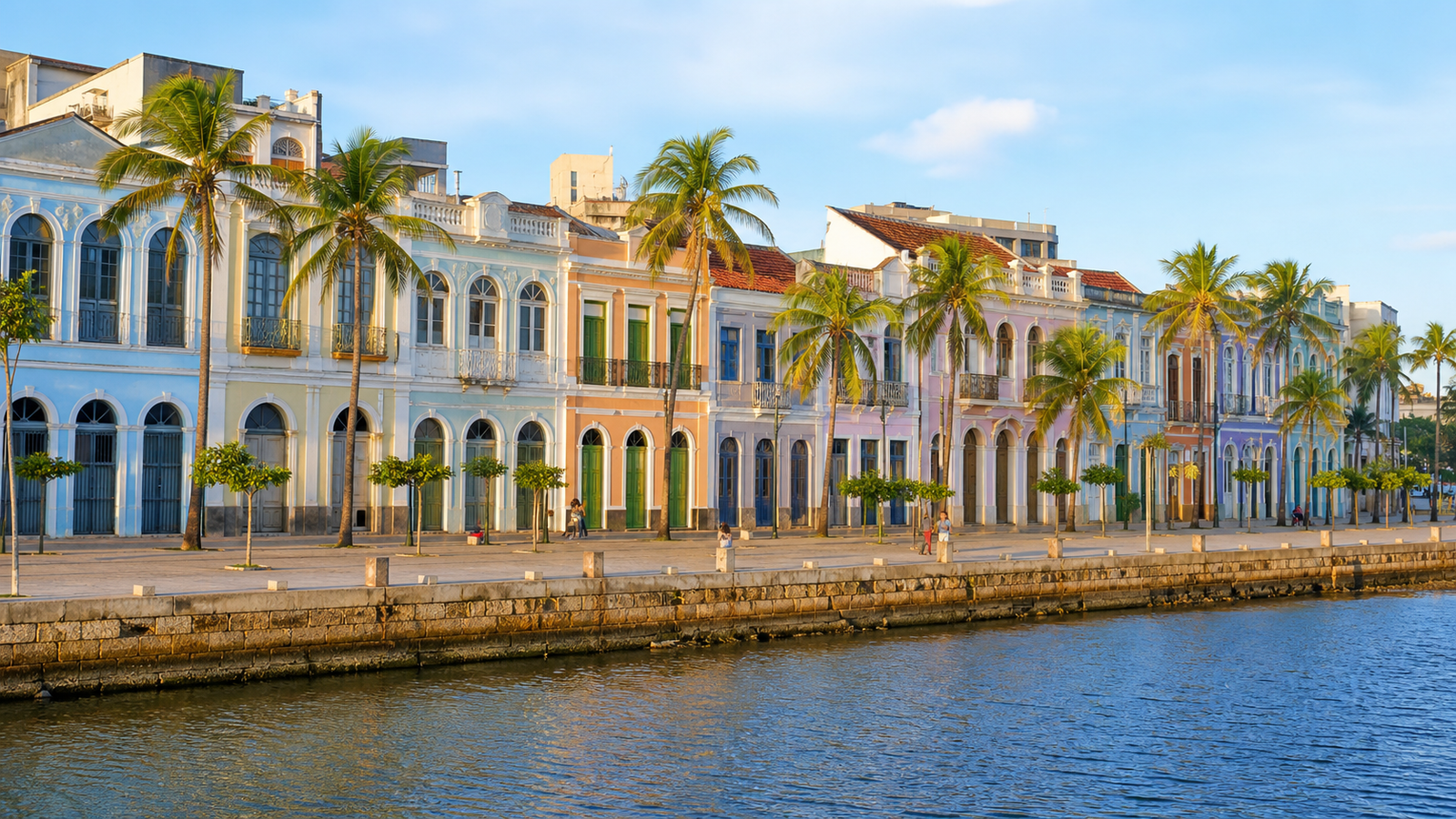
Running along the eastern bank of the Capibaribe River in the Boa Vista neighborhood, Rua da Aurora is one of Recife’s most photographed streetscapes. The street owes its name to its eastward orientation toward the sunrise, facing directly across the water toward the historic island of Santo Antônio.
The main draw here is the continuous wall of 19th-century neoclassical townhouses painted in cheerful pastel shades of pink, yellow, mint green, and terracotta. In the calm morning light, these facades create mirror-like reflections on the river surface. As you stroll the wide pedestrian sidewalk beneath tropical palm trees, you will also spot the famous Caranguejo Gigante (Giant Crab sculpture)—a public tribute to Recife’s iconic 1990s Manguebeat cultural movement that celebrated the mangrove ecosystems and urban identity of Pernambuco.
- Location: Boa Vista, along the Capibaribe River promenade.
- Admission: 100% Free (public street).
- Best time to visit: Early morning (8:30 AM to 10:30 AM) for softer sunlight, calm river reflections, and cooler walking temperatures. On weekends, the promenade often hosts the open-air Feira da Aurora craft and food fair.
Pátio de São Pedro: Cobblestones, baroque curves, and living culture
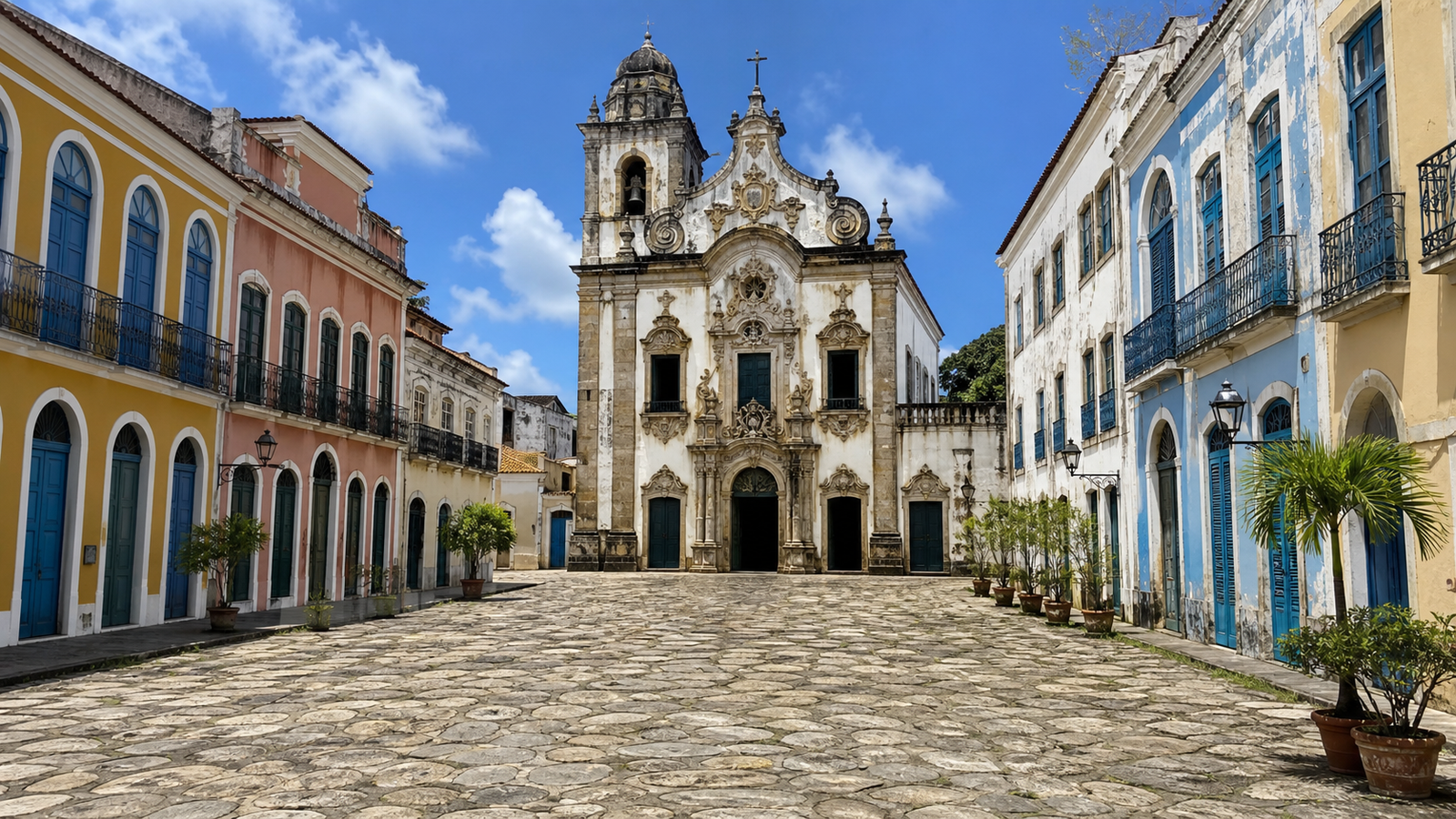
Cross the river into the historic neighborhood of Santo Antônio and make your way to Pátio de São Pedro, one of the few surviving colonial church squares in Brazil that retains its original irregular cobblestone pavement and continuous ring of 18th-century two-story merchant houses.
Dominating the square is the monumental Concatedral de São Pedro dos Clérigos, completed in 1782. Its tall, narrow Baroque facade and finely carved jacaranda wood interiors stand in striking contrast to the humble stone ground below. The surrounding restored townhouses now house cultural centers and artist spaces, including the Memorial Chico Science and the Casa do Carnaval, where visitors can learn about local rhythms like Maracatu and Frevo for free.
- Location: Bairro de Santo Antônio (near Avenida Dantas Barreto).
- Admission: Free public square access; free admission to municipal memorials.
- Insider tip: Take a few minutes to sit at one of the open-air corner cafes with a cup of regional coffee while soaking in the quiet architectural harmony before the midday heat picks up.
Crossing the Historic Bridges: From Nassau to Santa Isabel
You cannot understand Recife without walking across its historic bridge network. Because the central core is divided into three distinct islands—Recife Antigo, Santo Antônio, and Boa Vista—bridges have served as the vital arteries of the city for nearly four centuries.
Start with Ponte Maurício de Nassau, originally constructed in 1643 under Dutch governor Count John Maurice of Nassau as the first large bridge built in Latin America. Although rebuilt in modern times, it remains adorned with classical bronze statues representing poets, guardians, and river sirens. A short walk upstream brings you to Ponte Santa Isabel and Ponte Buarque de Macedo, offering dramatic vantage points overlooking colonial rooftops, church domes, and traditional fishing boats navigating the river canals.
- Location: Connecting Recife Antigo, Santo Antônio, and Boa Vista.
- Admission: 100% Free (pedestrian sidewalks).
- Photo tip: The pedestrian crossing along Ponte Maurício de Nassau provides the clearest unobstructed view of the colonial facades along Rua da Aurora.
Forte das Cinco Pontas: 17th-century fortress and free city museum
At the southern edge of the São José district stands Forte das Cinco Pontas (Fort of the Five Points). Originally built out of earth and timber by Dutch forces in 1630 as Fort Frederik Hendrik to protect water supplies and canal routes, it was later rebuilt in sturdy stone by the Portuguese in 1677 with four bastions.
Today, the fortress houses the Museu da Cidade do Recife (City Museum), which offers permanent free admission. Inside the thick stone walls and quiet courtyard, visitors can explore fascinating collections of historical maps, colonial archaeological relics, antique photographs, and tile art tracing Recife’s growth from a modest fishing port into a major Atlantic cultural capital.
- Location: Praça das Cinco Pontas, Bairro de São José.
- Admission: 100% Free for all visitors.
- Opening Hours: Wednesday to Friday from 10:00 AM to 5:00 PM; Saturday and Sunday from 10:00 AM to 4:00 PM (Closed Mondays and Tuesdays).
Parque das Esculturas Francisco Brennand: Harbor views and iconic ceramics
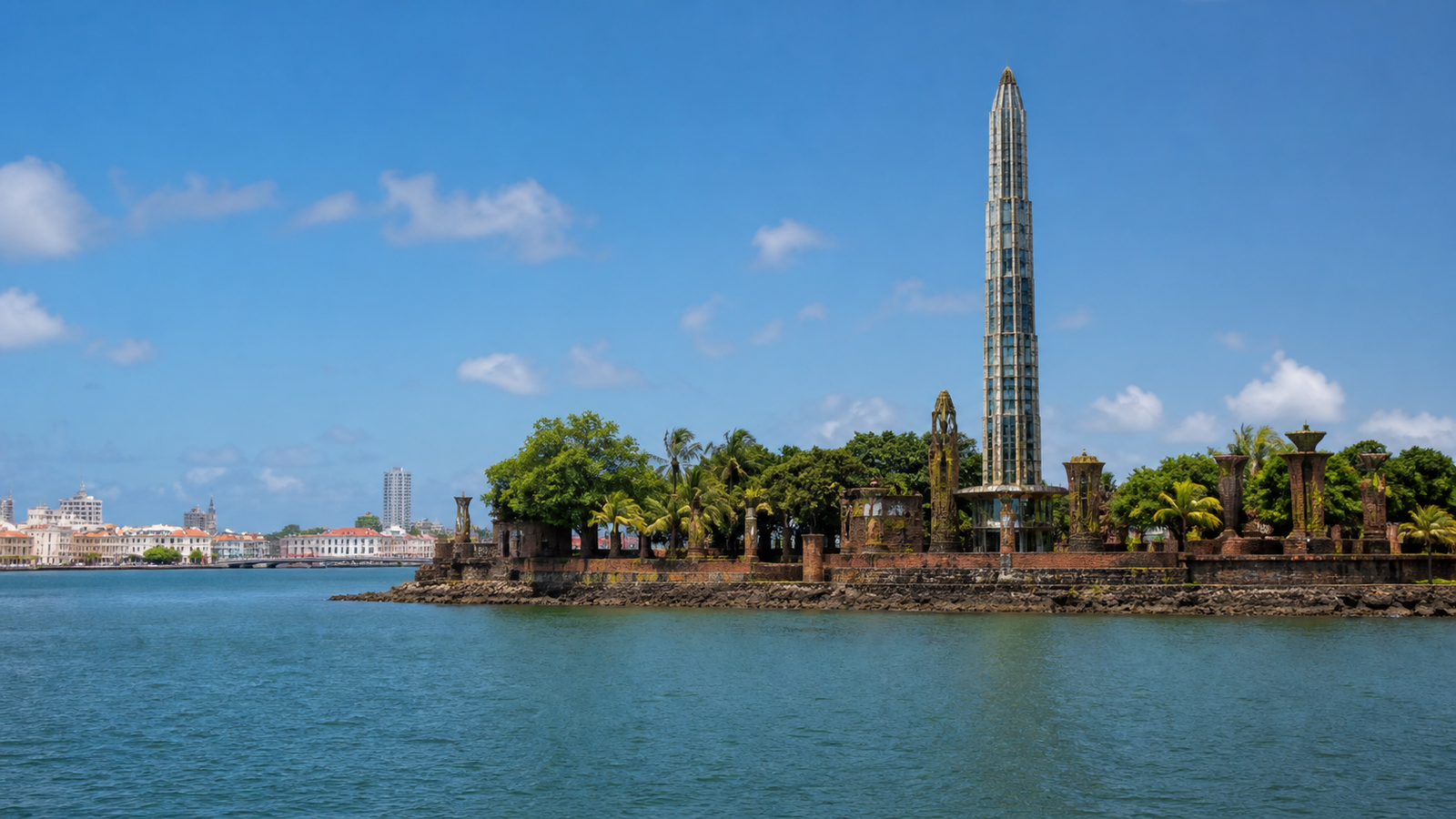
Perched directly atop the natural ocean reef barrier across the harbor from Marco Zero, Parque das Esculturas Francisco Brennand is one of Recife’s most striking open-air art landmarks. Created in the year 2000 to celebrate Brazil’s 500th anniversary, the park showcases over 100 monumental bronze and clay sculptures by master Pernambucan ceramic artist Francisco Brennand, centered around the soaring 32-meter Torre de Cristal (Crystal Tower).
Following an extensive revitalization completed by the city in March 2024, the sculpture park is once again fully restored and open to the public for free. To reach the breakwater, simply hop on one of the small wooden shuttle boats waiting at the Marco Zero pier. The scenic five-minute boat crossing costs just R$ 5.00 each way per passenger, rewarding you with panoramic views of the ocean breakwater, the historic harbor, and the Recife Antigo waterfront.
- Location: Ocean Reef Barrier (accessible via small boat from Marco Zero pier).
- Admission: Free park entry; boat crossing is R$ 5.00 each way (payable in cash or Pix).
- Opening Hours: Tuesday to Friday from 10:00 AM to 5:00 PM; Saturday and Sunday from 9:00 AM to 6:00 PM (last entry 20 minutes before closing).
The Tuesday Bonus: Free entry to Paço do Frevo and Cais do Sertão
While the streets, courtyards, bridges, and forts mentioned above are free every day they are open, timing your cultural walking tour on a Tuesday unlocks an incredible bonus: Recife’s two premier indoor museums waive their admission fees entirely.
Located on Praça do Arsenal in Recife Antigo, Paço do Frevo is an internationally acclaimed interactive museum dedicated to Frevo—the energetic dance, brass music, and colorful umbrella rhythm recognized by UNESCO as Intangible Cultural Heritage of Humanity. A few minutes away along Avenida Alfredo Lisboa, Centro Cultural Cais do Sertão offers an immersive, sensory exploration of Northeastern backlands (Sertão) culture, folklore, and music icon Luiz Gonzaga.
Before leaving the harbor, step inside the Centro de Artesanato de Pernambuco right by Marco Zero. It has free admission every day and houses over 25,000 certified pieces crafted by local artisans, making it a wonderful space to admire regional woodwork, clay figurines, and lace.
- Paço do Frevo: Free every Tuesday (10:00 AM to 5:00 PM).
- Cais do Sertão: Free every Tuesday (10:00 AM to 4:00 PM / 5:00 PM).
- Centro de Artesanato: Free admission daily (Monday to Saturday 9:00 AM to 7:00 PM; Sunday 10:00 AM to 6:00 PM).
Practical Tips: Timing, safety, and a seamless half-day route
To enjoy historic Recife comfortably and safely on foot, follow these straightforward local guidelines:
- Optimal Daylight Window: Plan your walking tour between 9:30 AM and 3:30 PM. During these hours, streets and plazas are active with shopkeepers, office workers, and municipal police patrols. Avoid lingering in quiet side streets after businesses shutter in the late afternoon.
- Recommended Pedestrian Sequence: Start your morning at Rua da Aurora in Boa Vista → Walk across Ponte Santa Isabel into Santo Antônio → Wander through Pátio de São Pedro → Stroll south to Forte das Cinco Pontas → Cross Ponte Maurício de Nassau into Recife Antigo → Take the quick boat across Marco Zero to Parque das Esculturas.
- Street Smarts: Keep smartphones and expensive cameras inside a secure crossbody bag between major photo stops. Wear comfortable walking shoes for uneven cobblestones, stay hydrated under the tropical sun, and take rideshare cars (Uber or 99) directly to and from your hotel.
Recife Free Historic & Cultural Sights at a Glance
| Attraction | Neighborhood | Admission Fee | Opening Hours | Highlights |
|---|---|---|---|---|
| Rua da Aurora | Boa Vista | Free | Public access (daylight recommended) | Neoclassical row houses & river promenade |
| Pátio de São Pedro | Santo Antônio | Free | Public access (Tue-Sun memorials) | 18th-century Concatedral & cobblestones |
| Historic River Bridges | Between Islands | Free | Public access (daylight recommended) | Historic statues & panoramic canal views |
| Forte das Cinco Pontas | São José | Free | Wed-Fri 10h-17h, Sat-Sun 10h-16h | 17th-century Dutch fortress & City Museum |
| Parque das Esculturas | Harbor Reef | Free (R$ 5 boat ride) | Tue-Fri 10h-17h, Sat-Sun 9h-18h | Brennand ceramic works & Torre de Cristal |
| Paço do Frevo & Cais do Sertão | Recife Antigo | Free on Tuesdays | Tuesdays 10h-17h / 10h-16h | World-class music & cultural exhibits |
Frequently Asked Questions
Are historic streets in Recife safe to walk for foreign tourists?
Yes, downtown historic streets in Recife are safe to explore during bright daylight hours (9:30 AM to 4:00 PM) when foot traffic is steady and shops are open. As in any large city, keep valuables discreet, stay on main pedestrian thoroughfares, avoid deserted alleys, and use rideshare apps to travel between your hotel and the historic center.
How much does it cost to visit Parque das Esculturas Francisco Brennand?
Admission to the sculpture park itself is completely free. If you take the traditional shuttle boat across the harbor basin from the Marco Zero pier, the fare is R$ 5.00 per passenger each way, paid directly to the local boat operator.
Which museums in Recife offer free admission days?
Paço do Frevo and Museu Cais do Sertão both offer free entry for all visitors every Tuesday. In addition, the Museu da Cidade do Recife inside Forte das Cinco Pontas and the Centro de Artesanato de Pernambuco are free all open days throughout the week.
How long does this historic walking route take?
A relaxed walking tour covering Rua da Aurora, Pátio de São Pedro, Forte das Cinco Pontas, and the waterfront takes approximately 3 to 4 hours, making it an ideal half-day morning itinerary that leaves your afternoon free for a regional lunch in Recife Antigo.