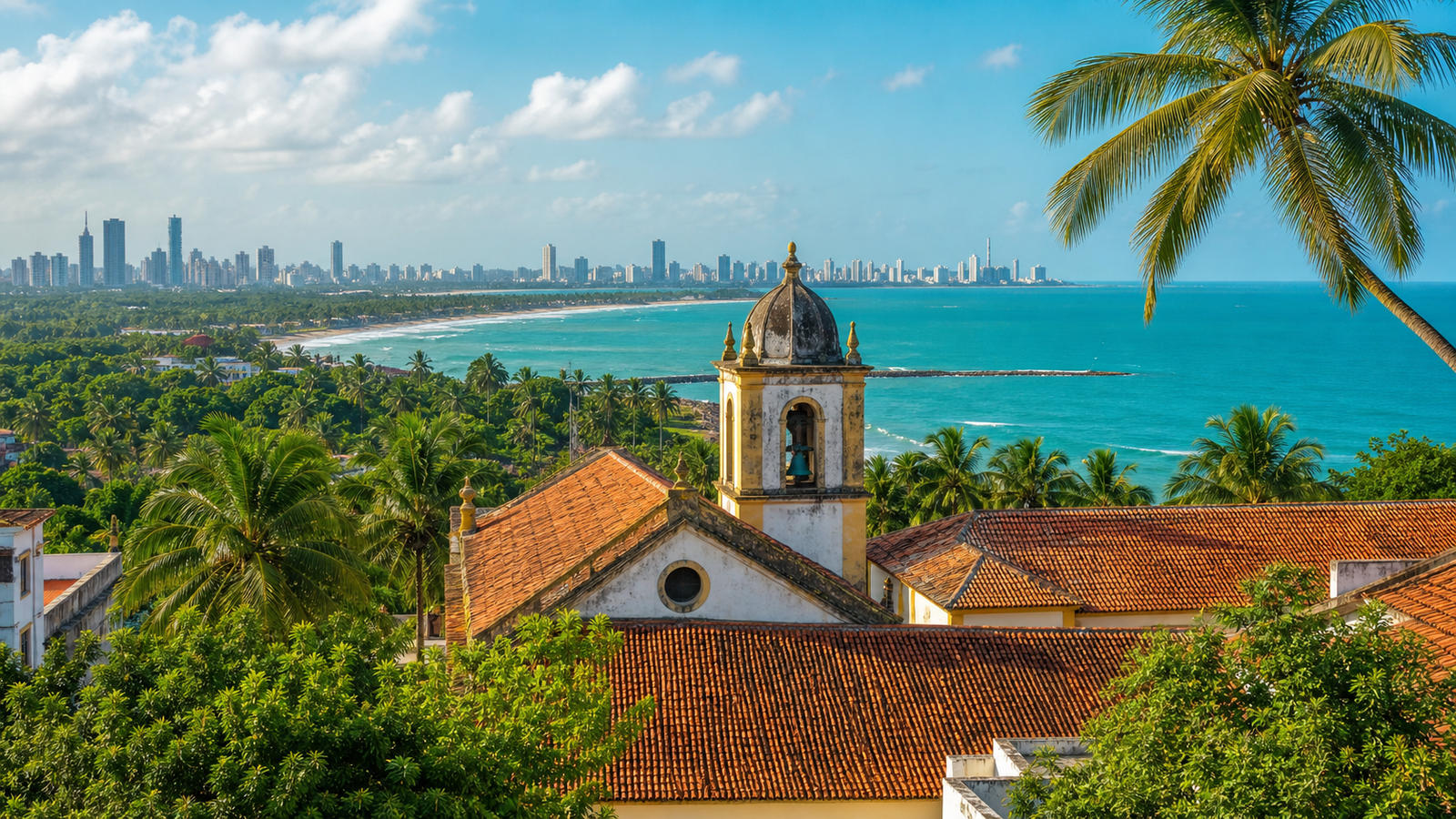
Perched on a cluster of green hills overlooking the Atlantic Ocean, Olinda is one of Brazil’s most enchanting colonial treasures. Recognized as a UNESCO World Heritage Site in 1982, this 16th-century town is famous for its pastel-colored merchant houses, ornate baroque monasteries, and rich artistic traditions. But for first-time visitors arriving from nearby Recife, Olinda holds a physical challenge: its cobblestone hills (ladeiras) are brutally steep, and tackling them under the tropical midday sun can leave you exhausted within an hour.
The secret to exploring Olinda comfortably is simple and geographical: start at the top and walk downhill. By booking your morning ride directly to the hilltop at Alto da Sé rather than the lower town square, you let gravity do the heavy lifting while winding your way down through centuries-old churches, artisan studios, and shaded bodegas before returning for sunset.
How to Get to Olinda from Recife (and the Downhill Secret)
Olinda sits just 10 to 12 kilometers north of central Recife, making it the premier day trip in Pernambuco. You do not need an organized tour bus or complicated public transit to get here. Ride-hailing apps like Uber operate reliably and affordably across the metropolitan area.
- From Recife Antigo (Historic Center): A direct Uber ride takes approximately 25 to 35 minutes and typically costs between R$ 25 and R$ 45 (BRL), depending on traffic.
- From Boa Viagem (Beach District): The drive covers roughly 18 to 20 kilometers, taking 35 to 50 minutes and costing between R$ 35 and R$ 60.
When setting your destination in the app, resist the temptation to select “Olinda Center” or “Praça do Carmo” at the bottom of the hill. Instead, set your drop-off point specifically to Alto da Sé. Arriving between 8:30 AM and 9:00 AM allows you to experience the historic plateau in the crisp morning light before large day-tour groups arrive.
Morning at Alto da Sé: Panoramic Views and Colonial Origins
Alto da Sé is the historical and geographic pinnacle of Olinda. When Portuguese explorer Duarte Coelho founded the settlement in 1535, he chose this high ground for its commanding defensive vantage point over the coastline. Today, that same elevation provides one of the most iconic postcard views in South America.
Begin at the wide overlook in front of the Catedral da Sé (Igreja de São Salvador do Mundo). From the terrace railing, you look out across a sea of lush coconut palms and historic terra-cotta roofs toward the turquoise Atlantic, with the glittering modern skyscrapers of Recife rising along the distant southern horizon.
Adjacent to the cathedral plaza stands the Caixa D’Água, a 1934 modernist water tower designed by architect Luís Nunes. For a modest admission fee (around R$ 5 to R$ 10), you can ride a 20-meter panoramic glass elevator to the rooftop viewing deck for an unobstructed 360-degree vista of the entire metropolitan coast. If you want a quick taste of Olinda’s world-famous Carnival heritage, step into the nearby Casa dos Bonecos Gigantes to admire the towering papier-mâché puppets that dance through the streets each February.
Descending the Slopes: Ladeira da Misericórdia, Quatro Cantos, and Rua do Amparo
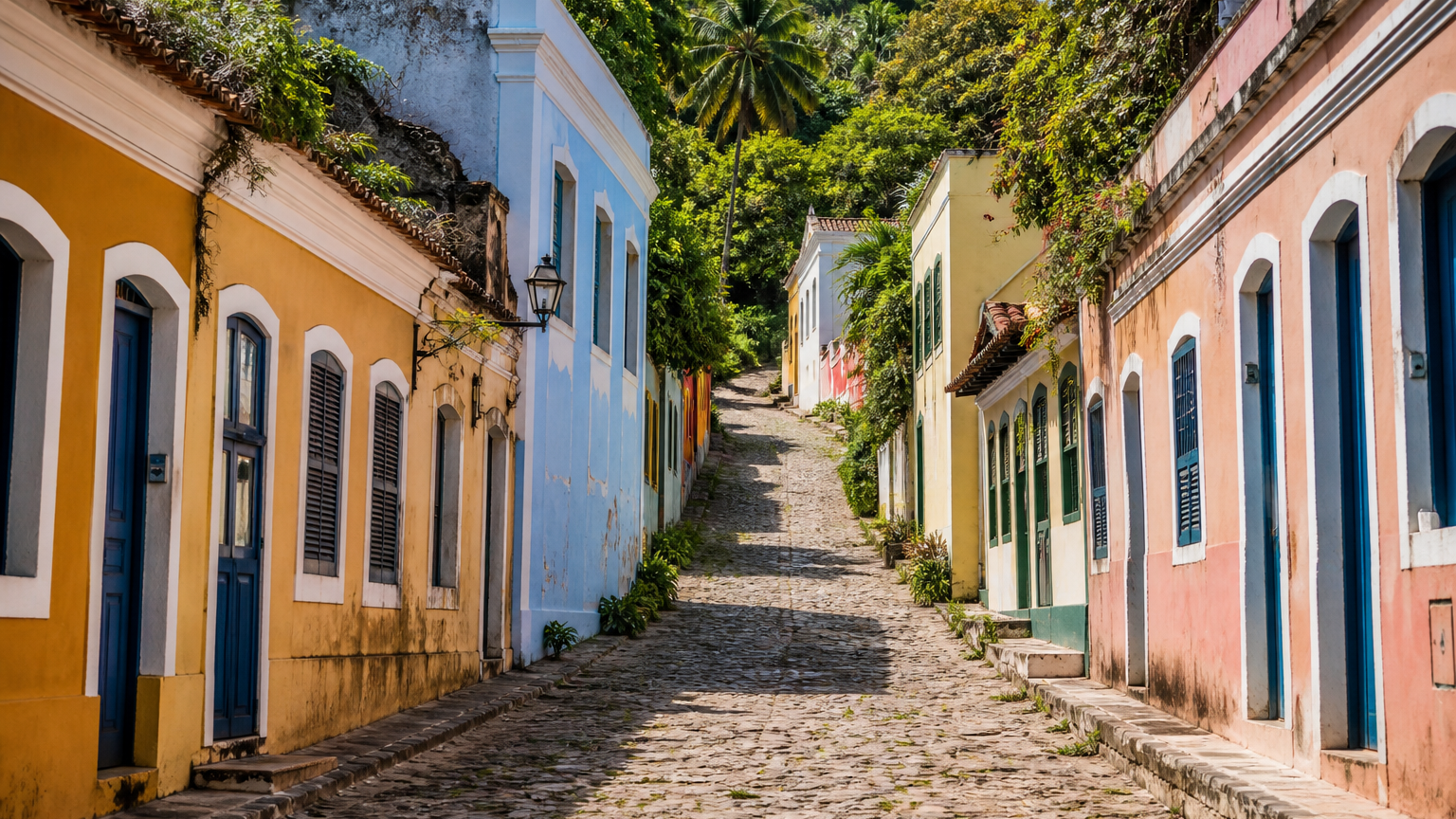
From Alto da Sé, begin your downhill walk by taking the Ladeira da Misericórdia. This is officially the steepest street in Olinda and one of its most photogenic corridors, framed by preserved 18th-century single-story colonial homes painted in vibrant shades of ochre, cobalt blue, and coral pink.
Practical Tip: Olinda’s streets are paved with irregular, polished cobblestones (paralelepípedos). Wear sturdy sneakers or walking shoes with good traction. Avoid flip-flops, smooth leather sandals, or heels, which easily slip on steep gradients.
At the base of the slope, you will reach Quatro Cantos (Four Corners), the iconic intersection of Rua do Amparo, Rua Prudente de Morais, Rua Bernardo Vieira de Melo, and Ladeira da Misericórdia. During Carnival, Quatro Cantos is the pulsing epicenter where brass frevo orchestras collide. On a normal morning, it is a quiet crossroads flanked by colonial lanterns and small craft workshops.
Turn onto Rua do Amparo, the artistic spine of Cidade Alta. This cobblestone corridor is home to resident painters, woodcarvers, and traditional mask makers. Strolling down Amparo gives you an intimate look at Olinda’s bohemian daily life away from vehicle traffic.
The Two Must-Visit Masterpieces: Mosteiro de São Bento and Convento de São Francisco
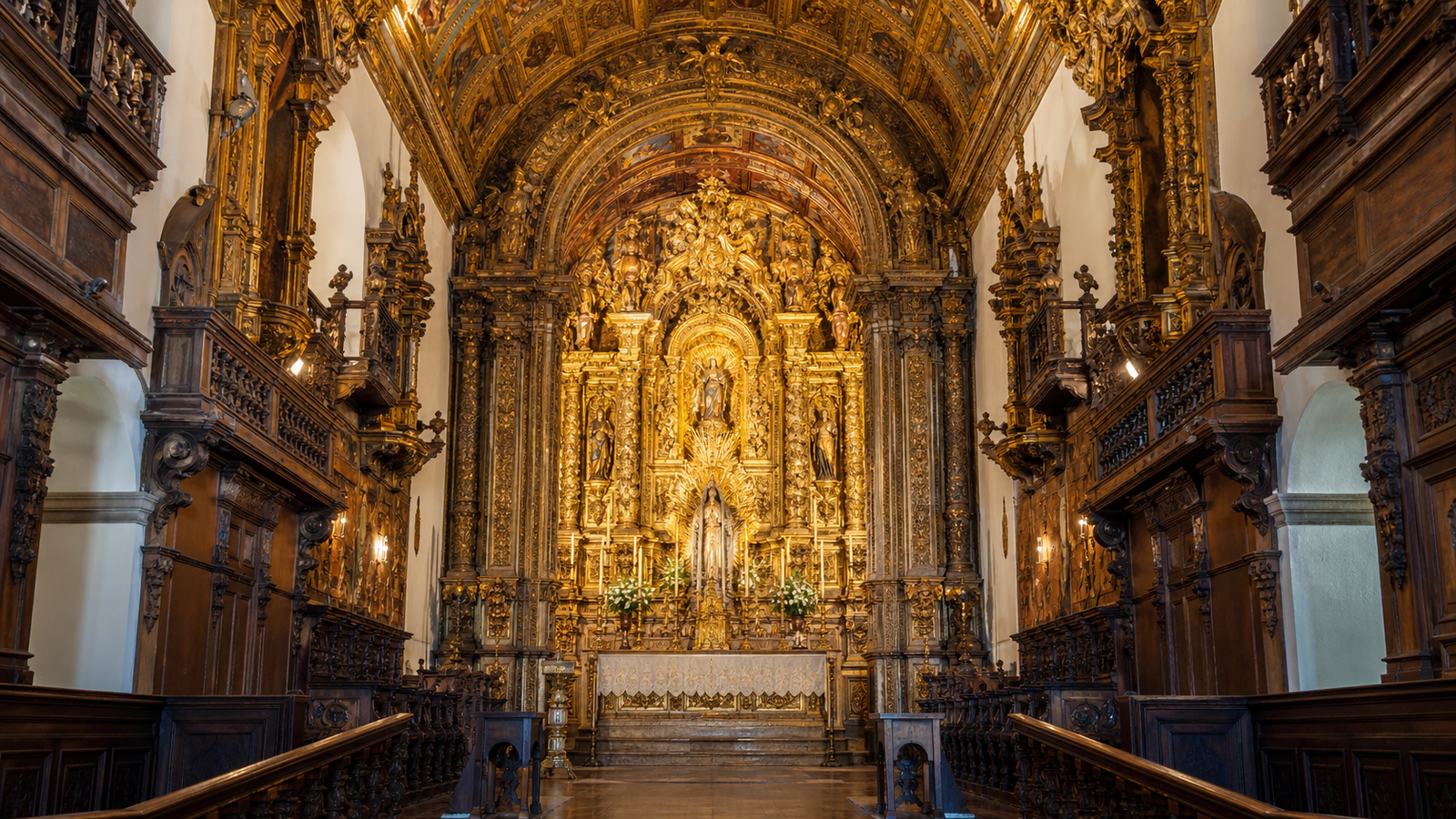
While Olinda is home to over twenty historic churches and chapels, trying to visit every single one leads quickly to museum fatigue. To make the most of your day, focus your attention on the two undisputed architectural masterpieces of the city: Mosteiro de São Bento and Convento de São Francisco.
The Mosteiro de São Bento (located on Rua de São Bento) houses one of the grandest examples of Brazilian baroque woodcarving in the country. Its 14-meter-high high altar (altar-mor) is entirely covered in brilliant gold leaf. The retable is so historically significant that it was completely disassembled and shipped to New York City to be showcased at the Guggenheim Museum in 2001. Visiting the church is free, and if you visit on a Sunday morning, the Benedictine monks celebrate Mass with traditional Gregorian chant at 10:00 AM.
A short walk away stands the Convento de São Francisco (Igreja de Nossa Senhora das Neves), established in 1585 as the very first Franciscan convent in Brazil. Inside its quiet cloister courtyard, you will find sixteen remarkable panels of 18th-century blue-and-white Portuguese azulejo tiles illustrating the life and virtues of Saint Francis of Assisi. A small maintenance fee (R$ 5 to R$ 10) helps preserve the historic structure.
| Attraction / Church | Key Highlight | Visiting Hours | Admission Fee |
|---|---|---|---|
| Mosteiro de São Bento | 14-meter gilded baroque altar-mor; Sunday 10 AM Gregorian chant | Daily 09:00–11:45 & 14:00–17:00 | Free entry |
| Convento de São Francisco | Oldest Franciscan convent in Brazil (1585); 18th-century azulejos | Mon–Sat 09:00–12:00 & 14:00–17:00 | R$ 5.00–10.00 (maintenance fee) |
| Catedral da Sé (Alto da Sé) | Historic cathedral & sweeping panoramic overlook of Recife | Daily 09:00–17:00 | Free (Elevator ~R$ 5.00–10.00) |
Crucial Timing Note: Both São Bento and São Francisco close their doors for lunch between 11:45 AM and 2:00 PM. Plan to visit one church during the mid-morning and the second in the early afternoon, using the midday lull to enjoy a relaxed local meal.
Where to Eat and Drink: From Bodega de Véio to Regional Feasts
When the midday heat reaches its peak, step off the cobblestones into one of Olinda’s atmospheric food spots. The town’s gastronomy blends traditional Pernambucan ingredients with coastal seafood and northeastern comfort food.
- Bodega de Véio (Rua do Amparo, 212): A beloved local institution that is half traditional grocery store and half bohemian watering hole. It is the perfect spot for an ice-cold beer, a taste of artisanal cachaça, and hearty bar snacks like aged queijo coalho, salami, and marinated olives served over a counter stacked with dry goods.
- Oficina do Sabor (Rua do Amparo, 335): Led by renowned Chef César Santos, this acclaimed restaurant serves refined northeastern cuisine in an airy colonial house. The house specialty is fresh pumpkin (moranga) stuffed with shrimp, charque (jerked beef), or seafood simmered in coconut milk and regional herbs, best enjoyed at a terrace table overlooking the rooftops.
- Mercado da Ribeira: Dating back to the late 17th century, this former colonial market square now houses regional craft ateliers and small cafes where you can sip fresh tropical juices made from caju, mangaba, or acerola.
Sunset at Alto da Sé: Tapioqueiras, Ocean Breezes, and Practical Tips
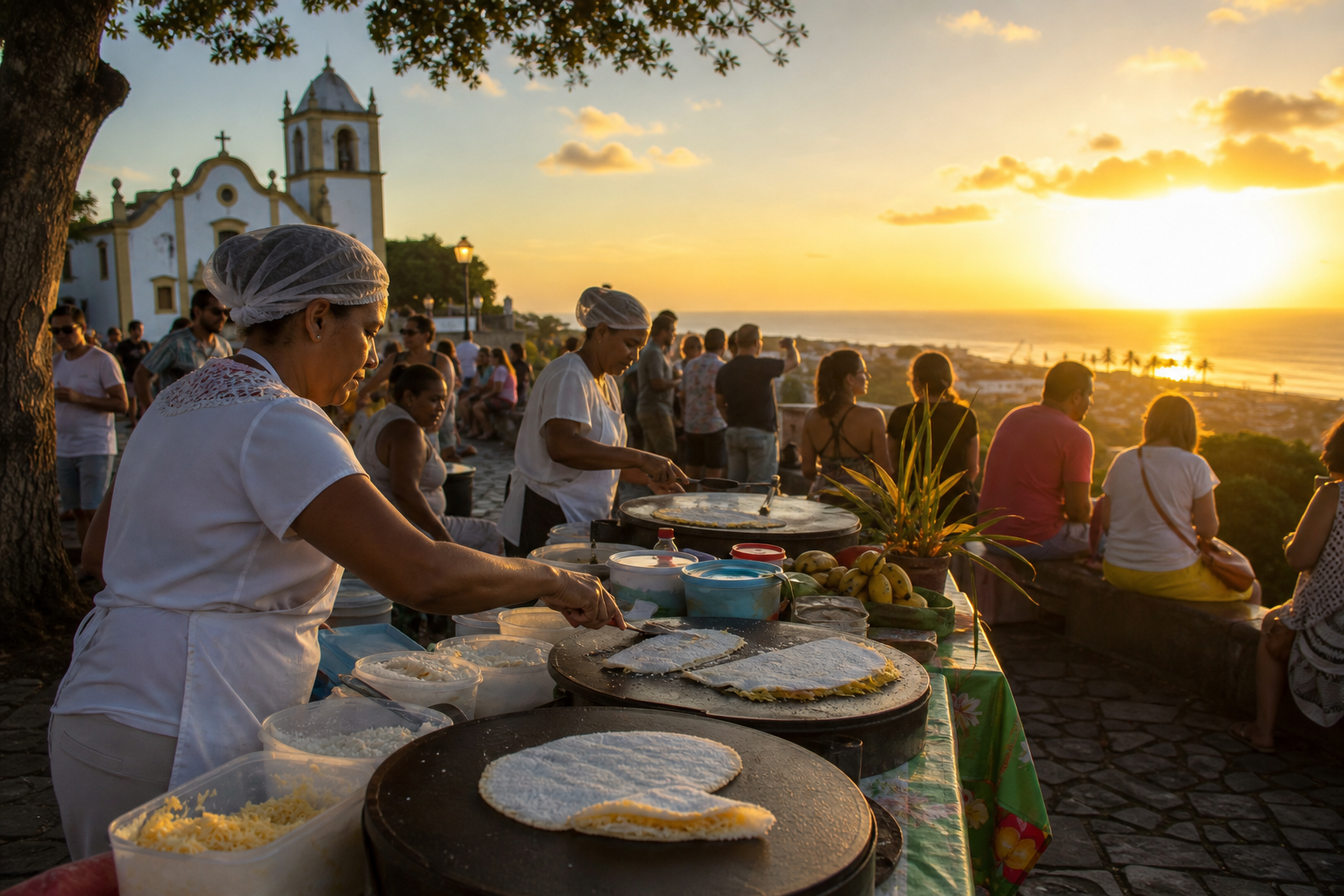
As the clock approaches 4:30 PM, make your way back up toward Alto da Sé. While you will have to walk uphill or take a brief 3-minute Uber ride back to the top, the reward is Olinda’s greatest daily ritual: watching the sunset from the cathedral terrace as cool ocean breezes sweep in from the Atlantic.
Late afternoon is when the square’s famous tapioqueiras light their burners. These licensed street cooks prepare traditional northeastern tapiocas on sizzling griddles, folding the warm cassava crepes around classic fillings like grated coconut with melted butter, shredded carne de sol with queijo coalho, or banana with cinnamon. Pair a hot tapioca with fresh coconut water as the sun dips behind the distant towers of Recife.
Practical Safety and Street Etiquette:
- Informal Street Guides: You will likely be approached by local guides offering walking tours around Praça do Carmo or Alto da Sé. If you prefer to explore independently, a polite, smiling, but firm “Não, obrigado” (No, thank you) is all you need. If you do wish to hire a guide for local anecdotes, agree on a fixed total price upfront (typically R$ 50 to R$ 80 for 1 to 2 hours).
- Personal Belongings: The historic center is safe to walk independently during daylight hours, but standard travel common sense applies. Keep expensive cameras and smartphones tucked away when not actively taking photos, and avoid wandering into deserted, unlit residential alleys after dark.
- Returning to Recife: When you are ready to depart, request your return Uber directly from the Alto da Sé parking area or Praça do Carmo for a quick, hassle-free ride back to your hotel.
Frequently Asked Questions About Visiting Olinda
How much time do you need to visit Olinda?
One full day—roughly 6 to 8 hours from morning to sunset—is the ideal amount of time for most travelers to explore the UNESCO historic center comfortably on foot, tour the key baroque churches, and enjoy the sunset food culture.
Is it better to take an Uber or a bus from Recife to Olinda?
Uber is strongly recommended for international visitors because it is fast (25 to 35 minutes from Recife Antigo), inexpensive (typically R$ 25 to R$ 45), and drops you off directly at the hilltop of Alto da Sé.
Is Olinda safe for tourists to walk around independently?
Yes, Olinda’s historic center is generally safe to explore independently during daylight hours on main tourist routes like Rua do Amparo, Alto da Sé, and Rua de São Bento. Keep valuables discreet and take an Uber back to Recife after sunset.
When is the Gregorian chant mass at Mosteiro de São Bento?
The weekly Sunday Mass featuring Gregorian chant sung by the Benedictine monks takes place every Sunday morning at 10:00 AM. Arrive approximately 15 minutes early to secure a seat inside the church.