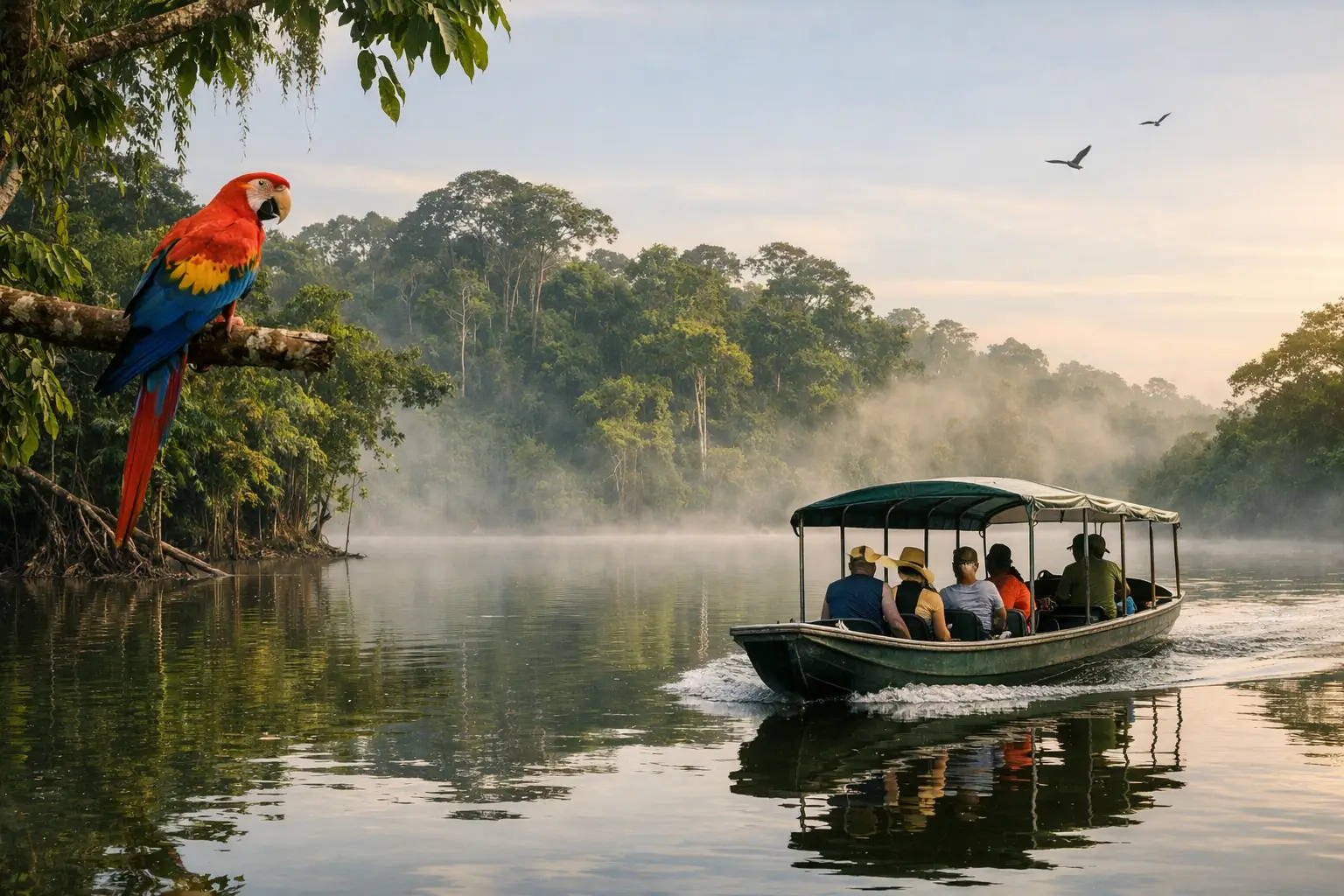
A pink river dolphin surfacing beside a canoe, a sudden tropical downpour, the sound of howler monkeys before sunrise – these are the moments many travelers imagine when they start researching amazon rainforest tours brazil. The challenge is that the Brazilian Amazon is enormous, and not every tour delivers the same kind of experience.
For international visitors, the best approach is to start with one simple question: what kind of Amazon trip do you actually want? Some travelers are looking for wildlife and remote lodges. Others want a short jungle experience that fits into a broader Brazil itinerary. Both are possible, but the right base, season, and tour style make a big difference.
Where amazon rainforest tours brazil usually begin
Most tours start from Manaus, the capital of Amazonas state. Manaus is the main gateway to the Brazilian Amazon because it has the largest airport in the region, regular connections with major Brazilian cities, and easy access to rivers, lodges, and protected forest areas.
This does not mean every Amazon experience is the same once you arrive. From Manaus, travelers can choose day trips, overnight jungle lodges, river cruises, or multi-day expeditions deeper into the forest. If you are visiting Brazil for the first time, Manaus is usually the most practical choice because logistics are simpler and tour availability is much wider.
Some travelers also look at tours in places such as Alter do Chao, Santarem, or more specialized reserves farther from major transport hubs. These can be excellent, especially if you want a different Amazon atmosphere with river beaches or more niche ecotourism experiences. Still, for most international visitors comparing options, Manaus remains the clearest starting point.
What kinds of Amazon tours are available
The shortest option is a day tour. These often include river navigation, a visit to flooded forest or nearby communities, wildlife spotting, and sometimes the Meeting of the Waters near Manaus. Day tours work well if your schedule is tight, but they offer only a partial sense of the forest. You will see the Amazon, but you will not really settle into it.
A lodge stay of two to four nights is the most balanced choice for many travelers. It usually combines comfort with access to guided activities such as canoe rides, jungle walks, piranha fishing, sunrise wildlife observation, and night safaris. This format gives you enough time to experience the rhythm of the region without needing complex expedition planning.
River cruises are another strong option, especially for travelers who prefer comfort and mobility over rustic immersion. Cruises can cover larger distances and often feel easier for couples, older travelers, or families who want a softer introduction to the Amazon. The trade-off is that some cruises feel more curated and less intimate than a stay at a small jungle lodge.
Then there are expedition-style tours, which are more physical and usually better for travelers specifically interested in birdwatching, photography, fishing, or deep forest experiences. These tours can be rewarding, but they are not always the best fit for first-time visitors expecting hotel-like comfort.
How many days do you need?
If you can spare only one day, you can still have a worthwhile introduction from Manaus. Just keep expectations realistic. A one-day trip is good for seeing river landscapes and learning about the region, but not for feeling far removed from urban life.
For most travelers, three days and two nights is the minimum that starts to feel meaningful. You have time for several outings, one or two early mornings in the forest, and a better chance of seeing wildlife. Four days or more creates a much richer experience, especially if your priority is nature rather than simply checking the Amazon off your list.
Longer is not always better if the tour style is wrong. A well-run three-night lodge stay can be more satisfying than a poorly organized five-day package. Quality of guiding, transport, and location matter as much as duration.
Best time to visit the Brazilian Amazon
The Amazon is a year-round destination, but the experience changes with the water level. This is one of the most important details to understand before booking.
High-water season, usually around December to May, means rivers are fuller and boats can move through flooded forest areas. This creates dramatic scenery and easier navigation by canoe into areas that are inaccessible at other times. If you picture gliding between tree trunks in still water, this is often the season behind that image.
Lower-water season, usually around June to November, exposes riverbanks and beaches and can make jungle trails easier to access on foot. Wildlife spotting may feel different rather than better or worse. In some areas, animals are easier to observe during drier months, while in others the flooded landscape is the main attraction.
Rain is possible at any time. Travelers expecting constant sunshine are usually surprised. The better mindset is to prepare for heat, humidity, and changing weather rather than fixating on a perfectly dry forecast.
What you can realistically expect to see
The Brazilian Amazon is spectacular, but it is not a zoo. Wildlife sightings are never guaranteed, and honest tour operators should say that clearly.
You may see monkeys, sloths, caimans, macaws, toucans, iguanas, river dolphins, and a wide range of insects and birds. But sightings depend on season, location, timing, and luck. A guide’s local knowledge can improve your chances considerably, especially for birds and smaller wildlife.
Many travelers arrive expecting jaguars around every corner. In reality, jaguar sightings are rare on standard Amazon tours in Brazil. If your trip depends on seeing very specific animals, choose a specialized itinerary rather than a general jungle package.
The forest itself is part of the experience. Even when animals stay hidden, the scale of the river system, the soundscape at night, and the feeling of moving through dense tropical vegetation are often what travelers remember most.
How to choose the right tour operator
This is where planning matters most. Good amazon rainforest tours brazil are usually defined by clear logistics, honest communication, and knowledgeable local guides.
Look closely at what is included. Airport transfers, meals, boat transportation, bilingual guiding, and lodging standards vary a lot. Two tours that seem similar in price may offer very different levels of service. If a package sounds unusually cheap, check whether transportation from Manaus, park fees, or guide services are extra.
Guide quality is especially important for international travelers. A strong guide does more than identify plants and animals. They help interpret the environment, explain regional realities, set realistic expectations, and make the trip feel safe and organized.
It is also worth checking the balance between culture and performance. Some tours include visits to riverside or Indigenous communities. These can be valuable when handled respectfully and with real local participation. They feel much less worthwhile when reduced to staged entertainment for visitors.
Cost, comfort, and trade-offs
Prices vary widely depending on duration, lodge level, transport type, and whether the tour is private or shared. Budget options exist, but lower prices may mean simpler rooms, more basic meals, and larger groups. That is not necessarily a problem if your priority is affordability and you are comfortable with rustic conditions.
Mid-range lodge stays are often the safest choice for travelers who want a dependable experience without going fully luxury. You usually get decent comfort, organized transfers, and a more polished operation. High-end lodges and cruises offer stronger comfort and service, but they may be less aligned with travelers who want a rougher, more hands-on jungle experience.
There is no universal best choice. Families with young children often value comfort and predictable logistics. Solo travelers may prioritize shared group tours and lower costs. Couples might prefer quieter lodges with private cabins and fewer daily transfers.
Practical tips before you go
Pack for humidity, not fashion. Lightweight long sleeves, quick-dry clothing, insect repellent, sunscreen, a rain jacket, and solid walking shoes matter more than anything stylish. Waterproof protection for your phone, camera, and passport is also a smart move.
Do not expect strong internet everywhere. Some lodges have limited connectivity, while others have none. For many travelers, that is part of the appeal, but it helps to plan ahead.
Health and safety are also worth preparing for properly. Check current vaccine recommendations before traveling, use mosquito protection consistently, and follow your guide’s instructions during walks and boat outings. The Amazon is accessible, but it is still a powerful natural environment, not a theme park.
If you are building a wider Brazil itinerary, the Amazon works especially well when paired with a major city such as Rio de Janeiro or Salvador, or with another nature destination like Iguazu Falls or the Pantanal. Explora Brasil often recommends thinking about pace here. The Amazon rewards travelers who leave some room in their schedule for slower mornings, unpredictable wildlife, and the simple experience of being in the forest.
The best Amazon trip is rarely the one with the longest activity list. It is the one that matches your time, comfort level, and curiosity. Start with that, and the Brazilian Amazon becomes much easier to plan – and much more rewarding to experience.