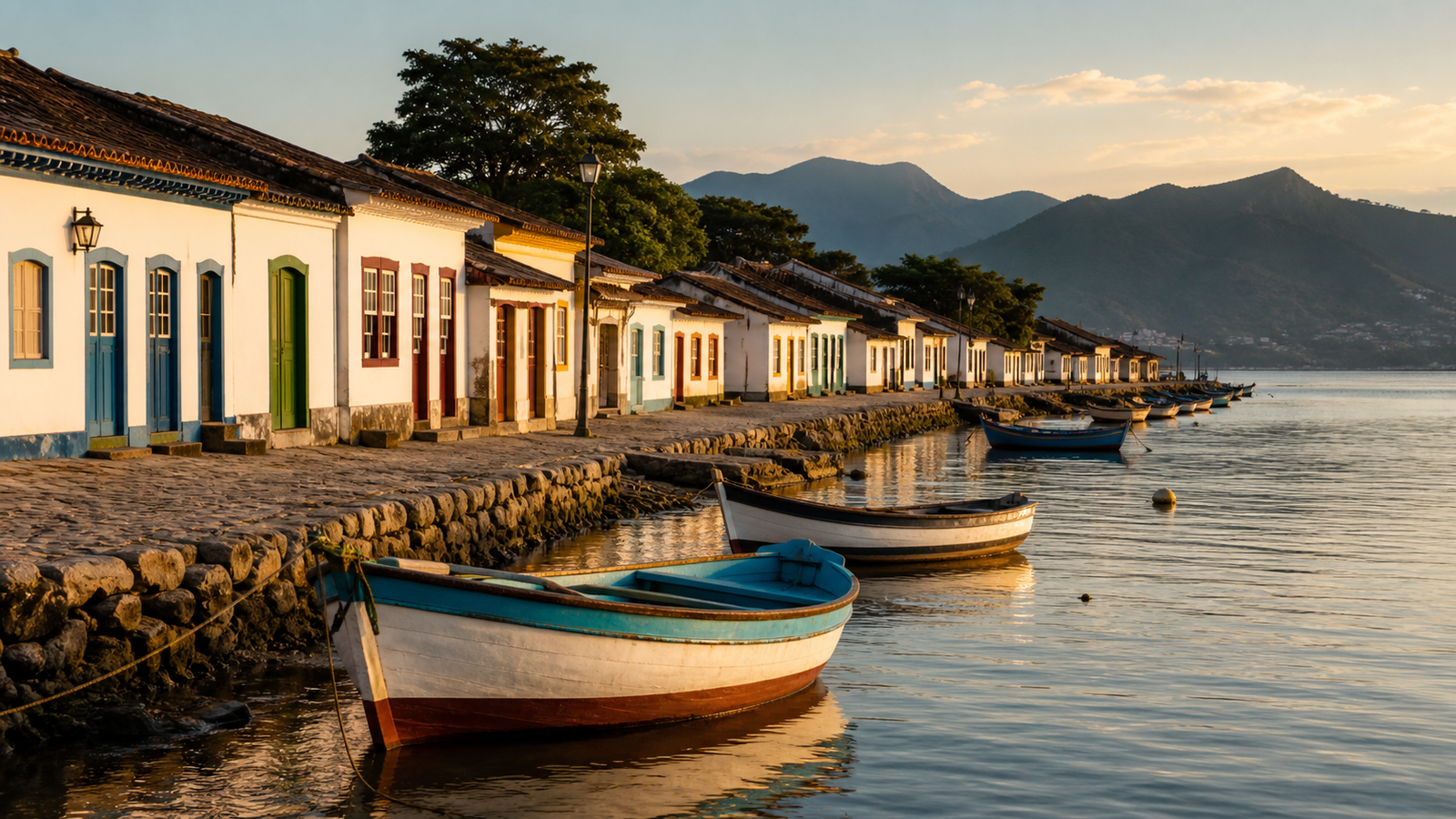
In March 2025, Brazil’s National Historic and Artistic Heritage Institute (IPHAN) officially listed the historic center of Santo Antônio de Lisboa as national heritage. It’s a small Azorean fishing village on the northern shore of Florianópolis’ Baía Norte, about 15 to 20 km from downtown, and most visitors to the island have never heard of it.
On the ground, it still feels like a quiet fishing village: cobblestone streets, colorful Azorean houses, oyster boats, and a church older than Brazil’s independence.
Santo Antônio de Lisboa, Florianópolis’ newest national heritage site
The tombamento — Brazil’s formal heritage-listing process — was approved unanimously by IPHAN’s advisory council in March 2025, as part of a broader listing covering the historic parishes of Greater Florianópolis: Santo Antônio de Lisboa, Lagoa da Conceição, and Ribeirão da Ilha, plus Enseada do Brito in nearby Palhoça. The listing protects the historic street layout and architectural ensemble of the village center, not the entire neighborhood as it exists today.
In practice, that means the streets, squares, and colonial houses that make up the old center now have the same kind of federal protection as other nationally recognized Brazilian heritage sites. It’s a status recent enough that it hasn’t made it into most travel guides yet.
A short history of Florianópolis’ Azorean village
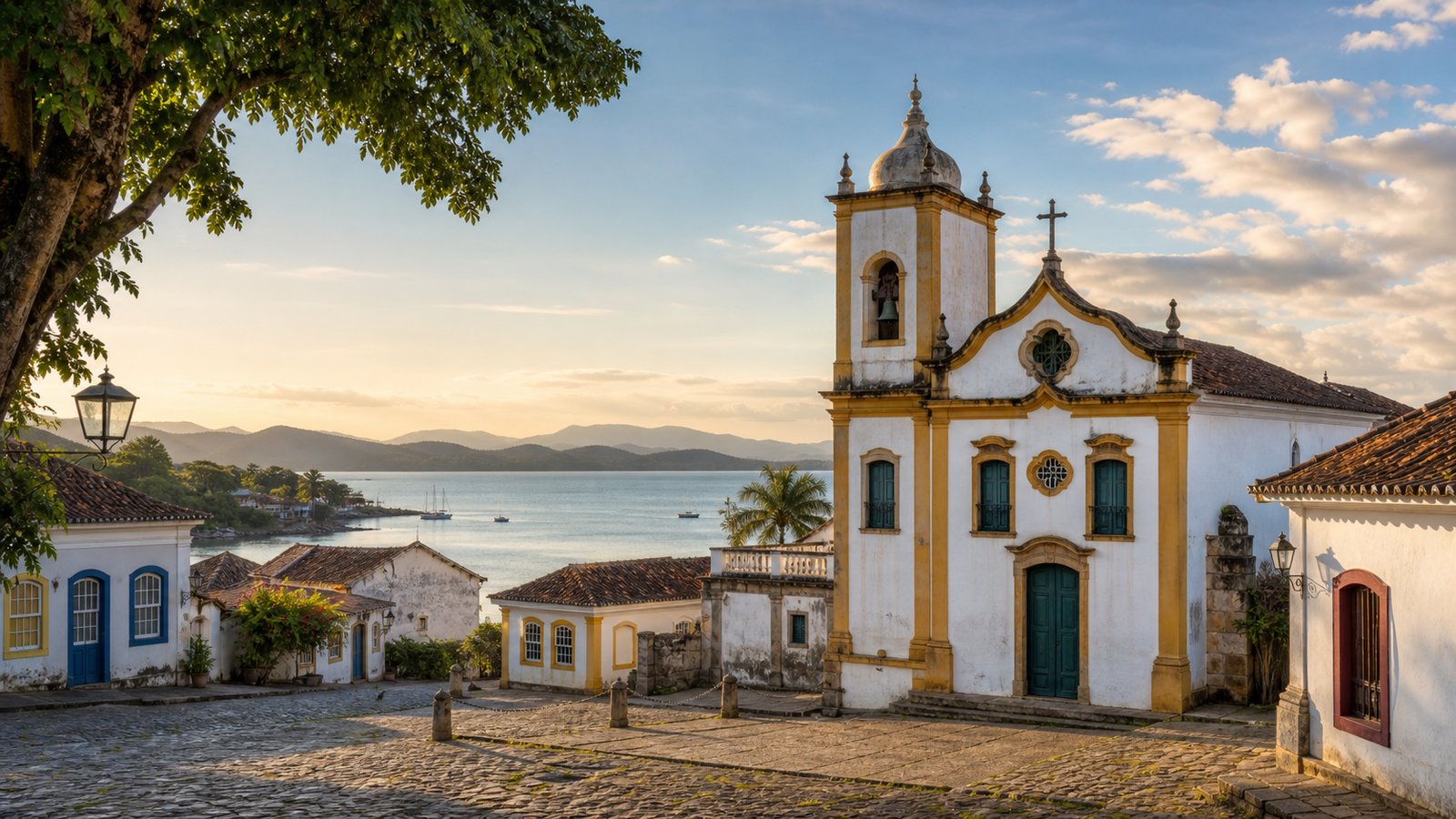
Portuguese settlers from the Azores islands began occupying this stretch of coastline around 1748, and the parish was formally established in 1750 under the name Nossa Senhora das Necessidades e Santo Antônio. That Azorean heritage is the same cultural thread running through several of Florianópolis’ oldest neighborhoods, and it’s part of why the historic parishes were grouped together in the 2025 heritage listing.
The village’s landmark church, Igreja de Nossa Senhora das Necessidades, was built between 1750 and 1756 in a Luso-Brazilian style, facing the bay. In 1845, Emperor Dom Pedro II and Empress Thereza Christina visited the village, and the main street was paved for the occasion — it’s cited locally as the first paved street in the state of Santa Catarina.
A walking route through the historic center
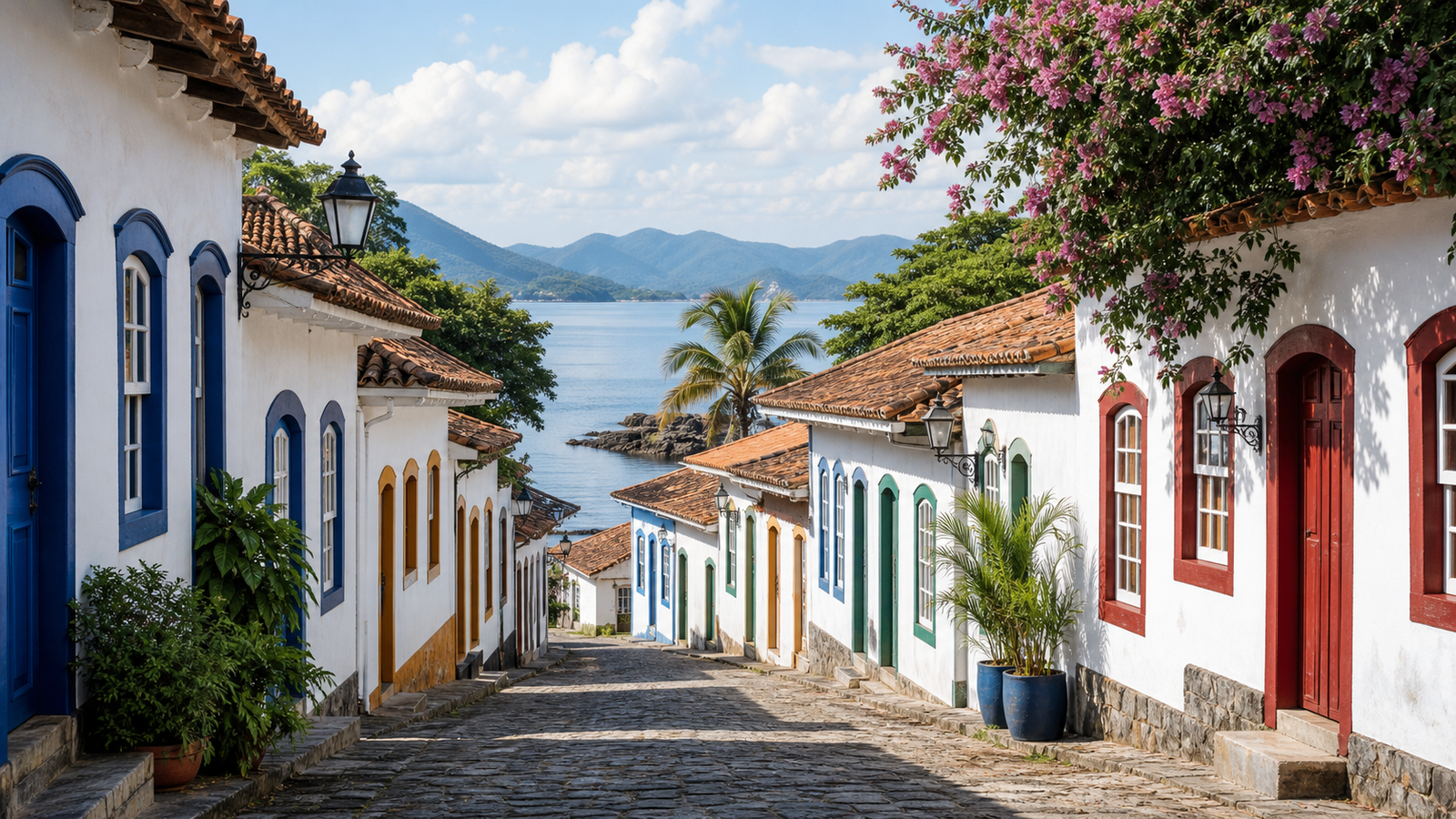
The historic core of Santo Antônio de Lisboa is compact enough to cover on foot in a couple of hours. A logical route looks like this:
- Start at the church. Igreja de Nossa Senhora das Necessidades faces the water and Praça Getúlio Vargas, and it’s the easiest landmark to orient yourself from.
- Walk the historic square and paved street. Praça Roldão Rocha Pires, just off the church, holds what locals point to as the first paved street in Santa Catarina.
- Check for the weekend crafts fair. On weekends, the same square hosts the Feira das Alfaias, with local artisans selling bilro lace, woodwork, and handmade jewelry. It doesn’t run on weekdays, so plan around that if the fair is part of the appeal.
- Stop by Casa da Renda. On Rua Cônego Serpa, this spot is dedicated to bilro lace-making, an Azorean textile tradition still practiced in the village.
- Finish along the waterfront. The seaside street, Rua XV de Novembro, is where the colonial houses, restaurants, and fishing boats line up against the bay — and it’s the natural spot to end the walk before sunset.
Where to eat and where to watch the sunset

Santo Antônio de Lisboa is known locally as one of Florianópolis’ main oyster-growing areas, and the waterfront restaurants along Rua XV de Novembro lean heavily into that — oysters, fish, and other seafood, often with a view of the bay. Freguesia Oyster Bar and Marisqueira Sintra come up repeatedly in local write-ups of the area, though the restaurant scene here changes like anywhere else, so it’s worth checking current hours and offerings before you go rather than treating any single recommendation as fixed.
The sunset is the other reason people make the trip. Because the village faces west across the Baía Norte, the water reflects the evening light directly, and on clear days you can see the outline of the Hercílio Luz bridge in the distance. Locals consider it one of the best sunset views on the island, and you can watch it from the waterfront street, a restaurant table, or the small pier.
How to get there and when to go
Santo Antônio de Lisboa sits about 15 to 20 km from downtown Florianópolis, roughly 20 to 30 minutes by car via the SC-401 highway, which runs up the island’s north end between the Sambaqui and Cacupé neighborhoods. Ride-hailing apps cover the route, and local bus lines also run through the area — since routes and schedules can change, it’s worth checking a transit app like Moovit or Google Maps on the day of your visit rather than relying on a fixed bus number.
The best time to go is a weekday afternoon or, if you want the crafts fair running, a weekend afternoon — most of the small shops, cafés, and the fair itself operate later in the day rather than in the morning.
Frequently asked questions
How far is Santo Antônio de Lisboa from downtown Florianópolis?
It’s about 15 to 20 km from downtown, roughly a 20-to-30-minute drive via the SC-401 highway.
Is Santo Antônio de Lisboa worth visiting if I only have one day in Florianópolis?
It works best as a half-day or afternoon stop combined with other spots on the island’s north end, rather than a full day on its own — if your time in Florianópolis is limited to a single day, treat it as optional rather than essential.
What is Santo Antônio de Lisboa known for?
Its Azorean colonial architecture, a church dating to the 1750s, oyster and seafood restaurants, and a sunset over the Baía Norte that locals consider one of the best on the island.
When is the best time to visit?
Afternoons, from Thursday through Sunday, when local shops and cafés are open and, on weekends, when the Feira das Alfaias crafts fair is running.
Is Santo Antônio de Lisboa an official heritage site?
Yes. In March 2025, IPHAN listed the historic street layout and architectural ensemble of the village as national heritage, as part of a broader listing covering several historic parishes of Greater Florianópolis.
If you’re still mapping out the rest of your trip, it’s worth pairing this stop with a broader look at what to do in Florianópolis or where to eat around the island to see how it fits into your route.