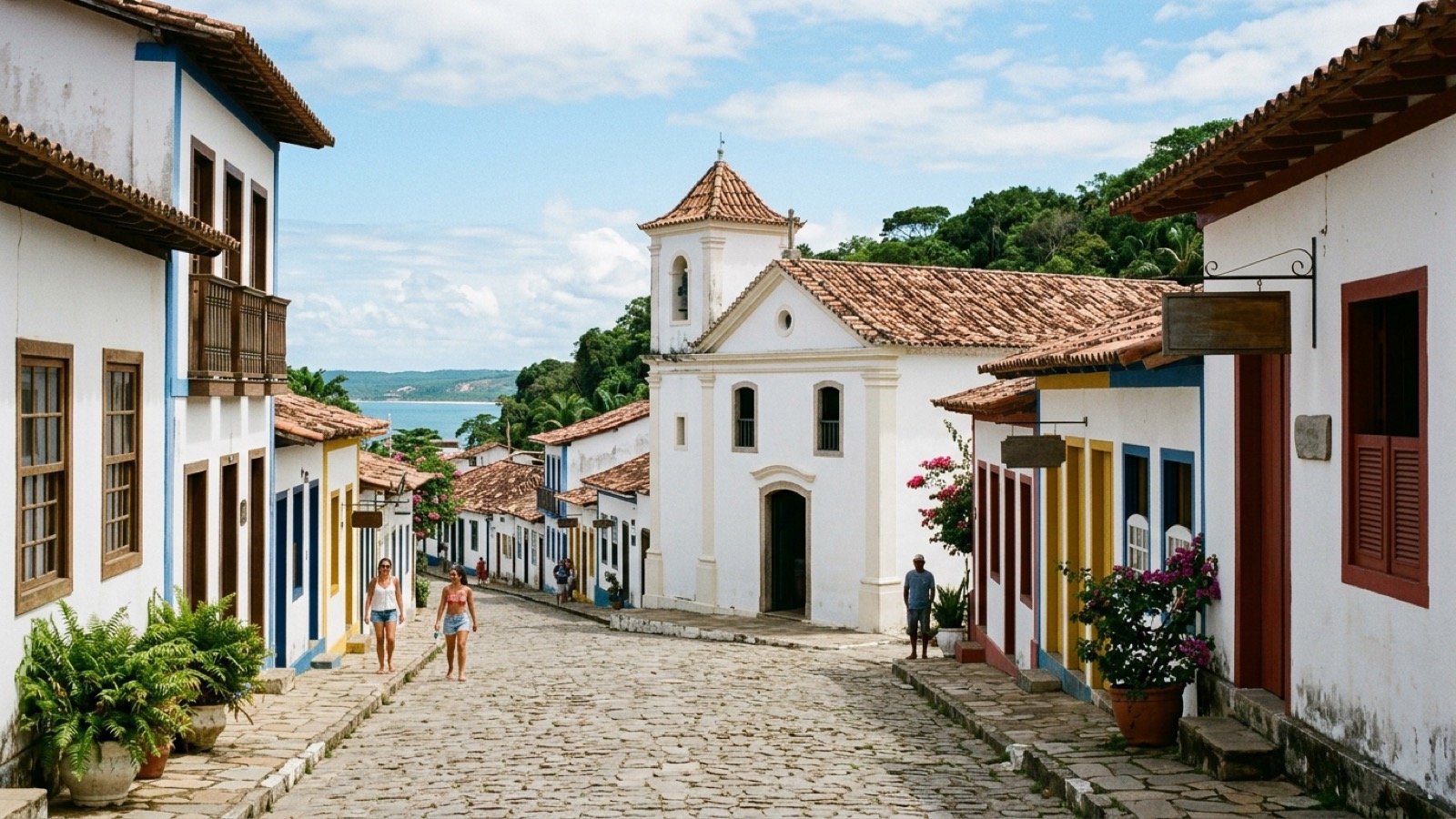
Porto Seguro’s historic center works best as a compact walk through the Cidade Alta, not as a list of isolated photo stops. Allow roughly two to three hours for the core route, and keep the plan flexible: access to churches and museum interiors can change, so check locally on the day.
The payoff is a different view of Porto Seguro. From the elevated streets, colonial buildings, churches and overlooks connect the city’s early historic core with the modern center, the Rio Buranhém and the coast below.
Start with the route, not a history lecture
Begin in Cidade Alta and use the open public spaces to get oriented. A simple sequence links the viewpoints, the Marco do Descobrimento, the Igreja Matriz Nossa Senhora da Pena, the Igreja da Misericórdia, the Paço Municipal and museum area, and the surrounding low colonial houses.
That order keeps the walk compact and gives each stop a role. The viewpoints explain the geography first; the monument, churches and civic buildings then add layers of navigation, faith and administration. You do not need to enter every building for the route to make sense.
If you are building a larger itinerary, start with the site’s Porto Seguro overview, then treat Cidade Alta as the focused cultural block.
The viewpoints explain the shape of Porto Seguro
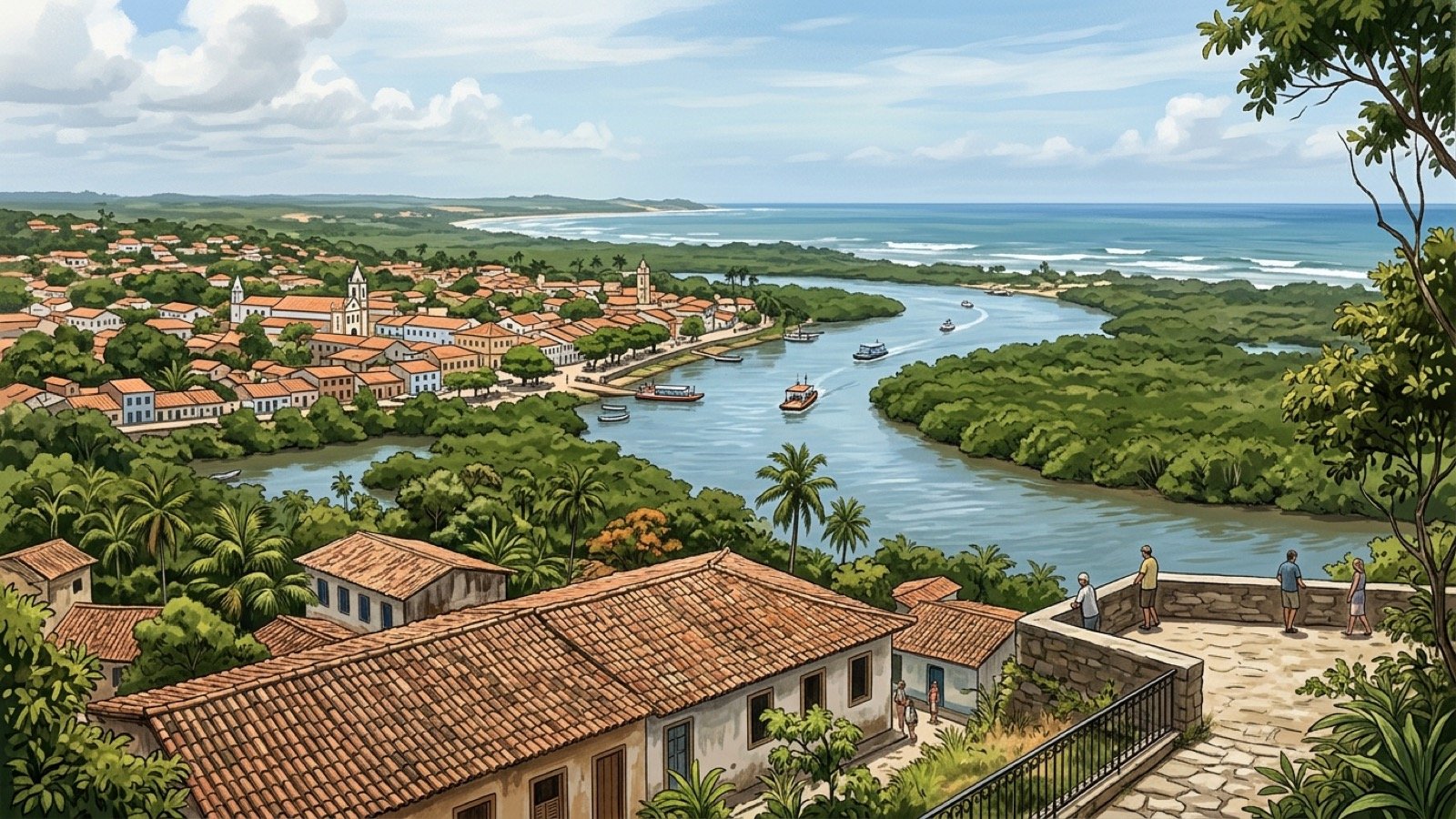
Before moving between monuments, stop at the edges of the elevated area. The views open toward the central city, the Rio Buranhém and the coast. This is the clearest visual explanation of why Cidade Alta feels separate from the busy waterfront even though the two areas can fit into the same day.
Morning and late afternoon are usually more comfortable for an exposed walk than the hottest part of the day. Weather and visibility vary, but the elevated perspective remains useful even without perfect light.
What to notice at the main stops
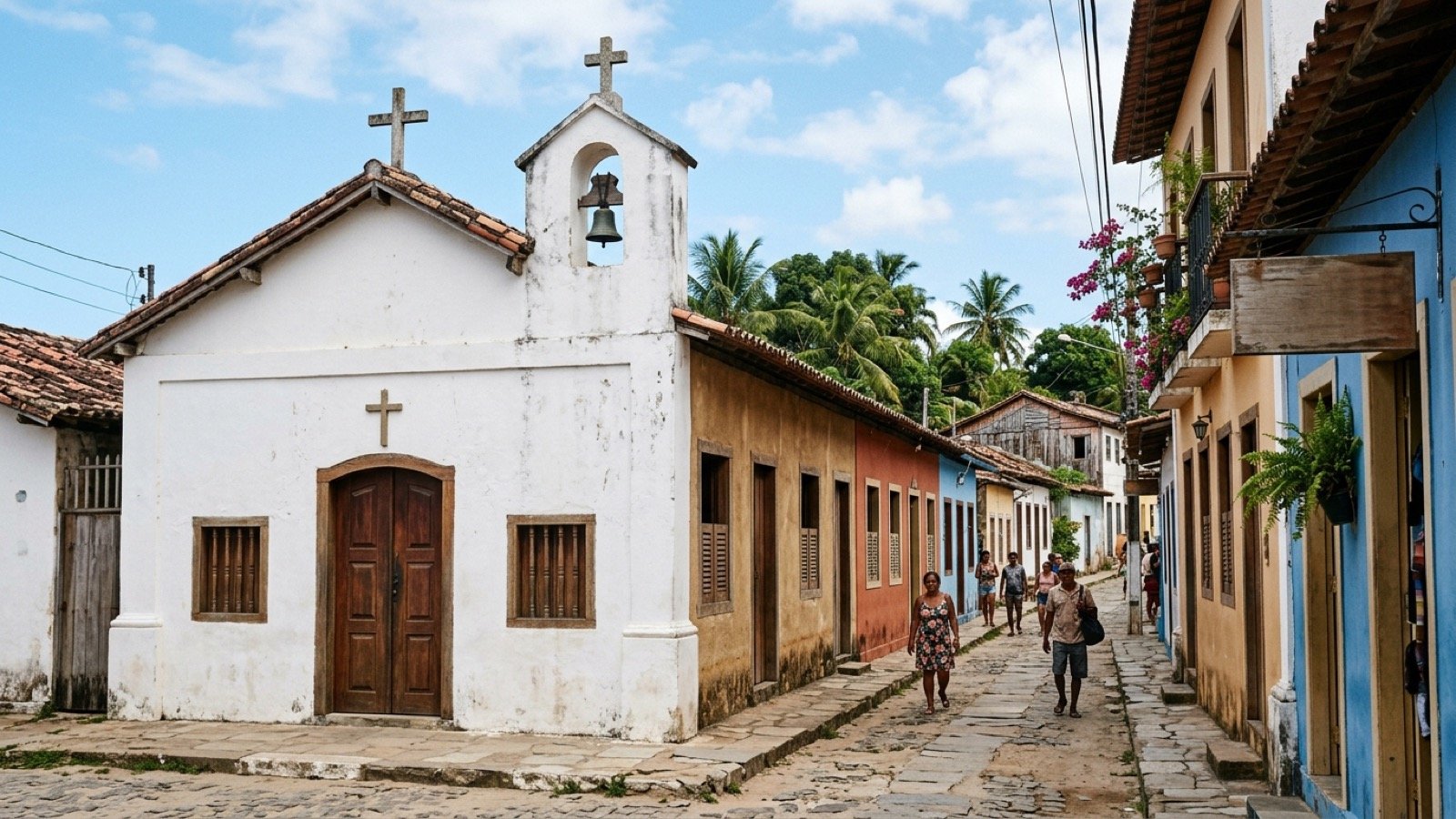
The Marco do Descobrimento is the route’s symbolic anchor. Nearby, the Igreja Matriz Nossa Senhora da Pena and the Igreja da Misericórdia shift the focus from a single monument to the religious buildings that shaped the historic ensemble.
The Paço Municipal and museum area add the civic side of the story, while the surrounding casario keeps the route from feeling like a checklist of major landmarks. Look at the scale of the buildings, the relationship between church, square and administrative space, and the way the streets frame the views downhill.
Do not build your entire visit around going inside. Individual spaces may close for maintenance, ceremonies, events or schedule changes. If a particular interior matters to you, confirm access before climbing to Cidade Alta.
How to make the walk easier
- Choose a cooler time: early morning or late afternoon can make the open sections more comfortable.
- Wear shoes with grip: expect uneven surfaces, slopes and steps rather than a flat indoor attraction.
- Carry water and sun protection: shade is not guaranteed along every part of the route.
- Keep two to three hours available: the lower end suits an exterior-focused walk; a guide or open museum can extend it.
- Check access on the day: church and museum hours can vary, and guides or individual experiences may involve separate charges.
Visitors with limited mobility should verify the exact drop-off point and the condition of the route they plan to use. The historic setting includes slopes and irregular surfaces, and the available sources do not support calling the entire circuit step-free.
How to pair Cidade Alta with the waterfront
Cidade Alta and the Passarela do Descobrimento are related, but they are not the same experience. The historic center is the elevated cultural walk; the Passarela works better as the waterfront continuation, especially later in the day.
A practical sequence is to visit Cidade Alta in the cooler part of the morning or afternoon, take a break in the center, and continue with the site’s Passarela do Descobrimento guide. That keeps the heritage stops and the evening waterfront atmosphere distinct instead of rushing both.
Is the historic center worth adding?
Add Cidade Alta if you want context, architecture and a short walk that changes the beach-only picture of Porto Seguro. Skip the pressure to see every interior. The route still works through its public spaces, views and building exteriors, provided you allow for heat and changing access.
Save the stop order, confirm any must-see interior on the day, and leave enough flexibility to continue toward the waterfront without turning a cultural half-day into a race.
Frequently asked questions
How long should I allow for Porto Seguro’s historic center?
Roughly two to three hours is a useful planning range. An exterior-focused walk can be shorter, while a guide, museum visit or slower pace can extend it.
Can I visit Cidade Alta without a guide?
Yes. The core stops can be followed independently, but a local guide may add historical context. Confirm guide prices and availability directly rather than relying on a fixed online figure.
Is the historic center the same as the Passarela do Descobrimento?
No. The historic center occupies Cidade Alta and focuses on monuments, churches, civic buildings and views. The Passarela is the waterfront continuation and has a different atmosphere.