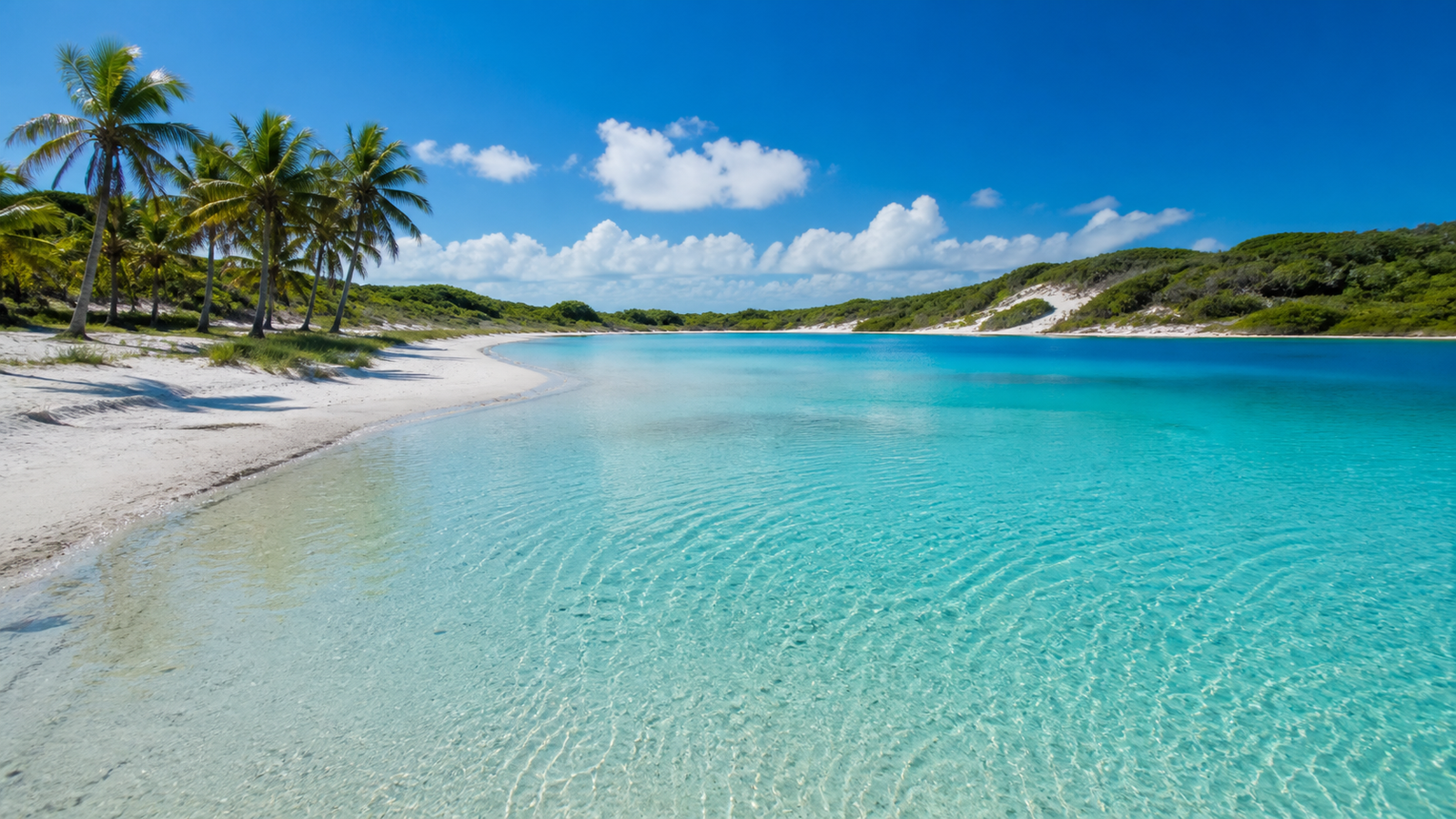
When international travelers plan a trip to Natal, the focus almost always lands on the bustling urban waterfront of Ponta Negra. While exploring the main Ponta Negra beach and visiting Morro do Careca are quintessential experiences, open Atlantic surf and lively beach crowds can quickly become overwhelming. What many first-time visitors miss is that some of Rio Grande do Norte’s most spectacular swimming waters are not ocean beaches at all—they are secluded, crystal-clear freshwater lagoons and wave-free natural reef pools tucked just 30 to 50 minutes away.
The coastline surrounding Natal is geographically blessed with dramatic landscapes. To the south in Nísia Floresta, a famous network of 26 freshwater lagoons sits alongside towering red sandstone cliffs and barrier reefs. To the north, rolling sand dunes give way to palm-shaded oasis lagoons and offshore coral formations. Whether you want to float in calm turquoise freshwater or watch wild dolphins from high ocean cliffs, these six day trips deliver an unforgettable escape from the city.
The South Coast freshwater lagoons: Arituba vs. Carcará
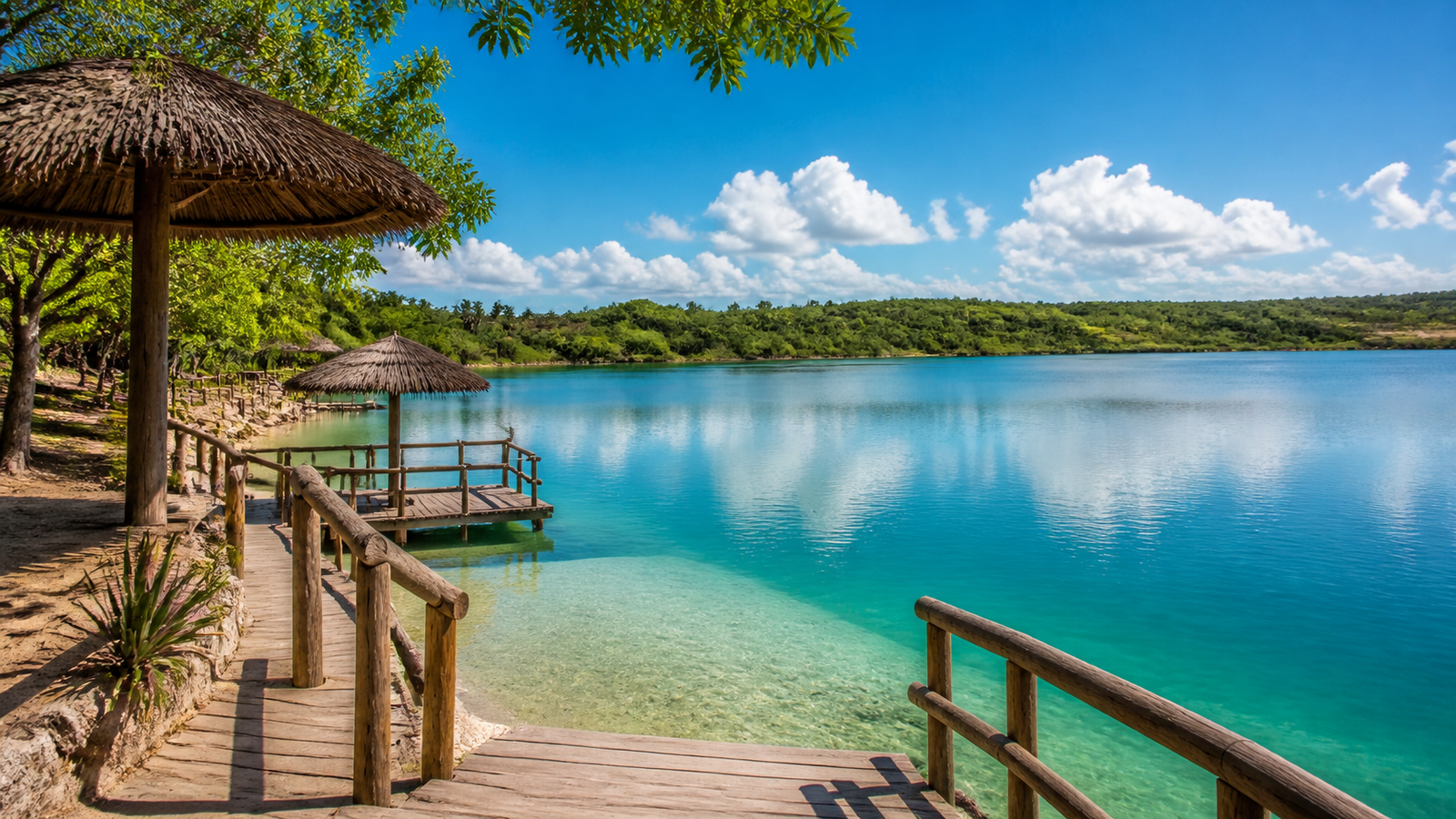
The municipality of Nísia Floresta, beginning roughly 35 kilometers south of Ponta Negra, is the heart of the region’s renowned “Water Route” (Roteiro das Águas). Two freshwater lagoons stand out as absolute highlights, each offering a distinct atmosphere.
Lagoa de Arituba (38 km south of Ponta Negra) is the most popular and accessible lagoon in the cluster. Connected directly by the paved coastal highway RN-063 (known locally as Rota do Sol), Arituba features clean, warm, shallow water ideal for relaxing swims. Lakeside restaurants (barracas) line the shore, serving fresh fried fish, grilled shrimp, and cold drinks. Visitors can rent stand-up paddleboards, pedal boats, and kayaks, or glide across the water on a lakeside zipline (tirolesa). Because the access road is completely paved and parking is organized, it is the most stress-free option for families and travelers driving a regular rental car.
Lagoa do Carcará (approximately 45 km south of Ponta Negra), by contrast, is the wilder, more picturesque sibling. Famous for its pale white sand floor and transparent Caribbean-blue freshwater, Carcará feels like a secluded natural oasis. The infrastructure here is more rustic, consisting of simple wooden kiosks and beach umbrellas set directly in the shallow water. Reaching Carcará requires driving along unpaved dirt and sand tracks off the main highway. While standard rental cars can make the journey during dry weather with slow and attentive driving, visitors should take their time or visit via a local buggy tour to avoid getting stuck in softer sand patches.
Wild dolphins and reef pools: Tabatinga and Camurupim
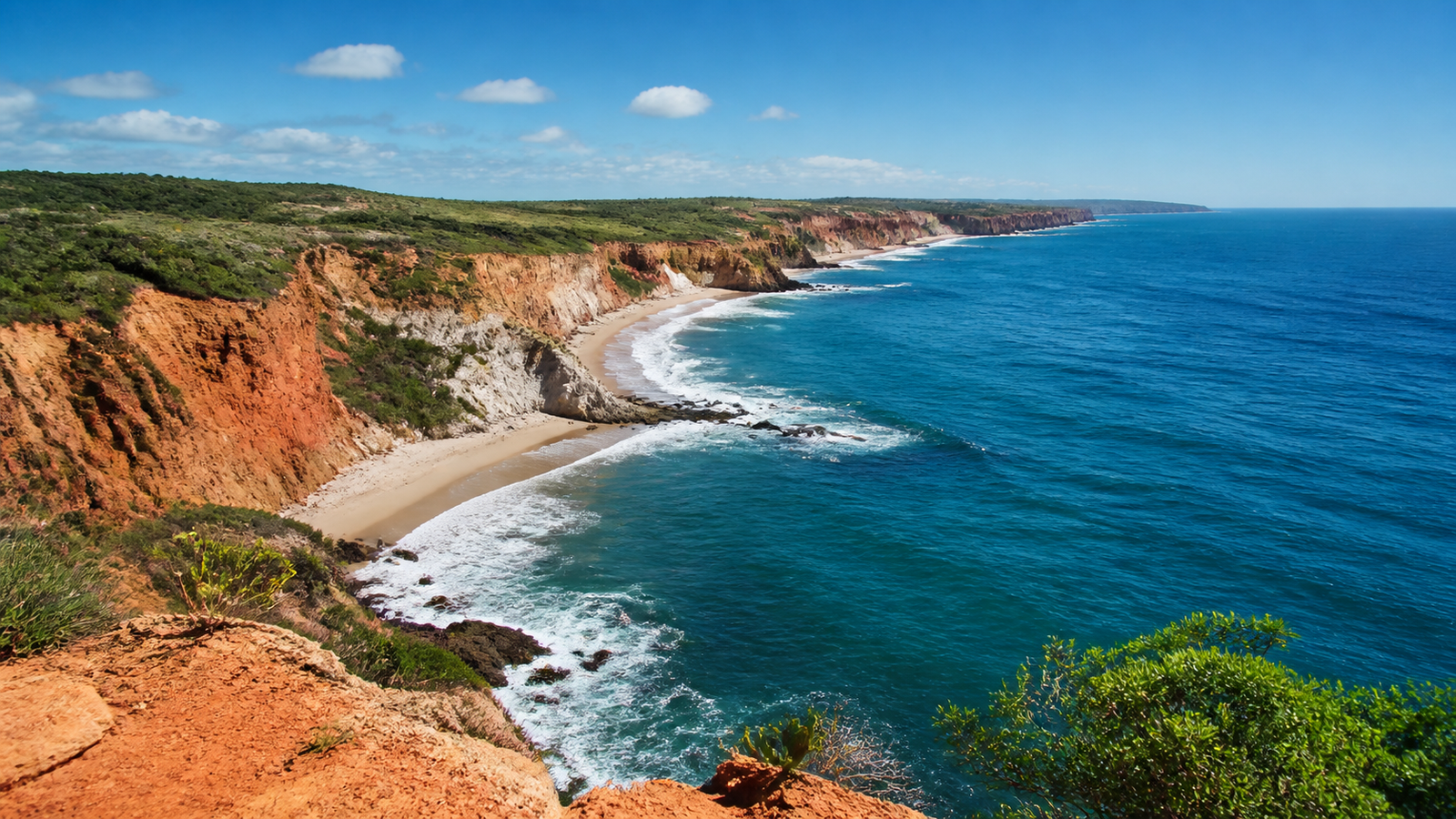
Continuing down the South Coast along RN-063 brings you to two of Rio Grande do Norte’s most unique coastal formations, both situated within minutes of the freshwater lagoons.
Mirante dos Golfinhos in Barra de Tabatinga (45 km south of Natal) is a high clifftop lookout set atop vibrant red sandstone cliffs (falésias). Below the lookout, a protected coastal cove serves as a natural feeding ground for resident wild dolphins (boto-cinza). Travelers can stand along the cliff edge and watch pods of dolphins surface and hunt in the clear Atlantic waves. While sightings cannot be guaranteed on an exact minute-by-minute schedule, visiting in the early morning or late afternoon during incoming high tide provides very high odds of seeing them without paying for a boat excursion.
Praia de Camurupim (40 km south of Natal) solves the common dilemma of rough ocean waves. An extensive natural sandstone reef barrier runs parallel to the shore, completely blocking the heavy Atlantic surf during low tide. The result is a series of vast, warm, waist-deep saltwater pools with zero waves, making it one of the safest swimming beaches in northeastern Brazil for young children and nervous swimmers. At spring low tides, you can even walk across the exposed reef to explore the Pedra Oca, a natural sea cave carved beneath the stone ledge.
Heading North: Dune lagoons and the coral reefs of Maracajaú
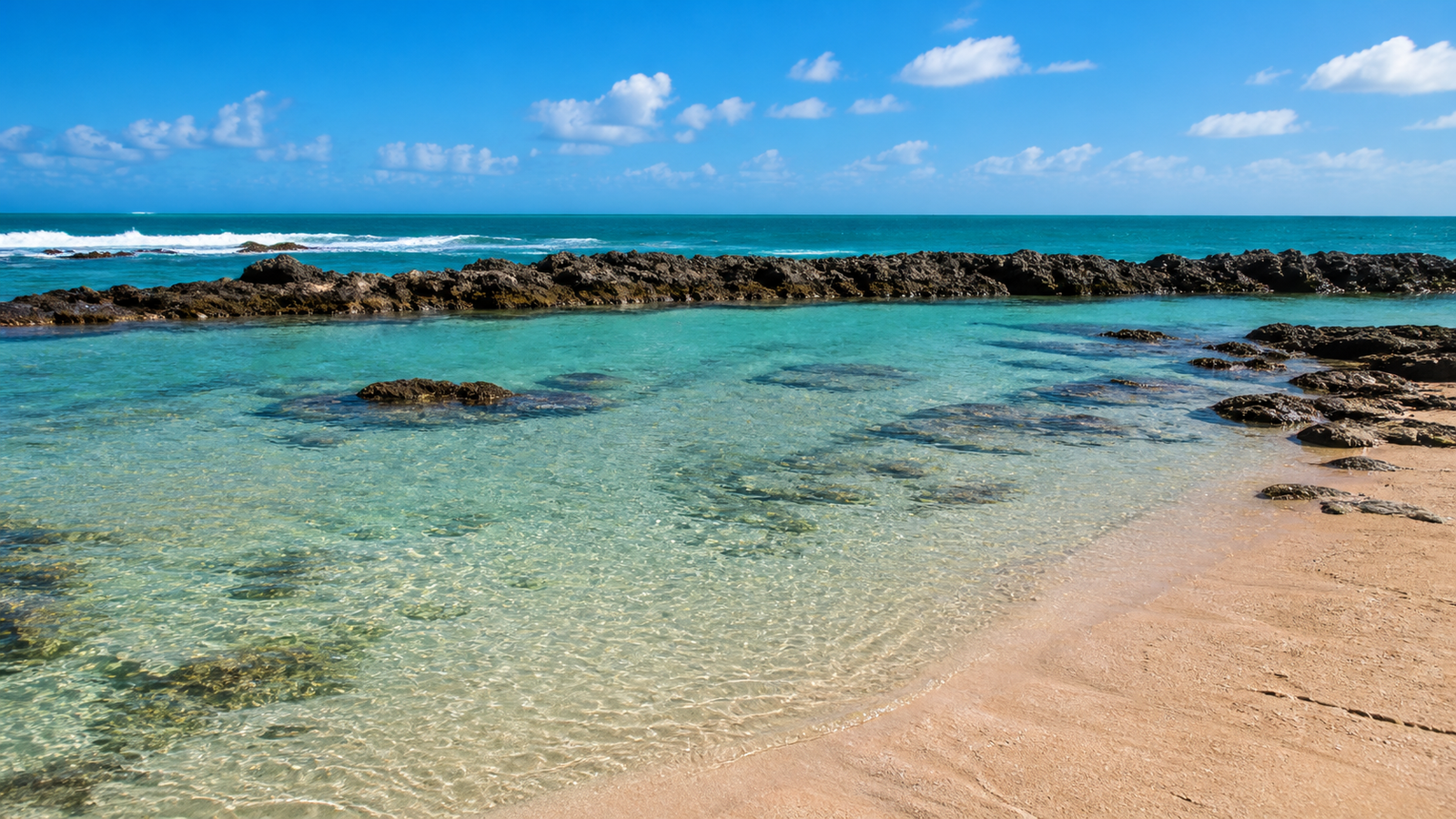
While the South Coast is celebrated for its lush greenery and clifftop drives, the North Coast of Natal is a world of expansive golden dunes, freshwater oases, and offshore marine sanctuaries.
Lagoa de Pitangui (30 km north of Natal, in Extremoz) is a classic desert-like oasis nestled amid towering sand dunes. Surrounded by carnaúba palm trees, Pitangui’s warm, golden freshwater is dotted with dining tables and plastic chairs placed directly inside the shallow water. You can order fresh coconut water or local appetizers while keeping your feet submerged in the refreshing lake.
Lagoa de Jacumã (35 km north of Natal, in Ceará-Mirim) is the thrill-seeker’s stop. Positioned directly at the base of steep sand dunes, Jacumã is legendary for its homegrown dune sports: aerobunda (a high-speed zipline that drops you straight into the deep freshwater), skibunda (sliding down the dune slope on a wooden board into the lake), and the kamikaze (a fast water-slide mat descent down the dune face).
Parrachos de Maracajaú (55 km north of Natal, in Maxaranguape) is often called the “Brazilian Caribbean.” Located seven kilometers offshore, this marine conservation area features shallow coral barrier formations filled with colorful reef fish. Catamarans and speedboats ferry visitors out to floating pontoons for snorkeling and scuba diving in crystal-clear turquoise waters. Because tours only operate during low tide windows (ideally when the tide is below 0.5 meters), checking the official tide table (tábua de marés) and booking in advance is mandatory.
Getting there: Rental car vs. buggy vs. organized tours
Deciding how to travel to these destinations depends largely on which coast you plan to explore:
- Renting a Car for the South Coast: For the South Coast route (Arituba, Camurupim, Tabatinga), picking up a rental car in Ponta Negra is the most flexible and economical choice. The coastal highway RN-063 (Rota do Sol) is well-paved, scenic, and straightforward to navigate. You can set your own pace, spend hours swimming in Arituba, stop for sunset at the Tabatinga dolphin lookout, and explore where to eat in Natal and coastal seafood on your way back.
- Accredited Buggy Tours for the North Coast: Exploring the North Coast dunes and lagoons (Pitangui, Jacumã, Genipabu) is best done via an accredited professional buggy driver (bugueiro credenciado). Driving private rental cars on dynamic sand dunes is illegal, dangerous, and virtually guarantees getting stuck. Professional buggies offer both exhilarating dune routes and safe transfers.
- Payment and Practical Tips: While established beach restaurants and lagoon kiosks accept credit cards, debit cards, and Pix, foreign travelers should keep R$ 30 to R$ 50 in small Brazilian Real banknotes. Small cash bills are useful for informal parking attendants (flanelinhas) and rustic village fruit stands.
At-a-glance comparison of top day-trip spots around Natal
Use this quick reference table to compare distances, road conditions, and highlights when planning your itinerary:
| Destination | Distance from Natal | Access Road | Water / Landscape | Best For |
|---|---|---|---|---|
| Lagoa de Arituba | 38 km South | Paved (RN-063) | Freshwater lagoon | Family dining, pedal boats & easy access |
| Lagoa do Carcará | 45 km South | Unpaved sand track | Transparent turquoise freshwater | Pristine swimming & wild beauty |
| Mirante dos Golfinhos | 45 km South | Paved | High red ocean cliffs | Spotting wild dolphins from clifftops |
| Praia de Camurupim | 40 km South | Paved | Reef-sheltered saltwater | Wave-free swimming & sea cave walk |
| Lagoa de Pitangui | 30 km North | Paved / Dune road | Freshwater palm oasis | Relaxing with tables in the water |
| Parrachos de Maracajaú | 55 km North | Paved + Catamaran | Offshore coral reef | Snorkeling with marine life at low tide |
Frequently Asked Questions
Can I drive to the South Coast lagoons in a regular rental car?
Yes. Lagoa de Arituba, Praia de Camurupim, and Barra de Tabatinga are directly connected by the fully paved Rota do Sol (RN-063) and easily reached with any standard city car. Reaching Lagoa do Carcará requires taking an unpaved sand and dirt track off the main road, which is passable for regular cars with slow, cautious driving in dry weather.
What is the best time of day to see dolphins at Barra de Tabatinga?
Early morning and late afternoon around high tide offer the highest likelihood of seeing wild boto-cinza dolphins foraging in the bay below the cliffs of Mirante dos Golfinhos.
Why is the tide chart important for Praia de Camurupim and Maracajaú?
Praia de Camurupim’s wave-free natural swimming pools only form during low tide when the offshore stone reef blocks incoming ocean surf. Similarly, boat excursions to Parrachos de Maracajaú only operate during low tide windows (ideally under 0.5 meters) when the coral reef pools are shallow enough for safe snorkeling.
What is the best time of year to visit the lagoons around Natal?
The dry season from September to March brings maximum sunshine, calm winds, and peak water clarity in both coastal lagoons and offshore coral reefs across Rio Grande do Norte.