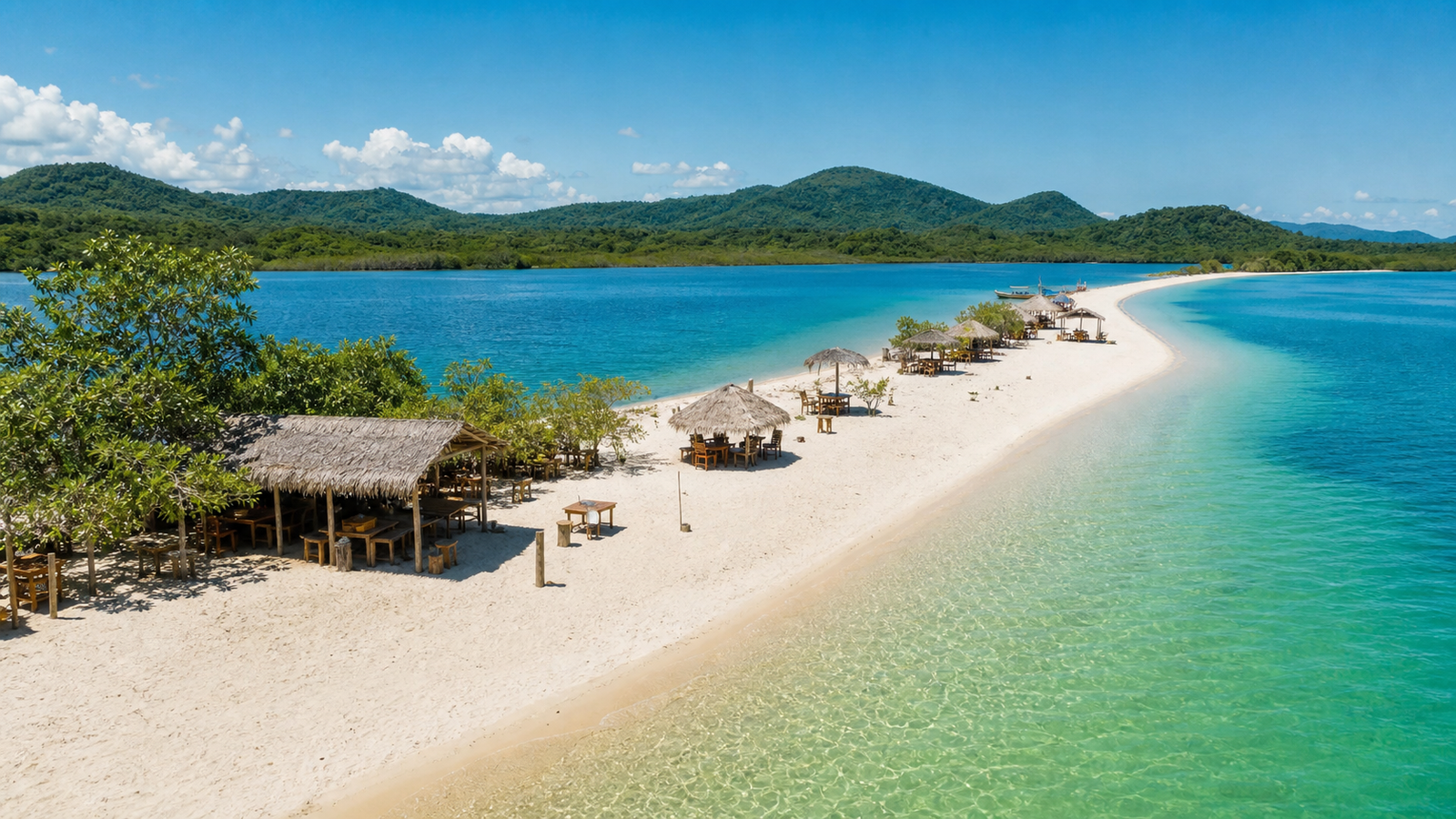
Visiting Ilha do Amor in Alter do Chão is remarkably simple and budget-friendly: traditional wooden rowboats called catraias take under 5 minutes from the village waterfront promenade and cost between R$ 5 and R$ 10 per person each way. Once across, you have immediate access to fine white sands, thatch-roofed beach kiosks serving fresh Amazonian river fish, and a scenic trail leading to the highest viewpoint in the region.
Often referred to as the crown jewel of the ‘Amazonian Caribbean,’ Ilha do Amor is not an oceanic saltwater island. It is a seasonal freshwater sand spit and river peninsula stretching across Lago Verde into the clear, warm, blue-green waters of the Rio Tapajós. Because river dynamics dictate the entire landscape, visiting smoothly comes down to knowing the boat system, understanding the seasonal water calendar, and knowing what local kiosks actually charge.
How to Cross to Ilha do Amor (The Catraia System Explained)
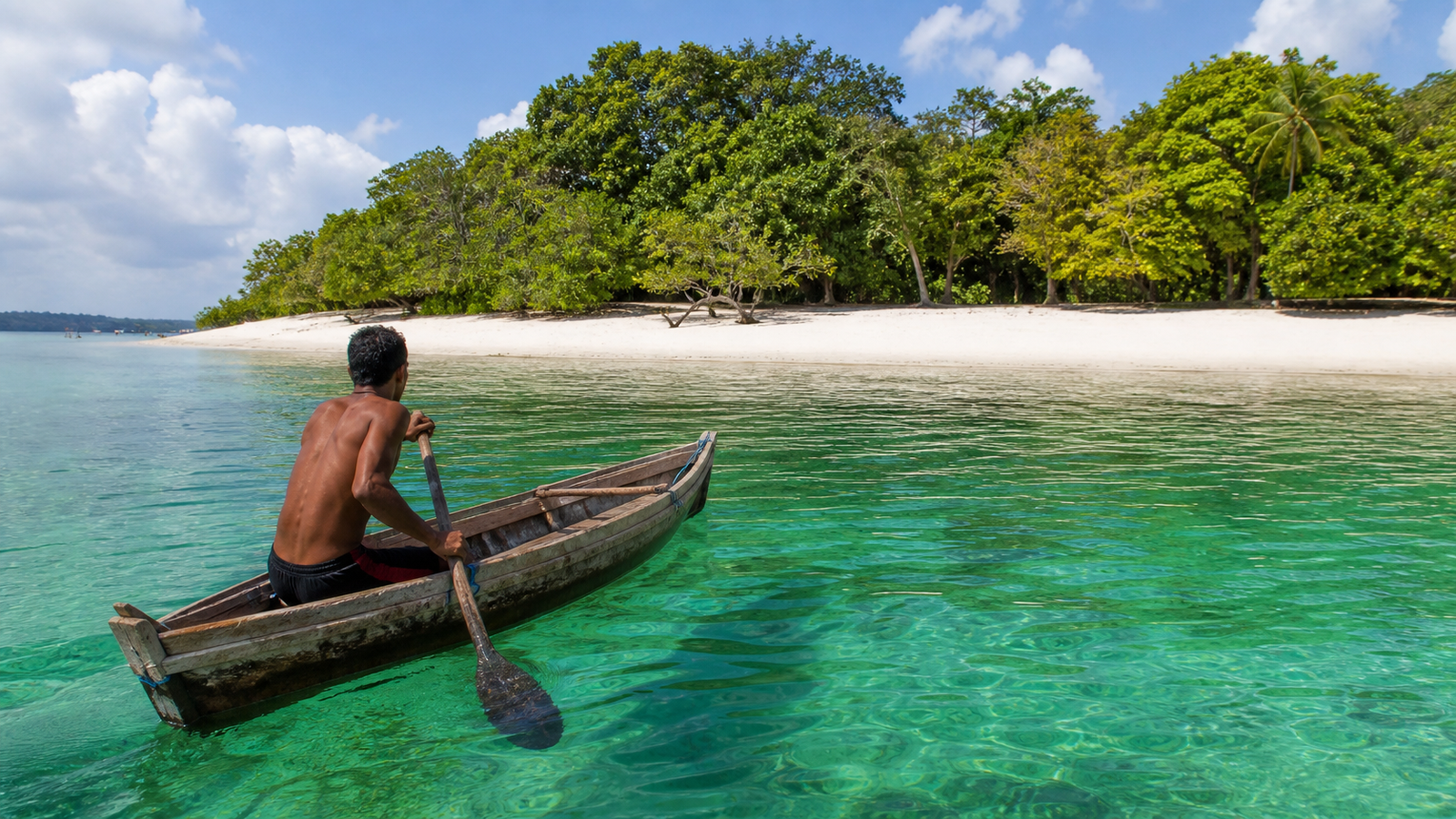
Getting across to Ilha do Amor requires no advance reservations or complicated tour bookings. Small wooden rowboats known locally as catraias line the Alter do Chão waterfront promenade (the Orla) all day long, operated by local boatmen from the village.
Here is exactly how the crossing works in practice:
- Where to board: Walk down the steps of the main waterfront promenade in central Alter do Chão. Boatmen are stationed along the bank and will wave you toward their rowboats.
- Crossing time: The trip across Lago Verde takes between 2 and 5 minutes.
- Cost: Standard fares range from R$ 5 to R$ 10 per passenger each way, paid directly in cash (or via Pix) to your boatman.
- Return crossing: When you are ready to head back to the village, simply walk to the island side of the lagoon and hop in any available catraia. Boats operate continuously from early morning until after sunset.
During the peak of the dry season (typically late October through December), the water level in Lago Verde drops so significantly that a sandbar connects the village directly to the island, allowing visitors to walk across on foot without paying for a boat. Even then, catraias remain on standby for those carrying heavy bags or seeking a relaxed ride.
When to Go: Amazon Dry Season vs. Flood Season
The appearance of Ilha do Amor changes dramatically throughout the year due to the natural hydrological cycle of the Amazon basin. Visiting during the wrong month could mean arriving at a fully submerged sandbar with no beach kiosks in sight.
The year is divided into two primary seasons:
- Dry Season / Vazante (August to December): The river level drops steadily, revealing wide expanses of white sand. Kiosks assemble their wooden thatch structures, chairs, and shade umbrellas. This is the peak beach season in Alter do Chão, with warm water temperatures averaging 28°C to 30°C (82°F–86°F).
- Flood Season / Cheia (February to July): The Tapajós River rises by several meters, submerging the sand spit almost entirely. Beach kiosks are dismantled, and the area becomes an aquatic landscape best explored by canoe or motorboat through the flooded igapó forests.
Use this quick reference table to plan your trip timing:
| Season & Months | Water Level | Beach & Sandbar Status | Best Activities |
|---|---|---|---|
| Aug – Dec (Dry / Vazante) | Low (Dropping) | Full white sandbar exposed; kiosks operating | Swimming, beach dining, sunset watching, Serra da Piraoca hike |
| Jan – Mar (Transition) | Medium (Rising) | Narrower sandbar; fewer kiosks | Swimming, quiet photography, boat excursions |
| Apr – Jul (Flood / Cheia) | High (Peak Flood) | Sandbar mostly submerged underwater | Canoeing through flooded forests (igapós), wildlife spotting |
Kiosk Costs, Food, and Beach Etiquette (What to Expect to Pay)
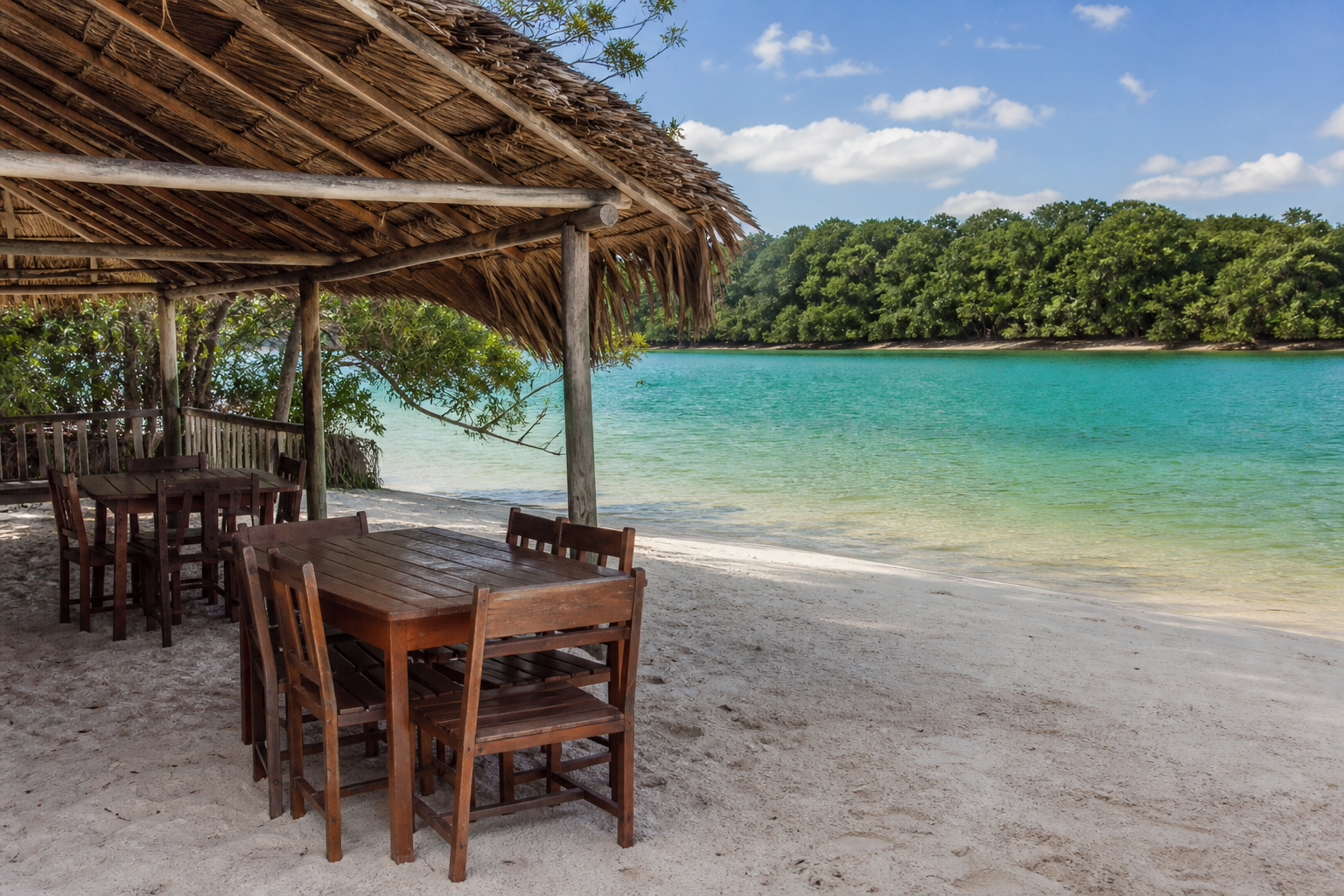
During the dry season, dozens of rustic, thatch-roofed kiosks (known locally as barracas) set up tables and plastic chairs right along the water’s edge on Ilha do Amor. Understanding their pricing and etiquette ensures a pleasant and cost-effective afternoon.
Here is what you should expect regarding food, drinks, and seating:
- Table and chair use: Most kiosks do not charge a separate rental fee for chairs or shade umbrellas as long as you order food or drinks from their menu. However, setting up at a table with outside coolers and consuming your own beverages is generally frowned upon by kiosk operators.
- Traditional fish platters: The signature meal here is whole grilled or fried Amazonian river fish—especially tucunaré (peacock bass), pirarucu (Amazonian giant fish), or tambaqui. A hearty fish platter served with rice, manioc farofa, and vinaigrette salad costs between R$ 80 and R$ 130 and comfortably feeds 2 to 3 adults.
- Appetizers & Snacks: Smaller fried fish bites (iscas de peixe) or regional shrimp and piracuí fish cakes typically cost between R$ 35 and R$ 55.
- Drinks: Fresh chilled coconuts (água de coco) cost around R$ 8 to R$ 10, while domestic beers (600ml bottles or cans) range from R$ 10 to R$ 16. Fresh fruit juices (cupuaçu, taperebá, acerola) run between R$ 10 and R$ 15.
To avoid any surprises, always take a quick glance at the physical menu or confirm the price of the fish platter with the attendant before placing your order.
Hiking Serra da Piraoca: The Free 360-Degree Amazon Viewpoint
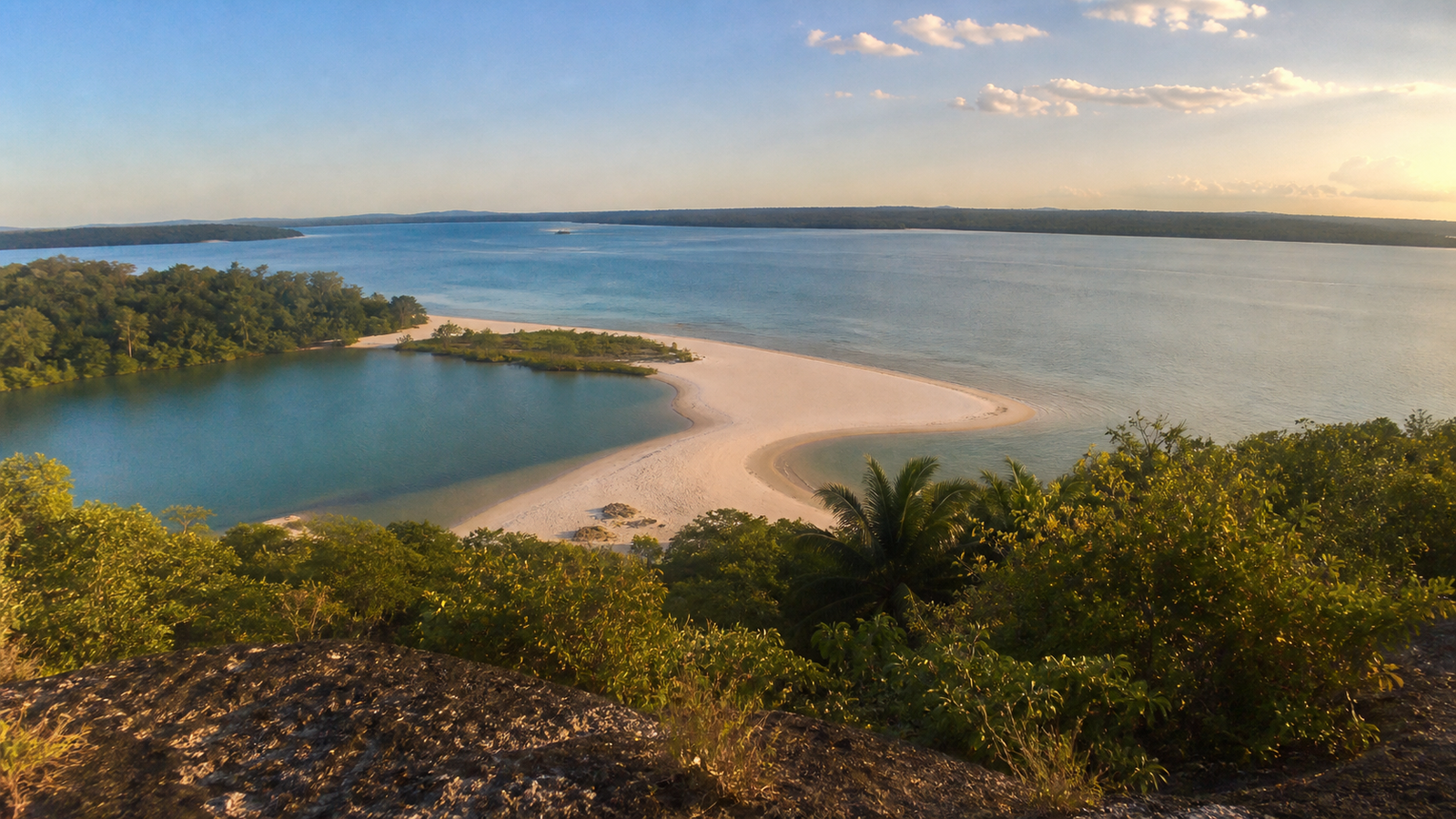
Beyond lounging at the beach kiosks, the most rewarding activity on Ilha do Amor is the self-guided hike to the summit of Serra da Piraoca (also spelled Morro da Piroca). Rising approximately 110 meters above the river level, this isolated pyramidal hill is the highest point near the village and provides an unmatched panoramic view of the entire region.
Here is how to complete the hike safely and easily:
- Trailhead location: Walk along the sandbar past the last cluster of kiosks toward the forested base of the island. You will see a clear dirt trail leading into the native Amazonian savanna and scrub forest.
- Distance and duration: The trail is approximately 2 kilometers round-trip. The ascent takes 35 to 45 minutes of steady uphill walking, while the descent takes around 20 minutes.
- Trail conditions: The path is well-marked and considered moderate. The lower section is relatively flat dirt, while the final 15 minutes involve a steeper climb over loose gravel, red clay, and exposed rock.
- The summit payoff: At the top, marked by a wooden cross, you are rewarded with a 360-degree vista overlooking the deep blue Tapajós River, the emerald-green Lago Verde, the white sand curve of Ilha do Amor, and the dense Amazon rainforest stretching to the horizon.
- Cost: Trail access is 100% free and does not require a paid guide. If you prefer in-depth botanical commentary, local guides in the village offer guided walks for around R$ 50.
Because there is virtually no shade along the final rocky stretch, do the hike in the early morning (around 7:30 AM to 8:30 AM) or late afternoon (around 4:30 PM for golden hour). Wear sturdy sneakers rather than flip-flops, and bring a bottle of drinking water and sun protection.
Essential Safety & Money Tips (Stingrays, Cash, and Crowds)
A few simple local travel habits make the difference between an effortless day on the sandbar and a frustrating detour:
- The Stingray Shuffle (Arrastar os Pés): Freshwater stingrays (arraias) inhabit sandy river bottoms throughout the Amazon basin. They are docile creatures that only sting defensively when accidentally stepped upon. When wading into shallow water, always slide or shuffle your feet along the sand rather than taking high stomping steps. The vibrations warn resting stingrays to swim away peacefully.
- Bring cash in Brazilian Reais: While some kiosks possess mobile card machines, cellular data reception on the sandbar fluctuates constantly. Always carry small cash bills (R$ 5, 10, 20, and 50 notes) for boat fares, coconut water, and kiosk meals to avoid card terminal transaction failures.
- Timing your visit: Ilha do Amor gets lively and crowded on Saturday and Sunday afternoons with local families and weekend travelers enjoying live music. For pristine photography, empty sands, and peaceful swimming, visit on a Tuesday through Thursday morning.
- Catching the sunset: The Tapajós River faces westward from the outer edge of the sandbar, making Ilha do Amor one of the most scenic sunset vantage points in northern Brazil. Plan to stay until 6:00 PM to watch the sky turn deep shades of orange and violet over the water.
Planning a longer stay in the region? Make sure to check out our complete 3 to 4-day Alter do Chão itinerary for detailed guides to hidden beaches, forest walks, and boat trips.
Frequently Asked Questions About Ilha do Amor
How much does the boat to Ilha do Amor cost?
Wooden catraia rowboats cost approximately R$ 5 to R$ 10 per person each way. The crossing takes just 2 to 5 minutes from the Alter do Chão waterfront promenade.
Can you walk to Ilha do Amor without a boat?
Yes, during the peak dry season (usually from late October through December), the water in Lago Verde recedes enough that you can walk across a shallow natural sandbar directly from the village on foot.
Do beach kiosks on Ilha do Amor accept credit cards?
Some kiosks have mobile card machines, but cellular signal on the sandbar can be spotty. It is always wise to carry cash in Brazilian Reais (R$) or have Pix configured on your phone.
Is swimming safe at Ilha do Amor?
Yes, swimming is safe, warm, and very pleasant. Because freshwater stingrays rest on sandy riverbeds, remember to shuffle your feet along the bottom when entering the water instead of taking high steps.
How long does the hike to Serra da Piraoca take?
The hike takes about 35 to 45 minutes to reach the summit (roughly 2 km round-trip). The trail begins at the back of Ilha do Amor, is completely free to enter, and offers a panoramic 360-degree view of the Tapajós River and rainforest.