Gramado is Brazil’s favorite mountain town, and it doesn’t look like the Brazil most foreigners picture. Up in the Serra Gaúcha, in the southern state of Rio Grande do Sul, you get half-timbered chalets, a lake ringed by pine trees, chocolate shops on every block, cheese fondue on cold nights and the country’s biggest Christmas festival. Brazilians come here for winter weather they can’t find anywhere else; international visitors usually come for the novelty and stay for the food and the waterfalls next door in Canela.
The catch is that Gramado rewards planning. Ticket prices change by season, the center gets jammed on holidays, and good hotels sell out months ahead for July and the Christmas season. This guide covers when to go, how many days you need, how to get there from Porto Alegre or Caxias do Sul, what’s worth paying for and what’s free, what the main attractions cost in 2026, a 3–4 day itinerary and a list of real hotels linked to their official websites.
Quick facts: Gramado
- Best time to go: June to August for cold weather, fondue and the Gramado Film Festival; late October to mid-January for the Natal Luz Christmas festival. Spring and fall are quieter and usually cheaper.
- How many days: 3 full days cover Gramado and Canela; 4 days let you add the Vale dos Vinhedos wine region or the Maria Fumaça steam train.
- Getting there: fly into Porto Alegre (about 115 km away) or Caxias do Sul (about 65 km), then drive, take a transfer or ride the bus.
- Airports: Salgado Filho (POA) in Porto Alegre has the most flights, including international ones; Hugo Cantergiani Regional Airport (CXJ) in Caxias do Sul is closer.
- Budget: the main paid attractions run from R$ 50 to about R$ 160 per adult; Lago Negro, Rua Coberta, St. Peter’s Church and the nightly Natal Luz light show are free.
- Where to stay: Centro to walk everywhere; Planalto and the Lago Negro area for quiet close to downtown; Bavária for classic hotels with gardens; Canela for generally lower rates.
A short history: cattle drovers, immigrants and a railway
Short answer: Gramado started as a resting spot for cattle drovers, was settled from the late 1800s by families of Azorean Portuguese, German and Italian descent, grew after the railway arrived and became an independent municipality on December 15, 1954.
According to the history published by Gramado’s City Council, the name means “grassy field” and comes from the meadow where tropeiros, the gaúcho cattle drovers, stopped to rest their herds on the way down from the highlands. The first land records date from the 1870s and 1880s and belong to families of Azorean Portuguese origin. Around the same time, descendants of German immigrants arrived from the colonies in the Sinos Valley, and Italians came up the mountains from the Caxias do Sul area. Syrian and Lebanese merchants rounded out the mix.
In 1904 the settlement became a district of the town of Taquara. Early in the 20th century, the railway line between Taquara and Canela brought Gramado within reach of Porto Alegre, and families from the state capital started coming up to escape the summer heat. Gramado became a “vila” in 1938 and gained independence in 1954. The town sits at roughly 830 meters (2,700 ft) above sea level in the area known as the Região das Hortênsias, the Hydrangea Region, and had 40,134 residents in the 2022 census, according to IBGE, Brazil’s statistics agency.
Organized tourism came later. The Film Festival began in 1972 and Natal Luz in the 1980s. Much of the half-timbered, chalet-style architecture you see today grew out of that tourism push, drawing on the immigrants’ heritage. As the Rio Grande do Sul tourism department puts it, Gramado blends German, Italian and Portuguese culture, and you’ll taste that blend at every meal.
When to visit Gramado: weather and events
Short answer: go in winter (June–August) for cold weather, fireplaces and the Film Festival, or between late October and early January for Natal Luz. Outside those windows the town is calmer and hotels are easier to book.
Remember that seasons are reversed in southern Brazil. The climate is humid subtropical with four distinct seasons. The Gramado Film Commission puts average winter temperatures between 4 °C and 14 °C (39–57 °F), with nights that can dip below freezing and frequent frost. Snow does happen, but it’s rare and unpredictable, so don’t plan a trip around it. Summer highs usually sit around 26–27 °C (79–81 °F) with cool evenings. It rains year-round, so pack an umbrella whatever the month.
Winter (June to August)
This is classic high season. July is school vacation month in Brazil, so downtown is crowded and rates climb. August brings the Gramado Film Festival: the 54th edition ran August 12–22, 2026, at the Palácio dos Festivais, and the 55th is already scheduled for August 7–21, 2027, according to the festival’s official website.
Natal Luz (late October to mid-January)
The 41st Natal Luz runs from October 22, 2026, to January 17, 2027, with 88 days of programming, according to the organizers. It’s the busiest stretch of the year. There’s a full section on it below.
Spring and fall
September, October before Natal Luz, March, April and May bring mild temperatures, hydrangeas in bloom in spring, and shorter lines. If you want the sights without the crowds, this is your window. The state tourism department also lists events such as Festa da Colônia, the Chocofest chocolate festival around Easter, and the Gastronomy Festival.
Natal Luz 2026: what’s paid and what’s free
Short answer: the 41st Natal Luz runs from October 22, 2026, to January 17, 2027; the big shows (the Grand Christmas Parade, Nativitaten and Natal Luz In Concert) need tickets, but the nightly light show, the Christmas Village and the performances on Rua Coberta are free.
Natal Luz, literally “Christmas Light”, is run by Gramadotur, the city’s tourism agency, and this edition has more than 400 attractions, according to the official Natal Luz website. The main ticketed shows are:
- Grande Desfile de Natal (Grand Christmas Parade): 39 performances from October 23 to January 10 at 8 p.m. Since last year it has been staged indoors at the Expogramado halls, with more than 400 performers and 11 floats.
- Nativitaten: the show on the lake at the Serra Park events center, 25 performances between October 24 and January 9 at 8 p.m.
- Natal Luz In Concert: 8 concerts at the Palácio dos Festivais at 9 p.m., featuring the Gramado Symphony Orchestra.
- Brilho de Natal: 75 sessions at 3 p.m. and 6 p.m. through January 10.
Free every day through January 10: the lighting show “O Despertar das Luzes” at 8 p.m. in front of the Palácio dos Festivais; the Christmas Village at Praça das Etnias from 9 a.m. to 9 p.m., including Santa’s House; and the Rua Coberta stage, Tuesday to Sunday at 6:30 p.m. (also 11:30 a.m. on weekends). Ticket prices for the paid shows vary by date and seating, so we don’t list them here. Buy only through official channels and book early, because December dates sell out.
Top things to do in Gramado
Short answer: the essentials are Rua Coberta, St. Peter’s Church, Lago Negro, Lago Joaquina Rita Bier and Mini Mundo, all within about 2 km of downtown; with kids, add Santa’s Village and Snowland.
Rua Coberta and Avenida Borges de Medeiros
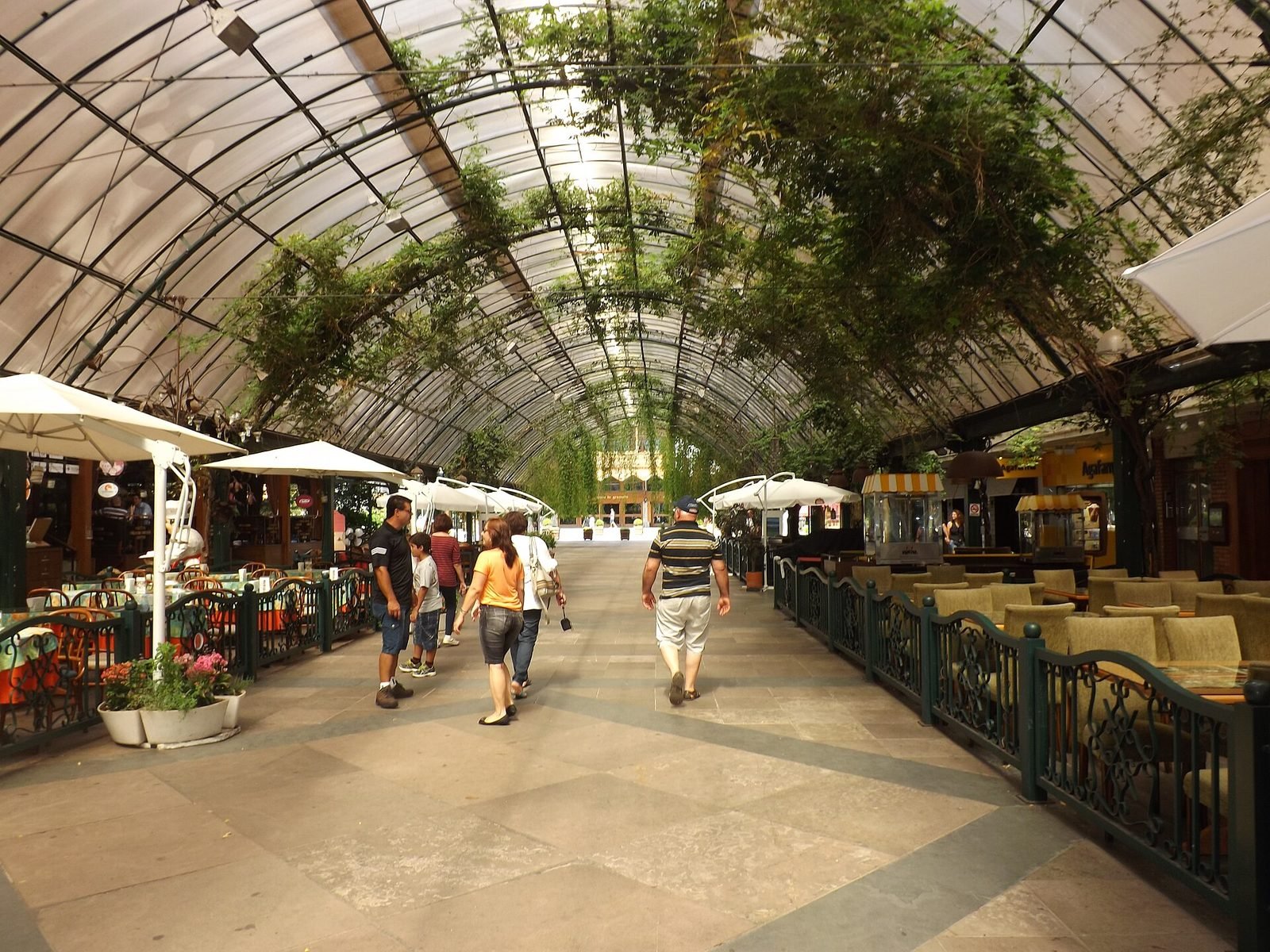
Short answer: Rua Coberta (“Covered Street”) is the stretch of Rua Madre Verônica between Avenida Borges de Medeiros and Rua Garibaldi, roofed in glass and lined with cafés and restaurants; it’s free to walk.
It’s the town’s meeting point and the stage for many events, including the free Natal Luz performances. Right next to it stands the Palácio dos Festivais, home of the Film Festival, with a walk of fame for honored artists. Borges de Medeiros, the main avenue, is where you’ll find chocolate shops, knitwear and souvenirs. Go early for photos without crowds, then come back after dark when the lighting changes everything.
St. Peter’s Church (Igreja Matriz São Pedro Apóstolo)
Short answer: the basalt-stone parish church downtown, a short walk from Rua Coberta, is free and one of Gramado’s must-have photos.
Built with blocks of basalt, the typical stone of the region, the church opened in the 1940s and has stained glass and an interior that’s simpler than the façade suggests. It faces the main square, right on the Borges de Medeiros bustle. It’s an active parish, so be discreet during Mass.
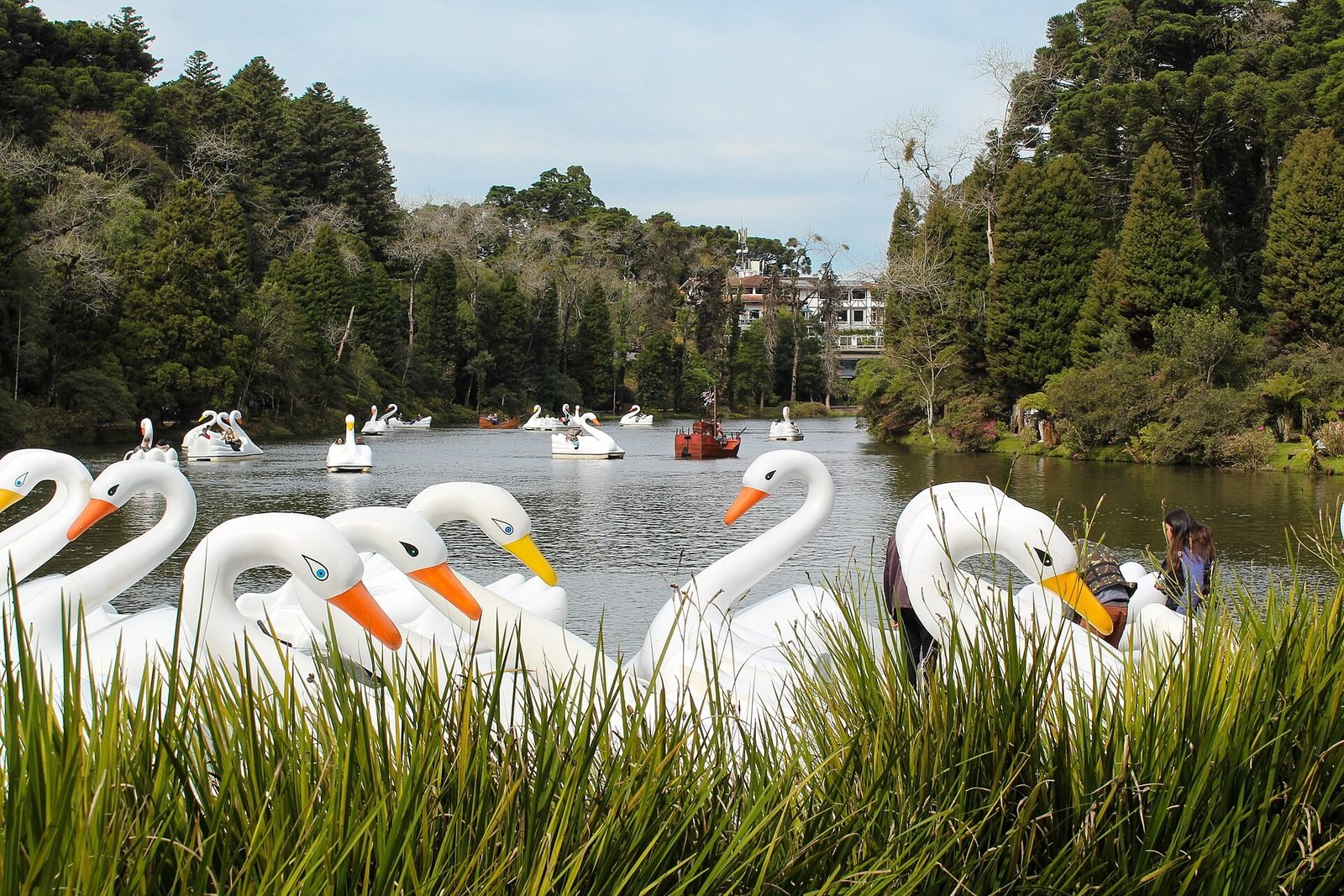
Lago Negro
Short answer: Lago Negro (“Black Lake”) is a man-made lake surrounded by pines and hydrangeas about 1.5 km from downtown; entry is free and pedal boats cost extra.
After a fire swept the area in 1942, businessman Leopoldo Rosenfeldt replanted the land and built the dam that formed the lake in 1953. Some of the trees came from Germany’s Black Forest, hence the name. Today there’s a path around the shore, benches and the famous swan pedal boats. Early mornings and late afternoons in fall give the best photos. Pedal boat prices change often; check on site.
Lago Joaquina Rita Bier
Short answer: this 17,000 m² lake in the Planalto neighborhood is quieter than Lago Negro, but in 2026 it’s undergoing a major makeover, with some areas closed.
According to the city’s official page about the lake, the land belonged to the Bier family from 1875; Joaquina Rita inherited it in 1886, the lake was dug in 1937 when the Vila Planalto subdivision was laid out, and it opened in 1938. The current R$ 8.5 million project, planned to take 24 months from March 2026, includes a circular bridge, a lookout, a café and thousands of new hydrangeas. Expect partial closures during the work; drop by if you’re nearby, but don’t build your day around it.
Mini Mundo
Short answer: Mini Mundo is a miniature park with scale models of famous buildings from Brazil and around the world; it’s open daily from 9 a.m. to 5 p.m. and a full-price ticket costs R$ 156 in 2026.
It’s at Rua Horácio Cardoso, 291, a few minutes’ walk from the center, and a visit takes about two hours. Kids love it, and so do adults who enjoy model trains and tiny details. According to the official store, half-price tickets (R$ 78) apply to children aged 3 to 15 and people 60 and over, children under 3 go free, and there are discounts for booking online in advance. Check current conditions on the official Mini Mundo website.
Aldeia do Papai Noel (Santa’s Village)
Short answer: a year-round Christmas theme park on Avenida Borges de Medeiros, 2300, with tickets from R$ 50 depending on the date.
There’s Santa’s house, permanent Christmas décor, the Bosque Gelado with an ice rink, and extras like the monorail that cost more. It’s open from 9:30 a.m. to 6 p.m., and until 8 p.m. in November and December. For families with small children, it’s a safe bet. Prices and hours are on the official Aldeia do Papai Noel website.
Snowland
Short answer: Snowland is an indoor snow park on the RS-235 highway with a ski slope, snowboarding and snow play areas; prices change by season.
It’s the answer for anyone who dreams of snow and knows it almost never falls here. There are ski and snowboard lessons, a sled run and kids’ areas. The park splits the year into seasons (low, mid, high) with different rates, so check your date on the official Snowland website. Bring gloves and thick socks: thermal gear is usually included, but the cold is real.
Canela and day trips
Short answer: Canela is about 8 km from Gramado and has the region’s big nature sights: Parque do Caracol, the cable cars, Skyglass and the Stone Cathedral. Give it at least one full day.
Parque do Caracol and Caracol Waterfall
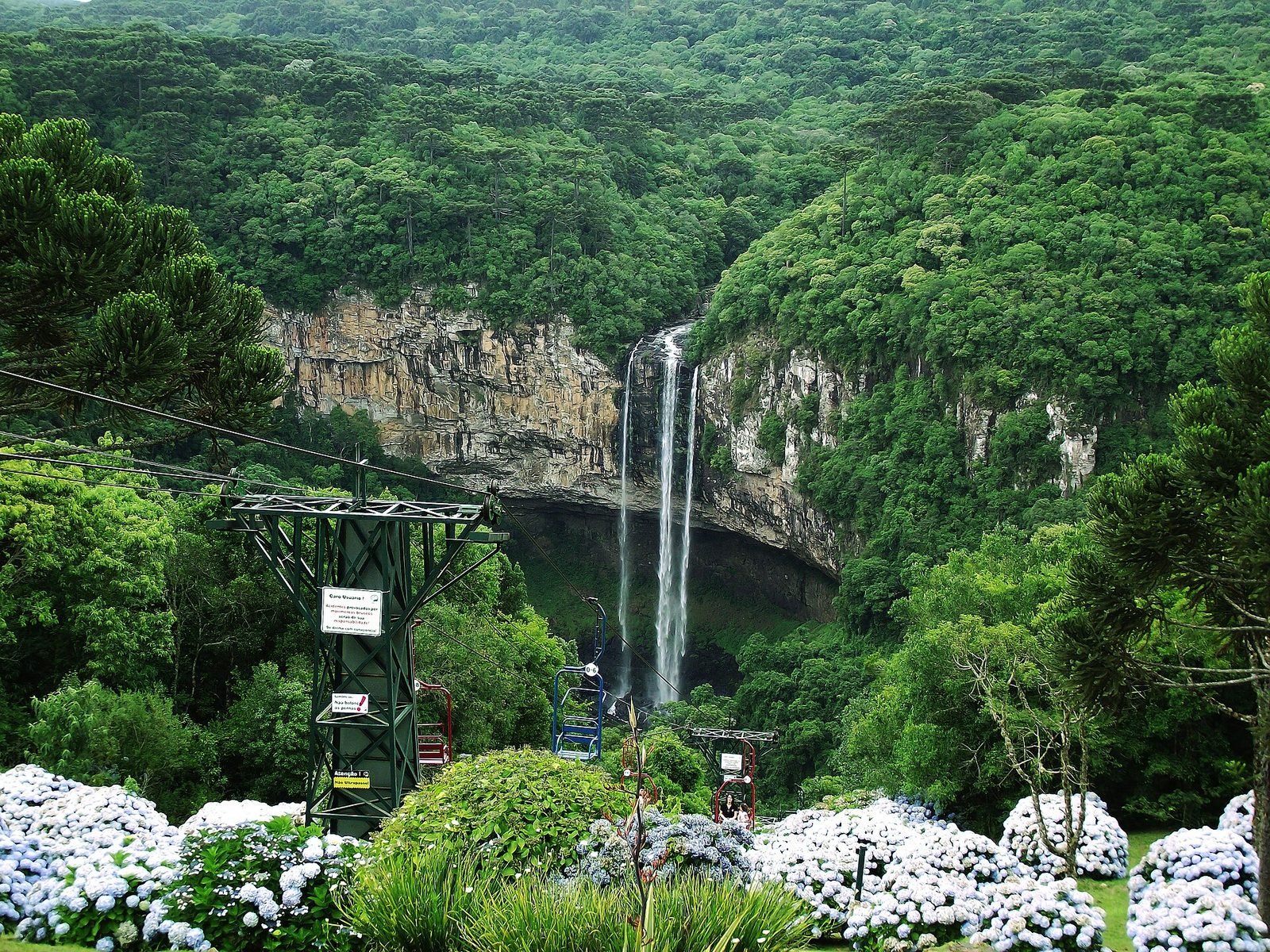
Short answer: Parque do Caracol protects the Cascata do Caracol, a 131-meter free-falling waterfall; adult tickets cost R$ 134.90 and the park is open every day.
According to the park’s official website, half price (R$ 67) applies to children 4 to 12, seniors 60 and over, people with disabilities and ID Jovem holders; there’s no student discount. Rio Grande do Sul residents get a reduced rate, and residents of Canela and Gramado enter free. Hours are 9 a.m. to 5 p.m. on weekdays and 9 a.m. to 6 p.m. on weekends and holidays, with last entry 30 minutes before closing. The park stays open in the rain, and the falls are usually fuller after wet days.
Bondinhos Aéreos (cable cars)
Short answer: Canela’s cable cars cover 840 meters across three stations with a head-on view of the Caracol Waterfall; adult tickets cost R$ 130.
There are 12 Swiss-made cabins, and half price is R$ 65, according to the official Parques da Serra store. They run daily from 9 a.m. to 5 p.m. If you can only pick one viewpoint of the falls, this is the most complete.
Skyglass
Short answer: Skyglass is a glass-floored platform suspended 360 meters above the Caí River valley, about 14 km from central Canela; advance online tickets start at R$ 145.
It bills itself as the first glass platform of its kind in Latin America. Besides the walkway, there’s the Abusado, a rail-mounted sled ride down the valley, and a small museum of clothes irons. It’s open daily from 9:30 a.m. to 6 p.m. Children 6 to 12 and people 60 and over pay half, and kids under 5 go free. Prices change by date and there are combo tickets; see the official Skyglass website.
Catedral de Pedra (Stone Cathedral)
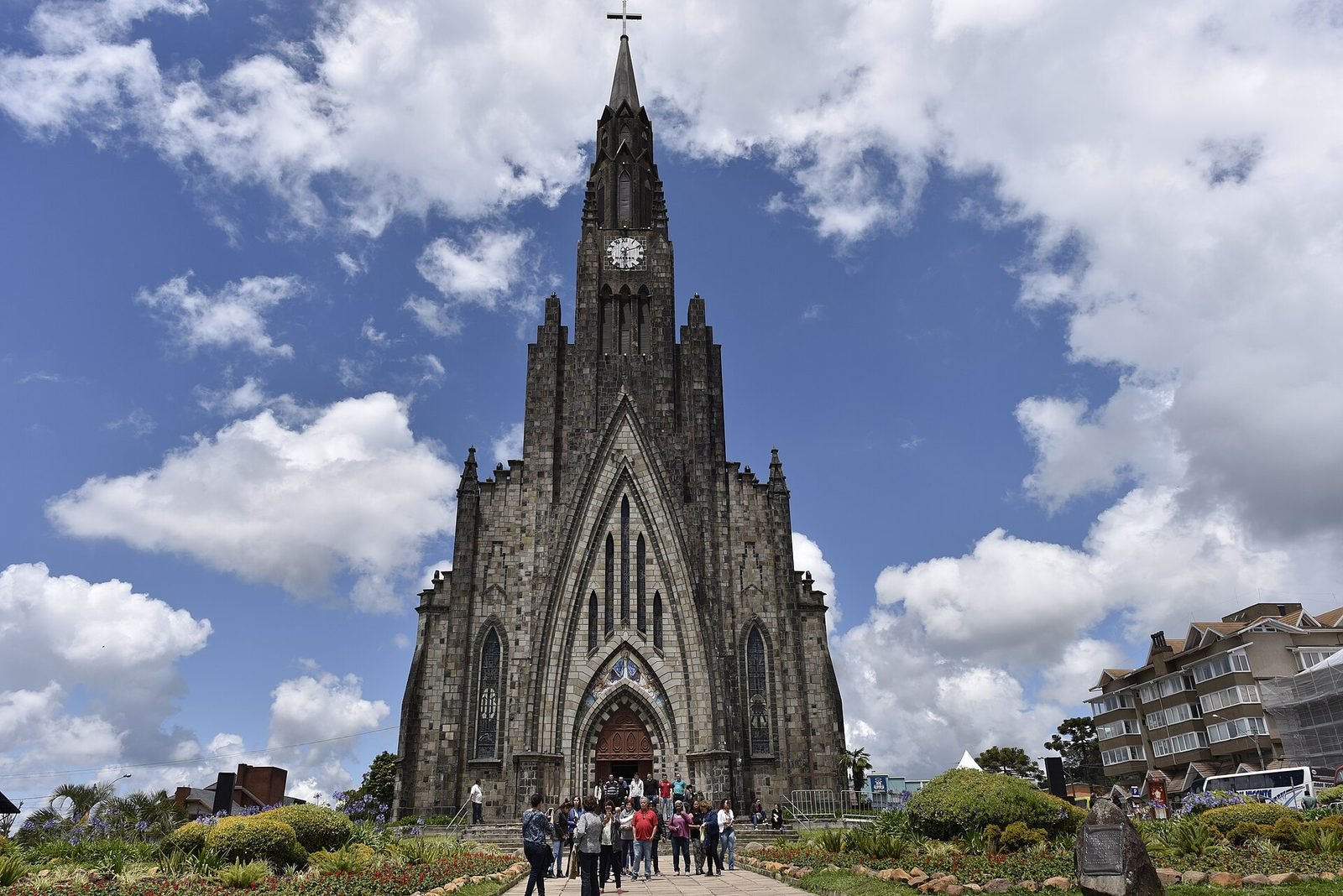
Short answer: Our Lady of Lourdes parish church, known as the Stone Cathedral, is Canela’s postcard sight: English neo-Gothic style, a 65-meter tower and free entry.
Construction started in 1953 and wasn’t finished until 1987. The tower houses a bronze carillon, and at night the façade is lit up, even more elaborately at Christmas. The square in front is the heart of Canela, with cafés and shops, and a good lunch stop on your Canela day.
Vale dos Vinhedos and the Maria Fumaça train
Short answer: Vale dos Vinhedos, in Bento Gonçalves, is a little over 100 km from Gramado, about 2 hours by car; it’s a full-day trip, often paired with the Maria Fumaça steam train.
It was Brazil’s first wine Denomination of Origin, recognized by the national IP office (INPI) in 2012, according to Embrapa Grape and Wine, the federal agricultural research agency. Dozens of wineries welcome visitors for tastings and Italian-style meals. The Maria Fumaça ride, operated by Giordani Turismo, runs between Bento Gonçalves, Garibaldi and Carlos Barbosa with wine, sparkling wine and grape juice tastings and live Italian music. Prices depend on the package; check with the operator. If you’re driving, pick a designated driver: Brazil has zero tolerance for drinking and driving.
How to get to Gramado
Short answer: most visitors fly into Porto Alegre, about 115 km away, and continue by car, transfer or bus for roughly 2 hours; Caxias do Sul, about 65 km away, is the closer alternative.
By air
Salgado Filho International Airport in Porto Alegre has flights from every Brazilian state capital plus some international routes, and it’s where most visitors arrive. Hugo Cantergiani Regional Airport (CXJ) in Caxias do Sul is closer and, according to the Caxias do Sul city government, has flights to São Paulo’s Guarulhos (LATAM), Congonhas (GOL) and Campinas-Viracopos (Azul). From Caxias it’s about 65 km to Gramado via Nova Petrópolis. Coming from abroad, you’ll usually connect in São Paulo.
By bus
Citral runs the Porto Alegre–Gramado line, departing from the city’s bus station with a stop at Salgado Filho airport. The ride takes about 2h30 to 2h45. It’s the cheapest option if you fly in and don’t want to rent a car. Private and shared transfers are also sold by agencies and many hotels.
By car
From Porto Alegre, the usual route climbs the RS-115 via Taquara and Três Coroas. Alternatively, go via Novo Hamburgo and Nova Petrópolis and enter on the RS-235. The roads are good but winding, and fog is common in winter, so drive in daylight when you can. On high-season weekends and during Natal Luz, expect traffic on the way into town.
Getting around Gramado and Canela
Short answer: downtown Gramado is walkable; for Canela, Snowland, Skyglass and the wineries you’ll need a car, a ride-hailing app, a taxi or an organized tour.
The center is compact: Rua Coberta, St. Peter’s Church, Lago Negro and Mini Mundo are 20 minutes’ walk or less from each other. Parking downtown is paid and scarce at peak hours, so if your hotel has a garage, leave the car there and walk. There’s an intercity bus to Canela, and ride-hailing apps work well in both towns. For the Vale dos Vinhedos, a tour with a driver makes sense since the point is tasting wine. During Natal Luz, some downtown streets close at night; ask your hotel.
What to eat in Gramado
Short answer: the dishes that define Gramado are fondue, the café colonial afternoon feast, handmade chocolate and galeto with pasta, a legacy of Italian immigration in the mountains.
- Fondue: cheese, then meat, then chocolate, usually as a fixed-price sequence per person. It’s the classic winter dinner. Compare menus, since what’s included varies a lot.
- Café colonial: a huge late-afternoon spread of breads, cucas (German-style crumb cakes), pies, jams, cold cuts and savory snacks, rooted in the tables of German and Italian farming families. Come hungry and skip dinner.
- Chocolate: factories and shops line Borges de Medeiros, and several offer tours and tastings. The Chocofest takes place around Easter.
- Galeto and pasta: spit-roasted young chicken with fried polenta, salad and pasta is a tradition of the Italian-settled towns such as Caxias do Sul and shows up on many menus in the region.
- German food: pork knuckle, sausages, sauerkraut and fruit cuca, especially at restaurants with German roots.
- Local wine and sparkling wine: labels from the Vale dos Vinhedos and other parts of the Serra Gaúcha are on almost every wine list.
Book well-known restaurants ahead in winter and during Natal Luz. In July and December, turning up without a reservation at 8 p.m. can mean an hour’s wait.
3- or 4-day Gramado and Canela itinerary
Short answer: spend one day in central Gramado, one in Canela, one on theme parks or Natal Luz and, if you have a fourth day, take a day trip to the Vale dos Vinhedos.
- Day 1, central Gramado: Rua Coberta and St. Peter’s Church in the morning, Lago Negro before lunch, Mini Mundo in the afternoon. In the evening, fondue or, in season, the free Natal Luz lighting show.
- Day 2, Canela: Parque do Caracol at opening time, then the cable cars, lunch near the Stone Cathedral and Skyglass mid-afternoon. Head back to Gramado for a café colonial.
- Day 3, theme parks or Natal Luz: Snowland or Santa’s Village during the day, chocolate shopping on Borges de Medeiros and, from October to January, one of the ticketed Natal Luz shows at night.
- Day 4, wine country: Vale dos Vinhedos and the Maria Fumaça train, leaving early. If you’d rather stay local, use the day for Lago Joaquina Rita Bier and a slow wander through the Bavária neighborhood.
Combining the south with other parts of Brazil? Check out our Rio de Janeiro travel guide and our Foz do Iguaçu travel guide; both cities have direct flights to Porto Alegre.
How much does a trip to Gramado cost?
Short answer: Mini Mundo, Parque do Caracol, the cable cars and Skyglass alone add up to about R$ 565 per adult in 2026, before Snowland, Natal Luz, lodging, transport and food.
| Attraction | Adult ticket 2026 |
|---|---|
| Lago Negro, Rua Coberta, St. Peter’s Church | Free |
| Natal Luz lighting show | Free |
| Mini Mundo | R$ 156 (half price R$ 78) |
| Aldeia do Papai Noel | from R$ 50 |
| Parque do Caracol (Canela) | R$ 134.90 (half price R$ 67) |
| Bondinhos Aéreos (Canela) | R$ 130 (half price R$ 65) |
| Skyglass (Canela) | from R$ 145 online |
| Snowland | varies by season |
Prices are those published by each attraction in October 2026 and can change. To save money, book online ahead (several attractions offer discounts), check whether your hotel includes any tickets, pick a hotel with breakfast included and take the Citral bus instead of a private transfer if you’re traveling solo or as a couple.
Where to stay in Gramado
Short answer: stay in Centro to walk everywhere; in Planalto, near Lago Negro and Mini Mundo, for peace and quiet within walking distance of Rua Coberta; and in Bavária for classic hotels with big gardens. Canela usually has lower rates.
Neighborhoods at a glance
- Centro: best if you don’t have a car. Restaurants, shops and Natal Luz on your doorstep. The trade-off is noise and traffic in high season.
- Planalto and the Lago Negro area: residential and leafy, 10 to 15 minutes’ walk from Rua Coberta. Some of the town’s most traditional hotels are here.
- Bavária: quiet streets close to the center, with long-established hotels on large grounds and smaller guesthouses.
- Canela: about 8 km away. It makes sense if you’ll spend more time at the nature parks or want to pay less, but you’ll need a car to go out for dinner in Gramado.
The list below covers real properties at different price points, each linked to its official website. We don’t publish rates because they swing a lot by date, especially during Natal Luz and in July; check directly with the hotel.
Castelo Saint Andrews (luxury, Belvedere)
A hotel inspired by Scottish castles, set inside a gated residential area with views over the Quilombo Valley. Choose from castle suites, suites built into the hillside or a private house, plus fine dining and a serious wine cellar. Made for honeymoons and special occasions. Official site
Hotel Colline de France (luxury, Avenida Central)
Décor inspired by France’s Second Empire, several suite categories and service that guests single out in reviews. It’s on Rua Vigilante, in the Avenida Central area, and is one of the most exclusive hotels in town. Official site
Estalagem St. Hubertus (boutique, facing Lago Negro)
A long-running inn in the Planalto neighborhood with a front-row view of Lago Negro. Breakfast and afternoon tea are included, and there’s a heated pool, sauna, fireplace lounge and the Consuelo restaurant. Great for couples who want quiet within walking distance of downtown. Official site
Hotel Ritta Höppner (boutique, Planalto)
Set in roughly 10,000 m² of gardens next to Mini Mundo and about 900 meters from Rua Coberta. Breakfast until noon and afternoon tea are included, and there’s a covered heated pool, a kids’ house and the Höppner restaurant, known for German cooking. The hotel says guests get Mini Mundo tickets during their stay. No pets. Official site
Casa da Montanha (boutique, Centro)
Right on Avenida Borges de Medeiros in the heart of town, with a chalet feel and a focus on families and couples. It has its own Italian restaurant, a bar and a spa, and runs themed programs for Christmas, school holidays, Easter and winter. Official site
Wish Serrano Resort (resort, Centro)
A resort on Avenida das Hortênsias near Rua Coberta, with a heated indoor pool, an outdoor pool, kids’ club, spa and four places to eat. It’s dog-friendly and runs activities for adults and children, which makes it an easy pick for families. Official site
Bavária Sport Hotel (classic, Bavária)
Welcoming guests for more than 50 years on large green grounds close to the center. Indoor and outdoor pools, a restaurant and plenty of space to unwind. A good fit for families who want room to breathe without being far from Borges de Medeiros. Official site
Pousada Tango (guesthouse, Bavária)
A small guesthouse with just 14 rooms on a quiet street in the Bavária area, a few minutes from downtown. Rooms range from doubles to family rooms for up to five, and guests rave about the homemade breakfast. Official site
Hotel Fioreze Centro (good value, Centro)
About 180 meters from Rua Coberta and St. Peter’s Church, on Rua São Pedro. Rooms are compact (from 13 m²), but the location means you can do almost everything on foot. Breakfast only, with plenty of restaurants nearby. Official site
Mater Hotel (boutique, Canela)
Our Canela pick, on Praça da Matriz facing the Stone Cathedral. It occupies a restored art deco building that once housed a school, with suites of 17 to 30 m² and apartments with full kitchens. Breakfast included. Ideal if you want to sleep in Canela and hit the parks early. Official site
Safety and practical tips
Short answer: Gramado is a safe, easygoing town for visitors; the main things to watch are booking early, packing for real cold and avoiding tickets or rooms sold outside official channels.
- Book early: for July and Natal Luz, good hotels sell out months ahead. Popular restaurants need reservations too.
- Dress in layers: nights are cool even in summer. In winter, bring a heavy coat, hat, gloves and closed shoes.
- Scams: fake social media profiles sell Natal Luz tickets and hotel bookings. Buy only on official websites and be wary of prices far below normal or requests to pay a private individual via Pix.
- Driving: mountain fog is common. Slow down, use low beams and avoid driving late at night.
- Language: outside hotels and big restaurants, English isn’t widely spoken. A translation app goes a long way, and locals are patient.
- Money: cards and Pix are accepted almost everywhere. Set a budget before you hit the chocolate and knitwear outlets.
- Accessibility: much of downtown is flat, but parks like Caracol have long staircases. Ask about access before buying tickets.
Video: the Natal Luz lighting show
This video from the official Natal Luz de Gramado YouTube channel shows the Show de Acendimento, the free lighting show staged every night in front of the Palácio dos Festivais during the festival. It’s a good taste of the town’s atmosphere at Christmas.
Gramado FAQ
How many days do you need in Gramado?
Three full days is ideal: one for central Gramado, one for Canela and one for theme parks or Natal Luz. With four days you can add a day trip to the Vale dos Vinhedos or the Maria Fumaça steam train.
What is the best time to visit Gramado?
It depends on what you want. For cold weather, fireplaces and the Film Festival, go between June and August. For Natal Luz, go between late October and mid-January. For lower prices and shorter lines, pick spring or fall and avoid Brazilian holidays.
When is Natal Luz 2026?
The 41st Natal Luz runs from October 22, 2026, to January 17, 2027. The main ticketed shows end on January 9–10, and free attractions such as the nightly lighting show run through January 10.
Does it snow in Gramado?
Occasionally, but it’s rare and unpredictable. What’s common in winter is near-freezing temperatures and frost. If you want guaranteed snow, head to Snowland, the town’s indoor snow park.
How do I get from Porto Alegre to Gramado?
It’s about 115 km. By car it takes around 2 hours via the RS-115. Citral buses leave from the Porto Alegre bus station and stop at Salgado Filho airport, with a ride of about 2h30 to 2h45. Private and shared transfers are also available.
Which airport is closest to Gramado?
Hugo Cantergiani Regional Airport in Caxias do Sul, about 65 km away. Salgado Filho in Porto Alegre is farther but has many more flights and usually cheaper fares.
Is Gramado worth visiting for international travelers?
Yes, especially if you’ve already seen Brazil’s beaches and want something completely different: European-style architecture, cool weather, wine country and the Caracol Waterfall nearby. Pair it with Porto Alegre or a flight on to Rio or Foz do Iguaçu.
What can you do for free in Gramado?
Stroll Rua Coberta and Avenida Borges de Medeiros, visit St. Peter’s Church, walk around Lago Negro and, during Natal Luz, watch the nightly lighting show, visit the Christmas Village and catch the free performances on Rua Coberta.
Should I stay in Canela instead of Gramado?
It makes sense if you’re focused on the nature parks (Caracol, the cable cars, Skyglass) or want to save on lodging. If you want to walk to restaurants, nightlife and Natal Luz, Gramado is more convenient.
Where is the best area to stay in Gramado?
Centro if you don’t have a car and want to walk everywhere. Planalto and the Lago Negro area for quiet without being far away. Bavária for classic hotels with big gardens.
Sources
- Natal Luz de Gramado (Gramadotur): natalluzdegramado.com.br (dates and program of the 41st edition)
- Gramado Film Festival: festivaldecinemadegramado.com (54th and 55th editions)
- Gramado City Council: gramado.rs.leg.br (town history)
- City of Gramado: Lago Joaquina Rita Bier
- Rio Grande do Sul tourism department: turismo.rs.gov.br; IBGE Cidades: Gramado
- Attractions: Mini Mundo, Aldeia do Papai Noel, Snowland, Parque do Caracol, Parques da Serra (cable cars), Skyglass
- Embrapa Grape and Wine: Vale dos Vinhedos DO; Giordani Turismo: giordaniturismo.com.br
- Transport: Citral; City of Caxias do Sul (Hugo Cantergiani Airport); Gramado Film Commission (climate)