
The first time we saw Rio from above, the city seemed too big for its own map: mountains, ocean, forest and lagoon all crowding in between the buildings and the people. We’ve been back many times since, and that feeling hasn’t faded. Rio is not a city to rush. It asks for time: an iced mate on the sand, a samba circle that starts whenever it starts, and the sunset at Arpoador that somehow always ends with applause.
This is the guide we wish we’d read before our first trip: when to go, how to get in from the airport, how to get around with peace of mind, what the big sights actually cost, what to eat and where to stay. We checked ticket and transport prices on the official websites in October 2026. Fares do change, so double-check before you head out.
Rio de Janeiro quick facts
- Best time to visit: April to June and August to October, with less rain, gentler heat and better prices. December to March is peak season, with New Year’s Eve and Carnival.
- How many days: 4 to 5 days for the essentials; 7 days if you want to add Petrópolis, Arraial do Cabo, Ilha Grande or Paraty.
- Airports: Galeão – Tom Jobim (GIG) for international and many domestic flights, and Santos Dumont (SDU), downtown, for domestic flights.
- Getting around: metro (R$7.90), VLT light rail downtown (R$5.00), BRT buses, taxis and ride-hailing apps. The metro takes contactless bank cards right at the turnstile.
- Typical costs: Corcovado train R$134; Sugarloaf cable car R$205; Museum of Tomorrow R$40; Maracanã tour R$115 (full adult prices, 2026).
- Where to stay: Copacabana and Leme (first trip), Ipanema and Leblon (calmer, pricier), Botafogo (good value), Santa Teresa (charm) and Centro/Lapa (history and nightlife).
- Emergency numbers: 190 (Military Police), 192 (ambulance, SAMU), 193 (Fire Department).

A brief history of Rio de Janeiro
Rio was founded on March 1, 1565, by Estácio de Sá on the shores of Guanabara Bay, and it was Brazil’s capital until 1960. Nearly four centuries as a seat of power explain why so much heritage is packed between downtown and the South Zone.
It became the colonial capital in 1763 and grew dramatically after the Portuguese royal court arrived in 1808. That same year Prince Regent João founded the Botanical Garden, still one of the loveliest places in the city. The Empire and the Republic followed, along with an urban makeover that gave downtown landmarks such as the Theatro Municipal, opened in 1909, and Confeitaria Colombo, a café that has been serving since 1894. The capital moved to Brasília in 1960, but Rio never stopped being Brazil’s shop window.
Two UNESCO listings sum up what makes the city special. In 2012, the “Carioca Landscapes between the Mountain and the Sea” became a World Heritage Site, recognizing exactly that blend of city, mountains, forest and ocean. In 2017, UNESCO added the Valongo Wharf in the port district, the main landing point for enslaved Africans in the Americas. A visit there shows a side of Rio’s history that the postcards leave out.
Today the city has 6,211,423 residents according to Brazil’s 2022 census (IBGE), and international tourism is booming: in 2025, Rio de Janeiro state welcomed about 2.2 million foreign visitors, a record according to Embratur, with Argentina in first place, followed by Chile, the United States, Uruguay and France.
When to visit Rio de Janeiro: month-by-month weather
For most travelers, the best time to visit Rio is April to June or August to October: less rain, more comfortable heat and more reasonable prices. Summer, from December to March, is hotter, wetter and more expensive, but it is when New Year’s Eve and Carnival happen.
Rio is warm all year. Even in the southern “winter”, from June to August, average highs stay above 26 °C (79 °F). What really changes is the rain: in summer it tends to arrive as heavy late-afternoon showers, while winter days are usually drier and clearer, which is perfect for Christ the Redeemer and Sugarloaf. The table below shows averages from Brazil’s weather service (INMET) at its downtown Saúde station, 1981–2010.
| Month | Avg. high | Avg. low | Rain (mm) | Our take |
|---|---|---|---|---|
| January | 31.5 °C / 88.7 °F | 24.1 °C / 75.4 °F | 137 | Very hot, school holidays, busy beaches |
| February | 32.2 °C / 90.0 °F | 24.4 °C / 75.9 °F | 130 | Carnival in most years |
| March | 31.2 °C / 88.2 °F | 24.0 °C / 75.2 °F | 136 | Still hot and rainy |
| April | 30.0 °C / 86.0 °F | 23.0 °C / 73.4 °F | 95 | The sweet spot begins |
| May | 27.8 °C / 82.0 °F | 20.7 °C / 69.3 °F | 70 | Excellent for sightseeing |
| June | 26.7 °C / 80.1 °F | 19.3 °C / 66.7 °F | 43 | Dry, clear skies |
| July | 26.4 °C / 79.5 °F | 18.7 °C / 65.7 °F | 42 | Brazilian school holidays |
| August | 27.0 °C / 80.6 °F | 19.1 °C / 66.4 °F | 45 | Dry, great for hiking |
| September | 26.7 °C / 80.1 °F | 19.6 °C / 67.3 °F | 54 | Pleasant and quieter |
| October | 28.2 °C / 82.8 °F | 21.1 °C / 70.0 °F | 87 | Warming up, still good |
| November | 29.4 °C / 84.9 °F | 22.3 °C / 72.1 °F | 98 | Shoulder season |
| December | 30.3 °C / 86.5 °F | 23.2 °C / 73.8 °F | 134 | Peak season and New Year’s Eve |
Want the bigger picture across the country? See our guide on when to visit Brazil.
Rio Carnival 2027
In 2027, the top-tier samba school parades (Grupo Especial) at the Marquês de Sapucaí Sambadrome take place on Sunday, February 7, Monday, February 8, and Tuesday, February 9, with four schools per night. Beyond the Sambadrome, free street parties called blocos fill the city in the weeks before and after. If you are going then, book your room months ahead and expect much higher rates.
New Year’s Eve in Copacabana
New Year’s Eve on Copacabana beach is the world’s largest New Year party, recognized by Guinness. For the turn into 2026, the city reported 2.6 million people in Copacabana alone and around 5.1 million across 13 stages citywide, with about 12 minutes of fireworks launched from 19 barges and a show of 1,200 drones. Tradition says wear white and jump seven waves.
How to get to Rio: Galeão (GIG) and Santos Dumont (SDU) airports
If you are flying in from abroad, you will almost certainly land at Galeão (GIG) on Ilha do Governador, roughly an hour from the South Zone depending on traffic. Santos Dumont (SDU) sits downtown on the bay, handles domestic flights and connects easily to the VLT and metro.
From Galeão to Copacabana and Ipanema
- Galeão x Terminal Gentileza express bus: leaves from Terminal 2 arrivals, costs R$15 and runs nonstop to Terminal Gentileza, where you can transfer to the VLT. It operates roughly from 6 a.m. to midnight, about every 20 minutes.
- BRT Transcarioca (line 42, Madureira x Galeão): stops at Terminals 1 and 2, runs from 4 a.m. to midnight and costs R$5.00. It connects with metro Line 2 at Vicente de Carvalho. Cheapest option, but tiring with luggage.
- Taxi or ride-hailing app: the simplest choice if you arrive with bags or late at night. Agree on the fare first or use the airport’s official taxi ranks.
From Santos Dumont to the South Zone
From Santos Dumont, take the VLT to Cinelândia or Carioca and switch to metro Line 1, which runs to Botafogo, Copacabana and Ipanema. The stations are a few minutes’ walk apart. Planning a wider trip? Our guide on how to get around Brazil covers flights and buses between cities.
Getting around Rio: metro, VLT, BRT and apps
The easiest way to move between downtown, the South Zone and Barra is the metro, which costs R$7.90 and accepts contactless credit or debit cards right at the turnstile. Downtown and in the port area, the VLT light rail does the rest. At night or with luggage, use a taxi or an app.
- Metro (MetrôRio): Lines 1 and 4 link Uruguai (Tijuca) to Jardim Oceânico (Barra), via downtown, Botafogo, Copacabana, Ipanema and Leblon. Line 2 runs from Pavuna to Botafogo. Hours are 5 a.m. to midnight Monday to Saturday and 7 a.m. to 11 p.m. on Sundays and holidays. Contactless Visa, Mastercard and Elo cards work at the gates; the Giro card costs R$11.90, including a R$4 deposit.
- VLT Carioca: downtown’s modern tram costs R$5.00, runs daily from 5 a.m. to 11 p.m. and serves Santos Dumont airport, Praça Mauá and the main bus station. You pay with a Jaé card or the QR code in the Jaé app, and riding without validating can cost you a R$170 fine.
- BRT: express bus corridors linking Barra, Recreio and Galeão airport with the rest of the city. A metro + BRT transfer with Jaé costs R$9.70.
- Santa Teresa tram (bonde): leaves from Carioca station downtown and climbs the neighborhood’s steep streets; it is a sightseeing ride in itself. The published fare is R$20 for a same-day round trip.
- Taxis and apps: work well across the city and are the best choice at night, after bars or concerts.
Something we learned the easy way: the beachfront is great for walking or cycling during the day, and many South Zone distances are short. You can go from Leme to the far end of Leblon almost entirely along the sea.
Best neighborhoods in Rio to explore and stay
For a first trip, Copacabana is the most practical base: metro access, hotels in every price range and life at all hours. Ipanema and Leblon are calmer and pricier; Botafogo offers the best value; Santa Teresa and Lapa bring charm and nightlife.
Copacabana and Leme
Brazil’s most famous 4 km of beachfront, with plenty of hotels, metro stations and round-the-clock energy. Leme, at the northern end, is quieter and more family-friendly. This is where New Year’s Eve happens, and Fort Copacabana at Posto 6 is a nice spot for a coffee with a view.
Ipanema and Leblon
Pricier and more relaxed, with leafy streets made for walking, restaurants, bookshops and the Arpoador sunset right around the corner. Rodrigo de Freitas Lagoon sits behind both neighborhoods and has a cycle path all the way around.
Botafogo and Flamengo
Residential neighborhoods with street bars, Sugarloaf views and fairer prices. Good metro links put you close to both downtown and Copacabana. Aterro do Flamengo, a large bayside park, is great for a run or a bike ride.
Santa Teresa and Lapa
Hills, old mansions, art studios and the historic tram in Santa Teresa; samba, the Lapa Arches and nightlife in Lapa. The Selarón Steps connect the two. At night, stick to Lapa’s busy streets and take a taxi or app back.
Centro and the Port District
Theatro Municipal, Confeitaria Colombo, the Museum of Tomorrow, the MAR art museum, the Valongo Wharf and the Olympic Boulevard. Best explored by day, ideally on weekdays when downtown is lively. On weekends and at night some streets empty out.
Top attractions in Rio de Janeiro: tickets and opening hours
The must-sees are Christ the Redeemer, Sugarloaf Mountain, the Selarón Steps, Arpoador, the Botanical Garden, Tijuca Forest and the Museum of Tomorrow. Below you will find official 2026 prices and hours. For a deeper plan, read how to visit Christ the Redeemer and Sugarloaf without wasting time.
Christ the Redeemer (Corcovado)
Christ the Redeemer was inaugurated in 1931 and stands 38 meters tall including the statue (30 m) and its pedestal (8 m). It sits 710 meters above sea level inside Tijuca National Park, and in 2007 it was voted one of the New Seven Wonders of the World.
- Corcovado Train: departs from Rua Cosme Velho 513 and has been running since 1884. Adults R$134, children 7–11 R$107, under-6s on a lap ride free. Departures every 20 minutes from 8 a.m. to 6 p.m. Arrive 40 minutes early and leave suitcases behind, as there is no luggage storage. Tickets at tremdocorcovado.rio.
- Official Paineiras-Corcovado vans: R$132 (R$105 concession) from Copacabana (Praça do Lido), Largo do Machado or the new stop at the Metropolitan Cathedral. From the Paineiras Visitor Center, the final stretch costs R$87 or R$60. Details at paineirascorcovado.com.br.
While the elevators and escalators are under renovation in 2026, expect to climb about 80 steps to the viewing platform. The operator itself suggests going in the afternoon, from 2 p.m., to avoid the longest lines. Our experience on the weather: check the forecast and go on your first clear day, because a cloud over Corcovado hides everything. More in our Christ the Redeemer tickets guide.
Sugarloaf Mountain
The Sugarloaf cable car has been running since 1912 and climbs in two stages, from Praia Vermelha to Morro da Urca and then up to Sugarloaf itself. A ticket costs R$205 (R$230 for the Friday and Saturday sunset slots), and late afternoon at the top is unforgettable.
Children 3–12 and visitors over 60 pay R$102; Rio state residents pay R$89. The cable car runs 8:30 a.m. to 9 p.m. on weekdays and 7:30 a.m. to 9 p.m. on weekends, with last boarding at 7:30 p.m. The ticket office is at Av. Pasteur 520 in Urca. Buy at bondinho.com.br.

Selarón Steps (Escadaria Selarón)
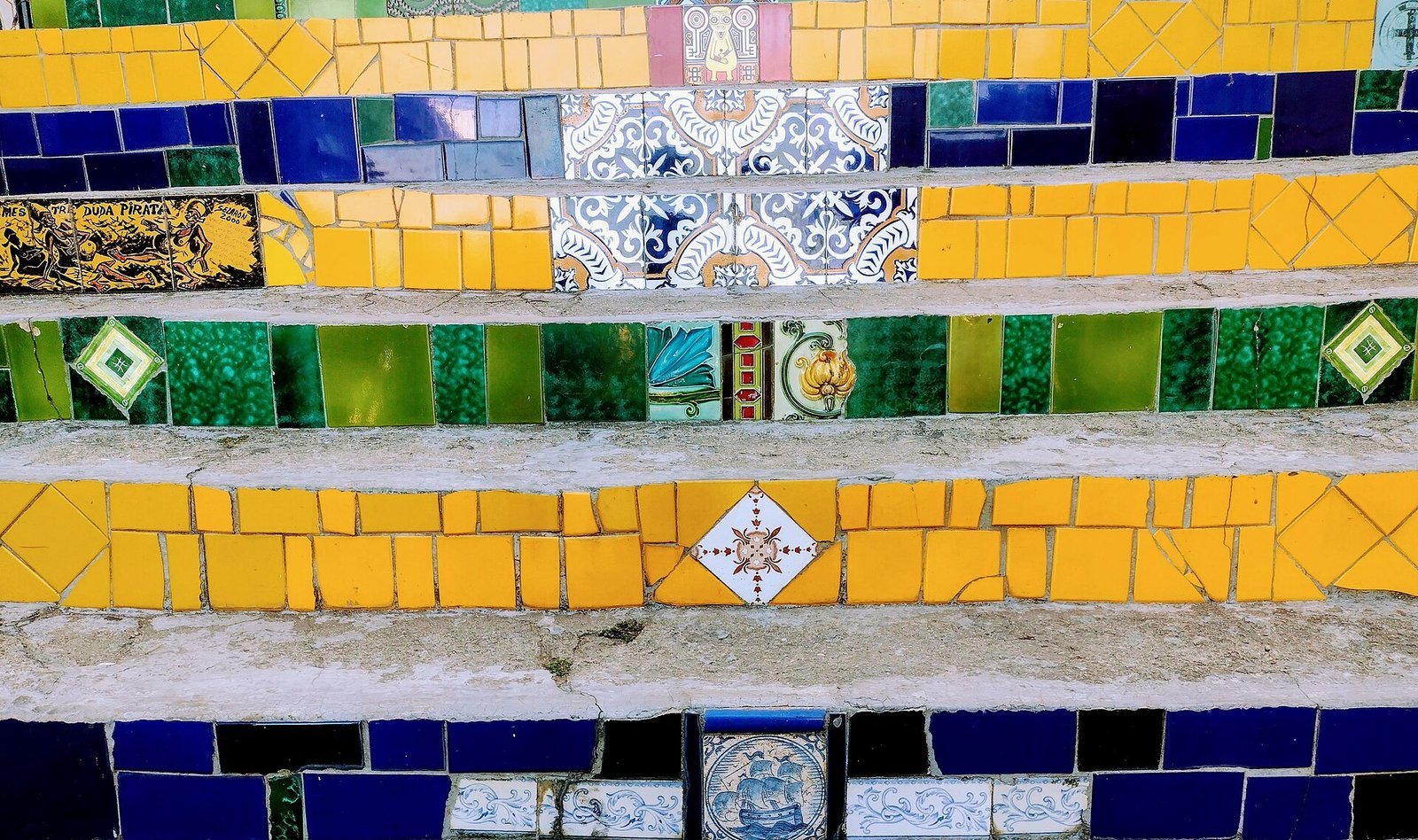
The Selarón Steps are 215 steps stretching about 125 meters between Lapa and Santa Teresa, covered in thousands of tiles from dozens of countries. They are free and always open, but mornings are best, before the crowds.
Chilean artist Jorge Selarón began the work in 1990 as a tribute to the Brazilian people and kept swapping tiles until his death in 2013. The city granted the stairway heritage protection in 2005. Many of the tiles were sent in by visitors from around the world.
Tijuca National Park and the Botanical Garden
Tijuca National Park protects almost 4,000 hectares of Atlantic Forest inside the city and is home to Corcovado, Pedra Bonita and Tijuca Peak, at 1,021 meters. Entry to Tijuca Forest is free.
Much of the forest you see today was replanted: in 1861 Emperor Pedro II ordered the protection of the Tijuca and Paineiras woods, and Major Archer oversaw the planting of more than 100,000 trees over 13 years. Trails and info at parquenacionaldatijuca.rio. The Botanical Garden charges R$40 for Brazil residents and R$80 for foreign visitors, and opens Thursday to Tuesday from 8 a.m. to 5 p.m. and Wednesdays from 11 a.m. to 5 p.m. Tickets are sold through the official Botanical Garden website.
Museum of Tomorrow and the Port District
The Museum of Tomorrow (Museu do Amanhã), designed by Santiago Calatrava and opened in 2015, is the symbol of the port’s revival. It is open Thursday to Tuesday from 10 a.m. to 6 p.m. (last entry 5 p.m.), closed on Wednesdays, and costs R$40, or R$20 for concessions.
Tickets are timed and sold at museudoamanha.org.br. From there, walk the Olympic Boulevard, take in the murals and finish at the Valongo Wharf. The VLT links it all to downtown and Santos Dumont.
Maracanã Stadium
The official Maracanã tour covers the locker rooms, press room, pitch and a historical exhibit. It runs daily from 9 a.m. to 5 p.m. (last entry 4:30 p.m.) and costs R$115, or R$57.50 for concessions.
Get off at Maracanã station on metro Line 2. On match or concert days hours are shorter, and if you like football, watching a big game beats the tour.
Rio de Janeiro beaches
Rio’s most famous beaches are Copacabana, Ipanema and Leblon, all with a promenade, beach kiosks and numbered lifeguard posts. For calmer water head to Praia Vermelha in Urca; for wilder scenery go west.
- Copacabana and Leme: a wide strip of sand, ideal for long walks and people-watching.
- Arpoador: the rock between Ipanema and Copacabana where people gather for sunset, and usually clap at the end.
- Ipanema and Leblon: each stretch, or “posto”, has its own crowd. The surf is often strong, so respect the red flags.
- Praia Vermelha: small and sheltered at the foot of Sugarloaf. Pair it with the Pista Cláudio Coutinho, an easy seaside walking path.
- Barra da Tijuca, Prainha and Grumari: farther out, with a long urban beachfront in Barra and much wilder scenery at Prainha and Grumari. Best reached by car or app.

Comparing Rio with the rest of the coast? See the best beaches in Brazil for international travelers.
What to eat and drink in Rio
Carioca food is all about botecos and the beach: feijoada on Saturdays, Biscoito Globo crackers with iced mate on the sand, pastel with sugarcane juice at street markets and draft beer with codfish fritters at sunset. Finish with a bowl of açaí.
- Feijoada, the black bean and pork stew, traditionally eaten on Saturdays, often with live samba.
- Biscoito Globo and iced mate, the classic beach combo sold by vendors on the sand.
- Pastel and caldo de cana (fried pastry and fresh sugarcane juice) at street markets.
- Chope and petiscos at botecos: ice-cold draft beer with bolinho de bacalhau, shrimp pastel or fried cassava.
- Açaí in a bowl, ice cold, after a swim.
Restaurant bills usually include an optional 10% service charge. For specific addresses, see where to eat in Rio on any budget.
Rio in video
To get a feel for the city before you go, watch “Discover Rio de Janeiro”, published by the official Rio City Hall channel:
Day trips from Rio de Janeiro
The most popular trips out of Rio are Petrópolis (about 1.5 hours away), Arraial do Cabo (about 4 hours) and, farther along the coast, Ilha Grande and Paraty. Buses leave from Rodoviária Novo Rio; for Ilha Grande and Paraty, plan to stay at least one night.
Petrópolis
Brazil’s “Imperial City” sits in the mountains, 1h10 to 1h40 away on Única-Fácil buses. The highlight is the Imperial Museum, Emperor Pedro II’s former summer residence, which holds the imperial crown and the pen used to sign the Lei Áurea, the 1888 law that abolished slavery.
The museum opens Tuesday to Sunday from 10 a.m. to 6 p.m. (last entry 5:15 p.m.), costs R$10 and is free on Sundays. It is at Rua da Imperatriz 220.
Arraial do Cabo
Arraial do Cabo is known for turquoise water and boat trips to Praia do Forno, the Prainhas do Pontal do Atalaia and Ilha do Farol. It is about 4 hours away on 1001 buses, so staying at least one night makes sense.
Ilha Grande and Paraty
Since 2019, Ilha Grande and Paraty have formed the UNESCO World Heritage Site “Paraty and Ilha Grande – Culture and Biodiversity”. There are no cars on Ilha Grande: you arrive by speedboat (15 to 20 minutes from Conceição de Jacareí) or by ferry from Angra dos Reis or Mangaratiba to Vila do Abraão.
Paraty is about 5 hours away by bus along the Costa Verde and deserves two nights for its historic center and boat trips. Start with our Ilha Grande travel guide.
Is Rio de Janeiro safe for tourists?
Rio is a safe trip for travelers who take basic precautions: phone snatching and theft of belongings on the beach are the most common problems for visitors. In the tourist areas of the South Zone and downtown, by day and with some awareness, the vast majority of trips go smoothly.
- Take only the essentials to the beach and keep your phone out of sight on promenades, at traffic lights and by open car windows.
- At night, take a taxi or app instead of walking down empty streets, including downtown and in Lapa.
- Do not wander into favelas on your own; go with licensed local guides.
- Use ATMs inside malls, banks or hotels.
- Respect red flags in the sea: rip currents off Ipanema and Leblon can be strong.
- Emergency: 190 (Military Police), 192 (SAMU ambulance) and 193 (Fire Department). The Tourist Police Station (DEAT) in Leblon is open 24 hours on (21) 2332-2924.
For country-wide advice, read is Brazil safe for tourists in 2026, and check what to pack for Brazil before you go.
Rio de Janeiro itinerary: 3 to 5 days
In 3 days you can see Christ the Redeemer, Sugarloaf, the beaches and downtown; with 5 days you can add the Botanical Garden, Tijuca, Maracanã and a day trip. Save Christ the Redeemer for your first clear day and shuffle the rest around it.
- Day 1 – South Zone: morning on Copacabana or Ipanema beach, lunch at a boteco, a walk along the seafront and sunset at Arpoador.
- Day 2 – Christ and Santa Teresa: Corcovado Train from Cosme Velho, then the tram or a taxi to Santa Teresa, down the Selarón Steps and a samba night in Lapa.
- Day 3 – Downtown and the port: Theatro Municipal, Confeitaria Colombo, VLT to Praça Mauá, the Museum of Tomorrow and the Valongo Wharf. Late afternoon on Sugarloaf.
- Day 4 – Green Rio: Botanical Garden in the morning, Rodrigo de Freitas Lagoon and an afternoon in Tijuca Forest or on Pedra Bonita.
- Day 5 – Football or the mountains: the Maracanã tour and a match, or a day trip to Petrópolis.
Combining Rio with other places? Try our 10-day Brazil itinerary or browse the best cities in Brazil.
How much does a trip to Rio cost? Attraction price table
Add up Christ the Redeemer, Sugarloaf, one museum and public transport and the main sights come to about R$450 per adult, before accommodation and food. The table lists official prices as of October 2026; hotels and restaurants vary too much by season, so check them directly.
| Item | Full price | Notes |
|---|---|---|
| Metro (per ride) | R$7.90 | Contactless cards accepted |
| VLT (per ride) | R$5.00 | Jaé card or app |
| BRT (per ride) | R$5.00 | Metro + BRT transfer: R$9.70 |
| Galeão x Terminal Gentileza bus | R$15.00 | From Terminal 2 |
| Corcovado Train | R$134 | Children 7–11: R$107 |
| Official van to Christ (Copacabana/Largo do Machado) | R$132 | Concession: R$105 |
| Sugarloaf cable car | R$205 | R$230 Fri/Sat sunset slots |
| Museum of Tomorrow | R$40 | Closed Wednesdays |
| Botanical Garden | R$40 / R$80 | Brazil residents / foreign visitors |
| Maracanã tour | R$115 | Concession: R$57.50 |
| Santa Teresa tram | R$20 | Round trip |
| Imperial Museum (Petrópolis) | R$10 | Free on Sundays |
Where to stay in Rio de Janeiro: hotels by neighborhood and budget
We picked real hotels, grouped by budget and neighborhood, each linked straight to its official website. We do not list prices because they swing a lot by date, so check availability and rates directly with the hotel.
Luxury
- Belmond Copacabana Palace – Copacabana. The Avenida Atlântica classic, open since 1923. Official site
- Hotel Fasano Rio de Janeiro – Ipanema. Right on the beach, with a rooftop and sweeping views. Official site
- Emiliano Rio – Copacabana (Av. Atlântica 3804). Official site
- Santa Teresa Hotel RJ – MGallery – Santa Teresa (Rua Almirante Alexandrino 660), on a former coffee estate dating from 1850. Official site
Upscale and mid-range
- Fairmont Rio – Copacabana, at Posto 6 (Av. Atlântica 4240). Official site
- Janeiro Hotel – Leblon, facing the ocean. Official site
- Hotel Arpoador – Arpoador/Ipanema (Rua Francisco Otaviano 177). Official site
- Vila Galé Rio de Janeiro – Lapa (Rua Riachuelo 124), in a 19th-century mansion. Official site
Budget
- ibis budget RJ Copacabana – Copacabana (Rua Constante Ramos 96), close to the metro. Official site
- Aurora Rio Hostel – Botafogo (Rua Camuirano 109). Official site
- Mambembe Hostel – Santa Teresa (Rua Joaquim Murtinho 251). Official site
Run a hotel or pousada in Rio and want to be featured in this guide? Get in touch through the Explora Brasil contact page.
Rio de Janeiro FAQ
How many days do you need in Rio de Janeiro?
Four to five days are enough to see Christ the Redeemer, Sugarloaf, the South Zone beaches, downtown and the Botanical Garden without rushing. With seven days you can add a day trip to Petrópolis or a night in Arraial do Cabo, Ilha Grande or Paraty.
What is the best time to visit Rio de Janeiro?
April to June and August to October. These months bring less rain, more comfortable temperatures and usually lower prices. December to March is hotter, with more late-afternoon rain, and it is when New Year’s Eve and Carnival take place.
Is Rio de Janeiro safe for tourists?
Yes, if you take basic precautions. The most common problem is theft of phones and belongings. Take only essentials to the beach, avoid empty streets at night, use a taxi or app after dark and do not enter favelas without a licensed guide. In an emergency, call 190.
How do I get from Galeão airport to Copacabana?
Your options are a taxi or ride-hailing app, the Galeão x Terminal Gentileza express bus (R$15, connecting to the VLT) or BRT line 42 (R$5.00) with a metro connection at Vicente de Carvalho. With luggage, a taxi or app is the most practical.
How much does it cost to visit Christ the Redeemer in 2026?
The Corcovado Train costs R$134 for adults and R$107 for children aged 7 to 11. Official vans from Copacabana or Largo do Machado cost R$132, or R$105 for concessions.
How much is the Sugarloaf cable car?
A full ticket costs R$205, or R$230 for the Friday and Saturday sunset slots. Children aged 3 to 12 and visitors over 60 pay R$102, and Rio state residents pay R$89.
What is the best neighborhood to stay in Rio de Janeiro?
For a first visit, Copacabana, thanks to its range of hotels, metro access and beach. Ipanema and Leblon are calmer and pricier, Botafogo offers good value and Santa Teresa suits travelers looking for charm and historic mansions.
Can I pay for the Rio metro with a credit card?
Yes. MetrôRio turnstiles accept contactless Visa, Mastercard and Elo cards, and a ride costs R$7.90. The VLT light rail, on the other hand, is paid with the Jaé card or app.
When is Rio Carnival 2027?
The top-tier samba school parades at the Marquês de Sapucaí Sambadrome take place on February 7, 8 and 9, 2027, from Sunday to Tuesday, with four schools per night. Street parties start weeks earlier.
Sources
- UNESCO – Rio de Janeiro: Carioca Landscapes between the Mountain and the Sea
- UNESCO – Valongo Wharf Archaeological Site
- UNESCO – Paraty and Ilha Grande
- Corcovado Train and Paineiras-Corcovado
- Parque Bondinho Pão de Açúcar
- MetrôRio and VLT Carioca
- RIOgaleão – Tom Jobim International Airport
- Museum of Tomorrow, Rio de Janeiro Botanical Garden and Tijuca National Park
- Official Maracanã Tour
- IBGE – 2022 Census; INMET climate normals 1981–2010; Embratur; Riotur; g1 Rio (Carnival 2027 and New Year’s Eve coverage)
Have a wonderful trip, and tell us which sunset became your favorite.