Most international travelers who make their way to João Pessoa spend their entire trip along the breezy beachfront promenade of Tambaú or Cabo Branco. That is completely understandable—the coastline here is clean, walkable, and relaxed. But just 10 kilometers inland, about a 15-minute ride-share from the beach hotels, sits one of the most underrated colonial treasures in South America: Brazil’s third-oldest state capital.
Founded in 1585 under the name Nossa Senhora das Neves, João Pessoa predates almost every other major Brazilian city outside of Salvador and Rio de Janeiro. Unlike the steep, bustling cobblestones of Salvador’s Pelourinho or the tourist-heavy lanes of Olinda, João Pessoa’s Centro Histórico feels unhurried and authentic. It offers a rare opportunity to admire world-class Franciscan baroque art and pastel colonial squares without dodging aggressive tour groups or souvenir hawkers.
Whether you have a spare morning or want to pair an afternoon architectural walk with a golden-hour river sunset, this practical guide gives you the exact step-by-step route, current 2026 admission prices, transport details, and straightforward safety advice.
Why João Pessoa’s Historic Downtown Is Worth Leaving the Beach
João Pessoa was established along the calm banks of the Sanhauá River rather than directly on the open Atlantic coast to protect early settlers from naval raids and tropical storms. This geographic choice created a distinctive urban layout split into two distinct tiers: Cidade Alta (the Upper City), where the church and administrative power were built atop a protective hill, and Cidade Baixa (the Lower City, also known as Varadouro), where riverboats once docked to trade regional sugarcane and cotton.
Today, this dual landscape makes for an effortless walking excursion. By starting in Cidade Alta and working your way down the gentle slope toward the river, gravity is on your side, and you will finish your tour right as the afternoon light illuminates the historic pastel facades of Varadouro.
For visitors following our broader 3-day João Pessoa itinerary, dedicating three to four hours to Centro Histórico provides rich cultural depth that makes the rest of your coastal holiday far more meaningful.
The Half-Day Walking Circuit: From Cidade Alta Down to the River
To keep your walk comfortable in the tropical warmth of Paraíba, we strongly recommend following this four-step downhill circuit:
- Start at Praça São Francisco (Cidade Alta): Take a morning or early afternoon ride-share directly to the grand courtyard of Centro Cultural São Francisco. Spend about an hour to an hour and a half touring the church, convent cloisters, and museum.
- Descend Ladeira São Francisco: Walk down the historic cobbled stone street connecting the upper and lower districts, pausing to admire the 18th-century stone walls of Casa da Pólvora.
- Explore Praça Antenor Navarro (Cidade Baixa): Arrive at the triangular heart of Varadouro, surrounded by vibrant 1920s and 1930s Art Deco and eclectic townhouses.
- Finish at Hotel Globo & the Sanhauá Overlook: Step into the adjacent Praça São Frei Pedro Gonçalves, visit the historic Hotel Globo cultural center, and take in the panoramic river view from its rear garden terrace.
The entire walking distance between these four anchor points is under 1.5 kilometers. It is an easy, slow-paced stroll suitable for any traveler with basic mobility.
The 4 Must-See Stops in João Pessoa’s Centro Histórico
While there are dozens of historic structures scattered across downtown, these four landmarks form the core of any satisfying first visit:
1. Centro Cultural São Francisco (Igreja e Convento de Santo Antônio)
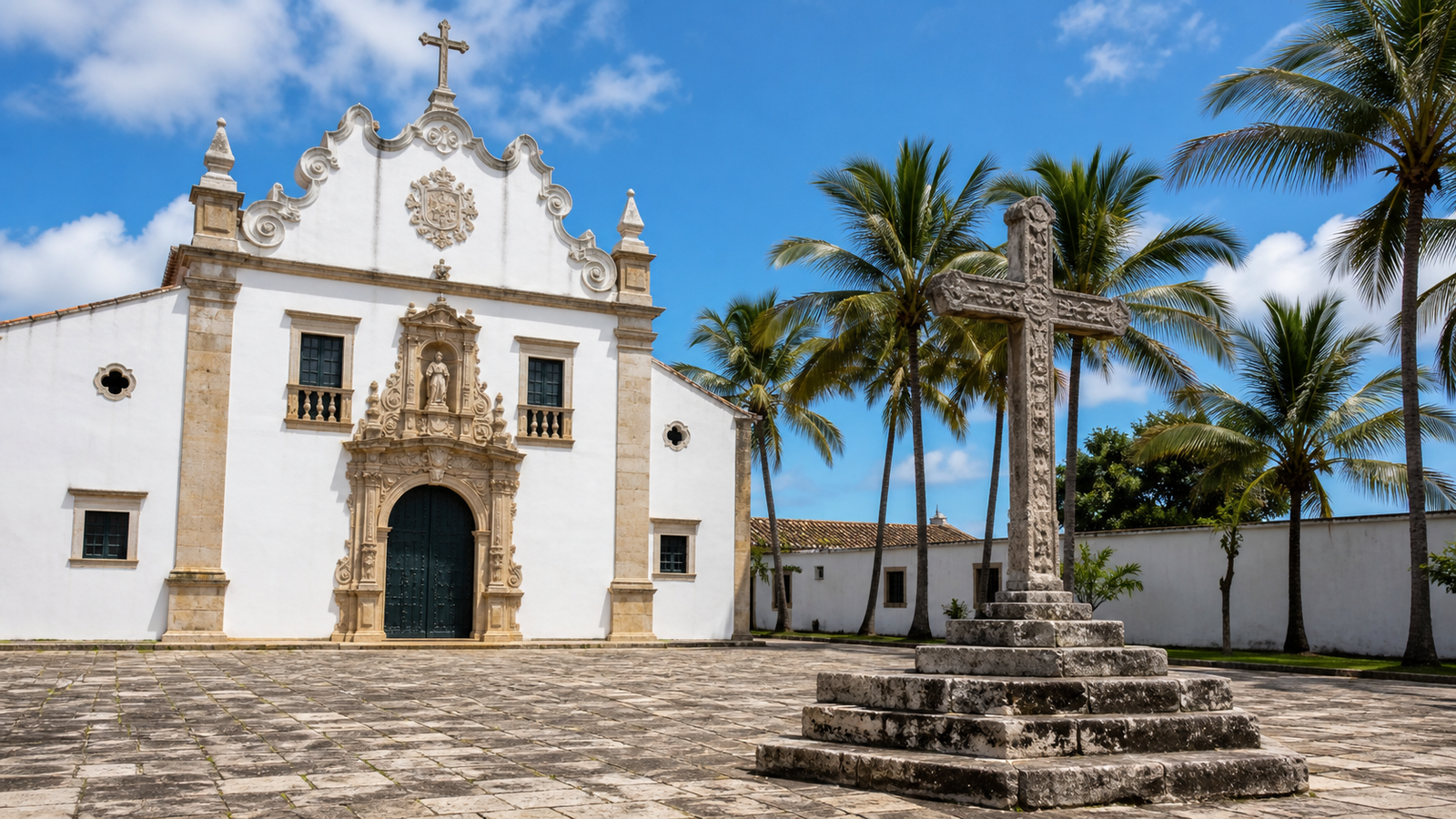
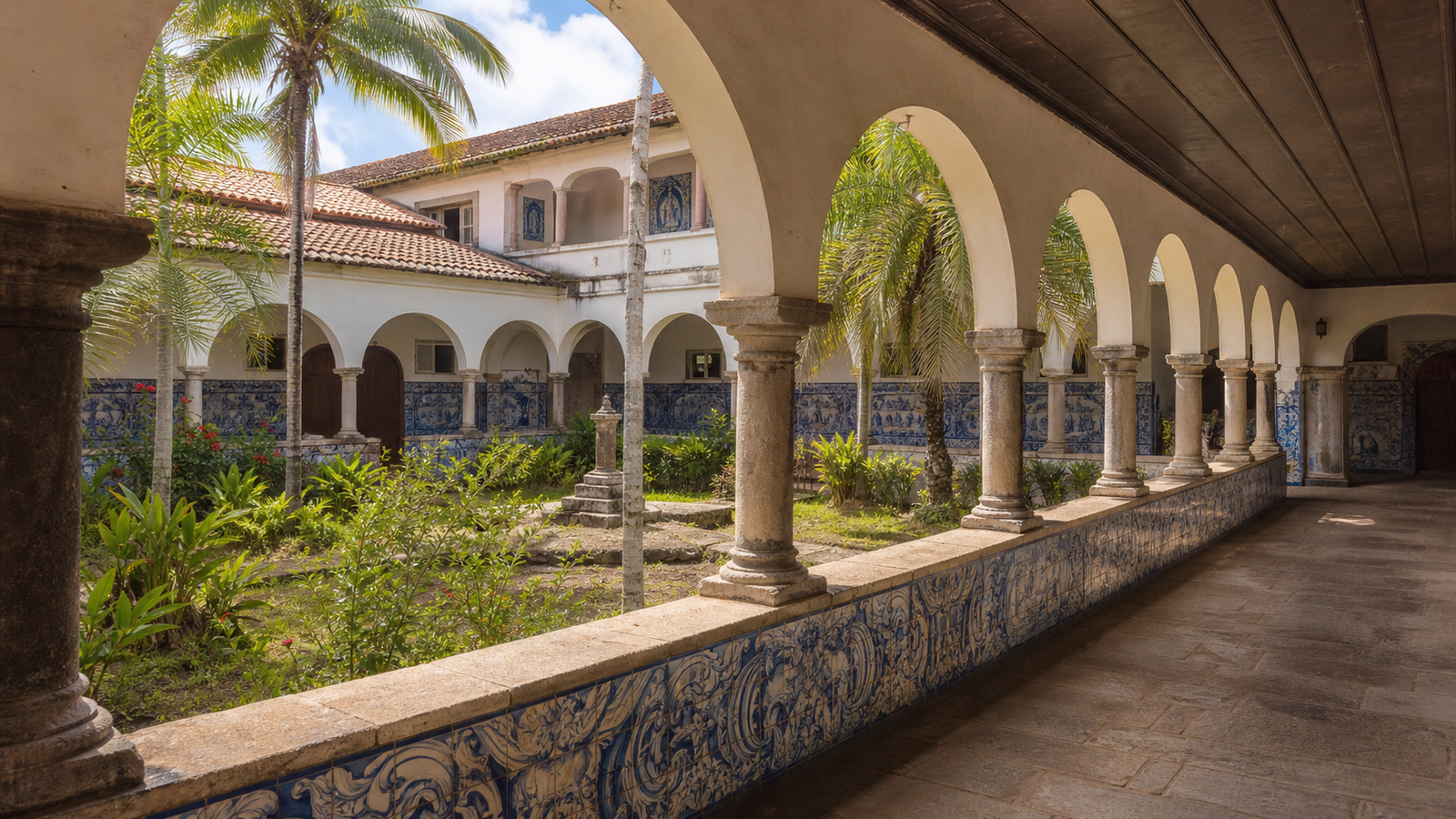
Begun by Franciscan friars in 1589 and expanded over the following two centuries, this monumental complex is widely recognized by architectural historians as one of Brazil’s finest examples of tropical baroque art. The exterior features a soaring stone cross (Cruzeiro) in a wide stone-paved courtyard. Inside, you will find intricate indigenous-carved cedar altars, gold leaf details, and magnificent hand-painted blue-and-white Portuguese azulejos depicting biblical scenes and the life of Saint Anthony.
Guided visits with local monitors are included in the ticket price and provide fascinating insight into how local Indigenous artisans subtly wove native floral and fauna motifs into Catholic imagery.
2. Casa da Pólvora (Gunpowder Magazine)
Perched along the descent of Ladeira São Francisco, this sturdy stone masonry building was constructed in 1710 by royal charter to store military munitions safely away from the primary residential center. Today, it hosts rotating art exhibitions and offers a lovely vantage point looking down toward the river basin.
3. Praça Antenor Navarro
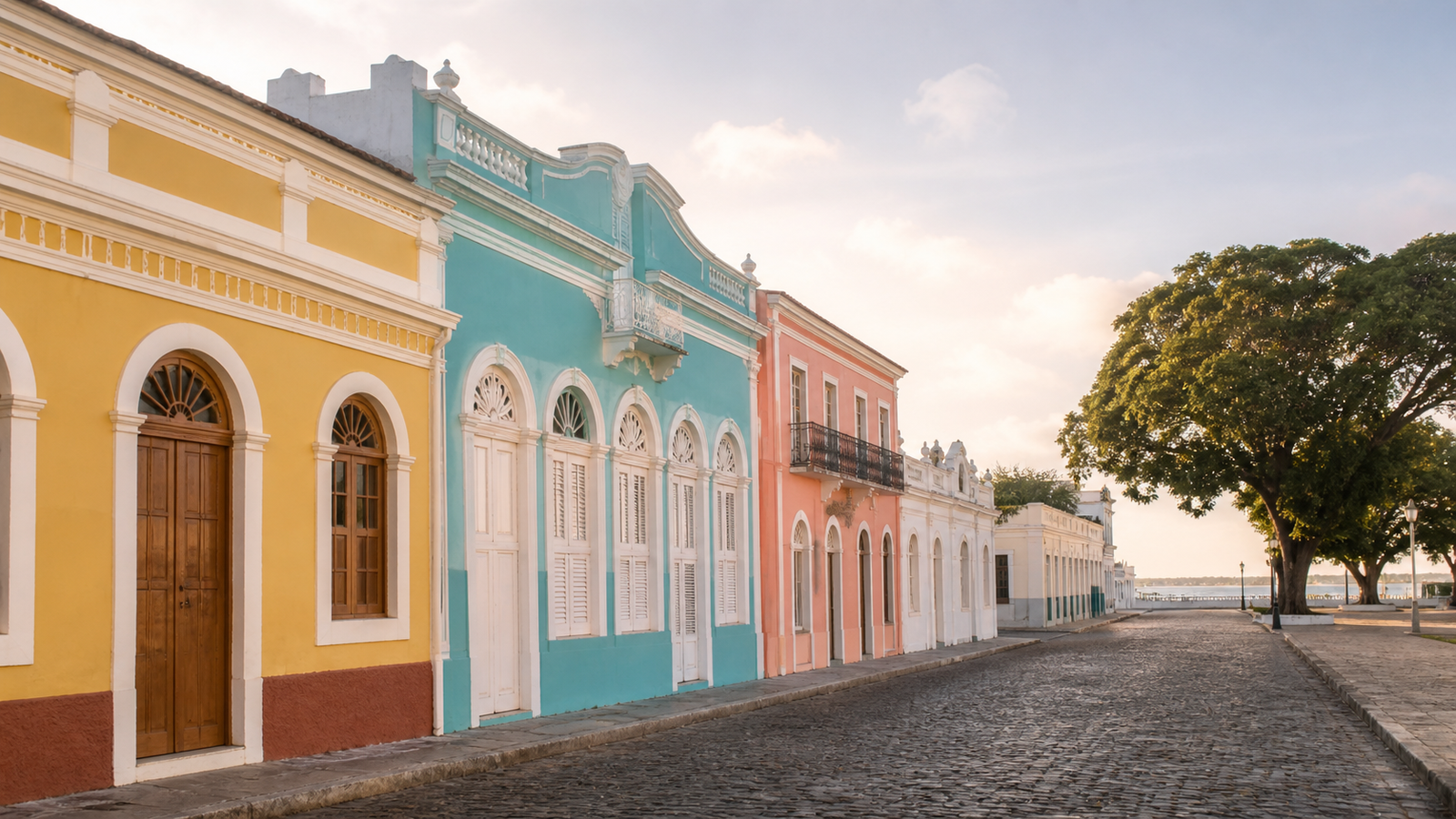
Named after former Paraíba politician Antenor Navarro in 1933, this charming triangular plaza is framed by two- and three-story historic townhouses painted in cheerful shades of yellow, turquoise, coral, and lavender. During the daytime, it is a peaceful spot for architectural photography. On weekends and cultural evenings, several local cafes and music venues open their doors here.
4. Hotel Globo & Mirante do Rio Sanhauá
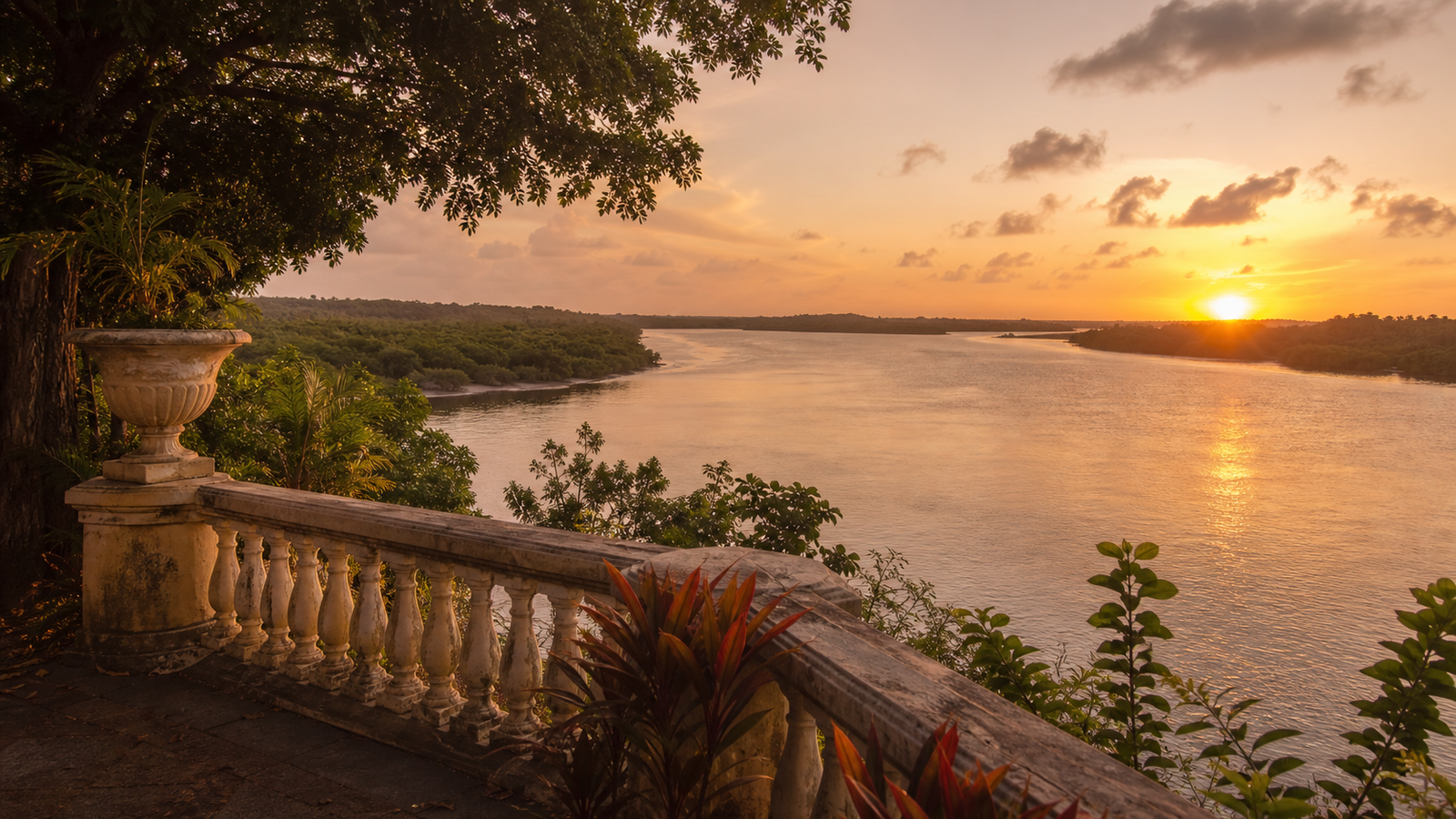
Built in 1929 by Henriqueta Torres, Hotel Globo was the premier luxury hotel in Paraíba during the early 20th century, hosting prominent politicians, writers, and international travelers. Now operated by the municipal cultural foundation (Funjope), the building serves as a free museum and gallery space. Its highlight is the breezy rear garden terrace, which offers an unobstructed panoramic view across the winding mangrove channels of the Sanhauá River. It is one of the most serene sunset viewpoints in the entire Northeast.
Opening Hours, Admission Fees, and Getting There
Planning your timing is essential because municipal operating schedules vary throughout the week. Here is the up-to-date practical breakdown:
| Attraction | Location | Opening Hours | Admission Fee | Time Needed |
|---|---|---|---|---|
| Centro Cultural São Francisco | Cidade Alta | Tue–Sat: 09:00–17:00 Sun: 09:00–15:00 (Closed Mondays) |
R$ 24 (full) / R$ 12 (half-price) Cash & Pix on-site |
1 to 1.5 hours |
| Casa da Pólvora | Ladeira São Francisco | Tue–Sun: 09:00–17:00 | Free admission | 15–20 minutes |
| Praça Antenor Navarro | Cidade Baixa (Varadouro) | Public square (Best 09:00–17:00) | Free admission | 30 minutes |
| Hotel Globo & Overlook | Praça Frei Pedro Gonçalves | Daily: 08:00–17:00 | Free admission | 30–45 minutes |
Transportation from Beach Hotels: The simplest way to travel between Tambaú or Cabo Branco and the historic center is via ride-share apps like Uber or 99. The 10-kilometer trip takes roughly 15 to 20 minutes and typically costs between R$ 20 and R$ 35 (approximately $4 to $7 USD each way). Set your destination to Centro Cultural São Francisco upon departure, and request your return ride from Hotel Globo or Praça Antenor Navarro when your walk concludes.
Pro Tip: If you are planning multiple excursions, consider timing your Centro Histórico visit for a sunny morning, returning to the beach for lunch, and heading out later for our recommended Praia do Jacaré sunset guide along the riverfront.
Safety and Timing: Practical Rules for a Smooth Visit
João Pessoa is widely regarded as one of the safer state capitals in Northeastern Brazil, but like any urban center in Latin America, downtown commercial areas require sensible awareness. Follow these practical rules to ensure an easy, trouble-free visit:
- Stick to daytime business hours: Plan your walk between 09:00 and 17:00 when municipal workers, local shops, and museum monitors are active on the streets.
- Avoid Mondays and quiet Sunday afternoons: Centro Cultural São Francisco is closed on Mondays, and commercial downtown becomes very quiet on Sunday late afternoons. Tuesday through Saturday offers the liveliest and most comfortable experience.
- Stay on the main marked cultural corridor: Stick to the designated route linking Praça São Francisco, Ladeira São Francisco, Praça Antenor Navarro, and Praça Frei Pedro Gonçalves. Avoid wandering alone down deserted side alleys off the main touristic spine.
- Keep valuables discreet: When walking between squares, keep your smartphone and professional camera tucked inside a zipped daypack or crossbody bag rather than holding them loosely in your hand.
- Wear flat, comfortable walking shoes: The historic paving stones and the gentle descent along Ladeira São Francisco can be uneven and slippery under tropical heat. Leave flip-flops at the beach hotel.
Frequently Asked Questions
Is João Pessoa’s Historic Center safe for foreign tourists?
Yes, during normal daytime visiting hours (09:00 to 17:00) along the main cultural route connecting Praça São Francisco, Ladeira São Francisco, Praça Antenor Navarro, and Hotel Globo. Exercise standard urban common sense: keep valuables out of plain view, avoid empty side alleys, and hail an Uber rather than walking back toward the hotel after dark.
How much does it cost to visit the sights in Centro Histórico?
Visiting the historic center is very affordable. The total cost is typically around R$ 74 to R$ 90 (approx. $15 to $18 USD), which covers the R$ 24 admission ticket to Centro Cultural São Francisco plus a round-trip Uber ride from Tambaú or Cabo Branco. Hotel Globo, Casa da Pólvora, and Praça Antenor Navarro are completely free to enter.
How long does the walking tour take?
A leisurely visit takes between 3 and 4 hours. This allows ample time for an in-depth 1-hour guided tour of the Franciscan convent, a relaxed walk down the historic hill, photo stops in Praça Antenor Navarro, and 30 to 45 minutes enjoying the river view from Hotel Globo.
Is Centro Cultural São Francisco open on Mondays?
No. Centro Cultural São Francisco is closed to visitors on Mondays for preservation maintenance. Visiting hours run Tuesday through Saturday from 09:00 to 17:00, and Sundays from 09:00 to 15:00. Note that ticket sales stop 30 minutes before closing.
Conclusion: An Essential Half-Day in Paraíba
Taking a half-day away from the beach to explore João Pessoa’s Centro Histórico is one of the most rewarding cultural choices you can make in Paraíba. The juxtaposition of 16th-century Franciscan craftsmanship, 1920s Art Deco architecture, and sweeping river views provides a rich context that few visitors ever get to experience. Catch an Uber after breakfast, enjoy the descent from Cidade Alta to Cidade Baixa, and discover the deep historical roots of Brazil’s third-oldest capital.