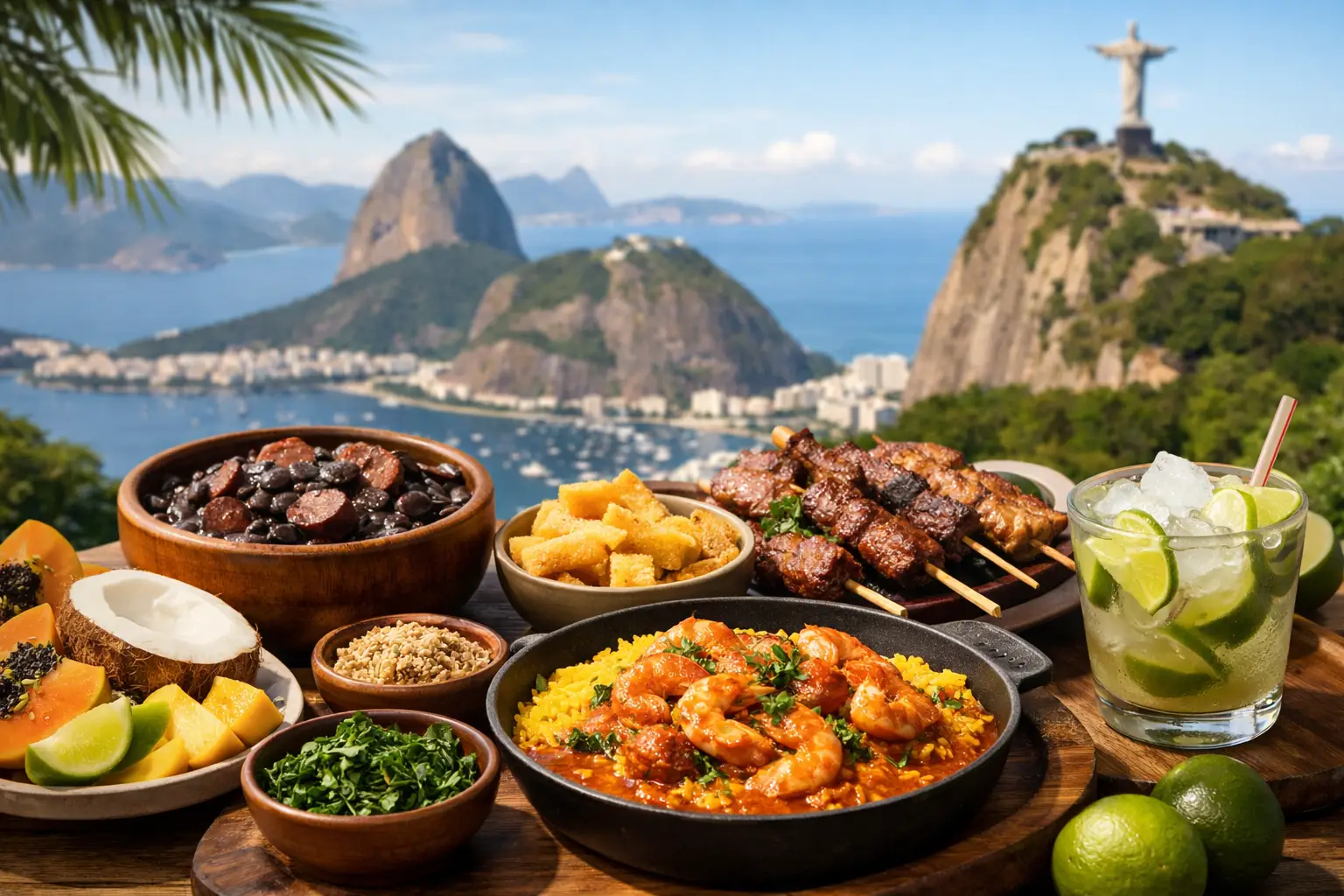
You can learn a lot about Brazil before your flight, but the country starts making real sense when lunch arrives. A plate of feijoada in Rio, moqueca by the coast in Bahia, or grilled meat in the South tells you something geography alone cannot. This brazil food guide is designed for international travelers who want to know what to expect, what to try first, and how Brazilian food changes from one region to another.
Brazilian cuisine is not one single style. It is a mix of Indigenous ingredients, African influence, Portuguese traditions, and regional habits shaped by climate, migration, and local agriculture. That is why the food in Salvador feels different from the food in Porto Alegre, and why a simple everyday meal in São Paulo may look nothing like a seafood lunch in Belém.
Brazil food guide: what defines Brazilian cuisine
For many visitors, the first surprise is that Brazilian food is often simpler and more comforting than expected. Rice, beans, cassava, grilled meats, fresh fruit, and stews form the base of many meals. Seasoning is usually flavorful but not necessarily spicy, which is an important distinction for travelers who associate Latin American food with heat.
Meals also depend heavily on region. Along the coast, fish and shrimp appear often. In the Amazon, river fish, tropical fruits, and manioc have a stronger presence. In the Southeast, you will find a mix of urban restaurant culture and classic home-style dishes. In the South, barbecue traditions are especially strong, with influences from European immigration.
The good news for travelers is that Brazilian food is generally approachable. Even when the dish is unfamiliar, the ingredients often are not. The challenge is less about whether you will enjoy it and more about knowing which specialties are worth trying in each part of the country.
The dishes most travelers should try first
If you are visiting Brazil for the first time, start with the classics. Feijoada is the most internationally known Brazilian dish, and for good reason. It is a black bean stew traditionally made with pork and served with rice, collard greens, farofa, and orange slices. It is rich, filling, and usually best at lunch rather than dinner.
Moqueca is another essential dish, especially if you are traveling in Bahia or Espírito Santo. Both versions are seafood stews, but they are not the same. Bahian moqueca often includes coconut milk, dendê oil, peppers, and a stronger Afro-Brazilian culinary identity. Espírito Santo’s version is lighter and usually skips coconut milk and dendê. Neither is better in every case – it depends on whether you prefer something deeper and richer or cleaner and more delicate.
Pão de queijo is one of the easiest foods to love. These small cheese breads, originally from Minas Gerais, are chewy, warm, and widely available in cafés, bakeries, and airports. They work well as breakfast, a snack, or a quick stop between sightseeing plans.
Then there is churrasco, Brazil’s barbecue tradition. In many places, this means expertly grilled cuts of beef seasoned simply with salt. In a rodízio restaurant, servers bring different cuts to your table continuously. It can be a fun experience for first-time visitors, though not always the best choice if you want a light meal or a fast lunch.
Regional food in Brazil matters more than many visitors expect
A useful brazil food guide has to go beyond famous dishes, because Brazil is too large for a one-menu view.
In Bahia, food is deeply marked by African heritage. Expect dishes made with shrimp, coconut milk, dendê oil, black-eyed peas, and bold seasoning. Acarajé is one of the best examples. It is a fried fritter made from black-eyed pea dough and usually filled with shrimp and spicy pastes. It is iconic street food, but it can be intense for some first-time eaters because of its richness and heat.
In Minas Gerais, the food is often associated with comfort and tradition. You will see slow-cooked meats, beans, pork, local cheeses, and dishes made with corn and cassava. This is a good region for travelers who enjoy hearty meals and a more rural culinary identity.
In the Amazon region, ingredients may be less familiar. Tacacá, tucupi, jambu, and freshwater fish such as tambaqui appear more often. The flavors here can feel more specific to place than anywhere else in Brazil. Some travelers love that immediately, while others need a little time to adjust.
In the South, especially in Rio Grande do Sul, barbecue culture is central. Meat tends to take the spotlight, but the region also has strong wine production and influences from Italian and German immigration. In cities with large immigrant histories, you may notice that the food scene broadens beyond what visitors imagine as traditionally Brazilian.
Everyday meals and local eating habits
Not every memorable meal in Brazil needs to be a destination dish. In fact, many travelers leave with a stronger appreciation for the everyday plate served at casual restaurants. A common lunch might include rice, beans, salad, grilled chicken or beef, fries, and farofa. It sounds simple, and it is, but it is also a reliable way to eat well while traveling.
Buffet-style restaurants are common in many Brazilian cities. Some charge by weight, which can be especially useful if you want to try several items without committing to one large plate. For international visitors, this format is practical and low-pressure. You can see the food before choosing it, which helps if your Portuguese is limited.
Lunch is often the main meal of the day. Dinner can be lighter, later, or more social depending on the city and your travel style. In large urban centers like São Paulo and Rio de Janeiro, you will find everything from simple local diners to high-end restaurants. In smaller destinations, the best meal may come from an unpretentious family-run spot rather than a trendy address.
Snacks, street food, and bakery staples
Brazil is very good at informal eating. Bakeries and snack bars are part of daily life, and they are useful for travelers who want quick, familiar, and affordable options.
Coxinha is one of the most popular snacks in the country. It is a teardrop-shaped fried pastry filled with shredded chicken, sometimes with cream cheese. Pastel is another staple – a crisp fried pastry that can be filled with cheese, meat, pizza-style ingredients, or even sweet options. Empadas, esfihas, and savory pastries are also common depending on the city.
Street food can be excellent, especially in places where certain items are part of local identity. That said, quality varies. Choosing busy stalls with high turnover is usually the safer move. As in any destination, good judgment matters more than rigid rules.
Desserts and fruits worth trying
Brazilian desserts tend to be sweet, sometimes very sweet by international standards. Brigadeiro is the classic example – a chocolate fudge ball made with condensed milk, cocoa, and butter. It is small, rich, and easy to find at parties, cafés, and sweet shops.
Quindim, made with egg yolks, sugar, and coconut, is another traditional favorite. Romeu e Julieta, a pairing of cheese and guava paste, shows how Brazil often balances sweet and savory in simple ways.
Fresh fruit, however, is where many visitors are most pleasantly surprised. Mango, papaya, pineapple, guava, passion fruit, and a long list of Amazonian and regional fruits appear in juices, desserts, and breakfast spreads. If you are used to limited tropical fruit options at home, Brazil can feel like a major upgrade.
What to drink with your meal
Fresh juice is part of the experience. Orange juice is common, but cashew fruit juice, acerola, guava, and passion fruit are also worth trying. Coconut water is easy to find in coastal areas and works well in Brazil’s heat.
If you drink alcohol, the caipirinha is the country’s signature cocktail, made with cachaça, lime, sugar, and ice. It is refreshing but often stronger than it seems. Beer is widely consumed and usually served very cold. Coffee is also part of daily life, though it is often served in smaller portions than some international travelers expect.
Practical dining tips for international travelers
Brazil is generally welcoming to visitors, but food culture still has a few details that help to know in advance. Portions can be generous, especially in casual restaurants. Many menus are straightforward, but English is not guaranteed outside major tourist areas, so a translation app can be useful.
Vegetarian travelers can eat well in bigger cities, though choices may narrow in smaller towns or in restaurants focused heavily on barbecue or seafood. Vegan options are improving, especially in São Paulo, Rio, and Florianópolis, but availability still depends on the destination.
If you have dietary restrictions, it helps to ask clearly and confirm ingredients more than once. Cassava flour, cheese, pork products, and seafood appear frequently in dishes that may not look obvious at first glance. The more regional the food, the more this matters.
Brazil rewards curious eaters, but you do not need to be adventurous at every meal. Try the famous dishes, pay attention to regional specialties, and leave room for the ordinary lunch places where daily Brazilian life is easiest to understand. If you travel with that mindset, the food will do more than feed you – it will help the country feel familiar faster.