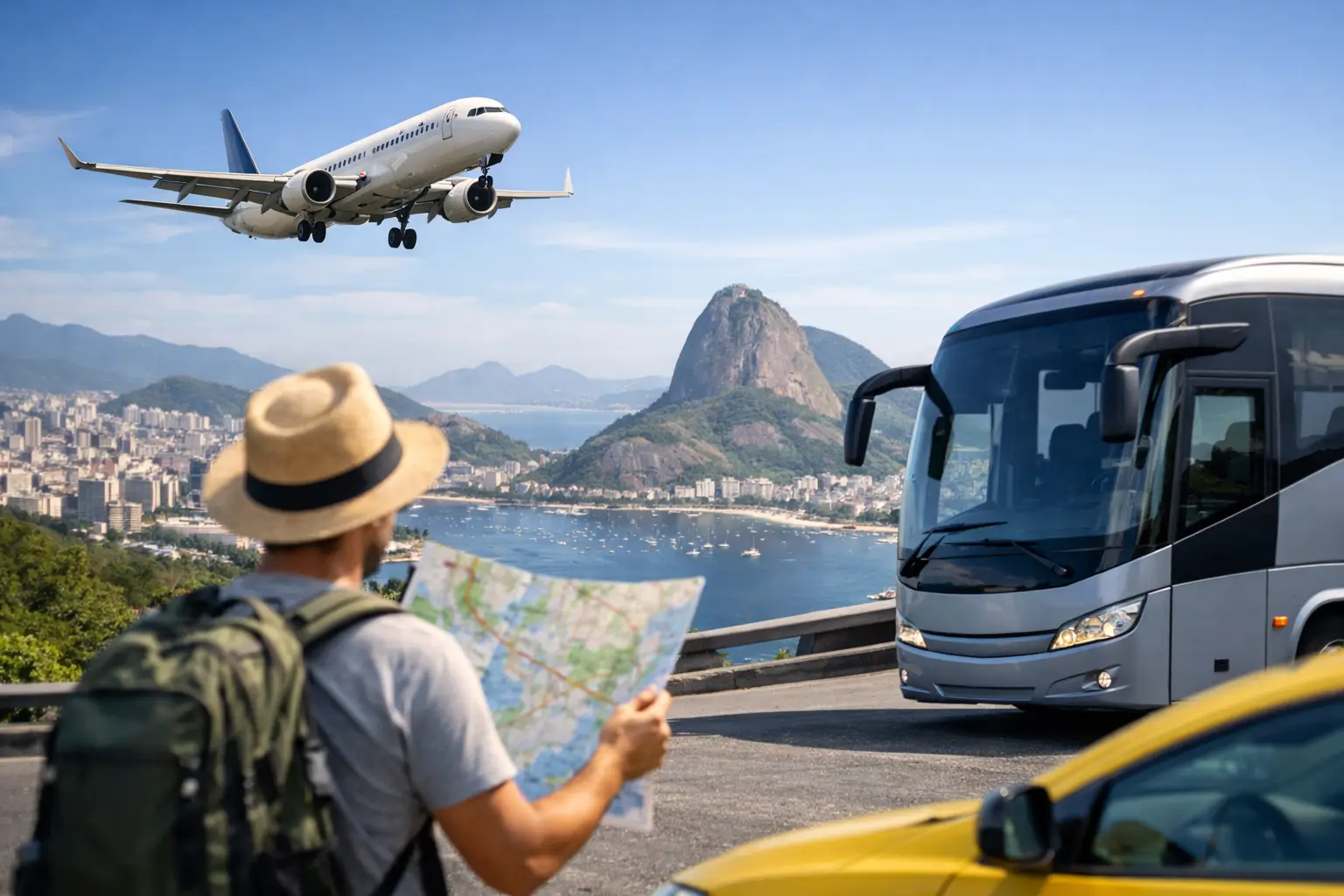
Brazil can look manageable on a map until you realize that Rio de Janeiro to Manaus is farther than New York to Los Angeles. That is why understanding how to get around Brazil matters early in your planning. The country is vast, transport options vary a lot by region, and the best choice depends on your route, budget, and travel style.
For most international visitors, getting around Brazil is not difficult once you match the right transportation to the right distance. Flights are often the smartest option for crossing regions. Buses are useful for shorter intercity routes and budget travel. In major cities, metro systems, ride-hailing apps, and taxis make local movement straightforward. In a few parts of the country, especially the Amazon, boats are not a scenic extra – they are an essential part of the network.
How to get around Brazil by distance
A good way to plan Brazil is to think in layers. Long distances usually call for flights, medium distances often work well by bus or car, and city travel is usually easiest with public transit or ride-hailing.
If your itinerary includes places in different regions, such as Rio de Janeiro, Salvador, and Foz do Iguacu, flying will save valuable time. Brazil is simply too large to treat overland travel as the default. On the other hand, if you are staying within one state or moving between nearby cities, buses can be practical, comfortable, and much cheaper than last-minute flights.
This is where many first-time visitors make mistakes. They build an itinerary based on famous destinations without checking the travel time between them. Brazil rewards travelers who plan with geography in mind.
Domestic flights are often the best tool
For long routes, domestic flights are usually the backbone of a Brazil trip. They connect major capitals efficiently and make it realistic to combine very different landscapes in one vacation, from beaches in the Northeast to cities in the Southeast or the Amazon in the North.
The main advantage is time. A flight from Sao Paulo to Recife takes a few hours, while a bus journey would take well over a day. If your trip is one or two weeks long, flights can make the difference between a balanced itinerary and one dominated by transit.
There are trade-offs. Flights can become expensive during holidays, school breaks, Carnival, and New Year. Brazil also has a busy domestic aviation market, so routes may be frequent between major cities but less direct for smaller destinations. Sometimes you will need to connect through Sao Paulo, Rio de Janeiro, or Brasilia.
If you plan to fly within Brazil, booking earlier usually helps. Also pay attention to airport location. Some airports are far from the city center, so the full journey time may be longer than it first appears.
When flying makes the most sense
Flying is usually the best option when you are crossing regions, trying to visit three or more distant destinations in a short trip, or traveling to places where overland travel is long and tiring. It is especially useful for routes involving the Amazon, the Northeast coastline, or Iguacu Falls.
Buses are better than many travelers expect
Brazil has an extensive long-distance bus network, and for many routes it works very well. Coaches between major and medium-sized cities are common, and some are surprisingly comfortable, with reclining seats, air conditioning, and onboard bathrooms.
For budget-conscious travelers, buses are often the best value. They also serve destinations that do not have practical flight connections. If you are moving between nearby cities such as Rio de Janeiro and Paraty, Salvador and nearby coastal towns, or Curitiba and smaller destinations in the south, buses can be a sensible choice.
The main downside is time. Distances add up fast in Brazil, and overnight buses are not for everyone. They can save money on a hotel night, but they also require flexibility and stamina. If you are traveling with children, carrying a lot of luggage, or arriving after a long international flight, comfort may matter more than savings.
Executive vs. basic bus classes
Not all buses are the same. Some are basic intercity coaches, while others offer wider seats and deeper recline. On longer routes, paying a bit more can make a real difference. If you are considering an overnight trip, comfort level is worth checking before you book.
Renting a car works well in specific regions
A rental car can be excellent in Brazil, but it is not the best default for every trip. In large cities such as Rio de Janeiro, Sao Paulo, Recife, or Salvador, driving often creates more stress than freedom. Traffic is heavy, parking can be limited, and local driving styles may feel intense to first-time visitors.
Where a car becomes useful is in regions where attractions are spread out. This includes parts of Minas Gerais, the countryside around Sao Paulo state, the Serra Gaucha, stretches of the southern coast, and some beach destinations where public transportation is limited. A car also gives flexibility for travelers who want to stop in smaller towns or travel at their own pace.
Still, it depends on the route. In places with narrow historic streets, ferry crossings, or difficult parking, a car can become a burden. If your plan centers on major cities, skip it. If your plan includes rural areas, scenic drives, or several small towns, it may be worth it.
Getting around cities in Brazil
Inside Brazilian cities, the most useful options are usually metro systems, buses, ride-hailing apps, and taxis. The best choice depends on the city and the neighborhood.
Metro systems are especially helpful in cities like Sao Paulo, Rio de Janeiro, Brasilia, Recife, and Belo Horizonte. They are often the fastest way to avoid traffic and reach business districts, tourist areas, and transport hubs. For international visitors, they are also relatively easy to use.
Ride-hailing apps are widely used in Brazil and are often the simplest option for short urban trips, especially if you do not speak Portuguese. They reduce the friction of explaining destinations and can feel more predictable than hailing a taxi on the street.
Public buses are abundant, but they can be more challenging for visitors unfamiliar with routes, payment methods, and stop names. They are useful, though not always the easiest starting point if this is your first time in the country.
City transport tips that save time
In major cities, avoid peak rush hours when possible. Distances that look short on a map can take much longer in traffic. If you are choosing where to stay, proximity to a metro station or to the neighborhoods you want to visit can make your trip much easier.
Boats matter in the Amazon and coastal areas
One of the biggest transport surprises for international travelers is that in some parts of Brazil, water travel is part of everyday life. In the Amazon region, rivers function like highways. Boats and ferries connect communities and cities where roads are limited or do not exist.
If you are visiting Manaus, Belem, Alter do Chao, or more remote areas in the North, check whether a boat journey is part of the route. These trips can be memorable, but they are usually slower and more weather-dependent than road or air travel.
Along parts of the coast and in island destinations, ferries may also be necessary. This is common for reaching certain beach towns or islands where private vehicles are restricted or unnecessary.
Safety and practicality while moving around
Brazil is very doable for international visitors, but practical habits matter. Use official taxis or ride-hailing apps, especially at airports and bus terminals. Keep valuables secure and avoid displaying phones or passports unnecessarily in crowded transit areas.
For long travel days, daytime arrivals are often easier, especially if you are going to an unfamiliar destination. It is also wise to leave some buffer between transport connections. Delays happen, and Brazil is not a country where you want every transfer timed too tightly.
Language can be another factor. English is not widely spoken everywhere, particularly outside major tourist areas. Having your destination written down, saved offline, or shown on a map can make a big difference.
The best way to get around Brazil depends on your itinerary
If your trip is city-focused and spread across distant regions, combine domestic flights with metro systems and ride-hailing apps. If you are traveling on a tighter budget or exploring within one area, buses may be the better fit. If you want freedom in rural or coastal regions, a rental car can add real value. And if you are heading into the Amazon, be ready to think beyond roads.
That is the simplest answer to how to get around Brazil: do not look for one perfect method for the whole country. Brazil works best when you use different types of transport for different parts of the journey.
Plan with distance in mind, stay realistic about travel times, and let geography shape your route. Brazil is easier to enjoy when you spend less time forcing connections and more time being where you actually want to be.