Salvador is where Brazil began. It was the country’s first capital, the main port of the colonial sugar economy and the place where African culture took the deepest root in the Americas. You feel it everywhere: in the pastel-colored mansions of the Pelourinho, in the drumming of Olodum, in the acarajé fritters sold by women in white lace dresses, in the ribbons tied to the gates of the Bonfim church and in the sunset at Farol da Barra, which locals still applaud. It’s also a big, working city of more than 2.4 million people, with beaches inside the city limits and a bay so large it holds dozens of islands.
Salvador is easy to love and a little harder to plan. The historic center, the beach districts and the airport are far apart, the city is built on two levels (the Upper City and the Lower City), a couple of famous sights have changed status recently, and hotels fill up from late December through Carnival. This guide covers when to go, how many days you need, how to get from the airport, what to see in each area, what’s free and what it costs in 2026, where to eat, a 3–4 day itinerary and a list of real hotels with links to their official websites.
Quick facts: Salvador
- Best time to visit: September to March, when it rains less and the sea is calmer. January and February bring the big festivals (Lavagem do Bonfim, Iemanjá and Carnival). April to June is the rainiest stretch.
- How many days: 3 full days for the historic center, Barra, Rio Vermelho and Bonfim; 4–5 days to add a boat trip around the bay, Praia do Forte or Morro de São Paulo.
- Getting there: fly into Salvador International Airport; from there, take the metro (Line 2), a city bus, a taxi or a ride-hailing app.
- Airport: Salvador Deputado Luís Eduardo Magalhães International Airport (SSA), in the north of the city near Itapuã.
- Budget: many highlights are free (Lacerda Elevator, Pelourinho, Bonfim, Mercado Modelo, the beaches); city-run museums charge R$20 and are free on Wednesdays.
- Where to stay: Barra for beaches and seafront walks; Rio Vermelho for bars and restaurants; Pelourinho and Santo Antônio Além do Carmo for history and character; Ondina for big seafront hotels; Itapuã and Stella Maris to be near the airport.
A short history of Salvador, Brazil’s first capital
Short answer: Salvador was founded in 1549 by Tomé de Sousa, the first Portuguese governor-general of Brazil, and served as the colonial capital until 1763, when the seat of government moved to Rio de Janeiro. It received one of the largest flows of enslaved Africans anywhere in the Americas, which is why Afro-Brazilian culture is so central to the city today.
The city celebrates its birthday on March 29, the day Tomé de Sousa’s fleet landed in the Bay of All Saints (Baía de Todos os Santos). The site was chosen for defense: a huge sheltered bay with a steep escarpment above it. The Portuguese built the administrative city on top of the cliff and the port at the bottom, and that split still shapes Salvador. The Upper City (Cidade Alta) has the churches, palaces and squares; the Lower City (Cidade Baixa) has the docks, warehouses and markets. Brazil’s heritage institute, Iphan, describes Salvador as the country’s first city and first capital.
For more than two centuries, sugar from the Recôncavo region left through this port, and hundreds of thousands of enslaved Africans arrived through it, mostly from West Africa and Angola. They brought languages, faiths, music, food and ways of organizing community life that survived slavery and became candomblé, capoeira, samba de roda and a cuisine built on dendê (palm) oil. Black lay brotherhoods built several of the historic churches, including Nossa Senhora do Rosário dos Pretos on the Largo do Pelourinho.
Bahia also played a key role in Brazilian independence: Portuguese troops only left Salvador on July 2, 1823, still a state holiday marked with a parade through the old town. In the 20th century, the city shaped the novels of Jorge Amado, the photography of Pierre Verger, the art of Carybé and a long line of musicians, from samba de roda to axé and the Afro blocs. The Historic Centre of Salvador de Bahia was inscribed as a UNESCO World Heritage Site in 1985. According to IBGE, the 2022 census counted 2,417,678 residents, making it the largest city in Brazil’s Northeast.
When to visit Salvador: weather and festivals
Short answer: for beaches, go between September and March, when there’s less rain. For festivals, go between early January and Carnival. If you can, avoid April, May and June, the wettest months.
Salvador is warm all year. Brazil’s national weather institute (Inmet) climate normals for 1991–2020 put average monthly temperatures at roughly 24–27 °C (75–81 °F), so the seasons are defined more by rain than by temperature. The rainy season runs from April to July. May is the wettest month, averaging around 300 mm, followed by April (about 285 mm) and June (about 238 mm). Even then, rain tends to come in heavy showers with sun in between, but the sea is rougher and boat trips can be cancelled.
Summer and festival season (December to March)
This is high season: hot, sunny, great for swimming and the whole city is out on the streets. The 2027 dates are set. Lavagem do Bonfim is on Thursday, January 14, 2027; Iemanjá is on February 2, as every year, in Rio Vermelho; and official Carnival runs from Thursday, February 4, to Tuesday, February 9, 2027, with the Arrastão parade on Ash Wednesday. The city also runs pre-Carnival street parties the weekend before (Pipoco, Furdunço and Fuzuê). Hotels in Barra and Ondina, along the Barra–Ondina Carnival route, sell out months ahead and often sell fixed multi-night packages.
Shoulder season (September to November)
Many repeat visitors think this is the best time: little rain, good beach weather, fewer crowds and lower hotel rates than in summer. It’s a good window for boat trips on the bay and day trips up the north coast.
Rainy season and São João (April to July)
Prices drop and sights are quieter, but pack an umbrella and keep an indoor plan B (museums, churches, the market). In June, São João (the June festivals) is the big celebration in inland Bahia, and many locals leave town; Salvador has its own events, but on a smaller scale. On July 2, the Bahia Independence parade is worth catching if you’re in town.
Salvador’s big street festivals
Short answer: the three festivals that draw the most visitors are Lavagem do Bonfim (January), the Iemanjá festival (February 2) and Carnival. The first two are free, take place on the street and blend Catholic devotion with Afro-Brazilian religion.
Lavagem do Bonfim. On the second Thursday after Epiphany, a procession of about 8 km (5 miles) leaves the Conceição da Praia basilica in the Comércio district and walks to the Bonfim church on its hill. Baianas in white lead the way carrying jars of scented water to wash the church steps and forecourt. Iphan recognized the Festa do Senhor do Bonfim as part of Brazil’s intangible heritage in 2013. Wear white, comfortable shoes and a hat, and carry water: it’s a long walk in strong sun.
Iemanjá. From before dawn on February 2, long lines of devotees bring flowers, perfume and gifts for the sea goddess Iemanjá to the Casa de Iemanjá and the fishermen’s shed in Rio Vermelho. In the afternoon, fishermen carry the main offering and the baskets out to sea by boat. The whole neighborhood turns into a party that runs into the night. The festival is more than a century old.
Carnival. Salvador’s Carnival runs along three main circuits: Barra–Ondina (Dodô) on the seafront, with the biggest trios elétricos (sound trucks); Campo Grande (Osmar) downtown, the traditional route; and the Pelourinho (Batatinha), with marching bands and smaller groups, which suits families. You can join for free as “pipoca” (outside the roped-off blocs) or buy an abadá (bloc costume and pass) or a camarote (VIP stand) ticket. If you go pipoca, carry only what you need in a zipped pocket and agree on a meeting point with your group.
How to get to Salvador
Short answer: most visitors fly into Salvador International Airport (SSA), which has direct flights from Brazil’s main cities and a handful of international routes. Long-distance buses arrive at the Rodoviária, next to Shopping da Bahia and a metro station.
The airport is in the north of the city near Itapuã, a long way from the historic center and Barra. From abroad, the easiest connections are usually through São Paulo (Guarulhos) or Rio de Janeiro. Combining both cities? See our Rio de Janeiro travel guide.
From the airport to Barra, Pelourinho or Rio Vermelho
Short answer: the cheapest way is the metro (R$4.10), reached by a free shuttle bus from the terminal; with luggage, a ride-hailing app or taxi is easier and takes from 40 minutes to over an hour to Barra, depending on traffic.
According to CCR Metrô Bahia, the free shuttle between the passenger terminal and Aeroporto metro station runs from 4:50 a.m. to 12:50 a.m., every 10–15 minutes. Aeroporto is the end of Line 2, which runs along Avenida Paralela to the bus station and Acesso Norte, where you can change to Line 1 for Lapa, near downtown. The metro does not reach Barra or Rio Vermelho, so for those areas you’ll finish the trip by bus or app. Aeroporto station has a city bus terminal with routes to the seafront and downtown, and an integrated metro + bus fare costs R$5.90, valid for two hours.
If you land at night, have heavy bags or are heading straight to the Pelourinho, a ride-hailing app or airport taxi is the sensible choice. Some hotels, including Grande Hotel da Barra, offer transfers; ask when you book.
Getting around Salvador
Short answer: use the metro for long distances, ride-hailing apps at night and your own feet within each neighborhood. The Lacerda Elevator links the Upper and Lower City and is free to ride in 2026.
The metro has two lines covering about 42 km, runs daily from 5 a.m. to midnight and costs R$4.10. It’s useful for the airport, the bus station, Shopping da Bahia and Lapa, but it doesn’t serve the Barra or Rio Vermelho seafront, where most tourist hotels are. There, city buses are frequent and cheap, and Uber and 99 work well and are inexpensive by international standards. After dark, always take an app.
To move between the Upper and Lower City, use the Lacerda Elevator, which runs from Praça Tomé de Sousa down to Praça Cayru, in front of Mercado Modelo. Don’t walk the steep lanes (ladeiras) that connect the two levels, especially with a bag or phone on show: some stretches are deserted and they save you nothing compared with the elevator.
Salvador neighborhoods at a glance
Short answer: visitors mostly spend time in five areas: the Historic Center (Pelourinho and Santo Antônio Além do Carmo), the Lower City (Comércio, Mercado Modelo and Bonfim), Barra, Rio Vermelho and the northern seafront from Ondina to Itapuã.
- Pelourinho and the Historic Center: the postcard Salvador, with Baroque churches, cobbled slopes, museums and street music. Busy by day; at night, only some squares stay lively, mostly on event nights.
- Santo Antônio Além do Carmo: the quieter, more residential continuation of the old town, with guesthouses, small restaurants and one of the best views of the bay.
- Comércio and the Lower City: the port, Mercado Modelo, the ferry terminal for island trips and, further north, the Itapagipe peninsula with Bonfim, Ribeira and Ponta de Humaitá.
- Barra: the most well-rounded base for beach lovers, with the lighthouse, Porto da Barra beach, a landscaped seafront and plenty of hotels and restaurants.
- Rio Vermelho: the bohemian district of bars, famous acarajé stalls and nightlife.
- Ondina, Pituba and Itapuã: the seafront heading north, with larger beachfront hotels, more open beaches and, at the end, Itapuã and Stella Maris near the airport.
Want quieter lookouts and lesser-known corners? Read our guide to Salvador’s hidden viewpoints and historic corners.
Top things to do in Salvador
Short answer: don’t miss the Pelourinho and Terreiro de Jesus, the Lacerda Elevator and Mercado Modelo, sunset at Farol da Barra, the Bonfim church and a night out in Rio Vermelho. Almost all of it is free.
Pelourinho and Terreiro de Jesus
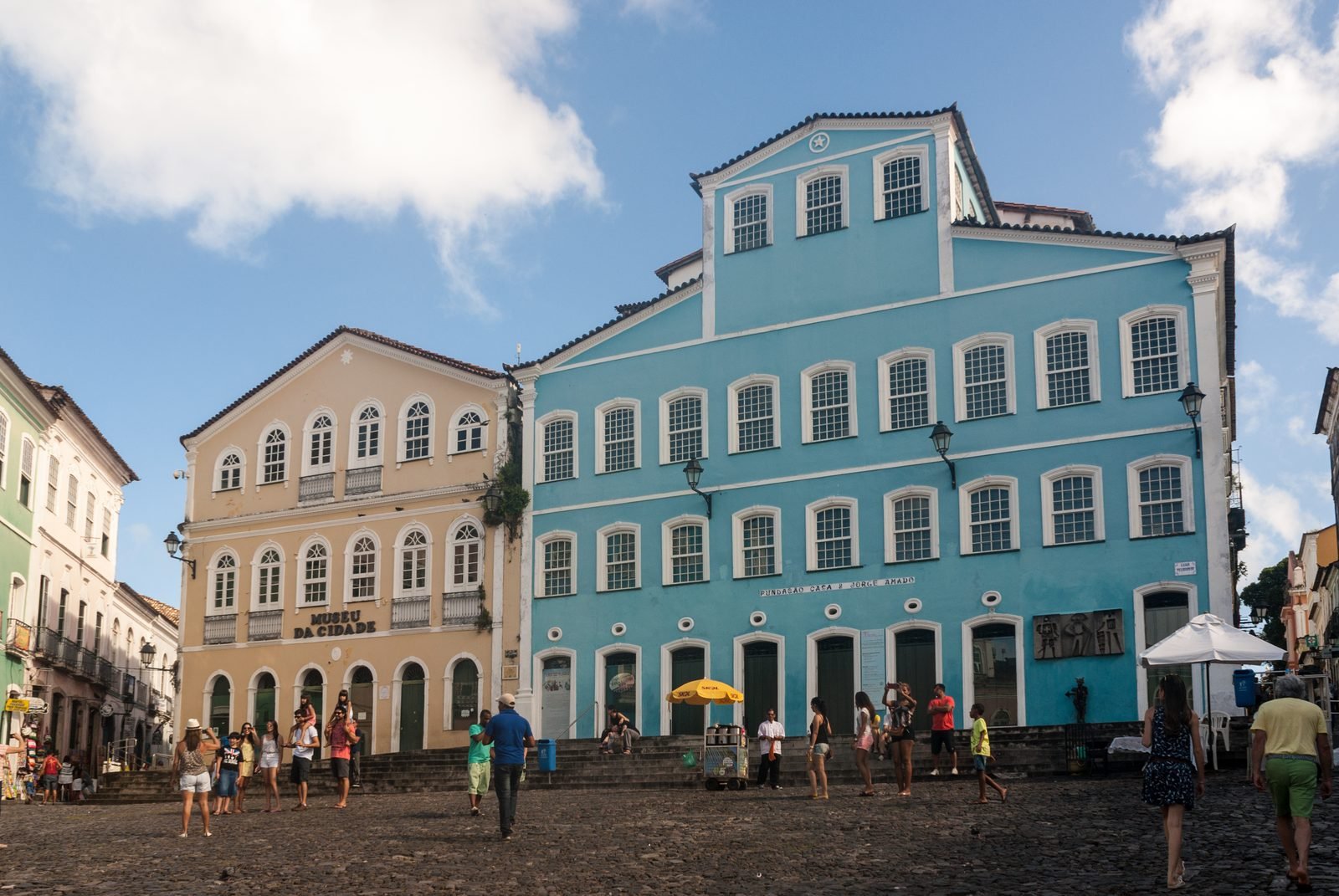
The Pelourinho is the best-known part of the UNESCO-listed Historic Center: 17th- to 19th-century townhouses painted in bold colors, sloping cobbled streets and a church on almost every corner. Walking around is free. On the Largo do Pelourinho you’ll find the Jorge Amado Foundation (the blue building) and the Rosário dos Pretos church. A few steps away, Terreiro de Jesus has the Cathedral Basilica and UFBA’s Afro-Brazilian Museum. The Casa do Carnaval da Bahia, on Praça Ramos de Queirós, tells the story of Carnival with interactive exhibits; according to the City of Salvador, it costs R$20 (half price R$10 for students and seniors), is free on Wednesdays, and opens Tuesday to Sunday, 9 a.m. to 5 p.m., with last entry at 4 p.m.
On Tuesday nights the Pelourinho usually has live music in its squares, and rehearsals by Afro blocs such as Olodum draw crowds at certain times of year. During the day, expect people selling ribbons or offering to guide you; a firm “não, obrigado” (no, thank you) works. If you want a guide, hire a licensed one.
São Francisco Church and Convent: closed for restoration
One important update before you plan: the São Francisco Church, famous for its gilded carved interior, has been closed since part of its ceiling collapsed in February 2025. Iphan is leading the restoration with federal funding, and full reopening is projected for around 2029, possibly with some areas opening earlier. The Church of the Third Order of St. Francis next door is a separate building with a carved stone facade worth a stop. Check the current status before you go.
Santo Antônio Além do Carmo
Follow Rua Direita de Santo Antônio out of the Pelourinho past Largo do Carmo and you reach one of the prettiest neighborhoods in Salvador. The architecture is similar to the Pelourinho’s, but with fewer crowds and more residents. At the end of the street, the Santo Antônio Além do Carmo fort houses the Pierre Verger and Carybé spaces, with a single R$20 ticket and free entry on Wednesdays. The square in front of the fort looks over the Bay of All Saints and is lovely in the late afternoon.
Lacerda Elevator (Elevador Lacerda)
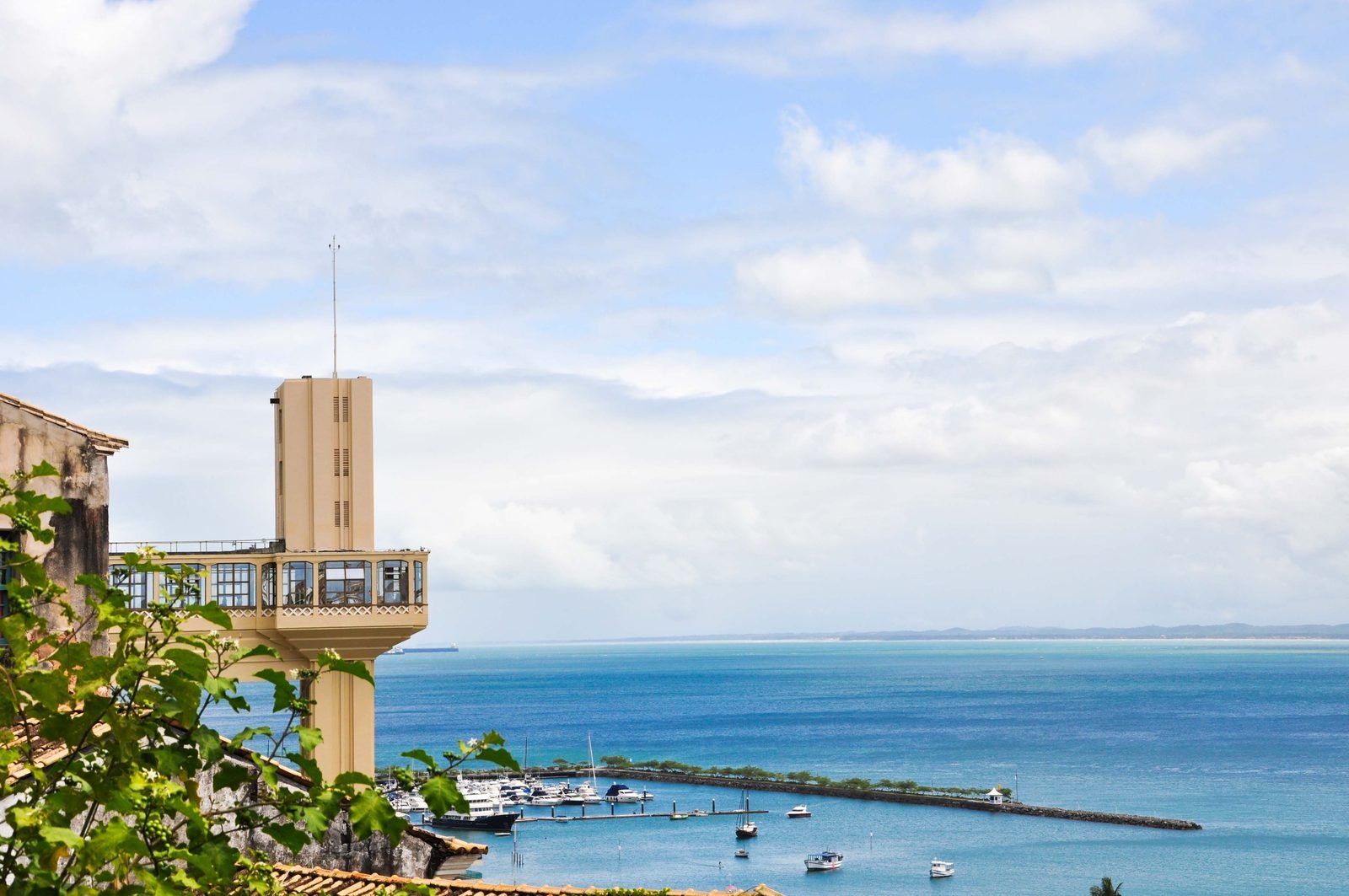
The Lacerda Elevator opened on December 8, 1873, as the Conceição da Praia Hydraulic Elevator, and is one of the oldest urban elevators in the world. The current Art Deco tower stands about 72 m (236 ft) tall and was renovated between 2023 and 2025 at a cost of more than R$14 million, reopening on February 25, 2025. In 2026 rides are free; the city has announced a future fare of R$1, free for SalvadorCard users. Hours are 6:30 a.m. to 9:30 p.m. on weekdays and 7 a.m. to 9:30 p.m. on weekends and holidays. The view from Praça Tomé de Sousa at the top, over São Marcelo Fort in the water and Mercado Modelo below, is one of the most photographed in the city. For a walking route between the two, see our Pelourinho and Lacerda Elevator guide.
Mercado Modelo
At the bottom of the elevator, in the Lower City, Mercado Modelo occupies the old customs house. Entry is free. Inside you’ll find crafts, hammocks, percussion instruments, cachaça, Bonfim ribbons and every kind of souvenir, plus upstairs restaurants with bay views. The building has been through renovation work, so check opening hours before you go; it generally opens during the day and closes earlier on Sundays. Compare prices between stalls and bargain politely. The Terminal Náutico, where schooners and catamarans leave for the islands, is right behind it.
Farol da Barra and the Nautical Museum
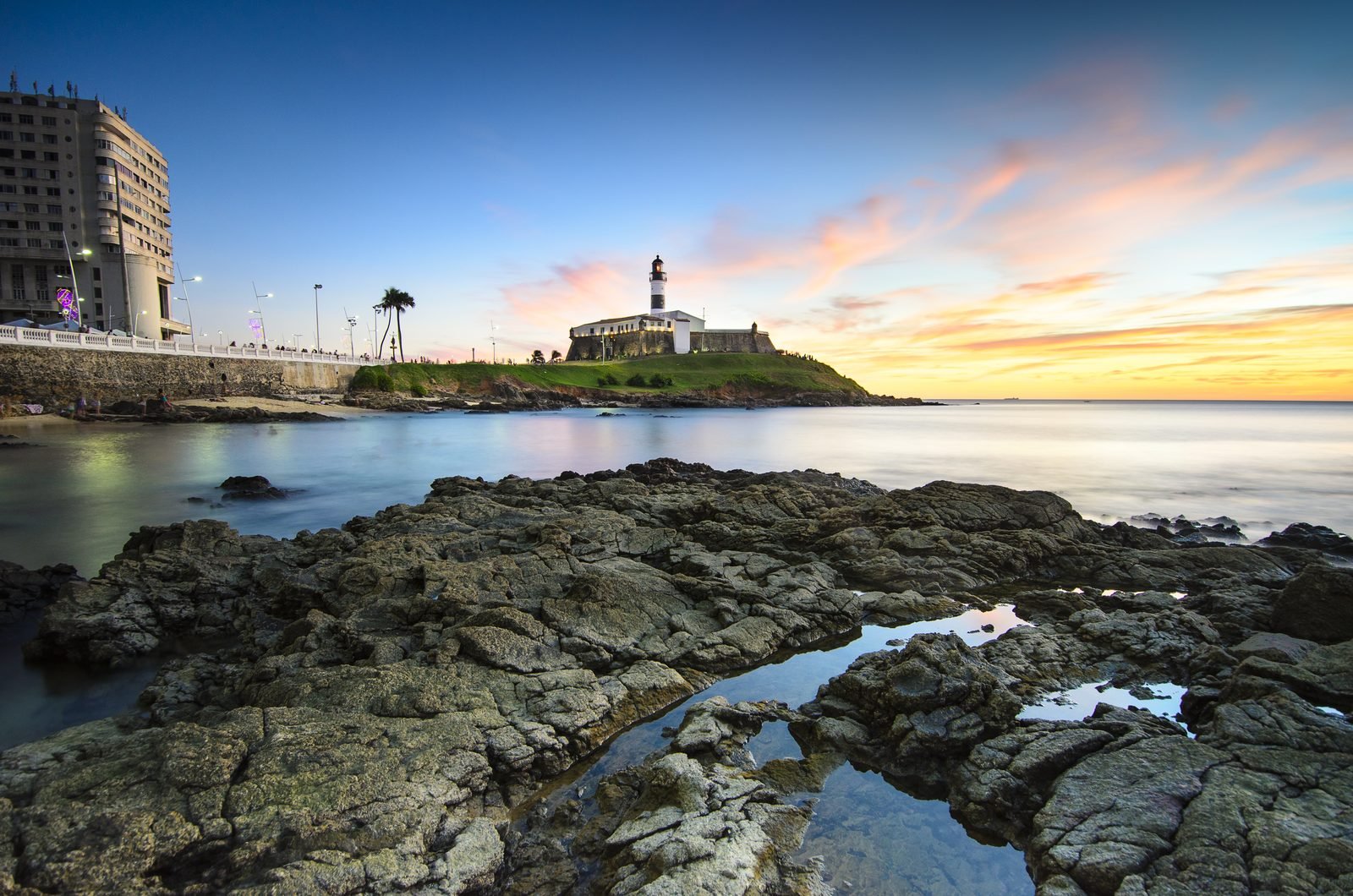
The Barra lighthouse stands inside Santo Antônio da Barra Fort, on the point where the bay meets the open ocean. Watching the sun drop into the bay from here is a Salvador ritual, often ending in applause. The fort houses the Nautical Museum of Bahia, open daily 9 a.m. to 6 p.m. (ticket desk until 5:30 p.m.). Tickets cost R$20, or R$10 for students, teachers and over-60s, and children under 7 go free. Even without entering the museum, the lawns around the fort and the seafront are free.
Porto da Barra beach
A few minutes’ walk from the lighthouse, Porto da Barra is one of Brazil’s best-loved city beaches. It sits inside the bay, between Santa Maria Fort and São Diogo Fort, so the water is usually calm and good for swimming and kids. It’s packed on weekends with vendors, beach chairs and locals. Arrive early for a spot and stay for sunset.
Bonfim Church (Basílica do Senhor do Bonfim)
Short answer: the Bonfim church is free and open every day: Monday to Thursday and Saturday 6:30 a.m. to 6 p.m., and Friday and Sunday 5:30 a.m. to 6 p.m., according to the Bonfim Sanctuary.
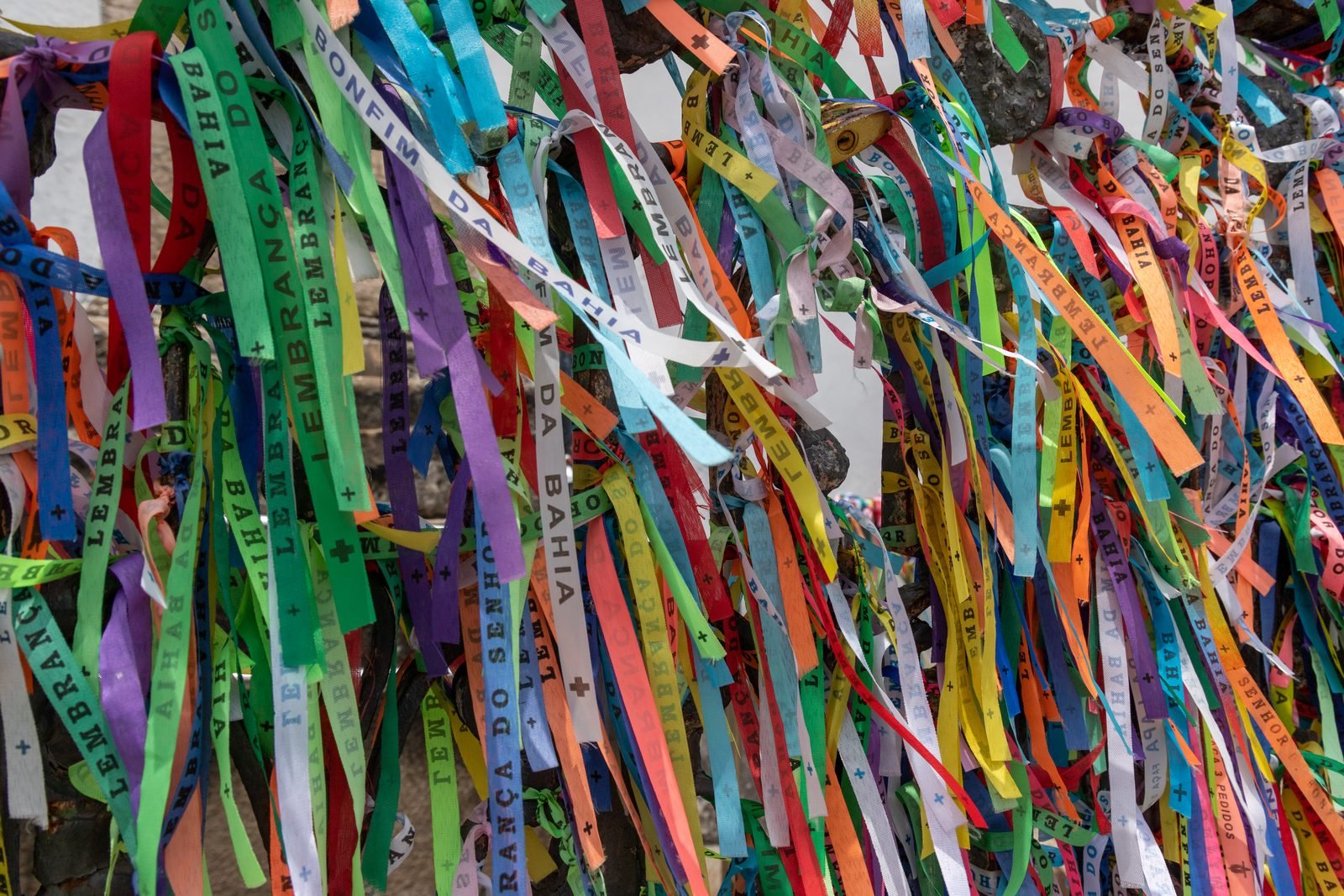
Built between 1745 and 1754 on the Colina Sagrada (Holy Hill) on the Itapagipe peninsula, it’s Bahia’s main Catholic shrine and a symbol of religious syncretism: many devotees associate the Senhor do Bonfim with the orixá Oxalá, so Friday, Oxalá’s day, is the busiest, with many people dressed in white. The colored ribbons, first made as “medidas” in the early 19th century, are tied to the railings with three knots and three wishes, and you wear one on your wrist until it falls off. Inside, the Room of Miracles displays ex-votos left by the faithful.
Ribeira and Ponta de Humaitá
Near Bonfim, Ribeira is a quiet bayside neighborhood known for Sorveteria da Ribeira, an ice-cream shop founded in 1931 that serves tropical fruit flavors such as cajá, umbu and tapioca. A little further on, Ponta de Humaitá, with the small Monte Serrat church and a lighthouse, is one of the best sunset spots on the bay side, with far fewer people than Barra.
Rio Vermelho
Rio Vermelho is Salvador’s bohemian quarter. At night, Largo de Santana and Largo da Mariquita fill with people around acarajé stalls and bars. Jorge Amado and Zélia Gattai lived here for decades; their home at Rua Alagoinhas 33 is now the Casa do Rio Vermelho, a well-curated museum about the couple’s life, with tickets at R$20 (half price R$10), free on Wednesdays, open Tuesday to Sunday 9 a.m. to 5 p.m. Our Rio Vermelho walking guide has more detail.
Itapuã and Abaeté Lagoon
Itapuã was made famous in songs by Vinicius de Moraes, Toquinho and Dorival Caymmi. The Itapuã lighthouse and beach are pretty, and the dark-water Abaeté Lagoon, ringed by white dunes, is close by. It’s a good stop on your first or last day, since it’s on the way to the airport.
Day trips from Salvador
Short answer: the most popular day trips are a schooner tour to Ilha dos Frades and Itaparica, the catamaran to Morro de São Paulo and the drive to Praia do Forte. The first two leave from the Terminal Náutico behind Mercado Modelo.
Ilha dos Frades and Itaparica by schooner
This is the classic Bay of All Saints outing. Schooners leave the Terminal Náutico in the morning, stop at Ilha dos Frades (usually Ponta de Nossa Senhora) and Itaparica island, and return in the late afternoon. Prices vary widely between agencies, and boarding and environmental fees are often charged separately, so compare and confirm what’s included before you pay.
Morro de São Paulo by catamaran
Morro de São Paulo, on Tinharé island, is one of Bahia’s best-known beach villages. In April 2026, according to the Terminal Náutico’s schedule, catamarans left Salvador at 9 a.m., 10:30 a.m. and 2:30 p.m., took about 2 hours 20 minutes, and a one-way ticket cost R$152.51. The open-sea crossing can be rough, so take seasickness tablets beforehand if you need them. A day trip is possible, but Morro deserves at least one night.
Praia do Forte and Projeto Tamar
Praia do Forte, in the municipality of Mata de São João, is about 75 km from central Salvador and 50 km from the airport along the Estrada do Coco (BA-099). The village is car-free, full of restaurants and shops, and has natural pools at low tide. The visitor center of Projeto Tamar, Brazil’s sea turtle conservation project, opens Tuesday to Sunday, 11 a.m. to 5 p.m., with tickets at R$54 (half price R$27).
Itaparica by ferry
For a cheaper, more local trip, the ferry leaves the São Joaquim terminal in the Lower City and crosses to Bom Despacho on Itaparica island in about an hour. A foot passenger fare was R$7.20 on weekdays and R$9.50 on weekends and holidays; check current fares before you go, as they are adjusted periodically.
What to eat in Salvador
Short answer: try street acarajé, moqueca baiana, abará, vatapá, caruru and cocada. Eat acarajé from the baianas’ stalls, especially in Rio Vermelho, and order moqueca in a restaurant to share.
Bahian cooking is the most delicious part of Salvador’s African heritage. It’s built on dendê palm oil, coconut milk, chili and dried shrimp. The dishes to know:
- Acarajé: a black-eyed pea fritter deep-fried in dendê oil, split and filled with vatapá, caruru, dried shrimp and a tomato salsa. The craft of the baianas de acarajé is listed as intangible heritage by Iphan. Ask for it “quente” (hot) if you like chili, “frio” if you don’t.
- Abará: the same batter, steamed in a banana leaf instead of fried. Lighter.
- Moqueca baiana: fish, shrimp or shellfish stewed in a clay pot with dendê oil, coconut milk, tomato, onion, peppers and cilantro, served with rice, farofa and pirão (a thick fish gravy). One order usually feeds two.
- Vatapá and caruru: vatapá is a creamy paste of bread, peanuts, cashews, shrimp and dendê; caruru is made with okra. Both go into acarajé and appear as side dishes.
- Cocada: a coconut sweet, white or caramelized, sold from trays all over the city. Also look for queijadinha and bolinho de estudante.
Where to eat:
- Acarajé da Dinha, Largo de Santana, Rio Vermelho. The stall was started by Dinha’s grandmother in the 1940s and is still run by the family.
- Acarajé da Cira, Largo da Mariquita, Rio Vermelho. Cira died in 2020, and her family keeps the stall going.
- Casa de Tereza, Rua Odilon Santos 45, Rio Vermelho, chef Tereza Paim’s restaurant for moquecas and modern Bahian cooking: casadetereza.com.br.
- Senac Pelourinho teaching restaurant, on the Largo do Pelourinho, with a lunchtime buffet of Bahian dishes cooked by students and instructors. A good way to try many dishes at once; check prices and hours on the Senac Bahia website.
- Sorveteria da Ribeira, in Ribeira near Bonfim, open since 1931.
The city’s tourism portal, Salvador da Bahia, has a map of acarajé stalls around town.
Is Salvador safe? Practical tips
Short answer: Salvador is a big city with the same crime issues as other large Brazilian cities, but visitors who take basic precautions generally have a trouble-free trip. The essentials: keep your phone out of sight on the street, use ride-hailing apps at night and avoid empty streets.
- Tourist areas in the Pelourinho, Barra and Rio Vermelho are busy during the day. At night, stick to lively squares and streets and take an app back to your hotel.
- Comércio and parts of the Lower City empty out after business hours and on Sundays. Visit Mercado Modelo and the Lacerda Elevator in daylight.
- Don’t walk the steep lanes between the Upper and Lower City; take the elevator.
- At the beach, bring the minimum: a towel, small bills and your phone kept away. Never leave things unattended on the sand.
- At street festivals and Carnival, wear a money belt under your clothes or use zipped pockets, and leave your passport in the hotel safe (carry a copy).
- The sun is strong all year. Sunscreen, a hat and water are essential, especially for Lavagem do Bonfim and on the seafront.
- “Free” ribbons tied on your wrist by street sellers usually end in a request for money; decline politely if you’re not interested.
- Credit cards and Pix (Brazil’s instant payment system) are widely accepted; keep some cash in small notes for street food and beach vendors.
3- or 4-day Salvador itinerary
Short answer: spend day one in the Historic Center, day two in Barra and Rio Vermelho, day three in the Lower City and Bonfim and, if you have a fourth day, take a boat trip or head to Praia do Forte.
- Day 1: Pelourinho and Santo Antônio. Start at Praça Tomé de Sousa for the view over the bay, walk through Terreiro de Jesus and the Largo do Pelourinho, visit the Casa do Carnaval and have lunch at the Senac buffet. In the afternoon, walk to Santo Antônio Além do Carmo for sunset at the fort square. If it’s a Tuesday, head back to the Pelourinho at night.
- Day 2: Barra and Rio Vermelho. Morning swim at Porto da Barra, lunch nearby and the Nautical Museum in the afternoon. Sunset at Farol da Barra. In the evening, acarajé and drinks in Rio Vermelho.
- Day 3: Lower City and Bonfim. Ride the Lacerda Elevator down, browse Mercado Modelo and take an app to the Bonfim church. Ice cream in Ribeira and sunset at Ponta de Humaitá. Alternatively, start the morning at the Casa do Rio Vermelho.
- Day 4: islands or north coast. Take a schooner to Ilha dos Frades and Itaparica from the Terminal Náutico, or spend the day in Praia do Forte with a visit to Projeto Tamar. If your flight is late in the day, stop at Itapuã and Abaeté Lagoon on the way to the airport.
With more time, Salvador pairs well with Morro de São Paulo, the Chapada Diamantina or other Brazilian highlights. Building a longer trip? See our Iguaçu Falls travel guide and Gramado travel guide.
How much does a trip to Salvador cost?
Short answer: Salvador is a mid-priced Brazilian city. Many of its highlights are free, city museums charge R$20 and public transport is cheap; the biggest costs are accommodation in high season and boat trips.
| Item | 2026 price |
|---|---|
| Lacerda Elevator | Free (future fare of R$1 announced) |
| Pelourinho, Mercado Modelo, Bonfim church, beaches | Free |
| Casa do Carnaval da Bahia | R$20 (half price R$10; free on Wednesdays) |
| Casa do Rio Vermelho | R$20 (half price R$10; free on Wednesdays) |
| Pierre Verger + Carybé spaces | R$20 (free on Wednesdays) |
| Nautical Museum of Bahia (Farol da Barra) | R$20 (half price R$10) |
| Metro | R$4.10 (R$5.90 with bus transfer) |
| Ferry to Itaparica (foot passenger) | R$7.20 weekdays; R$9.50 weekends |
| Catamaran Salvador–Morro de São Paulo | R$152.51 one way (April 2026) |
| Projeto Tamar, Praia do Forte | R$54 (half price R$27) |
Prices are those published by the attractions and operators in 2026 and may change. Half-price tickets (meia-entrada) usually require Brazilian student or senior ID, so most international visitors pay the full fare. To save money: group the city museums on a Wednesday, take the metro from the airport, eat at street stalls and neighborhood restaurants, and book early if you’re traveling between New Year’s and Carnival.
Where to stay in Salvador
Short answer: stay in Barra for beaches, walking and good infrastructure; in Rio Vermelho for bars and restaurants; in the Pelourinho or Santo Antônio Além do Carmo to be inside the historic center; in Ondina for large seafront hotels; and in Itapuã or Stella Maris to be close to the airport.
Neighborhoods at a glance
- Barra: the most balanced choice for a first trip. Calm beach, a seafront promenade, lots of restaurants and a reasonable ride to the historic center. During Carnival, it’s right on the route.
- Rio Vermelho: best for nightlife and food. The beach is less good for swimming than Barra’s.
- Pelourinho and Santo Antônio Além do Carmo: hotels in historic mansions, bay views and everything on foot. Some streets go quiet at night, so take an app back.
- Ondina: larger hotels facing the ocean, between Barra and Rio Vermelho.
- Itapuã and Stella Maris: resorts and hotels near the airport and more open beaches, but far from the historic center (allow for traffic).
The list below covers real places to stay across budgets, with links to each property’s official website. We don’t publish rates because prices swing a lot by date, especially over New Year’s and Carnival; check directly with the hotel.
Fasano Salvador (luxury, Historic Center)
On Praça Castro Alves, Fasano Salvador occupies the former headquarters of the A Tarde newspaper, a heritage-listed building. It has 70 rooms, a Gero restaurant, a spa and a rooftop pool overlooking the Bay of All Saints, a few minutes’ walk from the Pelourinho.
Fera Palace Hotel (luxury, Rua Chile)
Fera Palace Hotel fills a 1934 Art Deco building on Rua Chile, one of the oldest streets in Brazil, a block from Praça Tomé de Sousa and the Lacerda Elevator. It has a rooftop infinity pool, rooms from 18 to 110 m², and was awarded a MICHELIN Key in 2026.
Hotel Casa do Amarelindo (boutique, Pelourinho)
Casa do Amarelindo is a small hotel in a restored 19th-century mansion on Rua das Portas do Carmo, in the heart of the Pelourinho, with a bar and restaurant looking over the old town’s rooftops and the bay.
Pousada do Boqueirão (guesthouse, Santo Antônio Além do Carmo)
One of the neighborhood’s longest-running guesthouses, open since 1991 in two colonial houses at Rua Direita de Santo Antônio 48. It has 15 rooms, some with bay views, and the feel of an old family home filled with art and antiques. Its official website wasn’t loading when we checked in October 2026; search for it by name to get in touch.
Laranjeiras Hostel (budget, Pelourinho)
For backpackers and budget travelers, Laranjeiras Hostel is in a colonial house on Rua da Ordem Terceira in the Pelourinho, about 400 m from the Lacerda Elevator, with dorms, private rooms and English-speaking staff.
Grande Hotel da Barra (good value, Porto da Barra)
Grande Hotel da Barra is a four-star hotel facing Porto da Barra beach, next to São Diogo Fort, with sea-view rooms, a 24-hour front desk and airport transfers on request. Few locations in the city are more practical for beach time and walks to the lighthouse.
Zank by Toque Hotel (boutique, Rio Vermelho)
Zank by Toque is a boutique hotel in Rio Vermelho with a restaurant and spa. It’s listed in the MICHELIN Guide and makes a good base for dinners and nights out in the neighborhood.
Mercure Salvador Rio Vermelho (chain, Rio Vermelho)
Accor’s Mercure Salvador Rio Vermelho, on Rua Fonte do Boi, faces the ocean and has an infinity pool. A solid pick if you prefer the predictability of an international chain.
Vila Galé Salvador (chain, Ondina)
Vila Galé Salvador sits across from Ondina beach, about 20 minutes from the airport without traffic, according to the hotel. Renovated in 2017, it has 224 rooms including 16 suites, plus a pool, restaurant, bar, gym and sauna.
Catussaba Resort Hotel (resort, Stella Maris)
Catussaba Resort Hotel is in Stella Maris, next to Itapuã and close to the airport, with direct beach access and large gardens. It works well for families who want a resort stay, as long as you accept that the historic center is a long ride away.
Video: the Pelourinho, by the City of Salvador
This episode of the #VemProCentro web series, from the official Visit Salvador da Bahia channel run by the city government, takes you through the streets, squares and cultural life of the Pelourinho (in Portuguese).
Salvador FAQ
How many days do you need in Salvador?
Three full days cover the Historic Center, Barra, Rio Vermelho and Bonfim. With four or five days you can add a schooner trip around the bay, Praia do Forte or a night in Morro de São Paulo.
What is the best time to visit Salvador, Brazil?
September to March, when there’s less rain and the sea is calmer. January and February have the big festivals but also the highest prices. April, May and June are the rainiest months.
When is Salvador Carnival 2027?
Official Carnival 2027 runs from Thursday, February 4, to Tuesday, February 9, with the Arrastão parade on Ash Wednesday, February 10. Pre-Carnival street parties take place the weekend before.
When is Lavagem do Bonfim 2027?
Lavagem do Bonfim 2027 is on Thursday, January 14. The procession leaves the Conceição da Praia church in the Comércio district in the morning and walks about 8 km to the Bonfim church.
How do I get from Salvador airport to Barra?
By ride-hailing app or taxi, it takes 40 minutes to over an hour depending on traffic. The cheapest option is the free shuttle to Aeroporto metro station, the metro (R$4.10) and then an integrated bus or an app, since the metro doesn’t reach Barra.
How much does the Lacerda Elevator cost?
In 2026 the Lacerda Elevator is free. The city has announced a future fare of R$1, free for SalvadorCard users. It runs 6:30 a.m. to 9:30 p.m. on weekdays and 7 a.m. to 9:30 p.m. on weekends and holidays.
Is the São Francisco Church open?
No. The São Francisco Church and Convent has been closed since part of its ceiling collapsed in February 2025 and is being restored under Iphan, with full reopening projected for around 2029.
What can you do for free in Salvador?
Walk the Pelourinho and Santo Antônio Além do Carmo, ride the Lacerda Elevator, browse Mercado Modelo, visit the Bonfim church, watch sunset at Farol da Barra, swim at Porto da Barra and, on Wednesdays, visit the city-run museums for free.
Is Salvador safe for tourists?
With basic precautions, yes. Stay on busy streets, keep your phone out of sight, use ride-hailing apps at night, visit Comércio and the Lower City in daylight and carry the minimum to the beach and street festivals.
Where is the best area to stay in Salvador?
Barra for a first visit, thanks to its calm beach and good infrastructure. Rio Vermelho for bars and restaurants. The Pelourinho or Santo Antônio Além do Carmo to stay inside the historic center.
Is Salvador worth it?
Salvador isn’t a city to rush. Its best moments happen at street level: a long lunch over moqueca, sunset at the lighthouse, music that starts up without warning in a Pelourinho square, devotees lining up with flowers in Rio Vermelho. Pick the right neighborhood, plan your transfers and leave room for the unexpected. Before you go, check festival dates and the status of the main sights on the official websites listed below.
Sources
- City of Salvador: salvador.ba.gov.br (Lacerda Elevator, Carnival 2027, city museums, Iemanjá) and tourism portal salvadordabahia.com
- Iphan: gov.br/iphan (Historic Center, Bonfim festival, São Francisco Church); UNESCO: Historic Centre of Salvador de Bahia
- IBGE Cidades: Salvador; Inmet climate normals 1991–2020
- Transport: CCR Metrô Bahia; Terminal Turístico Náutico da Bahia (Socicam); Internacional Travessias (ferry)
- Attractions: Nautical Museum of Bahia, Bonfim Sanctuary, Projeto Tamar
- Hotels: official websites linked in the “Where to stay in Salvador” section, checked in October 2026