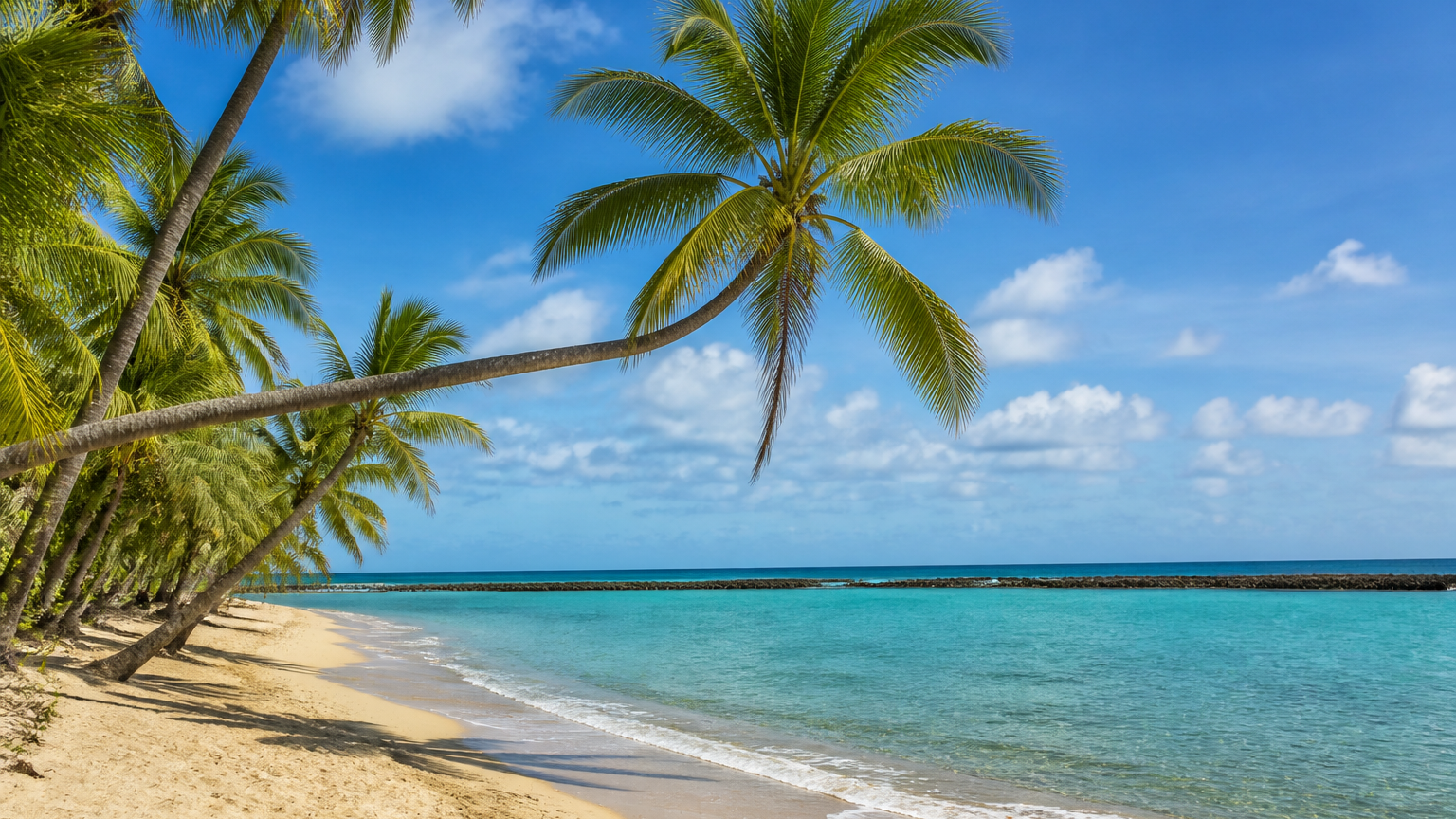
João Pessoa is famous for its tree-lined coastal avenue and relaxed pace of life, but if you spend all your time on the main hotel strips of Tambaú and Cabo Branco, you are only scratching the surface of Paraíba’s coastline. While the central promenade is undeniably convenient for dining and evening strolls, it also gathers the bulk of tour groups, beachfront sellers, and weekend foot traffic. Just 10 to 25 minutes north, however, lies an entirely different coastal world where crystalline waters are sheltered by barrier reefs, sea turtles nest on quiet dunes, and calm coastal lagoons offer effortless swimming.
Before packing your beach bag, there is one non-negotiable rule you must know: the tide governs everything in João Pessoa. Natural reef pools and tidal sandbars only reveal their crystal-clear conditions during low tide, specifically when the Brazilian Navy tide table (Tábua de Marés) records a level of 0.5 meters or lower. During new and full moons (spring tides or marés de sizígia), the water drops even further, creating shallow natural aquariums. If you arrive at high tide, those same reefs and sandbars are completely submerged beneath churning ocean water. If you are also planning your broader trip, check out our comprehensive 3-day João Pessoa itinerary to see how these hidden spots fit into your stay.
1. Praia do Bessa & Caribessa: Calm Turquoise Waters and Coral Reefs
Located immediately north of Manaíra, Praia do Bessa is a 6-kilometer stretch of soft golden sand that transitions from an upscale residential neighborhood into a tranquil coastal sanctuary. The southern and central curve of this beach has earned the affectionate nickname “Caribessa” because its warm, emerald-green waters resemble the Caribbean when the sun is high.
What makes Caribessa truly exceptional is a massive barrier reef system lying approximately 700 to 900 meters offshore. During low tide, this natural wall blocks the Atlantic swell, turning the nearshore ocean into a giant, calm saltwater swimming pool. It is arguably the best spot in the city for stand-up paddleboarding (SUP) and ocean kayaking. Local outfitters based along the sand rent boards and kayaks, often leading guided paddle excursions out to the reef basin where you can snorkel among schools of sergeant major fish and marine life.
Unlike the high-density hotel zone of Tambaú, Bessa has a distinctly residential, laid-back vibe. Instead of crowded souvenir stands, the beachfront is dotted with relaxed, open-air beach lounges like Praiano Bar, Sargaço Beach Lounge, and Fullano Praia, where you can sip fresh coconut water or a caipirinha with your feet in the sand. Remember to practice strict reef etiquette: never stand on or touch living coral formations.
2. Praia de Intermares: Breezy Open Shores and Urban Sea Turtle Conservation
Crossing the municipal border into neighboring Cabedelo (which forms a seamless part of the greater João Pessoa metro area), you reach Praia de Intermares. Here, the coastline widens significantly, offering a breezy, energetic atmosphere that contrasts with the sheltered waters of Bessa.
Intermares is renowned among locals for two very different reasons: consistent surf breaks in designated sections and critical marine conservation. This beach is one of the primary nesting grounds in northeastern Brazil for urban sea turtles, specifically the endangered hawksbill turtle (tartaruga-de-pente) and green turtle (tartaruga-verde). Between November and June, the local non-profit Associação Guajiru monitors the dunes through their Projeto Tartarugas Urbanas, protecting hundreds of nests from artificial city lighting and foot traffic.
While the open waters here have stronger waves than Caribessa, the wide sand strip is perfect for long, uninterrupted morning walks, kite surfing, or watching local surfers. Educational signs along the boardwalk explain the turtle life cycle, and if you visit during hatching season, you might witness an organized, supervised release of baby turtles into the sea.
3. Praia de Camboinha & Praia do Poço: Shallow Family Waters and Coastal Charm
Continuing north along the Cabedelo peninsula, Praia do Poço and Praia de Camboinha represent the pinnacle of calm-water beach relaxation in Paraíba. Shielded from ocean currents, these twin beaches feature glassy, almost wave-free shallows that stretch dozens of meters into the sea at knee-to-waist depth.
Camboinha is predominantly a summer residence neighborhood filled with elegant beachfront homes and shaded coconut groves. On weekdays, the beach is remarkably peaceful, with gentle breezes and warm water that feels more like a heated swimming pool than the open Atlantic. It is an ideal spot for travelers who simply want to read a book under a parasol, wade out into calm waters, or enjoy fresh fried fish and crab claws from traditional wooden kiosks along Praia do Poço.
Beyond its calm shores, this stretch of coastline serves as the primary gateway to one of Paraíba’s most extraordinary natural marine parks.
4. Parque Estadual Marinho de Areia Vermelha: The Disappearing Red Sandbar
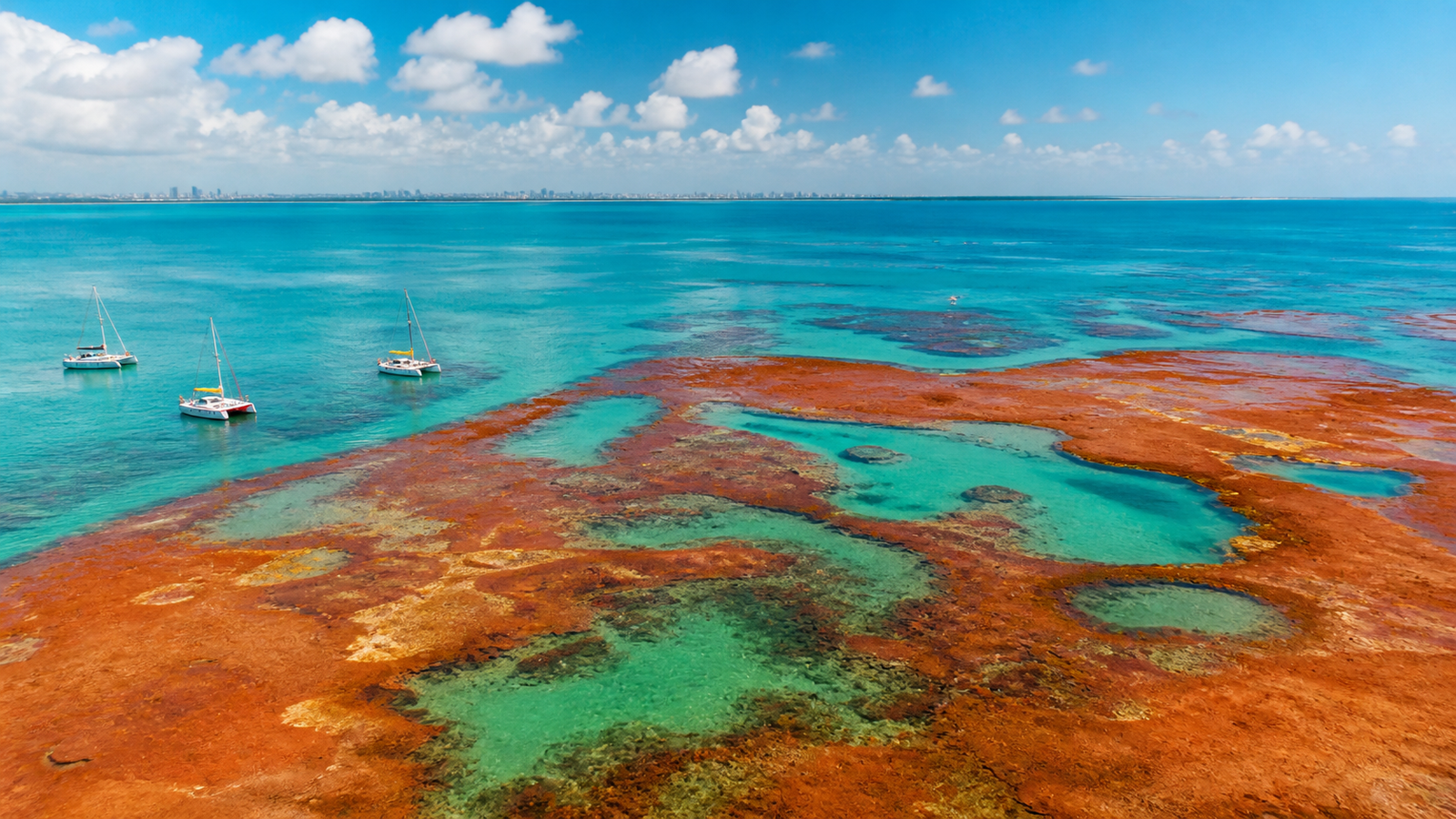
The disappearing sandbar of Parque Estadual Marinho de Areia Vermelha emerges strictly at low tide. (Illustrative image)
Located about 1.5 kilometers offshore from Camboinha and Poço, the Parque Estadual Marinho de Areia Vermelha is a geological wonder. It is a massive, two-kilometer-long sandbar composed of coarse reddish sand and surrounded by extensive coral reefs. The catch? It only exists for roughly 2 to 3 hours a day during low tide.
When the tide drops below 0.5 meters, the sandbar emerges completely from the ocean, creating a temporary island ringed by warm, crystal-clear natural pools. Authorized catamarans and small motorboats depart regularly from the sands of Camboinha and Poço to ferry visitors across the channel (typically costing between R$ 50 and R$ 80 per person round-trip).
In recent years, the state environmental agency (SUDEMA) enacted strict protection laws to preserve the fragile reef ecosystem. Fixed commercial bars, portable barbecues, and loud amplified sound systems are strictly prohibited on the sandbar. All visitors must pack out their own trash, and stepping directly onto living coral heads is forbidden. When visiting, pack reef shoes to protect your feet, high-SPF biodegradable sunscreen, and a waterproof phone pouch to capture the emerald water.
5. Fortaleza de Santa Catarina: 16th-Century History Where the River Meets the Sea
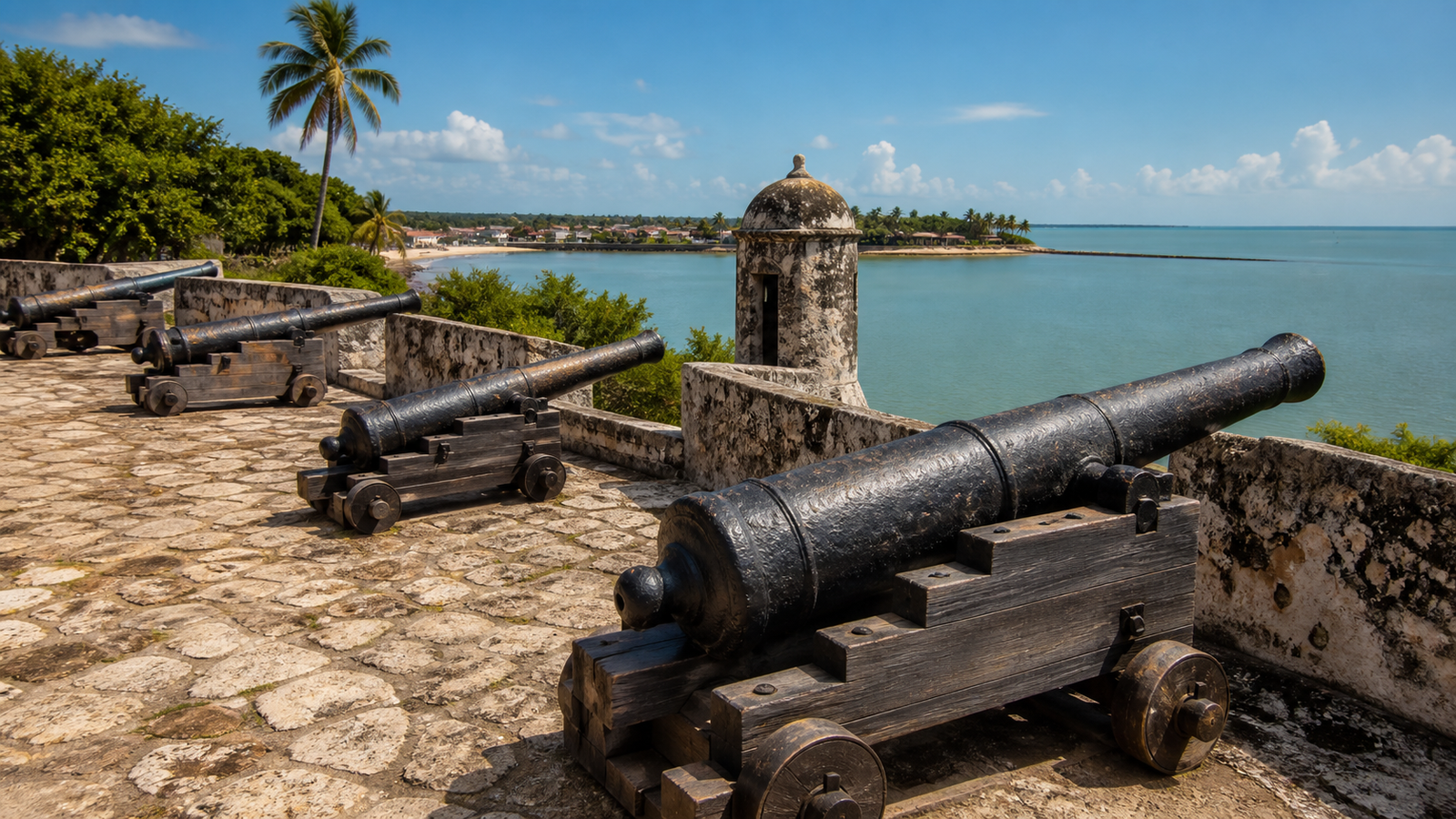
Fortaleza de Santa Catarina guarded the mouth of the Paraíba River against 17th-century invaders. (Illustrative image)
At the northernmost tip of the peninsula in Cabedelo, where the dark waters of the Paraíba River merge into the turquoise Atlantic, stands the Fortaleza de Santa Catarina. While most visitors to João Pessoa focus exclusively on coastal beaches, this historic fortress is one of the most significant colonial monuments in northeastern Brazil.
Originally constructed in 1585 out of rammed earth and rebuilt in solid stone in the 17th and 18th centuries, the fortress was designed to defend the entrance of the river from French corsairs and Dutch fleets. Between 1634 and 1654, Dutch forces occupied the stronghold, renaming it Forte Margarida before Portuguese rule was restored.
Today, the fortress is open daily from 8:00 AM to 5:30 PM. Visitors can walk along the stone ramparts, explore historical casemates, view original iron cannons pointing out to sea, and visit the preserved colonial chapel. Because it sits at the tip of Cabedelo, visiting the fortress in the late morning or early afternoon pairs perfectly with a visit to the nearby riverfront for the famous Praia do Jacaré sunset ritual, located just a 10-minute drive south.
6. Jardim Botânico Benjamim Maranhão: A Protected Urban Atlantic Rainforest
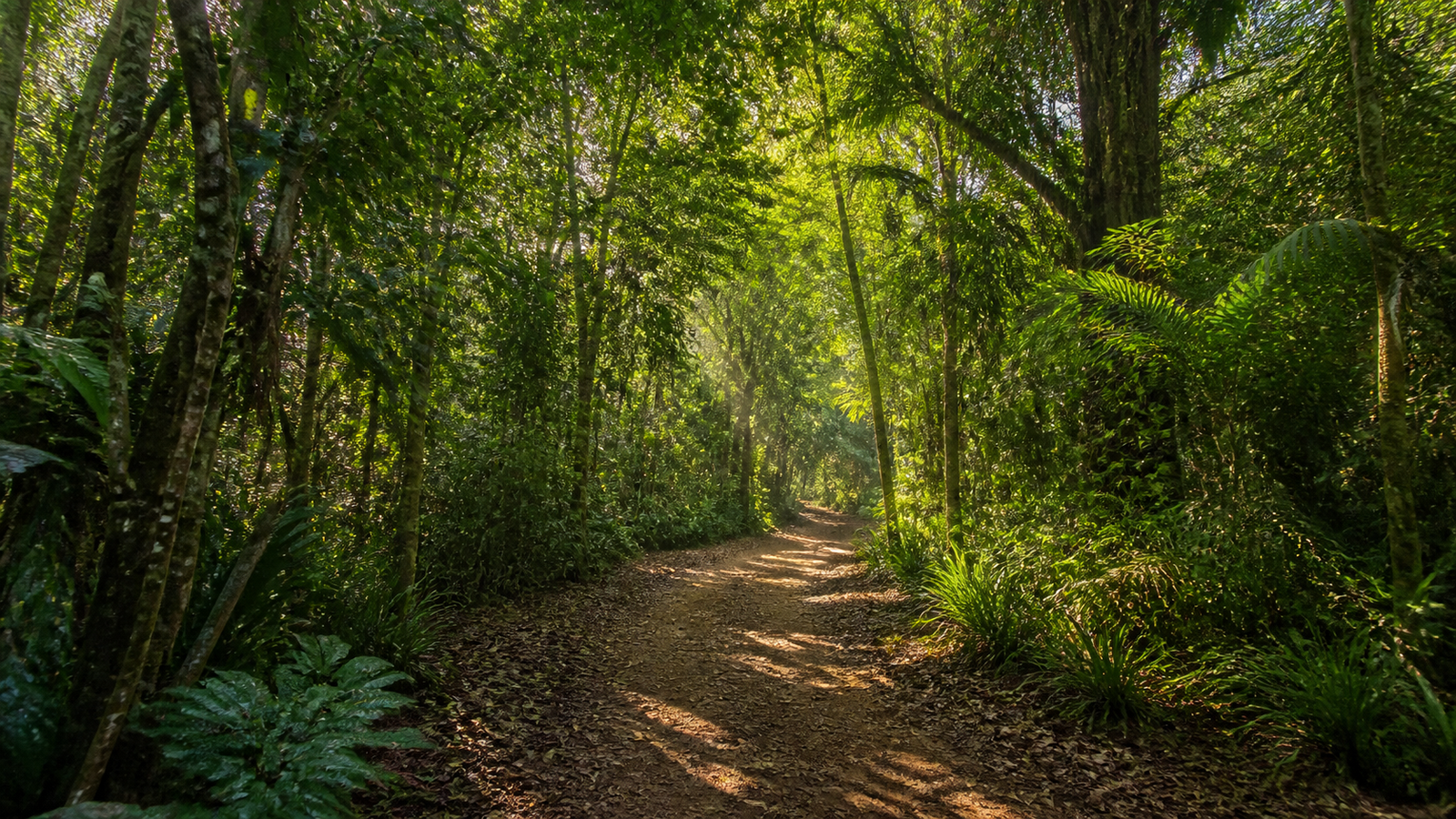
Guided nature trails through protected Atlantic rainforest at Jardim Botânico Benjamim Maranhão. (Illustrative image)
If you want a complete break from saltwater and coastal sun, head inland toward the center of João Pessoa to explore the Jardim Botânico Benjamim Maranhão, locally known as the Mata do Buraquinho. Spanning over 500 hectares, this is one of the largest preserved urban fragments of Atlantic Forest (Mata Atlântica) anywhere in Brazil.
Walking through the gates immediately lowers the ambient temperature as a dense green canopy filters the tropical sunlight. The reserve is home to towering native trees, orchids, bromeliads, monkeys, and hundreds of bird species. The park is managed by SUDEMA and offers free admission, operating from Tuesday to Saturday (8:00 AM to 4:30 PM).
To preserve the ecosystem and protect visitors, walking into the forest is conducted exclusively via free guided interpretive trails departing twice daily at 9:00 AM and 2:00 PM. Note that the park enforces a strict safety dress code: you must wear long pants and closed-toe footwear (such as sneakers or hiking shoes) to participate in the forest trails. Sandals, flip-flops, and shorts are not permitted on the trail. It is an easy 15-minute Uber ride from Tambaú and pairs wonderfully with a walking tour of the historic center of João Pessoa.
Planning Your Escape: Quick Comparison and Practical Travel Tips
To help you decide which spot fits best into your schedule, here is a quick breakdown of João Pessoa’s quietest coastal and nature escapes:
| Spot | Primary Vibe | Tide Dependent? | Transit from Tambaú | Best For |
|---|---|---|---|---|
| Caribessa (Praia do Bessa) | Calm lagoon & chic lounges | Yes (for reef paddling) | 10-15 min (R$ 15-20 via Uber) | SUP, kayaking & quiet beach day |
| Praia de Intermares | Breezy beach & surf | No | 15-20 min (R$ 20-28 via Uber) | Long walks & sea turtle awareness |
| Praia de Camboinha & Poço | Glassy shallow waters | No (calm all day) | 20-25 min (R$ 30-40 via Uber) | Family swimming & relaxing under palms |
| Areia Vermelha Marine Park | Tidal sandbar & reefs | Yes (strictly ≤ 0.5m low tide) | 20 min + catamaran | Walking on an ocean sandbar |
| Fortaleza de Santa Catarina | 16th-century fortress | No | 25-30 min (R$ 35-45 via Uber) | Colonial history & estuary views |
| Jardim Botânico | Urban Atlantic Rainforest | No (Tue-Sat only) | 15 min (R$ 15-25 via Uber) | Shaded nature hikes & birdwatching |
Getting to all these locations is surprisingly straightforward. Rideshare applications like Uber and 99 operate reliably throughout João Pessoa and Cabedelo, eliminating the need to rent a vehicle or commit to rigid group tour buses. When heading back from Cabedelo or Camboinha in the late afternoon, simply call your ride 10 to 15 minutes ahead of time.
After a full morning of discovering secluded lagoons and nature trails, wrap up your day by exploring the city’s culinary scene with our guide to the best regional food in João Pessoa.
Frequently Asked Questions
What is the quietest beach in João Pessoa?
Praia do Bessa (especially the southern “Caribessa” section) and Praia de Camboinha in Cabedelo are the quietest and calmest beaches near the urban center. Both offer shallow, tranquil waters and a relaxed residential atmosphere free from the high-density crowds of Tambaú.
How do I check if Areia Vermelha is open?
Areia Vermelha only emerges during low tide when the water level drops to 0.5 meters or lower on the Brazilian Navy tide table (Tábua de Marés) for Porto de Cabedelo. Aim to arrive at Praia do Poço or Camboinha roughly one hour before the absolute lowest point of the tide to maximize your time on the sandbar.
Do I need to rent a car to visit Cabedelo or Jardim Botânico?
No. Rideshare apps like Uber and 99 are fast, safe, and inexpensive in João Pessoa. Fares from Tambaú or Cabo Branco to Bessa cost around R$ 15 to R$ 20, while reaching Camboinha or Cabedelo typically costs between R$ 30 and R$ 45.
What are the dress code rules for Jardim Botânico Benjamim Maranhão?
Admission is free, but visitors joining the guided forest trails (at 9:00 AM and 2:00 PM, Tuesday to Saturday) must wear long pants and closed-toe footwear (such as sneakers). Visitors wearing shorts, skirts, sandals, or flip-flops will not be allowed on the forest trails for safety reasons.