Ilha Grande, literally “big island”, is the largest island in the municipality of Angra dos Reis, on the southern coast of Rio de Janeiro state. It covers about 193 km² of Atlantic Forest, has more than a hundred beaches and no private cars at all. Almost everyone arrives at Vila do Abraão, the only village with small-town services, and from there you walk the trails of the Ilha Grande State Park or take a boat to places such as Lopes Mendes beach, Lagoa Azul, Vila Dois Rios and Praia do Aventureiro. Until 1994 the island held a notorious prison, and that enforced isolation is a large part of why the forest is still standing. Since 2019, Ilha Grande and the nearby colonial town of Paraty have formed a single UNESCO World Heritage Site, listed for both culture and biodiversity.
This guide is written for international visitors and was checked in October 2026. It covers how to get to Ilha Grande from Rio de Janeiro and São Paulo through Angra dos Reis, Conceição de Jacareí or Mangaratiba, ferry and speedboat timetables and fares, the Sustainable Tourism Tax (TTS) that Angra dos Reis started charging in June 2026, the rules of INEA (the Rio state environment agency) for the park and for Aventureiro, the trails with distances and effort, what the boat trips cost, itineraries from two to five days, and ten real pousadas, each linked to its official website, with no affiliate links. Where sources disagree we show both figures and say which one we used. Prices are in Brazilian reais (R$).
Quick facts: Ilha Grande (Angra dos Reis, Rio de Janeiro state, Brazil)
- What it is: an island of about 193 km² (192 km² according to Angra dos Reis city hall) in the Bay of Ilha Grande, with 106 beaches counted by the city and about 87% of its land under environmental protection. The city estimates 6,172 residents, most of them in Vila do Abraão.
- No cars: there are no private cars and no paved roads. You get around on foot, along the trails, or by boat. The dirt road to Dois Rios is used only by service vehicles.
- Getting there: the Barcas Rio ferry from Angra dos Reis or Mangaratiba, R$20.50 each way; speedboats from Conceição de Jacareí, 15 to 20 minutes, R$50 to R$65 one way; or a water taxi from Angra.
- Distances: Angra is about 155 km from Rio de Janeiro and 350 km from São Paulo. Coming from Rio, Conceição de Jacareí is on the way, before Angra.
- Tourist tax: since 1 June 2026, Angra dos Reis has charged a Sustainable Tourism Tax (TTS) of R$50 per person, valid for 30 days. If you board for the island in another municipality, you pay R$50 with proof of two nights in licensed accommodation, or R$100 without it. You pay on the Viva Angra website.
- State park: entry to the Ilha Grande State Park (PEIG), run by INEA, is free. Campfires, pets and leaving litter are not allowed.
- Checked costs: schooner trip to Lagoa Azul R$90 to R$100 per person; half-island speedboat tour R$150 to R$250 depending on the season; a meal R$40 to R$80.
- When to go: April to June and September to November, avoiding Brazilian public holidays, for less rain than in summer and fewer people. Winter is the driest season; December to March is the wettest and the busiest.
- How long to stay: 2 days for Abraão, Lopes Mendes and one boat trip; 3 to 4 days to add Dois Rios, Lagoa Azul and a long hike; 5 days to fit in Pico do Papagaio, Aventureiro or a night on a remote beach.
A short history: from the Tupinambá to the Dois Rios prison
Short answer: Ilha Grande has been Indigenous land, a pirate hideout, a sugar and coffee estate, a quarantine station and, for most of the 20th century, a prison island. The Cândido Mendes Penal Institute at Dois Rios operated until 1994, when it was closed and blown up. After that the island became a nature destination, protected by a state park and other conservation areas, and in 2019 it joined the World Heritage List.
The first people to leave their mark were Indigenous peoples; the Tupi called the island Ipaum Guaçu, roughly “big island”. According to the traditional account, the expedition of Gonçalo Coelho entered the bay on 6 January 1502, the Day of the Kings (Reis), which gave Angra dos Reis its name. Over the following centuries the island’s many coves became a hiding place for ships: the English privateer Thomas Cavendish attacked it in December 1591, looting and burning homes, and pirates and smugglers used the sheltered bays for a long time. In 1726 the island was transferred to the captaincy of Rio de Janeiro.
Plantations, slavery and the visit of Emperor Pedro II
From the 18th century the island grew sugar cane and coffee on estates worked mainly by enslaved Africans, and life spread out across small seaside villages. In 1803 the island became a parish, Santana da Ilha Grande de Fora; the little church of Santana still stands by the sea. In 1863 Emperor Pedro II made his first visit and bought the Fazenda do Holandês, where Vila do Abraão is today, as well as the Dois Rios estate. Near the dam that fed the aqueduct there is still a stone bench known as the “Banco de D. Pedro”, where, by tradition, the emperor used to rest.
The Lazareto and the aqueduct
Between 1884 and 1886 the imperial government built the Lazareto at Abraão, a large quarantine complex for passengers on ships bound for Rio, at a time of cholera epidemics. To supply it with water, a dam and the stone aqueduct that still crosses the forest near the village were built. The Lazareto stopped working as a quarantine hospital in 1913, later served as a prison and was demolished in 1954 on the orders of governor Carlos Lacerda. Today the ruins can be visited on a short walk from the village.
The prison island
The first penal colony was set up in 1903 next to the village of Dois Rios, on the other side of the island. In 1940 the old Lazareto became the Cândido Mendes Penal Colony, and after the 1954 demolition the inmates were moved to Dois Rios, which became the Cândido Mendes Penal Institute. Political and ordinary prisoners passed through it: the novelist Graciliano Ramos, a political prisoner in the 1930s, described the experience in “Memórias do Cárcere” (Prison Memoirs); the guerrilla leader Carlos Marighella, the writer Orígenes Lessa and Madame Satã, a legendary figure of Rio’s Lapa district, were also held there. In the 1970s inmates formed the Falange Vermelha, which later became the Comando Vermelho, one of Brazil’s largest criminal organisations. One of its founders, José Carlos dos Reis Encina, known as Escadinha, escaped by helicopter on 31 December 1985 in an episode that became famous. The prison was closed and imploded in 1994, under governor Leonel Brizola.
Sardines, tourism and conservation
Meanwhile, the caiçara villages (the traditional coastal communities of south-east Brazil) lived from fishing. Salting fish began to replace the declining farms in the 1930s, and in the 1950s fishing reached its peak, with about twenty sardine factories around the island. Once the prison closed, tourism grew fast, especially at Abraão. Protection came in layers: Ilha Grande State Park was created by Decree 15,273 of 1971 and enlarged by Decree 40,602 of 2007; the island became part of the Tamoios Environmental Protection Area in 1982; the Praia do Sul Biological Reserve dates from 1981; and the Aventureiro Sustainable Development Reserve from 2014. After the prison closed, the Dois Rios area came under the management of the Centre for Environmental Studies and Sustainable Development (CEADS) of the Rio de Janeiro State University (UERJ).
World Heritage and the 2010 tragedy
On 1 January 2010, rain-triggered landslides hit Angra dos Reis and Ilha Grande; on the island alone at least 19 people died, according to English Wikipedia. The tragedy is still remembered and helps explain why the island’s slopes demand respect in the rainy season. On 5 July 2019 UNESCO inscribed “Paraty and Ilha Grande – Culture and Biodiversity” as a mixed World Heritage Site, the first in Brazil recognised for both cultural and natural values.
When to visit Ilha Grande: weather, rain and seasons
Short answer: the best time to visit Ilha Grande, if you want less rain and fewer people, is April to June and September to November, avoiding Brazilian holidays. Winter, June to August, is the driest period and good for hiking, but the sea is cooler. Summer, December to March, brings warm water and long days, but also the heaviest rain, the highest prices and queues for ferries and speedboats. Remember that the seasons are the reverse of the northern hemisphere.
The island sits in a very humid stretch of Atlantic Forest, and the mountains on the mainland trap the clouds that roll in from the sea. That explains the lush vegetation and also the afternoon downpours in summer. In Climate-Data.org’s model data for Angra dos Reis, January gets more than 300 mm of rain over 17 rainy days, while August sees about 60 mm. For long hikes, June to September is usually the safest period, with less slippery trails.
The table below uses Climate-Data.org’s averages for Angra dos Reis, which are model estimates rather than official INMET normals. Other travel sources mention summer highs of 31 °C to 32 °C; the model averages are lower because they smooth out the hottest days. The sea temperature, about 26 °C to 27 °C in February and 21 °C to 22 °C in August, is a rough guide.
| Month | Avg. low (°C) | Avg. high (°C) | Rain (mm) | Rainy days |
|---|---|---|---|---|
| January | 21.0 | 27.2 | 302 | 17 |
| February | 21.1 | 27.7 | 219 | 14 |
| March | 20.5 | 26.4 | 241 | 17 |
| April | 19.0 | 25.0 | 148 | 12 |
| May | 16.3 | 22.7 | 103 | 10 |
| June | 15.1 | 22.4 | 63 | 6 |
| July | 14.4 | 22.0 | 69 | 7 |
| August | 14.9 | 23.1 | 61 | 7 |
| September | 16.4 | 24.1 | 110 | 11 |
| October | 17.8 | 24.8 | 142 | 13 |
| November | 18.6 | 24.8 | 209 | 15 |
| December | 20.1 | 26.2 | 245 | 17 |
| Year | 17.9 (average) | 24.7 (average) | 1,912 | 146 |
Summer: December to March
This is high season. The sea is warm, the beaches around Abraão and the schooners are packed, and New Year’s Eve and Carnival sell out pousadas months ahead. It is also the rainiest period: late-afternoon storms are common, and several days of heavy rain in a row turn the trails to mud. Plan long hikes for the morning and keep a back-up plan, such as a boat trip or a lazy day.
Autumn: April and May
For many people this is the best time. Rain drops a lot compared with summer, the sea is still pleasant and pousada prices fall outside the Easter and Tiradentes (21 April) holidays. Days get shorter, so start hikes early.
Winter: June to August
The driest time of year, with clear days and cool nights, perfect for Pico do Papagaio, Dois Rios and hiking around the island. The sea is cooler and cold fronts can bring wind and rough seas, which may cancel boat trips to the ocean side, such as Lopes Mendes by boat or Aventureiro. July is a Brazilian school holiday and busier.
Spring: September to November
The rain gradually returns, but there are still plenty of good days and the island is quiet. September and October are a good bet if you want to combine hiking and beaches without the summer crowds. November is already wetter and marks the transition to high season.
How to get to Ilha Grande from Rio and São Paulo
Short answer: to reach Ilha Grande, first travel by car or bus to one of three departure points on the mainland, then cross by boat. Conceição de Jacareí, in the municipality of Mangaratiba, has the fastest crossings (speedboats taking 15 to 20 minutes, several times a day); Angra dos Reis has the cheapest ferry, at R$20.50, plus speedboats and water taxis; Mangaratiba has one ferry a day. Almost all boats arrive at the pier in Vila do Abraão.
There is no bridge and no commercial airport on the island. Which port you choose depends on where you start, how much you want to spend and the time of day. From Rio, Conceição de Jacareí is usually the most practical option, because it comes before Angra on the Rio–Santos highway (BR-101) and has more departures. From São Paulo, Angra is where the buses go. The ferry is the cheapest option but runs only a few times a day, and missing the last one means a night on the mainland or paying for a water taxi.
The ferry from Angra dos Reis and Mangaratiba
The ferries to Ilha Grande are run by the Barcas Rio consortium, which took over from the previous operator and kept the same timetable and fare. A ticket costs R$20.50 each way, a fare set by AGETRANSP Resolution 1222/2021, on both the Angra and the Mangaratiba lines. Bicycles travel free, up to ten per sailing. The times below were checked in October 2026 on the Barcas Rio website and in a June 2026 report by the local news site Angra Notícias.
| Route | Departure | Duration | Fare |
|---|---|---|---|
| Angra dos Reis → Abraão | 3:30pm on weekdays; 1:30pm at weekends and on public holidays | About 80 to 110 minutes | R$20.50 |
| Abraão → Angra dos Reis | 10am daily | About 80 to 110 minutes | R$20.50 |
| Mangaratiba → Abraão | 8am daily | About 80 to 110 minutes | R$20.50 |
| Abraão → Mangaratiba | 5:30pm daily | About 80 to 110 minutes | R$20.50 |
Sources disagree on the crossing time: one local report says “up to 110 minutes”, others about 80 minutes. Allow between an hour and a half and two hours. In Angra the ferries leave from the Santa Luzia station in the town centre, which also houses the tourist information desk and TurisAngra, the city’s tourism foundation. Arrive early on holidays: the queues are long.
Speedboats from Conceição de Jacareí
Conceição de Jacareí is a district of Mangaratiba right on the Rio–Santos highway. Speedboats known as flex boats leave from there for Vila do Abraão, a 15 to 20 minute crossing. Several companies run the same route, and prices vary slightly between them.
- Porto Real Turismo: departures from Conceição at 9:30am, 12:30pm, 2pm and 5pm, returning from Abraão at 10am, 1pm, 2:30pm and 5:30pm. A one-way ticket cost R$65 for anyone over 6, with online deals from R$55; a return ticket on promotion cost R$110 (checked in October 2026).
- Translados Conceição: the official website advertised R$50 one way and R$100 return as a “website-only price”, plus packages with parking and with transfers from Rio and Barra da Tijuca. An earlier check on another source showed R$70 and R$120, so confirm before you buy.
- Combined transfers: several agencies sell a van from Rio plus speedboat package. Paradise Transfer, for example, advertised a combo from R$130. It is the easiest option if you would rather not deal with buses.
Timetables change in high season, when extra departures are added, and rough seas can delay or cancel crossings. If you are staying at Araçatiba, Praia Vermelha or another beach far from Abraão, the Conceição speedboats will not help: they only stop at Abraão. In that case look for boats that go straight from Angra to those beaches, or ask your pousada.
Water taxi from Angra
Water taxis (táxi-boats) are private speedboats that cross between Angra and Abraão in 30 to 40 minutes, with more departures than the ferry. According to Angra Notícias, fares cost between R$100 and R$180 return in 2026, depending on the route and the time. They also go to other beaches, such as Lopes Mendes, Freguesia de Santana and Aventureiro. Use only licensed boats and check there are life jackets for everyone.
From Rio de Janeiro to the port
By car, Angra dos Reis is about 155 km from Rio along Avenida Brasil and the Rio–Santos highway. Conceição de Jacareí is on the way, before Angra. There are private paid car parks near the piers at Conceição and Angra; budget for this, because the car sits there every day of your trip.
By bus, Costa Verde Transportes runs the Rio–Angra dos Reis line from Rio’s Novo Rio bus station. In the official fare table checked in October 2026, a ticket cost R$49.99 plus a R$5.41 boarding fee, R$55.40 in total, with a return deal for R$98 when you buy both legs in one transaction and a 10% discount for cash. The trip takes about 3 hours; a 7am departure arrives at 10:10am, according to CheckMyBus. The company also sells tickets to Conceição de Jacareí and has boarding points in Rio’s South Zone: Copacabana (Siqueira Campos), Ipanema (General Osório), Leblon, Gávea, São Conrado and Barra. Comparison sites showed prices from R$54 to R$83 for the same route; we used the official table as our reference.
From São Paulo to the port
By car it is about 350 km to Angra, along the Via Dutra and the Saturnino Braga road, which drops down the mountains to the Rio–Santos highway, or along the coast through Ubatuba and Paraty. By bus, Viação Reunidas Paulista runs from São Paulo’s Tietê bus terminal to Angra dos Reis in about 8 hours 20 minutes. In October 2026 the DeÔnibus booking site listed semi-sleeper seats at R$134.98, conventional at R$178.98, sleeper at R$226.97 and full-flat sleeper at R$363.97, and the Primar company from R$98.71. Prices change with the date. If you are also visiting Paraty you can combine the two: see our Paraty travel guide.
By air
The island has no commercial airport. International visitors fly into Rio, either Galeão (GIG) or Santos Dumont (SDU), and continue by bus, transfer or car to Conceição de Jacareí or Angra. To plan your arrival in Rio, use our Rio de Janeiro travel guide.
Getting around Ilha Grande: trails and boats
Short answer: on Ilha Grande you walk or take a boat. There are no private cars, buses or ride-hailing apps; you can cover all of Vila do Abraão on foot, nearby beaches are a short walk away, and for the more distant ones you hike or take a water taxi. Bring a backpack rather than a wheeled suitcase: the streets of Abraão are sand and stone.
The absence of cars is one of the island’s great charms, but it takes some planning. The only road is the dirt track between Abraão and Dois Rios, used by service, UERJ and police vehicles, not by tourists. At the pier there are usually porters who carry luggage to your pousada for a price agreed on the spot; we did not check their rates for this guide. Many pousadas will also help if you tell them when you arrive.
Water taxis around the island
The water taxi stands are at the Abraão pier, with boats to beaches such as Praia Preta, Abraãozinho, Lopes Mendes (landing at Pouso, followed by a 1.1 km trail) and other coves. Fares are fixed by destination and vary with the season and the number of passengers; ask the price before you board and check the time of the last boat back. On rough days on the ocean side, boats may not run.
Trails
Ilha Grande State Park has more than 150 km of trails, numbered from T01 onwards and signposted from Abraão. The trails section below gives distances. Hiking is the cheapest and most beautiful way to see the island, but signage is patchy in places, the forest is dense and the climbs are steep.
Tourist information
There are Tourist Information Centres (CIT) at the Santa Luzia station in Angra and on Abraão beach. The State Park headquarters is on Avenida Nacib Monteiro de Queiróz in Abraão. TurisAngra can be reached on +55 24 3369-7704.
Rules and fees: Angra’s tourist tax, INEA and protected areas
Short answer: to visit Ilha Grande in 2026 you pay Angra dos Reis’s Sustainable Tourism Tax (TTS) of R$50 per person, valid for 30 days, on the Viva Angra website. Entry to the State Park is free, but INEA rules apply: no campfires, no pets and no litter left on the trails. Aventureiro requires a free wristband collected at the Santa Luzia station in Angra, and Praia do Sul and Praia do Leste are closed to visitors.
The Sustainable Tourism Tax (TTS)
The TTS was created by municipal laws 4,507/2025 and 4,522/2025 and has been charged since 1 June 2026 through the Viva Angra digital system. The rules, according to Angra dos Reis city hall and TurisAngra (checked in October 2026):
- Standard rate: R$50 per person, valid for 30 days, the same for the mainland and the islands. The city works this out as R$1.66 per day of stay.
- If you board for the islands in another municipality, such as Conceição de Jacareí or Mangaratiba: R$50 with proof of at least two nights in licensed accommodation in Angra; without that proof, R$100.
- Group day trips leaving from Angra, through the Santa Luzia station: R$28, a promotional rate from 1 June 2026 to 1 June 2027 (O Globo newspaper gave the end date as 31 May 2027). The planned full rate is R$55.
- Group day trips from another municipality, with a booking at a licensed restaurant: R$50 in the first year; the planned full rate is R$110.
- Exemptions: Angra residents and their relatives up to the second degree, registered service providers, people over 60, children and people with disabilities. The city hall announcement mentions children “up to 12”; the system’s own form mentioned under-5s. Check on Viva Angra before you travel. Exempt visitors still have to register.
- How to pay: on vivaangra.com.br, which generates a QR code, or at kiosks. Keep the receipt: it is checked at boarding and by inspectors.
The amount is adjusted for inflation by the IPCA-E index. According to the Viva Angra transparency portal, revenue from June to September 2026 totalled R$4,219,955.20. On 30 September 2026 the State Audit Court (TCE-RJ) suspended its review of the tax for 45 days, pending a case at the state Court of Justice. The tax was still being charged in October 2026, but the rules may change: check the official website close to your travel date.
Ilha Grande State Park (PEIG)
The PEIG, run by the Rio state environment agency INEA, covers 12,082 hectares and has a management plan approved by INEA Resolution 39/2011. According to English Wikipedia it covers about 62.5% of the island, and the whole island is recognised as an Important Bird Area. There is no entry fee. INEA’s recommendations and bans:
- Stay on the trails; shortcuts are dangerous and damage the forest.
- No campfires or barbecues in protected areas, and no fireworks.
- Pets are not allowed in the conservation areas.
- Carry your rubbish back to a collection point.
- Watch wildlife from a distance, do not feed animals and do not pick plants; hunting and capturing animals are crimes.
- Pico do Papagaio: between 5pm and 7am, access is allowed only with a tour guide or a guide accredited by INEA, and with the Term of Responsibility and Acknowledgement of Risk filled in.
Before a long hike, stop by the park headquarters in Abraão to check trail conditions. We did not verify the headquarters’ current opening hours.
Aventureiro Sustainable Development Reserve and Praia do Sul Biological Reserve
Praia do Aventureiro lies inside the Aventureiro Sustainable Development Reserve (RDS), created by state law 6,397 of 28 May 2014 and home to a caiçara community. Visits are controlled: to enter the village you need a free wristband from the Santa Luzia station in Angra, a form and a signed commitment. The station is open from 7am to 7pm every day. Overnight stays are allowed only at accredited campsites and lodgings.
Capacity figures differ between sources. The city hall and ABIH-RJ, the state hotel association, give 560 visitors, the limit of a 2006 agreement between the public prosecutor’s office, INEA, the city and the community. In December 2025 INEA said the reserve allows up to 878 visitors staying at the same time, at 19 authorised campsites and other lodgings. In high season places sell out weeks ahead, leaving only day visits.
Next door, the Praia do Sul State Biological Reserve, created by Decree 4,972 of 2 December 1981 and covering about 3,600 hectares, protects coastal scrub, lagoons and mangroves between Praia do Sul and Praia do Leste. Recreational visits are banned there. There is no scheduled boat to Aventureiro: go with a boat licensed for the open sea.
Things to do on Ilha Grande: the main sights
Short answer: the best things to do on Ilha Grande come down to three: hiking Atlantic Forest trails to remote beaches such as Lopes Mendes, Dois Rios and Caxadaço; taking boat trips around the calm coves, such as Lagoa Azul and Saco do Céu; and learning the island’s history at the Lazareto ruins, the aqueduct and the Prison Museum. Vila do Abraão is the base for almost everything.
The island has two very different sides. The side facing the mainland, looking onto the Bay of Ilha Grande, has calm coves, villages and good snorkelling stops. The ocean side faces the open Atlantic, with waves and long, almost empty beaches. Knowing this helps you choose the day’s plan: when a southerly wind brings rough seas, stick to the sheltered side.
Vila do Abraão
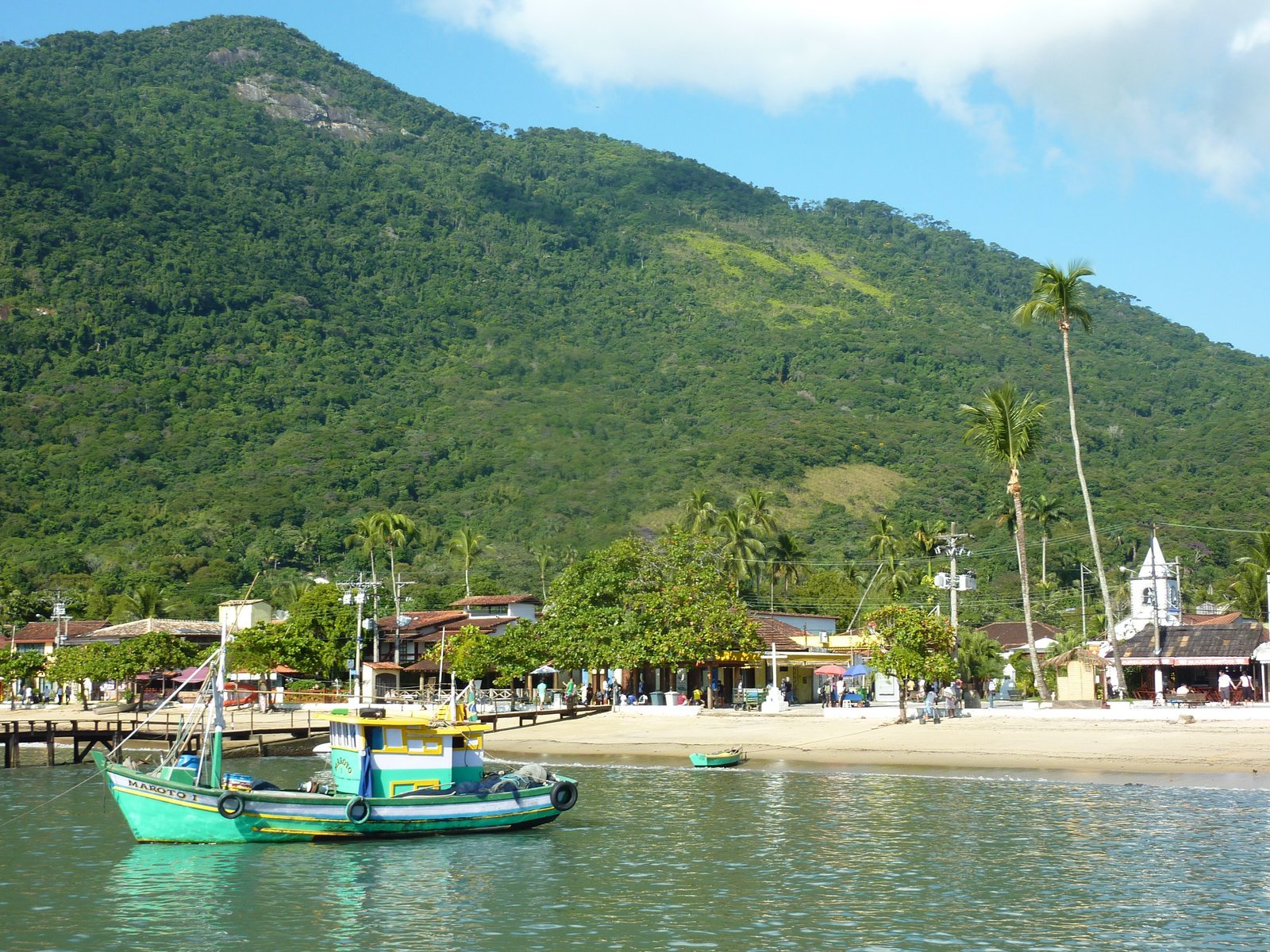
Abraão is the gateway and the centre of island life. It has the pier, a small white church near the beach, sandy streets lined with pousadas, restaurants, tour agencies and shops, and a beach-village atmosphere that gets lively at night in high season. Abraão beach itself is more harbour than swimming beach, with boats at anchor, but the waterfront is lovely for a stroll and for watching the sun set behind the mountains. Praia do Canto, right next door, is quieter.
The Abraão circuit: Lazareto and aqueduct
The easiest walk on the island is the Abraão Circuit, about 4 km and around 2 hours. It leaves the village along the shore, passes small neighbouring beaches, reaches the ruins of the Lazareto, built in 1884–1886, and continues to the stone aqueduct that supplied the complex, at the start of trail T01. The “Banco de D. Pedro” stone bench is along the way. It is a good outing for your arrival day or a late afternoon.
Lopes Mendes beach
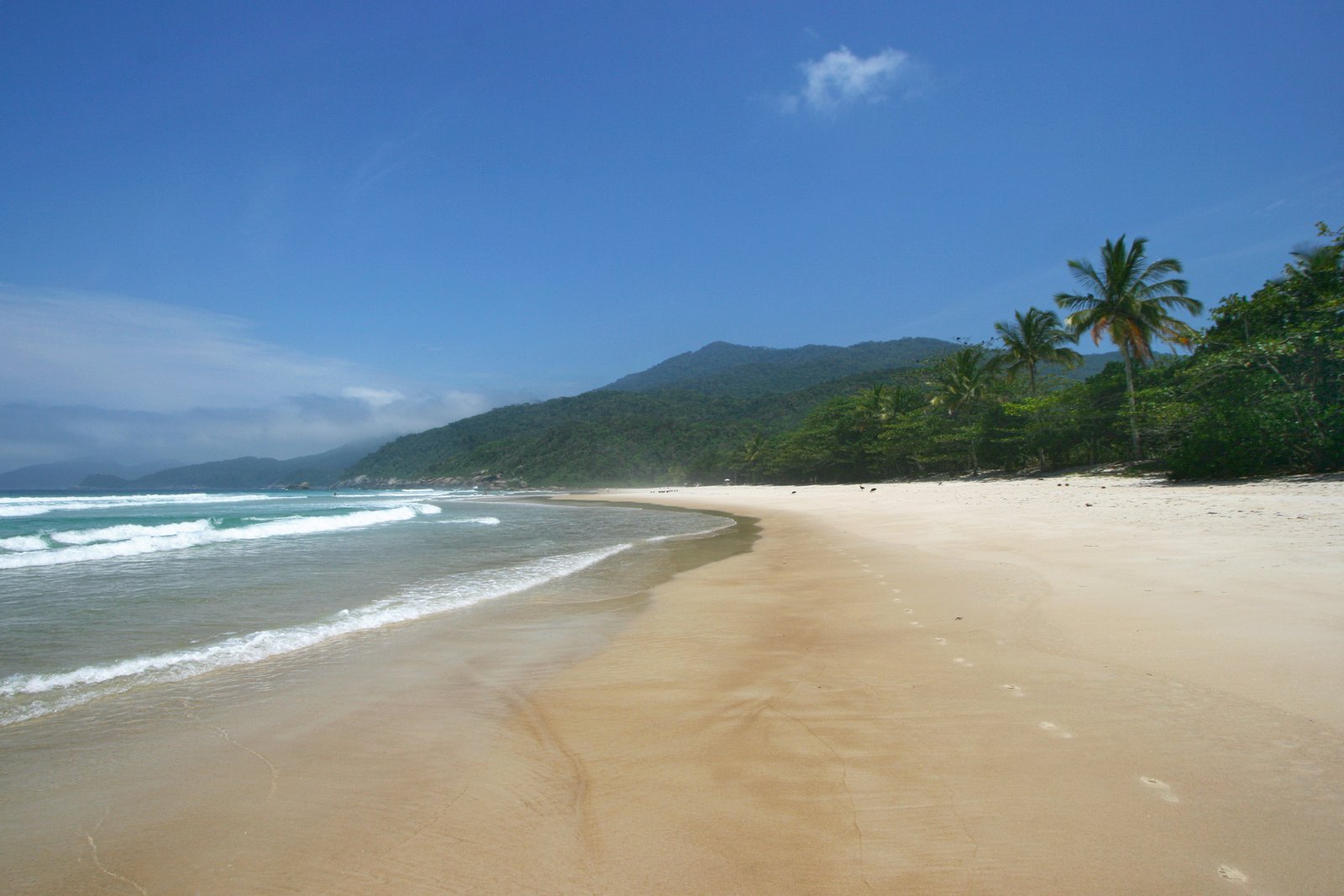
Lopes Mendes is the island’s most famous beach and often listed among the most beautiful in Brazil: about 3 km of fine white sand, sea in shades of green and blue, waves that draw surfers and not a single building. The beach is backed by coastal scrub and abricó trees that give shade. Because it faces the ocean the water is rougher: watch out for currents, especially with children.
There are two ways to get there. On foot, take trail T10 from Abraão to Praia do Pouso, about 5 km, then T11, 1.1 km, to Lopes Mendes; the return trip adds up to 13 to 14 km and, according to English Wikipedia, about 2 hours’ walk each way. By boat, water taxis and speedboats leave Abraão for Enseada das Palmas or Pouso, from where you only walk the short trail. You can combine the two: walk there and take a boat back. Boats back to Abraão usually leave between 2pm and 4pm; confirm the time with the boatman before you set off for the beach. There are no regular kiosks at Lopes Mendes: bring water, snacks and a bag for your rubbish.
Lagoa Azul and the schooner trip
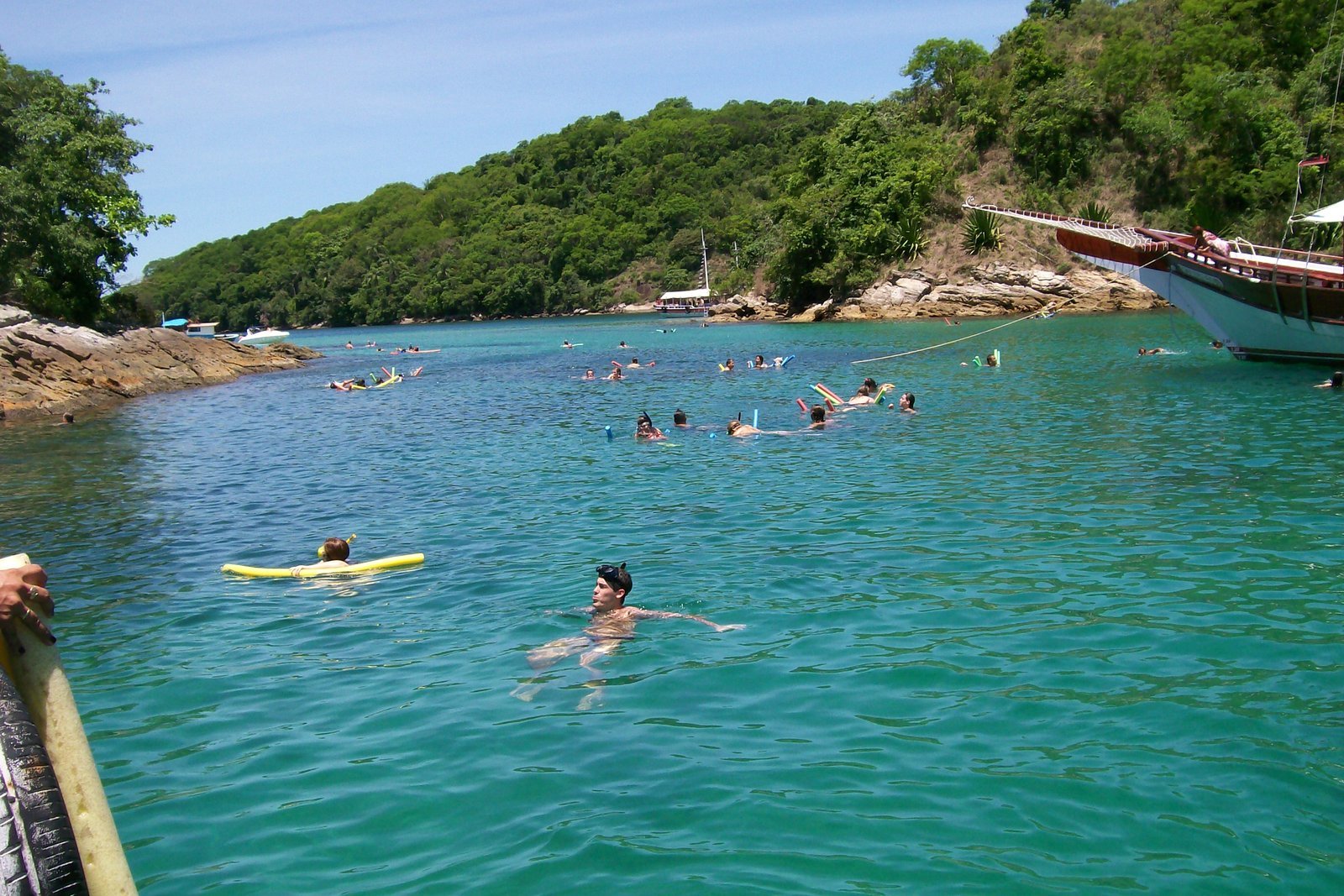
Despite the name, Lagoa Azul (“blue lagoon”) is not a lagoon but a shallow, crystal-clear stretch of water between the island’s north coast and some islets, sheltered from the waves, where boats stop for swimming and snorkelling. The very clear water full of fish makes it the busiest stop on the boat trips. Go early or avoid holidays: at midday in January dozens of boats share the same spot.
The classic schooner (escuna) trip leaves Abraão in the morning and stops at Lagoa Azul, at Praia do Japariz for lunch, and at Saco do Céu, a closed cove with still water. In October 2026 prices on operators’ websites ranged from R$90 to R$100 per person; one offer added a R$10.30 TurisAngra fee. Lunch is not included and costs R$40 to R$80.
Half-island and round-island speedboat tours
To see more in one day, take the half-island speedboat tour (meia volta), which usually follows the coast facing the mainland with stops such as Lagoa Azul, Freguesia de Santana, Saco do Céu and other coves, or the full round-island tour, which includes the ocean side when the sea allows. In October 2026 Adventure Boat advertised the half-island tour from R$160, and Nativos quoted R$150 to R$180 in low season and R$180 to R$250 in high season. The exact route varies from company to company; read the description before you pay.
Freguesia de Santana and Saco do Céu
Freguesia de Santana, one of the oldest settlements on the island, has the seaside Santana church and is a stop on many tours. Saco do Céu is a narrow, very calm cove surrounded by forest that turns into a mirror on windless days. You can walk there on trails T01 and T02, a long hike of about 18 km return, or go by boat.
Ilha Grande trails: distances from Abraão
The distances below are return trips from Vila do Abraão, according to the Ilha Grande portal (ilhagrande.com.br), and do not include walking around at the destination. Times vary a lot with fitness, heat and mud.
| Destination | Trails | Return | Notes |
|---|---|---|---|
| Abraão Circuit (Lazareto, aqueduct) | T1 circuit | 4 km | About 2 hours; the easiest |
| Feiticeira waterfall and beach | T01 + T02 | 12 km | Passes the Poção pool and the aqueduct |
| Lopes Mendes | T10 + T11 | 13 to 14 km | Pouso is 5 km away; T11 is 1.1 km |
| Pico do Papagaio | T14 + T13 | 12 km | Steep climb; guide recommended |
| Vila Dois Rios | T14 | 14 km | 7 km of dirt road each way |
| Caxadaço | T14 + T15 | 18 km | 20 km including Vila Dois Rios |
| Saco do Céu | T01 + T02 | 18 km | Long; a boat back helps |
| Parnaioca | T14 + T16 | 30 km | Needs an overnight stay |
| Bananal | T01 to T04 | 32 km | Needs an overnight stay |
For a bigger challenge you can hike all the way round the island, a route of about 70 km over five to seven days, staying overnight in villages and campsites. That figure comes from travel blogs and was not confirmed by an official source; the stretch between Aventureiro and Parnaioca, which passes through the Praia do Sul Biological Reserve, cannot be walked and has to be done by boat. Hiring an accredited guide is recommended.
Pico do Papagaio
Pico do Papagaio (“Parrot Peak”) is the island’s best-known summit, with a profile like a parrot’s head that you can see from Abraão. It is 982 m high according to Wikipedia and the Commons record; the Ilha Grande portal says 959 m. The island’s highest point is Pico da Pedra D’Água, at 1,031 m. Trail T13 leaves from Abraão, climbs steeply through the forest and ends on a rocky summit with a view over the whole bay when there are no clouds. The Ilha Grande portal advises against climbing without a guide: signage is poor and there are reports of hikers getting lost, mostly on the way down.
Many people climb before dawn to see the sunrise, but between 5pm and 7am the park rules require a guide accredited by INEA and the signed liability form. Bring a torch, a jacket and water; there is nothing to buy on the trail.
Vila Dois Rios and the Prison Museum
Dois Rios is on the ocean side, 7 km from Abraão along a dirt road through the forest, which is trail T14. The island’s prison stood here, and today the village hosts UERJ’s Centre for Environmental Studies and Sustainable Development. The highlight is the Museu do Cárcere (Prison Museum), part of the Ecomuseu Ilha Grande, which tells a hundred years of prison history on the island, from 1894 to 1994, with cells, documents and photographs. It is on Rua Amapá and opens Tuesday to Sunday, including holidays, from 10am to 4pm, according to the Ecomuseu website; phone +55 24 3361-9055. We could not confirm whether there is an entry charge.
Dois Rios beach is long, with pale sand and open sea. The village is managed in partnership with UERJ, has its own access rules and is not a tourist accommodation destination; plan to go and come back the same day.
Caxadaço
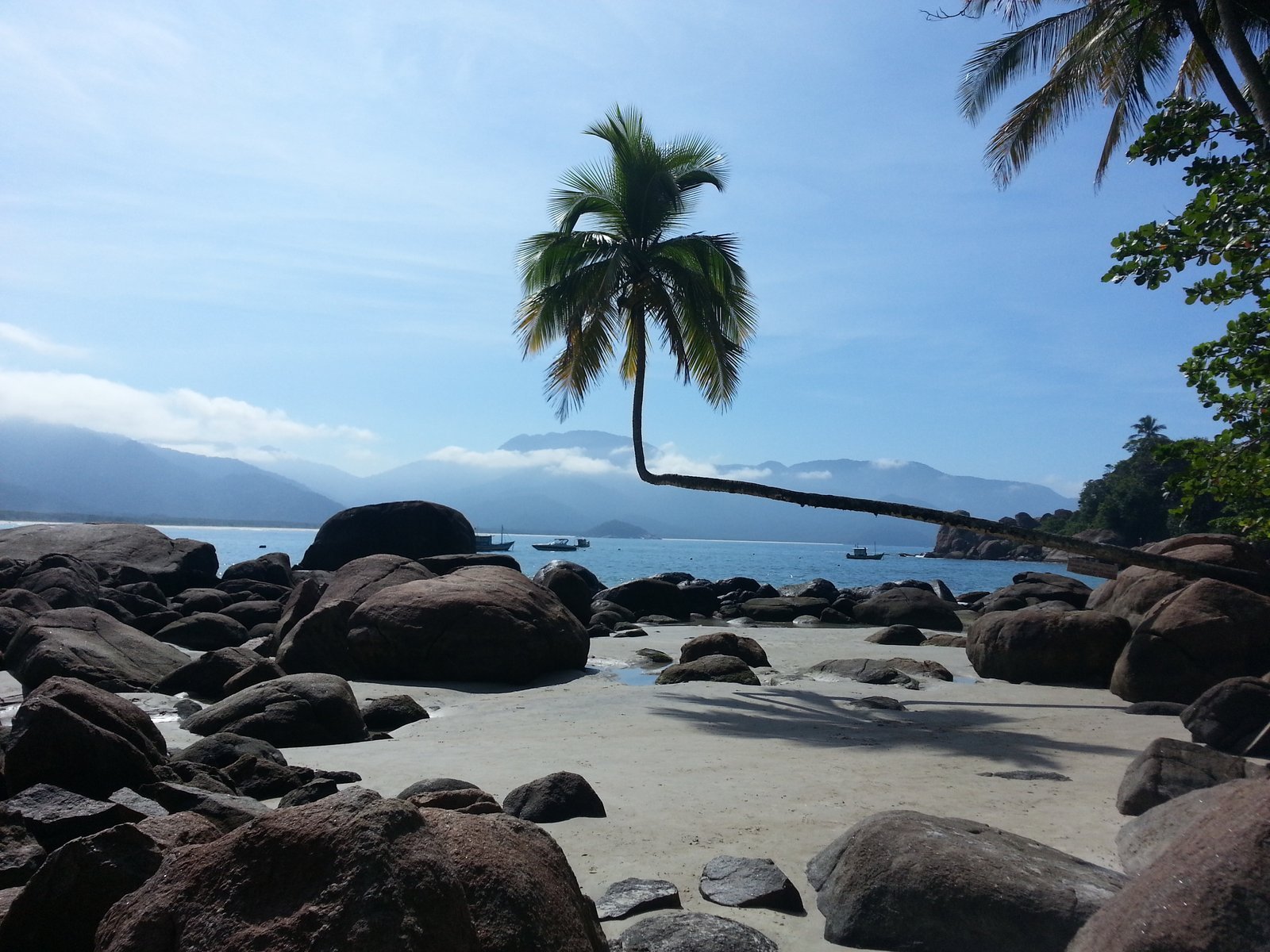
Praia do Caxadaço is a small cove of calm water on the ocean side, ringed by rocks, with good snorkelling. You reach it from Dois Rios on trail T15, about 18 km return from Abraão. The path from Caxadaço on to Praia de Santo Antônio is neither official nor signposted and is considered dangerous: go with a guide.
Praia do Aventureiro
Aventureiro is a caiçara village in the south of the island, facing the open sea, with a short beach and the famous palm tree that grows sideways over the rocks. Because it lies inside the Aventureiro reserve, visitor numbers are limited, the wristband from the Santa Luzia station is mandatory and overnight stays are allowed only at accredited campsites and lodgings (see the rules above). Access is by boat across open water, and the crossing depends on the weather; on rough days boats do not go.
Bananal, Araçatiba and Praia Vermelha
Further west, away from the bustle of Abraão, are fishing villages and quiet coves such as Bananal, where the sardine factories once operated, Araçatiba and Praia Vermelha, with calm water. Some of the pousadas listed below are on these beaches. This is the place for total peace, as long as you accept that getting there and back depends on boats and that facilities are few.
Castelhanos lighthouse and other beaches
The Farol dos Castelhanos lighthouse, on the eastern tip, is run by the Brazilian Navy and can be reached on a long trail, about 23 km return from Abraão, or by boat. To stay overnight near the lighthouse you need prior permission from the Navy, according to the Ilha Grande portal. Other well-known beaches include Palmas, Pouso, Santo Antônio, Parnaioca and Feiticeira, each with its own character. With 106 beaches counted by the city, it is worth asking your pousada which one is best on the day.
What to eat on Ilha Grande
Short answer: on Ilha Grande you eat a lot of fish and seafood cooked the caiçara way, such as grilled fish with plantain, moquecas (Brazilian seafood stews) and the catch of the day. Abraão has most of the restaurants, from simple places to pricier ones, and the smaller villages have beachfront restaurants that serve the tour boats. In October 2026 lunch at the tour stops cost R$40 to R$80.
Caiçara cooking on the Costa Verde blends the sea and the smallholding: fresh fish, plantain, cassava flour and seafood. Dishes such as azul-marinho, a fish stew with green banana that turns bluish, appear on menus in the region, but not every restaurant makes it. At tour stops such as Japariz, lunch is simple and charged separately. In Abraão you will also find pizzerias, açaí, ice-cream shops, cafés and vegetarian options. Prices are higher than on the mainland, because almost everything arrives by boat. To save money, choose a pousada with a generous breakfast and pack snacks for the trails.
Safety and practical tips for Ilha Grande
Short answer: Ilha Grande is a laid-back destination, but you need to take care on the trails, in the sea and with boat times. Start hikes early, bring water and a torch, do not take unofficial trails without a guide, respect the currents on the ocean side and confirm the last ferry or speedboat. Carry some cash and insect repellent.
On the trails
The trails cross dense forest, with steep climbs, rocks and mud after rain. Wear trainers or boots with good grip, and take at least 2 litres of water per person, sunscreen, repellent and a torch. Tell your pousada where you are going. Do not rely on your phone: there is no signal along many stretches. Be back before dark, because the forest is pitch black at night.
In the sea
On the ocean side, at Lopes Mendes, Dois Rios and Aventureiro, there are waves and currents. Swim close to shore and away from rocks, and do not go in after drinking. On boat trips, wear a life jacket if you cannot swim and do not jump in near propellers.
Rain and slopes
In summer, heavy rain can cause landslides and flash floods in rivers and waterfalls. If the Civil Defence issues an alert, avoid trails and waterfall swims.
Money and services
Carry some cash: boats, porters and small places do not always take cards, and we did not check the current situation of ATMs in Abraão. Outside Abraão facilities are minimal, with few shops: bring any personal medication.
Respect the island
Most of the island is protected. Take your rubbish back, do not feed animals, do not pull up plants and respect the villages’ quiet hours. Pets are not allowed in the conservation areas, which includes the park and its trails.
How much a trip to Ilha Grande costs in 2026
Short answer: the biggest costs on Ilha Grande are accommodation, boat trips and food, which costs more than on the mainland. With the prices checked for this guide, the ferry costs R$20.50 each way, the speedboat from Conceição de Jacareí R$50 to R$65 one way, the TTS tourist tax R$50 per person, the schooner trip to Lagoa Azul R$90 to R$100 and the half-island speedboat tour R$150 to R$250. We have not listed nightly rates because they change with every date.
| Item | Price in 2026 | Notes |
|---|---|---|
| Bus Rio (Novo Rio)–Angra, Costa Verde | R$55.40 (R$49.99 + R$5.41 boarding fee) | Return deal R$98; official table, October 2026 |
| Bus São Paulo (Tietê)–Angra | R$98.71 to R$363.97 | Primar and Reunidas Paulista, from conventional to full-flat sleeper; about 8h20 |
| Ferry Angra or Mangaratiba–Abraão | R$20.50 each way | Barcas Rio; bicycles free |
| Speedboat Conceição de Jacareí–Abraão | R$50 to R$65 one way; R$100 to R$110 return | Prices from official websites, with online deals |
| Water taxi Angra–Abraão | R$100 to R$180 return | According to Angra Notícias, 2026 |
| Transfer from Rio + speedboat | From R$130 | Combo advertised by an agency |
| Sustainable Tourism Tax (TTS) | R$50 per person; R$100 without proof of accommodation if you board in another municipality | Valid 30 days; exemptions for over-60s, children and others |
| Ilha Grande State Park | Free | No trail fees |
| Schooner trip to Lagoa Azul | R$90 to R$100 per person | Lunch extra; a TurisAngra fee may apply |
| Half-island speedboat tour | R$150 to R$250 per person | Depends on season and company |
| Lunch at a tour-stop restaurant | R$40 to R$80 | Single dish or set meal |
| Aventureiro wristband | Free | Collected at the Santa Luzia station |
| Prison Museum | Not confirmed | Tuesday to Sunday, 10am to 4pm |
As a rough guide, travelling from Rio by bus and speedboat costs under R$300 per person in transport and tax, there and back, before accommodation and food; that figure is our own estimate, adding up the prices in the table. To save money, travel midweek and outside Brazilian school holidays, take the ferry instead of a water taxi when the timetable suits you, choose hikes over paid tours and pick pousadas that include breakfast.
Ilha Grande itineraries: 2, 3, 4 and 5 days
Short answer: two days are enough for the Abraão Circuit and Lopes Mendes; three days add the schooner trip to Lagoa Azul; four days include Dois Rios, the Prison Museum and Caxadaço; five days finish with Pico do Papagaio or Aventureiro. Save ocean-side boat trips for calm days and long hikes for the mornings.
Ilha Grande in 2 days
- Day 1: arrive in the morning via Conceição de Jacareí or the Mangaratiba ferry; drop your bags at the pousada and walk the Abraão Circuit, with the Lazareto ruins and the aqueduct; late afternoon at Praia do Canto and dinner in the village.
- Day 2: early hike to Lopes Mendes on trails T10 and T11, or a water taxi to Pouso; beach until early afternoon and a boat back; speedboat to the mainland at the end of the day, after checking the last departure.
Ilha Grande in 3 days
- Day 1: arrival and the Abraão Circuit.
- Day 2: Lopes Mendes, walking there and taking a boat back.
- Day 3: schooner trip to Lagoa Azul, Japariz and Saco do Céu; back to the mainland in the afternoon.
Ilha Grande in 4 days
- Days 1 to 3: as in the three-day itinerary.
- Day 4: hike to Vila Dois Rios on trail T14, visit the Prison Museum, which opens Tuesday to Sunday, and swim at Dois Rios beach; if you still have energy, continue to Caxadaço on T15. For something easier, swap it for a half-island speedboat tour.
Ilha Grande in 5 days
- Days 1 to 4: as in the four-day itinerary.
- Day 5: climb Pico do Papagaio with an accredited guide, starting early, or take a boat to Aventureiro, collecting your wristband beforehand at the Santa Luzia station. Another option is to change base and spend a night on a remote beach such as Araçatiba, Praia Vermelha or Bananal.
With more time, Ilha Grande pairs well with Paraty, its neighbour along the Rio–Santos highway, and with Rio de Janeiro. See our Paraty travel guide to plan a trip along the whole Costa Verde.
Where to stay on Ilha Grande
Short answer: on a first visit, stay in Vila do Abraão or at Praia do Canto next door, so the pier, restaurants and trailheads are all within walking distance. If you want peace and quiet, choose a remote beach such as Praia Vermelha, Araçatiba or Bananal, knowing you will depend on boats. All the links below go to each property’s official website and were checked on 27 October 2026.
Before you book, bear the following in mind. In Abraão, pousadas on the main street can be noisy at night in high season. Those at Praia do Canto and on the hillsides are quieter but mean walking a few minutes with your luggage. On remote beaches, ask how the boat transfer works and what it costs, whether there is a generator or solar power and which meals are included. Over New Year, Carnival and public holidays, book early and read the cancellation policy. Remember that the TTS tourist tax is cheaper if you can prove at least two nights in licensed accommodation.
Pousada Naturalia (sea views, Praia do Canto)
Pousada Naturalia is at Praia do Canto, about a 15-minute walk from the Abraão pier. According to its official website it has 18 rooms, 16 with sea views, all with a balcony with a hammock and air conditioning, plus breakfast and afternoon tea. A good choice if you want quiet and a view without being far from the village.
Pousada Manacá (beachfront, Praia do Canto)
Pousada Manacá sits right on the sand at Praia do Canto and has belonged to the Cheret family since 2001, according to its official website. It has seven suites with air conditioning and Wi-Fi. Small and family-run, for waking up facing the sea.
Asalem (rustic, Praia da Crena)
Asalem is at Praia da Crena, on Abraão bay, about 8 minutes by water taxi or some 20 minutes’ walk from the village. Its official website presents it as deliberately rustic, with candlelit evenings. For anyone who wants to switch off completely.
Pousada Tropicana (central, Abraão beach)
Pousada Tropicana faces Abraão beach, 100 m from the pier and 30 m from the square, according to its official website. Rooms have air conditioning, TV and a safe. Practical if you arrive and leave by boat and want everything within walking distance.
Aquarela do Mar (small, Vila do Abraão)
Aquarela do Mar is in Abraão, 50 m from the beach, with nine rooms with balconies, three with sea views, according to its official website, which also shows its registration with Cadastur, Brazil’s official tourism register. A small pousada, good for couples.
Pousada Só Natureza (with pool, Vila do Abraão)
Pousada Só Natureza is in the centre of the village and has a swimming pool, something rare in Abraão. According to its official website it has been running for more than 23 years; the phone number given is +55 24 99303-9441. A good option for families.
Pousada Bugio Hostel (budget, Vila do Abraão)
Pousada Bugio Hostel is in the heart of Abraão, 3 minutes from the beach, and offers budget suites, according to its official website. The pick if you would rather spend less on a bed and more on boat trips.
Pousada Ponta da Barca (quiet, Praia Vermelha)
Pousada Ponta da Barca is at Praia Vermelha, a calm-water cove far from Abraão, and has a restaurant serving caiçara food, according to its official website. For travellers who want to be away from the crowds and do not mind relying on boats.
Pousada Convés (over the water, Araçatiba)
Pousada Convés has been in Araçatiba since 2003 and has five suites built over the sea, with solar power and a generator, and its own restaurant, according to its official website. A fishing-village experience with only a handful of guests.
Pousada Casa Nova (family-run, Bananal)
Pousada Casa Nova is on Praia do Bananal and is run by a local family. Its official website tells the story of Bananal’s sardine factories and offers packages with meals, tours and transfers included. Good for getting to know the island’s traditional side.
If you are travelling with a dog, remember that pets are not allowed in the island’s conservation areas, including the park trails. Check each pousada’s pet policy directly before booking.
Video: Paraty and Ilha Grande, World Heritage in Brazil
This short bilingual video from Brazil’s Permanent Delegation to UNESCO presents Paraty and Ilha Grande, the mixed cultural and natural World Heritage Site inscribed in 2019. It runs for about a minute.
Frequently asked questions about Ilha Grande
What is the best way to get from Rio de Janeiro to Ilha Grande?
The most practical way is by bus, transfer or car to Conceição de Jacareí, then a 15 to 20 minute speedboat to Abraão for R$50 to R$65 one way. Alternatively, take the Costa Verde bus to Angra for R$55.40 and the R$20.50 ferry, which leaves at 3:30pm on weekdays and 1:30pm at weekends. There is also a ferry from Mangaratiba at 8am.
How do I get from São Paulo to Ilha Grande?
By bus, go from São Paulo’s Tietê terminal to Angra dos Reis, a trip of about 8 hours 20 minutes, with fares from R$98.71 to R$363.97 in October 2026, then cross by ferry, speedboat or water taxi. By car it is about 350 km to Angra, via the Via Dutra and the Saturnino Braga road or along the coast via Paraty.
Is there a tourist tax for Ilha Grande?
Yes. Since 1 June 2026 Angra dos Reis has charged a Sustainable Tourism Tax of R$50 per person, valid for 30 days, paid on the Viva Angra website. If you board in another municipality you pay R$50 with proof of two nights in licensed accommodation, or R$100 without it. People over 60, children and some other groups are exempt. Entry to the state park is free.
Are there cars on Ilha Grande?
No. There are no private cars and no paved roads on Ilha Grande; the only vehicles are service vehicles on the dirt road to Dois Rios. You get around on foot, along the trails, or by boat, and your car stays in a paid car park on the mainland.
When is the best time to visit Ilha Grande?
April to June and September to November, outside public holidays, bring less rain than summer, fewer people and lower prices. Winter is the driest season, good for hiking, but the sea is cooler. From December to March the sea is warm, but it rains more and everything is crowded.
How many days do you need on Ilha Grande?
Two days cover the Abraão Circuit and Lopes Mendes, but three to four days are better, adding the Lagoa Azul schooner trip, Dois Rios and the Prison Museum. With five days you can climb Pico do Papagaio with a guide, visit Aventureiro or spend a night on a remote beach.
How do I get to Lopes Mendes beach?
On foot, take trail T10 to Praia do Pouso, about 5 km, then T11, 1.1 km, a total of 13 to 14 km return from Abraão. By boat, water taxis drop you at Pouso or Palmas, and from there you only walk the short trail. Boats back usually leave between 2pm and 4pm.
Do I need a guide to climb Pico do Papagaio?
Between 5pm and 7am, yes: INEA requires an accredited guide and the signed Term of Responsibility and Acknowledgement of Risk. In daytime a guide is not mandatory but is recommended, because signage is poor and hikers have got lost. It is about 12 km return from Abraão.
How do I visit Praia do Aventureiro?
Collect the free wristband and sign the commitment form at the Santa Luzia station in Angra, open 7am to 7pm, and go on a boat licensed for the open sea, since there is no scheduled service. Visitor numbers are limited, and overnight stays are allowed only at accredited campsites and lodgings in the Aventureiro reserve.
Where should I stay on Ilha Grande?
On a first visit, stay in Vila do Abraão or at Praia do Canto, so the pier, restaurants and trails are within walking distance. For peace and quiet, pick a remote beach such as Praia Vermelha, Araçatiba or Bananal, which depend on boats. This guide lists ten pousadas linked to their official websites, checked in October 2026.
Is Ilha Grande worth visiting?
Yes, especially if you love nature and do not mind walking. It is rare to find, so close to Rio, an island with no cars, real rainforest, empty beaches and such a striking history. The downsides are the summer crowds in Abraão, heavy rain from December to March, the new municipal tourist tax and boat logistics that require you to watch the timetables. Go outside high season if you can, stay at least three days and set aside a morning for Lopes Mendes.
If you are planning a longer trip around the state, see our Paraty travel guide, our Rio de Janeiro travel guide, our Búzios travel guide and our Arraial do Cabo travel guide. Coming from São Paulo? Our São Paulo travel guide helps you plan the journey there and back.
Sources
- Angra dos Reis city hall: Viva Angra and Sustainable Tourism Tax rules (rates, validity, exemptions and day trips) (Portuguese)
- Viva Angra: official TTS system and transparency portal (June to September 2026 revenue)
- Visite Angra, the city’s tourism portal: Ilha Grande and Praia do Aventureiro (area, number of beaches, Aventureiro rules, Santa Luzia station)
- INEA: Ilha Grande State Park and Aventureiro Sustainable Development Reserve (decrees, area, management plan and visitor rules)
- Barcas Rio: Angra dos Reis–Ilha Grande line and lines, timetables and fares
- Angra Notícias: ferry and water-taxi times and fares, TCE-RJ suspends review of the TTS and Pico do Papagaio rules
- O Globo: what a visit to Ilha Grande costs with the new tax
- A Voz da Cidade: INEA summer operation and Aventureiro capacity
- ABIH-RJ: TurisAngra controls visits to Praia do Aventureiro
- Ilha Grande portal: trails from Abraão (distances, numbering and warnings)
- Ecomuseu Ilha Grande (UERJ): Prison Museum (address, opening hours and contact)
- Costa Verde Transportes: fare table and boarding points; CheckMyBus and DeÔnibus for bus times and prices
- Porto Real Turismo: Conceição de Jacareí–Abraão crossing; Translados Conceição; Travessia Ilha Grande
- UNESCO: Paraty and Ilha Grande – Culture and Biodiversity
- Climate-Data.org: Angra dos Reis climate (model averages, not INMET normals)
- Wikipedia: Ilha Grande (Portuguese), Cândido Mendes Penal Institute, Praia de Lopes Mendes and Ilha Grande (English) (history and general data, cross-checked against official sources)