Paraty is a small colonial town on the southern tip of Rio de Janeiro state’s coastline, squeezed between the forested Serra da Bocaina mountains and the island-studded Bay of Ilha Grande. It sits roughly 250 km from Rio de Janeiro and about 300 km from São Paulo, which makes it the most popular side trip from either city for travellers who want something slower than the big beaches. The historic centre is a grid of uneven stone streets lined with whitewashed houses and brightly painted doors. In the 1700s it was the port that shipped a large share of Brazil’s gold to Portugal. Around it you find dozens of islands, fishing villages, Atlantic Forest trails, waterfalls and cachaça distilleries. Since 2019 Paraty and Ilha Grande have together formed Brazil’s first “mixed” UNESCO World Heritage site, listed for both culture and nature.
This guide is written for international visitors and was checked on 26 October 2026. It covers how to get to Paraty from Rio’s airports and from São Paulo, what the cobbled centre is really like on foot, what the schooner and speedboat tours cost, how to reach Praia do Sono and the Mamanguá inlet, the 2026 dates of the FLIP literary festival and the Festa do Divino, itineraries from two to five days, and ten real hotels and pousadas, each linked to its official website, with no affiliate links. Prices change quickly in Brazilian resort towns, so where there was any doubt we give a range and a reminder to check before you go. Prices are in Brazilian reais (R$).
Quick facts: Paraty (Rio de Janeiro state, Brazil)
- What it is: a colonial port town and municipality on the Costa Verde (“Green Coast”) of Rio de Janeiro state, with 45,243 residents in the 2022 IBGE census (an estimated 47,668 in 2025) and 924 km² of territory, mostly protected Atlantic Forest.
- Heritage: the historic centre was listed by Brazil’s heritage institute IPHAN in 1958, and the municipality became a National Monument in 1966. “Paraty and Ilha Grande: Culture and Biodiversity” joined the UNESCO World Heritage List on 5 July 2019. Paraty is also a UNESCO Creative City of Gastronomy.
- Distances: about 240 to 250 km from Rio de Janeiro on the BR-101 coastal highway (around 4 hours without traffic); about 300 km from São Paulo (4.5 to 5 hours). The nearest airport with scheduled flights is Rio de Janeiro-Galeão (GIG).
- Buses: Costa Verde runs from Rio’s Novo Rio bus station (about 4h40); Reunidas Paulista and Primar run from São Paulo’s Tietê terminal (6 to 7 hours). Local Colitur buses link Paraty’s bus station with Trindade, Laranjeiras and Paraty-Mirim; the fare to Trindade was R$5.00 in October 2026.
- Historic centre: closed to cars and paved with large, uneven stones. Bring trainers or sturdy sandals and leave the heels at home. On very high full-moon tides, the sea briefly floods some streets, as it always has.
- Entry fee: in October 2026 private cars paid no tourist or environmental fee to enter Paraty; a bill on the subject was being debated by the town council. Tour buses and vans need prior authorisation from the town hall.
- Best time: April to September is much drier (60 to 150 mm of rain a month) and best for hiking and boat trips; December to March is hotter with warmer sea, but it rains on more than half the days.
- Typical costs: schooner tour from R$110 per person (about 5 hours, up to four stops); speedboat tour from R$200 per person; boat from Laranjeiras to Praia do Sono R$60 each way; the two federal museums in the centre are free.
- How long to stay: 2 days for the old town and one boat trip; 3 to 4 days to add Trindade, Praia do Sono or Mamanguá; 5 days to fit in waterfalls, distilleries and the Gold Trail without rushing.
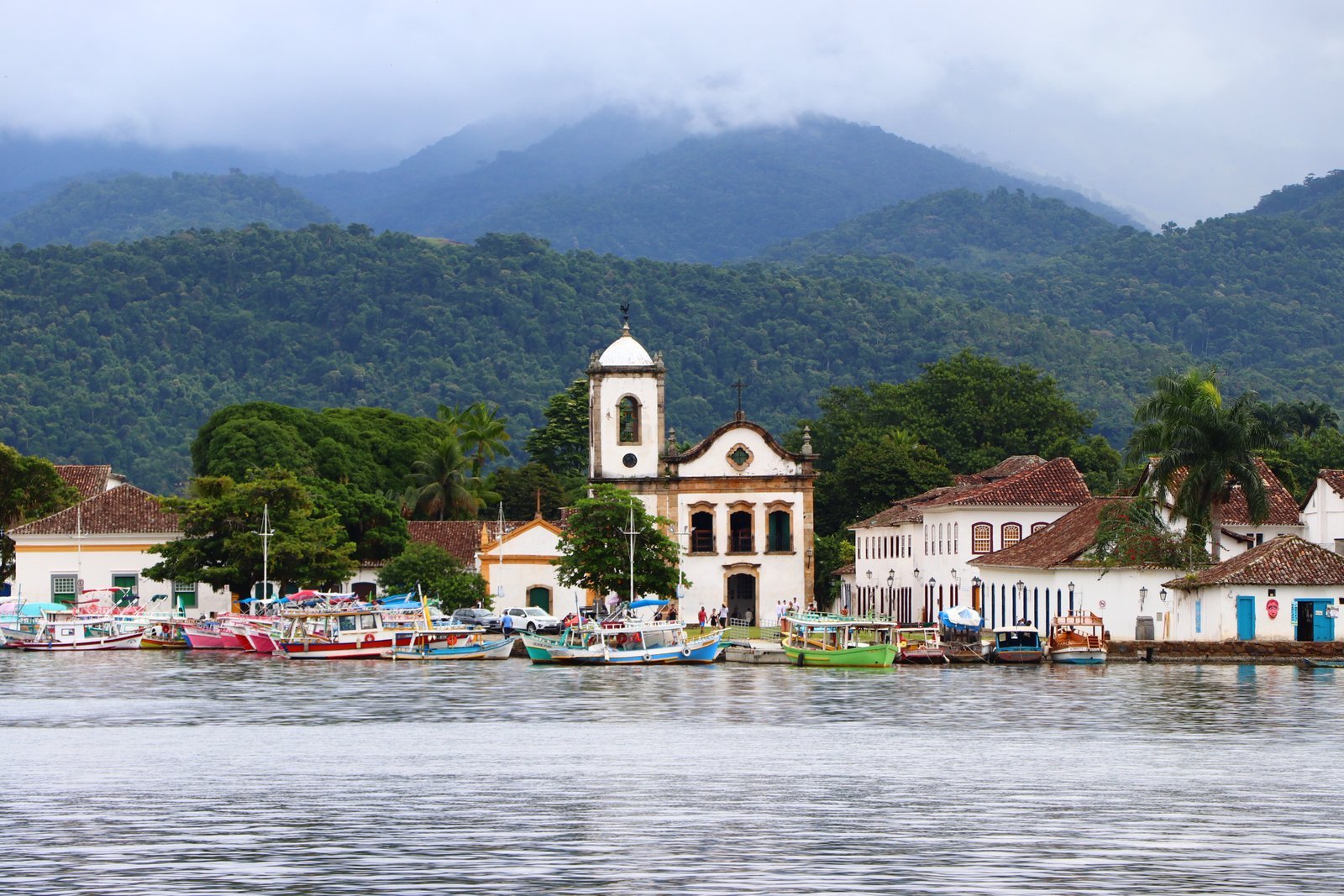
A short history of Paraty: from the Gold Road to World Heritage
Short answer: Paraty began as a Portuguese settlement on land of the Guaianá people, became an official town (vila) by royal charter on 28 February 1667, and grew rich in the 1700s as the seaport for gold coming down from Minas Gerais along the Caminho do Ouro, the Gold Road. When the gold was rerouted overland straight to Rio, the town stalled. That long isolation preserved its colonial streets, which IPHAN protected in 1958, and led to World Heritage status in 2019, shared with Ilha Grande.
Before the Portuguese arrived, the strip between the mountains and the sea was Indigenous territory, and the path that climbed the coastal range towards the Paraíba Valley was known as the Guaianá Trail. Settlers moved in at the end of the 16th and start of the 17th centuries. Sources disagree on an exact founding date, but the official milestone is the royal charter of 28 February 1667 that made the settlement a town called Vila de Nossa Senhora dos Remédios de Paraty. Our Lady of Remedies is still the patron saint, and the main church (Matriz) bears her name.
The gold port
Everything changed at the end of the 17th century, when gold was discovered in Minas Gerais. The shortest route from the mines to the sea ran through the Paraíba Valley, down the mountains along the old Indigenous path and into Paraty, where the gold was loaded onto boats for Rio de Janeiro and then Lisbon. That route, the Caminho Velho (Old Road), was widened and paved with stone in many places. Today it is called the Caminho do Ouro, and a stretch near the Penha neighbourhood can be walked with a guide.
To control the gold and collect the “fifth”, the Crown’s 20 per cent tax, Paraty received the first gold registry office in 1703. The same roads carried goods up to the mines and enslaved Africans who were forced to work in the mines, on the sugar estates and in the port. You can read the town’s social history in its churches. Santa Rita (1722) was built by free people of mixed race; Nossa Senhora do Rosário e São Benedito (1725) by enslaved Black people; Nossa Senhora das Dores (1800) was the church of the local elite; and the Matriz of Nossa Senhora dos Remédios, begun in the 17th century, was only completed in 1873.
The decline that saved the town
Early in the 18th century the Caminho Novo (New Road) opened, linking the mines directly to Rio by land. Paraty lost its monopoly but stayed busy with trade, with cachaça, already famous in colonial times, and later with coffee from the Paraíba Valley, which also came down the mountains to be shipped. Paraty was raised to the status of city by provincial law in 1844.
The final blow was the railway. Once trains connected the Paraíba Valley to Rio in the second half of the 19th century, and slavery ended soon after, the port lost its purpose. The population fell, many houses stood empty, and for almost a hundred years Paraty was cut off, reachable mostly by sea. Nobody had the money to pull down the old townhouses and build anything modern, which is why the 18th-century street plan survived almost untouched into the 20th century.
Rediscovery
Rediscovery began with conservation. The ensemble was declared a state historic monument in 1945. On 13 February 1958 IPHAN listed the town’s architectural and landscape ensemble, and a 1966 federal decree made the whole municipality a National Monument. A further listing in 1974 extended protection to the surrounding landscape.
The road to Cunha, which climbs towards São Paulo state, opened in the 1950s, but the real turning point was the Rio-Santos highway (BR-101), which reached Paraty in 1974. Artists, backpackers and weekenders followed, then international tourism. Trindade, a fishing village 25 km from the centre, became a hippie hideaway in the 1970s and the scene of a long fight between local caiçara families (the traditional coastal people of this region) and a company that wanted to turn the area into a luxury development, until an agreement secured the villagers’ land.
Paraty and Ilha Grande on the UNESCO list
On 5 July 2019, meeting in Baku, Azerbaijan, the UNESCO World Heritage Committee inscribed “Paraty and Ilha Grande: Culture and Biodiversity”. It was Brazil’s first mixed site, recognised for both cultural and natural value. The property covers more than 150,000 hectares, surrounded by an even larger buffer zone, and has six components: Paraty’s historic centre, Morro da Vila Velha with the remains of the Defensor Perpétuo fort, Serra da Bocaina National Park, the Cairuçu Environmental Protection Area, Ilha Grande State Park and the Praia do Sul Biological Reserve. A stretch of the Gold Road inside the national park is part of the property.
UNESCO did not just reward pretty houses. It highlighted how caiçara, quilombola (communities descended from escaped and freed enslaved people) and Guarani Indigenous communities keep traditional ways of life inside one of the best-preserved pieces of Atlantic Forest, with dugout canoes, artisanal fishing and religious festivals. So to really see Paraty, get out of the centre: visit a fishing beach on the Juatinga peninsula, eat at a quilombo, walk up the Gold Road.
Paraty is also part of the UNESCO Creative Cities Network for gastronomy, which recognises caiçara cooking (fish, plantain and cassava flour) and the local distilling tradition. In January 2024 Brazil’s industrial property office, INPI, upgraded Paraty cachaça’s geographical indication to a Designation of Origin.
When to visit Paraty: weather, rain and seasons
Short answer: if you want sunshine and dry trails, the best time to visit Paraty is April to September, when there is far less rain and clear days are common. Summer (December to March) is hotter with a warmer sea, but it is also the wettest season, with near-daily showers and slippery trails. For events, note the Festa do Divino in May or June, the FLIP literary festival in July and the Cachaça Festival in August. Remember that seasons are reversed from the northern hemisphere: July is mid-winter here.
Paraty has a humid tropical climate, and the mountains right behind town trap clouds blowing in from the sea. That makes it one of the rainiest parts of the Rio coast, with more than 1,800 mm a year. Most rain falls in summer, usually as late-afternoon storms, though January and February can bring days of steady rain. In winter the mornings are fresh and the sea is cooler, but visibility for snorkelling is often better and the waterfalls are quieter.
Brazil’s national weather service, INMET, has no station with climate normals in Paraty. The table below uses averages from the Weather Atlas service, which are model estimates rather than official measurements. Treat them as a guide to the rhythm of the seasons, not as a forecast.
| Month | Avg high / low (°C) | Rain (mm) | Rainy days | Sea (°C) |
|---|---|---|---|---|
| January | 29 / 19 | 266 | 19 | 25.8 |
| February | 29 / 19 | 245 | 16 | 25.9 |
| March | 29 / 19 | 225 | 15 | 26.3 |
| April | 27 / 17 | 148 | 13 | 25.8 |
| May | 25 / 14 | 89 | 11 | 24.3 |
| June | 24 / 12 | 66 | 9 | 23.0 |
| July | 23 / 11 | 62 | 9 | 21.8 |
| August | 25 / 12 | 64 | 9 | 21.9 |
| September | 25 / 14 | 91 | 11 | 21.3 |
| October | 25 / 16 | 148 | 16 | 22.7 |
| November | 27 / 17 | 190 | 17 | 23.2 |
| December | 28 / 18 | 254 | 20 | 24.4 |
| Year | 26 / 16 (average) | 1,848 | 165 | 23.9 (average) |
Summer: December to March
This is Brazilian beach season and school holidays. Pousadas in the centre and in Trindade fill up for New Year’s Eve, Carnival and January weekends, and prices climb. The sea reaches about 26 °C, perfect for boat trips, but leave a spare day in your plan for rain. Trails such as the one to Praia do Sono and the climb up Pão de Açúcar in Mamanguá turn muddy after storms. After heavy rain, waterfalls can see flash floods (cabeça d’água): if the water turns brown or rises suddenly, get out at once.
Autumn and winter: April to September
For many people this is the best time. Rainfall drops to 60 to 150 mm a month, mornings are clear and temperatures range from about 11 °C to 27 °C. The sea cools to 21 or 22 °C, refreshing rather than cold if you are used to European or North American beaches. The town’s three best-known events happen in this period, so prices rise on those weekends. Outside them, May, June, August and September are among the best months to enjoy Paraty with fewer people.
Spring: October and November
Rain picks up again and the sea slowly warms. Midweek prices are often lower, although Brazilian public holidays on 12 October, 2 November and 15 November bring weekend crowds from Rio and São Paulo.
Festivals and events in 2026
The Festa do Divino Espírito Santo (Feast of the Holy Spirit) is Paraty’s biggest religious festival, celebrated since the 18th century. It is tied to Pentecost, so the date moves every year. In 2026 it ran from 15 to 24 May, with ten days of novenas, processions, the ribbon dance, the Xiba Cateretê folk dance, the traditional sharing of meat and sweets with residents, and the crowning of the “Emperor of the Divine” on Saturday 23 May. For 2027, check the dates with the parish and the town hall.
The Paraty International Literary Festival, known as FLIP, has run since 2003 and brings writers from around the world. The 2026 edition ran from 22 to 26 July and honoured the poet Orides Fontela. The main sessions are ticketed and in Portuguese, but the whole town hosts a free fringe programme in partner houses. Accommodation sells out months ahead.
The Paraty Cachaça, Culture and Flavours Festival brought the region’s distilleries together from 20 to 23 August 2026 on the Areal do Pontal, with free entry, concerts and tastings. Every May since 2009 the town also hosts the Bourbon Festival Paraty, a jazz and blues event. Dates and programmes change every year, so always check the town hall’s and organisers’ websites.
How to get to Paraty from Rio de Janeiro and São Paulo
Short answer: Paraty has no scheduled flights. Most international visitors fly into Rio de Janeiro (Galeão, GIG) and travel about 240 to 250 km along the BR-101 coastal highway, roughly 4 hours by car without traffic or about 4h40 by direct bus from Rio’s Novo Rio bus station. From São Paulo it is about 300 km, 4.5 to 5 hours by car or 6 to 7 hours by direct bus from the Tietê terminal. Shared door-to-door transfers from Galeão airport cost about R$300 to R$460 per person.
Getting to Paraty is part of the trip. Both main roads run between the mountains and the sea, with views over bays, islands and beaches, but also with bends, single-lane stretches and lorries. Leave early, avoid driving at night if you don’t know the road, and expect jams leaving Rio and on the Serra das Araras before long weekends. If you are planning a wider route, our guide on how to get around Brazil covers flights, buses and car hire across the country, and our Brazil visa requirements page explains who needs a visa before flying in.
Flying in: Galeão, Santos Dumont or São Paulo
Paraty has a small airfield with no scheduled commercial flights, used only by air taxis and private planes. Long-haul flights land at Rio de Janeiro-Galeão (GIG), about 250 km from Paraty. Rio’s downtown airport, Santos Dumont (SDU), handles domestic flights and is handy if you are connecting from elsewhere in Brazil. From either airport you can hire a car, take a transfer or get to the Novo Rio bus station for the bus. Going from Galeão by bus means first getting to Novo Rio, which adds an hour or more.
São Paulo-Guarulhos (GRU) is Brazil’s biggest international gateway and also works, especially if you want to combine Paraty with São Paulo’s north coast. From GRU, the drive down via Taubaté and Ubatuba takes around 4 to 5 hours without traffic.
Airport transfers
Several local operators run shared transfers from Galeão to Paraty hotels. In the quotes we checked for this guide, prices ranged from about R$300 to R$460 per person, with a minimum of two passengers and around 5 hours on the road including drop-offs. Private transfers cost more but leave when you want. Book ahead, give your flight number, and agree what happens if the flight is late.
Driving from Rio de Janeiro
There is just one route: Avenida Brasil, then the Rio-Santos highway (BR-101) along the Costa Verde, through Itaguaí, Mangaratiba and Angra dos Reis. The tourism site paraty.com.br puts it at 249 km and about 3h47; the federal parks agency ICMBio says around 240 km. In practice, with a meal stop, allow 4 to 5 hours. There are petrol stations along the way, though fewer between Angra and Paraty. The road has speed cameras and lots of speed bumps through villages, so stick to the limits.
Driving in Brazil as a visitor is manageable on this route, but be aware that Brazilian drivers overtake aggressively on two-lane roads, that the road can be dark and foggy at night, and that rental cars are not allowed into Paraty’s historic centre. Choose accommodation with parking or budget for a car park.
Driving from São Paulo
There are three usual routes. The most popular takes the Ayrton Senna or Dutra highway to São José dos Campos, the Tamoios highway down to Caraguatatuba, then the BR-101 through Ubatuba to Paraty: about 300 km and nearly 5 hours. The second takes the Dutra to Taubaté and the Oswaldo Cruz road down the mountains to Ubatuba: about 298 km, just over 4 hours with no traffic. The third comes down the Paraty-Cunha road (RJ-165) from Guaratinguetá and Cunha: about 269 km and 4 hours.
A word of warning on the Cunha road. The roughly 10 km stretch that crosses Serra da Bocaina National Park is narrow and steep, and parts shrink to a single lane. Buses and lorries are banned. It is a beautiful road with viewpoints and distilleries, but it is not for anyone in a hurry, and you should not drive it at night in fog or heavy rain. The route via the Imigrantes highway and São Paulo’s south coast is the longest, at more than 350 km and almost 7 hours.
Buses from Rio and São Paulo
From Rio, Viação Costa Verde leaves the Novo Rio bus station several times a day, from early morning to night. The trip takes about 4h40, and fares on ticket-sales websites in October 2026 were between R$121 and R$137. From São Paulo’s Tietê terminal, Reunidas Paulista takes about 6h40 with fares of R$110 to R$167, and Primar takes about 6h10 with fares of R$81 to R$109. Prices vary by day and departure; buy ahead for holidays, because buses fill up. Brazilian long-distance buses are generally comfortable, with air conditioning and reclining seats, but bring a jumper because the air conditioning is cold.
There is no known direct bus from Belo Horizonte; the usual option is a bus to Angra dos Reis and then Colitur’s Angra-Paraty service. Paraty’s bus station is on Rua Jango Pádua, about a 10-minute walk from the historic centre.
Tour buses and vans: the town hall’s rule
Tour buses and vans arriving in Paraty need prior authorisation from the town hall and pay a fee to circulate and park. If you book a tour, this is the operator’s job, but it is worth checking that they have the permit. For private cars, there was no entry fee in force in October 2026: a bill creating an environmental preservation fee was being discussed by the town council without set amounts, according to a January 2026 report in the newspaper Folha de S.Paulo. Check the town hall website before travelling in case anything changes.
Getting around Paraty
Short answer: you explore the historic centre on foot, since it is closed to cars. For beaches and villages elsewhere in the municipality, local Colitur buses leave from the bus station for Trindade, Laranjeiras and Vila Oratório (for Praia do Sono), Paraty-Mirim and Penha (for the waterfalls); the fare to Trindade was R$5.00. For islands and beaches only reachable by sea, you go by schooner, speedboat or fishing boat from the town quay.
A car helps for the waterfalls on the Cunha road and the distilleries, but in the centre it is just a nuisance. Leave it at your pousada or in a car park and forget about it while you are in the old town. A January 2026 Folha report quoted around R$50 a day at private car parks near the centre and R$3 an hour for street parking. After a federal court ruling in November 2025 in a case brought by IPHAN, the trend is to remove parked cars from the protected area, so check where parking is allowed before you arrive.
Colitur local buses
Colitur is the municipal bus company. Line 25 to Trindade leaves the bus station roughly every hour, from 5:15 am to 10:30 pm on weekdays and 6 am to 10:30 pm at weekends. The company also runs lines to Vila Oratório and Laranjeiras, to Paraty-Mirim via the Quilombo do Cabral, and to Penha. Timetables change in high season, so check on the Colitur website or at the bus station ticket desk before setting out. Carry cash in small notes for the fare.
Taxis, ride-hailing and bikes
There are taxi ranks at the bus station and at the entrance to the centre, and ride-hailing apps work in the urban area, with fewer cars at night and in outlying districts. For Trindade or Paraty-Mirim, agree the fare before you go. The centre and nearby neighbourhoods are flat and you can hire bicycles, but the historic centre’s stones are tough going on two wheels.
Boats: schooners, speedboats and fishing boats
The sea is Paraty’s main road. From the quay next to the historic centre you will find schooners (escunas), large wooden tour boats, and faster speedboats (lanchas), as well as fishermen’s boats and water taxis to specific beaches. Departures, prices and tips are covered in the boat-tour section below.
Things to do in Paraty’s historic centre
Short answer: wander the historic centre slowly, by day and again at night. See the four colonial churches, especially Santa Rita at the water’s edge, visit the two federal museums, which are free, notice how the streets were designed to let the tide in and out, and save late afternoon for the quay and the evening for restaurants and live music. You can see the highlights in a day, but the charm lies in coming back more than once.
The protected centre is a grid of straight streets paved with “pé-de-moleque” stones, single-storey houses and whitewashed townhouses with doors and shutters in blue, green, yellow and red, and lanterns on the corners. The stones are large and irregular, laid to resist water and ox carts, and nobody walks fast on them. Wheeled suitcases suffer; ask your pousada in advance whether someone can help with luggage. Wheelchair and pushchair users will find the centre genuinely difficult.
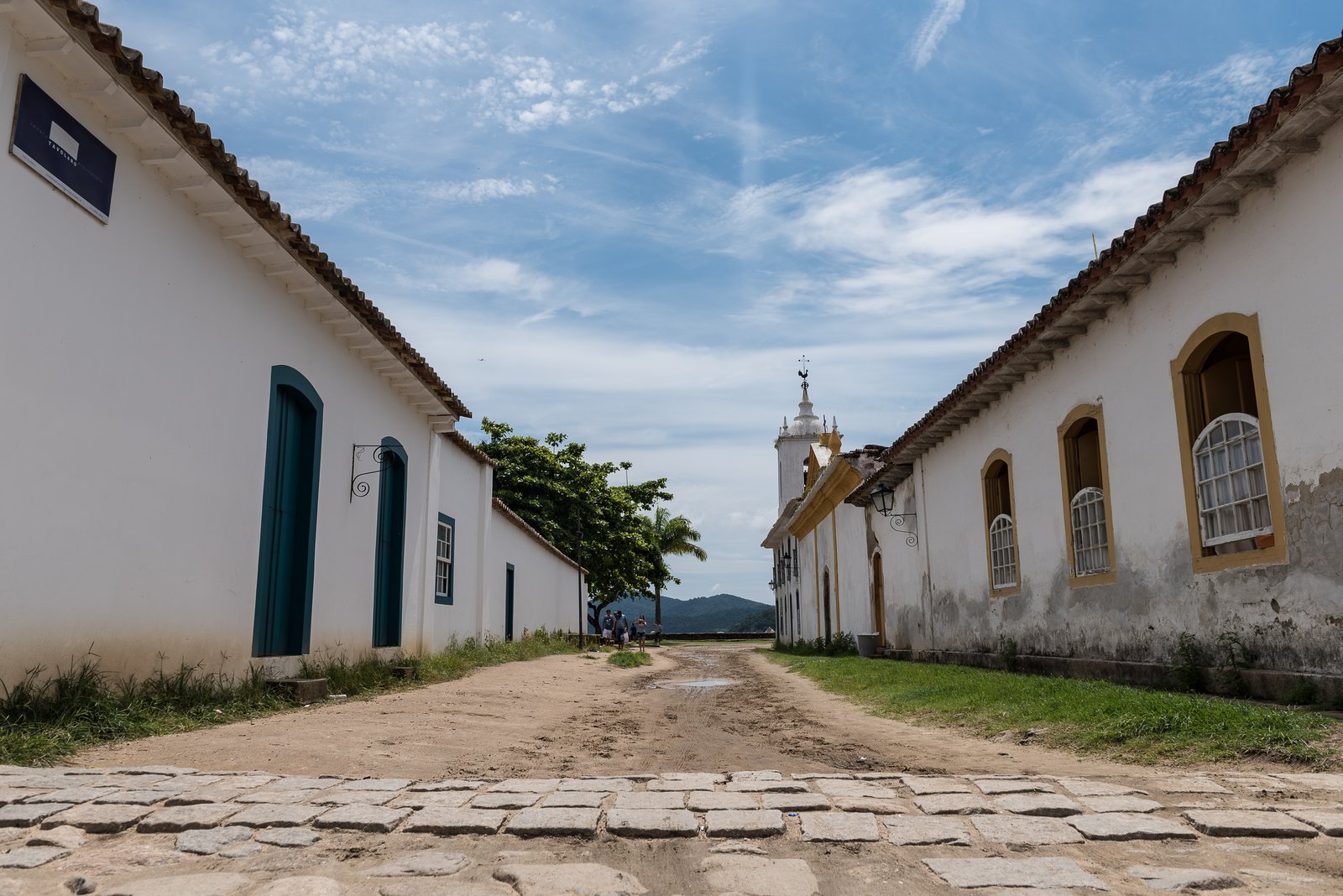
The tide that floods the streets
Paraty was built at sea level, and some streets in the centre were designed so that the highest tides would flow in, wash the stones and drain away. Even today, on full-moon spring tides, water rises a few centimetres in streets near the quay for a short while. It makes a lovely sight, with the houses reflected in the flooded streets. It is also a worry: in September 2025 a high tide reached the altar of Santa Rita church, and IPHAN and the town hall are discussing protective works. If you are there at high tide, check the Brazilian Navy’s tide tables and avoid wading where there may be sewage.
Santa Rita church and the Museum of Sacred Art
Santa Rita church, completed in 1722, is Paraty’s most famous image: white, with a side tower and the bay behind. It was built by free people of mixed race and houses the Museum of Sacred Art, created in 1976 and run since 2009 by the Brazilian Institute of Museums (Ibram), with statues, silverware and religious objects from the town’s churches. It is on Largo de Santa Rita, 141. Next door is the Old Jail (Cadeia Antiga), an early 18th-century building that was part of a harbour defence and later served as a prison.
Rosário church, Dores chapel and the Matriz
The church of Nossa Senhora do Rosário e São Benedito dos Homens Pretos, from 1725, was built by and for enslaved Black people and has a plain façade without the decoration of the elite churches. The chapel of Nossa Senhora das Dores, from 1800, near the beach, was the church of wealthy families. The Matriz of Nossa Senhora dos Remédios, the largest, on the main square, took more than two centuries to finish and is the centre of religious festivals, including the Divino. Church opening hours vary and change around services; ask at the tourist information centre.
Defensor Perpétuo fort
Across the Perequê-Açu river, on the Pontal hill, stand the Defensor Perpétuo fort and its museum, also run by Ibram, at Avenida Orlando Carpinelli, 440. The fort was built in the 18th century to defend the gold port; sources give different dates. Its current name honours Emperor Pedro I. There are cannons, bay views and an outdoor area open daily from 7 am to 7 pm. The walk from the centre takes about 20 minutes, over the bridge and along Pontal beach.
Federal museum opening hours
According to Ibram, the Museum of Sacred Art and the Defensor Perpétuo Fort Museum open Wednesday to Friday from 10 am to 5 pm, and on Saturdays, Sundays and public holidays from 10 am to 2 pm. They close on Mondays and Tuesdays. Entry is free. Check before you go, as hours can change on holidays and during events.
Casa da Cultura, crafts and galleries
Paraty’s Casa da Cultura occupies a townhouse in the centre and hosts exhibitions about the town’s history and traditional communities. Around the streets you will find many art galleries, studios, shops selling caiçara crafts such as miniature carved wooden canoes, and cachaça shops. Prices in the centre are high; in fishing villages and at markets, crafts are usually cheaper and the money goes straight to the maker.
The quay, Pontal beach and sunset
The quay is where the town meets the sea. In the late afternoon the tour boats come back, fishermen tidy their nets and the light turns golden over Santa Rita church. Pontal beach, across the bridge, has kiosks and is the closest town beach, but the water there is not the cleanest because of the river. For swimming, head to the bay’s islands and beaches or to Trindade.
Paraty at night
At night the historic centre is lit by lanterns and turns into one big open-air restaurant, with live music in several places, especially at weekends. There are cachaça bars, caiçara and contemporary restaurants and jazz venues. Dinner in Brazil starts later than in the US or northern Europe, often from 8 pm. Ask your pousada what is on that week, because shows and cultural events vary a lot between high and low season.
Paraty boat tours: schooners, speedboats and islands
Short answer: the schooner (escuna) tour is the classic option and cost from R$110 per person in 2026, a price set by the boat operators’ association, for about 5 hours and up to four swimming stops at islands and beaches. Speedboat (lancha) tours cost more, from R$200 per person, but go further and faster. Boats leave from the quay by the historic centre, usually late morning, and return between 4 and 5 pm.
Paraty Bay has about 65 islands, and many beaches can only be reached by sea, so at least one boat trip is a must. Choosing between a schooner and a speedboat changes the experience a lot.
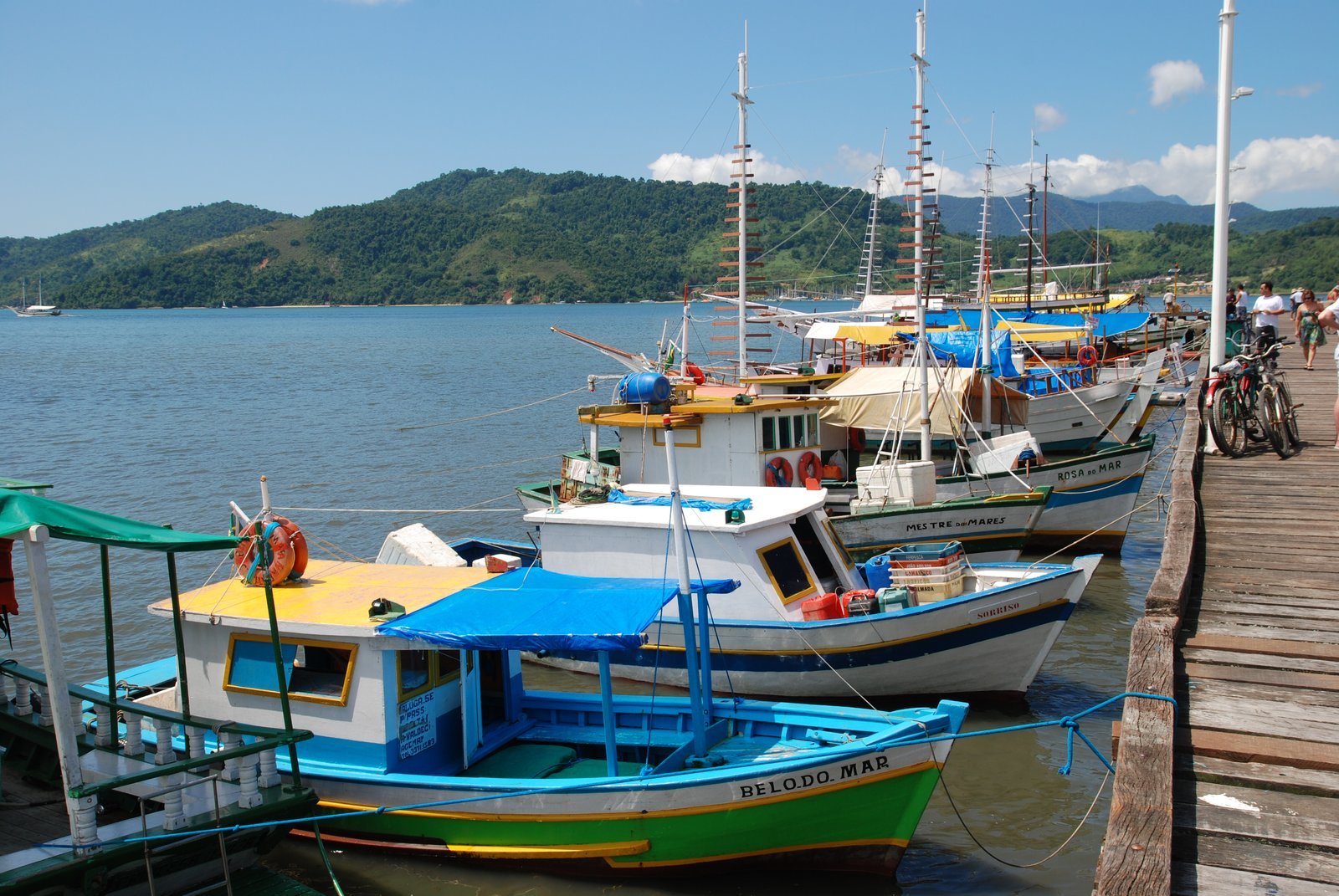
Schooner: the classic trip
Schooners are big wooden boats carrying up to around 160 people, with a bar, toilet and often live music. According to a January 2026 report in Folha de S.Paulo, the basic price set by the operators’ association was R$110 per person for about 5 hours and up to four stops. They leave the quay late in the morning, around 11 am, and return mid-afternoon. The route changes with wind and sea, but usually includes islands and beaches with calm water, good for swimming and snorkelling.
Everything on board is extra. In the same report, lunch cost R$70 to R$90, a beer R$16, snorkel hire R$25, and photographers charged about R$20 per photo. The trip is lively and good for families and groups, but don’t expect silence or empty beaches: on summer weekends several schooners stop at the same spot at the same time. Guides usually speak Portuguese only, so if you want commentary in English, ask before booking.
Speedboat: further and fewer people
Speedboats carry far fewer passengers, leave from the same quay and reach places the schooners can’t cover in the same time. Folha quoted trips from R$200 per person, such as the one to Praia Vermelha, about 40 minutes away. Ilha dos Cocos, an island that has gone viral on social media, is about 1h20 by boat. Private speedboats are priced per boat and are worth it for groups of six to eight. Always ask how many stops are included, how long you get at each and whether there are life jackets for everyone.
Choosing a boat and avoiding hassle at the quay
The quay has lots of touts, and some approach tourists insistently. Don’t rush into anything. Compare the route, the duration and what is included, ask the boat’s name and whether it is licensed by the Brazilian Navy, and favour companies recommended by your pousada or the tourist information centre. Bring cash and a card, sunscreen, a hat and a layer for the wind on the way back. If you get seasick, choose a schooner, which rolls less than a speedboat, and take your tablet before boarding.
Kayaks and stand-up paddle
For something calmer, kayaks and stand-up paddleboards can be rented at some points around the bay and at pousadas in Paraty-Mirim and Mamanguá; ask at yours. Paddling near the historic centre in the late afternoon gives you another view of the old town. Stay close to the shore and be back before dark.
Trindade: beaches, a natural pool and a fishing village
Short answer: Trindade is a fishing village about 25 km from the centre, on the border with São Paulo state, with open-sea beaches and the Cachadaço natural pool, reached by a trail of about 1.5 km from Praia do Meio in 20 to 25 minutes. The Colitur bus costs R$5.00 and leaves the bus station roughly every hour. Go early, because the village gets packed on summer weekends.
The road to Trindade leaves the BR-101 and drops down a short, steep hill to the village. Trindade was a hideaway for hippies and surfers in the 1970s and 1980s and still has that easy-going feel, with campsites, simple pousadas, bars and craft stalls. Part of the area lies inside Serra da Bocaina National Park and the Cairuçu protected area, and the trails and natural pool are subject to environmental rules.
Trindade’s beaches
Praia do Cepilho, the first beach, has waves and is the surf spot. Praia de Fora, the main beach, has fishing boats and beachfront restaurants. Praia do Rancho next door has calmer water and suits children. Praia do Meio is small, rocky and crystal clear, and the trail to Cachadaço starts there. Further on, by trail, are Praia Brava, Praia dos Pelados (a naturist beach) and the Caixa d’Aço point.
The Cachadaço natural pool
Trindade’s postcard view: a rocky cove that forms a calm pool of green water, sheltered from the waves by huge boulders. The trail of about 1.5 km starts at Praia do Meio, climbs along the rocky shore and takes 20 to 25 minutes. Boats also make the trip. Don’t bring big cool boxes, take your rubbish home and avoid the peak hours of 11 am to 3 pm, when the pool gets crowded. In rough seas, waves break over the rocks: if that is happening, stay out.
Getting there and parking
By car, parking in the village is limited and paid, and the access road jams on holidays. The Colitur bus solves the problem: line 25 leaves Paraty bus station from 5:15 am to 10:30 pm on weekdays and from 6 am to 10:30 pm at weekends. The trip takes under an hour, depending on traffic on the access hill.
Praia do Sono: trail or boat
Short answer: Praia do Sono lies inside the Juatinga Ecological Reserve, about 27 km from the centre. Drive or take the bus to Vila Oratório, next to the Laranjeiras gated community, then either walk the moderate 3.1 km trail (50 minutes to 1h30) or catch a boat from the Laranjeiras pier for R$60 each way (about 10 minutes). Bring cash, because mobile signal is weak.
Sono is a long beach of pale sand and open sea, with a caiçara community that lives from fishing and tourism, campsites and a few simple bars and restaurants. There is no road and there are no cars, which is exactly why it still feels like a real beach.
The trail
The trail starts at the end of the bus line in Vila Oratório and crosses the Atlantic Forest with ups and downs and stretches of rock and roots. It is about 3.1 km and takes 50 minutes to 1h30, depending on your pace and the mud. It falls under the rules of INEA, the state environmental agency: no pets, no fires, no litter. Wear trainers and carry water. From Sono, other trails continue to even more remote beaches such as Antigos and Ponta Negra; for those, go with a local guide or ask about conditions in the community.
The boat
If you would rather not walk, take a boat from the pier inside the Laranjeiras gated community. Entry to the community is controlled, and a free internal shuttle runs to the pier. The crossing cost R$60 each way, took about 10 minutes and ran from 8 am to 6 pm, according to the information gathered for this guide. In rough seas the boats don’t go.
Parking and buses
Private car parks in Vila Oratório charge R$25 to R$30 a day. The Colitur bus to Laranjeiras and Vila Oratório leaves Paraty bus station and takes 40 to 50 minutes. Check return times, because the last bus leaves early on some days.
Saco do Mamanguá: Paraty’s “fjord”
Short answer: Saco do Mamanguá is a narrow inlet about 8 km long and 2 km wide, flanked by forest-covered mountains, with 33 beaches and a mangrove at the far end. It is not a true fjord, but many people think it is the most beautiful place in the municipality. You reach it via Paraty-Mirim, by car or bus and then boat, or by speedboat from the centre, which agencies were selling for R$230 to R$350 per person.
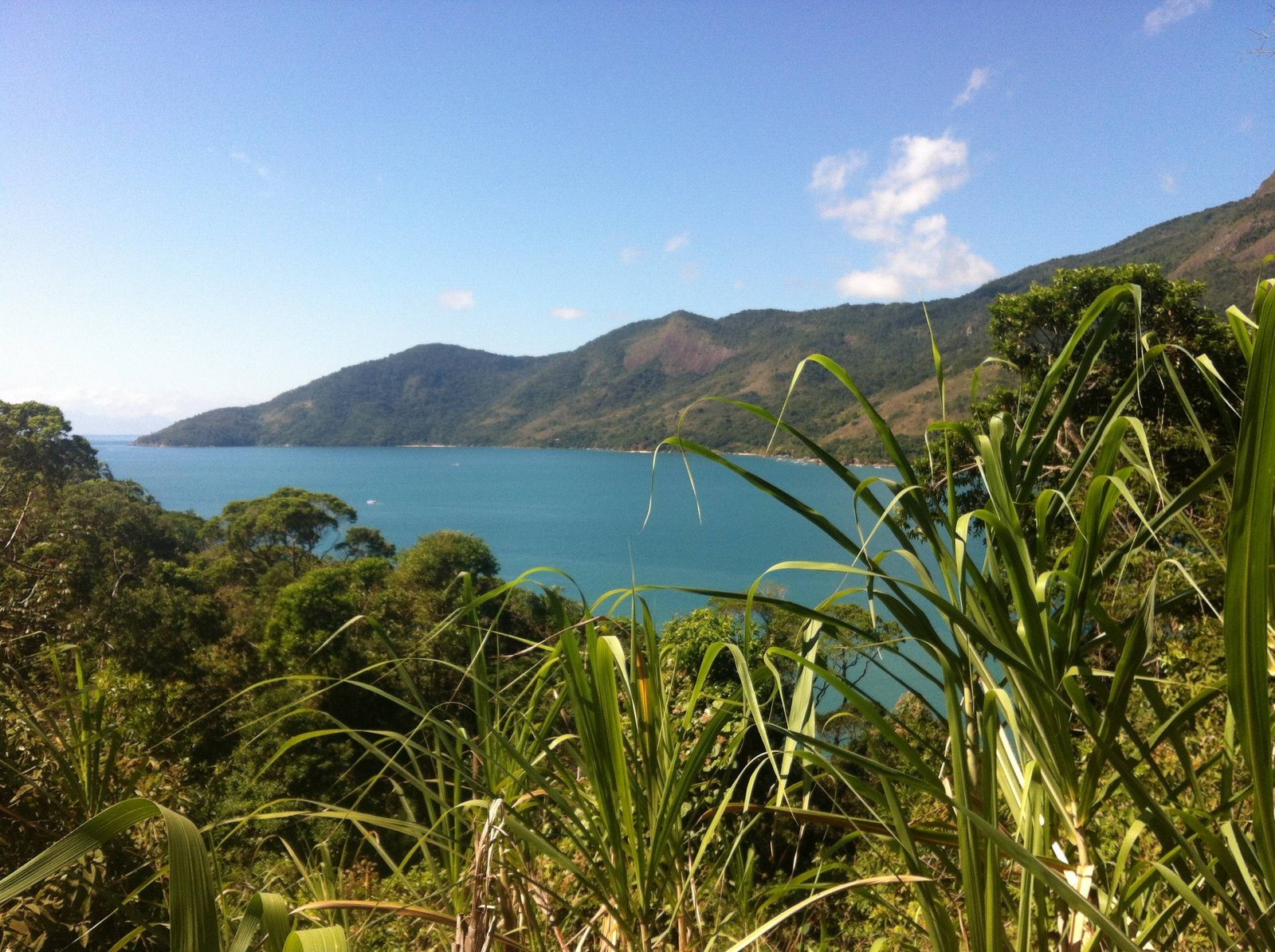
The name comes from the Tupi language and refers to the “mamangá”, a local shrub. Mamanguá is a protected area, home to caiçara families who live from fishing, tourism and woodcraft such as miniature canoes. The water is clearer at the mouth and shallower and murkier near the mangrove.
How to get to Mamanguá
The cheapest way is to go to Paraty-Mirim, along the BR-101 and then a road of about 7 km with dirt sections, by car or on the Colitur bus. From there, boatmen take you into Mamanguá in about 15 minutes by speedboat or about 45 minutes in the wooden “toc-toc” boats, at a price agreed on the spot. There is also a trail of about 1h30 from Paraty-Mirim to Praia Grande do Mamanguá. Speedboats from Paraty’s centre take up to 2 hours, depending on stops. Few boatmen speak English, so have the price and the pick-up time written down or on your phone.
Pão de Açúcar peak
Mamanguá’s most famous trail climbs the Pão de Açúcar (“Sugarloaf”) peak from Praia do Cruzeiro: about 1.5 km with 425 metres of ascent, rated hard, taking 1 to 2 hours up. The summit view takes in the whole inlet. Start early with water and proper shoes, ideally with a guide, and don’t climb in the rain.
Paraty-Mirim
Paraty-Mirim is a village with a calm beach and a colonial church, Nossa Senhora da Conceição, from the days when the area was a landing point. It lies between the centre and Mamanguá and is where the boats leave from. On the way is the Quilombo do Cabral, one of the municipality’s quilombola communities.
Waterfalls near Paraty
Short answer: the most visited waterfalls are in the Penha neighbourhood on the Paraty-Cunha road, about 8 km from the centre: the Tobogã, a smooth rock slide into a pool, and the Poço do Tarzan, both about 5 minutes’ walk from the road. Cachoeira da Pedra Branca is about 9 km away, with 3.5 km of dirt road and a short trail. Most are free to visit but call for care on the rocks and in the rain.
Tobogã and Poço do Tarzan
The Tobogã is Paraty’s most famous waterfall. Locals slide down the rock standing up, almost surfing; visitors sit down. It is great fun, but accidents happen: if you don’t know the spot, watch first, slide sitting down and don’t try it when the current is strong. Nearby, the Poço do Tarzan has a deep pool and a rope swing. Beside the road is the small, old Penha church.
Pedra Branca and other falls
Cachoeira da Pedra Branca sits in a valley with several falls and pools, near some distilleries. You reach it via Ponte Branca and a dirt road of about 3.5 km, then a trail of about 15 minutes. There are more waterfalls along the Cunha road, some on private land that charges admission. At any waterfall, if the water turns brown or the level rises suddenly, get out immediately: that is the sign of a flash flood.
The Gold Trail (Caminho do Ouro)
Short answer: a paved stretch of the historic Gold Road can be walked in the Serra da Bocaina, starting from the Caminho do Ouro tourist information centre in the Penha neighbourhood. The guided walk takes 1h30 to 2 hours, is easy to moderate, and follows stones laid by enslaved workers about 300 years ago. Agency prices started at R$120 per person and reached R$390 to R$450 including transport.
It is one of Paraty’s most interesting outings and one of the least crowded. The surviving stretch is narrow and enclosed by forest, with rounded stones and gutters cut to carry away the rain. Guides tell the story of the mule trains, the gold registries and the lives of the enslaved people who built and maintained the road. Visits usually end at a distillery or a restaurant on the Cunha road. Check departure times with the agency, whether the guide is accredited, whether the tour is available in English and whether transport is included.
Cachaça distilleries
Short answer: Paraty has made cachaça, Brazil’s sugarcane spirit, since colonial times, and the region’s cachaça has had a Designation of Origin from INPI since January 2024. Several distilleries (alambiques) welcome visitors for tastings, mostly on the Cunha and Pedra Branca roads and along the BR-101. Some require advance booking.
In Paraty, cachaça is more than a drink: in the 18th century “parati” was even used as a word for sugarcane spirit in other parts of Brazil. Today there are small family stills and award-winning brands. Alambique Maria Izabel, which has produced organic cachaça since 1996 at Sítio Santo Antônio, about 9 km from the centre towards Rio, takes visitors by appointment only, from 10:30 am to 4 pm, for R$10. Engenho D’Ouro on the Cunha road and Paratiana on the Pedra Branca road are also mentioned as distilleries open to visitors; confirm hours directly with them.
At a tasting, try Gabriela, cachaça infused with clove and cinnamon, one of the town’s signature drinks. If you are driving, take one sip and buy the bottle: Brazil’s drink-driving law is zero tolerance and is enforced in the region.
What to eat in Paraty
Paraty’s cooking blends sea and farm. The best-known caiçara dishes use fresh fish, plantain and cassava flour, such as azul-marinho, a fish stew with green plantain that tints the broth a bluish colour. There are prawns, squid and mussels, prawn pastéis (fried pastries) at the beach kiosks, and plenty of contemporary restaurants in the historic centre, some run by well-known chefs. That mix is what earned Paraty its place in UNESCO’s Creative Cities Network for gastronomy.
Eating in the historic centre is expensive. For fairer prices, try the restaurants on Praia de Fora in Trindade, the kiosks at Pontal and community restaurants such as those in quilombos, which are part of community-based tourism routes. Book these in advance.
Safety and practical tips
Short answer: Paraty is a calm town for visitors, and the main risks come from nature and travel rather than crime: open sea at Trindade and Sono, boats without life jackets, slippery waterfalls and flash floods, muddy trails in the rain and the highway at night. In the centre, watch your belongings in crowds, such as during FLIP and New Year.
Sea, boats and waterfalls
Swim at calm beaches and respect flags and warnings. On boats, insist on a life jacket and don’t board in rough seas. At waterfalls, don’t jump into pools you don’t know and get out if the water rises.
Trails
Start early, take water, a torch and sunscreen, tell your pousada which trail you are doing and avoid walking in heavy rain. Trails such as Pão de Açúcar and those on the Juatinga peninsula are better with a local guide.
Insects and health
Paraty has biting blackflies (borrachudos), especially near rivers and waterfalls, so pack repellent. Summer heat calls for water and a hat. The town has a municipal hospital and health posts; in remote villages such as Sono and Mamanguá, help depends on a boat or a trail, so carry a small first-aid kit. Check your home country’s health advice for Brazil before you travel, and take out travel insurance that covers medical evacuation.
Money and mobile signal
Cards and Pix (Brazil’s instant payment system, mostly for people with a Brazilian bank account) work in the centre, but on beaches and in villages such as Sono, Mamanguá and parts of Trindade the signal is weak and many places take cash only. Carry some reais in notes.
Language
English is spoken at the better pousadas and some restaurants in the centre, but much less on boats, buses and in the villages. A translation app with offline Portuguese downloaded makes life much easier.
The road
Avoid driving on the BR-101 and the Cunha road at night or in fog. Heavy rain has caused landslides in the region. Check road conditions before setting out.
Respect the heritage and communities
Don’t climb on walls and monuments, don’t take stones from the paving, don’t leave rubbish on beaches and ask before photographing residents. In caiçara, quilombola and Indigenous communities, follow the visiting rules.
How much does a trip to Paraty cost in 2026?
Short answer: the biggest costs are accommodation, which varies hugely between low and high season, and boat trips. With the prices checked for this guide, a schooner tour starts at R$110 per person, a speedboat tour at R$200, the bus to Trindade costs R$5.00 and the boat to Praia do Sono R$60 each way. The two federal museums in the centre are free. We don’t list room rates, because they change with every date: check directly on the hotels’ official websites.
| Item | Price in 2026 | Notes |
|---|---|---|
| Bus Rio (Novo Rio)–Paraty, Costa Verde | R$121 to R$137 | About 4h40; ticket-site quotes, October 2026 |
| Bus São Paulo (Tietê)–Paraty | R$81 to R$167 | Primar or Reunidas Paulista; 6 to 7 hours |
| Shared transfer Galeão airport–Paraty | R$300 to R$460 per person | Minimum 2 people; about 5 hours |
| Car park near the centre | About R$50 per day | Street parking about R$3 an hour (Folha, Jan 2026) |
| Schooner tour | From R$110 per person | About 5 hours, up to 4 stops; food and drinks extra |
| Speedboat tour | From R$200 per person | Private boats priced per boat |
| Lunch on board a schooner | R$70 to R$90 | Beer about R$16; snorkel hire R$25 |
| Speedboat from the centre to Mamanguá | R$230 to R$350 per person | Agency prices; cheaper from Paraty-Mirim |
| Colitur bus Paraty–Trindade | R$5.00 | Line 25, from the bus station |
| Boat Laranjeiras–Praia do Sono | R$60 each way | About 10 minutes, 8 am to 6 pm |
| Car park at Vila Oratório | R$25 to R$30 per day | For the Sono trail |
| Guided Gold Trail walk | From R$120 per person | R$390 to R$450 with transport, depending on agency |
| Maria Izabel distillery visit | R$10 | By appointment only |
| Museum of Sacred Art and Defensor Perpétuo fort | Free | Wednesday to Sunday; closed Monday and Tuesday |
| Cachaça Festival | Free | August, Areal do Pontal |
| Tourist fee for private cars | Not charged | Bill under discussion in October 2026 |
As a rough guide, a couple staying in a mid-range pousada in the centre, taking one schooner trip and a bus day trip to Trindade and eating in the old town will spend far more on food and rooms than on transport and tours. That is our estimate, not a researched price. To save money, travel midweek, avoid FLIP and New Year, and have lunch outside the historic centre. Card machines are everywhere in town, but international cards occasionally fail on small terminals, so keep a backup card and some cash.
Paraty itineraries: 2, 3, 4 and 5 days
Short answer: two days covers the historic centre and a boat trip; three days adds Trindade; four days adds Praia do Sono or Saco do Mamanguá; five days rounds things off with waterfalls, distilleries and the Gold Trail. Keep an eye on the forecast and save the boat for the sunniest day.
Paraty in 2 days
- Day 1: morning in the historic centre with Santa Rita, Rosário and the Matriz; lunch in town; in the afternoon, the Museum of Sacred Art (Wednesday to Sunday) and a walk to the Defensor Perpétuo fort via Pontal; late afternoon at the quay and dinner in the centre.
- Day 2: schooner or speedboat trip around the bay, roughly 11 am to 4 or 5 pm; in the evening, back to the centre for live music and a cachaça tasting.
Paraty in 3 days
- Day 1: historic centre and museums, as in the 2-day plan.
- Day 2: boat trip around the islands.
- Day 3: Trindade by bus or car, walking the trail to the Cachadaço natural pool in the morning and having lunch on Praia de Fora; back in the late afternoon.
Paraty in 4 days
- Days 1 to 3: as in the 3-day plan.
- Day 4: Praia do Sono, on the trail from Vila Oratório or by boat from Laranjeiras; or a day in Saco do Mamanguá from Paraty-Mirim, with the Pão de Açúcar climb if you have the legs for it.
Paraty in 5 days
- Days 1 to 4: as in the 4-day plan.
- Day 5: the Cunha road, with a guided Gold Trail walk in the morning, lunch at a mountain restaurant, the Tobogã waterfall and Poço do Tarzan in the afternoon and a distillery visit, booked ahead.
With more time, Paraty pairs naturally with Ilha Grande, the other half of the UNESCO site, reached by boat from Angra dos Reis and other ports on the Costa Verde; see our Ilha Grande travel guide. Many international travellers also build a coastal loop of Rio de Janeiro, Paraty, Ilha Grande and back, or continue south to Ubatuba and São Paulo.
Where to stay in Paraty
Short answer: on a first visit, stay in or right next to the historic centre so you can walk everywhere and enjoy the evenings. The town centre just outside the protected area, near the bus station, has lower rates and parking. Jabaquara is a quieter beach neighbourhood that suits families. Trindade is for beach time and a fishing-village vibe, and Mamanguá for real seclusion. Every link below goes to the property’s official website and was checked on 26 October 2026.
A few things to know before booking. The historic centre has no cars: luggage goes on foot, by porter or on a trolley over the stones, and many pousadas have no parking of their own. The old townhouses have thick walls, but the centre has music at night at weekends. Outside the centre, pousadas usually offer parking, pools and lower rates, with a 5 to 15 minute walk to the old town. For FLIP, New Year and Carnival, book months ahead and read the cancellation policy. A “pousada” is a small, usually family-run guesthouse or boutique inn, often with breakfast included.
Casa Turquesa (luxury, historic centre)
Casa Turquesa is a luxury guesthouse in a colonial townhouse in the historic centre, at Rua Doutor Pereira 50, describing itself as a maison d’hôtes with genuinely Brazilian hospitality. It is one of the most exclusive places to stay in town, for travellers who want to live inside the old houses with boutique-hotel standards. Its website has an English version.
Pousada Literária (luxury, historic centre)
Pousada Literária is at Rua do Comércio 362 and takes reading as its theme, down to its garden named Quintal das Letras. According to its website it has 16 apartments of 30 m² with a mini library and reading chaise, four suites of about 43 m², 55 m² master suites and the Villa Aurora, plus a pool, spa, restaurant and accessibility features including adapted rooms and ramps. It also offers day use and stays in Saco do Mamanguá. The website has an English version.
Sandi Hotel (upscale, historic centre)
Sandi Hotel, formerly Pousada do Sandi, stands on Largo do Rosário 1, next to the Rosário church in the heart of the historic centre. According to its website, it has been in Paraty for more than 30 years and has an Asian-style spa, a gym, a temperature-controlled wine cellar and two fine-dining restaurants. A good choice if you want a central location and hotel facilities in colonial style.
Pousada Arte Urquijo (boutique, historic centre)
Pousada Arte Urquijo occupies a preserved 18th-century colonial townhouse at Rua Dona Geralda 28. Its website lists six individually decorated suites upstairs, all air-conditioned, a pool among flowers and sculptures, a pub with imported wines and a breakfast featuring a family-recipe apple crêpe. It is small and personal, ideal for couples.
Pousada da Marquesa (charming, historic centre)
Pousada da Marquesa is at Rua Dona Geralda 292, in a mansion in the historic centre, and has 20 rooms and a two-room suite, according to its website. It is one of the town’s traditional pousadas, a few steps from the churches and the quay.
Pousada do Ouro (charming, historic centre)
Pousada do Ouro is at Rua Doutor Pereira 298 in the historic centre and presents itself as a pousada with sustainable practices, a member of a green hotels association since 2011. A classic pick if you want to sleep inside the protected area.
Pousada Parque Imperial (mid-range, town centre)
Pousada Parque Imperial is at Rua Waldemar Mathias 215, one block from the bus station and about a 5-minute walk from the historic centre, according to its website. Practical if you arrive by bus or car and want parking and air conditioning at a lower rate than inside the protected area.
Pousada Praia do Jabaquara (families, Jabaquara)
Pousada Praia do Jabaquara is at Rua Dom Pedro I 16 in the Jabaquara neighbourhood, north of the centre, about 100 metres from Jabaquara beach, which has calm water, according to its website. It has a pool and is a quiet option for families with children who don’t need to sleep in the old town.
Pousada do Pelé (simple, beachfront, Trindade)
Pousada do Pelé has been in the village of Trindade for more than 30 years, at Rua Pastor Ezonir 13 on Praia de Fora. According to its website, rooms have air conditioning, a minibar and smart TV, there is satellite Wi-Fi, free parking and a backup generator for power cuts. Stay here to wake up to the sound of the sea and hit Trindade’s trails before the day-trippers arrive.
Pousada Mamanguá (secluded, Saco do Mamanguá)
Pousada Mamanguá is on Praia Grande do Mamanguá, reached by boat or on foot from Paraty-Mirim. It faces the sea, includes breakfast and has a restaurant, according to its website. It is the choice for a night or two in the silence of the inlet, with the Pão de Açúcar trail nearby. Arrange the boat with the pousada before you go and bring cash and anything you need, as there are no shops nearby.
Video: Paraty by Visit Brasil
This short film from Visit Brasil, the official international promotion channel of Brazil’s tourism board Embratur, shows the quiet side of Paraty, its waters and its colonial streets.
Frequently asked questions about Paraty
How many days do you need in Paraty?
Three days is a good minimum: one for the historic centre and its free federal museums, one for a schooner or speedboat trip around the bay, and one for Trindade and the Cachadaço natural pool. With four or five days you can add Praia do Sono or Saco do Mamanguá, the waterfalls on the Cunha road, a distillery and the Gold Trail.
When is the best time to visit Paraty?
April to September is the driest period, with 60 to 150 mm of rain a month, and the best for hiking and boat trips. December to March is hotter with a warmer sea, but it rains on more than half the days. To avoid crowds and peak prices, skip New Year, Carnival and the FLIP festival dates.
How do I get from Rio de Janeiro to Paraty?
By car it is about 240 to 250 km on the BR-101 coastal highway via Mangaratiba and Angra dos Reis, roughly 4 hours without traffic. Viação Costa Verde buses leave Rio’s Novo Rio bus station, take about 4h40 and cost R$121 to R$137 (October 2026). Shared transfers from Galeão airport cost about R$300 to R$460 per person.
How do I get from São Paulo to Paraty?
By car it is about 300 km via the Tamoios highway to Caraguatatuba or the Oswaldo Cruz road to Ubatuba, then the BR-101, in 4.5 to 5 hours. The Cunha road is shorter but narrow and steep inside the national park. Reunidas Paulista and Primar buses leave the Tietê terminal and take 6 to 7 hours.
How much is a boat tour in Paraty?
In 2026 the schooner tour cost from R$110 per person, a price set by the boat operators’ association, for about 5 hours and up to four stops. Food and drinks are extra: lunch on board cost R$70 to R$90. Speedboat tours started at R$200 per person. Check prices at the quay, as they change by season.
How do I get to Praia do Sono?
Drive or take the Colitur bus to Vila Oratório, next to the Laranjeiras gated community, about 27 km from the centre. From there, walk the moderate trail of about 3.1 km (50 minutes to 1h30) or take a boat from the Laranjeiras pier, which cost R$60 each way and takes about 10 minutes. Bring cash, as mobile signal is weak.
How do I get to Saco do Mamanguá?
The cheapest way is to drive or take the bus to Paraty-Mirim and then a fishing boat, 15 to 45 minutes depending on the boat, or walk the trail of about 1h30 to Praia Grande do Mamanguá. Speedboats from Paraty’s centre were sold by agencies for R$230 to R$350 per person.
Is there a tourist fee to enter Paraty?
In October 2026 private cars paid no fee to enter Paraty. A bill for an environmental preservation fee was before the town council, with no amount set. Tour buses and vans need prior authorisation from the town hall and pay a fee. Check the town hall website before travelling, as this may change.
Where is the best area to stay in Paraty?
On a first trip, stay in or next to the historic centre so you can walk everywhere. The town centre near the bus station has lower rates and parking. Jabaquara is quiet and good for families, Trindade suits beach lovers who like a village atmosphere, and Saco do Mamanguá is for complete seclusion.
When are FLIP and the Festa do Divino?
FLIP usually takes place between July and August; in 2026 it ran from 22 to 26 July. The Festa do Divino follows the date of Pentecost and lasts about ten days; in 2026 it ran from 15 to 24 May. Dates for 2027 should be confirmed with the organisers and the town hall.
Is Paraty worth it?
Yes, and perhaps more than you expect on a first visit. Paraty is one of the few places in Brazil where you can spend the morning in an 18th-century church, the afternoon on an island with green water and the evening in a chef-driven restaurant, without getting in a car. What sets it apart from other colonial towns is what surrounds it: forested mountains, fishing beaches, waterfalls and communities that keep traditional ways of life. The trade-offs are a pricey old town, long road journeys and summer rain. Plan calmly and give it one more day than you think you need.
If you are planning a longer trip, start with our Rio de Janeiro travel guide, add the Búzios travel guide for the other side of the Rio coast, and see the São Paulo travel guide if you are flying in or out of Guarulhos. Travelling as a couple? Paraty features in our list of romantic destinations in Brazil.
Sources
- IBGE Cidades: Paraty (RJ) overview (2022 census population, 2025 estimate and area)
- UNESCO: Paraty and Ilha Grande – Culture and Biodiversity (2019 inscription and site components) and Paraty in the Creative Cities Network
- IPHAN: National Historic and Artistic Heritage Institute (listing of Paraty’s architectural and landscape ensemble)
- Ibram: Brazilian Institute of Museums (Museum of Sacred Art and Defensor Perpétuo Fort Museum: addresses, hours and admission)
- Paraty town hall: official website (events, Festa do Divino, Cachaça Festival, rules for tour buses)
- ICMBio: Serra da Bocaina National Park (distances and access)
- INEA: Rio de Janeiro State Environmental Institute (Juatinga Ecological Reserve and the Praia do Sono trail)
- INPI: National Institute of Industrial Property (Designation of Origin for Paraty cachaça, 2024)
- FLIP: Paraty International Literary Festival (2026 dates and honoree)
- Colitur: local bus lines and timetables
- Brazilian Navy: TábuaMares (official tide tables)
- Weather Atlas: Paraty climate (monthly averages for temperature, rain and sea; not INMET normals)
- Paraty.com.br: tourism portal (road distances and travel times)
- Alambique Maria Izabel: official website (visits and booking)
- Folha de S.Paulo: January 2026 reports on Paraty boat tours, prices at the quay, parking in the centre and the proposed tourist fee
- Wikipedia: Paraty, plus the Portuguese-language articles on the Caminho do Ouro, Saco do Mamanguá and FLIP (history, dates and general data, cross-checked with official sources)