Campos do Jordão is Brazil’s answer to an Alpine village: a mountain town in the Serra da Mantiqueira, about 180 km from São Paulo, where people go to feel cold on purpose. At 1,628 metres it is the highest town seat in the country, and its half-timbered chalets, araucaria pines and frosty winter mornings earned it the nickname “the Brazilian Switzerland”. Around 4.5 million visitors come every year, most of them from São Paulo and Rio. In short, here is what to do: wander Vila Capivari at night, ride the chairlift up Morro do Elefante, walk through the gardens of Parque Amantikir, hike under araucarias in the state park, take the little tram of Brazil’s highest railway, look down on the Paraíba Valley from Pico do Itapeva, tour the governor’s winter palace, eat fondue and trout, and, if you have an extra day, see the granite wall of Pedra do Baú next door.
We put this guide together in October 2026 using official sources: the Campos do Jordão railway, the state park, Parque Capivari, Amantikir, Palácio Boa Vista, the Felícia Leirner museum, the Winter Festival, the Pedra do Baú natural monument, the city hall and each hotel’s own website. It covers the town’s odd history as a tuberculosis retreat, which neighbourhood to stay in, when to go (and how much July inflates prices), how to get there by car, bus or plane, what each attraction costs, a three-day itinerary and ten hotels with verified official websites. Where sources disagree or a price may have changed, we say so.
Quick facts: Campos do Jordão, Brazil
- Where: Serra da Mantiqueira, eastern São Paulo state, on the border with Minas Gerais. Neighbours include São Bento do Sapucaí, Santo Antônio do Pinhal and Pindamonhangaba.
- Altitude and size: 1,628 m at the town centre, the highest in Brazil. 290.5 km² and 46,974 residents (2022 census).
- Best time to go: May to August for cold, dry, clear weather. July is peak season (Winter Festival, top prices). April, May, September and October are the sweet spot: pleasant weather, shorter queues, lower rates. December to March is the rainy season.
- Getting there: from São Paulo, take the Ayrton Senna/Carvalho Pinto highway (SP-070) or the Dutra to Taubaté, then the SP-123 up the mountains. Roughly 170 to 185 km, about 3 hours. Pássaro Marron buses leave from São Paulo’s Tietê terminal. Fly into Guarulhos (GRU) or Congonhas (CGH).
- Costs: Amantikir R$100, state park R$27 (plus R$30 parking), tram R$20 to R$30, Felícia Leirner museum R$20 (free on Sundays), Palácio Boa Vista and Ducha de Prata free. Hotels cost far more in July than the rest of the year.
- How many days: two days cover Capivari, the chairlift, Amantikir and the tram. Three let you add the state park, Pico do Itapeva and the palace. Four or five, Pedra do Baú and Santo Antônio do Pinhal.
- Don’t forget: a proper coat (the average July low is 4.6 °C), cash or a Brazilian Pix account for Amantikir, booking the state park online 48 hours ahead, and patience with Capivari traffic on holiday weekends.
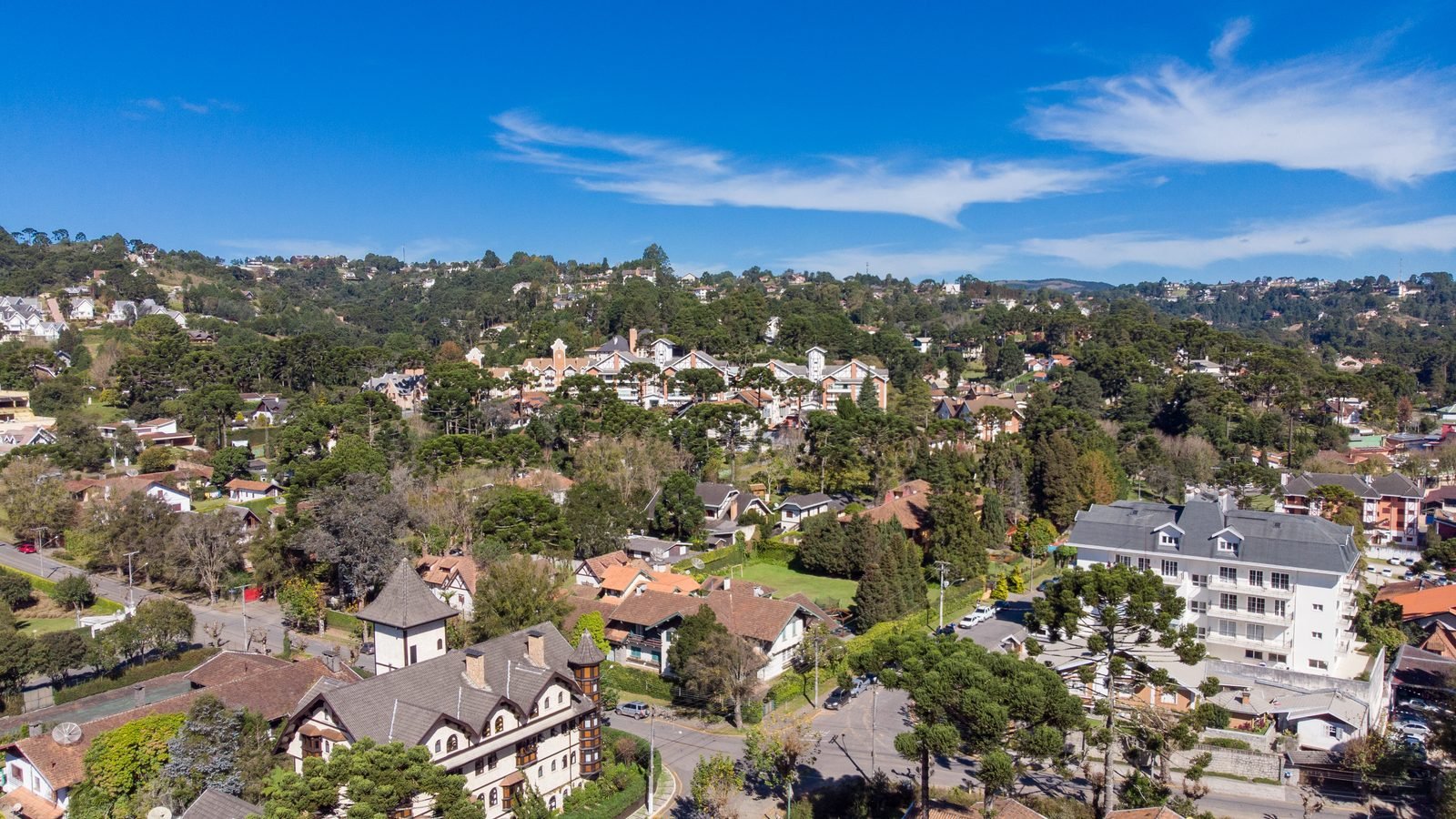
History of Campos do Jordão: from sanatorium town to “Brazilian Switzerland”
Short answer: Campos do Jordão was founded on 29 April 1874 by Mateus da Costa Pinto, on land once owned by Brigadier Manuel Rodrigues Jordão, who gave the place its name (“Jordão’s fields”). In the early 20th century, the cold, dry mountain air drew tuberculosis patients, and the town filled up with sanatoriums and boarding houses. It became a municipality on 19 June 1934. Once antibiotics made TB curable in the 1950s, the town reinvented itself as Brazil’s favourite winter getaway.
If you stroll through Capivari and see all those half-timbered façades, you might assume Swiss or German settlers built the town. They didn’t. The European look came later, as a style choice for a place that was already famous for its climate. The real story involves cattle ranches, early 20th-century medicine and a railway built to carry the sick up the mountain.
The brigadier’s fields
In the 19th century, the high plateaus of the Mantiqueira were cattle country, with natural grasslands between araucaria forests. Much of it belonged to Brigadier Manuel Rodrigues Jordão, and the area became known as “os campos do Jordão”. Naming land after its owner was common at the time, and the name stuck.
The founding
In 1874 Mateus da Costa Pinto bought part of these lands near the Imbiri River and, on 29 April, began building a small village he called São Mateus do Imbiri. That is the official founding date. Work on the chapel of Nossa Senhora da Conceição started in 1879. In 1891, the doctor Domingos José Nogueira Jaguaribe Filho bought out Mateus Pinto’s land and settled in the village, which was renamed Vila Jaguaribe in his honour. The neighbourhood still carries that name.
A climate that cured, or promised to
Before antibiotics, treating tuberculosis meant rest, good food and clean air. Cold, dry mountains were considered ideal, and Campos do Jordão started receiving patients from São Paulo and beyond. In 1915 the village became a district of São Bento do Sapucaí under the name Campos do Jordão. Around then, Vila Abernéssia grew up around the sanatoriums, and in 1920 work began on Vila Emílio Ribas.
The town mattered so much as a health resort that the state created a special “sanitary prefecture” to run it, from 1926 to 1931. Political independence only came on 19 June 1934, when Campos do Jordão split from São Bento do Sapucaí.
The railway for the sick
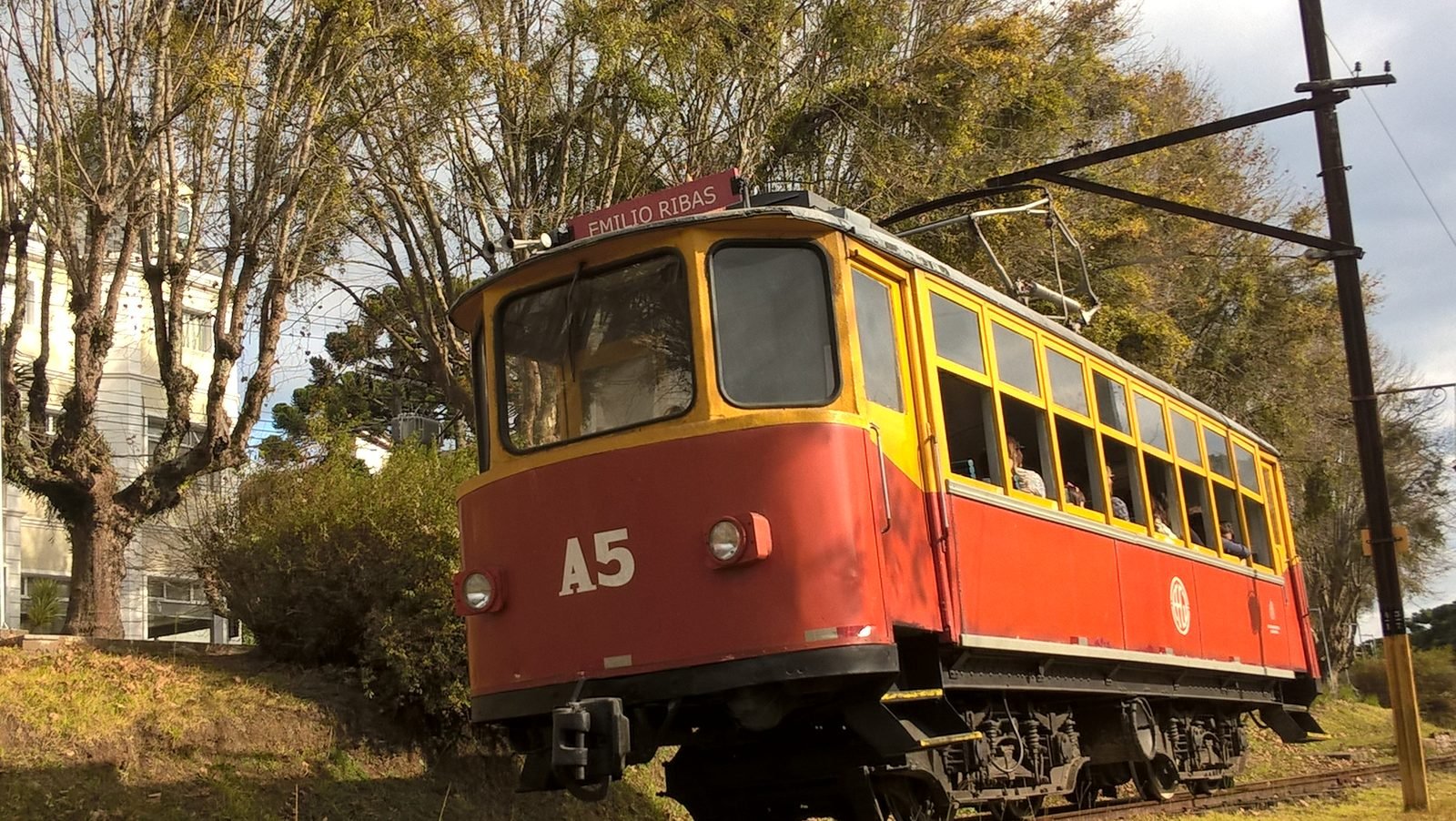
Getting up the mountain a century ago was hard work, so doctors pushed for a railway. The Estrada de Ferro Campos do Jordão (EFCJ), championed by public-health pioneers Emílio Ribas and Victor Godinho, links Pindamonhangaba in the Paraíba Valley to Campos do Jordão. Its 47 km of track opened on 15 November 1914, the line was electrified in 1924, and it peaks at 1,743 metres at Alto do Lageado, the highest railway point in Brazil. You’ll see the names Emílio Ribas and Victor Godinho on avenues and stations all over town.
From sanatoriums to winter tourism
When antibiotics arrived in the 1950s, tuberculosis stopped being a death sentence and the sanatoriums gradually lost their purpose. But Campos already had the climate, the scenery, the railway and a São Paulo elite used to coming up for the season. Hotels, holiday homes and restaurants followed, and later the European-style architecture that gave the town its nickname.
Two landmarks sealed its cultural reputation. Palácio Boa Vista, the São Paulo governor’s winter residence, was begun in 1938, inaugurated in 1964 and opened as a palace-museum in 1970. That same year, 1970, the Campos do Jordão Winter Festival was born, created by Luís Arrobas Martins. Its organisers describe it today as the largest classical music festival in Latin America. The town celebrated its 150th anniversary in 2024.
The railway today
The EFCJ is still publicly owned and tied to the state government. There has been no regular train on the mountain section between Pindamonhangaba and Campos since 2017, and cable thefts in 2021 made a restart harder. In October 2026, the state assembly approved transferring the railway to CPTM, São Paulo’s commuter rail company. For visitors, what runs today are the tourist rides within town: the little tram and, on weekends, a steam train. More on both below.
Where to stay in Campos do Jordão: Capivari, Abernéssia, Jaguaribe or the hills
Short answer: stay in Vila Capivari if you want to walk everywhere, with restaurants, bars, the chairlift and the tram on your doorstep. Choose Abernéssia or Jaguaribe to spend less, as long as you don’t mind using a car or ride-hailing app. Pick a hotel in the hills (Alto da Boa Vista, the Toriba road or the road to Pico do Itapeva) for quiet, fireplaces and views, knowing that a car becomes essential.
Campos do Jordão is not compact. The urban area is split into three “vilas” linked by one main avenue and the tram tracks, and the rest of the municipality is hills, forest and winding lanes.
Vila Capivari
The postcard. Streets lined with chocolate, knitwear and fondue shops, a square that stays lively until late, the Emílio Ribas tram station, Parque Capivari with its chairlift, and dozens of hotels within walking distance. It is also where rates are highest and traffic is worst in July and on holidays. If you’re travelling without a car, this is by far your best bet.
Vila Abernéssia
The town’s commercial centre, where locals live and work: banks, supermarkets, everyday shops and cheaper places to stay. It is a few kilometres from Capivari, connected by the main avenue and the tram (the Capivari–Abernéssia ride is one of the tourist routes). Good for travellers on a budget.
Vila Jaguaribe
The oldest part of town, where the original village was founded. Quieter, with guesthouses and a few restaurants, and on the way to the state park and the Felícia Leirner museum.
The hills: Alto da Boa Vista, Toriba and the Itapeva road
Many of the most traditional hotels and resorts sit outside the centre: in Alto da Boa Vista near the palace, along Avenida Ernesto Diederichsen (the road to the Toriba) or on the way up to Pico do Itapeva. Better views, more silence, and many of them have fireplaces, heated pools and their own restaurants. The trade-off is that you’ll drive (or use the hotel shuttle) for everything.
Weather and the best time to visit Campos do Jordão
Short answer: for real cold, go between May and August, when rainfall drops to around 40 mm a month and nights fall below 5 °C. July is the busiest month because of school holidays and the Winter Festival, and prices jump. For a good balance of weather and cost, go in April, May, September or October. December to March is the rainy season, with afternoon storms and the greenest scenery.
The climate is subtropical highland (Köppen Cfb). According to Brazil’s national weather institute (INMET) normals for 1981 to 2010, the annual average temperature is 14.5 °C. July, the coldest month, averages 10.3 °C with an average low of 4.6 °C. Even in January the average high is only 22.5 °C.
| Period | What it’s like | Best for |
|---|---|---|
| December to March | Wettest months (January gets about 253 mm), highs around 22 °C, lush green hills | Budget travellers who don’t mind afternoon rain |
| April and May | Rain eases, clear days, cold nights, pine nuts on the araucarias | Winter feel without the July crowds |
| June to August | Dry (about 40 mm a month, four rainy days), average lows under 6 °C, frost possible | Cold-weather lovers; July has the Winter Festival |
| September to November | Spring, gardens in bloom, rain slowly returns | Flower gardens and lower rates |
The cold is real
Campos do Jordão holds São Paulo state’s record low: −7.3 °C on 1 June 1979. Frost on the lawns is common on winter mornings. Snow, however, is very rare: historical records cite 1928, 1942, 1947 and 1966. Don’t plan a trip around it.
July: peak of the peak
In July the town is packed. Hotels often require multi-night packages, rates soar, and weekend traffic in Capivari can grind to a halt. The upside is the programme: the Winter Festival, the Cherry Blossom Festival (July and August, at Parque da Cerejeira) and a town dressed up for the season. If you go then, book months ahead and arrive early in the morning.
Is the off-season worth it?
Absolutely. In April, May, September and October attractions run normally, queues for the chairlift and tram are short, and many hotels run promotions. Summer is wetter, but mornings are often lovely, and escaping the heat of São Paulo or Rio is the whole point for many Brazilians.
What to pack
A heavy coat, beanie and gloves from June to August, even if the afternoon is sunny: once the sun goes down, the temperature plunges. In any season, bring a warm layer, closed shoes for trails and a light rain jacket. Sunscreen too: at 1,600 metres the sun burns, even when the air is cold.
How to get to Campos do Jordão
Short answer: from São Paulo, most people drive the Ayrton Senna and Carvalho Pinto highways (SP-070) to Taubaté, then take the Rodovia Floriano Rodrigues Pinheiro (SP-123) up the mountains. It’s about 170 to 185 km and roughly 3 hours without traffic. Without a car, Pássaro Marron runs buses from São Paulo’s Tietê bus terminal to Campos do Jordão in about 3 hours. International visitors normally fly into Guarulhos (GRU) or Congonhas (CGH) and continue overland.
By car from São Paulo
The classic route: Marginal Tietê, then the Ayrton Senna highway, which becomes the Carvalho Pinto (SP-070), as far as Taubaté. There you join the SP-123, Rodovia Floriano Rodrigues Pinheiro, and start the climb: lots of bends, good signage. You can also take the Via Dutra (BR-116) to Taubaté and pick up the same SP-123. On the Ayrton Senna/Carvalho Pinto route there are tolls at Itaquaquecetuba, Guararema, Jacareí and Caçapava. In 2026, Jacareí and Caçapava charged R$5.70 and R$5.80 per car. Most toll booths take cards, but keep some cash handy.
Drive the mountain road slowly, especially at night and in fog, which is common in winter. On holiday weekends the climb on Friday and, above all, the descent on Sunday afternoon can be slow. Leaving São Paulo before 7 am, or after 10 pm on Friday, can save you hours.
By car from Rio de Janeiro or Minas Gerais
From Rio, take the Via Dutra towards São Paulo as far as Taubaté (or Pindamonhangaba) and head up the SP-123. From Minas Gerais, there are road links via Wenceslau Braz and Itajubá, and many travellers combine Campos with southern Minas on the same trip. Check local road conditions first, especially in the rainy season.
By bus
Pássaro Marron runs the route between São Paulo’s Tietê terminal (served by Metro Line 1, Portuguesa-Tietê station) and the Campos do Jordão bus station. The trip takes around 3 hours. Ticket sites list several departures a day, mostly in the morning and late afternoon, with fares close to R$100 in 2026. Times and prices shift a lot in July and on holidays, so check the company website or a booking platform and buy ahead in high season.
From Rio de Janeiro there is little direct service. The easiest option is usually a bus to Taubaté or São José dos Campos and a connection from there.
By plane
Campos do Jordão has no commercial airport. The practical choice is to fly into São Paulo Guarulhos (GRU), the main international gateway, or Congonhas (CGH) for domestic flights, then rent a car, book a transfer or take the bus from Tietê. São José dos Campos airport (SJK) is closer but had very few commercial flights in 2026. Compare total travel time before booking: flying into São Paulo and driving up is often quicker.
By train?
There is currently no regular passenger train up the mountain from Pindamonhangaba. The Campos do Jordão railway operates as a tourist ride within town (tram and steam train). If CPTM restores the mountain section in the future, we’ll update this guide.
Getting around Campos do Jordão
Short answer: with a car you can reach every attraction, but you’ll battle traffic and parking in Capivari in winter. Without one, you’ll manage fine if you stay in Capivari, using your feet, ride-hailing apps, taxis and the tram. For Pico do Itapeva, Pedra do Baú and the outlying parks, a car or an organised tour makes a big difference.
Car: handy, with a strategy
A car helps because attractions are spread out: Amantikir is in the Gavião Gonzaga district, the state park a few kilometres from Capivari, Pico do Itapeva about 14 km away and Pedra do Baú in another municipality altogether. The problem is Capivari in July: central streets jam and private car parks are pricey. A good tactic is to leave the car at the hotel in the evening and walk or take an app ride to dinner. Many foreign licences are accepted for short tourist stays, but an International Driving Permit is a sensible extra.
The tram as transport
The railway’s tram links Emílio Ribas station in Capivari to Abernéssia. It’s more of a ride than a commute (slow, with set times), but it works if you’re car-free and want to see the town’s commercial centre.
Apps, taxis and tours
Ride-hailing apps such as Uber and 99 work in the urban area, with longer waits at peak times in high season. Taxis wait at ranks in Capivari. For Pico do Itapeva, Pedra do Baú and Santo Antônio do Pinhal, local agencies sell half-day and full-day tours. Agree on the price beforehand and check what’s included (tickets, time at each stop). Few drivers and guides speak English, so a translation app helps.
Fees, tickets and rules: what changed in 2025 and 2026
Short answer: in 2025 Campos do Jordão passed an Environmental Preservation Fee (TPAM) charged per day on vehicles registered outside the town, expected to start in the second half of 2026. For a car, the announced rate is R$13.34 per day. Check the city hall website to see whether it’s in force before you travel; rental cars registered elsewhere would in principle be included. Beyond that, some attractions require advance purchase (state park, Baden Baden) while others sell only on the day (tram).
TPAM: the vehicle environmental fee
The law, signed in 2025, sets a daily charge per vehicle licensed outside Campos do Jordão, based on the municipal fiscal unit (UFJ, R$6.67). Announced rates: motorbike R$6.67, car R$13.34, pickup R$20.01, truck R$40.02, van R$50.02, minibus R$100.05 and coach R$166.75. Vehicles from neighbouring towns (Santo Antônio do Pinhal, São Bento do Sapucaí, Pindamonhangaba, Guaratinguetá, Piranguçu, Brasópolis, Itajubá and Wenceslau Braz) are exempt. The city planned to tender the system and begin charging in the second half of 2026, but at the time of writing we found no official confirmation that it has started.
Book ahead or buy on the day?
- Campos do Jordão State Park (Horto Florestal): online tickets through the official site, up to 48 hours in advance; e-tickets arrive by email.
- Amantikir: pay at the gate in cash, bank transfer or Pix (Brazil’s instant payment system).
- Tram and steam train: tickets only at the station ticket office on the day. No online sales, no reservations.
- Parque Capivari chairlift: online sales available; worth buying ahead in high season.
- Baden Baden brewery tour: advance tickets via the official site or Sympla, adults 18+ only.
- Pedra do Baú (Bauzinho): no booking needed; the R$18 fee is paid on site. Ana Chata and the Pedra do Baú via ferrata require advance booking.
Common-sense rules
Don’t feed wildlife in the parks, stay on marked trails and take your rubbish with you. The state park and Amantikir have their own rules (picnics, for example, aren’t allowed at Amantikir). In July, arrive early: many attractions cap visitor numbers.
Things to do in Campos do Jordão
Short answer: the essentials are Vila Capivari, the Parque Capivari chairlift up Morro do Elefante, Parque Amantikir, the Campos do Jordão railway tram, the state park (Horto Florestal), Pico do Itapeva, Palácio Boa Vista and the Felícia Leirner museum. With more time, add the Baden Baden brewery, Ducha de Prata and a day trip to Pedra do Baú. Every attraction below was operating in October 2026, according to its official channels.
1. Vila Capivari
Capivari is where the town comes alive. By day, shops selling knitwear, chocolate and crafts draw crowds; at night, fondue restaurants light their fireplaces and the streets fill up, especially from June to August. It isn’t rustic or undiscovered, but it’s fun, safe and very photogenic. A loop around the square and the lake, a hot chocolate and the lit-up shop windows are enough to make your first evening.
Tip: July weekends in Capivari are hectic. If you want dinner without a queue, sit down before 7 pm or book.
2. Parque Capivari and the Morro do Elefante chairlift
Right in Capivari, Parque Capivari bundles the town’s classic attractions. The star is the chairlift (teleférico) up Morro do Elefante, with one of the best views of the village and the mountains. There’s also a mountain toboggan (Trenó de Montanha), pedal boats on the lake and, in winter, special rides such as the Mini Montanha Hilda, a small German-made coaster with a 60-metre track.
2026 prices according to the park: Mini Montanha Hilda R$35 (R$17.50 for seniors and people with disabilities, R$59 for two). In winter, the Night Pass gives evening access to the chairlift (R$49) and toboggan (R$35), with the town lit up below. In 2025, the park’s official profile listed the chairlift at R$69 when bought online. Check current prices on the park’s website, as they vary by season. Lockers cost R$18.
3. The tram and steam train of the Campos do Jordão railway
Emílio Ribas station (Av. Emílio Ribas, 1111, Capivari) is the starting point for tourist rides on Brazil’s highest railway. According to the NetCampos portal, the tram (bondinho) leaves every hour from 10 am to 5 pm on routes within town, such as Capivari–Abernéssia and Capivari–town gateway (Portal), with recent fares between R$20 and R$30.
On Saturdays, Sundays and public holidays, the draw is the maria-fumaça: a Belgian steam locomotive built in 1912 and restored in 1979, pulling a carriage for about 40 passengers to Abernéssia in around 25 minutes. Listed departures are at 11 am, 1 pm, 3 pm and 5 pm, and a return ticket cost R$23.
Official EFCJ rules: tickets are sold only on the day at the station ticket office, closing 5 minutes before departure. No online sales or reservations. Children under 5 on a lap ride free, and over-60s pay half. Cash and cards accepted. Pets up to 10 kg travel in a rigid carrier. Timetables can change with the weather.
Next to Emílio Ribas station, the railway’s free Memory Centre (Centro de Memória) opens daily from 9:30 am to 12:30 pm and 2 pm to 4:30 pm. It’s worth 20 minutes to see photos from the sanatorium era and understand why these tracks exist.
4. Parque Amantikir
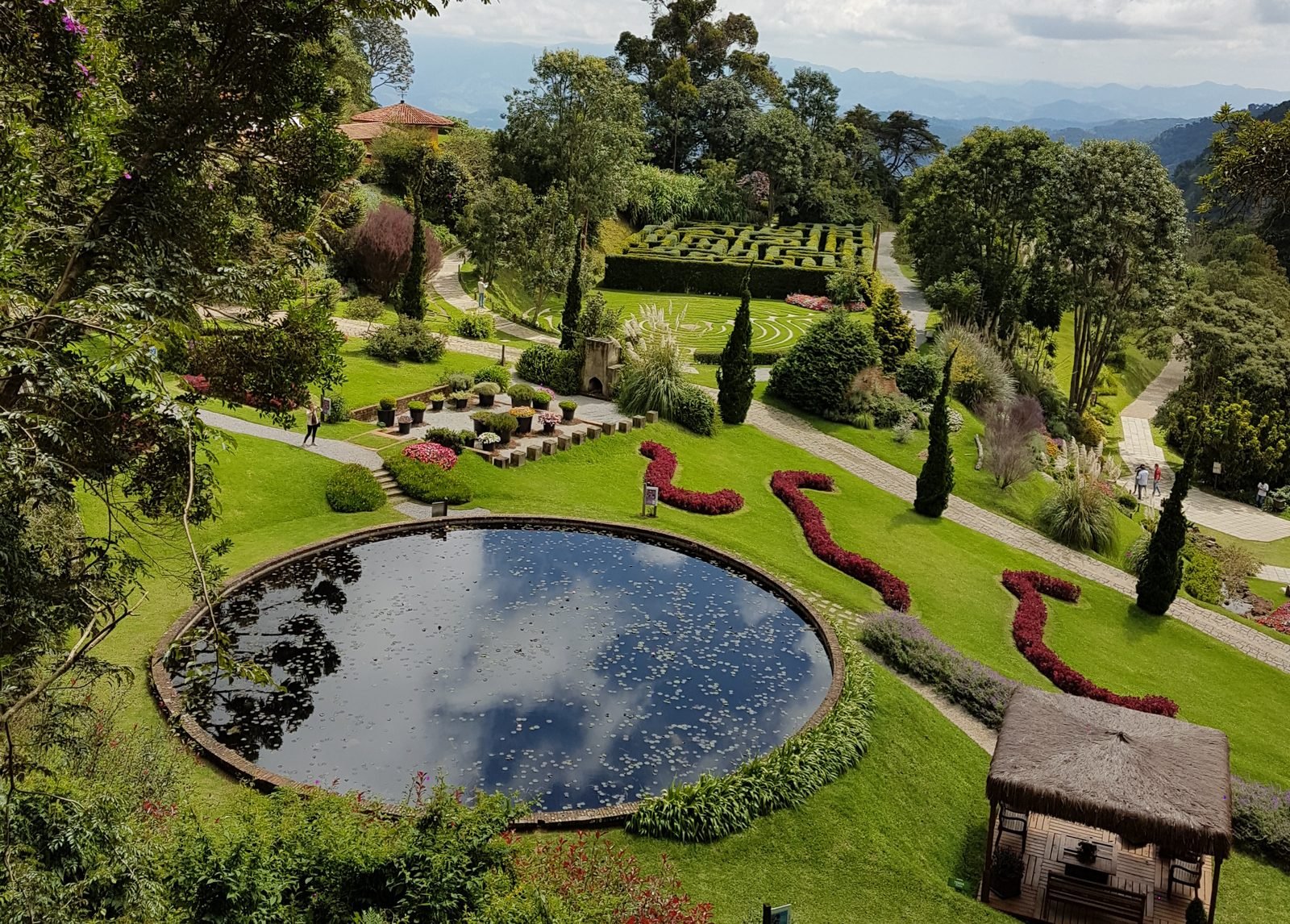
If you only pay for one attraction, make it this one. Amantikir is a garden park created in 2007 by landscape designer and agronomist Walter Vasconcellos: about 60,000 m² with more than 700 plant species in gardens inspired by different countries, plus a maze, lookouts and a wide view over the Serra da Mantiqueira. The name comes from the Indigenous word that became “Mantiqueira”, usually translated as “the mountain that weeps”.
Official details: open every day including holidays, 9 am to 4 pm, last entry 3:30 pm. Full price R$100; half price R$50 (children 6 to 16, students, over-60s and other legal cases). Under-5s free; Campos do Jordão residents R$30. Payment in cash, bank transfer or Pix only, so bring Brazilian reais in cash if you don’t have Pix. A visit takes about 2 hours, and guided walks are included. No picnics. Address: Rua Simplício de Toledo Neto, 2200, Gavião Gonzaga.
Tip: go in the morning, when the light is better and the park is still quiet. Spring (September to November) is when the gardens look their best.
5. Campos do Jordão State Park (Horto Florestal)
Parque Estadual Campos do Jordão, still called Horto Florestal by everyone, is the town’s largest protected green area: araucaria forest, ice-cold streams and trails of various levels. It’s the place for nature without leaving town, at Av. Pedro Paulo s/n, out past Jaguaribe.
Official tickets: R$27 full price and R$13.50 half price (over-60s, students and others). Parking: R$30 per car, R$15 per motorbike. Tickets are bought on the official website up to 48 hours ahead, and the e-ticket arrives by email. Treetop courses, zip line, bikes and pedal boats cost extra. Opening hours differ between sources (9 am to 5 pm or until 6 pm), and some reports mention Wednesday closures in certain months. Confirm on the website or via the park’s WhatsApp, +55 12 99607-0501, before going.
Bring snacks, water and a jacket: under the araucarias it gets cold fast in the late afternoon.
6. Pico do Itapeva
Pico do Itapeva rises to about 2,025 metres. The summit technically sits in Pindamonhangaba, a few metres over the border, but access is from Campos do Jordão along a paved road about 14 km from Capivari (via Av. Senador Roberto Simonsen). It’s one of the highest points in Brazil you can drive to. On a clear day the view sweeps over much of the Paraíba Valley, with several towns spread out below. The name is Tupi for “flat stone”.
Today the lookout sits on private land with a café and lavender beds, which charges for entry and parking. Prices change often, so check on arrival. A clothing and craft market that used to operate at the top was removed by court order in 2014, as the area is environmentally protected.
Tip: go early in the morning, before fog rises from the valley. On a cloudy day the view simply disappears, so check the forecast.
7. Palácio Boa Vista
The São Paulo governor’s winter residence doubles as a palace-museum open to the public. Construction began in 1938 under Governor Adhemar de Barros, to a design by architect Georg Przyrembel, and it was inaugurated in 1964. Since 1970 it has worked as a museum, with furniture, paintings and objects from the state’s art collection.
Opening times according to the Palace Collection (Acervo dos Palácios): Wednesday, Friday, Saturday and Sunday, 10 am to 12 pm and 2 pm to 5 pm; Thursday 2 pm to 5 pm only. No booking needed. Visits run in groups of up to 20 with numbered tickets, so arriving at 10 am or 2 pm helps. Entry is free. It’s in the Alto da Boa Vista district.
8. Felícia Leirner Museum and Claudio Santoro Auditorium
An open-air museum in the forest, with sculptures by artist Felícia Leirner set along paths and lawns. Next door is the Claudio Santoro Auditorium, one of the main Winter Festival venues. It’s a calm, beautiful and cheap outing.
Hours: Tuesday to Sunday, 9 am to 6 pm. Tickets R$20 (half price R$10), free on Sundays and for residents. Free parking. It’s on the way to the state park, so the two pair well in one morning or afternoon.
9. Campos do Jordão Winter Festival
Founded in 1970, it is the largest classical music festival in Latin America, according to its organisers. The 56th edition, in 2026, ran from 4 July to 2 August, with concerts at the Claudio Santoro Auditorium, performances in squares and churches and plenty of free events. Auditorium tickets tend to sell out quickly. Watch the official website from May for the 2027 programme.
10. Baden Baden Brewery
Baden Baden is the town’s best-known beer, and the factory tour has run every day since 1999. It walks you through the brewing process and finishes with a tasting. The brewery is about 2.5 km from the town gateway, at Av. Matheus da Costa Pinto, 1653, Vila Santa Cruz.
Key rules: adults 18+ only, even if accompanied. Groups of up to 30 per slot, and tickets must be bought in advance via the official site or Sympla. There are plain tasting and food-pairing versions. Check prices when you book.
11. Ducha de Prata
A small roadside waterfall surrounded by shops, a craft fair and food stalls. Free entry. Generally open from about 9:30 am to 5:30 pm; on-site parking is paid. A quick stop for photos, sweets and souvenirs.
12. Cherry Blossom Festival
In July and August, when the cherry trees at Parque da Cerejeira bloom, the Festa da Cerejeira em Flor celebrates with Japanese culture, food and performances. It’s a nice change of pace if you’re in town in peak season. Dates shift each year with the blossoms.
13. Day trip to Pedra do Baú (São Bento do Sapucaí)
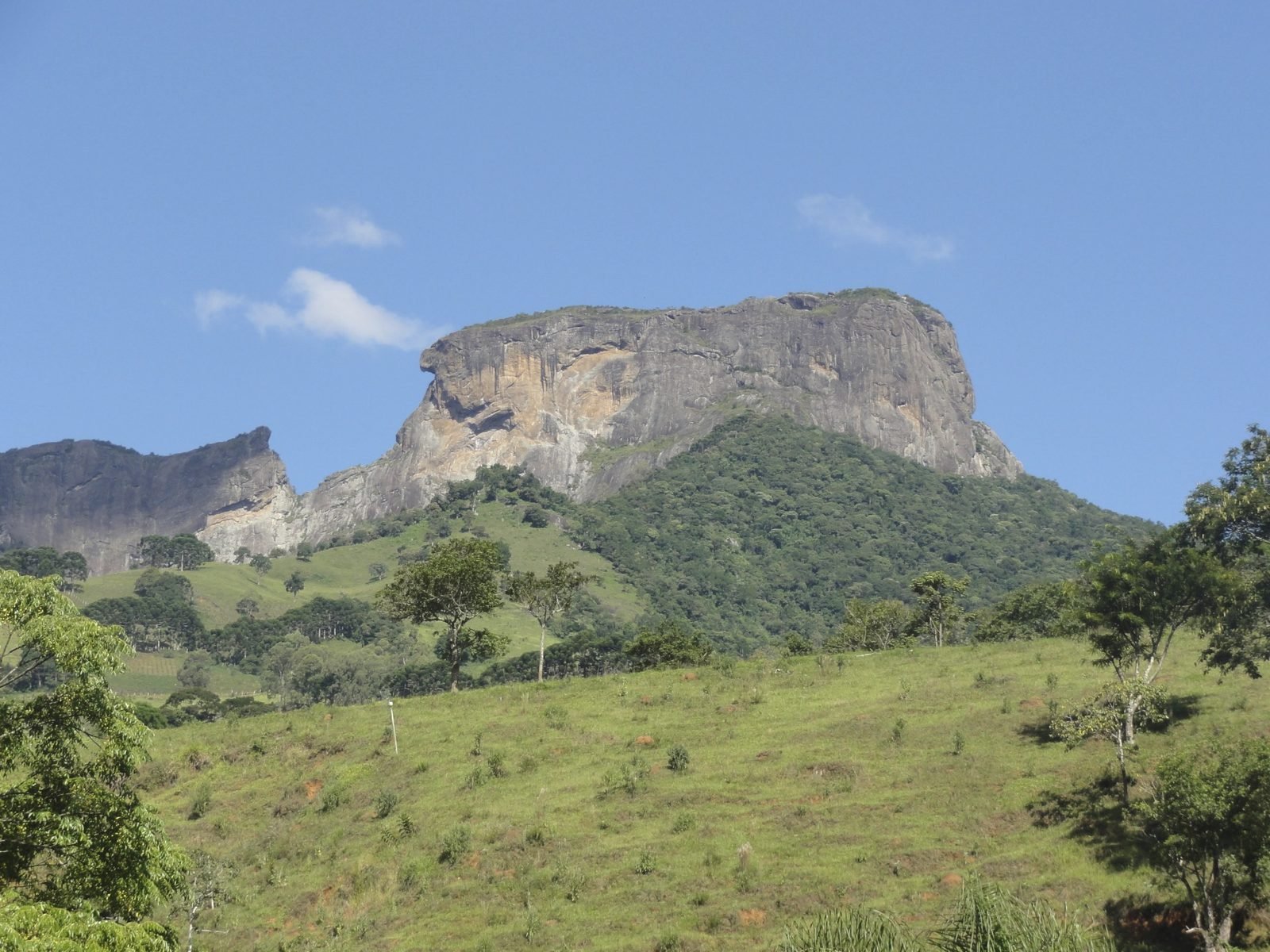
Pedra do Baú is the most famous rock formation in the Mantiqueira. The complex, protected as a Natural Monument, lies in neighbouring São Bento do Sapucaí and has three formations: Bauzinho, Pedra do Baú (1,964 m high, with a 340-metre rock face) and Ana Chata. The first recorded ascent was in 1940, by the Cortez brothers.
Bauzinho is the easy one: no booking, open daily 9 am to 6 pm, R$18 per person (cash or Pix). Over-60s and children up to 12 are exempt. Cars may drive to the top only with seniors, people with reduced mobility, pregnant visitors or children up to 5; everyone else walks about 30 minutes. No pets. The face-on view of Pedra do Baú is worth every step.
For Ana Chata and the Pedra do Baú via ferrata (iron rungs fixed into the rock), advance booking and safety gear are mandatory under the monument’s rules. Trail entry is from 7 am to 2 pm, and via ferrata climbs must start by 3 pm. If you lack experience, hire a certified guide.
Where to eat in Campos do Jordão: fondue, trout, pine nuts and chocolate
Short answer: Campos do Jordão is all about cold-weather food. Cheese and chocolate fondue in Capivari, trout raised in the icy Mantiqueira streams, dishes made with pinhão (araucaria pine nuts) in autumn and winter, hot chocolate from local factories and craft beer, with Baden Baden leading the way. For dinner in Capivari on July nights, book ahead. Out of season you can pick on the spot.
Fondue: the cliché that works
Dozens of Capivari restaurants serve fondue as a set sequence (cheese, meat, then chocolate). It’s pricey for what it is and fairly similar from place to place, but on a 5 °C night by the fireplace, nobody complains. Read the menu at the door first: many places charge per person, and wine adds up quickly.
Mantiqueira trout
The cold mountain streams are perfect for trout farming, and it shows up on many menus: grilled, with almonds, smoked or as pâté. In the surrounding countryside, including on the way to Santo Antônio do Pinhal and São Bento do Sapucaí, trout farms and rural restaurants serve it fresh.
Pinhão and the araucaria
The seed of the araucaria, the town’s symbol tree, appears in autumn and winter in soups, risottos, a sweet paçoca and simply boiled, sold at street stalls. If you visit between April and July, try it. It tastes a bit like chestnut.
Chocolate and sweets
Chocolate factories are part of the Capivari landscape. The best known is Chocolate Araucária, which has offered factory visits and a small chocolate museum in the past; check whether visits are open when you travel. Homemade sweets, jams and liqueurs are sold at Ducha de Prata and craft fairs.
Beer
Besides Baden Baden, which runs the factory tour and has beer halls in town, the region has several smaller craft breweries. If you’re driving the mountain roads, agree on a designated driver: the descent is unforgiving.
Hotel restaurants
Several hotels have well-regarded restaurants, such as Maison Du Champ (at Le Renard), Alquimia (at Serra da Estrela) and the restaurants at Toriba and the Grande Hotel Campos do Jordão, which is also a Senac hospitality school. If you’re not staying there, call ahead to ask whether they take non-guest bookings.
Practical eating tips
Tipping: a 10% service charge is usually added to restaurant bills in Brazil and is optional. Menus in English are uncommon outside the bigger Capivari restaurants, so a translation app helps. Lunch is the main meal for many Brazilians, and set lunches in Abernéssia are much cheaper than dinner in Capivari.
How much does a trip to Campos do Jordão cost?
Short answer: attractions are relatively cheap, but accommodation and food in July hit hard. For a couple, an off-season weekend with a mid-range hotel, meals and three or four paid attractions usually costs far less than the same trip in July. The main tickets range from free (Palácio Boa Vista, Ducha de Prata, the railway’s Memory Centre) to R$100 (Amantikir).
| Item | Price (Oct 2026, official sources) | Notes |
|---|---|---|
| Parque Amantikir | R$100 (half R$50; residents R$30) | Cash, transfer or Pix |
| State Park (Horto) | R$27 (half R$13.50) | Plus R$30 car parking |
| EFCJ tram | R$20 to R$30 depending on route | Ticket office only, on the day; over-60s half price |
| Steam train (weekends) | R$23 return | Saturdays, Sundays and holidays |
| Chairlift (Parque Capivari) | Varies by season; Night Pass R$49 | Online sales available |
| Felícia Leirner Museum | R$20 (half R$10) | Free on Sundays |
| Palácio Boa Vista | Free | Groups with numbered tickets |
| Bauzinho (Pedra do Baú) | R$18 | Over-60s and children up to 12 exempt |
| Tolls São Paulo–Taubaté via SP-070 | Jacareí R$5.70; Caçapava R$5.80, plus Itaquaquecetuba and Guararema | 2026 car rates |
| TPAM (out-of-town car) | R$13.34 per day | Check whether it’s in force |
Accommodation: the biggest expense
Hotel rates in Campos do Jordão swing wildly with the season. From March to May and September to November, the same rooms can cost a fraction of their July price, when many hotels only sell multi-night packages. A real example: in October 2026 the Grande Hotel Campos do Jordão advertised an All Souls’ Day holiday package from 6 instalments of R$1,510. Simple guesthouses in Abernéssia and Jaguaribe cost much less. Always compare on the hotel’s official site: direct rates or perks are often better than on booking platforms.
How to save money
- Travel Sunday to Thursday and avoid July.
- Favour free or cheap outings: Palácio Boa Vista, Ducha de Prata, the railway’s Memory Centre and the Felícia Leirner museum on Sundays.
- Have lunch in Abernéssia and save Capivari fondue for one night.
- Bring a water bottle and snacks for the state park and Bauzinho.
- If you drive, share the car: tolls, fuel and the possible TPAM cost less per head.
Campos do Jordão itinerary: 2 or 3 days
Short answer: in two days, do Capivari, the chairlift, Amantikir and the tram. On day three, add Pico do Itapeva, Palácio Boa Vista, the state park and the Felícia Leirner museum. With a fourth day, head to Pedra do Baú. Group each day by area to avoid wasting time in traffic.
Day 1: Capivari and Morro do Elefante
Arrive early, check in and head straight to Parque Capivari to ride the chairlift up Morro do Elefante while the queue is short. Come down for lunch in Capivari. In the afternoon, take the tram to Abernéssia (or the steam train at weekends) and stop by the railway’s Memory Centre. In the evening, fondue in Capivari, booked ahead if it’s July.
Day 2: Amantikir, Baden Baden and Ducha de Prata
Start at Amantikir at 9 am, allowing two hours. Continue to Ducha de Prata for photos and sweets. In the afternoon, do the Baden Baden tour (booked in advance) and finish with a hot chocolate in Capivari. If you still have energy in winter, go back to Parque Capivari for the chairlift Night Pass.
Day 3: Itapeva, the palace and the araucarias
Leave early for Pico do Itapeva, before the fog. On the way back, visit Palácio Boa Vista (arrive at 10 am for the first group). After lunch, head to the Jaguaribe side for the Felícia Leirner museum and the state park, with tickets bought 48 hours ahead. Remember the palace is closed on Mondays and Tuesdays, and the museum on Mondays.
Day 4 (optional): Pedra do Baú and São Bento do Sapucaí
Spend the day at the Pedra do Baú complex. Bauzinho is for everyone; the Baú via ferrata needs booking, gear and fitness. Have lunch in São Bento do Sapucaí, a town known for rural tourism, wine and cheese, and head back in the late afternoon.
Is Campos do Jordão safe? Practical tips
Short answer: Campos do Jordão is considered a calm town for visitors, and Capivari is busy and well policed in high season. The bigger risks are the mountain roads (bends, fog and rain), underestimating the cold, unguided trails and petty theft in crowded spots. Keep an eye on your phone and wallet in Capivari on July weekends.
- On the road: drive the mountain section in daylight when you can, use dipped headlights in fog and avoid descending on Sunday afternoon of holiday weekends.
- In the cold: mild hypothermia is a real risk on early trips to Itapeva or on trails. Dress in layers and bring a beanie.
- On trails: stick to marked trails in the state park. For the Pedra do Baú via ferrata, go only with proper gear and, if you’re a beginner, a certified guide.
- In the water: mountain rivers and waterfalls rise fast with heavy summer rain. Get out if the sky darkens.
- Health: altitudes of 1,600 to 2,000 m rarely cause problems, but dry winter air dries out skin and lips. Bring moisturiser and drink water.
- Money: cards and Pix work almost everywhere, but some attractions (such as Amantikir and Bauzinho) take only cash, transfer or Pix. Carry some small notes.
- Bookings: in July, book hotels, restaurants and the Baden Baden tour well ahead. The tram can’t be reserved: get to the station early.
- Pets: several hotels accept pets (see the list below), but Bauzinho doesn’t, and the tram only takes pets up to 10 kg in a rigid carrier.
- Language: English is limited outside hotels and the main Capivari restaurants. Download Portuguese offline in your translation app.
Nearby destinations to combine with Campos do Jordão
Short answer: Campos do Jordão pairs well with São Bento do Sapucaí (Pedra do Baú) and Santo Antônio do Pinhal, just down the road, and with São Paulo, where most trips start. For mountains and beach on the same trip, drop down to São Paulo’s north coast or to Paraty in Rio de Janeiro state.
- São Paulo: the gateway city. See our São Paulo travel guide to make the most of the capital before or after the mountains.
- Ubatuba: around 100 beaches on the north coast, a few hours’ drive via the Paraíba Valley. Read our Ubatuba travel guide.
- Paraty: a colonial old town, islands and waterfalls on the Costa Verde. See the Paraty travel guide.
- Gramado: if you love mountain air and European-style architecture, Gramado in Brazil’s far south is the other big name. See our Gramado travel guide.
- Santo Antônio do Pinhal: a smaller, more rural neighbour with lookouts and restaurants. Next to Eugênio Lefèvre station, at 1,162 m, the railway runs a free lookout open from 9 am to 5 pm.
- São Bento do Sapucaí: Pedra do Baú, rural tourism, wine and cheese. In 2024 it was named the most welcoming destination in Brazil in the Traveller Review Awards.
Where to stay in Campos do Jordão: 10 places with official websites
Short answer: to walk everywhere, stay in Vila Capivari (Le Renard, Leão da Montanha, Serra da Estrela, Estoril or Villa Capivary). For a full-service hotel with several restaurants and leisure facilities, look at Toriba, the Grande Hotel Campos do Jordão and Vila Inglesa. For silence and altitude, Home Green Home and Surya-Pan. The links go to each property’s official website and were checked on 27 October 2026. There are no affiliate links. Services listed are those stated on each website, and prices and conditions may change, so confirm directly with the hotel.
One tip before booking: in July many hotels impose minimum stays and charge far more than the rest of the year. If your dates are flexible, compare a weekend in June or August with one in July. The difference is usually big.
Toriba Hotel Spa & Gastronomia (mountain hotel, Toriba road)
Toriba is one of the town’s most traditional hotels, set at around 1,800 metres on Avenida Ernesto Diederichsen, 2962, according to its official website. It highlights immersion in nature, a spa and four restaurants, and has a strong reputation with families travelling with children. A good pick if you plan to spend much of your time at the hotel.
Home Green Home (boutique hotel, Pico do Itapeva road)
Home Green Home occupies a Norman-style, castle-like building at 1,850 metres, near the road to Pico do Itapeva, according to its official website. Rooms have fireplaces, small pets are welcome and one child up to 7 stays free. Ideal for couples after quiet and views who don’t mind driving down to Capivari.
Surya-Pan Hotel Refúgio (hotel, Alto da Boa Vista)
Surya-Pan sits on Avenida Dr. Fausto Bueno Arruda Camargo, 1055, in Alto da Boa Vista near the palace, according to its official website. Its big selling point is that it’s designed for travellers with dogs. A retreat atmosphere, away from the Capivari bustle.
Le Renard (hotel, Vila Capivari)
Le Renard is at Rua Engenheiro Souza Campos Junior, 50, in Vila Capivari, according to its official website. It has a heated pool (10 am to 8 pm), the Maison Du Champ restaurant and a free shuttle within 1 km from 9 am to 11 pm, which solves trips into the centre. Duplex suites come with a hot tub and fireplace. Pets up to 8 kg are accepted in the Classic Júnior category for R$250 per day.
Hotel Leão da Montanha (hotel, Vila Capivari)
Leão da Montanha is at Rua Dr. Raul Mesquita, 443, in Vila Capivari, according to its official website. It has a covered heated pool, sauna, Piano’s Bar and the Leão Gourmet restaurant. Breakfast runs from 8 to 11 am, and one child up to 7 stays free. A solid choice for families who want to be close to everything.
Hotel Serra da Estrela (hotel, Vila Capivari)
Hotel Serra da Estrela is at Rua Mario Ottoni Rezende, 160, in Capivari, according to its official website. It offers a spa, the Alquimia restaurant, free bike loans and accepts pets. Central location plus proper leisure facilities.
Grande Hotel Campos do Jordão (Senac hotel school)
The Grande Hotel Campos do Jordão is a Senac hospitality-school hotel on Avenida Frei Orestes Girardi, 3549, 175 km from São Paulo, according to its official website. The building has Art Nouveau lines, and the hotel has its own vineyard, several restaurants and bars, including a children’s restaurant. In October 2026 it advertised an All Souls’ Day package from 6 instalments of R$1,510. For lovers of classic grand hotels with hotel-school service.
Hotel Estoril (hotel, Vila Capivari)
Hotel Estoril is at Avenida Macedo Soares, 241, in Vila Capivari, according to its official website. It has a restaurant and spa, but no pool and no pets. The draw is the location, right in the thick of things.
Pousada Villa Capivary (guesthouse, Vila Capivari)
Pousada Villa Capivary is at Avenida Victor Godinho, 131, in Vila Capivari, according to its official website. The lounge fireplace is lit every day, and it has a small-guesthouse feel. No pets. Good for couples without a car.
Hotel Vila Inglesa (leisure hotel, Campos do Jordão)
Hotel Vila Inglesa has welcomed guests since 1948, according to its official website, and is at Rua Marianne Baumgart, 3400. The focus is family leisure, with facilities to spend the whole day on site. Good for families with kids who want green space.
Video: Campos do Jordão
The video below was published by the Campos do Jordão city hall on YouTube and presents the town as Brazil’s most sought-after winter destination, with Capivari, parks, mountains and events (in Portuguese, but the images speak for themselves).
Campos do Jordão FAQ
What is Campos do Jordão known for?
It’s Brazil’s best-known mountain winter destination: the highest town seat in the country at 1,628 m, with European-style architecture, araucaria forests, cold winters, fondue and the Campos do Jordão Winter Festival, which organisers call the largest classical music festival in Latin America.
What are the best things to do in Campos do Jordão?
Vila Capivari, the Parque Capivari chairlift up Morro do Elefante, Parque Amantikir, the tram and steam train of the Campos do Jordão railway, the state park (Horto Florestal), Pico do Itapeva, Palácio Boa Vista, the Felícia Leirner museum, the Baden Baden brewery and Ducha de Prata. With an extra day, take a day trip to Pedra do Baú.
When is the best time to visit Campos do Jordão?
May to August for cold, dry weather. July is the peak, with the Winter Festival, but also the most expensive and crowded month. April, May, September and October balance pleasant weather, fewer people and lower rates. December to March is wetter.
How many days do you need in Campos do Jordão?
Two days cover Capivari, the chairlift, Amantikir and the tram. With three days you can add Pico do Itapeva, Palácio Boa Vista, the state park and the Felícia Leirner museum. Four days allow a trip to Pedra do Baú.
How do I get from São Paulo to Campos do Jordão?
By car, via the Ayrton Senna/Carvalho Pinto highway (SP-070) or the Dutra to Taubaté, then the SP-123 up the mountains: about 170 to 185 km and 3 hours. By bus, Pássaro Marron leaves from São Paulo’s Tietê terminal and takes around 3 hours.
What is the nearest airport to Campos do Jordão?
São José dos Campos airport is the closest but had few commercial flights in 2026. In practice, most travellers fly into São Paulo Guarulhos (GRU) or Congonhas (CGH) and continue by car, transfer or bus.
Does it snow in Campos do Jordão?
Very rarely. There are historical snow records from 1928, 1942, 1947 and 1966. Frost is common on winter mornings, and the record low of −7.3 °C, set in 1979, is the coldest ever measured in São Paulo state.
How much does Amantikir cost?
According to the official website, full price is R$100 and half price R$50. Under-5s are free and residents pay R$30. The park is open daily from 9 am to 4 pm (last entry 3:30 pm) and accepts cash, bank transfer or Pix only.
Is there a fee to enter Campos do Jordão?
In 2025 the town passed an Environmental Preservation Fee (TPAM), charged per day on vehicles registered elsewhere, with an announced rate of R$13.34 per car. Charging was expected to start in the second half of 2026. Check the city hall website to see whether it’s in force.
Is Campos do Jordão good for families?
Yes. Parque Capivari, the tram, the steam train, the state park and Amantikir all work well for children, and several hotels have kids’ facilities. The exception is the Baden Baden brewery tour, which is for adults 18+ only. Pack plenty of warm clothes for little ones.
Is Campos do Jordão worth visiting?
Yes, as long as you know what you’re signing up for. Campos do Jordão isn’t a hidden rustic hamlet: it’s a big tourist town, with traffic, queues and peak-season prices. In return it offers something rare in Brazil, a real winter, with araucarias, fireplaces and freezing nights, three hours from São Paulo. The Amantikir gardens, the view from Itapeva, the century-old railway and the music of the Winter Festival make the trip worthwhile. If you can, avoid July: the town is calmer and you’ll enjoy it more.
Sources
- Campos do Jordão city hall
- Campos do Jordão city hall: Environmental Preservation Fee law
- Wikipedia (PT): Campos do Jordão
- Wikipedia (PT): Campos do Jordão railway
- EFCJ: rides and fares (São Paulo Metropolitan Transport Department)
- NetCampos: steam train and tourist tram
- Parque Capivari: chairlift
- Parque Capivari: winter 2026
- Parque Amantikir: tickets
- Parque Amantikir: visit
- Campos do Jordão State Park: tickets
- São Paulo Protected Areas Guide: Campos do Jordão State Park
- Palace Collection: Palácio Boa Vista
- Felícia Leirner Museum: location and hours
- Felícia Leirner Museum: tickets
- Campos do Jordão Winter Festival: 2026 edition
- Baden Baden: brewery tour
- São Bento do Sapucaí city hall: climbing Pedra do Baú
- Pedra do Baú Natural Monument: information
- g1: cheap or free attractions in Campos do Jordão
- Pássaro Marron
- Wikipedia (EN): Campos do Jordão