Lençóis Maranhenses is a field of white sand dunes on the eastern coast of Maranhão, in northeastern Brazil. After the rains, water collects between the dunes and forms hundreds of green and blue freshwater lagoons. The landscape is protected by Lençóis Maranhenses National Park, created in 1981 and added to UNESCO’s World Heritage List in 2024. Almost everyone arrives through Barreirinhas, a riverside town on the Preguiças River where the 4×4 tours to Lagoa Azul and Lagoa Bonita begin. Travellers who want more peace head to Atins, a sandy village at the mouth of the river, or to Santo Amaro do Maranhão on the western side, where the dunes start almost at the end of the streets.
This Lençóis Maranhenses travel guide was checked in October 2026 and is written for international visitors. It covers how to get there from São Luís now that Barreirinhas has no scheduled commercial flights, when the lagoons are usually full, the park rules for trekking and vehicles that changed in 2026, Santo Amaro’s tourist tax, the prices tour operators publish for each trip, two- to five-day itineraries and ten pousadas (guesthouses) linked to their official websites, with no affiliate links. Where sources disagree, we show both versions and say which one we use.
Quick facts: Lençóis Maranhenses (Maranhão, Brazil)
- What it is: a national park created by Decree 86,060 of 2 June 1981, covering about 156,000 hectares (the figure varies by source) in the municipalities of Barreirinhas, Santo Amaro do Maranhão and Primeira Cruz. Roughly 90,000 hectares are dunes with rain-fed lagoons. A UNESCO natural World Heritage Site since July 2024.
- Gateways: Barreirinhas, with the most services and the Lagoa Azul and Lagoa Bonita circuits; Atins, a small village with sand streets at the mouth of the Preguiças River; and Santo Amaro do Maranhão on the western side, for the Andorinhas, Emendadas and Betânia lagoons.
- Getting there: fly to São Luís (SLZ) and drive about 250 to 270 km to Barreirinhas, 3 to 4 hours by car or shuttle van. Azul ended its flights to Barreirinhas in March 2025, and in September 2026 the town’s airport still had no scheduled commercial flights.
- Entrance fee: none. Tours may only be run with vehicles, drivers and guides licensed by ICMBio, the federal parks agency; private cars, quad bikes and UTVs are banned from the dunes.
- Local tax: only Santo Amaro do Maranhão charges a Sustainable Tourism Tax: R$ 10 per person under the 2023 law, which allows for annual adjustment. It is valid for three days and has been issued online since May 2026. Barreirinhas and Atins do not charge a tax.
- When to go: Brazil’s Ministry of Tourism recommends May to September. The lagoons are usually fullest from June to August, but water levels depend on each year’s rain. From October to January many lagoons dry out or become shallow.
- Prices checked: Lagoa Azul circuit R$ 140 to R$ 150 per person; Lagoa Bonita R$ 150; Preguiças River boat trip R$ 130 to R$ 250; shared van São Luís–Barreirinhas about R$ 80 to R$ 150 each way.
- How many days: 2 days for the two classic circuits; 3 to 4 days to add the Preguiças River, Atins or Santo Amaro; 5 days to include a night in Atins and a full day on the Santo Amaro side, or to do the multi-day trek across the dunes.
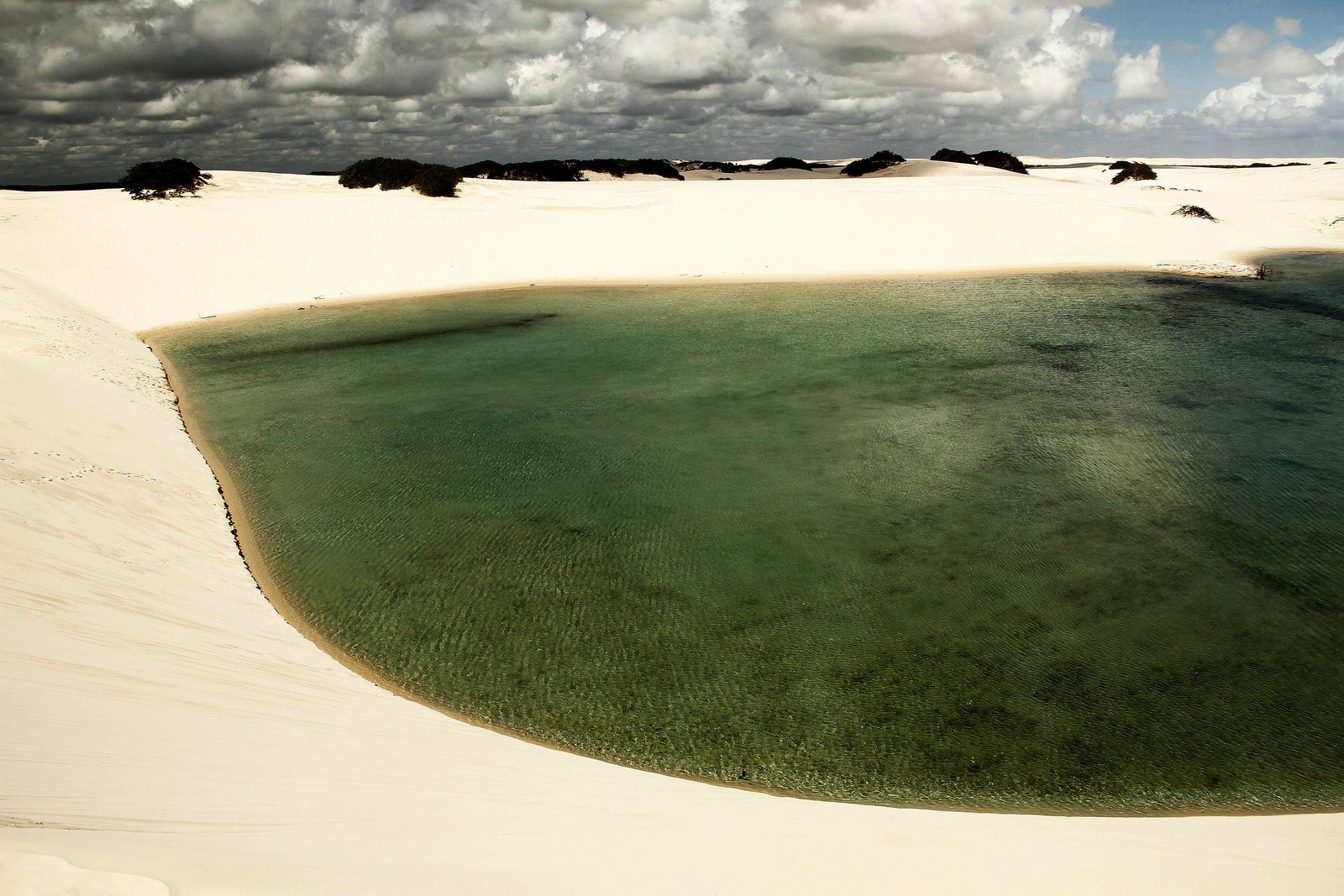
A little history and geology: how the Lençóis formed
Short answer: Lençóis Maranhenses is made of sand brought in by the sea and pushed inland by the wind. In the rainy season the water table rises and rainwater collects in the hollows between the dunes, forming lagoons with no connection to rivers or the sea. Because the dunes move up to 25 metres a year, the lagoons change shape and position from one year to the next. The park was created in 1981 and became a World Heritage Site in 2024.
The name, which means “the bedsheets of Maranhão”, comes from the image everyone repeats after seeing the region from above: smooth white dunes that look like sheets spread over the ground. UNESCO’s official description explains how it works. Along about 80 km of coastline, the tide deposits sand on a beach between 600 metres and 2 km wide. The wind, which blows almost always from the same direction, erodes that sand and shapes small crescent dunes called barchans, 50 cm to 1 metre high near the sea. As they advance inland over older generations of dunes, they grow to about 30 metres. These dune chains can be up to 75 km long and reach more than 20 km inland.
Why the lagoons appear and disappear
In the first half of the year, heavy rain falls on the Maranhão coast. The water table rises and water collects in the low ground between the dunes, forming temporary lagoons and a few permanent ones. UNESCO points out that they have no inflow or outflow: they depend on rain. The bottom is covered by a layer of brown or green algae and cyanobacteria, which helps explain the range of colours. In the dry season the water evaporates and seeps away, and many lagoons vanish. Since the dunes migrate 4 to 25 metres a year, according to the same description, next year’s lagoon comes back with a different outline, sometimes in a different spot. That is why photos of the same circuit taken in different years can look like different places.
A desert that is not a desert
Despite appearances, the region has a semi-humid climate and gets a lot of rain for part of the year, so it is not technically a desert. The park sits in a transition zone between the Cerrado savanna, the dry Caatinga and the Amazon, and the Ministry of Tourism notes that species from all three biomes occur there. Besides the dunes, there are more than 40,000 hectares of restinga coastal scrub, mangroves, rivers and a strip of sea, according to UNESCO. The Ministry of Tourism estimates that the dune field covers about two thirds of the park.
The park’s creation and official area
Lençóis Maranhenses National Park was created by Decree 86,060 of 2 June 1981, which set its area at 155,000 hectares. Today the figure varies slightly by source: ICMBio gives 156,608.16 hectares, Brazil’s National Register of Protected Areas lists 157,173.63 hectares, UNESCO uses 156,562 hectares and the Ministry of Tourism still says 155,000. The difference comes from different surveys and mapping bases. In this guide we say “about 156,000 hectares”. The park is managed by ICMBio, the Chico Mendes Institute for Biodiversity Conservation, and visitor rules follow ICMBio Ordinance 199/2017 and the park’s management plan.
Communities living inside the park
Lençóis is not an empty landscape. When UNESCO inscribed the park in 2024, more than 4,000 people lived within its boundaries, in villages such as Baixa Grande, Queimada dos Britos and Betânia, the oases where trekking groups sleep. The park recognises these communities through formal commitment agreements. In practice, visitors meet fishermen, families who raise goats and residents selling tapioca and meals at the support points. Treat these places as someone’s home, because that is what they are.
World Heritage in 2024
On 26 July 2024, at the 46th session of the World Heritage Committee, UNESCO inscribed Lençóis Maranhenses National Park on the World Heritage List as a natural site, under decision 46 COM 8B.6, on the basis of criteria (vii), exceptional natural beauty, and (viii), geological processes. UNESCO considers its field of fixed and mobile dunes the largest in South America and the only one in the world with such an extensive development of dynamic dunes and lagoons.
When to visit Lençóis Maranhenses: rain, lagoons and seasons
Short answer: the best time to see full lagoons is usually June to August, right after the rainy season. The Ministry of Tourism recommends May to September. July is the busiest month because of Brazilian school holidays, and August is often the best balance between water and crowds. From October to January many lagoons are shallow or dry. Because water levels depend on each year’s rainfall, check with a local operator before you buy your ticket.
The Ministry of Tourism sums up the calendar like this: rain between February and May, a dry season from June to January, and the fullest lagoons during and just after the rainy season. In a column published by iG Turismo in January 2026, journalist Vitor Vianna advises against going in January, when low lagoons are common, and points to June to August as the peak, with August as the smartest choice and late August and early September still good. The two sources agree on the essentials and differ slightly at the edges: the Ministry includes May and September, the column stresses August. Our reading is simple: June to August is the safest bet, and May and September are good bets in years of normal rainfall.
| Period | What the lagoons are usually like | What to consider |
|---|---|---|
| February to May | Filling up; by April and May they may already look good | Rainy season with heavy showers; some sand roads flood |
| June to August | Fullest and most colourful | High season; July is Brazilian school holidays and the busiest; book ahead |
| September | Still holding water, starting to drop | A good option, with fewer people than July |
| October to January | Low; many dry out | Windy and very sunny; good for dunes and kitesurfing, not for swimming in lagoons |
This table summarises what the Ministry of Tourism, the iG column and the operators we consulted say. These are not measurements: lagoon levels change from year to year. In dry years the lagoons can be low as early as August; in wet years there is still water in October. Some Atins agencies still give March to May as the season for full lagoons, which holds for the end of the rainy season but is not the rule for the whole park.
Temperature, sun and wind
The sun is strong all year because the region lies close to the Equator, and the white sand reflects the light. In the second half of the year the wind picks up, which helps cool things down but also blows sand across the dunes. Sunset is the most popular moment on both Barreirinhas circuits, and travellers who want photos without crowds tend to prefer the circuits on the Santo Amaro or Atins side.
Holidays and crowds
July, New Year, Carnival and long holiday weekends fill Barreirinhas. Pousadas, vans from São Luís and the most popular tours sell out first. ICMBio also works with visitor guideline numbers for each attraction: in its visitation planning table, Lagoa Bonita, for example, has parking planned for 150 vehicles, which limits how many cars can stop there at once. If you can, travel midweek and avoid peak dates.
For more on the calendar, see our Portuguese article on the best time to see the Lençóis Maranhenses lagoons.
How to get to Lençóis Maranhenses: São Luís, Barreirinhas and Parnaíba
Short answer: the usual route is to fly to São Luís (SLZ) and continue by shuttle van, bus or car to Barreirinhas, a trip of about 250 to 270 km and 3 to 4 hours on the BR-135 and MA-402 highways. There have been no scheduled commercial flights to Barreirinhas since March 2025. Travellers on the Rota das Emoções (Route of Emotions) can arrive from the Piauí side by flying to Parnaíba (PHB), or come overland from Jericoacoara in Ceará.
Flying to São Luís
São Luís’s Marechal Cunha Machado International Airport is the main gateway, with flights from several Brazilian state capitals. Barreirinhas has an airport, but Azul dropped the route in March 2025. In September 2026, Brazil’s Ministry of Ports and Airports said the terminal handles only general aviation and charter flights and is being modernised under the AmpliAR programme, with the promise of scheduled flights in the future. Until an airline announces a return, plan on São Luís or Parnaíba.
São Luís to Barreirinhas by road
The road leaves São Luís on the BR-135 to Bacabeira and continues on the MA-402, known as the Estrada dos Lençóis, to Barreirinhas. Part of this route is already treated as a federal highway, the BR-402. The distance is given as 250, 255, 260 or 270 km depending on the source, and the drive takes three to four hours by car, a little longer by van because of pick-ups and a rest stop. The road is paved, but the worst stretch is between the Santo Amaro junction and Barreirinhas, the last hour of the trip: in May 2026 there was a protest over potholes, and DNIT, the federal roads agency, carried out repairs that were still under way, according to Rota Insider. Expect patches and roadworks.
- Shared van (transfer): the most popular option. Rota Combo, for example, charges R$ 132 per person each way in the 2026 season, with daily departures from São Luís between 6:20 and 8:00 a.m. The Rota Insider guide recorded R$ 80 to R$ 150 per person in October 2026. Book ahead and give your flight number.
- Private transfer: Rota Combo lists R$ 1,072 for up to three people and R$ 1,300 for four or five, each way. Rota Insider quotes R$ 600 to R$ 1,700 per car.
- Bus: buses leave São Luís bus station in the morning, early afternoon and evening, from about R$ 70, according to Rota Insider. They do not wait for delayed flights, and the evening ones reach Barreirinhas late. Check times when you buy.
- Rental car: fine for reaching Barreirinhas and getting around town, but useless inside the park. Only licensed vehicles may drive in Lençóis. Avoid driving the highway at night.
Barreirinhas to Atins
Atins lies at the mouth of the Preguiças River, about 38 km downstream. There are three ways to get there. The fast speedboat, called a voadeira, takes about an hour and leaves from Avenida Beira Rio; Rota Insider recorded fares of R$ 120 and R$ 150 per person in October 2026. The boat that stops at Vassouras, Mandacaru and Caburé takes about four hours and works as both a tour and transport. And there is the licensed 4×4, which uses the outer road and the beach and takes an hour and a half to two hours depending on the tide; the cheapest version is the jardineira, a shared 4×4 truck for about R$ 40. Since July 2026, ICMBio has made it clear that this outer route is the only authorised overland access between Barreirinhas and Atins: crossing the dune field in your own or an unlicensed vehicle means a fine and seizure.
Barreirinhas and São Luís to Santo Amaro
Santo Amaro do Maranhão lies on the western side of the park. The operator Vale dos Lençóis gives 95 km of paved road between Barreirinhas and Santo Amaro, about an hour and a half. The final stretch is the MA-320, a little over 30 km from the BR-402 to Santo Amaro; it was paved and opened by the Maranhão state government in June 2018, according to the G1 news site. The Ministry of Tourism page still mentions 46 km of sand road suitable only for 4x4s with snorkels, which is out of date. Ten months after the road opened, G1 was already reporting potholes, so ask your pousada about road conditions before you go.
On the Rota das Emoções: Jericoacoara, the Parnaíba Delta and Lençóis
Lençóis is the western end of the Rota das Emoções, the route linking Jericoacoara in Ceará, the Parnaíba Delta in Piauí and Lençóis Maranhenses. Many agencies run the 4×4 leg between Jeri and Barreirinhas via the Delta and Paulino Neves, home of the so-called Pequenos Lençóis (Little Lençóis). Travellers doing the full route usually arrive through Fortaleza or Jericoacoara and leave from São Luís, or the other way round. Our Jericoacoara travel guide and Fortaleza travel guide cover the Ceará side, and we have Portuguese tips on getting from Barreirinhas to Parnaíba and things to do in Paulino Neves.
Getting around Lençóis: licensed 4x4s, boats and on foot
Short answer: inside the park you travel in adapted 4×4 trucks licensed by ICMBio, on foot with a guide or by boat along the Preguiças River. Private cars, quad bikes, motorbikes, buggies and UTVs are not allowed in. Barreirinhas is easy to cover on foot or by motorbike taxi; Atins is all sand, and there you walk or take a quad taxi.
The 4×4 tours
The famous jardineiras and pick-up trucks with benches in the back carry groups from Barreirinhas to the lagoons. The ride to Lagoa Azul starts with a ferry crossing of the Preguiças River and continues along sand tracks and flooded patches of restinga. If you have back problems, be aware that it is a bumpy ride. Tours are sold by agencies in town and by pousadas, as group or private trips.
By boat on the Preguiças River
The river links Barreirinhas with Atins and is the natural road for the villages of Vassouras, Mandacaru and Caburé. Speedboats run the trip with stops and also serve as transport for anyone staying in Atins.
On foot
The Ministry of Tourism says hiring a visitor guide is not compulsory but is highly recommended, especially for people who cannot navigate in natural environments. ICMBio’s visitation planning table allows access on foot to all open attractions. But there are rules: the trek across the dunes requires advance booking at the community support points and registering your entry with ICMBio’s trekking QR code, and trekking groups are limited to 10 people per guide. There is no mobile signal in most of the park, the dunes shift and there are no marked trails. Short walks near the edges, such as those that start on foot from Santo Amaro, are feasible on your own; anything longer calls for a guide.
In town and in the villages
Barreirinhas is small and flat; Avenida Beira Rio has most of the restaurants, agencies and the boat landing. Atins has no paved roads, and most pousadas are 5 to 15 minutes’ walk from the centre, according to Rota Insider; quad taxis charge R$ 10 to R$ 20 a ride. Bring flip-flops and a bag you can carry over sand. To explore Barreirinhas on foot, see our Barreirinhas walking guide.
Park rules and fees: what changed in 2026
Short answer: ICMBio does not charge an entrance fee for Lençóis Maranhenses National Park. What you pay for are the services of licensed operators and, in Santo Amaro do Maranhão, the municipal Sustainable Tourism Tax of R$ 10 per person under the 2023 law. In 2026 the park tightened its rules: compulsory booking of support points for treks and a maximum of 10 people per guide, a human waste kit on overnight hikes, a ban on glass and fires, and stepped-up enforcement against unlicensed vehicles.
What is banned inside the park
ICMBio’s visitor guidelines, based on ICMBio Ordinance 199/2017 and the management plan, list the main prohibitions. Read them before you go, because some surprise people used to other beach destinations.
- Tours in private vehicles. Visitors may only be transported by licensed vehicles, drivers and guides.
- Motorbikes, buggies, quad bikes, UTVs and other unauthorised vehicles, as well as enduro races and rallies.
- Any motor vehicle driving over the open dune field.
- Selling, carrying or drinking alcohol, and illegal drugs.
- Campfires, barbecues and camping stoves.
- Pets.
- Glass bottles and containers, under Circular Letter 5/2026.
In practice, that means leaving the beer at your pousada, carrying water in a plastic or reusable bottle and taking all your rubbish back out. The alcohol ban often catches out people who picture a sunset with sparkling wine on a dune: inside the park, that is not allowed.
Trekking rules in force since 1 May 2026
Circular Letter 5/2026, signed by the park’s management on 1 April 2026, set compulsory guidelines for hiking and trekking from 1 May. For long-distance routes such as the Lençóis crossing between Atins, Baixa Grande, Queimada dos Britos and Betânia, you must book the community support points in advance and carry proof, which rangers may ask to see at any time. Groups are limited to 10 people per guide. On any overnight hike, each group must carry at least one human waste collector suited to its size. ICMBio’s visitation planning table adds compulsory entry registration through the park’s trekking and hiking QR code.
Vehicles and access to Atins
On 11 July 2026, Circular Letter 16/2026 reinforced that driving private or unlicensed vehicles across the dune field is banned, including tourist UTVs and quad bikes. The document also named the traditional outer road, which runs outside the park boundary, as the only authorised overland route between Barreirinhas and Atins. Enforcement promises fines and immediate seizure of vehicles under Law 9,605/1998 and Decree 6,514/2008, with special attention to visitors who pretend to be residents to get in without a guide.
Commissions banned
According to the Imaranhão news portal, ICMBio ruled that from 2026 licensed guides, drivers and vehicle owners may not charge or receive commission for taking tourists to restaurants and other businesses inside the park, which belong to traditional residents. If your driver insists on a particular restaurant, you are free to choose another.
Opening hours: sources disagree
The Ministry of Tourism’s page on the park gives daily opening hours of 8 a.m. to 6 p.m. ICMBio’s visitation planning table, a more recent and more detailed operational document, allows activities at sunrise, in the morning, in the afternoon, at sunset and, at several attractions, at night, and says activities may take place around the clock depending on the attraction. That is why operators sell sunset tours returning at 7 p.m. and even full-moon outings returning at 9 p.m. For visitors, what counts is the schedule of the tour you book with a licensed operator.
Is a guide compulsory?
Again, there is nuance. The Ministry of Tourism says a guide is not compulsory but is highly recommended. In practice, since only licensed vehicles enter the park, nearly every visitor goes in with an operator’s driver and guide. For long hikes such as the crossing, the 2026 rules treat the guide as part of the group, with a limit of 10 people per guide. With no mobile signal and dunes that shift, this is not the place to save money.
Santo Amaro’s Sustainable Tourism Tax
Santo Amaro do Maranhão is the only one of the park’s municipalities that charges a tourist tax. Municipal Law 329/2023, published in the town’s official gazette on 19 April 2023, created a Sustainable Tourism Tax of R$ 10 per visitor, covering three days of access to the attractions. The law provides for annual adjustment in line with the IPCA inflation index and charges R$ 150 for motorhomes, also for three days. Exempt are people with disabilities, children under 12 and adults over 60, people born in Santo Amaro and Primeira Cruz, Santo Amaro residents and their first-degree relatives. Collection was suspended at one point and resumed in July 2024, according to G1. Since 18 May 2026 the tax can be issued online through the system indicated by the town hall (in Portuguese), according to the Cazumbá portal and the Jericar agency. Bring ID that proves your age if you qualify for an exemption. Because the law provides for an annual IPCA inflation adjustment and we found no updated 2026 amount published by the town hall, check the amount when you issue the tax.
No tax in Barreirinhas or Atins
In 2023, word spread that Barreirinhas would start charging tourists a fee. The town hall denied it, according to the newspaper O Imparcial. As of October 2026, we found no municipal tax in force in Barreirinhas or Atins, which is a village within Barreirinhas.
Things to do in Lençóis Maranhenses: the main tours
Short answer: the most popular tours leave from Barreirinhas: the Lagoa Azul circuit in the morning, the Lagoa Bonita circuit in the afternoon and the speedboat trip down the Preguiças River to Vassouras, Mandacaru and Caburé. From Atins, the highlights are Canto do Atins, the nearby lagoons and kitesurfing. From Santo Amaro, circuits go to the Andorinhas, Emendadas and Betânia lagoons. If you are fit, the trek across the dunes from Atins to Santo Amaro takes three to five days.
The park has dozens of open attractions, and lagoon names change from year to year because the lagoons themselves change. ICMBio’s planning table organises visits into hubs: Lagoa Azul and Lagoa Bonita, from the Santo Antônio gatehouse near Barreirinhas; Atins and Canto do Atins; Santo Amaro, with Betânia, Emendadas and Rancharia; Ponta Verde and Travosa; and Primeira Cruz. Below are the tours in order of popularity, with the prices operators published in October 2026.
Lagoa Azul circuit
The classic Barreirinhas tour. The 4×4 crosses the Preguiças River by ferry and drives about 10 km along sand tracks, roughly 40 minutes, to the edge of the dunes. From there, the guide leads a walk from dune to dune past several lagoons, with time to swim. Vale dos Lençóis runs the regular tour from 9 a.m. to 1:20 p.m. for R$ 140 per person; Kairós Turismo lists R$ 150. The area has parking and, according to ICMBio, is one of the attractions where authorised events such as breakfasts and picnics can take place. Next to it is Lagoa da Lua, reachable only on foot from the Lagoa Azul car park.
Lagoa Bonita circuit
The other classic, done in the afternoon. The 4×4 ride is about 20 km and an hour to the foot of the dunes, where a staircase helps you climb the first dune, one of the highest points in the area, with a wide view over the dune field. Then the walk takes in several lagoons until sunset. Vale dos Lençóis runs it from 2 p.m. to 7 p.m. for R$ 150 per person, the same price Kairós lists. ICMBio’s table mentions tapioca stalls at the support area by the staircase. To do both circuits in one day, you can book the combined trip with lunch in the village of Mata Fome; Vale dos Lençóis lists R$ 1,850 per private vehicle for up to six people, from 9 a.m. to 7 p.m.
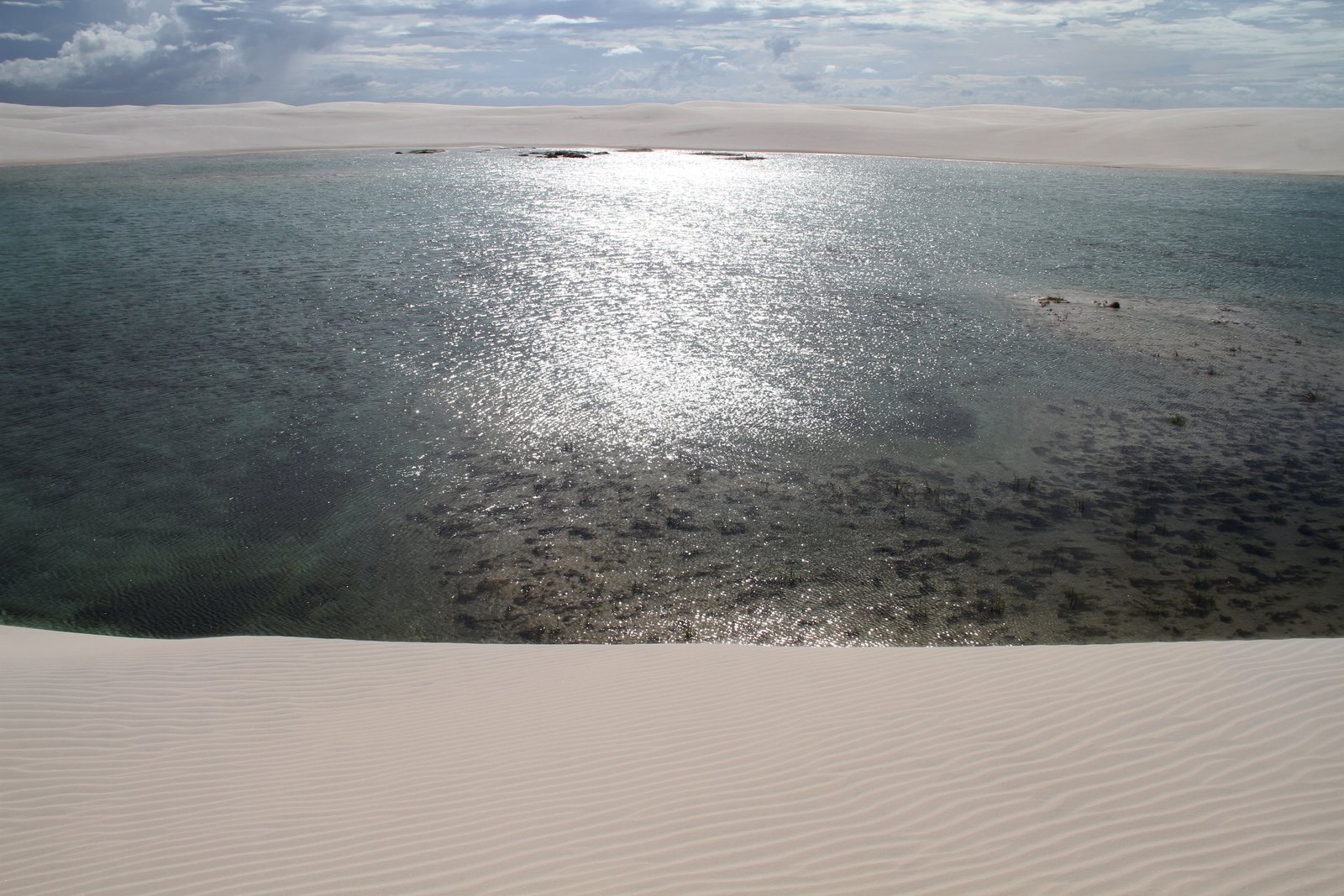
For a closer comparison of the two circuits, see our guide to Lagoa Azul vs Lagoa Bonita.
Speedboat down the Preguiças River: Vassouras, Mandacaru and Caburé
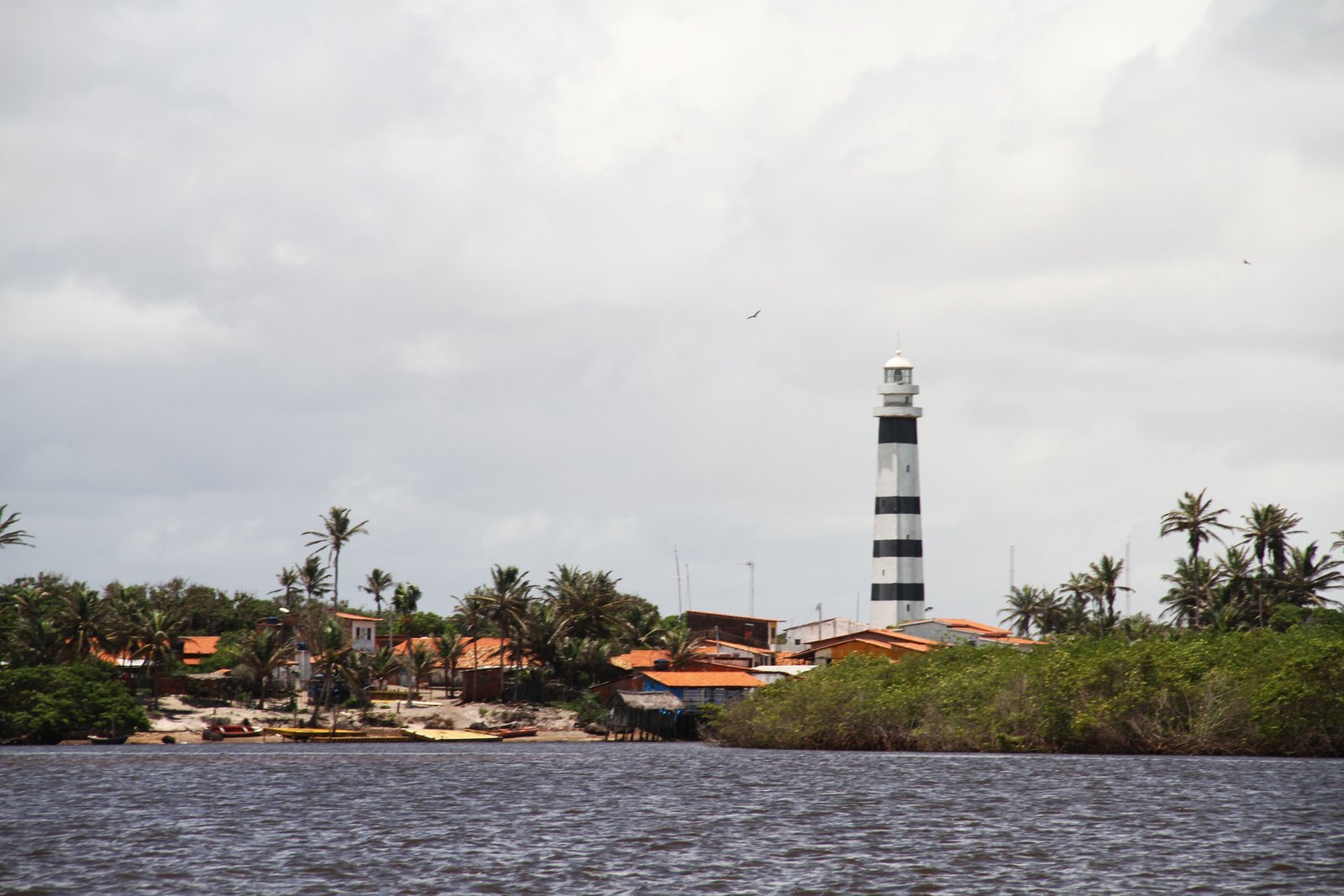
This trip shows the other side of the region: river, mangroves, the Little Lençóis and the meeting of river and sea. The speedboat runs down the Preguiças for about 40 minutes to Vassouras, where there are smaller dunes, a support point and, depending on the season, lagoons for swimming. If you see any animals, do not feed them. The next stop is Mandacaru, home of the Preguiças Lighthouse, and the trip ends at Caburé, a strip of sand between river and sea with restaurants for lunch. Vale dos Lençóis charges R$ 150 per person, from 8:30 a.m. to 3:30 p.m.; Kairós lists R$ 130; Levada Turismo advertises its full-day version from R$ 250. Prices differ according to the type of boat, the length of the trip and what is included.
Preguiças Lighthouse in Mandacaru
The Preguiças Lighthouse, also called Mandacaru Lighthouse, is run by the Brazilian Navy. The white concrete tower with black bands is 35 metres tall, was opened in 1940 and replaced a 1909 structure, according to Wikipedia. Vale dos Lençóis says there are 160 steps to the top, from where you see the river meeting the sea and the dunes of the Little Lençóis. Wikipedia gives daily visiting hours of 8:30 to 11:30 a.m. and 1:30 to 5 p.m. We found no current official source on whether there is a fee to climb; check on site.
Atins and Canto do Atins
Atins is a village of Barreirinhas at the mouth of the Preguiças River, with sand streets, small pousadas, kitesurfing schools and quick access to the eastern dunes of the park. If you are staying in Barreirinhas, you can go on a full-day trip: Vale dos Lençóis drives about 30 km by 4×4, stopping at the river mouth, walking through the Canto do Atins lagoons and having grilled shrimp for lunch at one of the area’s rustic restaurants, such as Seu Antônio’s or Dona Luzia’s, for R$ 250 per person, from 8 a.m. to 4 p.m., lunch not included. Kairós lists R$ 200 for its full-day trip to Atins by 4×4 across the dunes. Those who sleep in Atins, though, get the best part: the lagoons at sunrise and sunset, without the crowds of the Barreirinhas circuits.
According to ICMBio’s table, the Canto de Atins gatehouse gives access to attractions such as Praia dos Lençóis, Lagoa Tropical, Lagoa da Esmeralda, Lagoa das Sete Mulheres, Lagoa Maria Vitória, Lagoa da Gaivota, Lagoa do Gavião and Lagoa da Pininga. Praia dos Lençóis and the Guajiru waterfall are classed as sensitive areas because of wildlife and fossil mangroves, and walkers on the stretch of beach between Atins and Canto must register with ICMBio’s QR code.
Kitesurfing in Atins and on the lagoons
Steady wind has turned Atins into one of Brazil’s kitesurfing destinations, with schools and pousadas geared to the sport. Inside the park, kitesurfing is allowed only in authorised places. ICMBio’s table names Lagoa da Pininga, in the Atins hub, as the preferred spot for kitesurfing, and also lists Lagoa do Kite at Canto do Atins and the Santo Amaro lake, where kayaking, canoeing and stand-up paddle are also possible. Outside the park, kiters use the sea and the river. Book lessons only with established schools and confirm where the session will take place.
Santo Amaro do Maranhão: Andorinhas, Emendadas and Betânia
Santo Amaro lies on the western side of the park, and it feels different: the dunes start close to town and the Alegre River cuts through the landscape. Lagoa das Andorinhas is the best known and has facilities for vehicles, with two car parks for 70 vehicles each, according to ICMBio. Lagoa das Emendadas is in the park’s primitive zone and can only be reached on foot from the car park. In the village of Betânia, on the Alegre River, there is a restaurant and overnight lodging for trekkers; when the river is high, getting there may require a short boat ride. With only one day, you can go from Barreirinhas: Vale dos Lençóis sells the Barreirinhas–Santo Amaro circuit, 8 a.m. to 7:30 p.m., for R$ 320 per person in a group, or from R$ 2,600 as a private trip for up to four, with lunch in Betânia extra. Remember to pay the Sustainable Tourism Tax.
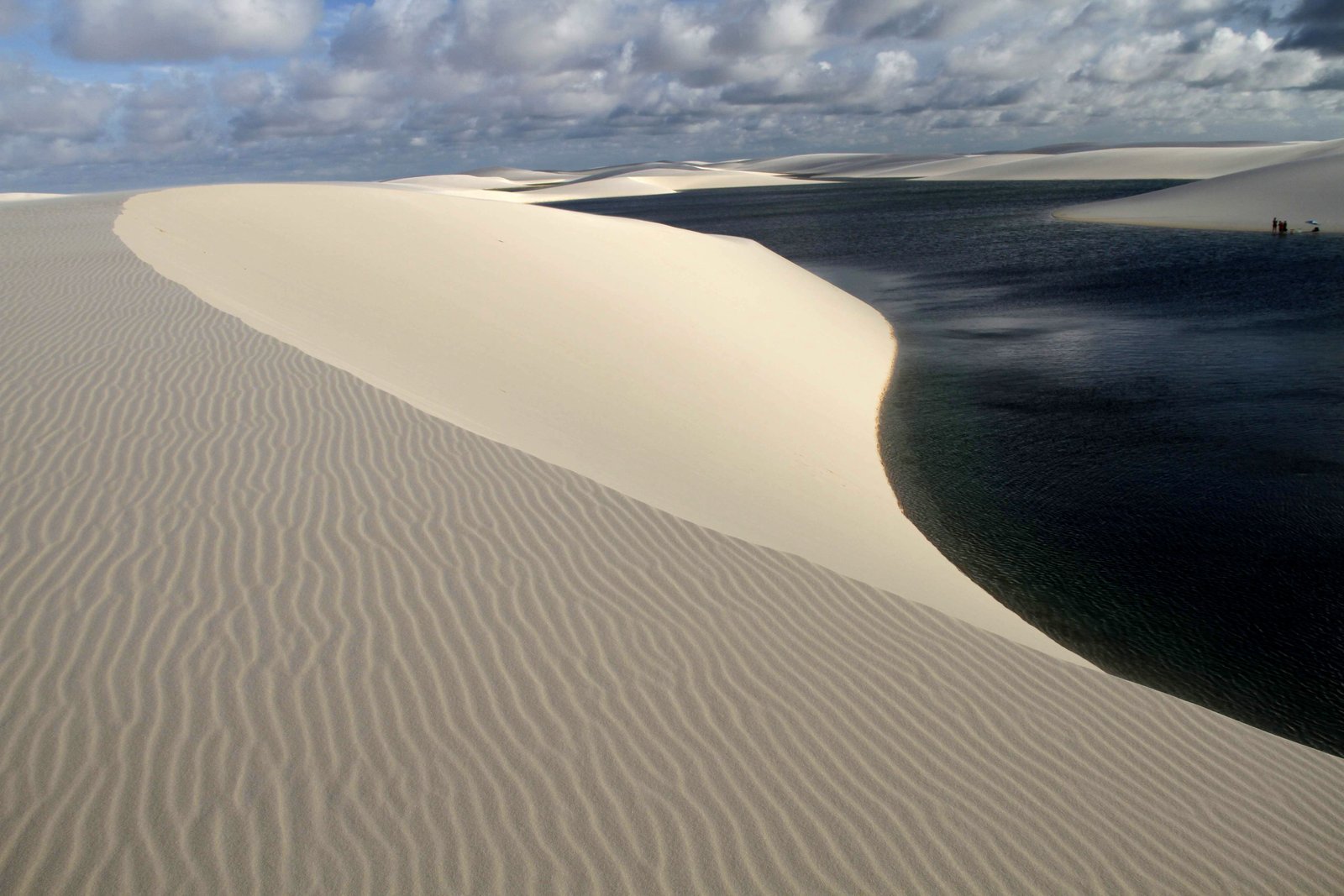
ICMBio’s table also lists other circuits from Santo Amaro: Lagoa das Américas and Lagoa da Jangada, reached by boat from the town’s harbour; the Rancharia and Patacas area, suited to hiking; and, further east, the Ponta Verde and Travosa circuits. To escape the crowds, our guide to the uncrowded lagoons of Lençóis has more options.
The Lençóis crossing on foot
This is the most intense experience in the park: crossing the dune field on foot from Atins to Santo Amaro, or the other way, sleeping in hammocks at the oases of Baixa Grande, Queimada dos Britos and Betânia, where local families host groups. It takes three to five days. The distance varies by source and route: the Rota Combo blog gives 45 to 77 km, with Caetés Expedições’ four-day version at around 46 km, while Habitat Expedições cites 70 to 80 km. In soft sand your pace drops to 2 to 3 km an hour, and some dunes are over 40 metres high, according to Rota Combo, more than the 30 metres UNESCO uses as the typical height of the largest barchans.
ICMBio has set guideline numbers for the oases: 620 visitors a day and 465 overnight stays in Baixa Grande, and 415 a day and 385 overnight stays in Queimada dos Britos. In October 2026, Rota Combo quoted Caetés Expedições at R$ 3,925 per person for a group of four, or R$ 9,422 for a solo traveller, for four days with speedboat, 4×4, guide, hammock lodging and meals. A July 2025 account cited by the same blog spent R$ 250 to R$ 300 per person per day, excluding transport, by arranging everything independently. The recommended season is June to September, with full lagoons and little rain. Follow the 2026 rules: book the support points, hire a licensed guide, register your entry, carry a waste kit, no glass and no fires.
Sunset and night on the dunes
Sunset is the big moment in Lençóis, and ICMBio allows night activities at several attractions. Vale dos Lençóis sells a late-afternoon tour to watch the full moon or the starry sky, from 4 p.m. to 9 p.m., with dinner extra at Mata Fome, for R$ 1,300 per private vehicle for up to six people. ICMBio’s table says stargazing without setting up any structure is not considered an event and may take place during permitted periods. Breakfasts, picnics, moonlight parties and dinners set up on the dunes, however, count as events, may only happen at attractions with facilities and need authorisation through the Gov.br portal.
Tubing on the Formiga River and other trips outside the park
Not everything happens on the dunes. Vale dos Lençóis takes groups to the village of Cardosa, 34 km from Barreirinhas, to float down the Formiga River on inner tubes for about an hour, among palm trees and riverside forest, for R$ 120 per person, from 8:30 a.m. to 12:30 p.m. At the support point they serve tapioca and tiquira, Maranhão’s cassava spirit. The same operator runs a guided quad-bike tour through the Little Lençóis area, with 45 km of tracks to Caburé, for R$ 650 per quad for up to two people. Note that this tour takes place outside the national park’s dune field, where quad bikes are banned. To see the Little Lençóis at a slower pace, continue east to Paulino Neves.
What to eat in Lençóis Maranhenses
Short answer: the local food is simple and good: grilled fish and shrimp, free-range chicken, tapioca and, across Maranhão, arroz de cuxá and juçara. Inside the park, meals are served by residents at places such as Mata Fome, near Lagoa Bonita, Betânia, on the Santo Amaro side, and the rustic restaurants of Canto do Atins, known for their shrimp. In Barreirinhas, most restaurants are on Avenida Beira Rio.
On tours, lunch is almost never included in the price, and each stop has its own speciality. If you do both classic circuits in one day, you stop at Mata Fome, where Vale dos Lençóis describes a rustic restaurant serving free-range chicken, shrimp or grilled fish, with hammocks for a rest afterwards. On the full-day trip to Atins, lunch is at one of the Canto do Atins restaurants, where the dish to order is grilled shrimp. On the Preguiças River trip, lunch is at Caburé. On the Santo Amaro side, lunch is in Betânia, on the banks of the Alegre River.
Flavours of Maranhão
A few things are worth trying anywhere in the state. Arroz de cuxá, rice with vinagreira (roselle) leaves, sesame and dried shrimp, is the dish most associated with Maranhão’s cooking. Juçara, as locals call the regional açaí, is usually served plain or with cassava flour and fish or shrimp, not with granola as in southern Brazil. Guaraná Jesus, a pink and very sweet soft drink, is the state’s own. And tiquira, a cassava spirit, turns up at support points outside the park, such as at the end of the Formiga River tubing trip. Remember that alcohol is banned inside the park.
Tapioca on the dunes
ICMBio’s planning table mentions tapioca stalls at the support area by the Lagoa Bonita staircase and at Testa Branca. Tapioca is the classic snack between one lagoon swim and the next, but do not count on stalls on every circuit. Carry water and a light snack in your bag, in packaging you will take back out.
Eating in Barreirinhas and Atins
In Barreirinhas, the Preguiças riverfront has fish restaurants, pizzerias and snack bars, and several pousadas have restaurants open to the public. Atins has fewer options, but its food scene has grown with the boutique pousadas. Prices rise in high season in both places. For restaurant tips, see our guide on where to eat in Lençóis Maranhenses.
Safety in Lençóis Maranhenses
Short answer: the risks in Lençóis come from nature, not crime: strong sun, dehydration, getting lost in the dunes, drowning in deeper lagoons and accidents with unlicensed vehicles. Always go with a licensed operator and guide, carry plenty of water, wear sunscreen and light long-sleeved clothing, stay with your group and never drive into the park in a private vehicle.
Sun, heat and water
The white sand reflects the light and the sun near the Equator is fierce. Bring sunscreen, sunglasses, a hat and water. On the circuits you walk up and down dunes, sometimes for more than an hour, with no shade. We suggest carrying at least a litre and a half of water per person on a half-day tour, and more if you will walk longer. On the multi-day crossing, dehydration is the main risk.
Navigation: the dunes move
There are no fixed trails in the dune field, and the lagoons move. The Ministry of Tourism warns that there is no mobile signal in the park. It is easy to lose your bearings as you drop down a dune to the next lagoon, especially late in the afternoon. Agree on a meeting point and time with your guide and do not wander off alone.
Lagoons and river
Most lagoons are shallow at the edges, but some are deep in the middle, and depth changes through the year. Do not dive in head first, keep an eye on children and avoid swimming after a heavy meal. On the Preguiças River and at the river mouth in Atins there are currents and speedboat traffic.
Vehicles and quad bikes
ICMBio has banned private vehicles, UTVs and quad bikes from the dune field and stepped up enforcement in 2026. Besides the fine and seizure, driving there poses severe safety risks, according to the agency itself. Be wary of anyone offering quad-bike tours over the park’s dunes.
In town
Barreirinhas and Atins are calm, but the usual precautions apply: do not leave belongings unattended on the sand, and at night prefer to move around with company on unlit streets. On the highway between São Luís and Barreirinhas, the final stretch has potholes and ongoing repairs; avoid driving at night.
How much a trip to Lençóis Maranhenses costs in 2026
Short answer: the classic Barreirinhas tours cost R$ 140 to R$ 150 per person each, the Preguiças River boat trip R$ 130 to R$ 250, and a full day in Atins or Santo Amaro R$ 200 to R$ 320. A shared transfer from São Luís to Barreirinhas costs about R$ 80 to R$ 150 each way. The park charges no entrance fee; only Santo Amaro charges a municipal tax, R$ 10 under the 2023 law.
The prices below were published by the operators and travel guides themselves and checked in October 2026. Tour and transport prices change with the season and group size; use the table as a guide and confirm when you book.
| Item | Price in 2026 | Notes |
|---|---|---|
| National park entrance | Free | ICMBio charges no fee; you pay for licensed operators’ services |
| Santo Amaro Sustainable Tourism Tax | R$ 10 per person | Rate set by Law 329/2023, with annual adjustment provided for; valid three days; exemptions for under-12s, over-60s and people with disabilities |
| Lagoa Azul circuit (group) | R$ 140 to R$ 150 per person | Vale dos Lençóis R$ 140, Kairós R$ 150; half day |
| Lagoa Bonita circuit (group) | R$ 150 per person | Vale dos Lençóis and Kairós; afternoon, with sunset |
| Lagoa Azul and Lagoa Bonita on the same day (private) | R$ 1,850 per vehicle | Vale dos Lençóis, up to 6 people; lunch extra |
| Preguiças River by speedboat (Vassouras, Mandacaru, Caburé) | R$ 130 to R$ 250 per person | Kairós R$ 130, Vale dos Lençóis R$ 150, Levada from R$ 250 |
| Full day in Atins by 4×4 | R$ 200 to R$ 250 per person | Kairós R$ 200, Vale dos Lençóis R$ 250; lunch extra |
| Santo Amaro circuit from Barreirinhas | R$ 320 per person | Vale dos Lençóis, group; private from R$ 2,600 for up to 4 |
| Tubing on the Formiga River | R$ 120 per person | Vale dos Lençóis; outside the park |
| Quad bikes in the Little Lençóis | R$ 650 per quad | Up to 2 people, guided; outside the park’s dune field |
| Shared van São Luís–Barreirinhas | R$ 80 to R$ 150 each way | Rota Combo R$ 132; R$ 80 to R$ 150 range per Rota Insider |
| Private transfer São Luís–Barreirinhas | R$ 600 to R$ 1,700 per car | Rota Combo: R$ 1,072 for up to 3 people and R$ 1,300 for 4 or 5 |
| Bus São Luís–Barreirinhas | From about R$ 70 | From São Luís bus station; check times |
| Speedboat Barreirinhas–Atins | R$ 120 to R$ 150 per person | Rota Insider examples, October 2026; about 1 hour |
| Jardineira 4×4 truck Barreirinhas–Atins | About R$ 40 per person | Shared truck, about 2 hours; depends on the tide |
| Guided crossing on foot (4 days) | R$ 3,925 per person | Caetés Expedições, group of 4, quoted by Rota Combo on 10/10/2026; R$ 9,422 for 1 person |
| Independent crossing | R$ 250 to R$ 300 per person per day | July 2025 account cited by Rota Combo; excluding transport |
By our own estimate, based on these prices, a couple spending three nights in Barreirinhas and doing Lagoa Azul, Lagoa Bonita and the Preguiças River on group tours will spend about R$ 860 to R$ 880 on tours for the two of them, plus about R$ 264 per person for the return shared transfer from São Luís at Rota Combo’s price, not counting accommodation, meals or flights. It is a rough figure we worked out by adding up the table, not a price quoted by any operator.
How to save money
Travel outside July and public holidays, when pousadas and tours charge less and there is more availability. Take group tours rather than private ones. Book your São Luís transfer with the operator running your tours, as some offer packages. And consider spending one or two nights in Atins or Santo Amaro: you save the 4×4 round trip and reach the lagoons on foot or with short rides.
Lençóis Maranhenses itineraries: 2 to 5 days
Short answer: with two days, do Lagoa Azul and Lagoa Bonita from Barreirinhas. With three, add the speedboat trip down the Preguiças River. With four, spend a night in Atins or a day in Santo Amaro. With five, split your stay between Barreirinhas and Atins or Santo Amaro, or swap everything for the trek across the dunes. Always allow half a day for the drive in and half a day for the drive back to São Luís.
2-day itinerary
- Day 1: early departure from São Luís, arrival in Barreirinhas around midday and the Lagoa Bonita circuit with sunset in the afternoon.
- Day 2: Lagoa Azul circuit in the morning, lunch in Barreirinhas and back to São Luís in the afternoon. If your flight leaves in the evening, check the transfer time.
3-day itinerary
- Day 1: arrive in Barreirinhas and do the Lagoa Bonita circuit in the afternoon.
- Day 2: speedboat trip down the Preguiças River, with Vassouras, the Preguiças Lighthouse in Mandacaru and lunch at Caburé.
- Day 3: Lagoa Azul circuit in the morning and back to São Luís in the afternoon.
4-day itinerary
- Day 1: arrive in Barreirinhas and do the Lagoa Bonita circuit.
- Day 2: Lagoa Azul circuit in the morning and a free afternoon on the Preguiças riverfront.
- Day 3: boat trip down the river with a stop at Caburé, ending the day in Atins, where you sleep.
- Day 4: morning at the Canto do Atins lagoons, a shrimp lunch and back by speedboat to Barreirinhas and by van to São Luís. If you prefer the western side, swap Atins for a day in Santo Amaro with lunch in Betânia.
5-day itinerary
- Day 1: arrive in Barreirinhas and do the Lagoa Bonita circuit.
- Day 2: Lagoa Azul circuit in the morning and tubing on the Formiga River or a rest in the afternoon.
- Day 3: speedboat down the Preguiças River to Atins, with stops along the way.
- Day 4: full day in Atins: Canto do Atins, the lagoons and, if you like, a kitesurfing lesson.
- Day 5: back to Barreirinhas and São Luís. Another option is to split the trip between Barreirinhas and Santo Amaro, spending two nights on the western side to see Andorinhas, Emendadas and Betânia at leisure.
What about the crossing?
The crossing from Atins to Santo Amaro takes three to five days of walking and needs an extra day of logistics at each end. If you want to do the crossing and the classic circuits, you need at least a week. Contact licensed operators and follow the 2026 rules.
Coming along the Rota das Emoções
Travellers arriving from Jericoacoara or the Parnaíba Delta usually enter Lençóis through Paulino Neves or Barreirinhas and leave from São Luís. In that case, allow at least three nights in Barreirinhas or Atins so you do not rush through Lençóis after days on the road. And if your trip starts in São Luís, set aside a day for the capital’s historic centre, also a World Heritage Site; see our Portuguese guide to things to do in São Luís.
Where to stay in Lençóis Maranhenses: Barreirinhas, Atins or Santo Amaro
Short answer: on a first trip, stay in Barreirinhas, which has the most pousadas and restaurants and is where the Lagoa Azul and Lagoa Bonita circuits start. For peace and quiet and lagoons with fewer people, sleep in Atins, which is also the kitesurfing base. For the western side of the park, with Andorinhas, Emendadas and Betânia, stay in Santo Amaro do Maranhão. All the links below go to each property’s official website and were checked on 27 October 2026.
Before you book, keep a few things in mind. In Barreirinhas, the pousadas on the banks of the Preguiças River are prettier, but some are a long way from the centre; the ones in town let you walk to restaurants and to the boat landing. In Atins the streets are sand: ask how arrival with luggage works and whether the pousada arranges the speedboat or 4×4 from Barreirinhas. In Santo Amaro, check whether the pousada sells tours and remember the Sustainable Tourism Tax. In July and over public holidays, book early and read the cancellation policy. This list is not sponsored and has no affiliate links.
Porto Preguiças Resort (resort, riverside in Barreirinhas)
Porto Preguiças Resort sits on the Estrada do Canaubal, on the banks of the Preguiças River, in a 200,000 m² property, according to the official website. The chalets range from 58 m² for couples to 100 m² for families or small groups, all with bathroom, Wi-Fi, cable TV and breakfast. The pool has a sand bottom. It suits travellers who want resort facilities and don’t mind relying on a car or transfer to get into town.
Pousada Encantes do Nordeste (pousada, riverside in Barreirinhas)
Pousada Encantes do Nordeste opened in October 2001 with seven chalets and now has 28, according to the official website of Grupo Trip, which was founded the same year in Barreirinhas. Chalets are 20 m² in the standard category or 25 m² in the superior, with air conditioning, a veranda and a minibar. Breakfast is served in a kiosk by the pool, and the group’s Bambaê restaurant is on the Preguiças riverbank, with river swimming and sunset views.
Hotel Pousada do Buriti (hotel, central Barreirinhas)
Hotel Pousada do Buriti is on Rua Inácio Lins, in the centre of Barreirinhas, close to the riverfront. According to the official website, the chalets have air conditioning, TV, a minibar and a terrace with a hammock, and there is a pool, the Eco Bar overlooking the Tibúrcio stream, O Buriti restaurant serving Maranhão food, and a tour agency inside the hotel. Good for walking to restaurants and the boat landing.
Gran Lençóis Flat Residence (apartment hotel, riverside in Barreirinhas)
Gran Lençóis Flat Residence describes itself on its official website as an apartment hotel on the banks of the Preguiças River, close to the park, with leisure facilities. The site gives little detail about the units, so check the apartment type, kitchen and distance from the centre before booking. It may suit families and groups who prefer self-contained apartments.
Pousada Buriti Atins (boutique pousada, Atins)
Pousada Buriti Atins has five bungalows for up to two guests and two 66 m² chalets with private pool and kitchen for up to three, set in 2,000 m² of gardens, according to the official website. Facilities include a stone pool, a hot tub, a rooftop for sunset and a spa, and a regional breakfast is included. It is one of the most exclusive options in the village.
Atins Beach House and Beach Chalés (pousada, beachfront in Atins)
Atins Beach House combines suites, two houses and the Chalé do Pescador 20 metres from the beach, with air conditioning, and the Beach Chalés, wood-and-thatch chalets with a veranda and fan, 50 to 120 metres from the beach, according to the official website. Breakfast is included at both. A good choice if you want to be near the sea and the life of the village.
Atins Charme Chalés (charming pousada, Atins)
Atins Charme Chalés belongs to the Charme Atins group, which runs pousadas and restaurants in the village. According to the official website, the chalets are made of wood with buriti-palm thatched roofs, natural ventilation and hammocks on the veranda, surrounded by gardens, and the pousada has its own restaurant serving Maranhão cooking. The site says the pousada was recognised among the best luxury hotels in Brazil in TripAdvisor’s Travellers’ Choice 2023. The menu opens with a cassava-dough coxinha filled with shrimp.
Pousada Rancho das Dunas (pousada, Santo Amaro do Maranhão)
Pousada Rancho das Dunas is on Rua Olho D’Água, in Santo Amaro do Maranhão, and has chalets in four categories, according to the official website. Breakfast, with cuscuz, fruit and homemade cake, is included and served from 7 to 10 am, and there is a spa offering massages. For comfort on the western side of the park.
Pousada Reflexo das Águas (pousada, central Santo Amaro do Maranhão)
Pousada Reflexo das Águas is on Rua Oswaldo Cruz, in the centre of Santo Amaro. According to the official website, it has master suites, double rooms for couples and quadruple rooms for families, with air conditioning, TV and minibar, plus Wi-Fi, a 24-hour front desk, breakfast and its own agency for tours and transfers. Practical if you arrive without tours booked.
Ciamat Camp Eco Lodge (eco lodge, Rio Alegre in Santo Amaro)
Ciamat Camp Eco Lodge sits on the banks of the Rio Alegre, in Santo Amaro do Maranhão, in a large garden with trees and plenty of birds, according to the official website, which also arranges itineraries in Barreirinhas and Atins. It is the option for travellers who want to be close to nature on the western side of the park.
Video: a sunset picnic in Lençóis Maranhenses, by Visit Brasil
Visit Brasil, the official tourism channel run by Embratur, Brazil’s international tourism promotion agency, filmed a sunset picnic among the dunes and lagoons near Atins. The accompanying Visit Brasil page notes that the Lençóis are at their most beautiful between June and September, when the rains fill the valleys between the dunes, and that Atins can only be reached by 4×4 or boat.
Frequently asked questions about Lençóis Maranhenses
When is the best time to visit Lençóis Maranhenses?
From June to August, when the lagoons are usually fullest after the rains of the first half of the year. Brazil's Ministry of Tourism suggests May to September. July is the busiest month because of school holidays. From October to January many lagoons become shallow or dry up, and water levels change from year to year depending on rainfall.
Do you have to pay to enter Lençóis Maranhenses National Park?
No. ICMBio, the federal parks agency, charges no entrance fee. You pay for tours with accredited agencies, because only authorised vehicles and guides may enter the park. The exception is Santo Amaro do Maranhão, which charges a municipal Sustainable Tourism Tax of R$10 per person under its 2023 law, valid for three days and issued online since May 2026.
How do you get to Lençóis Maranhenses from São Luís?
By shared van, bus or car to Barreirinhas, a trip of about 250 to 270 km and 3 to 4 hours on the BR-135 and MA-402. Rota Combo's van costs R$132 each way; Rota Insider recorded fares from R$80 to R$150. For Santo Amaro, the final stretch is on the paved MA-320.
Are there still flights to Barreirinhas?
There are no regular commercial flights. Azul ended the route in March 2025, and in September 2026 the Ministry of Ports and Airports said the airport handles only general aviation and charters while it undergoes works under the AmpliAR programme. Fly into São Luís or, if you are doing the Rota das Emoções, into Parnaíba.
Is it better to stay in Barreirinhas, Atins or Santo Amaro?
Barreirinhas is the best base for a first trip, with the most facilities and departures for the Lagoa Azul and Lagoa Bonita circuits. Atins is quieter, close to the Canto do Atins lagoons and good for kitesurfing. Santo Amaro gives access to the western lagoons, such as Andorinhas and Emendadas, and charges a municipal tax.
How many days do you need in Lençóis Maranhenses?
Three to four days is ideal: two for Lagoa Azul and Lagoa Bonita, one for the Preguiças River and one for Atins or Santo Amaro. With two days you can only do the classic circuits. The trek across the dunes takes three to five days of walking, plus logistics.
Lagoa Azul or Lagoa Bonita: which should you choose?
If you can, do both. Lagoa Azul is the morning tour, with a shorter 4×4 ride of about 40 minutes. Lagoa Bonita is the afternoon tour, with a climb up a staircase and sunset on the dunes. At Vale dos Lençóis they cost R$140 and R$150 per person.
Can you drive your own car or a quad bike into the park?
No. ICMBio bans tours in private vehicles and the entry of motorbikes, buggies, quad bikes and UTVs. In July 2026, Circular Letter 16 reinforced the ban on the dune field, with fines and seizure, and made the outer road the only land access between Barreirinhas and Atins.
Can you take alcohol to the lagoons?
No. ICMBio's visitor guidelines prohibit selling, carrying and drinking alcohol inside the park, and since 2026 glass bottles and containers are also banned. Campfires and barbecues are not allowed either. Bring water in a reusable bottle and carry your rubbish out.
How does the trek across Lençóis Maranhenses work?
It is a three-to-five-day walk between Atins and Santo Amaro, sleeping in hammocks at the oases of Baixa Grande, Queimada dos Britos and Betânia. The distance ranges from about 45 to 80 km depending on the route. Since May 2026, advance booking of the support points, a guide with groups of up to 10 people, QR Code registration and a waste kit are mandatory.
Is Lençóis Maranhenses worth visiting?
Yes, absolutely, as long as you go at the right time of year. Few places in the world have a dune field this size dotted with freshwater lagoons, and UNESCO did not list the park by chance. The downside is logistics: Barreirinhas has no regular flights, the road from São Luís takes half a day, tours depend on agencies and, from October to January, the lagoons can disappoint. Go between June and September, stay at least three nights and, if you can, spend a night in Atins or Santo Amaro.
If your trip continues through the Northeast, see our Jericoacoara travel guide, the other end of the Rota das Emoções, and the Fortaleza travel guide. Further south there are guides to Natal, Recife, Porto de Galinhas, Maceió and Salvador. And before you pack, read what to pack for Lençóis Maranhenses (in Portuguese).
Sources
- ICMBio: Lençóis Maranhenses National Park (official area and general information) (Portuguese)
- ICMBio: visitor guidelines (free entry, accreditation and prohibitions) (Portuguese)
- ICMBio: visitation planning table (open attractions, access routes, periods, visitor caps and events) (Portuguese)
- ICMBio: Circular Letter 5/2026 (trekking rules for the 2026 season) (Portuguese)
- ICMBio: Circular Letter 16/2026 (vehicles on the dune field and access to Atins) (Portuguese)
- National Register of Conservation Units (Ministry of the Environment): Lençóis Maranhenses National Park report (area of 157,173.63 hectares) (Portuguese)
- Presidency of the Republic: Decree 86,060/1981 (creation of the park) (Portuguese)
- Ministry of Tourism: Parques do Brasil: Lençóis Maranhenses (opening hours, season, rules and biomes) (Portuguese)
- UNESCO: Lençóis Maranhenses National Park and decision 46 COM 8B.6 (geology, area and 2024 inscription)
- Santo Amaro do Maranhão city hall: Law 329/2023 in the Official Gazette (Sustainable Tourism Tax) (Portuguese)
- G1 Maranhão: tax resumed in Santo Amaro and MA-320 (Portuguese)
- Cazumbá: Santo Amaro digitises the tourism tax (online issue since May 2026) (Portuguese)
- Jericar Viagens: Santo Amaro tax online (validity, exemptions and digital system) (Portuguese)
- O Imparcial: Barreirinhas denies charging a fee (Portuguese)
- Imaranhão: ICMBio bans commissions from 2026 (Portuguese)
- Ministry of Ports and Airports: Barreirinhas airport upgrade (no regular flights in September 2026) (Portuguese)
- Meio News: Azul ends flights to Barreirinhas (Portuguese)
- iG Turismo: Vitor Vianna’s column on January (lagoon season) (Portuguese)
- Vale dos Lençóis: tours and prices; Kairós Turismo: tours in Barreirinhas; Levada Turismo: tours (prices published in October 2026) (Portuguese)
- Rota Combo: São Luís–Barreirinhas transfer and trek guide (Portuguese)
- Rota Insider: São Luís–Barreirinhas and Barreirinhas–Atins (transport, road conditions and prices in October 2026) (Portuguese)
- Habitat Expedições: trek itinerary and logistics (Portuguese)
- Wikipedia: Farol de Preguiças (height, dates and visiting hours) (Portuguese)
- Visit Brasil: Sunset Picnic in the Lençóis Maranhenses (video, season and access to Atins)
- TV Brasil: Parques do Brasil: Lençóis Maranhenses (documentary episode) (Portuguese)