Chapada Diamantina is a highland region of mesas, canyons, tea-coloured rivers and flooded caves in the middle of Bahia, Brazil, roughly 400 km inland from Salvador. At its core is Chapada Diamantina National Park, created in 1985 to protect the Sincorá range. In short, this is what a first trip looks like: watch sunset from the top of Morro do Pai Inácio, lie flat on the rock and peer over the edge of the Fumaça waterfall, float in the cave pool of Poço Azul, see a shaft of sunlight hit the blue water of Poço Encantado, walk through the Lapa Doce cave, swim in the clear river at Pratinha and, if your legs allow it, trek through the Vale do Pati. Most visitors base themselves in Lençóis, the old diamond capital. Hikers often prefer the Vale do Capão, and the southern side is best explored from Mucugê or Ibicoara.
This Chapada Diamantina travel guide pulls together what we checked in October 2026. It covers the diamond rush that briefly made Lençóis the world’s leading diamond producer and the towns you can use as a base. It goes through every major sight with distances, effort and entry fees, and explains when a local guide is recommended and when it is required. You will also find how to get there by plane, bus or car, the best time to go, what the Lençóis agencies charge, two- to seven-day itineraries, safety advice and ten places to stay linked to their official websites, with no affiliate links. Where sources disagree, we say so.
Quick summary: Chapada Diamantina (Bahia, Brazil)
- What it is: a highland region in central Bahia. Chapada Diamantina National Park was created by Decree 91,655 of 17 September 1985 and covers about 152,000 hectares across the municipalities of Lençóis, Palmeiras, Mucugê, Andaraí, Ibicoara and Itaetê. Many famous sights, such as Poço Azul, Pratinha and Lapa Doce, are outside the park on private or municipal land.
- Bases: Lençóis, the best-equipped option, with an airport, agencies and a listed historic centre; Vale do Capão (Caeté-Açu), for hiking and a laid-back alternative scene; Mucugê and Igatu, for history and the central area; Ibicoara, for Buracão and Fumacinha.
- Getting there: Azul flies Salvador to Lençóis twice a week and announced a Belo Horizonte (Confins) route from June 2026. Rápido Federal buses take about six and a half hours from Salvador. By car it is roughly 410 km on the BR-324, BR-116 and BR-242.
- Entry: the national park charges no entry fee and has no gates. Sights on private or municipal land do charge: Morro do Pai Inácio costs R$20 since April 2026, Pratinha R$90 to R$110, Poço Encantado R$70 and Lapa Doce R$60 to R$120 per person.
- Guides: required at Buracão, Lapa Doce and other sites that run their own guided visits. On national park trails, the park agency (ICMBio) recommends a guide because there is no phone signal and no signposting.
- When to go: April to September, the dry season, when trails are firm and sunlight reaches Poço Azul and Poço Encantado. November to March is wetter, with fuller waterfalls but occasional trail closures.
- How long: four or five days for the highlights from Lençóis; a week or more if you want to add the Vale do Pati trek or the southern side.
- Day tours: R$249 to R$749 per person per day at Lençóis agencies that publish prices, usually including transport, a guide, entry fees and lunch.
A short history of Chapada Diamantina: diamonds, colonels and a national park
The story starts with gravel. According to IPHAN, Brazil’s national heritage institute, in 1844 a prospector known as Cazuza do Prado noticed something in the gravel of the Mucugê river and recognised the signs of diamond-bearing ground. It was St John’s Day. Word spread fast, and the highlands of the Serra do Sincorá became known as the Lavras Diamantinas, the diamond diggings. Between 1844 and 1848 more than 30,000 people arrived chasing quick fortunes, and the settlement that is now Mucugê was born.
In 1845, richer deposits were found on the Lençóis river, and the diamond buyers in Mucugê followed. Prospectors came from the Serro Frio region of Minas Gerais and from the interior backlands. Merchants came from Salvador, and sugar planters from the Recôncavo brought enslaved workers. The popular explanation recorded by IPHAN is that, seen from the hills, the prospectors’ tents looked like bedsheets, or lençóis, laid out to dry, and that gave the town its name. Many miners also lived in caves and rock shelters, and you still pass some of them on the trails.
Lençóis grew quickly. In 1856 it split from Santa Isabel do Paraguaçu (today’s Mucugê) as the Comercial Vila de Lençóis, a name that honoured the big gem traders, and in 1864 it became a city. IPHAN says that between 1845 and 1871 Lençóis was the world’s largest diamond producer and the third most important city in Bahia. It exported stones to Europe, imported luxury goods, and even had a French vice-consulate to handle the trade. At society balls, diamonds were worn as jewellery and sewn onto clothes.
The boom ended when diamonds were discovered in South Africa in 1865 and the easiest deposits ran out. From 1871 the international market turned to African stones and the region went into decline. Many people left. Those who stayed turned to gem cutting and later to carbonado, a dark, impure diamond that became valuable as an industrial abrasive. Mining carried on with ups and downs until the late twentieth century, and for much of that time the region was ruled by local strongmen known as coronéis. The best known, Horácio de Mattos, now gives his name to the Lençóis airport. In Mucugê, IPHAN notes, the local oligarchies even held out against the Prestes Column, the rebel army that crossed Brazil in the 1920s.
Tourism and conservation changed everything. IPHAN listed the historic and landscape ensemble of Lençóis in 1973, a protected area with 570 buildings, and Mucugê in 1980, including its hillside cemetery in a so-called Byzantine style. On 17 September 1985, Decree 91,655 created Chapada Diamantina National Park, with 152,000 hectares, to protect the Serra do Sincorá. Igatu, a village of stone ruins in the municipality of Andaraí, was listed in 2000. Former prospectors became trekking guides, and many of today’s trails are the same stone-paved paths of the diamond era.
What the park protects
ICMBio, the federal agency that manages Brazil’s national parks, describes the park as part of the Serra do Sincorá, the northern end of the Espinhaço range that runs from Minas Gerais into Bahia. Three biomes meet here: Atlantic Forest, Cerrado savanna and Caatinga dry forest. The area lies within the Caatinga and Atlantic Forest Biosphere Reserves. The agency counts almost 300 km of trails, 33 waterfalls including Fumaça, two caves, ten climbing sites, 16 historic sites and the Marimbus wetland, known as the Pantanal of Chapada Diamantina. Park headquarters are in Palmeiras.
The scenery is made of very old sandstones and conglomerates. ICMBio dates the Tombador formation, which you walk on along some trails, to 1.6 billion years. The high ground is covered in campo rupestre, a rocky grassland where orchids, bromeliads and the spiky canela-de-ema plant grow straight out of the stone. Valleys hold patches of Atlantic Forest, while the lower and drier land turns to Caatinga. River water looks like tea or cola because of dissolved organic matter, not dirt. In shallow pools it glows gold.
Something many visitors do not realise: the national park has no gates, no visitor centre and no entry fee, as ICMBio explains. You walk in along any of the 38 access trails spread across six municipalities. What you pay for are the fees at sights outside the park, on private farms or in municipal parks, plus guides and tour agencies.
Where to base yourself in Chapada Diamantina
Chapada Diamantina is big, and underestimating distances is the classic first-timer mistake. From Morro do Pai Inácio in the north to Buracão waterfall in the south is several hours by road. ICMBio splits the park into three areas with different access points: north (Lençóis and Palmeiras), centre (Andaraí and Mucugê) and south (Ibicoara and Itaetê). Your base decides what you can do without spending the day in a car.
Lençóis: the easiest base
Lençóis is where most visitors start, and it is the right call for a first trip. It has the only airport with scheduled flights, the widest choice of guesthouses and restaurants, plenty of agencies and guides, and a historic centre of colourful mansions along the Lençóis river. You can walk from town to Ribeirão do Meio, the Sossego waterfall and the Muritiba municipal park. Mosquito waterfall, Pai Inácio, Pratinha and Lapa Doce fit into day tours of 100 to 150 km of driving round trip, according to local agency itineraries. Poço Azul and Poço Encantado take a full day: Poço Encantado is about 140 km from Lençóis, and the tour that combines both covers close to 300 km.
In the evening, life centres on the streets and squares of the old town, with restaurants, bars and craft shops. For food tips, see our guide to restaurants in Lençóis (in Portuguese).
Vale do Capão (Caeté-Açu): the hikers’ base
Vale do Capão is the village of Caeté-Açu in the municipality of Palmeiras, about 20 km from Palmeiras town. It sits in a green valley ringed by mountains, and the trail to the top of Fumaça waterfall starts here, from the hamlet of Campos. It is also one of the starting points for the Vale do Pati trek and for the trail between Capão and Lençóis. The village has an alternative reputation, with wholefood restaurants and plenty of people who moved here for a different kind of life.
Two practical points. Pousada do Capão notes on its official website that there is no mobile phone signal in the valley (most guesthouses have internet), and that the last fuel station is in Palmeiras. Village lanes are unpaved. If you arrive by bus, you get off in Palmeiras and continue by van.
Mucugê: history and the central area
Mucugê lies in the middle of the Chapada at about 980 metres above sea level, and it is noticeably cooler than Lençóis. This is where the diamond rush began in 1844, and its nineteenth-century houses are well preserved. The most photographed sight is the Santa Isabel cemetery, known as the Byzantine cemetery, with white tombs set into the slope of the Serra do Sincorá. Mucugê is one of the southern gateways to the Vale do Pati (the quickest route into the valley starts near the village of Guiné) and lies on the way to Ibicoara.
Igatu and Andaraí: the stone town
Igatu is a village in the municipality of Andaraí, also called Xique-Xique do Igatu and the Cidade de Pedras, the city of stones. IPHAN listed it in 2000. The listing covers the stone ruins of the prospectors’ houses and about 200 buildings. Some 380 people live there, most of them descended from miners, and it is often nicknamed the Machu Picchu of Bahia. The Galeria Arte e Memória mixes art and memories of the mining days and is a must-see in the village. Igatu is also one of the best-known climbing and bouldering spots in north-east Brazil, with two authorised sectors inside the park, Serra Alta and Califórnia.
Andaraí town is the end point of one of the Pati routes, down the Ladeira do Império, and is close to Poço Encantado, which lies in neighbouring Itaetê. It is also one of the gateways to the Marimbus.
Ibicoara: Buracão and Fumacinha
Ibicoara is at the far south of the region, on the BA-142, 177 km from its junction with the BR-242 according to ICMBio’s directions. It is the base for Buracão waterfall, in the Espalhado municipal park, and for Fumacinha. From Lençóis, a Buracão day trip involves about four hours of driving each way, according to the agency Raízes da Chapada, so it is worth spending at least two nights in Ibicoara if you want to see the south.
Which base should you choose?
- First trip, no car: Lençóis. Every agency is there and tours pick you up at your guesthouse.
- Focused on hiking and Fumaça: Vale do Capão, ideally combined with Lençóis.
- Longer trip with a car: Lençóis first, Mucugê or Igatu in the middle, Ibicoara last (or the other way round).
- Vale do Pati: start in Capão, Guiné (Mucugê) or Andaraí, depending on your guide’s route.
Best time to visit Chapada Diamantina
The region has two clear seasons: dry from April to September and wet from November to March, with October as a transition month. INMET weather data for the Lençóis station, at 394 metres, published by the Visite Chapada Diamantina website, show September as the driest month, with an average of 26 mm over six rainy days, followed by August (40 mm) and July (42 mm). The wettest months are March (164 mm over 13 days), November (135 mm) and January (133 mm).
Dry season (April to September)
This is the favourite season for long hikes. Paths are firm, rivers are lower, and multi-day treks such as the Vale do Pati and Fumaça from below are safer. It is also when the sun reaches into Poço Encantado: the site’s official website says the beam of light appears from April to September, roughly between 10am and 1:30pm. Poço Azul has a similar effect. In July and August, daytime highs in Lençóis are around 27°C and lows around 17°C. Higher places such as Capão and Mucugê get cold at night, so pack a proper jacket.
The downside is that by August and September some waterfalls are running thin. Fumaça itself can shrink to a thread that the wind blows away before it reaches the bottom. This is also the peak season for wildfires in the vegetation. Never light a fire on the trails, and respect any closures.
Wet season (November to March)
Rain fills the waterfalls and turns everything green. January and February are also Brazilian school holidays, with busier towns and higher prices. Highs in Lençóis go above 30°C in these months, up to 32°C in the same INMET series. The real risk is flash floods, which locals call cabeça d’água. A heavy storm upstream can make a river rise in minutes even when the sky above you is clear. In this season a local guide matters even more, because they know the warning signs and the escape routes.
Holidays and high season
Fazenda Pratinha, for example, treats 27 December to 17 February, the whole of July and public holidays as high season, with higher prices. New Year, Carnival, Easter week and the São João festivities in June, a big deal in inland Bahia, fill up the guesthouses. Book early for those dates.
How to get to Chapada Diamantina
By air
Horácio de Mattos airport in Lençóis has scheduled Azul flights. ICMBio mentions two flights a week in low season and three in high season. In April 2026, Aero Magazine reported that the Salvador–Lençóis route ran on Sundays and Thursdays with ATR 72-600 turboprops, leaving Salvador at 2:30pm. Azul also announced a Belo Horizonte (Confins) to Lençóis route from June 2026, on Thursdays and Sundays. Days and times change with the season, so check with the airline before you build your plans. Pousada do Capão’s website mentions a car rental company at the airport itself.
The alternative is to fly into Salvador, which has flights from all over Brazil and some international routes, and continue overland. If you do, it is worth spending a few days in the city. See our Salvador travel guide.
By bus
Rápido Federal runs daily buses from Salvador to Lençóis and also to Palmeiras, where vans leave for the Vale do Capão. In October 2026, departures from Salvador were at 8am, 1pm and 11pm, taking roughly 6 hours 10 minutes to 6 hours 40 minutes. Fares were about R$140 for a standard seat, R$189 for executive and R$199 to R$279 for a sleeper (leito). For Andaraí and Mucugê, ICMBio lists the companies Águia Branca and Cidade Sol. Itaetê is served by Cidade Sol, and Ibicoara only has buses on Saturdays. Rural schedules change often, so confirm at the bus station or with the company.
By car
From Salvador, take the BR-324 to Feira de Santana (about 120 km), the BR-116 for 70 km and then the BR-242. Following ICMBio’s directions, the turn-off for Lençóis, on the BA-850, is 218 km along the BR-242, which makes about 410 km in total. For Palmeiras, continue to the 250 km mark and take the BA-149, then it is about 20 km more to Capão. For Andaraí, turn onto the BA-142 182 km along the BR-242 and drive 51 km. Mucugê is 50 km beyond Andaraí. Ibicoara, on the same BA-142, is 177 km from the junction. Pousada do Capão estimates about seven hours by car from Salvador to Capão.
The BR-242 carries a lot of trucks and has rough stretches, so drive in daylight. Fill up whenever you can, because there are long stretches with no fuel station.
Coming from the south or from Minas Gerais
If you are coming from Porto Seguro or southern Bahia, you will usually arrive on the BA-142 via Ibicoara and Mucugê and can explore the Chapada from south to north. To combine it with the coast, see our Porto Seguro travel guide.
Getting around
There is no public transport between the sights, which leaves three ways to move around.
- Agency day tours: the easiest option if you are staying in Lençóis. A car picks you up early at your guesthouse with a guide and driver, usually with entry fees and lunch included, and brings you back in the late afternoon. Raízes da Chapada, for example, works with groups of up to six.
- Rental car plus guide: gives you freedom and pays off for couples and groups. You drive, and hire a guide through the local associations or your guesthouse for the trails that need one. Some access roads are dirt, and a car with higher clearance helps in the rain.
- On foot: from Lençóis you can walk to Ribeirão do Meio, Sossego and the Serrano. The trail to the top of Fumaça leaves from Capão. There are also multi-day routes such as Lençóis–Capão (18.6 km), Capão–Lençóis via the Trilha do 21 (15.6 km) and the old Estrada Real from Lençóis to Andaraí (26 km), all described by ICMBio.
Rules, fees and guides: what to know before you go
The national park charges no entry fee
Worth repeating, because it is the most common question. According to ICMBio, Chapada Diamantina National Park does not yet have visitor facilities, so there is no entry fee. You pay nothing to hike to Fumaça or into the Pati, for example. What you pay for is the guide (condutor de visitantes), a local professional accredited to lead visitors.
When a guide is required
ICMBio does not require a guide on every park trail, but it strongly recommends one, for practical reasons: there is no phone signal and the trails are not signposted. If you go without a guide, tell someone your route and when you expect to be back. Several sights outside the park make guides compulsory:
- Buracão waterfall (Ibicoara): an accredited guide is mandatory and is paid separately from the Espalhado municipal park ticket. Visits are booked by date, and visitor numbers are controlled.
- Lapa Doce cave (Iraquara): all visits are led by the site’s own guides.
- Poço Encantado (Itaetê): visits run in groups of up to ten, at booked times, and you need photo ID.
- Fumacinha (Ibicoara): a tough hike inside a canyon with long stretches over boulders. In practice, only go with a local guide.
- Vale do Pati: there is no general legal requirement, but almost nobody goes without a guide, and for good reason. It means several days with no signal and confusing junctions.
Guide associations
Every town has guide associations and independent guides. In Capão, the Associação de Condutores de Visitantes do Vale do Capão (ACV-VC) has its base near the start of the Fumaça trail and, according to ICMBio, has run volunteer visitor monitoring there since 2000. In Lençóis, agencies and guesthouses can recommend guides. Ask about accreditation and agree the route, timings, price and what is included in advance.
Entry fees at the main sights (October 2026)
The figures below come from official websites and local media. They change often, so treat them as a guide.
| Sight | Municipality | Entry | Notes |
|---|---|---|---|
| Morro do Pai Inácio | Palmeiras | R$20 full / R$10 half | Since 6 April 2026 (previously R$12) |
| Fazenda Pratinha | Iraquara | R$90 to R$110 | Half price R$45 to R$55; cave float and zipline extra |
| Lapa Doce cave | Iraquara | R$60 to R$120 per person | Site’s own guide required; cheaper per person in groups |
| Poço Encantado | Itaetê | R$70 | Viewing only; groups of up to 10 |
| Poço Azul | Nova Redenção | R$70 to R$100 | Price depends on the sales channel |
| Mosquito waterfall | Lençóis area | R$60 | January 2026 figure |
| Ribeirão do Meio and Poço do Diabo | Lençóis area | Free | A guide is recommended |
| Buracão waterfall | Ibicoara | Municipal fee + guide | Guide required, not included in the ticket |
| National park trails | Several | No fee | ICMBio recommends a guide |
The Pai Inácio increase was reported by G1: Palmeiras’ environment department began charging R$20 full price and R$10 half price from 6 April 2026, under municipal Law 939/25 and Decree 56/2026. The same prices apply at the Riachinho municipal park. Each site sets its own half-price rules: at Pratinha and Poço Encantado, for example, half price applies only to people aged 60 and over and people with disabilities, with ID.
Common-sense rules
- Do not take soap, shampoo or sunscreen into pools and rivers. Many of these waters are still and fragile.
- Carry all your rubbish out, fruit peel included.
- Do not jump off rocks unless your guide has checked the depth. Dark water is deceptive.
- In caves, do not touch the formations and avoid using flash directly on them, as Lapa Doce asks.
- Leave pets at home for sights that ban them (Lapa Doce does).
- Never light fires on the trails.
Things to do in Chapada Diamantina: the main sights
The list below is grouped by area, the way tours are usually sold in Lençóis. For each sight we give the location, the effort involved and what changes with the season. If you want to reach the waterfalls on your own, our article on how to reach the waterfalls of Chapada Diamantina (in Portuguese) complements this guide. For longer walks, see our Chapada Diamantina hiking guide.
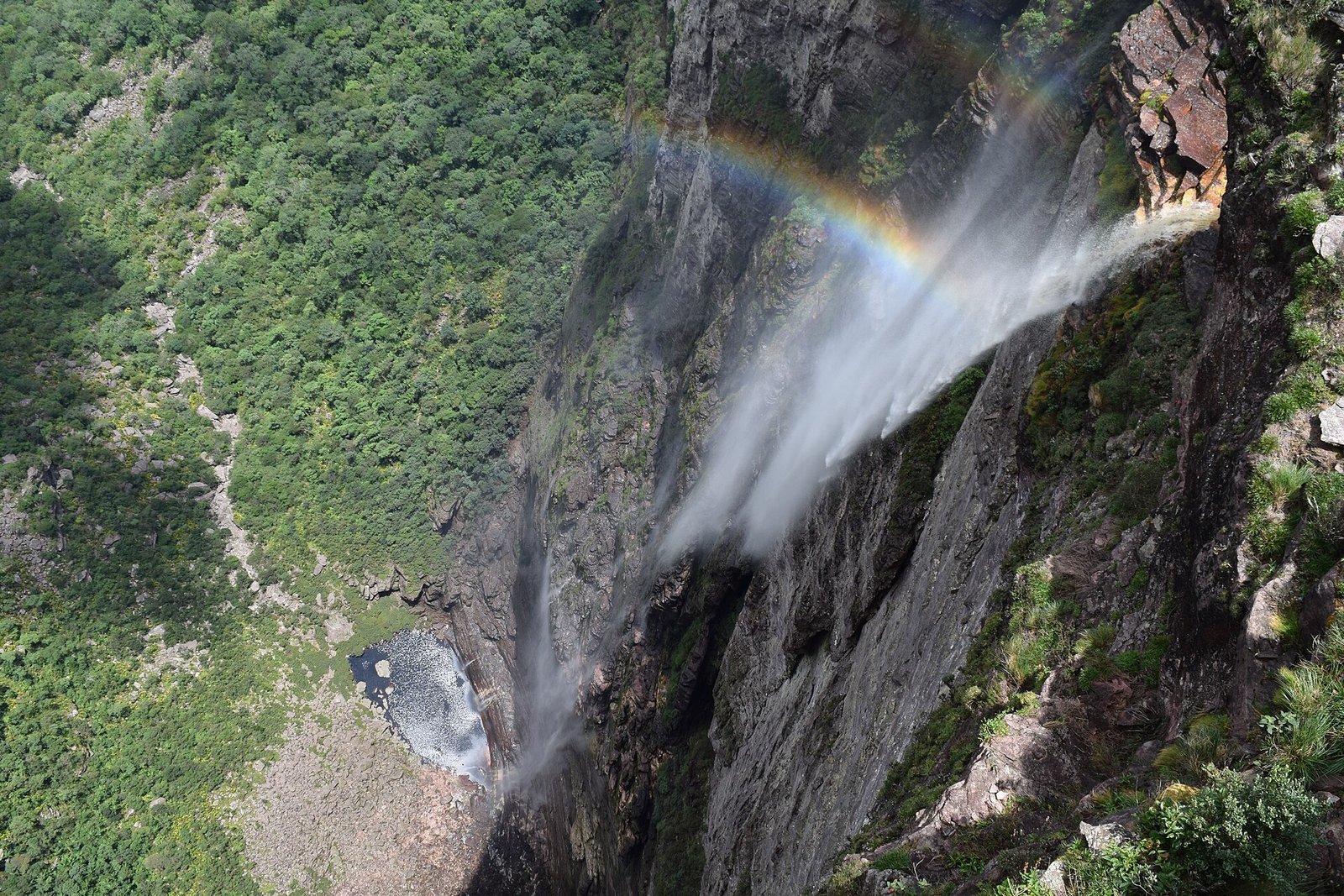
Fumaça waterfall from the top (Vale do Capão)
This is Chapada Diamantina’s signature sight and one of the highest waterfalls in Brazil. ICMBio says the drop is about 380 metres from the lip to the “neck” of the fall, and that in places the height from top to pool reaches 420 metres. Elsewhere the agency rounds it to 390 metres. Whatever the exact figure, the show is the same: for much of the year the wind pushes the water back up before it reaches the bottom, which is where the name, “smoke”, comes from.
The upper trail starts in the hamlet of Campos in the Vale do Capão. ICMBio puts it at about 5 km, taking around two hours, with an hour of steep climbing at the start. After the climb, the path crosses a plateau of rock and grassland to the canyon rim. At the top, the routine is to lie flat on your stomach on the rock slab and look straight down. There is no swimming on this route; it is all about the view. The ACV-VC guide association has its base near the trailhead.
Tips: start early to avoid the sun on the climb, carry at least two litres of water and bring a layer for the wind at the top. In the dry season the fall is thin. In the wet season there is more water and more spray, but also more cloud that can hide the valley. Raízes da Chapada’s tour combining Fumaça with Riachinho waterfall covers 12 km on foot and cost R$429 per person in 2026.
Fumaça waterfall from below (three-day trek)
Seeing Fumaça from the bottom of the canyon is a different experience, reserved for keen walkers. ICMBio describes the route from Capão to Lençóis. It follows the upper trail, drops into the Fumaça river valley via the Serra do Macaco, and reaches the Toca do Cesário, also called Toca do Macaco, a rock shelter used as the first overnight stop. From there you walk to the foot of the falls and back. The next day the route follows the Capivara river down to the Capivara waterfall and the Toca do Capivara, the second night’s stop, passes the Palmital waterfall and ends in Lençóis via Ribeirão do Meio. That is 25 km over three days and two nights, and it can be walked in the opposite direction. You sleep in rock shelters and wild camps, so bring a tent or arrange equipment with your guide.
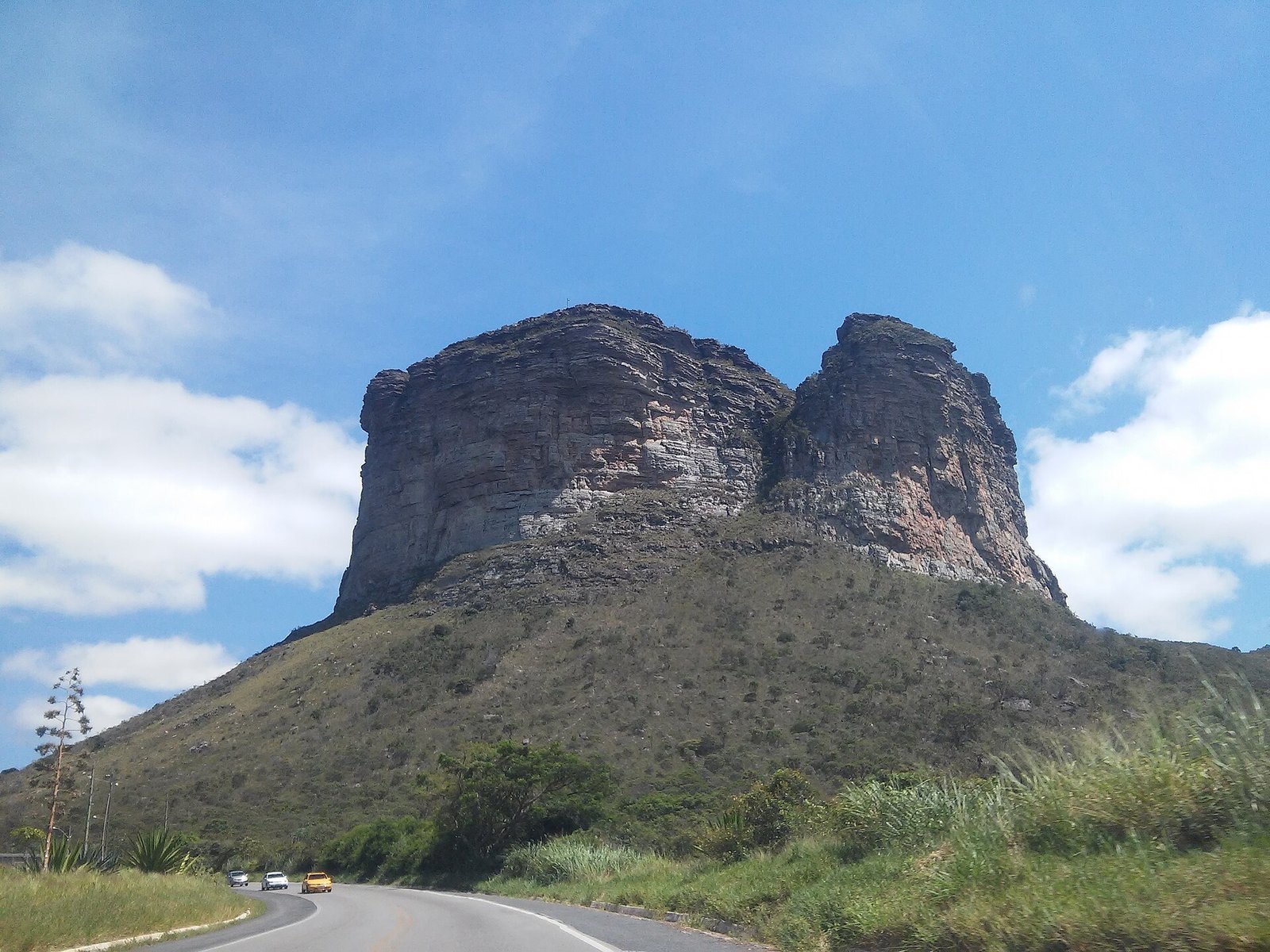
Morro do Pai Inácio (Palmeiras)
Pai Inácio is Chapada Diamantina’s most famous viewpoint. It is a flat-topped mesa ringed by cliffs, a few minutes off the BR-242 in the Pai Inácio municipal park. The path to the top is short and steep, over rock in places, and takes under half an hour at an easy pace. At the top, the view opens over valleys, grassland and other flat-topped hills. Sunset is popular, so arrive early. The fee is R$20 full price and R$10 half price since April 2026. Many agencies finish the day here after Pratinha and Lapa Doce.
The legend behind the name, as guides tell it, is about an enslaved man called Inácio who, chased for an affair with his master’s wife, supposedly jumped off the top holding an umbrella. It is folklore, but it is part of the visit.
Lapa Doce cave (Iraquara)
Lapa Doce is a show cave with vast chambers full of stalactites and stalagmites. It is in Iraquara, about 12 km from the BR-242, according to its official website. Every visit is led by the site’s own guides and lasts one to two hours on average. There are uneven ups and downs, so wear closed shoes. It opens Monday to Saturday from 8am to 4:30pm and on Sundays from 8am to noon. Pets are not allowed in the cave. In January 2026, regional media listed R$120 for one person on their own or R$60 per person for groups of three or more. As most of the visit is underground, it is a good rainy-day option.
Fazenda Pratinha and Gruta Azul (Iraquara)
Pratinha is a private farm with a crystal-clear river, kiosks on the bank, restaurants and a guesthouse. The entry fee covers swimming in the Pratinha river and photographing the outside of the Pratinha and Azul caves, where the light turns the water blue. According to the official 2026 price list, full price is R$90 in low season and R$110 in high season. Half price is R$45 to R$55 and is only for people with disabilities and people aged 60 and over. Children up to 9 go free. Floating inside the Pratinha cave costs R$100 extra, and the zipline is R$50 per ride. There are also kayaks, stand-up paddleboards and pedal boats. It opens daily from 8am to 4pm, and you can stay until 5pm.
Poço do Diabo and Mosquito waterfall
Poço do Diabo is a waterfall with a deep, dark pool, free to visit and usually combined with other sights along the BR-242. Mosquito waterfall is on private land and charges entry, R$60 in January 2026. Raízes da Chapada sells the two together, with 4 km of walking and about 100 km of driving, for R$439 per person with lunch, and also a version that adds Pai Inácio.
Poço Azul (Nova Redenção)
Poço Azul is a flooded cave with water so clear it hardly seems to be there. Unlike Poço Encantado, you are allowed to float here. In part of the year, as at Poço Encantado, sunlight enters the cave and lights up the water. It is in rural Nova Redenção, and two different websites present themselves as official booking channels. One advertised R$70 full price in October 2026, open 8am to 4:30pm, with a float of about 30 minutes. The other listed R$100 at the gate, open 9am to 5pm, including access to the pool and five waterfalls in the complex. Confirm the price and times when you book. Visits can be suspended after heavy rain.
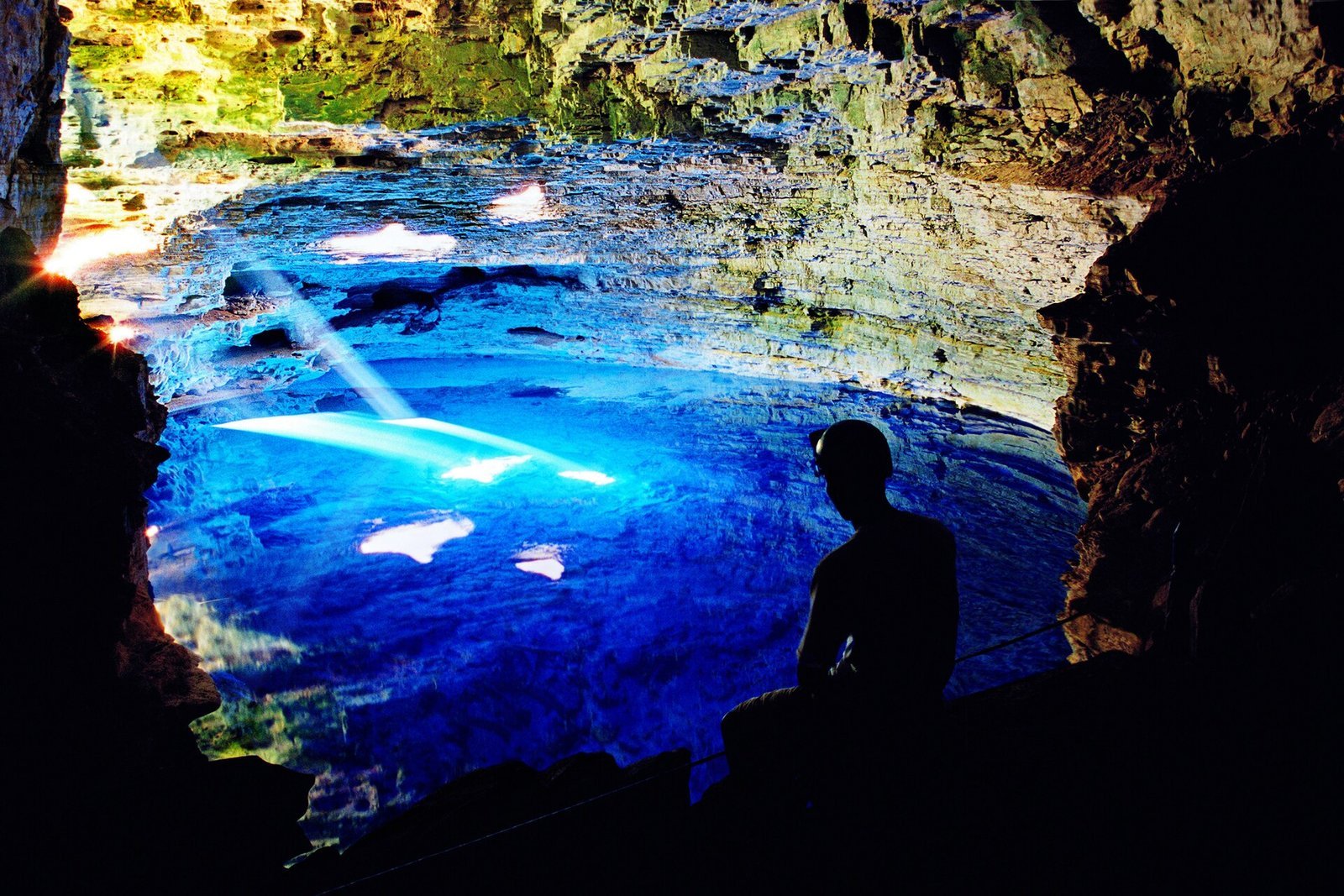
Poço Encantado (Itaetê)
Poço Encantado is a cave holding a lake of blue water up to 60 metres deep, according to the official website, clear enough to see submerged rocks with the naked eye. From April to September a beam of sunlight comes through a crack and pierces the water, roughly from 10am to 1:30pm. Outside that period the water is still blue. It is viewing only, no swimming. You go down 325 steps along a path of about 230 metres, and the visit lasts around 40 minutes, in groups of up to ten.
In October 2026, entry cost R$70 on the official website, with admissions from 8am to 4pm. You need your voucher and an official photo ID. Half price is for seniors and people with disabilities and is refunded on site. The cave is 24 km from Itaetê, 43 km from Andaraí, 37 km from Igatu, 47 km from Mucugê and 140 km from Lençóis, according to the site. If you are staying in Lençóis, you will usually combine Poço Encantado with Poço Azul in one day. At Cirtur, a Lençóis agency founded in 1992, that tour cost R$498 by Pix (Brazil’s instant payment system) in 2026, leaving at 8am and back around 4pm, with about 300 km of driving and 2 km of walking.
Buracão waterfall (Ibicoara)
For many people Buracão is the most beautiful waterfall in the Chapada. It is about 85 metres high and falls into a canyon of layered rock in the Espalhado municipal park. The trail follows the Espalhado river and ends with a swim through the canyon to the base of the fall, with a life jacket that is included in the ticket. You must hire an accredited guide, paid separately. Raízes da Chapada sells it as a day trip from Lençóis, with about four hours of driving each way, leaving at 6:30am and returning at 8:30pm, for R$749. It makes more sense to sleep in Ibicoara and take your time.
Fumacinha waterfall (Ibicoara)
Fumacinha drops into a narrow slot in the canyon and is one of the toughest walks in the region, with long stretches over boulders in the riverbed. From Ibicoara, only go with a local guide and in settled weather, because the canyon is narrow and there is nowhere to escape if the river rises. You can also see Fumacinha from above: ICMBio describes a two-day route from Mucugê with a night at the Toca do Vaqueiro and a walk to the top of the falls, exiting via the village of Campo Alegre in Ibicoara.
Sossego waterfall and Ribeirão do Meio (Lençóis)
These are the walks you can start from the centre of Lençóis. Ribeirão do Meio has a natural rock slide that ends in a pool, and it is free. It makes for one of the most fun afternoons of the trip, and Raízes da Chapada sells a guided version, 8 km on foot, for R$249. Sossego waterfall is further upriver and involves hopping over boulders along the riverbed. The agency rates the Sossego plus Ribeirão do Meio combination as moderate to hard, 14 km on foot, for R$329. Do not attempt Sossego when the river is high.
Muritiba municipal park and the Serrano
On the edge of Lençóis, the Muritiba municipal park includes the Serrano, with rock slabs and tea-coloured pools on the Lençóis river, and some short trails. Many visitors make it their first outing, on arrival day. Raízes da Chapada sells a guided walk of 6 km for R$249.
Marimbus and the Roncador river
The Marimbus is a wetland where rivers meet, with aquatic plants and plenty of birds, hence its nickname, the Pantanal of the Chapada. According to ICMBio, the canoe trip starts from the quilombola community of Remanso, 22 km from Lençóis on a dirt road, and takes about four hours to reach the Roncador river, where you can swim in pools among the rocks. Quilombola communities descend from people who escaped slavery. Raízes da Chapada sells Marimbus plus Roncador as an easy day, with 5 km of walking and a packed lunch, for R$479.
Vale do Pati (three- to five-day trek)
For many hikers, the Vale do Pati is the finest trek in Brazil, and it is easy to see why. It is a deep green valley ringed by cliffs where a few families still live. According to ICMBio, it is the only part of the park where you can sleep in residents’ homes instead of camping. Beds and meals are simple and are usually arranged by your guide. There are several ways in:
- From Capão: the trail starts at the hamlet of Bomba, climbs the Serra da Moitinha, crosses the Gerais do Vieira plateau and climbs the Ladeira do Quebra-Bunda to the Gerais do Rio Preto before dropping into the valley. ICMBio describes the Capão–Pati–Mucugê crossing as 40 km.
- From Guiné (Mucugê): about three hours on foot, the quickest way into the valley.
- From Andaraí: via the Ladeira do Império, a stone-paved path, usually used to walk out.
ICMBio suggests a four-day, 30 km route. Day one: walk into the valley and visit the Funis waterfall. Day two: climb Morro do Castelo, one of the best viewpoints over the Pati. Day three: walk to Pati de Baixo, the lower valley. Day four: walk out via the Ladeira do Império to Andaraí. The five-day version adds the trail to the top of the Cachoeirão, with the waterfall and another panoramic view of the valley. Agencies such as Raízes da Chapada sell three- and five-day treks. Pack light, because you carry everything, and bring cash for the families who host you.
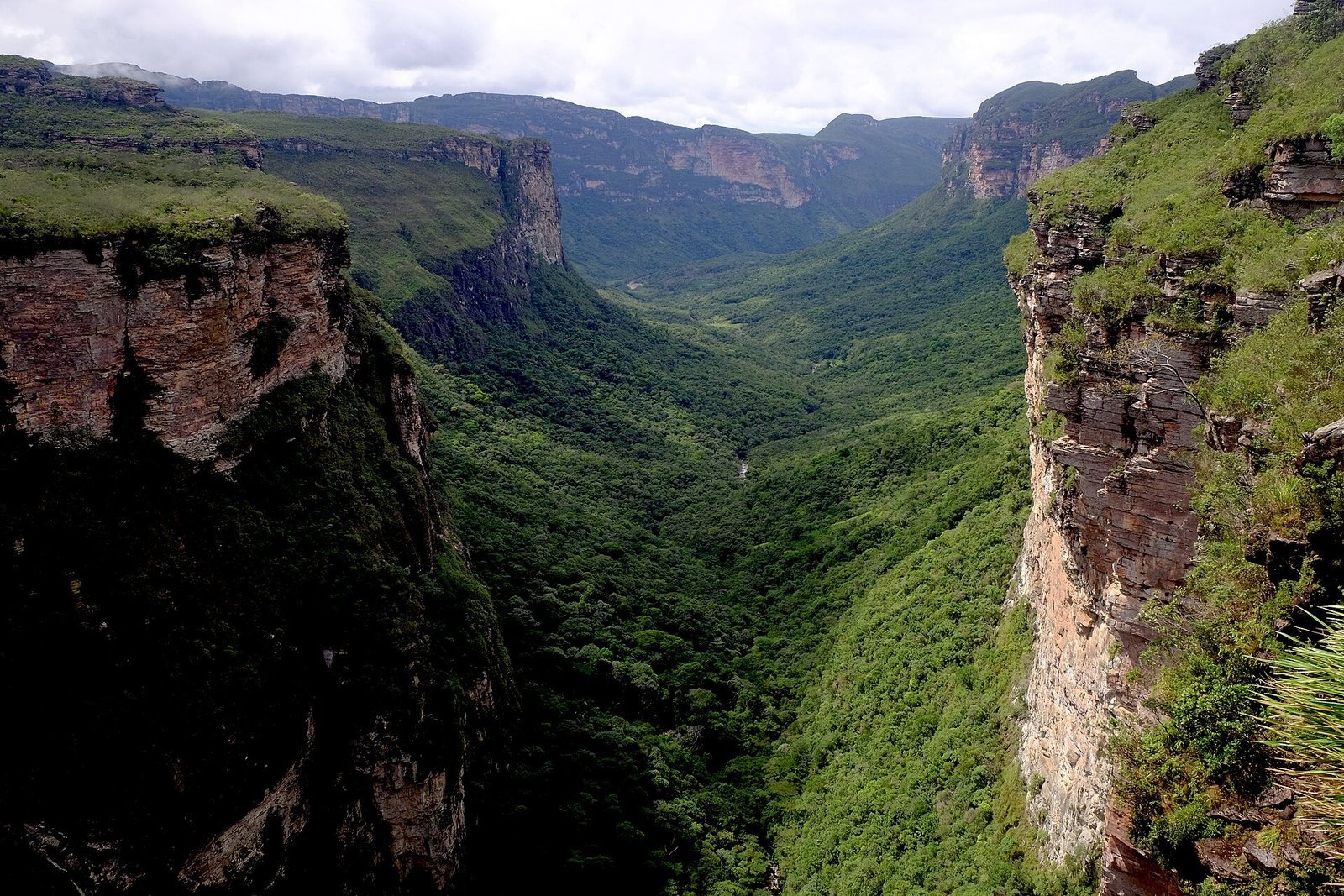
Águas Claras trail and the Lençóis–Capão crossing
If you want a long walk without sleeping out, the Águas Claras trail links the area near Pai Inácio to the hamlet of Campos in Capão, crossing open country known locally as Gerais and passing Águas Claras, a tributary of the Mucugezinho river with a swimming spot. ICMBio puts it at 15.3 km, and Raízes da Chapada sells an 18 km moderate version for R$399. The Lençóis–Capão crossing, 18.6 km, passes a viewpoint over Lençóis, old mining remains in the Ribeirão river valley, the Poço da Piaba and views of the Morrão and the Serra dos Cristais.
Cachoeira Encantada and other southern waterfalls
Cachoeira Encantada, about 270 metres high, is one of the tallest in the region and lies in the Itaetê area. ICMBio describes access from the Assentamento Baixão settlement, with 8 km on minor roads and then 4.1 km on foot, first over flat ground and then along the Samina river. The agency warns not to confuse it with the community of Baixão in Ibicoara, where the trail to the Véu de Noiva waterfall starts, about 3 km long.
Igatu, Mucugê and history on foot
Set aside an afternoon to wander through the ruins of Igatu and visit the Galeria Arte e Memória. In Mucugê, walk up to the Santa Isabel cemetery and stroll around the centre. In Lençóis, simply walking through the old town and along the river is worthwhile. IPHAN records that the chapel of Nossa Senhora da Conceição was begun in 1851, in the town’s early years.
Climbing and mountain biking
Igatu has two climbing sectors open inside the park, Serra Alta and Califórnia, known for bouldering. For mountain biking, ICMBio highlights the Lençóis–Barro Branco trail, with stone-paved sections from the diamond era and swimming spots on the Mandassaia river. It is a technical ride, suited to experienced mountain bikers.
How much does a trip to Chapada Diamantina cost?
There is no single price, because the big cost is the driving day tours, which charge for transport, a guide and entry fees. The figures below are from 2026, taken from official websites and from agencies that publish price lists. Use them as a guide.
| Item | Reference price (2026) | Source |
|---|---|---|
| Bus Salvador–Lençóis (one way) | R$140 to R$279, depending on class | Rápido Federal, Oct 2026 |
| Guided walk from Lençóis (Muritiba or Ribeirão do Meio) | R$249 per person | Raízes da Chapada |
| Sossego + Ribeirão do Meio | R$329 per person | Raízes da Chapada |
| Fumaça from the top + Riachinho | R$429 per person | Raízes da Chapada |
| Lapa Doce + Pratinha + Pai Inácio | R$489 per person, with lunch | Raízes da Chapada |
| Poço Azul + Poço Encantado | R$498 to R$518 per person | Cirtur and Raízes da Chapada |
| Buracão, from Lençóis | R$749 per person | Raízes da Chapada |
| Pai Inácio entry | R$20 (half price R$10) | Palmeiras council, via G1 |
| Pratinha entry | R$90 to R$110 | Official price list |
| Poço Encantado entry | R$70 | Official website |
Agency tours generally include transport, a guide, entry fees and lunch or a packed lunch. Raízes da Chapada also includes adventure insurance, runs departures from two people and keeps groups to six. Cirtur offers a lower price for Pix payments. As an example, Ribeirão do Meio (R$249), Lapa Doce + Pratinha + Pai Inácio (R$489), Fumaça + Riachinho (R$429) and Poço Azul + Poço Encantado (R$499) add up to R$1,666 per person at Raízes da Chapada’s published 2026 prices, before accommodation, dinners and transport to the region. With a rental car and a guide hired separately, the cost per person drops a lot for groups of three or four.
How to save money
- Do the walks that start from Lençóis and Capão (Ribeirão do Meio, the Serrano, Fumaça from the top) and pay only for a guide.
- Share a car and guide with other travellers from your guesthouse.
- Avoid high-season dates, when Pratinha and other sights charge more.
- Carry cash: phone signal is poor in many communities and sights, and card machines do not always work.
Chapada Diamantina itineraries from 2 to 7 days
These itineraries start from Lençóis, where you arrive by plane or bus. Adjust them to the season and your fitness.
Chapada Diamantina in 2 days
- Day 1: arrive, visit the Muritiba park and the Serrano in the late afternoon, and stroll around the old town of Lençóis.
- Day 2: Lapa Doce, Pratinha and Gruta Azul, then sunset on Morro do Pai Inácio.
Chapada Diamantina in 3 days
- Day 1: arrive, the Serrano and the old town.
- Day 2: Lapa Doce, Pratinha and sunset on Pai Inácio.
- Day 3: Poço Azul and Poço Encantado (from April to September, time your visit for the sunbeam).
Chapada Diamantina in 4 days
- Day 1: arrive and walk to Ribeirão do Meio.
- Day 2: Lapa Doce, Pratinha and Pai Inácio.
- Day 3: Fumaça from the top, starting in Capão (agencies drive you there from Lençóis).
- Day 4: Poço Azul and Poço Encantado.
Chapada Diamantina in 5 days
- Days 1 to 4: as above.
- Day 5: Mosquito waterfall and Poço do Diabo, or the Marimbus and the Roncador river.
Chapada Diamantina in 7 days (by car or with the Pati)
Option A, by car across the whole region:
- Day 1: Lençóis, the Serrano and the old town.
- Day 2: Lapa Doce, Pratinha and Pai Inácio.
- Day 3: move to Capão and hike to the top of Fumaça.
- Day 4: Poço Azul and Poço Encantado on the way to Igatu or Mucugê.
- Day 5: the ruins of Igatu and the Mucugê cemetery.
- Day 6: Buracão waterfall, sleeping in Ibicoara.
- Day 7: Fumacinha (with a guide) or drive back to Lençóis.
Option B, with the trek:
- Days 1 and 2: Lençóis, Ribeirão do Meio, Lapa Doce, Pratinha and Pai Inácio.
- Days 3 to 6: the four-day Vale do Pati trek, walking out to Andaraí.
- Day 7: rest, and visit Poço Encantado, 43 km from Andaraí.
Safety in Chapada Diamantina
Chapada Diamantina is a safe, relaxed destination, but nature punishes anyone who underestimates it. ICMBio itself points out that rescues in natural areas are complex, expensive and slow.
- Flash floods: if the river suddenly turns muddy, starts carrying leaves and branches or gets louder, get out of the riverbed and climb to higher ground straight away. Do not wait to see what happens.
- No signal: there is no phone signal in the park. Download offline maps and tell someone your route and when you expect to be back.
- Unmarked trails: park trails have no signposts and some sections are faint. Hire a guide whenever you do not know the way.
- Canyon edges: there are no railings at the top of Fumaça or at other viewpoints. Lie down to look over, and keep away from the edge in strong wind.
- Jumping into pools: dark water hides rocks. Only jump where your guide says it is safe.
- Heat and sun: carry more water than you think you need. Many trails cross open ground with no shade.
- Roads: drive in daylight, watch for animals and potholes, and refuel often.
- Fire: the wildfire risk is high in the dry season. Do not light anything, and tell guides if you see smoke.
What to pack for Chapada Diamantina
- Hiking shoes or boots with good grip, already broken in, plus sandals for the pools.
- A small daypack and a bottle or bladder holding at least two litres.
- Swimwear, a quick-dry towel and light clothes for the day.
- A warm jacket and long trousers for nights in Capão, Mucugê and Ibicoara, especially from May to August.
- A rain jacket, even in the dry season.
- A headtorch, essential for multi-day treks.
- Sunscreen, a hat and sunglasses (keep the sunscreen out of the pools).
- Insect repellent, a first-aid kit and any personal medication.
- A bag to carry your rubbish out.
- Cash and photo ID, required at Poço Encantado and for half-price tickets elsewhere.
Where to stay in Chapada Diamantina: 10 places with official websites
The short answer: on a first trip, stay in Lençóis, which has the most choice and is where tours start. For hiking, Vale do Capão is the best base. Mucugê, Igatu and Ibicoara let you explore the centre and south without hours of driving. We chose ten places with their own websites. The links go to each property’s official site and were checked on 27 October 2026. There are no affiliate links. The details come from what each property says on its own website, so confirm prices, child policies and availability directly with them.
One tip before you book: without a car, choose central Lençóis or Mucugê, where you can walk to restaurants and agencies. Capão is spread out, and some guesthouses are a few kilometres from the village centre.
Hotel de Lençóis (hotel, Lençóis)
Hotel de Lençóis says on its official website that it has planted more than a thousand seedlings over four decades, which now form a small wood around the rooms. It has a restaurant, a massage area in the woods, a children’s area, two auditoriums, an electric car charger and an exhibition on local history. It suits families and anyone who wants greenery close to the centre.
Hotel Canto das Águas (hotel, Lençóis)
Hotel Canto das Águas sits on the Lençóis river in the historic centre, according to its official website. It has suites, some with a private pool or hot tub, and the Restaurante Azul, on a veranda over the river, which is also open to non-guests every day. Pick it if you want to hear the river from your room and walk everywhere.
Pousada Vila Serrano (guesthouse, Lençóis)
Pousada Vila Serrano is on Rua Alto do Bonfim, a few minutes’ walk from the centre, according to its official website. It has 22 rooms in six categories set in a tropical garden with a pool, pool bar, massages and a yoga pavilion. Breakfast is included.
Portal Hotel Lençóis (hotel, Lençóis)
Portal Hotel Lençóis is a larger hotel with a pool, gym and games room, according to its official website. It offers deluxe rooms, mezzanine rooms and bungalows, plus a restaurant serving international food. It is on Rua Altina Alves.
Pousada do Capão (guesthouse, Vale do Capão)
Pousada do Capão has been running for more than 30 years, 2.5 km from the village, according to its official website. It has 34 rooms, two chalets and three glamping domes, three restaurants, a wine cellar, a spa, river bathing, an organic garden and an amphitheatre. It says it has internet in all areas, which matters in a valley with no mobile signal.
Pousada Vie do Capão (guesthouse, Vale do Capão)
Pousada Vie do Capão describes itself on its official website as comfortable, sophisticated and eco-friendly accommodation in the Vale do Capão. The site gives few details, so ask for room photos and confirm the location before booking.
Pousada Mandala do Vale (guesthouse, Vale do Capão)
Pousada Mandala do Vale is on Rua do Gorgulho in Caeté-Açu, according to its official website. It offers service in Portuguese, English and Spanish and works with partner guides for the Vale do Pati, Fumaça, Águas Claras and Purificação, which helps if you want to organise hikes from your guesthouse.
Pousada Mucugê (guesthouse, Mucugê)
Pousada Mucugê occupies a nineteenth-century colonial mansion in Mucugê’s historic centre, on Rua Doutor Rodrigues Lima, according to its official website. It is a good base for the Byzantine cemetery, the Guiné route into the Pati and the road south to Ibicoara.
Pousada Licuri (guesthouse, Ibicoara)
Pousada Licuri is in the centre of Ibicoara and has six air-conditioned suites with breakfast, according to its official website. It works well as a base for Buracão and Fumacinha.
Pousada Flor de Açucena (guesthouse, Igatu)
Pousada Flor de Açucena is at the entrance to Igatu, on a 15,000 m² plot built among the rocks, according to its official website. It has 17 rooms plus the “Toca de Vidro”, a natural-water pool, a therapeutic clay area, a shared kitchen and a massage house. Stay here if you want to sleep in the stone town and explore the ruins early in the morning.
Video: Chapada Diamantina by Visit Brasil
This short film from Visit Brasil, the official channel of Brazil’s tourism board, gives a quick taste of the landscapes of Chapada Diamantina.
Frequently asked questions about Chapada Diamantina
What are the best things to do in Chapada Diamantina?
The most popular sights are Fumaça waterfall from the top, sunset on Morro do Pai Inácio, Lapa Doce cave, Fazenda Pratinha, Poço Azul, Poço Encantado, Ribeirão do Meio, Mosquito waterfall, the Marimbus wetland and, in the south, Buracão waterfall. For hikers, the highlight is the three- to five-day Vale do Pati trek.
Do you need a guide in Chapada Diamantina?
It depends on the sight. A guide is required at Buracão and at Lapa Doce, and places such as Poço Encantado run their own guided group visits. National park trails have no general requirement, but ICMBio recommends hiring a guide because there is no phone signal and no signposting.
How much is the entrance fee for Chapada Diamantina National Park?
The national park charges no entry fee, because it has no gates or visitor facilities, according to ICMBio. You do pay at sights on private or municipal land, such as Pai Inácio (R$20), Pratinha (R$90 to R$110) and Poço Encantado (R$70), plus your guide.
When is the best time to visit Chapada Diamantina?
April to September, the dry season, when trails are safer and the sun lights up Poço Encantado and Poço Azul. September is the driest month in Lençóis, according to INMET data. From November to March waterfalls are fuller, but there is a risk of flash floods and closed trails.
How many days do you need in Chapada Diamantina?
Four or five days cover the highlights from Lençóis. With a week or more you can add the Vale do Pati trek or the southern side, with Buracão and Fumacinha.
How do you get to Chapada Diamantina from Salvador?
By air, with Azul to Lençóis airport, on a few flights a week. By bus, with Rápido Federal, in about six and a half hours. By car, it is about 410 km to Lençóis on the BR-324, BR-116 and BR-242.
Should I stay in Lençóis or Vale do Capão?
Lençóis is better for a first trip, especially without a car, because it has the agencies, restaurants and airport. Vale do Capão is better for hikers, especially for Fumaça from the top and the Pati trailheads, and for a more alternative vibe. Many visitors split their stay between the two.
Can you swim in Poço Encantado and Poço Azul?
Not in Poço Encantado, where visits are viewing only. At Poço Azul you can float. Both are in the central and southern part of the region and are usually visited together on a full-day trip from Lençóis.
How high is Fumaça waterfall?
ICMBio says about 380 metres from the lip to the neck of the falls, with places where the drop from top to pool reaches 420 metres. Elsewhere it rounds the figure to 390 metres. The upper trail is about 5 km from the Vale do Capão.
Can you visit Chapada Diamantina without a car?
Yes. In Lençóis, all the main sights are sold as agency tours with transport, a guide and entry fees included, and some trails start on foot from town. Vans run from Palmeiras to Capão. For the south, such as Ibicoara, public transport is scarce, so you will need a car or an agency.
Is Chapada Diamantina worth visiting?
Yes, as long as you give it time. Few places in Brazil combine blue-water caves, waterfalls hundreds of metres high, listed diamond-era towns and multi-day treks in a single trip. The trick is not to try to see everything. Pick one or two bases, hire good guides and keep a spare day for rain or tired legs. To add the coast, pair Chapada Diamantina with our Salvador travel guide or our Porto Seguro travel guide. For more nature destinations, see our Lençóis Maranhenses travel guide, our Bonito travel guide, our Iguaçu Falls travel guide and our Fernando de Noronha travel guide.
Sources
- ICMBio: Chapada Diamantina National Park (in Portuguese)
- ICMBio: visitor information for Chapada Diamantina National Park (in Portuguese)
- IPHAN: Lençóis heritage listing (in Portuguese)
- IPHAN: Mucugê heritage listing (in Portuguese)
- IPHAN: Igatu heritage listing (in Portuguese)
- G1: Morro do Pai Inácio fee increase (in Portuguese)
- Aero Magazine: Azul flights to Lençóis (in Portuguese)
- Panrotas: new Confins–Lençóis route (in Portuguese)
- Visite Chapada Diamantina: Lençóis climate (INMET data)
- Poço Encantado: official website
- Poço Azul: pocoazul.com.br
- Poço Azul: pocoazuloficial.com.br
- Fazenda Pratinha: price list
- Lapa Doce cave: official website
- Espalhado municipal park: Buracão waterfall
- Caraíbas FM: sight prices, January 2026 (in Portuguese)
- Raízes da Chapada: day tours
- Cirtur: Poço Encantado and Poço Azul tour
- Transportal: Salvador–Lençóis bus times and fares
- Official websites of the places to stay listed above, checked on 27 October 2026.
- Visit Brasil on YouTube: To renew yourself, there’s no place like Chapada Diamantina!