Fortaleza turned 300 on April 13, 2026, and it has grown into Brazil’s fourth-largest city, home to 2,428,708 people at the 2022 census. For visitors, the capital of Ceará state comes down to a few reliable things: sunshine for most of the year, a steady trade wind that takes the edge off the heat, more than 30 km of urban seafront, and a local sense of humor that Brazilians from other regions love to talk about. Avenida Beira-Mar is where the hotels, the evening craft fair and the seaside promenade are. Praia do Futuro is the full-day beach with the famous beach clubs. Praia de Iracema, the old bohemian district, has the Ponte dos Ingleses pier and the Dragão do Mar cultural center.
The city is also the gateway to one of the most varied coastlines in Brazil. Within three hours you can reach Beach Park, one of the biggest water parks in Latin America, the dunes and kitesurfing beaches of Cumbuco, the colored cliffs of Morro Branco, the quiet coves of Lagoinha and Flecheiras, and the red cliffs of Canoa Quebrada. Jericoacoara is a little further. This guide is written for international travelers planning a trip in 2026. It covers the eVisa now required for US, Canadian and Australian citizens, getting from Fortaleza airport (FOR) to the seafront, money and safety, month-by-month weather from Brazil’s national weather service (INMET), the main sights with opening hours and prices, day trips, food, 3-, 5- and 7-day itineraries and ten real hotels, each linked to its official website.
Quick facts: Fortaleza, Brazil
- What it is: the capital of Ceará state in northeastern Brazil and the country’s fourth-largest city, with 2,428,708 people (IBGE, 2022 census). It celebrated its 300th anniversary on April 13, 2026.
- Best time: July to December, the dry season. August to November gets less than 25 mm (1 inch) of rain a month. The rainy season runs from January to June and peaks from March to May.
- Temperature: average highs of 30.5–31.7 °C (87–89 °F) and lows of 22.8–24.9 °C (73–77 °F) all year (INMET 1991-2020 normals). The wind makes it feel cooler than it is.
- Airport: Pinto Martins International Airport (FOR), about 12 km (7.5 miles) from Beira-Mar, with nonstop flights to Lisbon, Paris, Madrid, Miami, Orlando, Buenos Aires and Santiago.
- Visa: US, Canadian and Australian citizens need an eVisa (since April 10, 2025). Most European and South American passport holders enter visa-free. Check your nationality on the Brazilian government site.
- Money: Brazilian real (BRL, R$). Cards are accepted almost everywhere; carry some cash for beach vendors, buggy drivers and small markets.
- Power: 220 V, 60 Hz, unlike Rio and São Paulo, which use 127 V. Brazilian type N sockets; type C plugs usually fit.
- Daily budget: R$ 250–400 per person on a budget trip, excluding hotel and paid tours (our estimate).
- How long: 3 days for the city and one day trip; 5 days to add Beach Park and Canoa Quebrada; 7 days to spend two nights in Jericoacoara.
- Where to stay: Meireles or Mucuripe on Avenida Beira-Mar for a first visit; Praia de Iracema for culture and nightlife; Praia do Futuro or Porto das Dunas for resorts; Cumbuco for wind and dunes.
Entry requirements, money and practical basics
Direct answer: US, Canadian and Australian citizens need a Brazilian eVisa, applied for online before the trip; citizens of many countries, including most of the EU, the UK and South America, can enter as tourists without a visa. Brazil’s currency is the real (R$), cards are widely accepted, and Fortaleza runs on 220 V power.
- eVisa: since April 10, 2025, Brazil requires a visa from citizens of the United States, Canada and Australia. The application is online through the official provider linked from the Brazilian Ministry of Foreign Affairs site, costs US$ 80.90 and allows stays of up to 90 days. Processing can take up to 10 business days, so apply well ahead and only through official channels.
- Other passports: rules vary by nationality, so check the Ministry of Foreign Affairs visa table before booking.
- Money: withdraw reais from bank ATMs inside shopping malls or at the airport, which are safer than street machines. Credit and debit cards work in hotels, restaurants, beach clubs and most shops. Pix, the instant transfer system Brazilians use for almost everything, usually needs a Brazilian bank account; as a visitor, plan on cards and some cash for the craft fair, street food and buggy rides.
- Language: Portuguese. English is spoken at larger hotels and some tour desks, much less at beach kiosks and markets. A translation app with offline Portuguese is worth downloading.
- Power: Fortaleza uses 220 V, 60 Hz. That matters if you are coming from Rio or São Paulo, where it is 127 V. Check your chargers and hair dryers before plugging in, and bring a plug adapter.
- Tipping: restaurants and beach clubs usually add a 10% service charge to the bill. It is technically optional.
- Time zone: Fortaleza is on UTC-3 all year, with no daylight saving time.
- Emergency numbers: Military Police 190, ambulance (SAMU) 192 and fire department 193. There is also a Tourist Police unit on the seafront.
A short history: from a Dutch fort to 300 years
Direct answer: Fortaleza grew out of a fort, which is literally what its name means. The Dutch built Fort Schoonenborch beside the Pajeú creek in 1649; the Portuguese took it back in 1654 and renamed it Nossa Senhora da Assunção. The town was created in 1725 and formally installed on April 13, 1726, the date the city celebrates as its birthday, which is why the tricentennial fell in 2026.
European settlement began earlier. In 1603 the Azorean Pero Coelho de Sousa built a small fort at the mouth of the Ceará River, and in 1613 Martim Soares Moreno arrived to secure the Portuguese presence, a story the novelist José de Alencar later turned into Iracema, the 1865 romance about an Indigenous woman and a Portuguese soldier that is still the city’s founding myth. The Dutch took the area in 1637 and, under Matias Beck, built the fort that gave the city its name. Rebuilt in the 19th century, it still stands in the Centro as an army base.
Fortaleza became the capital of the captaincy in 1799 and a city in 1823. Cotton exports in the 19th century paid for a building boom: the Passeio Público square, the Santa Casa hospital, the Mucuripe lighthouse, a railway and an iron pier where ships docked. The neoclassical Centro and the Theatro José de Alencar, opened in 1910, are what is left of that belle époque.
Every local knows the abolition story. Between January 27 and 31, 1881, raft fishermen led by Francisco José do Nascimento, nicknamed Dragão do Mar, the Sea Dragon, refused to ferry enslaved people out to ships in the harbor, ending the slave trade through the port. Ceará abolished slavery on March 25, 1884, four years before the rest of Brazil, and the fisherman’s nickname now belongs to the city’s main arts center.
In the 20th century the port moved to Mucuripe from the 1940s, and Avenida Beira-Mar opened in 1963, turning the seafront into the city’s postcard. Today Fortaleza is one of Brazil’s most visited destinations, known nationally as the capital of comedy and as the home of electronic forró, the accordion-driven dance music that bands from here took to the rest of the country.
When to visit Fortaleza: weather month by month
Direct answer: the best time to visit Fortaleza is July to December. From August to November it rains less than 25 mm a month on average and sunny days are the norm. The rainy season runs from January to June, with March and April each getting more than 330 mm. Temperatures barely change: highs hover around 31 °C (88 °F) all year.
The table uses INMET’s 1991-2020 climate normals for the Fortaleza weather station.
| Month | Average low and high | Average rain (mm) |
|---|---|---|
| January | 24.5–31.2 °C (76–88 °F) | 156.4 |
| February | 24.3–31.1 °C (76–88 °F) | 187.0 |
| March | 23.9–30.8 °C (75–87 °F) | 336.9 |
| April | 23.8–30.6 °C (75–87 °F) | 385.0 |
| May | 23.8–30.8 °C (75–87 °F) | 229.0 |
| June | 23.2–30.5 °C (74–87 °F) | 130.0 |
| July | 22.8–30.6 °C (73–87 °F) | 69.7 |
| August | 22.9–31.1 °C (73–88 °F) | 20.0 |
| September | 23.6–31.4 °C (74–89 °F) | 13.6 |
| October | 24.3–31.6 °C (76–89 °F) | 9.5 |
| November | 24.7–31.7 °C (76–89 °F) | 9.8 |
| December | 24.9–31.7 °C (77–89 °F) | 37.1 |
| Year | 23.9–31.1 °C (75–88 °F) | 1,584 |
Fortaleza really has two seasons: dry from July to December and wet from January to June. Even in the wet months, rain tends to come as heavy showers followed by sunshine rather than days of grey sky. Wind is the other big factor. It blows hardest in the dry season, which is why August to December is kitesurfing season in Cumbuco and all along the coast west of the city.
High season, holidays and prices
December, January and July are the busiest months, with higher hotel rates, more crowded tours and long lines at Beach Park. Carnival also fills the city. September, October and November combine dry weather, good wind and lower prices than the summer peak, and many repeat visitors consider them the best months of the year. Cruise season at the Port of Mucuripe runs from October to April.
Can you go in the rainy season?
Yes, if you stay flexible. March, April and May are the wettest months, and buggy or boat trips may be rescheduled. In exchange, the dune lagoons are full, the landscape turns green and hotel rates drop. January and February get far less rain than the autumn months and still feel like summer.
Sun and wind
Fortaleza is less than 4 degrees south of the equator. The sun is strong even on cloudy days, and the breeze is deceptive because your skin never feels hot. Use high-SPF sunscreen, wear a hat and reapply after every swim.
How to get to Fortaleza: flights, FOR airport, buses and cruises
Direct answer: most visitors fly into Pinto Martins International Airport (FOR), about 9 km from the Centro and 12 km from Beira-Mar, a 20- to 30-minute drive. It has nonstop flights from more than 15 Brazilian cities and from international destinations including Lisbon, Paris, Madrid, Miami, Orlando, Buenos Aires and Santiago.
Pinto Martins International Airport (FOR)
The airport is at Avenida Senador Carlos Jereissati 3000 in the Serrinha district and is run by Fraport. According to Visit Fortaleza, the city’s official tourism portal, it has direct flights to more than 15 Brazilian destinations and seven international ones, served by airlines such as Gol, Latam, Azul, TAP, Air France, KLM and Iberia. For late 2026, Air France announced daily Paris flights from December and TAP added frequencies to Lisbon, which makes Fortaleza one of the easiest Brazilian cities to reach from Europe without connecting in São Paulo. From North America, the Miami and Orlando routes are the direct options; otherwise you connect in São Paulo, Rio or Brasília. There is a tourist information desk (Casa do Turista) at the airport, open daily from 8 a.m. to 8 p.m.
From the airport to the seafront: taxi, rideshare and bus
- Special taxi: run by the COOPEAERO cooperative, with fixed fares by zone, 24 hours a day, on level 1 opposite arrivals. The 2026 municipal decree sets fares of R$ 40.59, R$ 60.88 and R$ 81.18 depending on the zone; ask at the desk which zone your hotel is in.
- Regular taxi: the COOPERTÁXI cooperative, metered, also 24 hours. To Beira-Mar, expect roughly R$ 55–75 on the standard rate, based on our estimate from the 2026 tariff.
- Rideshare: Uber and 99 have a pickup point on level 1, near door 6.
- Bus: line 404 goes to the Centro, the bus station and Benfica; line 066 runs via Parangaba, Papicu and Shopping Iguatemi; and line 027 goes via Siqueira, Papicu and Aldeota. With luggage and a hotel on Beira-Mar, it means changing buses and is not worth it.
Praia do Futuro and Beach Park are 30 to 40 minutes from the airport by car.
By long-distance bus
The Engenheiro João Thomé bus station is at Avenida Borges de Melo 1630, with routes across the Northeast and beyond. It is also where buses leave for coastal towns such as Aracati, the town for Canoa Quebrada, and Jijoca, the gateway to Jericoacoara.
By cruise ship or car
Cruise ships dock at the passenger terminal in the Port of Mucuripe, near the eastern end of Avenida Beira-Mar, from October to April. Driving, Fortaleza is roughly 530 km from Natal by road. Highways BR-116 and CE-040 head down the east coast, and CE-085 runs up the west coast towards Cumbuco and Jericoacoara.
Getting around Fortaleza: buses, metro, taxis and rideshare
Direct answer: as a visitor, the easiest way to get around is on foot along the seafront and by Uber, 99 or taxi between neighborhoods. City buses cost R$ 5.40 since January 2, 2026, and the Bilhete Único card lets you change buses for up to 2 hours on a single fare. Taxis start at R$ 6.82.
The bus network is managed by Etufor and covers the whole city, with transfer terminals at Papicu, Parangaba and Messejana. It works for long trips, but buses get packed at rush hour and the routes are not intuitive for newcomers. If you use them, plan the route in a maps app first.
The metro and light rail lines are run by Metrofor. The South Line links the Centro to Pacatuba, the West Line runs to Caucaia, and the Parangaba–Mucuripe light rail crosses the city to near the port. They are useful for commuters but rarely practical for seafront sightseeing.
Taxi fares follow Decree 16,574/2026, in force since January 19, 2026: a flag fall of R$ 6.82, R$ 4.06 per km on the standard rate (bandeira 1) and R$ 5.28 on the higher rate (bandeira 2), and R$ 40.59 per hour of waiting. Bandeira 2, about 30% more expensive, applies from 8 p.m. to 6 a.m. on weekdays, from 1 p.m. on Saturdays and all day on Sundays and public holidays.
On the seafront, a bike is a great option. Avenida Beira-Mar has a cycle lane and a wide promenade from Mucuripe to Praia de Iracema, and the whole stretch makes a lovely late-afternoon walk once the sun drops and the wind picks up.
For day trips along the coast, most visitors book with local tour operators that pick up at hotels. Renting a car makes sense if you want to explore the east coast slowly, from Morro Branco to Canoa Quebrada, but you do not need one in the city.
Fortaleza neighborhoods and beaches: which one is for you
Direct answer: Fortaleza’s visitor life runs along the coast from west to east: the Centro and Praia de Iracema, then Meireles and Mucuripe along Avenida Beira-Mar, and, past the port, Praia do Futuro. For a first visit, Beira-Mar is the most practical base.
Meireles
The heart of Avenida Beira-Mar, with the biggest cluster of hotels, the evening craft fair, restaurants and the busiest stretch of promenade. The sea here is calm and broken up by stone groynes, but it is better for walking beside than for swimming; for a swim, most people head to Praia do Futuro or out of town.
Mucuripe
At the eastern end of Beira-Mar you’ll find the fish market, the cove where the raft fishermen land, and Volta da Jurema, where sailing trips leave from. This is where the tallest hotels stand and where you get sunsets with fishing rafts on the water.
Praia de Iracema
Fortaleza’s old bohemian quarter has the Ponte dos Ingleses pier, the Dragão do Mar cultural center, old townhouses, bars and a recently revamped waterfront. It is the best area for culture and nightlife, though some streets empty out once the bars close.
Centro
Downtown has the Mercado Central, the cathedral, the Theatro José de Alencar, the Pinacoteca do Ceará art museum in the old railway station, the Passeio Público and Praça do Ferreira. Visit by day, Monday to Saturday, when the shops are open and the streets are busy.
Aldeota and Varjota
Residential and commercial districts just behind Beira-Mar. Varjota is a restaurant hub with a wide range of cuisines, and Aldeota has shopping malls and offices.
Praia do Futuro
A long strip of sand, more than 7 km, east of the port, lined with big beach clubs that have pools, live music and crab on the menu. This is open ocean with waves and currents, so take care. It is about 20 minutes from Beira-Mar.
Porto das Dunas and Cumbuco
Outside Fortaleza proper, but part of most trips. Porto das Dunas, in Aquiraz, is home to Beach Park, about 25 km away. Cumbuco, in Caucaia, about 30 km west, is the beach for dune buggies and kitesurfing.
Things to do in Fortaleza: top sights, opening hours and prices
Direct answer: the essentials in Fortaleza are an evening walk along Avenida Beira-Mar with a stop at the craft fair, sunset on the Ponte dos Ingleses, a long lunch at a Praia do Futuro beach club, a morning downtown at the Mercado Central, the cathedral and the Theatro José de Alencar, and a night out around Dragão do Mar. Almost all of it is free or cheap.
Avenida Beira-Mar and the craft fair
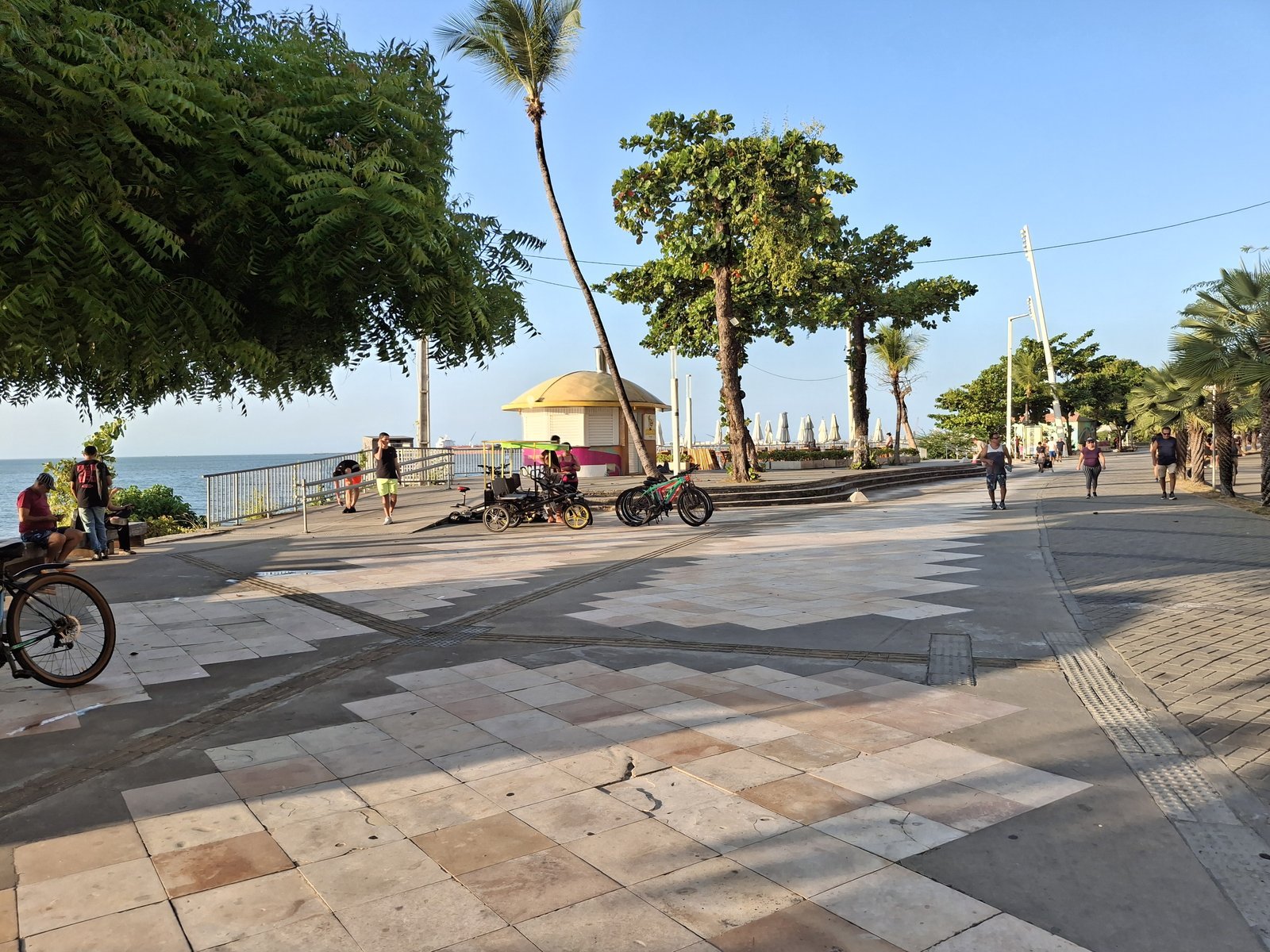
Beira-Mar is where Fortaleza comes to meet. Early in the morning, the promenade belongs to runners and cyclists; late in the afternoon, to families, corn and coconut sellers and people who just want to sit and look at the sea. The Feirinha da Beira-Mar craft fair runs every day from 4 p.m. to 10 p.m. near number 2800 in Meireles, with hundreds of stalls selling handicrafts, hammocks, cashews, cachaça, lace, beachwear and the bottles of colored sand that are Ceará’s classic souvenir. Haggling is part of the fun. There is a tourist information desk in front of number 272, open daily from 8 a.m. to 8 p.m.
Mucuripe fish market
At the end of Beira-Mar, the Mercado dos Peixes opens daily from 7 a.m. to 10 p.m., according to Visit Fortaleza, at Avenida Beira-Mar 3479. You pick your fish, shrimp or lobster at the stalls and take it to one of the kiosks to have it fried or grilled on the spot. It is simple, noisy and one of the best things to do in the city. Check the weight and the price before you hand it over to be cooked.
Praia de Iracema and the Ponte dos Ingleses
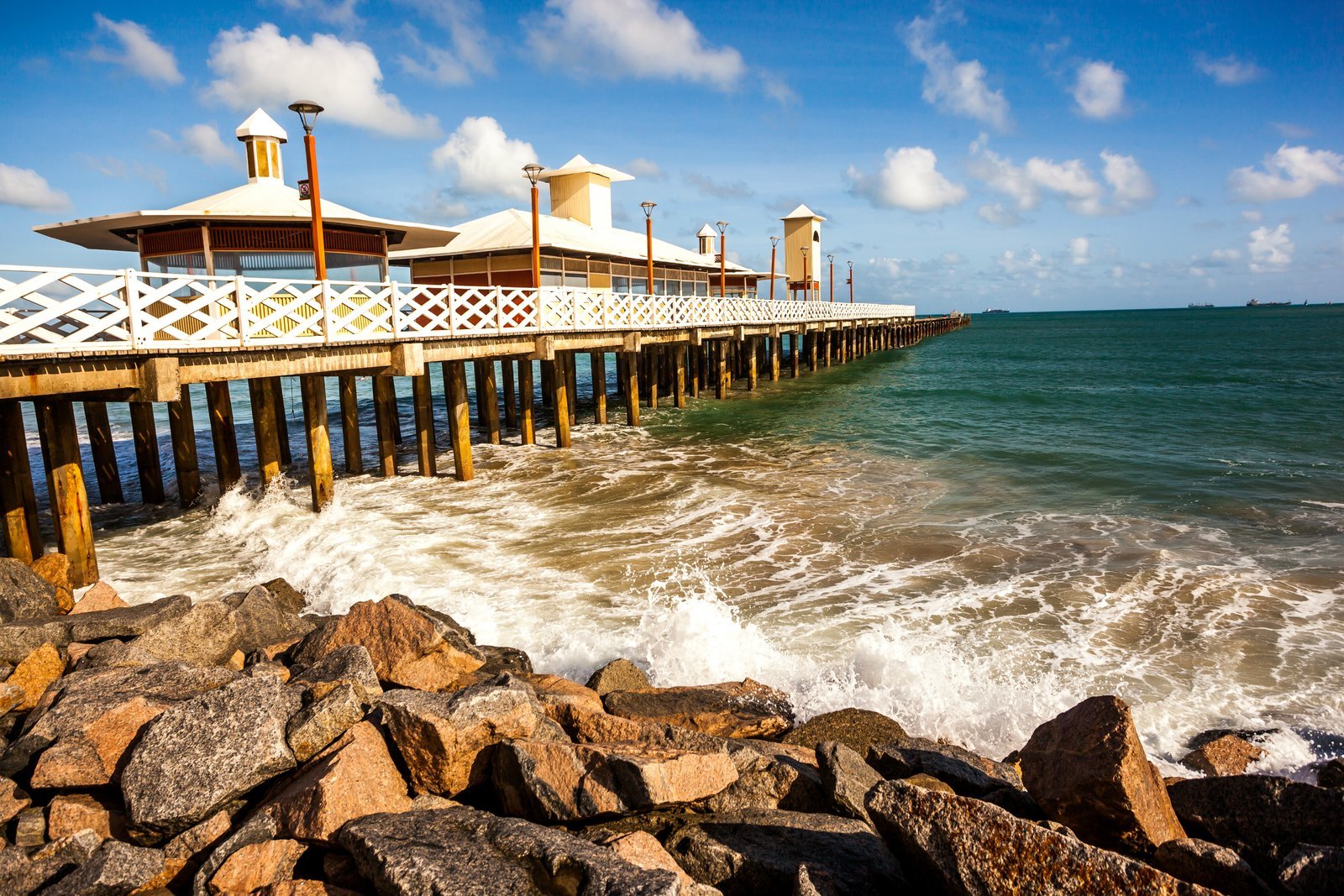
The Ponte dos Ingleses, the “Englishmen’s Bridge”, is a pier built in the last century as part of a port project that never worked out, and it became the city’s most famous viewpoint. It was closed from 2018 to 2024 and reopened on August 25, 2024, after a renovation that added kiosks, a central pavilion and an observation tower. Late afternoon is the busiest time, because the sun sets over the sea here, which is unusual on Brazil’s east-facing northeastern coast. From the pier you can stroll along the renovated Praia de Iracema waterfront to the Iracema Guardiã statue.
Dragão do Mar Center of Art and Culture
Opened on April 28, 1999 at Rua Dragão do Mar 81 in Praia de Iracema, Dragão do Mar is the city’s largest arts complex, with the Museum of Ceará Culture, the Ceará Museum of Contemporary Art, a cinema, theaters, an amphitheater and the Rubens de Azevedo Planetarium, plus bars and restaurants all around. The complex opens Tuesday to Sunday, and the museums keep their own hours, which changed more than once in 2026, so check the Instituto Dragão do Mar website before you go. Cinema tickets cost R$ 16, with cheaper sessions on Tuesdays. The planetarium reopened in October 2026 after maintenance, with weekend shows at R$ 20 (R$ 10 for those eligible for half price). At night the streets around the complex fill up, and many of the city’s cultural events happen here.
Mercado Central
The Mercado Central, at Avenida Alberto Nepomuceno 199 in the Centro, has more than 600 shops. It is the best place in town for hammocks, bobbin lace, cashews, sweets, cachaça, T-shirts and souvenirs, often cheaper than on the seafront if you compare prices. The official website lists opening hours of 9 a.m. to 5 p.m. Monday to Saturday and 8 a.m. to 1 p.m. on Sunday, while the market’s Instagram advertises longer hours; to be safe, go in the morning. There is a tourist desk inside too.
Metropolitan Cathedral
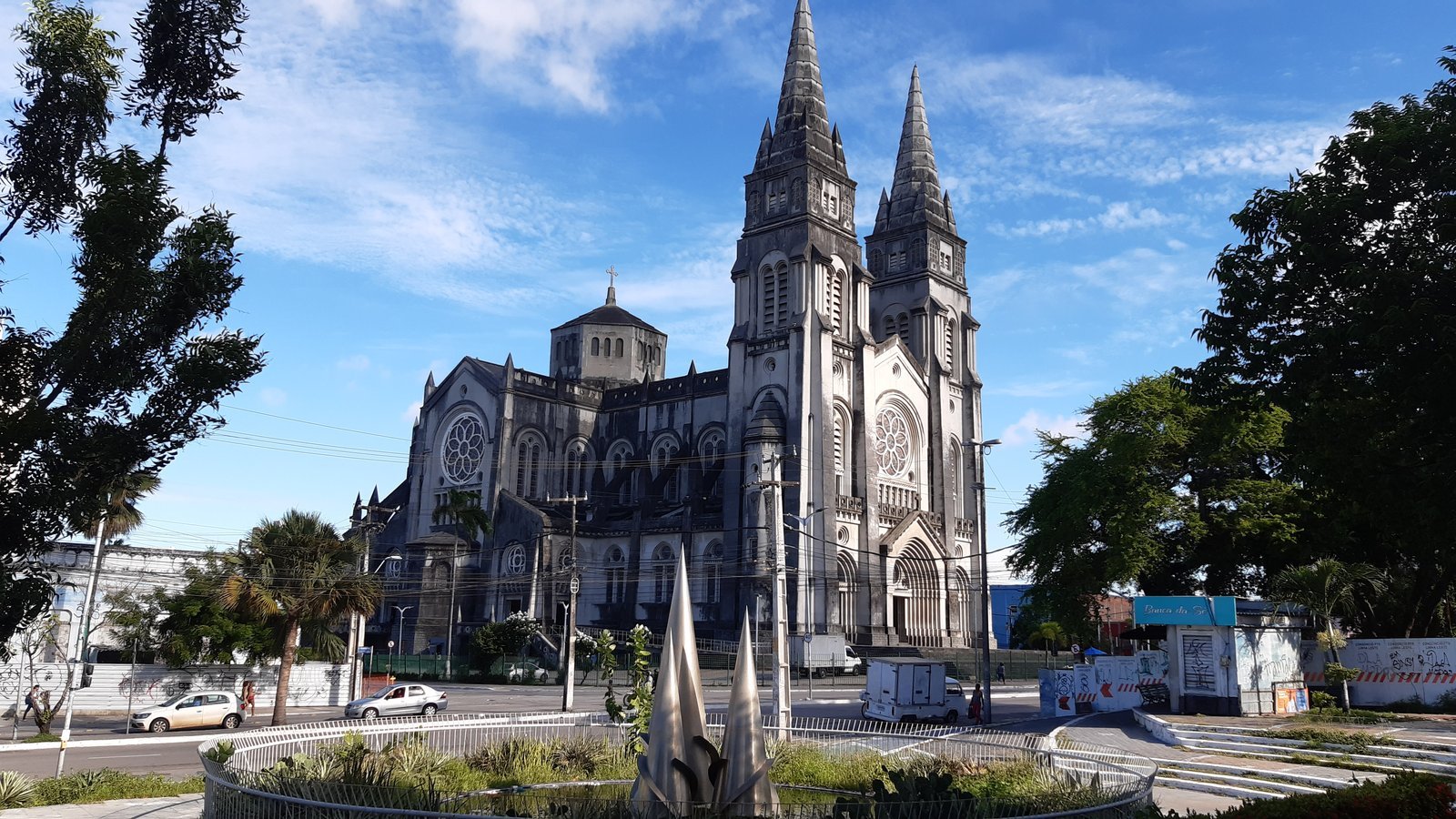
Across the street from the Mercado Central stands the Catedral Metropolitana de Fortaleza, an eclectic church inspired by Gothic and Romanesque styles that holds 5,000 people. It replaced the old cathedral, demolished in 1938. The foundation stone was laid on August 15, 1939, to a design by the French engineer George Mounier, and the building was not inaugurated until December 22, 1978, almost 40 years later. Step inside for the stained glass and the crypt. According to the Archdiocese, Mass is held on Sundays at 9 a.m., 11 a.m., 5 p.m. and 7 p.m., Tuesday to Friday at noon and on Saturdays at noon in the crypt; the church is closed on Mondays.
Theatro José de Alencar
Opened on June 17, 1910, the Theatro José de Alencar is the great symbol of Fortaleza’s belle époque, with a cast-iron structure shipped from Scotland and gardens redesigned by landscape architect Roberto Burle Marx in a 1970s renovation. It is at Rua Liberato Barroso 525 and runs guided visits Tuesday to Friday at 9 a.m., 11 a.m., 2 p.m. and 4 p.m. and on Saturdays at 11 a.m., 1:30 p.m., 2:30 p.m. and 3:30 p.m. Tickets cost R$ 12 (R$ 6 half price) on Sympla or at the box office, with groups of up to 45 people. Visits are free on the 17th of every month, and free for over-60s on Wednesdays. Tours are in Portuguese, but the building speaks for itself.
Pinacoteca do Ceará and Estação das Artes
The old João Felipe railway station, starting point of a line built during the drought of 1877, is now the Estação das Artes complex, home to the Pinacoteca do Ceará art museum and a railway museum. The Pinacoteca opens Wednesday to Friday from 10 a.m. to 6 p.m., Saturday from noon to 8 p.m. and Sunday from 10 a.m. to 5 p.m., and entry is free. It is a good plan for a rainy afternoon or a day when the sun is simply too much.
Passeio Público, Praça do Ferreira and the fort
Near the cathedral, the Passeio Público, laid out in 1820, is the city’s oldest public square, with century-old trees and a view of the sea. Next to it stands the Fortaleza de Nossa Senhora da Assunção, the fort that gave the city its name and is now a military area. A few blocks away, Praça do Ferreira is the symbolic heart of Fortaleza and the stage for local legends of the “Ceará Moleque”, the cheeky Ceará spirit, including the Cajueiro da Mentira, the “liars’ cashew tree” where the best teller of tall tales won a prize every April 1.
Praia do Futuro and its beach clubs
Praia do Futuro is Fortaleza’s full-day beach. The barracas here are more like beach clubs, with pools, playgrounds, showers, music and huge seafood menus. There is usually no entry fee and your food and drinks pay for the facilities; ask about minimum spend or service charges before you sit down. This is open ocean with currents, so stay near the lifeguard posts. On Thursday nights the clubs serve the traditional crab feast. For tips on choosing a club, prices and safety, see our Praia do Futuro guide.
Beach Park
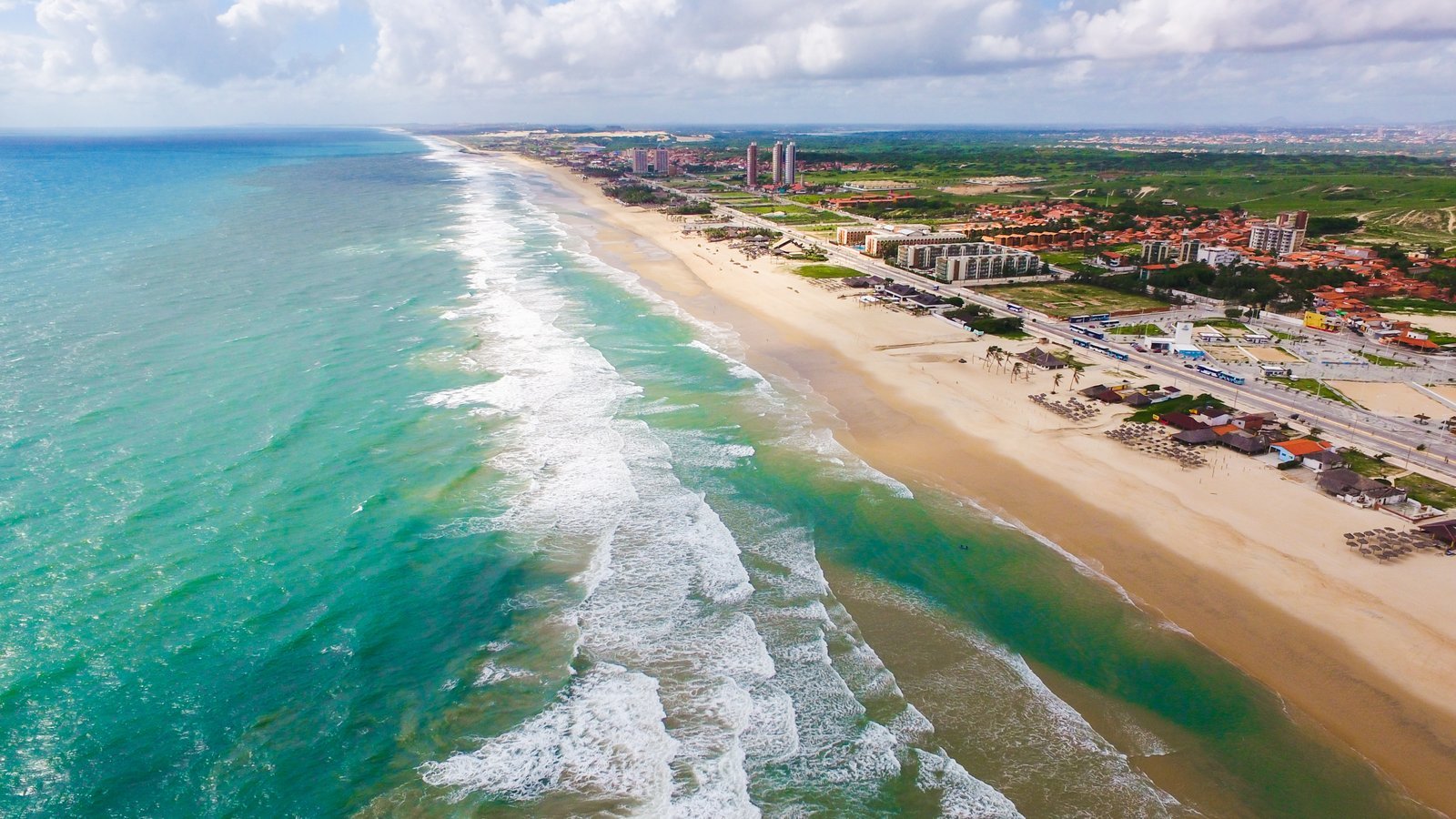
Beach Park, in Porto das Dunas, Aquiraz, about 25 km and 40 minutes from Fortaleza, is one of the largest water parks in Latin America and the top pick for families. Aqua Park tickets start at R$ 250 online, or from R$ 230 if you buy more than 45 days ahead, and prices vary by date. Children under 1 meter tall go free. The park opens from 11 a.m. to 5 p.m., and arriving at opening time means shorter lines. Tour operators charge around R$ 60 per person for a round-trip transfer.
Messejana lagoon and the tapioca stalls
In the south of the city, Lagoa da Messejana has Fortaleza’s largest statue of Iracema, as tall as a four-story building. Nearby, on the border with Eusébio, the Tapioqueiras are a cluster of stalls specializing in tapioca on the road to the east coast, an easy stop on the way to or from Beach Park or Morro Branco.
Sailing and football
Sailing boats and schooners leave from Volta da Jurema in Mucuripe for trips along the seafront, with views of the Beira-Mar skyline and the port. Football fans can catch Fortaleza or Ceará at the Arena Castelão, one of the 2014 World Cup stadiums; the derby between the two is one of the liveliest in the Northeast.
Day trips from Fortaleza: distances, prices and how much time to allow
Direct answer: the most popular day trips are Cumbuco, about 30 km away; Beach Park, 25 km; Morro Branco and Praia das Fontes, about 85 km; Lagoinha, about 110 km; Canoa Quebrada, about 160 km; and Jericoacoara, about 300 km. Tours with transport start at roughly R$ 55 to R$ 175 per person with local operators, with buggies, boats and entry fees paid separately.
The prices below were checked on October 26, 2026 on the websites of local operators Girafatur and Vitorino Tur. They are “from” prices, usually without lunch, and vary with the date and group size.
Cumbuco
The nearest beach with dunes is in Caucaia, about 30 km and 40 to 50 minutes from Beira-Mar. The classic outing is a dune buggy ride to lagoons such as Lagoa do Banana and Parnamirim, where you can slide down the dunes on a board or ride a zip line straight into the water. Cumbuco is also one of Brazil’s top kitesurfing spots during the windy season, August to December, with schools and gear rental on the beach. Tours start at R$ 54.90 with Girafatur and R$ 65 with Vitorino; the buggy is hired separately, per vehicle, from licensed drivers.
Morro Branco and Praia das Fontes
In Beberibe, about 85 km east and 1.5 hours away, Morro Branco is known for its labyrinth of colored sandstone cliffs, the source of the sand used in Ceará’s famous sand-art bottles. Next door, Praia das Fontes has freshwater springs trickling out of the cliffs onto the beach. A tour combining the two starts at R$ 85 with Girafatur.
Lagoinha
In Paraipaba, about 110 to 120 km west and 2 hours away, Lagoinha is one of the prettiest beaches on the west coast, with coconut palms, dunes and lagoons tucked between them. The sea is usually calm and the beach has kiosks and buggy rides. Tours start at R$ 79.90 with Girafatur and R$ 95 with Vitorino.
Flecheiras and Mundaú
In Trairi, about 130 km away, Flecheiras has natural pools in the reef at low tide and a fishing village that is still quiet. Girafatur combines it with Mundaú, where a river meets the sea, from R$ 174.90. It suits people who want to escape the crowds at the famous beaches; check the tide table before you book.
Canoa Quebrada
In Aracati, about 160 km east, Canoa Quebrada brings together red cliffs, dunes, the bar-lined main street locals call Broadway, and the crescent moon and star carved into the cliff face. A buggy ride over the dunes to neighboring beaches such as Majorlândia is the main event, along with paragliding and jangada rides. Full-day tours start at R$ 110 with Vitorino, running 7 a.m. to 4 p.m. with a stop at a cachaça distillery, and R$ 120 with Girafatur. If you have time, stay the night; Canoa has good inns and a lively evening scene.
Jericoacoara: day trip or overnight?
Jericoacoara is about 300 km from Fortaleza, in the municipality of Jijoca, and the last stretch to the village is done in 4×4 vehicles over the dunes, because regular cars are not allowed in. That makes a day trip exhausting: many hours on the road in a single day for a few hours in the village. Girafatur sells day trips from R$ 150 and Vitorino from R$ 220 including sunset; Girafatur also has an overnight package from R$ 240. Our advice is simple: if you can, spend at least two nights in Jeri. You’ll catch sunset on the dune, visit the Pedra Furada rock arch and Lagoa do Paraíso without rushing, and enjoy the village at night. Every visitor pays the Sustainable Tourism Fee, R$ 41.50 per person for up to 10 days plus R$ 4.15 per extra day; an entry ticket for the National Park for visitors going only to the village is suspended by court order. To plan your stay, see our guides to Jericoacoara village center, Pedra Furada and Sunset Dune and the best restaurants in Jericoacoara.
Paracuru, Águas Belas and the “3 beaches” tour
For other one-day options, Girafatur also runs trips to Paracuru, on the west coast, from R$ 84.90, and to Águas Belas beach in Cascavel from R$ 74.90. The “3 praias” tour, which strings together several east-coast beaches in one day, starts at R$ 99.90 with Girafatur and R$ 109 with Vitorino.
What to eat in Fortaleza
Direct answer: the must-tries in Fortaleza are Thursday-night crab, baião de dois with sun-dried beef, tapioca, fresh fried fish at the Mucuripe market, Ceará-style fish stew, lobster and shrimp, cashew nuts and fruit juices such as cashew fruit, cajá and soursop.
Thursday crab night
Every Thursday, beach clubs and restaurants across Fortaleza serve whole crabs cooked in a seasoned broth, which you crack open at the table with a small wooden mallet. According to Diário do Nordeste, the tradition began at Praia do Futuro, with the Chico do Caranguejo beach club already reported as the pioneer of crab nights in 1988; in the 1990s it became a citywide craze. Praia do Futuro is still the classic place to do it. Much of the crab comes from the neighboring states of Piauí and Maranhão.
Baião de dois and carne de sol
Baião de dois is rice and black-eyed beans cooked together with coalho cheese, clarified butter and sometimes cream. It is served with almost everything, usually with carne de sol, a salted, sun-cured beef, or lamb. Also try paçoca, shredded carne de sol pounded with cassava flour, and fried cassava.
Tapioca
Ceará tapioca is a crepe made to order from cassava starch, filled with coalho cheese, carne de sol, coconut or something sweet. You’ll find it at hotel breakfasts, at stalls on Beira-Mar and at the Tapioqueiras on the way to the east coast.
Fish stew, lobster and shrimp
Peixada cearense, made with king mackerel or snapper, vegetables and a thick fish-broth porridge called pirão, is said to have been the dish that restored the strength of raft fishermen back from the sea. Lobster is another star, especially on the east coast, and shrimp is on almost every menu. At the fish market, you choose your catch and have it cooked.
Sweets, fruit and drinks
Cashew nuts are everywhere: raw, roasted or caramelized. Cashew fruit juice is almost compulsory, and cajuína, a clear, lightly sweet drink made from cashew fruit, is common in Ceará and neighboring Piauí. Try the regional fruit ice creams, rapadura (solid cane sugar) and cachaça from the inland distilleries too.
A practical tip
Seafood and carne de sol dishes in Fortaleza are usually portioned for two or three people. Ask the waiter before ordering so you don’t overdo it. At beach clubs, check whether the service charge is included and whether there’s a cover charge for live music.
Nightlife in Fortaleza
Direct answer: Fortaleza nightlife centers on three areas: Praia de Iracema and the streets around Dragão do Mar, with bars and cultural events; Beira-Mar and Varjota, with restaurants and quieter bars; and the forró dance halls. Stand-up comedy is a city trademark.
Brazilians call Fortaleza the capital of comedy, and comedy shows in bars and dedicated venues draw millions of spectators a year. Even if you miss half the jokes, it is a very Ceará experience. Forró is the most popular music in the city, from traditional accordion trios to the electronic version, and several venues hold forró nights during the week; if you have never danced it, the locals are usually happy to teach.
In Praia de Iracema, the streets around Dragão do Mar are full of bars with live music, especially Thursday to Saturday. Varjota has restaurants and bars for a relaxed dinner, and Beira-Mar stays busy late near the craft fair. On Thursdays, the night starts early with crab at Praia do Futuro. Use Uber, 99 or a taxi to get there and back at night.
Is Fortaleza safe?
Direct answer: Avenida Beira-Mar, Praia de Iracema, Praia do Futuro during the day and the Centro during business hours are busy areas that are generally fine for visitors who take the usual big-city precautions. Fortaleza does have high violence rates in some outlying neighborhoods, but they are falling, and the tourist zone is the most heavily policed part of the city.
Some numbers for context. According to Ceará’s public security research office (Supesp), Fortaleza recorded 742 intentional violent deaths in 2025, down 11% from 834 in 2024, and robbery-related killings in the capital fell from 20 to 9. That is still a high rate by international standards, roughly 30 per 100,000 residents by our calculation, but most cases are linked to gang disputes in neighborhoods far from the seafront. For visitors, the most common risk is phone theft.
- Your phone: avoid using it on the sidewalk, especially near the curb and at bus stops. Step into a shop or restaurant to check a map or call a ride.
- At night: Beira-Mar is busy until late near the craft fair, but some stretches go quiet. In Praia de Iracema and the Centro, avoid empty streets after the bars close. Use rideshare or a taxi between neighborhoods.
- Downtown: visit on weekdays or Saturday mornings. On Sundays and at night, the shops close and the streets empty.
- On the beach: bring only what you need and don’t leave things unattended on the sand. Praia do Futuro’s beach clubs are well organized, but keep an eye on your belongings.
- In the sea: Praia do Futuro is open ocean with currents. Watch the flags and stay near lifeguard posts. Swimming at Beira-Mar is less advisable because of the groynes and water quality in some stretches; check the bathing-water bulletins from Semace, the state environmental agency.
- Dune buggies: book licensed drivers, ideally through your hotel or a tour operator, and agree on the route and price before you set off.
- Emergencies: Military Police 190, ambulance (SAMU) 192 and fire department 193. Fortaleza also has a Tourist Police unit on the seafront.
How much does a trip to Fortaleza cost in 2026?
Direct answer: Fortaleza is a mid-priced destination by northeastern Brazil standards. A bus ride costs R$ 5.40, a guided visit to the Theatro José de Alencar R$ 12, Beach Park from R$ 250, and full-day coastal tours start between R$ 55 and R$ 175 per person, without buggy or lunch. For hotel rates, check each hotel’s official website, because prices swing a lot with the season.
The table lists prices we checked with official sources and tour operators in October 2026. Optional extras are paid on the spot and can change without notice.
| Item | 2026 price | Notes |
|---|---|---|
| City bus | R$ 5.40 | Since 2 Jan 2026; 2-hour transfers with Bilhete Único |
| Taxi flag fall | R$ 6.82 | Plus R$ 4.06 per km (standard rate) or R$ 5.28 (higher rate) |
| Airport special taxi | R$ 40.59 to R$ 81.18 | Fixed fare by zone, Decree 16,574/2026 |
| Regular taxi, airport to Beira-Mar | R$ 55 to R$ 75 | Our estimate from the meter, standard rate |
| Theatro José de Alencar guided visit | R$ 12 | R$ 6 half price; free on the 17th of each month |
| Pinacoteca do Ceará | Free | Wednesday to Sunday |
| Dragão do Mar cinema | R$ 16 | R$ 8 half price; cheaper on Tuesdays |
| Rubens de Azevedo Planetarium | R$ 20 | R$ 10 half price; weekend shows |
| Beach Park Aqua Park ticket | From R$ 250 | From R$ 230 when booked more than 45 days ahead |
| Beach Park transfer | From R$ 59.90 | Girafatur, round trip |
| Cumbuco tour | From R$ 54.90 | Girafatur; Vitorino from R$ 65; buggy extra |
| Morro Branco and Praia das Fontes tour | From R$ 85 | Girafatur |
| Lagoinha tour | From R$ 79.90 | Girafatur; Vitorino from R$ 95 |
| Canoa Quebrada tour | From R$ 110 | Vitorino; Girafatur from R$ 120 |
| Flecheiras and Mundaú | From R$ 174.90 | Girafatur |
| Jericoacoara day trip | From R$ 150 | Girafatur; Vitorino with sunset from R$ 220 |
| Jericoacoara Sustainable Tourism Fee | R$ 41.50 | Per person, up to 10 days; R$ 4.15 per extra day |
“Half price” (meia-entrada) is a Brazilian discount mainly for students, seniors and people with disabilities; foreign visitors usually pay the full price unless they qualify under the local rules. On a budget trip, excluding hotel and paid tours, plan on R$ 250–400 per person per day for simple restaurant meals, a beach club lunch, coconut water, rideshares and small purchases. That is our estimate. For a five-day trip with Beach Park and two full-day tours with a buggy ride, set aside roughly R$ 800–1,200 per person for tickets and tours alone.
Fortaleza itineraries: 3, 5 and 7 days
Direct answer: in 3 days you can see the seafront and downtown and fit in a day trip to Cumbuco. In 5, add Beach Park and Canoa Quebrada or Morro Branco. In 7, you can spend two nights in Jericoacoara. These itineraries assume a hotel on Beira-Mar.
3-day itinerary
- Day 1, seafront and Praia de Iracema: a morning walk or bike ride along Beira-Mar, lunch at the Mucuripe fish market, the afternoon in Praia de Iracema, sunset on the Ponte dos Ingleses and the evening at Dragão do Mar. If it’s a Thursday, swap dinner for crab at Praia do Futuro.
- Day 2, downtown and Praia do Futuro: the Mercado Central, the cathedral and the Theatro José de Alencar in the morning, with the 11 a.m. guided visit. After lunch, head to a Praia do Futuro beach club and stay until late afternoon. Evening at the Beira-Mar craft fair.
- Day 3, Cumbuco: a day trip to Cumbuco with a buggy ride over the dunes and a swim in a lagoon. Back in the late afternoon for dinner in Varjota.
5-day itinerary
- Days 1 to 3: follow the 3-day itinerary.
- Day 4, Beach Park: a full day at the water park, arriving at opening time. If water parks aren’t your thing, go to Lagoinha instead.
- Day 5, Canoa Quebrada or Morro Branco: Canoa for cliffs, buggies and a lively village; Morro Branco and Praia das Fontes for a shorter, quieter day. Stop at the Tapioqueiras on the way back.
7-day itinerary
- Days 1 to 4: follow the 5-day itinerary through Beach Park.
- Days 5 and 6, Jericoacoara: transfer to Jeri and two nights in the village, with sunset on the dune, Pedra Furada and Lagoa do Paraíso.
- Day 7, return and a last outing: back to Fortaleza. With an evening flight, use the time for souvenir shopping at the Mercado Central or a visit to the Pinacoteca. If you’d rather stay close to the city, swap Jeri for Canoa Quebrada and Lagoinha.
Where to stay in Fortaleza
Direct answer: for a first visit, stay on Avenida Beira-Mar between Meireles and Mucuripe, close to the craft fair, restaurants and the promenade. Praia de Iracema suits travelers who want culture and nightlife. Praia do Futuro and Porto das Dunas are for resorts and pools, and Cumbuco is for those who come for the wind and dunes. Every link below goes to the hotel’s official website and was checked in October 2026; we do not use agency or booking-site links.
Rates change a lot with the season, and December, January, July and Carnival are the most expensive periods. Check prices directly on each hotel’s official site and book early for those dates.
Gran Marquise (luxury, Mucuripe)
The Gran Marquise is at Avenida Beira-Mar 3980, on the Mucuripe stretch, and is one of the city’s long-established luxury hotels. It has a rooftop infinity pool, a spa and two restaurants, Mucuripe and Mangostin. On its official site, the Superior Gran Class room was listed from about R$ 1,054 a night in October 2026.
Seara Praia Hotel (upscale, Meireles)
The Seara Praia Hotel is at Avenida Beira-Mar 3080, less than 100 meters from the craft fair, and describes itself as a five-star hotel. It has a rooftop pool with a bar, a sauna and a hot tub, all with sea views.
Hotel Luzeiros Fortaleza (upscale, Meireles)
Hotel Luzeiros Fortaleza is at Avenida Beira-Mar 2600, in the middle of the busiest stretch of the seafront. It has a pool, a gym and a steam room, and the location means you can walk almost everywhere.
Afago Mareiro Hotel (mid-range, Meireles)
The Afago Mareiro Hotel, formerly the Mareiro, is at Avenida Beira-Mar 2380, facing the sea and close to the craft fair. A solid mid-range choice on the main avenue.
Hotel Beira Mar (mid-range, Meireles)
Hotel Beira Mar is at Avenida Beira-Mar 3130, between the craft fair and Mucuripe. It is a traditional seafront hotel for travelers who want the location without luxury prices.
Hotel Praia Centro (mid-range, Praia de Iracema)
Hotel Praia Centro is at Avenida Monsenhor Tabosa 740, on the Praia de Iracema shopping street, a few blocks from Dragão do Mar and the Ponte dos Ingleses. It has a rooftop pool and bar and a gym, and breakfast includes tapioca and couscous, the northeastern corn version.
Marina Park Hotel (urban resort, Praia Formosa)
The Marina Park Hotel is at Avenida Presidente Castelo Branco 400, west of the Centro, with a marina for about 150 boats and 200 meters of beach. It suits travelers who want resort facilities without leaving the city, but it is far from Beira-Mar and you’ll need a car or rideshare for everything.
Vila Galé Fortaleza (resort, Praia do Futuro)
Vila Galé Fortaleza is at Avenida Dioguinho 4189 on Praia do Futuro, with around 300 rooms, a spa and a kids’ club. It is about 26 minutes from the airport and a good base if you want open-ocean beach right outside the hotel.
Acqua Beach Park Resort (resort, Porto das Dunas)
The Acqua Beach Park Resort is in Porto das Dunas, Aquiraz, and is the Beach Park resort with direct access to the water park via a lazy river called the Aqualink. It has an infinity pool and apartments for up to six people, a strong choice for families. The same group runs the Oceani Beach Park Resort, 500 meters from the park, with a shuttle.
Vila Galé Cumbuco (all-inclusive, Cumbuco)
Vila Galé Cumbuco is at Rua Lagoa das Rosas 5 in Cumbuco, Caucaia, and runs on an all-inclusive basis, with 488 rooms, 49 chalets and five restaurants. It suits travelers who want to be close to the dunes and kitesurfing, about 30 km from Fortaleza.
Video: Fortaleza by Visit Brasil
This short film from Visit Brasil, the official channel of Brazil’s tourism board, Embratur, shows Fortaleza’s beaches, dunes and adventures. It is a good way to get a feel for the place before you go.
Frequently asked questions about Fortaleza
Do I need a visa to visit Fortaleza, Brazil?
It depends on your passport. Since April 10, 2025, citizens of the United States, Canada and Australia need an eVisa, applied for online through the official provider linked from the Brazilian Ministry of Foreign Affairs. It costs US$ 80.90, allows stays of up to 90 days and can take up to 10 business days to process. Most EU, UK and South American passport holders can enter visa-free as tourists.
What is the best time to visit Fortaleza?
July to December, the dry season. According to INMET climate normals, August to November gets less than 25 mm of rain a month. September, October and November combine sunshine, good kitesurfing wind and lower prices than December, January and July. The rainy season runs from January to June and peaks from March to May.
How many days do you need in Fortaleza?
Three days cover Beira-Mar, Praia de Iracema, downtown, Praia do Futuro and a day trip to Cumbuco. Five days let you add Beach Park and Canoa Quebrada or Morro Branco. With seven, you can spend two nights in Jericoacoara.
Where is the best area to stay in Fortaleza?
For a first visit, Avenida Beira-Mar between Meireles and Mucuripe is the most practical base, close to the craft fair, the fish market, restaurants and the promenade. Praia de Iracema suits culture and nightlife lovers, and Praia do Futuro and Porto das Dunas are where the resorts are.
How do I get from Fortaleza airport to Beira-Mar?
The airport is about 12 km from Beira-Mar, 20 to 30 minutes by car. Options are the COOPEAERO special taxi with fixed fares by zone from R$ 40.59 to R$ 81.18, a metered regular taxi, Uber and 99 with pickup on level 1 near door 6, or city buses such as lines 027 and 066, which require a change to reach the seafront.
How much is a Beach Park ticket?
On the official site, Aqua Park tickets start at R$ 250 online, or from R$ 230 if you book more than 45 days ahead. Prices vary by date, and children under 1 meter tall go free. The park is in Porto das Dunas, Aquiraz, about 25 km from Fortaleza.
Can you do a day trip from Fortaleza to Jericoacoara?
You can, but it’s tiring. Jeri is about 300 km away, the last stretch is by 4×4 over the dunes, and a day trip means many hours on the road. Local operators sell day trips from R$ 150 per person. Ideally, stay at least two nights. Every visitor pays the Sustainable Tourism Fee of R$ 41.50 for up to 10 days.
Is Fortaleza safe for tourists?
Beira-Mar, Praia de Iracema, Praia do Futuro by day and downtown during business hours are busy and generally fine with normal big-city precautions. Violent deaths in the city fell 11% in 2025, according to Supesp, and are concentrated in neighborhoods far from the seafront. Phone theft is the most common risk for visitors, so keep your phone out of sight on the street and use rideshare at night.
What is Thursday crab night in Fortaleza?
It is the local tradition of eating whole crabs on Thursday nights, cracking the shells with a small wooden mallet. According to Diário do Nordeste, it began at Praia do Futuro, with the Chico do Caranguejo beach club as the pioneer in the late 1980s, and became a craze in the 1990s. Today bars and beach clubs all over the city take part.
Which Fortaleza beach is best for swimming?
In the city, the most popular swimming beach is Praia do Futuro, but it is open ocean with waves and currents, so stay near the lifeguards. Swimming at Beira-Mar is less advisable. For calm, clear water, head out of town to beaches such as Lagoinha, Cumbuco or Flecheiras.
Is Fortaleza worth visiting?
Direct answer: yes, especially if you want near-guaranteed sunshine for half the year, a big city with good infrastructure, and a remarkably varied coastline within a few hours, with dunes, cliffs, lagoons and Jericoacoara. The city itself has a lively seafront, great food and a cultural scene that many visitors underestimate.
Fortaleza works well for families, who have Beach Park and the resorts, for couples, and for kitesurfers, who find some of the world’s most reliable wind in Cumbuco and along the west coast. For a longer trip through northeastern Brazil, it is the usual starting point for routes west to Jericoacoara and the Lençóis Maranhenses dunes or south along the coast to Natal. See also our guides to Natal, Maceió, Salvador and Fernando de Noronha.
Sources
- Brazilian Ministry of Foreign Affairs: visitor visa requirement for nationals of Australia, Canada and the USA
- IBGE Cidades: Fortaleza (CE) overview (2022 census population, estimate and area)
- INMET: Brazilian climate normals 1991-2020 (rain, highs and lows, Fortaleza station)
- Wikipedia (Portuguese): Fortaleza (history, abolition, culture and food)
- Visit Fortaleza, City of Fortaleza: useful information (airport, taxis, bus lines, tourist desks and climate) and Mercado dos Peixes
- G1 Ceará: bus fare rises to R$ 5.40 (January 2026)
- Eitaxi: Fortaleza taxi fare increase (Decree 16,574/2026) and Diário do Nordeste: taxi fare adjustment
- Supesp/SSPDS: violent deaths in 2025
- Theatro José de Alencar: guided visits and tickets
- Mercado Central de Fortaleza: official site (address and hours)
- Archdiocese of Fortaleza: history of the cathedral and Mass times
- Instituto Dragão do Mar: Dragão do Mar Center of Art and Culture and GCMais: October 2026 program and planetarium
- Pinacoteca do Ceará: opening hours and Mapa Cultural do Ceará: free entry
- G1 Ceará: Ponte dos Ingleses reopening and O Povo: Ponte dos Ingleses reopens
- Feirinha da Beira-Mar: official site (hours and location)
- Beach Park: Aqua Park tickets and 2026 ticket sales policy
- Diário do Nordeste: how Thursday crab night became a tradition
- Jijoca de Jericoacoara / ADEJERI: Sustainable Tourism Fee and O Povo: court upholds ban on Jericoacoara entry ticket
- Girafatur: tours from Fortaleza and Vitorino Tur: tours in Ceará (“from” prices on October 26, 2026)