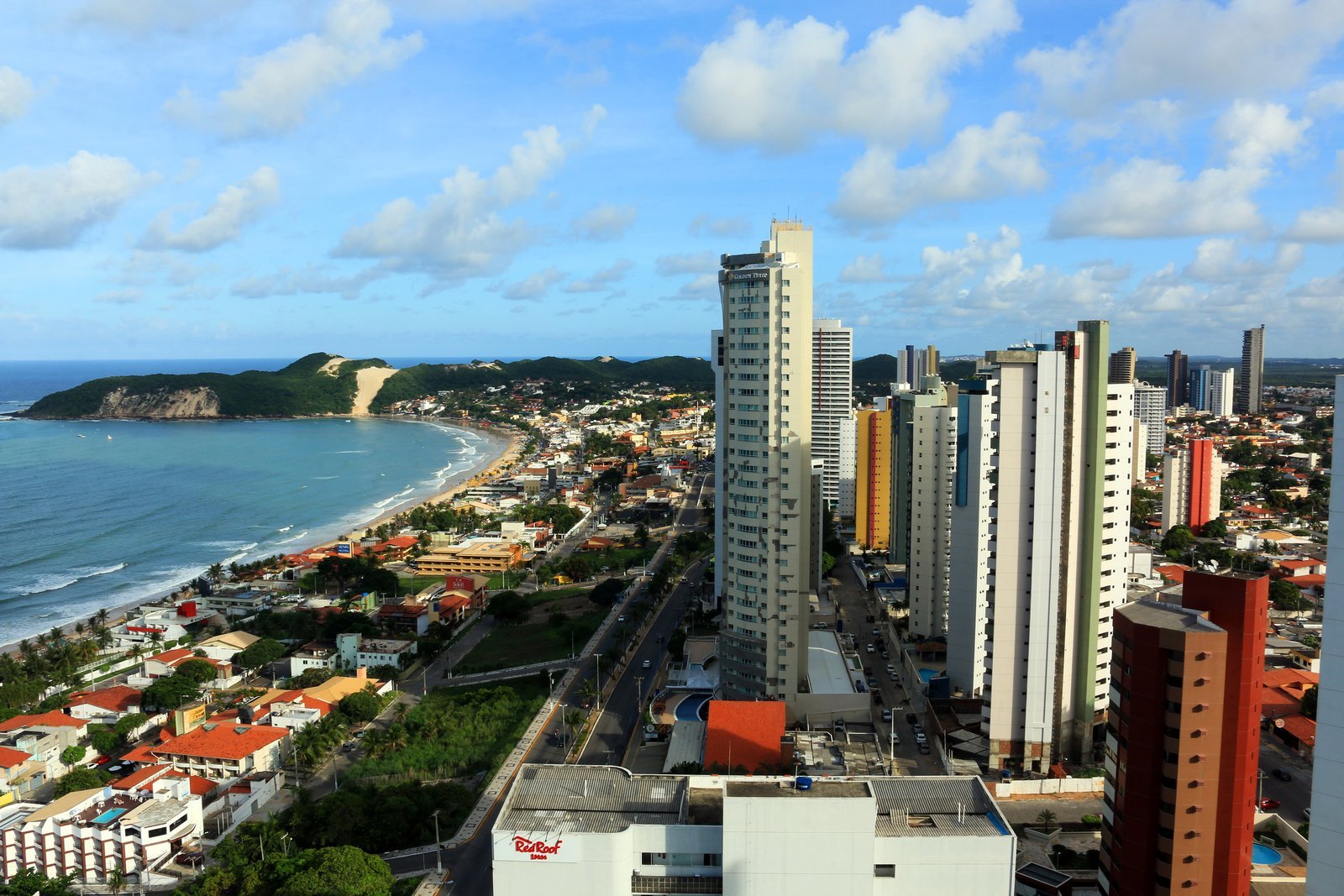
Natal is the capital of Rio Grande do Norte, on the northeastern tip of Brazil, a beach city of 751,300 people (2022 IBGE census) with strong sun most of the year, warm water and sand dunes running right down to the sea. Most visitors use it as a base. In town you have Ponta Negra beach and the Morro do Careca dune, the 16th-century Forte dos Reis Magos, the Newton Navarro bridge, a small historic center and the city beaches. Within two hours by road you reach the dunes of Genipabu, the coral pools of Maracajaú, the world’s largest cashew tree, the cliffs of Pipa and quiet villages like São Miguel do Gostoso and Galinhos.
This guide is written for international travelers planning a trip in 2026. It covers visa rules, including the eVisa now required for US, Canadian and Australian citizens, how to get from Natal airport (NAT) to Ponta Negra, money, safety, month-by-month weather from Brazil’s national weather service, the main sights with checked opening hours and prices, day trips, food, 3-, 5- and 7-day itineraries and real hotels in Ponta Negra, Via Costeira, Areia Preta and Pipa, each linked to its official website.
Quick facts: Natal, Brazil
- What it is: the capital of Rio Grande do Norte state in Northeast Brazil, with 751,300 residents in the 2022 census. Locals are called natalenses; people from the state are potiguares.
- Best time to go: September to February, the drier months. October to December are the driest. The rainy season runs from March to August and peaks in June.
- Temperature: average highs of 28 to 31 °C (82 to 88 °F) all year, lows of 21 to 25 °C (70 to 77 °F), according to INMET 1991-2020 climate normals.
- Airport: Governador Aluízio Alves International Airport (NAT), in São Gonçalo do Amarante, about 30 km from central Natal. Most international visitors arrive on a connecting flight from another Brazilian city.
- Visa: US, Canadian and Australian citizens need an eVisa (since April 10, 2025). Many European and South American passport holders enter visa-free. Check your own nationality on the Brazilian government site.
- Money: Brazilian real (BRL, R$). Cards are accepted almost everywhere, and Pix (Brazil’s instant payment system) is everywhere, but carry some cash for beach kiosks and small vendors.
- Power: 220 V, 60 Hz. Bring an adapter for Brazilian type N sockets (type C plugs usually fit).
- Daily budget: R$ 250 to R$ 400 per person on a budget, excluding accommodation and buggy or boat trips (our estimate).
- How long: 3 days for the city and Genipabu, 5 days to add Maracajaú and Pipa, 7 days for São Miguel do Gostoso or Galinhos.
A short history: from the Forte dos Reis Magos to the “City of the Sun”
Direct answer: Natal was founded on December 25, 1599, and takes its name from Christmas Day (Natal in Portuguese). A year and a half earlier, in January 1598, the Portuguese started building the Forte dos Reis Magos at the mouth of the Potengi River to drive out French traders who dealt in brazilwood with the Indigenous Potiguara and to protect the coast.
Construction began on January 6, Epiphany or Three Kings’ Day, which is where the fort’s name, “Fort of the Three Wise Men”, comes from. The small settlement grew on a hill near the river, today’s Cidade Alta, around what is now Praça André de Albuquerque, considered the city’s point zero, and the Igreja Matriz de Nossa Senhora da Apresentação.
From 1633 to 1654 the region was under Dutch rule; the Dutch took the fort and renamed it. After the Portuguese regained control, Natal spent more than two centuries as a small town living off its port, sugar and cattle from the interior. The word potiguar, used for anyone from the state, comes from the Tupi language and is often translated as “shrimp eater”. Consider that a hint about the food.
The 20th century changed everything. During World War II, Natal’s position at the point of South America closest to Africa made it strategic for the Allies. A large air base was built in neighboring Parnamirim, thousands of American servicemen passed through, and the city earned the nickname “Trampoline to Victory”. In January 1943, Brazilian president Getúlio Vargas and US president Franklin D. Roosevelt met in Natal, in what became known as the Potengi Conference. That story is told at the Museu da Rampa, on the riverbank, and at the Centro Cultural Trampolim da Vitória in Parnamirim.
In recent decades tourism became one of the main drivers of the economy. The Via Costeira road, opened between the dunes and the sea, filled with large hotels; Ponta Negra became the main tourist district; and the Newton Navarro bridge, opened in 2007, linked the center to the north coast. In 2014 the Arena das Dunas hosted FIFA World Cup matches. The city’s nickname today, Cidade do Sol (City of the Sun), sums up why most people come.
When to visit Natal: weather by month and events
Direct answer: the best time to visit Natal is September to February, when there is little rain and the sea tends to be calm and clear for boat trips. October, November and December are the driest months, with under 30 mm of rain on average. March to August is the rainy season, peaking in June, though showers usually alternate with sunny spells.
The table uses the 1991-2020 climate normals of Brazil’s National Institute of Meteorology (INMET) for the Natal station. Temperatures barely change during the year; rainfall does.
| Month | Average low and high | Average rainfall (mm) |
|---|---|---|
| January | 24.4 °C to 30.4 °C | 80.7 |
| February | 24.6 °C to 30.7 °C | 99.8 |
| March | 24.2 °C to 30.7 °C | 200.8 |
| April | 23.7 °C to 30.3 °C | 240.5 |
| May | 23.1 °C to 29.8 °C | 221.8 |
| June | 21.9 °C to 28.8 °C | 348.8 |
| July | 21.0 °C to 28.4 °C | 254.0 |
| August | 21.2 °C to 28.6 °C | 118.7 |
| September | 22.2 °C to 29.0 °C | 54.0 |
| October | 23.5 °C to 29.7 °C | 20.6 |
| November | 24.2 °C to 30.0 °C | 22.5 |
| December | 24.7 °C to 30.4 °C | 29.0 |
Keep in mind that Brazil’s seasons are reversed. December and January are summer and Brazilian school holidays, and so is July, so those months bring the highest hotel prices and the busiest beaches. September, October and November are the sweet spot for most international visitors: dry weather, good sea conditions and fewer crowds. If you are on a budget, April, May and August can work if you accept some rain and leave spare days in your plan.
Natal is just a few degrees south of the Equator, so the sun is intense year-round, even on cloudy days. Wear high-factor sunscreen and avoid long exposure between 10 am and 3 pm.
Carnatal
Carnatal is Natal’s out-of-season carnival, with trios elétricos (huge sound trucks) and big names in axé music. The 35th edition is scheduled for December 4 to 6, 2026, around the Arena das Dunas. The city fills up and room rates jump, so book early or avoid those dates if you want a quiet trip.
December and New Year’s Eve
December combines dry weather, holidays and year-end festivities. The city named after Christmas usually has Christmas events and New Year’s Eve fireworks on the beachfront, especially in Ponta Negra. It is the busiest time of year.
Festa junina in June
June is festa junina season across the Northeast, with square dances, forró music and corn-based food. Natal has street parties around town and the interior of the state celebrates in a big way. It is also the wettest month, so combine it with a more cultural trip.
Wind season in São Miguel do Gostoso
Kitesurfers should look at a different calendar. According to São Miguel do Gostoso’s official tourism site, the wind is strongest and most consistent from September to March, peaking from October to February.
Entry requirements, money and practical basics
Direct answer: US, Canadian and Australian citizens need a Brazilian eVisa, applied for online before the trip; citizens of many countries, including most of the EU, the UK and South America, can enter as tourists without a visa. Brazil’s currency is the real (R$), cards and Pix are widely accepted, and the power supply in Natal is 220 V.
- eVisa: since April 10, 2025, Brazil requires a visa from citizens of the United States, Canada and Australia. The application is online through the official provider linked from the Brazilian Ministry of Foreign Affairs site, costs US$ 80.90 and allows stays of up to 90 days. Apply well in advance and only through official channels.
- Other passports: rules vary by nationality, so check the Ministry of Foreign Affairs visa table before booking.
- Money: withdraw reais from bank ATMs inside shopping malls or the airport, which are safer than street machines. Credit and debit cards are accepted in hotels, restaurants and most shops. Pix, the instant transfer system Brazilians use for almost everything, usually needs a Brazilian bank account; as a visitor, plan on cards and some cash.
- Language: Portuguese. English is spoken at larger hotels and some tour agencies, less so elsewhere. A translation app helps a lot.
- Power: Natal uses 220 V, 60 Hz. Check that your chargers support 220 V and bring a plug adapter.
- Tipping: restaurants usually add a 10% service charge to the bill. It is technically optional.
- Emergency numbers: Military Police 190, ambulance (SAMU) 192, fire department 193 and the Tourist Police (Delegacia do Turista), +55 84 3232-7404.
How to get to Natal: flights, NAT airport and buses
Direct answer: almost all visitors fly into Governador Aluízio Alves International Airport (NAT), which is in São Gonçalo do Amarante, outside the city, about 30 km from central Natal. Most international travelers arrive on a connecting flight via one of Brazil’s larger hubs. Overland, buses arrive at Natal’s main bus station in the Cidade da Esperança district.
Natal airport (NAT)
The airport opened in 2014 and has been run by Zurich Airport Brasil since February 2024. Ponta Negra, where most visitors stay, is farther than the city center because you have to cross or skirt the city; the drive usually takes 40 minutes to an hour depending on traffic.
- Ride-hailing: Uber and 99 pick up from the covered area right outside the terminal exit, according to the airport. This is the easiest option to Ponta Negra or the Via Costeira resorts. Fares vary with time and demand.
- Taxi: the airport taxi cooperative operates at the arrivals hall 24 hours a day.
- Bus: line R, run by Trampolim da Vitória, links São Gonçalo do Amarante to the Midway Mall via the airport. It does not go to Ponta Negra, so with luggage a ride-hailing car or transfer makes more sense.
- Transfer: many hotels and local agencies offer airport transfers. Agree on the price in advance.
By bus
Natal’s bus station (Rodoviária de Natal) is at Avenida Capitão Mor Gouveia, 1597, in Cidade da Esperança, with buses from other northeastern capitals and towns in the interior. It is about 20 to 30 minutes by car to Ponta Negra. Intercity buses also run to Pipa and other beaches, but schedules change often, so check the bus station’s official website.
By car
The BR-101 highway links Natal with João Pessoa (about 3 hours) and Recife. For the north coast, you leave via the Newton Navarro bridge or the BR-406. Renting a car makes sense for independent day trips to São Miguel do Gostoso, Galinhos and Pipa. In the dune areas, however, only licensed buggy drivers can operate on tour routes, so your car stays in the parking lot.
Getting around Natal: rideshare, buses and taxis
Direct answer: for visitors, ride-hailing apps are the easiest way to get around Natal. Uber, 99, inDrive and Maxim all operate, and distances between Ponta Negra, the Via Costeira and the center are short. City buses cost R$ 5.20 since March 29, 2026 and cover the main corridors, but they take patience and are not always easy to figure out without Portuguese.
Regular lines cost R$ 5.20 and neighborhood lines R$ 4.50. The city transport department (STTU) recommends the Nubus app to track buses in real time.
- Ponta Negra to the center: by car along the Via Costeira, usually 20 to 30 minutes outside rush hour, with sea and dune views along the way.
- At night: use an app or taxi, especially in the quieter parts of the center and Ribeira.
- Out-of-town trips: for Genipabu, Maracajaú, Pipa and the Pirangi cashew tree, most visitors book a tour with transport included or hire a licensed buggy driver.
- E-scooters: rental e-scooters are available in some areas, handy for short stretches along the beachfront.
Natal neighborhoods and beaches: where each fits
Direct answer: Ponta Negra is the main tourist district, with hotels, restaurants, bars and the Morro do Careca. The Via Costeira is a strip of beach resorts between the dunes and the sea. Areia Preta, Praia dos Artistas and Praia do Meio are the city beaches near downtown. Cidade Alta and Ribeira hold the historic heritage, and Redinha sits across the river on the north side.
Ponta Negra
Natal’s most famous beach, with a boardwalk, beach kiosks and the Morro do Careca at its southern end. It has most of the hotels, restaurants and tourist nightlife, along Avenida Engenheiro Roberto Freire, Avenida Erivan França and Rua Francisco Gurgel. It is the most practical base for a first visit.
Via Costeira
Officially Avenida Senador Dinarte Mariz, the Via Costeira is a road of about 10 km between the sea and the Parque das Dunas, linking Ponta Negra to the city beaches. The resorts sit side by side with direct beach access, and the beaches here are usually quieter than Ponta Negra. The downside: there is almost nothing within walking distance.
Areia Preta, Praia dos Artistas and Praia do Meio
The city beaches near downtown. Areia Preta has the sundial and the “Eu Amo Natal” (I love Natal) sign; Praia dos Artistas has natural pools at low tide and the crafts center; Praia do Meio has the statue of Iemanjá, the sea goddess of Afro-Brazilian religions. A good area if you want to be near the fort, the bridge and the historic center.
Cidade Alta and Ribeira
The old core of Natal. Cidade Alta has churches, squares and museums; Ribeira, by the river, has the Teatro Alberto Maranhão, old mansions and the Museu da Rampa. Visit during the day.
Petrópolis and Tirol
Leafy residential districts between downtown and the sea, with good restaurants and bars, particularly in the area known as Plano Palumbo in Petrópolis.
Redinha and the north coast
Across the Newton Navarro bridge, Redinha is a fishing beach with a public market famous for ginga com tapioca. It is also the road to Genipabu and the north coast beaches.
Things to do in Natal: top sights, rules and prices
Direct answer: the essential things to do in Natal are Ponta Negra beach with its view of the Morro do Careca, the Forte dos Reis Magos, the Newton Navarro bridge, the historic center and the city beaches, plus, outside town, a dune buggy ride in Genipabu, snorkeling the Maracajaú reefs, the giant cashew tree in Pirangi and a day in Pipa. Prices below were checked in October 2026 on official or operator websites and in local media; estimates are labeled as such.
One rule applies to almost every beach outing: the tide decides. Natural pools such as those in Maracajaú, Praia dos Artistas and Pirangi only show at low tide, and boat departure times change daily. Check a tide table (tábua de marés) before planning each day.
Ponta Negra beach and the Morro do Careca
Ponta Negra is Natal’s postcard. The beach has calm water for most of the year, kiosks, a boardwalk and activities like parasailing, jangada rides (traditional sailing rafts) and paragliding. At its southern end rises the Morro do Careca, a dune covered in vegetation with a strip of bare sand down the middle, the “bald patch” (careca) that gives it its name.
Climbing the Morro do Careca has been banned since 1997 by court order to protect the dune from erosion. The area is fenced and monitored, and anyone who ignores the ban commits an environmental offense and can be fined. Enjoy it from the sand or from the beachfront.
The dune has also shrunk. The 107-meter height still quoted on many websites is out of date: a survey by the Federal University of Rio Grande do Norte (UFRN) released in 2023 measured about 63 meters, down from 66 meters in 2006. Ponta Negra also recently had a beach nourishment project that widened the sand, so the beach may look different from older photos.
Via Costeira and Parque das Dunas
The Via Costeira is worth the drive in itself: about 10 km of road between the ocean and the Parque das Dunas, a large area of dunes and Atlantic Forest that the city describes as Brazil’s second-largest conservation area within an urban perimeter. By car, rideshare or bike, you get sea views on one side and greenery on the other. The park has trails that are usually done with a guide; check visiting rules before you go.
Forte dos Reis Magos
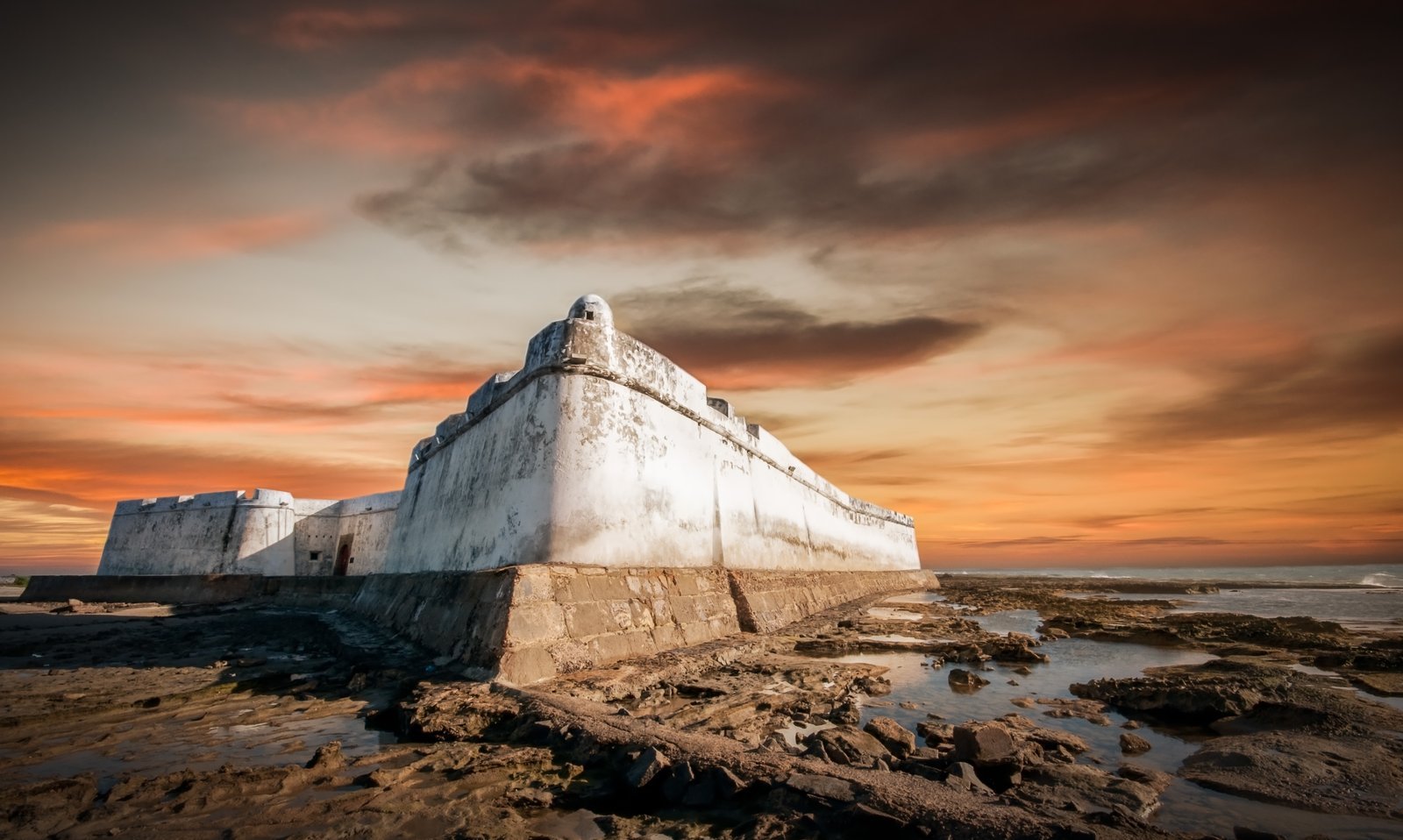
The Forte dos Reis Magos is Natal’s most important monument and marks the city’s origin. Construction began in January 1598 at the mouth of the Potengi River, with the star shape typical of forts of that era. Inside is the Marco de Touros, a stone marker the Portuguese placed on this coast in 1501. The fort is a nationally listed heritage site.
It opens Tuesday to Sunday, 8 am to 4 pm, at Avenida Presidente Café Filho, 1. Since 2025 there is an entry fee: R$ 10 full price and R$ 5 concession. Children under 12, people over 65 and Natal residents with proof of address enter free. You reach it along a walkway over the sand, and at high tide the fort is surrounded by water, which makes it even more photogenic. Go early to avoid the midday heat.
Newton Navarro bridge
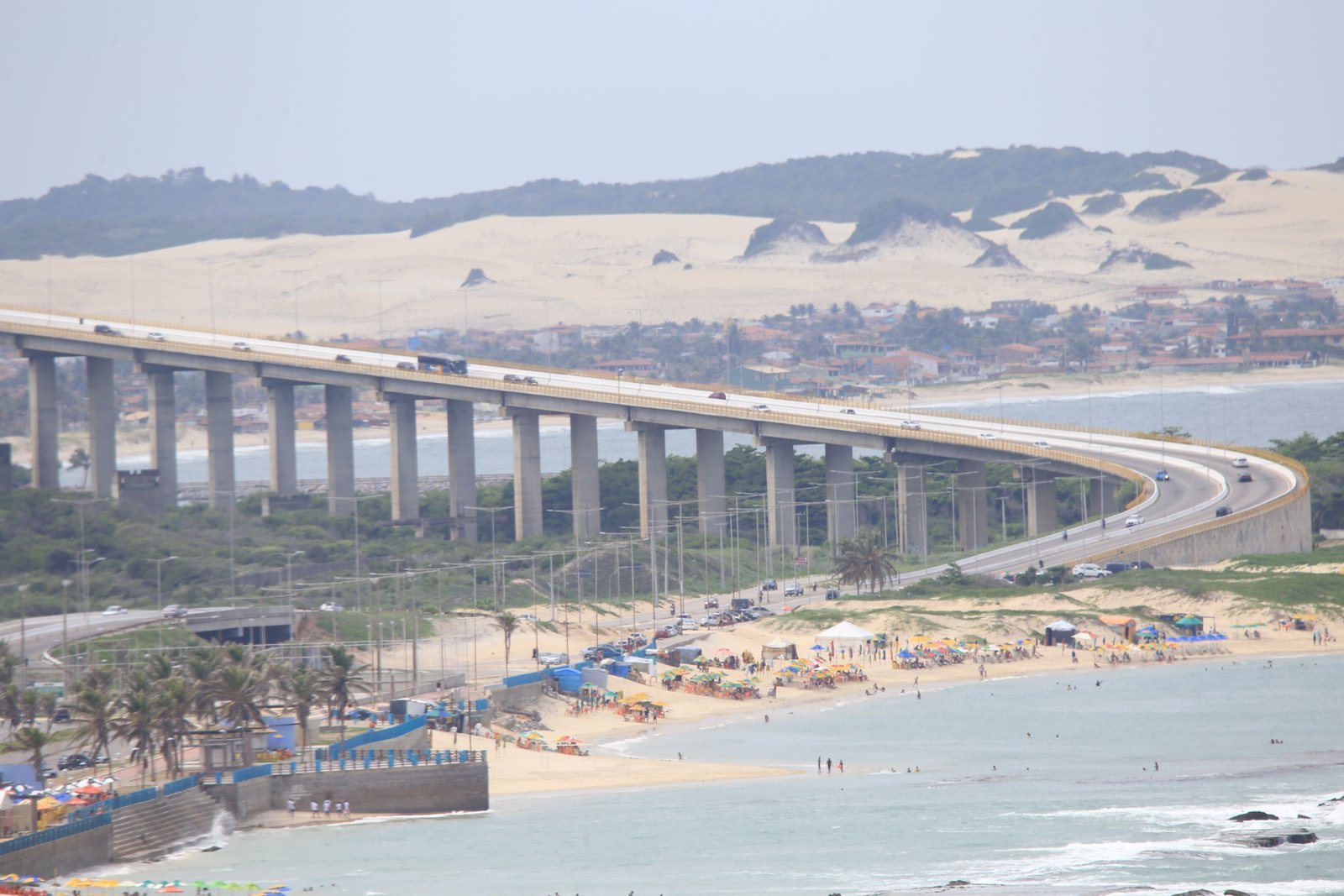
The Newton Navarro bridge, opened in November 2007, is a cable-stayed bridge about 1.8 km long over the mouth of the Potengi, connecting east Natal with Redinha and the north coast. The deck runs about 55 meters above the river and the towers reach about 100 meters. From the top you see the fort, the river meeting the sea and the dunes on the far bank.
The best views of the bridge are from the fort, Praia do Forte or a sunset on the Potengi. Some companies offer rappelling and rope jumping from the structure; if you try it, use operators with certified equipment and instructors.
Historic center: Cidade Alta and Ribeira
Natal’s historic center is small and fits into a morning. Start at Praça André de Albuquerque, the city’s point zero. Here you find the Igreja Matriz de Nossa Senhora da Apresentação, Natal’s first church, and nearby the Igreja do Rosário dos Pretos and the 18th-century Igreja de Santo Antônio, known as Igreja do Galo, which houses a museum of sacred art.
Other stops:
- Beco da Lama: Rua Vaz Gondim and the surrounding lanes, with old-school bars, street art and tributes to folklorist Câmara Cascudo, Natal’s most famous son.
- Teatro Alberto Maranhão: a 1904 theater on Praça Augusto Severo in Ribeira, one of the city’s most beautiful buildings.
- Memorial Câmara Cascudo and Ludovicus: spaces devoted to the author of the Dictionary of Brazilian Folklore.
- Centro de Turismo: a 19th-century building that once was the city jail, now home to craft shops with a sea view.
- Museu da Rampa: on the Potengi riverbank, telling the story of aviation and World War II in Natal, including the 1943 Vargas-Roosevelt meeting.
Go during the day, ideally with a guide or on a city tour, as some streets empty out in the afternoon and on weekends. Museum hours change, so check before heading out.
Areia Preta, the Mãe Luiza steps and the sundial
Areia Preta is a city beach lined with high-rises and natural pools at low tide. On its promenade stand the sundial (Relógio do Sol) and the “Eu Amo Natal” sign, a classic photo stop. Nearby, the Escadaria de Mãe Luiza staircase was revamped in 2014 with 133 colorful mosaics and links the beach with the Mãe Luiza neighborhood, home to the city’s lighthouse.
Praia dos Artistas, Praia do Meio and Praia do Forte
Praia dos Artistas has natural pools formed by the reefs, and at Avenida Presidente Café Filho, 1160, the Centro de Artesanato crafts market, open daily 8 am to 10 pm with free entry. It is a good place to buy lace, cashew nuts and souvenirs. Praia do Meio has the Iemanjá statue and more natural pools. Praia do Forte, right by the fort, has a large natural pool and the best view of the bridge.
Redinha and sunset on the Potengi
Across the bridge, Praia da Redinha is a fishing village with the Mercado Público da Redinha, known for ginga com tapioca. The stone church of Nossa Senhora dos Navegantes stands on the beach. From Redinha, the Auto do Potengi departs: a catamaran trip of about 1.5 hours with a musical show about the founding of Natal and forró at the end, on Thursdays and Sundays at 4 pm, for R$ 90 on the operator’s website in October 2026. Another classic sunset spot is Avenida do Contorno, where the sun sets over the Potengi.
Viewpoints: Parque da Cidade and Memorial Natal
For a view from above, the Parque da Cidade Dom Nivaldo Monte has the Memorial Natal, a tower with a lookout, plus trails and green space. On Avenida Getúlio Vargas in Petrópolis, a lookout over the sea shows the city beachfront all the way to the Via Costeira.
Genipabu: dune buggies and lagoons
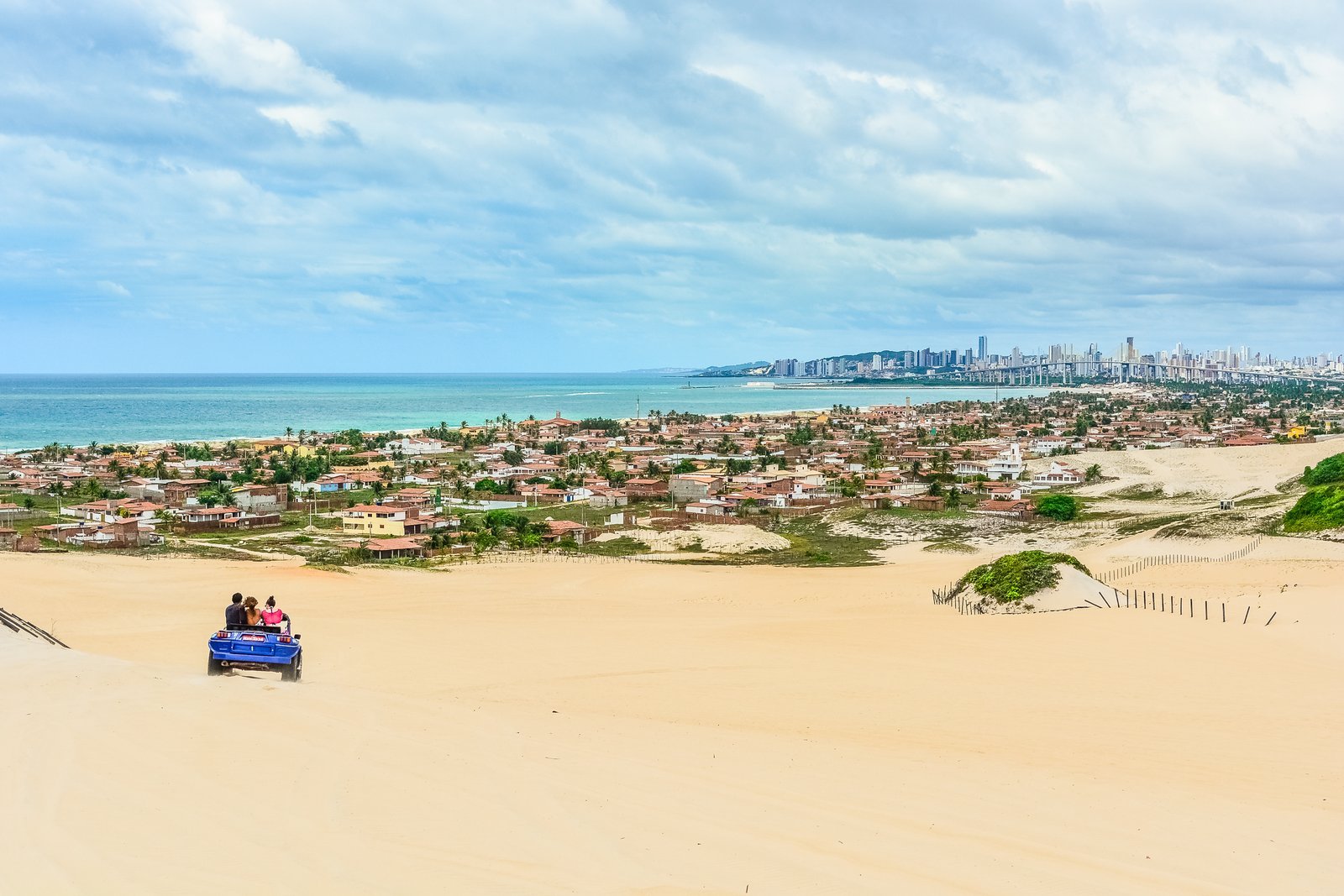
Genipabu is in Extremoz, about 30 km from Natal on the north coast, and is the state’s most famous excursion. The dunes reach 50 meters, with the Genipabu lagoon in the middle and the ocean behind. Rides are with a licensed buggy driver (bugueiro) and come “com emoção” (with thrills: steep drops and fast turns) or “sem emoção” (gentle). From Natal you go over the Newton Navarro bridge or via the BR-406, and some routes include a ferry (balsa) across the Ceará-Mirim River.
What it costs: buggies are priced per vehicle, for up to four people. Luck Receptivo listed its private Genipabu dune buggy tour, about 4 hours with the dune fee included, at R$ 661.25 per vehicle, valid until December 18, 2026. As a rough market range, our estimate is R$ 400 to R$ 800 per buggy depending on length and route, plus dune and ferry fees that are sometimes charged separately. Always confirm what is included.
A note if you have seen older photos: the dromedary rides on the Genipabu dunes, which ran for 26 years, ended in 2024. The operator cited falling demand, and the animals were moved to a sanctuary in Tocantins.
Lagoa de Jacumã
Lagoa de Jacumã is in Ceará-Mirim, about 30 km from Natal, and is usually part of the north coast buggy route. Its best-known attraction is the aerobunda, a zipline that runs down from the dune and drops you into the lagoon, at around R$ 20 per ride (our estimate based on January 2026 reports). In September 2024 a court in Ceará-Mirim banned esquibunda (dune sledding) on the lagoon’s dunes, in a case brought by prosecutors over damage to the protected area. Ask your driver which activities are running that day.
Maracajaú reefs (parrachos)
Maracajaú is a beach in Maxaranguape, about 70 km north of Natal. Roughly 7 km offshore lie the parrachos, coral reefs that form natural pools of clear water full of colorful fish. They are reached by boat only. The trip takes about 2.5 hours (30 minutes out, 1.5 hours at the reefs, 30 minutes back), departs according to low tide and involves wet boarding, with water up to your waist.
What it costs: at Parrachos Praia Clube, the catamaran with snorkeling cost R$ 130 in October 2026, including mask, life vest, environmental fee and day use of the club. With a transfer from Natal it was R$ 210. Scuba diving and underwater photos cost extra. The city’s tourism portal recommends March to August, but since those months overlap with the rainy season, what really makes a good day is low tide plus sunshine. From September to February, with less rain, the water is usually clear too.
Pirangi cashew tree and the Cashew Route
The Cajueiro de Pirangi, in Parnamirim, is in the Guinness book as the world’s largest cashew tree, with a canopy of about 8,500 m². It looks like a small forest but is a single tree that spread out as its branches rooted where they touched the ground. Walkways and a lookout let you see the canopy from above. It opens daily, 8 am to 5:30 pm, and entry is R$ 10 (R$ 5 concession), payable by Pix or card.
The tree is part of the so-called Rota do Caju (Cashew Route) on the south coast, along with the cliffs of Cotovelo, Pium beach and the Pirangi beaches, where boats run to natural pools. Also in Parnamirim is the Barreira do Inferno Launch Center, an Air Force rocket base created in 1965; visits by prior appointment only.
Pipa and Praia do Madeiro
Pipa, a district of Tibau do Sul about 85 km south of Natal, deserves at least a full day and ideally one or two nights. The village has colorful cliffs, green-water beaches, surfing, streets lined with restaurants and lively nightlife. At Baía dos Golfinhos and Praia do Madeiro, dolphins often swim close to the break. Baía dos Golfinhos can only be reached along the sand at low tide, so check the tide table.
Praia do Madeiro, between Pipa and Tibau do Sul, has calmer water and is good for beginner surfers. From the clifftops, Chapadão and the Madeiro lookout offer the best views of the south coast.
São Miguel do Gostoso
São Miguel do Gostoso is about 105 km north of Natal. It is a laid-back village of sandy streets, guesthouses and restaurants, known for steady wind that draws kitesurfers and windsurfers. Even non-surfers enjoy the village feel and the beaches of Tourinhos and Santo Cristo. Stay at least one night; a day trip is tiring.
Galinhos
Galinhos is about 150 km from Natal, on a peninsula between the sea and a river. You leave your car at Porto do Pratagil, at the end of the RN-402, and cross by boat in 10 to 15 minutes. There are no cars in the village; people get around on foot or by horse cart. The reward is dunes, salt flats, a lighthouse and a pace of life far from the city. Best for trips of a week or more.
Day trips from Natal: distances and time needed
Direct answer: the most popular day trips from Natal are Genipabu and the north coast, Maracajaú, the Pirangi cashew tree and the south coast, and Pipa. São Miguel do Gostoso and Galinhos are farther and work better with an overnight stay. Distances are approximate, from Natal.
| Destination | Approx. distance | How to do it |
|---|---|---|
| Genipabu (Extremoz) | 30 km | Buggy with a licensed driver, half or full day |
| Lagoa de Jacumã (Ceará-Mirim) | 30 km | Usually part of the north coast buggy route |
| Pirangi cashew tree (Parnamirim) | 25 km | Car, rideshare or Cashew Route tour |
| Maracajaú (Maxaranguape) | 70 km | Tour with transfer or own car, timed to the tide |
| Pipa (Tibau do Sul) | 85 km | Full-day tour, car or bus; best with an overnight |
| São Miguel do Gostoso | 105 km | Car or transfer; best with an overnight |
| Galinhos | 150 km | Car to Porto do Pratagil, then boat; best with an overnight |
If you are not renting a car, Natal agencies sell these trips with hotel pickup. Compare what is included: environmental fees, ferries, dune tolls, lunch and free time at each stop all affect the final price. Ask whether the guide speaks English if that matters to you.
What to eat in Natal
Direct answer: in Natal, eat shrimp in every form, carne de sol with feijão verde, arroz de leite and pirão de queijo, paçoca de pilão and the ginga com tapioca of Redinha. The restaurants most visitors know are in Ponta Negra, but it is worth crossing town to eat well.
- Shrimp (camarão): the most ordered dish, garlic-fried, served in a pumpkin (camarão na moranga), in bobó (a cassava cream), in moqueca stew or breaded.
- Carne de sol: salted, air-cured beef served with feijão verde (fresh green beans), arroz de leite (rice cooked in milk), cassava, clarified “manteiga da terra” butter and pirão de queijo, a cheesy cassava-flour porridge.
- Paçoca de pilão: shredded carne de sol pounded with cassava flour, served with banana or beans.
- Ginga com tapioca: small whole fried fish served in a tapioca crepe, the specialty of Redinha market and part of the city’s intangible heritage.
- Cashew: Rio Grande do Norte is a major cashew producer. Try the juice and cajuína, and take cashew nuts home.
- Tapioca and cuscuz: on every guesthouse breakfast table, with sweet or savory fillings.
A few well-known addresses:
- Camarões: a Natal restaurant dedicated to shrimp, with branches on Avenida Engenheiro Roberto Freire, 3980, in Ponta Negra, at Camarões Potiguar, Rua Pedro Fonseca Filho, 8887, and in Midway Mall.
- Mangai: a buffet of sertão (backlands) food at Avenida Amintas Barros, 3300, in Lagoa Nova, with dozens of regional dishes. Great for trying a bit of everything.
- Paçoca de Pilão: a restaurant in Pirangi on the south coast, near the cashew tree, known for its paçoca and seafood.
- Redinha market: simple stalls serving ginga com tapioca and fried fish with a river view.
- Ponta Negra beach kiosks: for snacks, fried fish and coconut water with your feet in the sand.
Nightlife in Natal
Direct answer: Natal’s nightlife splits between Ponta Negra, with bars and forró venues aimed at visitors, and Plano Palumbo in Petrópolis, where locals go out. Beco da Lama, downtown, is the most traditional bohemian spot.
- Ponta Negra: the beachfront and Avenida Erivan França concentrate bars, restaurants and live music. Easiest if you are staying in the area.
- Plano Palumbo: the part of Petrópolis between Rua Potengi, Rua Assu and the Afonso Pena and Campos Sales avenues, with bars, snack bars and restaurants popular with residents.
- Beco da Lama: old bars, samba and artists’ gatherings in the narrow streets of Cidade Alta. Go by app and leave by app.
- Pipa: if you stay in Pipa, you will find the region’s liveliest nights, with bars and parties on the village’s main street.
- Forró: look for venues with live forró pé de serra, the classic Northeast dance music.
For more food ideas, see our Natal food guide, and for quieter sand, our guide to secret beaches and lagoons near Natal.
Is Natal safe? Safety tips for visitors
Direct answer: Natal’s tourist areas, such as Ponta Negra, the Via Costeira and the city beaches during the day, are busy and generally fine for visitors who take ordinary precautions. The most common problems are phone theft and belongings stolen from the sand. At night, avoid walking through empty stretches and use rideshare or a taxi.
- On the beach: do not leave your phone, wallet or camera unattended while you swim. Bring only what you need.
- Phones: avoid using your phone at the curb or walking while texting in busy areas; step inside a shop or café to order your ride.
- At night: in Ponta Negra, stick to busy streets; downtown and in Ribeira, get around by car once shops close.
- In the sea: follow the flags and lifeguards. Some beaches have strong currents, and natural pools hide sharp rocks and coral, so wear water shoes.
- Tours: book licensed buggy drivers and registered agencies. In a buggy, wear the seatbelt and agree beforehand whether the ride is “com” or “sem emoção”.
- Sun: sunscreen, a hat and water at all times. Heatstroke and sunburn are among the most common issues for visitors.
- Morro do Careca: do not try to climb it. It is banned, dangerous and damages the dune.
- Travel insurance: get a policy that covers medical care; private hospitals in Brazil are good but expensive.
Emergency numbers: Military Police 190, ambulance (SAMU) 192, fire department 193, Civil Police 197 and the Tourist Police (Delegacia Especializada em Atendimento ao Turista), +55 84 3232-7404. If something is stolen, you will need a police report (boletim de ocorrência) for insurance.
How much does a trip to Natal cost in 2026?
Direct answer: Natal is mid-priced by Brazilian standards and good value for most visitors from North America and Europe. A city bus costs R$ 5.20, the Forte dos Reis Magos and the Pirangi cashew tree charge R$ 10 each, and buggy and boat trips are the biggest spend. Accommodation varies widely by season; December, January and July are the most expensive months.
| Item | Price in 2026 | Notes |
|---|---|---|
| City bus (regular lines) | R$ 5.20 | Since March 29, 2026 |
| City bus (neighborhood lines) | R$ 4.50 | Half price for students |
| Forte dos Reis Magos | R$ 10 | R$ 5 concession; free for residents, under-12s and over-65s |
| Pirangi cashew tree | R$ 10 | R$ 5 concession; daily, 8 am to 5:30 pm |
| Centro de Artesanato crafts market | Free | Daily, 8 am to 10 pm |
| Maracajaú catamaran and snorkeling | R$ 130 | Parrachos Praia Clube; R$ 210 with transfer from Natal |
| Private Genipabu buggy (up to 4 people) | R$ 661.25 | Luck Receptivo, about 4 hours, valid until Dec 18, 2026 |
| Dune buggy (market range) | R$ 400 to R$ 800 per buggy | Our estimate, depending on length and route |
| Aerobunda zipline at Lagoa de Jacumã | About R$ 20 | Estimate, per ride |
| Auto do Potengi (catamaran show) | R$ 90 | Thursdays and Sundays, 4 pm, from Redinha |
| Budget daily spend | R$ 250 to R$ 400 per person | Our estimate, excluding accommodation and paid tours |
| Brazil eVisa (US, Canada, Australia) | US$ 80.90 | Official fee, paid online |
Prices were checked in October 2026 on official and operator websites and can change without notice. Rideshare fares vary with time, demand and traffic, so we do not quote a fixed figure; check the estimate in the app before you book.
Natal itineraries: 3, 5 and 7 days
Direct answer: in 3 days you can cover Ponta Negra, the historic center, the fort and Genipabu. In 5 days add Maracajaú, the Pirangi cashew tree and a day in Pipa. In 7 days you can spend nights in Pipa or São Miguel do Gostoso and fit in Galinhos. Adjust the order to the tides and the weather forecast.
3-day itinerary
- Day 1: morning on Ponta Negra beach with the Morro do Careca view. In the afternoon, drive the Via Costeira to Areia Preta for photos at the “Eu Amo Natal” sign and the Mãe Luiza steps. Shrimp dinner in Ponta Negra.
- Day 2: buggy ride in Genipabu and along the north coast, stopping at Lagoa de Jacumã. On the way back, ginga com tapioca at Redinha market and sunset on the Potengi.
- Day 3: Forte dos Reis Magos first thing, Praia do Forte and views of the Newton Navarro bridge. Then the historic center, Beco da Lama and shopping at the Centro de Artesanato or Centro de Turismo.
5-day itinerary
- Days 1 to 3: follow the 3-day plan.
- Day 4: Maracajaú, timed to low tide, snorkeling the reefs. Rest on the beach in the late afternoon.
- Day 5: full day on the south coast: the Pirangi cashew tree in the morning and Pipa in the afternoon for the cliffs, Praia do Madeiro and dinner in the village.
7-day itinerary
- Days 1 to 4: follow the 5-day plan through Maracajaú.
- Day 5: the Pirangi cashew tree and the Cashew Route on the way to Pipa. Overnight in Pipa.
- Day 6: Pipa at an easy pace: Baía dos Golfinhos at low tide, Praia do Madeiro, the Chapadão lookout and an evening in the village.
- Day 7: back to Natal for your flight or, if you prefer the north coast, swap days 5 and 6 for São Miguel do Gostoso and Galinhos with an overnight stay.
Short on time? Our Ponta Negra walking guide covers a half day around the beach, and the Morro do Careca guide explains the dune in detail.
Where to stay in Natal
Direct answer: for a first visit, stay in Ponta Negra, with the beach, restaurants and nightlife within walking distance. The Via Costeira is for those who want a resort with direct beach access. Areia Preta and Praia do Meio are close to the historic center and often cheaper. Pipa is the choice for spending part of your trip on the south coast. All links below go to each hotel’s official website and were checked in October 2026; we do not use travel agency or booking site links.
Rates swing a lot with season and events such as Carnatal and New Year’s Eve. Check prices directly on each hotel’s website and book well ahead for December, January and July. Larger hotels usually have English-speaking staff at reception; smaller guesthouses may not.
Manary Praia Hotel (boutique, Ponta Negra)
Manary Praia Hotel sits on the Ponta Negra beachfront at Rua Francisco Gurgel, 9067, and is a member of the Roteiros de Charme association of Brazilian boutique hotels. It has 23 rooms with balconies and hammocks, a spa and a restaurant that belongs to the Boa Lembrança restaurant association. Ideal for couples.
Rifóles Praia Hotel e Resort (family resort, Ponta Negra)
Rifóles Praia Hotel e Resort is on the Ponta Negra beachfront at Rua Coronel Inácio Vale, 8847, near the convention center. It has a large pirate ship themed structure, five pools, an entertainment team, two restaurants, a spa and views of the Morro do Careca. One of the most popular choices for families with children.
Praiamar Natal Hotel & Convention (mid-range, Ponta Negra)
Praiamar Natal Hotel & Convention is at Rua Francisco Gurgel, 33, a few steps from Ponta Negra beach. It has leisure areas and kids’ activities, event facilities and a beachfront beach club for guests. A good pick if you want to stay in Ponta Negra with large-hotel facilities.
SERHS Natal Grand Hotel & Resort (five-star, Via Costeira)
SERHS Natal Grand Hotel & Resort is a five-star resort on the Via Costeira overlooking the sea toward Ponta Negra, with pools, a spa, a kids’ club and restaurants. One of the most complete options in the city if you want a resort close to Ponta Negra.
Ocean Palace Resort (all-inclusive, Via Costeira)
Ocean Palace Resort is an all-inclusive beachfront resort on the Via Costeira, with food, drinks and activities included in the rate, several restaurants and bars, and rooms facing the sea or the dunes. It works well for families who do not want to think about meals.
Wish Natal Resort (resort, Via Costeira)
Wish Natal Resort faces the sea on the Via Costeira and offers an all-inclusive option. It is pet friendly, which is rare in Natal, and runs activity programs for children and adults. The website is also available in English and Spanish.
Natal Infinity Praia Hotel (budget, Areia Preta)
Natal Infinity Praia Hotel is at Avenida Governador Silvio Pedroza, 19, in Areia Preta, about 50 meters from Praia dos Artistas. It has 165 rooms in four categories, a pool, a bar and a restaurant. Good if you want to be near the fort, the historic center and the crafts market at lower rates than Ponta Negra.
Pousada Toca da Coruja (boutique, Pipa)
Pousada Toca da Coruja is at Avenida Baía dos Golfinhos, 464, in Pipa, and is also a Roteiros de Charme member. Its 28 bungalows and rooms are surrounded by a patch of Atlantic Forest, a few minutes from the village center. One of Pipa’s best-known places for couples.
Sombra e Água Fresca (hotel, resort and spa, Pipa)
Sombra e Água Fresca has three properties in Pipa: the Hotel, with panoramic sea views; the Resort, with houses and large pools; and the Spa Floresta, with chalets in native forest. You can pick the one that fits your trip.
Hotel Ponta do Madeiro (clifftop hotel, Pipa)
Hotel Ponta do Madeiro sits on the clifftop above Praia do Madeiro, at Avenida Antônio Florêncio, 2695, between central Pipa and Tibau do Sul. It has five room categories, gardens, pools for adults and children, a swim-up bar, a beach club and a restaurant. Below lies Praia do Madeiro, where dolphins are often seen. Ideal for views and calm water a few minutes from the village bustle.
Video: Natal by Visit Brasil
This Visit Brasil video, from Brazil’s official tourism channel, shows a cultural immersion in the Potiguara Katu Indigenous territory, between Canguaretama and Goianinha, south of Natal, where the community runs its own tourism experiences.
Frequently asked questions about Natal
Do I need a visa to visit Natal, Brazil?
It depends on your passport. Since April 10, 2025, citizens of the United States, Canada and Australia need a Brazilian eVisa, applied for online before travel, with a fee of US$ 80.90 and stays of up to 90 days. Citizens of many other countries, including most of the EU and the UK, can enter as tourists without a visa. Check the Brazilian Ministry of Foreign Affairs site for your nationality.
What is the best time to visit Natal?
September to February, when there is little rain and the sea is usually good for boat trips. October, November and December are the driest months, with under 30 mm of rain on average, according to INMET. March to August is the rainy season, peaking in June, but temperatures stay between 21 °C and 31 °C all year.
How do I get from Natal airport to Ponta Negra?
Natal’s Governador Aluízio Alves International Airport (NAT) is in São Gonçalo do Amarante, about 30 km from central Natal. The easiest option is Uber or 99 from the covered pickup area outside the terminal, or a taxi from the 24-hour cooperative at arrivals. The ride to Ponta Negra usually takes 40 minutes to an hour. The airport bus only goes as far as Midway Mall.
How many days do I need in Natal?
Three days let you see Ponta Negra, the Forte dos Reis Magos, the historic center and do the Genipabu buggy ride. With five days you can add Maracajaú, the Pirangi cashew tree and Pipa. With seven, you have time to stay in Pipa or visit São Miguel do Gostoso and Galinhos.
Is Natal safe for tourists?
The tourist areas, especially Ponta Negra, the Via Costeira and the city beaches by day, are generally fine with normal precautions. The most common issues are phone theft and belongings stolen from the beach. At night, use rideshare or taxis instead of walking through empty streets, and call 190 for the police in an emergency.
What currency is used in Natal and can I pay by card?
Brazil uses the real (BRL, R$). Credit and debit cards are accepted in hotels, restaurants and most shops, and many places also take Pix, Brazil’s instant payment system. Carry some cash for beach kiosks and small vendors, and use ATMs inside malls or the airport.
Can you climb the Morro do Careca?
No. Climbing has been banned since 1997 by court order to protect the dune from erosion, and violators commit an environmental offense. Enjoy it from Ponta Negra beach. A 2023 UFRN survey measured it at about 63 meters, well below the 107 meters still quoted on many sites.
How much does a dune buggy ride in Genipabu cost?
Buggies are priced per vehicle, for up to four people. Luck Receptivo listed a private Genipabu buggy tour of about 4 hours at R$ 661.25 per vehicle, valid until December 18, 2026. Our estimate for the market range is R$ 400 to R$ 800 per buggy depending on length and route. Check whether dune and ferry fees are included.
How do I get to the Maracajaú natural pools?
Maracajaú is in Maxaranguape, about 70 km from Natal, and the reefs lie about 7 km offshore, reachable only by boat. The Parrachos Praia Clube catamaran with snorkeling cost R$ 130 in October 2026, or R$ 210 with a transfer from Natal. Departures depend on low tide.
Is it worth going from Natal to Pipa?
Yes. Pipa is about 85 km south of Natal and has colorful cliffs, dolphins, green-water beaches and the liveliest village on the state’s coast. You can do it as a full-day tour, but staying at least one night is better.
Is Natal worth visiting?
Direct answer: yes, especially if you want beaches, reliable sunshine for much of the year and varied excursions within a short radius. Natal pairs a capital city with good infrastructure, city beaches and history with dunes, lagoons, coral pools and charming villages less than two hours away.
The city itself takes only a few days, but what makes Natal worth the trip is what surrounds it: buggy rides in Genipabu, the clear water of Maracajaú, the giant cashew tree in Pirangi and the cliffs of Pipa. Pick your season well, plan around the tides, sort out your visa early if you need one and leave time for slow meals of shrimp and carne de sol. To compare with other destinations in Brazil, read our guides to Fernando de Noronha, Salvador, Porto Seguro and Rio de Janeiro.
Sources
- IBGE Cidades: Natal (RN) overview (2022 census population and area)
- INMET: 1991-2020 climate normals (rainfall and temperatures, Natal station)
- Brazilian Ministry of Foreign Affairs: visitor visa requirement for nationals of Australia, Canada and the USA (eVisa, fee and stay)
- City of Natal, Visit Natal: official tourism portal (history, beaches, food, sights and useful phone numbers)
- Natal Airport: getting to the airport (location, transport and pickup areas)
- g1 RN: Natal bus fare rises to R$ 5.20 (March 2026)
- 96 FM Natal: Forte dos Reis Magos fees and hours
- Parrachos Praia Clube: Maracajaú trips and Auto do Potengi (October 2026 prices)
- Luck Receptivo: private Genipabu dune buggy tour (2026 price)
- RNatural: court bans esquibunda at Lagoa de Jacumã (September 2024)
- Visit Gostoso: kitesurfing in São Miguel do Gostoso (wind season)
- Visit Rio Grande do Norte: state tourism portal (Galinhos, São Miguel do Gostoso and the coast)