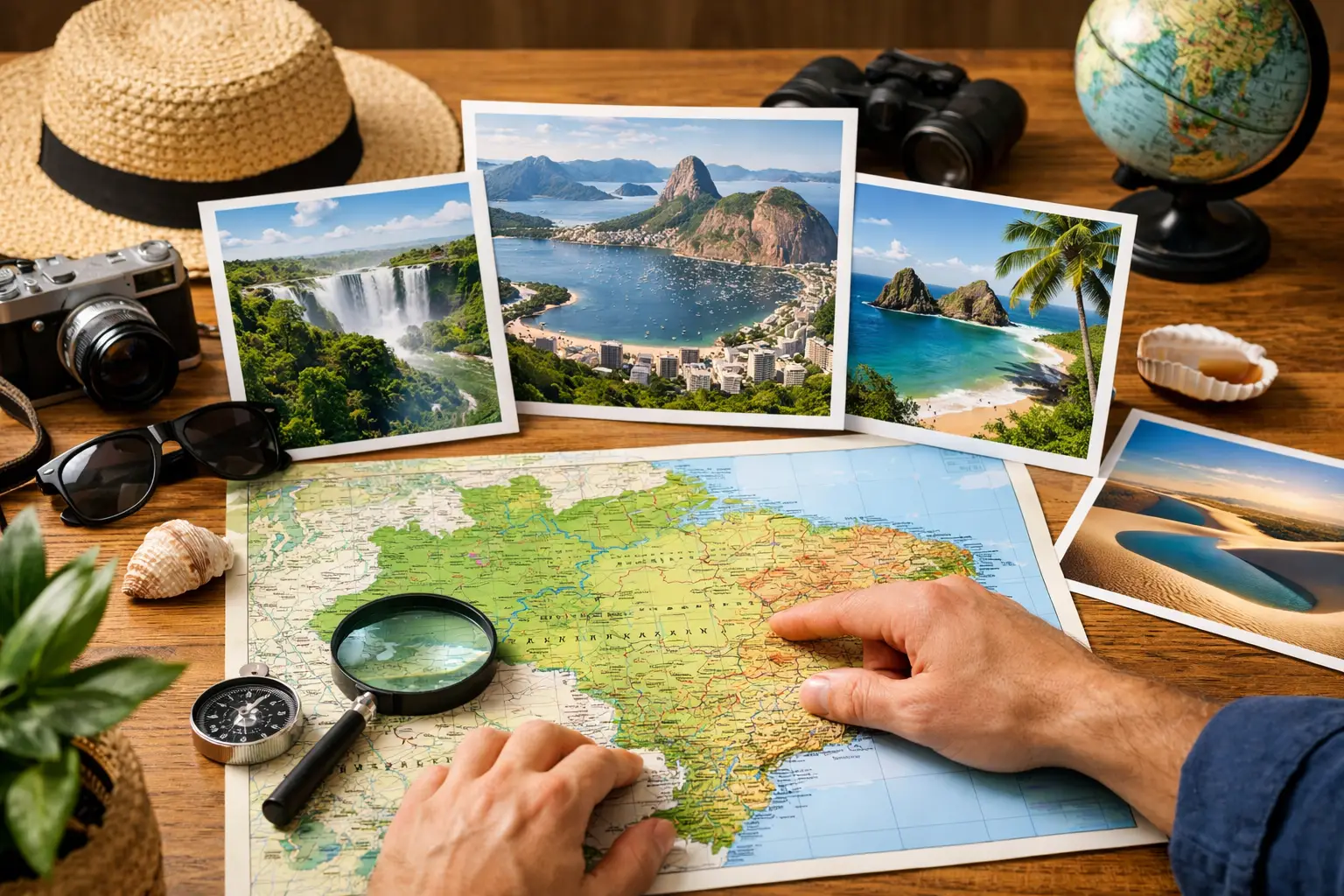
Brazil can feel easy to picture and hard to plan at the same time. Many travelers know they want beaches, music, nature, and great food, but get stuck on one question: how to choose Brazil regions when the country is larger and more varied than most first-time visitors expect.
The best starting point is not a map. It is your trip style. Brazil is not a destination where every region offers the same experience with a different backdrop. The Northeast feels very different from the South. The Amazon is a different trip from Rio de Janeiro. São Paulo is not a substitute for Salvador, and the Pantanal is not the same kind of nature experience as the coast. Once you match the region to the kind of trip you actually want, planning becomes much simpler.
How to choose Brazil regions by travel style
If your priority is classic postcard Brazil, the Southeast usually makes the most sense. This is where many international travelers begin, especially in Rio de Janeiro and São Paulo. Rio delivers the iconic mix of beaches, mountain views, famous landmarks, nightlife, and easy day trips. São Paulo is more urban and less scenic at first glance, but it stands out for food, culture, museums, and connections to other parts of the country.
The Southeast is often the right choice for first-time visitors who want a broad introduction to Brazil with strong flight options and well-developed tourism infrastructure. The trade-off is that it can also feel busier, more expensive, and less relaxed than other parts of the country, especially during peak travel periods.
If your ideal trip means warm water, long beaches, colonial centers, and strong local culture, the Northeast deserves serious attention. States such as Bahia, Pernambuco, Alagoas, Rio Grande do Norte, and Ceará attract travelers looking for both coastline and character. Salvador offers Afro-Brazilian heritage, music, food, and architecture. Recife and Olinda combine history with urban energy. Maceió and the surrounding coast are better for beach-focused stays. Fortaleza and Natal often work well for travelers who want sun and easier resort-style planning.
The Northeast is one of the easiest regions to fall in love with, but it is also broad. Some destinations are best for culture and city life, others for beach relaxation, and others for wind sports or road trips. If you are choosing this region mainly for beaches, look closely at the specific stretch of coast instead of assuming the whole region feels the same.
If nature is your main reason for coming to Brazil, your decision usually comes down to what kind of nature you want. The North is home to the Amazon, with Manaus as the main gateway. This region suits travelers who want rainforest lodges, river journeys, wildlife, and a sense of scale that feels completely different from coastal Brazil. It is memorable, but it requires more planning and often more time. Distances are long, logistics can be slower, and the experience is less about checking landmarks and more about immersion.
The Central-West is another strong choice for nature, especially for the Pantanal and Chapada dos Veadeiros. The Pantanal is one of Brazil’s best wildlife destinations and often a better option than the Amazon for seeing animals more easily. Chapada dos Veadeiros offers waterfalls, trails, and dramatic landscapes that appeal to active travelers. This region is ideal for people who want outdoor experiences without focusing on beaches.
The South is often the best fit for travelers looking for a different side of Brazil. It is known for cooler seasons, European-influenced towns, wine regions, mountain scenery, and organized urban centers such as Curitiba and Porto Alegre. Florianópolis is a standout for beaches with a more relaxed and lifestyle-driven atmosphere. The South can be a good match for couples, road trippers, and travelers who prefer milder temperatures or a more structured pace.
Choose Brazil regions based on time and distance
One of the biggest mistakes travelers make is trying to combine too many parts of Brazil in a short trip. On paper, adding Rio, Salvador, Iguazu Falls, and the Amazon may look exciting. In practice, it can turn into a trip built around airports.
If you have one week, choosing one main region is usually the smartest approach. You can still see variety within it. In the Southeast, that might mean Rio de Janeiro plus nearby beach towns. In the Northeast, it could mean Salvador and the Bahian coast, or Recife with Olinda and Porto de Galinhas. In the South, it might be Florianópolis with a few nearby stops.
With 10 to 14 days, two regions can work if the combination is realistic. Rio de Janeiro and Iguazu Falls is a common pairing. Rio and Salvador can also work well if you want both iconic city scenery and deeper cultural contrast. What matters is not only flight time, but also how often you want to pack, transfer, and adjust.
If you have more than two weeks, Brazil opens up in a more rewarding way. That is when combining coast, city, and nature becomes more comfortable. Even then, restraint helps. This is a country where fewer stops often lead to a better trip.
Match the region to the season
Weather matters in Brazil, but not in a simple north-good, south-bad way. The country spans multiple climate patterns, so the best region depends on when you plan to travel.
The Northeast is popular for sun-seeking travelers for much of the year, but rainfall varies by state and month. One coastal area may be ideal while another is wetter. The Southeast works year-round, though summer brings heat, humidity, and busy beaches, especially around holidays. The South has more defined seasons, which some travelers enjoy and others find surprising if they expected tropical weather everywhere.
The Amazon also changes significantly depending on river levels and rainfall. Neither season is automatically better. High-water and low-water periods create different experiences. The Pantanal is similar, with wildlife viewing and landscape conditions shifting through the year.
If your dates are fixed, choose the region that performs best during that travel window instead of forcing your dream itinerary into the wrong season.
Budget can narrow the decision quickly
Brazil offers both luxury and value, but costs vary by region and travel style. Rio de Janeiro, especially in high season, can stretch a budget faster than many first-time visitors expect. São Paulo can also be expensive, particularly for hotels. In the Northeast, it is often easier to find good-value beach destinations, though premium resort areas can still be costly.
Remote nature trips tend to raise the overall price. The Amazon and Pantanal often involve guided excursions, domestic flights, and lodge stays that cost more than a city-and-beach itinerary. That does not make them less worthwhile, but they are rarely the cheapest way to see Brazil.
If budget is a central factor, focus on one region with good internal options rather than crossing the country. You will usually spend less and experience more.
Think about energy level, not just attractions
A useful way to choose is to ask how you want your days to feel. Do you want movement, nightlife, and a packed schedule? The Southeast may fit best. Do you want a slower rhythm with beach time and local culture? The Northeast often delivers that balance. Do you want early starts, guided outings, and long stretches in nature? Look to the North or Central-West.
This matters because Brazil is not only about what you see. It is also about pace. A trip that looks perfect in photos can feel wrong if the daily rhythm does not match your expectations.
Families may prefer destinations with simpler logistics and beach infrastructure. Couples may prioritize atmosphere, scenery, and food. Solo travelers often do well in larger cities or established coastal bases where transportation and tours are easier to arrange. There is no single best region, only the best fit for the kind of trip you want to have.
A simple way to decide
If you are still unsure how to choose Brazil regions, start with one lead question: what is the main reason you want to visit Brazil?
If the answer is famous landmarks and city life, begin with the Southeast. If it is beaches and culture, look at the Northeast. If it is rainforest and river landscapes, focus on the North. If it is wildlife and national parks, consider the Central-West. If it is milder weather, scenic road trips, and a different cultural atmosphere, the South may be the right choice.
From there, narrow it down by trip length, season, and budget. That approach is much more reliable than trying to see everything at once. Platforms like Explora Brasil can make this easier by helping you compare regions, states, and cities in a way that feels organized rather than overwhelming.
Brazil rewards travelers who choose with intention. Pick the region that matches your interests now, and leave space for the rest of the country to become a reason to come back.