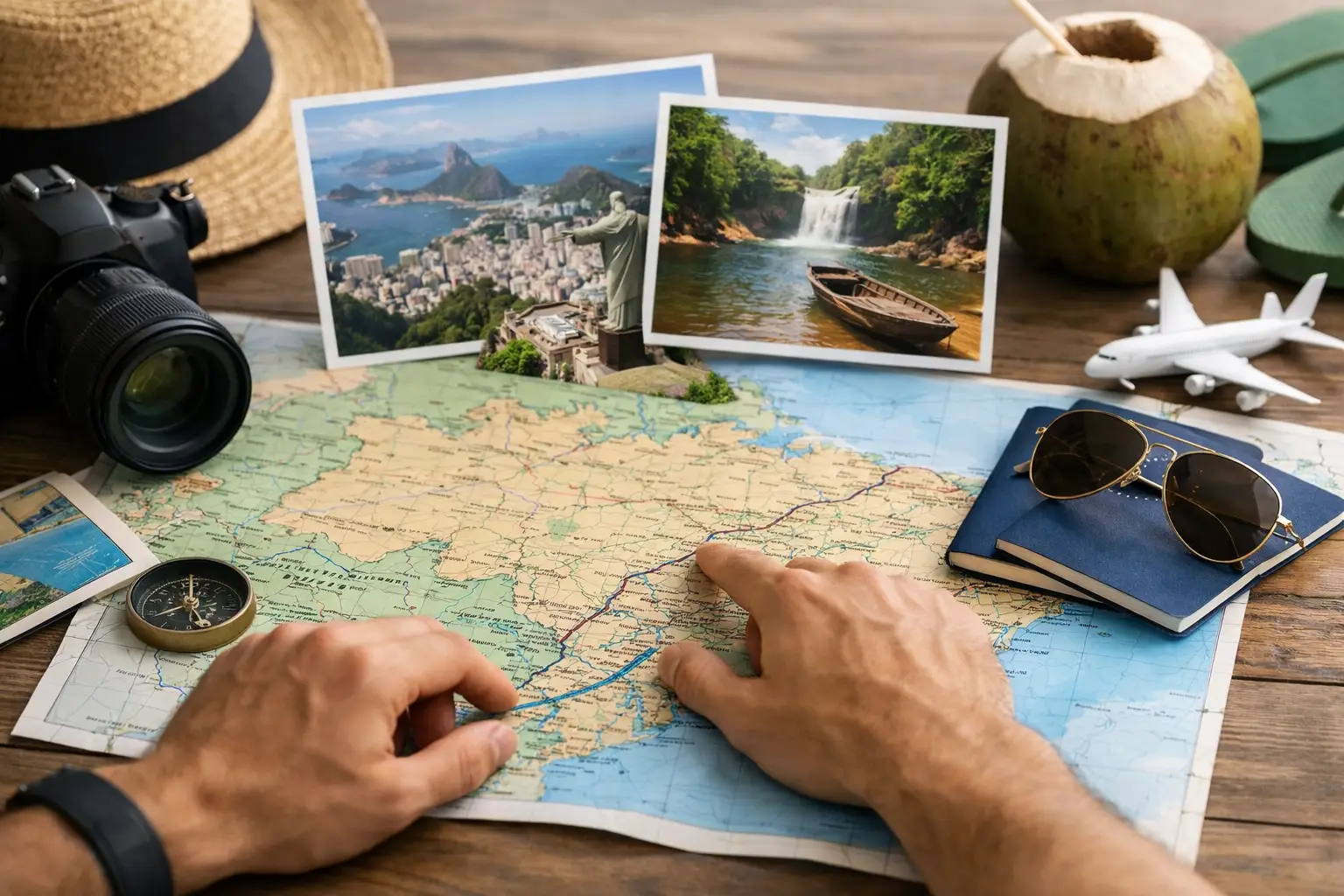
If you only have 14 days in Brazil, every flight matters. A good two week Brazil route example is not about squeezing in the most destinations – it is about choosing places that show the country’s variety without turning your trip into a checklist with airports attached.
Brazil is large enough that a poorly planned itinerary can waste entire days in transit. For most international travelers, the smartest approach is to combine one major gateway city, one natural highlight, and one culturally rich destination with a different regional feel. That gives you contrast, keeps logistics manageable, and makes the trip feel like Brazil rather than just one corner of it.
A practical two week Brazil route example
For a first trip, one of the strongest routes is Rio de Janeiro, Iguazu Falls, and Salvador. It works because each stop offers something clearly different. Rio gives you the postcard version of Brazil, but also neighborhoods, beaches, music, and mountain views. Iguazu adds one of South America’s most impressive natural sights. Salvador brings Afro-Brazilian culture, colonial architecture, and a very different rhythm from the southeast.
This route also avoids one common mistake: trying to pair Rio, the Amazon, the Pantanal, Florianopolis, and the Northeast in one trip. On a map that may look possible. In real travel time, it usually feels rushed.
Days 1 to 5: Rio de Janeiro
Start in Rio de Janeiro with five days, especially if you are arriving on a long international flight. Rio is one of the easiest places to begin because it gives first-time visitors an immediate sense of place. You have iconic landmarks like Christ the Redeemer and Sugarloaf Mountain, but also beach culture in Copacabana, Ipanema, and Leblon, plus lively areas such as Santa Teresa and Lapa.
Five days may sound generous, but Rio rewards slower pacing. One day can go to the major viewpoints, another to the beaches, another to the historic and cultural side of the city, and another to lighter activities such as a botanical garden visit, a food-focused outing, or time in a neighborhood café. Weather can also affect plans, especially panoramic attractions, so extra time helps.
For international travelers, Rio works well because tourism infrastructure is strong and it is easy to find accommodation across different budgets. The trade-off is that it is one of the most visited destinations in the country, so prices can be higher in well-known beach areas. If you want convenience, staying in the South Zone is usually worth it. If you want atmosphere and a more local urban feel, consider Santa Teresa or Botafogo, but check transport options carefully.
Days 6 to 7: Iguazu Falls
From Rio, fly to Foz do Iguacu and spend two days visiting Iguazu Falls. This is enough time for most travelers if the goal is to see both the Brazilian and Argentine sides, or at least to have one full day for the falls and one flexible day for nearby attractions or travel timing.
The Brazilian side is known for wide panoramic views. The Argentine side usually offers a more immersive network of walkways and closer perspectives. If you are eligible and have the right documents for a border crossing, seeing both sides is ideal. If not, the Brazilian side alone is still worthwhile.
This stop is short for a reason. Iguazu is unforgettable, but it is a place where one or two focused days often feel complete. Staying longer only makes sense if you want a slower pace, birdwatching, or extra excursions. For most two-week itineraries, two nights is the sweet spot.
Days 8 to 12: Salvador
Next, fly to Salvador and give it five days. This is where the route shifts in tone. Salvador is not just another beach city. It is one of Brazil’s most important cultural destinations, with strong African heritage, colonial buildings, religious traditions, music, and cuisine that feels distinct from Rio and the south.
Spend time in the Pelourinho historic center, but do not limit yourself to it. Salvador also opens up through neighborhoods, viewpoints, churches, local markets, and the waterfront. If your schedule allows, a day trip to nearby islands or beach areas can add balance to the city experience.
This is also a destination where cultural context matters. Salvador’s food, rhythms, and history are central to the experience, so plan for more than sightseeing. Try regional dishes such as moqueca and acaraje, and build in time to enjoy the city at a slower pace. Rushing through Salvador can flatten what makes it special.
In practical terms, five days gives you room to explore without pressure. The city can feel less immediately intuitive for first-time visitors than Rio, so that extra time helps with orientation. Choosing accommodation in a well-located area with good access to major sights is especially useful here.
Days 13 to 14: Return via Rio or Sao Paulo
Use the final two days for your return logistics, with one overnight in the city connected to your international departure if needed. In many cases, that means flying back through Rio de Janeiro or Sao Paulo. This buffer matters more in Brazil than some travelers expect. Domestic flights are efficient, but distances are long, and tight same-day connections to international departures can create unnecessary stress.
If your international ticket departs from Sao Paulo, spending the last night there may be the safer choice. If it departs from Rio, return to Rio and use the final evening for one more beach walk, museum visit, or relaxed dinner before flying home.
Why this route works for first-time visitors
The main strength of this two week Brazil route example is variety without chaos. You see one of the world’s most recognizable cities, one major natural wonder, and one culturally rich northeastern capital. That combination gives a wider picture of Brazil than a trip focused only on the southeast.
It also works well with flight reality. Brazil is not a place where overland travel between major regions makes sense on a short trip. Domestic flights are part of smart planning. By choosing three core stops instead of five or six, you preserve your energy for the experience itself.
Another benefit is season flexibility. Rio, Iguazu, and Salvador can be visited in most months, though each has weather trade-offs. Summer can mean heat, humidity, and crowds, especially around holidays. Winter is often pleasant in Rio and Salvador, while Iguazu can still be warm. If you are traveling during Carnival or major national holidays, book early and expect higher prices.
When to adjust this itinerary
Not every traveler wants the same Brazil. If beaches are your priority, you could replace Iguazu with a shorter flight route and spend more time between Rio and Bahia’s coast. If wildlife is the main goal, the Pantanal may make more sense than Salvador, though it changes the pace and logistics. If you are interested in urban culture and food, adding Sao Paulo instead of Iguazu can create a more city-focused trip.
The key is understanding the trade-off. Every new destination in Brazil adds more than sightseeing value – it adds airport time, packing time, transfer time, and decision fatigue. In two weeks, fewer stops usually create a better trip.
Practical planning tips for this two week Brazil route example
Book domestic flights early if you are traveling in high season or around major events. Brazil’s distances make flights essential on routes like this, and prices can rise sharply.
Keep at least one flexible half-day in your schedule. Weather, traffic, and simple travel fatigue can shift your plans. A trip feels better when it has room to breathe.
Use this route as a framework, not a rule. Some travelers will prefer four nights in Rio and six in Salvador. Others may want an extra night at Iguazu. The best version depends on whether your priority is landmarks, culture, beach time, or ease.
Finally, do not judge Brazil by speed. The country is too large and too layered for that. A well-planned two-week route should leave you feeling oriented, energized, and curious to come back for another region next time.