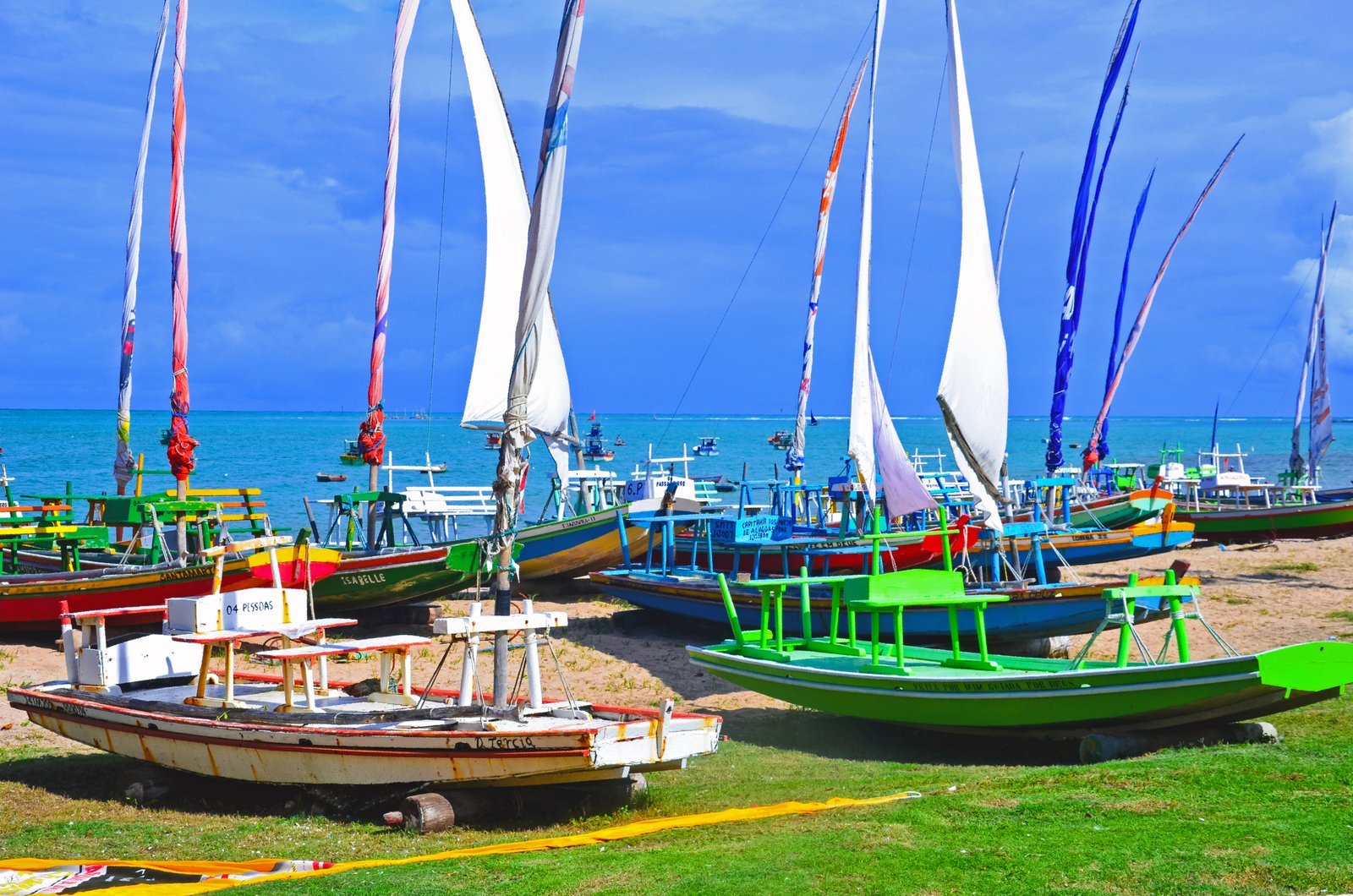
Maceió, the capital of the northeastern state of Alagoas, is the Brazilian beach city that surprises people most. Its urban seafront, running from Pajuçara through Ponta Verde to Jatiúca, faces a pale green sea sheltered by a reef that turns into warm natural pools at low tide. You can walk out of a city hotel, cross the promenade and be floating over a reef within half an hour, carried there on a jangada, the wooden sailing raft of local fishermen. The city has 957,916 residents according to Brazil’s 2022 census, a busy food scene built around coconut, fish and the sururu mussel, and a historic port district, Jaraguá, that explains how the place came to be.
This guide is written for international travelers planning a trip in 2026. It covers visa rules, including the eVisa now required for US, Canadian and Australian citizens, how to get from Maceió airport (MCZ) to the beach districts, money and safety, month-by-month weather from Brazil’s national weather service (INMET), the natural pools and how tides control them, day trips to Praia do Gunga, Maragogi, São Miguel dos Milagres and the São Francisco river mouth, what to eat, 3-, 5- and 7-day itineraries and ten real hotels, each linked to its official website.
Quick facts: Maceió, Brazil
- What it is: the capital of Alagoas state in northeastern Brazil, with 957,916 people (IBGE, 2022 census). It sits between the Atlantic and the Mundaú lagoon.
- Best time: September to March. October to February is the driest stretch; April to August is the rainy season, peaking in June.
- Temperature: average highs of 27.6–31.5 °C (82–89 °F) all year and average lows of about 20–22 °C (67–72 °F). Sea water is warm year-round.
- Airport: Zumbi dos Palmares International Airport (MCZ), in Rio Largo, about 22 km (14 miles) from the city center. Most international visitors connect through São Paulo, Rio, Brasília, Recife or Salvador.
- Visa: US, Canadian and Australian citizens need an eVisa (since April 10, 2025). Many European and South American passport holders enter visa-free. Check your own nationality on the Brazilian government site.
- Money: Brazilian real (BRL, R$). Cards are accepted almost everywhere; carry some cash for jangada rides, beach kiosks and boat crossings.
- Power: 220 V, 60 Hz. Bring an adapter for Brazilian type N sockets (type C plugs usually fit).
- Daily budget: R$ 250–400 per person on a budget trip, excluding hotel and paid tours (our estimate).
- How long: 3 days for the city and one day trip; 5 days to add Maragogi or Milagres; 7 days to include the São Francisco river and the colonial town of Penedo.
- Where to stay: Pajuçara or Ponta Verde for a first visit; Jatiúca for beachfront resorts; São Miguel dos Milagres or Maragogi for boutique inns and all-inclusives.
Entry requirements, money and practical basics
Direct answer: US, Canadian and Australian citizens need a Brazilian eVisa, applied for online before the trip; citizens of many countries, including most of the EU, the UK and South America, can enter as tourists without a visa. Brazil’s currency is the real (R$), cards are widely accepted, and the power supply in Maceió is 220 V.
- eVisa: since April 10, 2025, Brazil requires a visa from citizens of the United States, Canada and Australia. The application is online through the official provider linked from the Brazilian Ministry of Foreign Affairs site, costs US$ 80.90 and allows stays of up to 90 days. Apply well in advance and only through official channels.
- Other passports: rules vary by nationality, so check the Ministry of Foreign Affairs visa table before booking.
- Money: withdraw reais from bank ATMs inside shopping malls or the airport, which are safer than street machines. Credit and debit cards work in hotels, restaurants and most shops. Pix, the instant transfer system Brazilians use for almost everything, usually needs a Brazilian bank account; as a visitor, plan on cards and some cash. Several costs in this guide, such as the compulsory boat crossing at Praia do Gunga, are paid on the spot in cash or Pix.
- Language: Portuguese. English is spoken at larger hotels and by some tour desks, much less on the beach. A translation app with offline Portuguese helps a lot.
- Power: Maceió uses 220 V, 60 Hz. Check that your chargers support 220 V and bring a plug adapter.
- Tipping: restaurants usually add a 10% service charge to the bill. It is technically optional.
- Emergency numbers: Military Police 190, ambulance (SAMU) 192 and fire department 193.
- Tide tables: not a formality here. Download a tide app or bookmark the Port of Maceió tide table, because the natural pools only appear at low tide and boat times change every day.
A short history: from Jaraguá port to state capital
Direct answer: Maceió grew around a sugar mill and the natural harbor at Jaraguá, which shipped sugar, tobacco and coconut. It became a town on December 5, 1815, when it split from the older settlement of Alagoas (today’s Marechal Deodoro), and became a city and provincial capital on December 9, 1839.
The name comes from the Tupi word “maçayó”, usually translated as “what covers the swamp”, a fair description of a place surrounded by lagoons, mangroves and creeks. Before the Portuguese, this stretch of coast was Caeté territory. For two centuries the settlement lived in the shadow of the old town of Alagoas across the lagoon, which held political power in the region.
The port changed everything. The Jaraguá cove gave ships a safe anchorage, and sugar from the inland mills began to leave through it. Trade brought warehouses, export houses and merchant mansions, many of which still stand in the Jaraguá district, now home to museums, restored buildings and part of the nightlife. With the port’s economic weight behind it, Maceió won its autonomy in 1815 and, in 1839, took over as capital.
The city’s patron saint is Nossa Senhora dos Prazeres, and Maceió celebrated 200 years since its emancipation in December 2015. Today the economy mixes tourism, services and industry; the city is Brazil’s largest producer of rock salt.
That salt is also behind the city’s hardest recent chapter. Since 2018, rock-salt mining by the petrochemical company Braskem beneath the city has caused the ground to sink in five neighborhoods: Pinheiro, Mutange, Bebedouro, Bom Parto and part of Farol. According to BBC News Brasil, about 60,000 people had to leave their homes, and more than 14,000 properties are in the affected area. These are residential districts well away from the seafront, and the issue does not affect a visitor’s itinerary, but you will hear locals talk about it.
When to visit Maceió: weather month by month
Direct answer: the best time to visit Maceió is September to March. From October to February it rains less than 100 mm (4 inches) a month on average, and the water at the natural pools is usually at its clearest. The rainy season runs from April to August, peaking in June at more than 320 mm (12.7 inches).
The table uses climate normals from Brazil’s National Institute of Meteorology (INMET) for the Maceió station. Highs and rainfall are from the 1991-2020 series; lows are from the 1981-2010 series, the latest published with that data for the city.
| Month | Average low and high | Average rainfall |
|---|---|---|
| January | 21.4–31.0 °C (71–88 °F) | 91 mm (3.6 in) |
| February | 21.8–31.3 °C (71–88 °F) | 80 mm (3.2 in) |
| March | 22.1–31.5 °C (72–89 °F) | 101 mm (4.0 in) |
| April | 21.8–30.7 °C (71–87 °F) | 194 mm (7.6 in) |
| May | 21.2–29.5 °C (70–85 °F) | 295 mm (11.6 in) |
| June | 20.3–28.4 °C (69–83 °F) | 323 mm (12.7 in) |
| July | 19.7–27.6 °C (67–82 °F) | 271 mm (10.7 in) |
| August | 19.7–27.8 °C (67–82 °F) | 192 mm (7.5 in) |
| September | 19.9–28.6 °C (68–83 °F) | 109 mm (4.3 in) |
| October | 20.3–29.9 °C (69–86 °F) | 70 mm (2.8 in) |
| November | 21.9–30.8 °C (71–87 °F) | 45 mm (1.8 in) |
| December | 21.2–31.3 °C (70–88 °F) | 37 mm (1.4 in) |
Annual rainfall averages 1,808 mm (71 inches), almost all of it between April and August. Temperatures barely change: the average annual high is 29.9 °C (86 °F). INMET’s heat record for the city is 36.3 °C (97 °F), set on November 26, 2015, and matched on January 4, 2016.
Seasons, holidays and prices
Remember that Brazil’s seasons are reversed: December and January are summer school holidays, along with July, and those are the most expensive and crowded months in Maceió. New Year’s Eve and Carnival fill the seafront, hotels ask for minimum stays and tours sell out. If you can choose, October and November are the sweet spot: little rain, good water, pre-summer hotel rates and tours running with room to spare. March, after Carnival and before the rains, is another good window.
Is the rainy season worth it?
It can be, with adjusted expectations. Between May and July showers are frequent, skies stay overcast for longer and the water at the natural pools gets murkier, which takes the shine off the main attraction. In exchange, hotel rates drop. If you travel then, keep boat trips for sunny mornings and use cloudy days for museums, Jaraguá and road trips.
Tides run the show
In Maceió the tide table matters as much as the weather forecast. The pools at Pajuçara, Maragogi and São Miguel dos Milagres only appear at low tide, and departure times shift every day. In Maragogi, for example, boats to the offshore pools only go out at tides of 0.5 m (1.6 ft) or lower, according to the tour operator Luck Receptivo, and trips run from two hours before to two hours after low tide. During neap tides, when the range is small, there may be no trips at all. Before you fix your dates, check the Port of Maceió tide table and plan boat trips for the mornings with the lowest tides.
How to get to Maceió: flights, MCZ airport and buses
Direct answer: almost every visitor flies into Zumbi dos Palmares International Airport (MCZ), in the municipality of Rio Largo, about 22 km (14 miles) from central Maceió. From the airport to Pajuçara and Ponta Verde you can take a cooperative taxi, a shared transfer (R$ 128 per person with Luck Receptivo in the second half of 2026), Uber or 99, or a metropolitan bus. Overland, long-distance buses arrive at the city bus station.
Maceió airport (MCZ)
The airport is run by the Spanish operator Aena and has direct flights from Brazil’s main cities. If you are flying from abroad, you will almost certainly connect in São Paulo, Rio de Janeiro, Brasília, Recife or Salvador. Leave at least two to three hours for an international-to-domestic connection, since you clear immigration and customs at your first Brazilian airport and usually recheck your bags there.
From the airport to the beaches
- Taxi: two cooperatives, Astril (standard taxis) and Contal (premium), work from the ground floor of the terminal from 10 am to 2:30 am, according to Aena; phones are +55 82 4104-0144 and +55 82 3322-2530. We found no published flat fare to the seafront. Using the city’s official taxi meter rates (R$ 4.79 flag fall plus R$ 3.34 per km), a 25–30 km ride to Pajuçara or Ponta Verde comes to roughly R$ 90–110 without heavy traffic. That is our own estimate; ask for the price before you get in.
- Shared transfer: Luck Receptivo has a desk in the arrivals hall and charges R$ 128 per person for an arrival transfer to hotels in Pajuçara, Ponta Verde, Jatiúca, Lagoa da Anta and Cruz das Almas between July 1 and December 18, 2026, R$ 134 from December 19, 2026 to January 31, 2027, and R$ 130 after that. Good value if you travel alone and want a no-thinking arrival; for two or more people a taxi is usually cheaper.
- Ride-hailing: Uber and 99 operate in Maceió and serve the airport. Prices change with demand, so check the app before confirming.
- Bus: Viação Veleiro runs a metropolitan line from the airport to Ponta Verde, with departures from early morning to evening on weekdays; the current timetable is on the company’s website. We could not confirm the fare on an official source; for reference, the standard Rio Largo–Maceió fare is R$ 7.70 since December 2025, set by the state regulator ARSAL. With luggage, this is only worth it on a tight budget.
By bus from other cities
Maceió’s bus station has services to Recife, Aracaju, Salvador and towns across Alagoas. Recife is a little over 250 km (155 miles) north, and many travelers combine the two capitals on one trip, stopping at Maragogi and Porto de Galinhas along the coast. From the bus station to the seafront, take a taxi or Uber.
Renting a car
A rental car makes sense if you plan several day trips on your own, especially north to São Miguel dos Milagres and south to Gunga, Barra de São Miguel and Praia do Francês. The AL-101 highway follows the coast in both directions. Driving in Brazil is on the right, and many rental companies accept a valid foreign license for tourists; check with your rental company before you travel. Inside Maceió, parking near the beach on weekends can be hard, and ride-hailing covers short trips well.
Getting around Maceió: buses, light rail, rideshare and taxis
Direct answer: for visitors, the easiest way to get around is walking along the seafront and using Uber, 99 or taxis for longer hops. City buses cost R$ 4.00 and the light rail costs R$ 2.50. For day trips, tour operators pick you up at your hotel.
The Pajuçara, Ponta Verde and Jatiúca waterfront forms a corridor several kilometers long with a promenade, a bike lane and beach kiosks. If you stay in those districts, you can do almost everything on foot during the day: the beach, the craft market, restaurants and the jangada departure point. At night, for longer distances or empty streets, take a car.
- City buses: the fare is R$ 4.00 paid by QR code, contactless bank card or transit pass. The local Vamu Cidadão card lowers it to R$ 3.49, but it is aimed at residents. Buses cover the seafront–downtown route well, though route information is in Portuguese.
- Light rail (VLT): a CBTU commuter line runs from downtown toward Rio Largo, with a R$ 2.50 fare. It is used mostly by locals.
- Taxis: official meter rates since February 2025 are R$ 4.79 flag fall, R$ 3.34 per km on rate 1 and R$ 4.00 per km on rate 2, which applies from 10 pm to 6 am, on Sundays and on holidays.
- Uber and 99: work well on the seafront and downtown, and they are the simplest choice at night.
- Cycling: the seafront bike lane is flat and pleasant in the late afternoon. Avoid the midday sun.
Maceió neighborhoods and beaches: which one is for you
Direct answer: Pajuçara is where the jangadas leave for the natural pools, and it is close to everything. Ponta Verde has the prettiest city beach, with the striped lighthouse on the reef. Jatiúca has the bigger hotels and beachfront resorts. Jaraguá and downtown hold the history and museums. To the north, Garça Torta, Riacho Doce and Ipioca have quieter beaches.
Pajuçara
The most practical base for a first trip. The beach is calm, protected by the reef, and the jangadas to the natural pools leave from here. Along the promenade you will find the craft market, the Ferris wheel, kiosks and many mid-range hotels, with bakeries, pharmacies and grocery stores a block or two inland. For a deeper look at this stretch, see our Pajuçara and Ponta Verde guide.
Ponta Verde
Right after Pajuçara, around the point that gives it its name. Pale sand, coconut palms and, at low tide, a wide reef flat with the red-and-white striped lighthouse that has become Maceió’s postcard. It is a residential district of tall apartment blocks with good restaurants and bars on the seafront avenue, and it suits travelers who want a beach base with more going on at night.
Jatiúca and Lagoa da Anta
Heading north, the seafront enters Jatiúca, home to some of the city’s larger hotels, including Hotel Jatiúca, which bills itself as the only beachfront resort in the heart of Maceió. Next door, Lagoa da Anta has resorts with big pools and kids’ clubs. The sea is more open here, with waves in places, and the beach is lovely for a late-afternoon walk.
Cruz das Almas
Past Jatiúca, Cruz das Almas has a more open beach with rougher water, used mainly by locals. Hotels tend to be simpler and cheaper, and it works if you have a car or don’t mind taking Uber to Pajuçara.
Jaraguá and downtown
Jaraguá is the historic port district where the city began, with restored mansions and warehouses, the Alagoas Museum of Image and Sound (MISA) and bars that fill up at night. Downtown, a few minutes away, has the Teatro Deodoro, the Palácio Floriano Peixoto museum and the Théo Brandão folk museum. Our Jaraguá walking guide has a route you can follow.
Garça Torta, Riacho Doce and Ipioca
Maceió’s north coast is still within city limits but feels like another place: coconut groves, weekend houses, beach restaurants and beach clubs. Garça Torta and Riacho Doce are fishing villages with quieter beaches; Ipioca has beach clubs that charge a day-use fee. Good for a lazy day without a long drive.
Pontal da Barra
At the southern tip of the city, where the Mundaú lagoon meets the sea, Pontal da Barra is the lacemakers’ neighborhood, full of shops selling filé, the colorful Alagoas embroidery worked on a knotted net. It is also where the nine-islands boat trip departs.
Things to do in Maceió: top sights, rules and prices
Direct answer: the essentials in Maceió are a jangada ride to the Pajuçara natural pools, Ponta Verde beach and its lighthouse, the nine-islands boat trip on the Mundaú lagoon, the Jaraguá historic district and downtown museums, the craft market and Pontal da Barra. The most popular day trips are Praia do Gunga, Praia do Francês, Maragogi and São Miguel dos Milagres.
Pajuçara natural pools by jangada
This is Maceió’s signature experience. About 2 km (1.2 miles) offshore, a reef forms pools of warm, clear water at low tide, where you can stand and watch small fish with a mask. You get there on a jangada, a flat wooden raft with a triangular sail, in 15 to 20 minutes, and usually spend about an hour and a half at the pools, according to the Brazilian travel site Viagem Brasil.
There is no official price list. You agree the fare directly with the licensed jangada owners on Pajuçara beach. In October 2025, the newspaper Jornal Extra de Alagoas found prices of R$ 40–60 per person for the crossing only, with room to bargain. In high season it can reach about R$ 90, and mask rental is usually around R$ 20 extra. The jangada owners formed an association in April 2025 to organize the service.
- Tide: the trip only works at low tide, ideally 0.4–0.5 m (about 1.5 ft) or lower. Check the tide table and go as the tide is falling.
- Agree first: settle the price, the time at the pools and whether a mask is included before you board. Pay at the end, back on the beach.
- Reef etiquette: don’t stand on coral and don’t feed the fish. Water shoes help, because parts of the bottom are rocky.
- Sun: there is no shade out there. Bring sunscreen, a hat and water.
Ponta Verde beach and the lighthouse
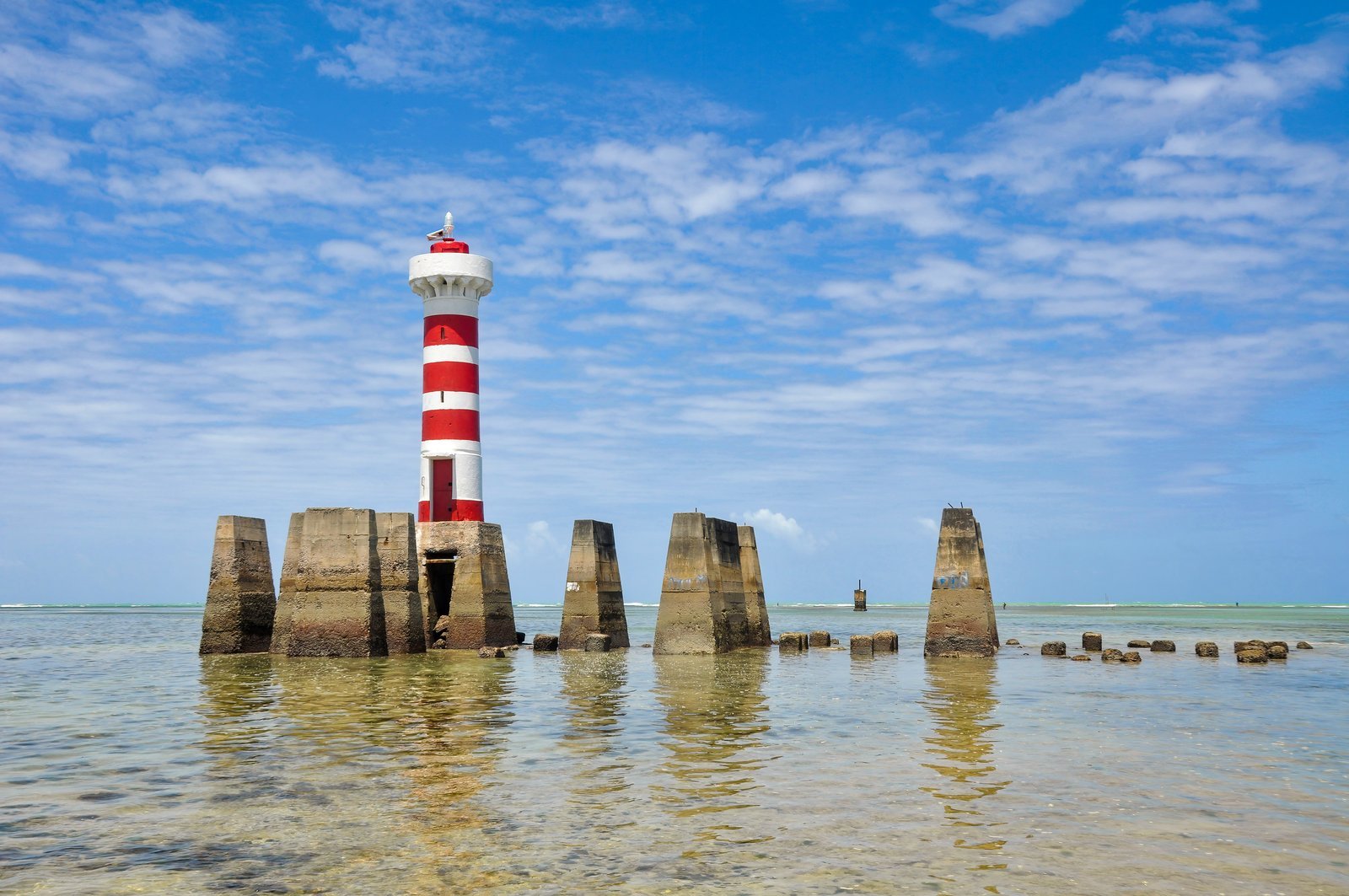
At low tide, Ponta Verde reveals a wide reef with shallow pools, and the little lighthouse is close to the sand. It is one of the most photographed spots in the city and a good alternative if you want to see the pools without a boat. Boat trips also leave from Ponta Verde; Jornal Extra found prices of R$ 60–80 in October 2025. Nearby, the Marco dos Corais monument on the promenade is a handy meeting point.
The promenade, bike lane and Ferris wheel
Maceió’s seafront is made for walking. The promenade runs through Pajuçara, Ponta Verde and Jatiúca, with a bike lane, kiosks, sports courts and outdoor gyms. Around sunset it fills with people jogging, cycling and drinking coconut water. In Pajuçara, the Ferris wheel gives you a view over the reef and the city; Luck Receptivo sells full-price tickets for R$ 63.
Pajuçara craft market
The craft market on the Pajuçara seafront has dozens of stalls selling filé embroidery, lace, straw and clay pieces, cachaça, sweets and T-shirts. It is the easiest place to buy souvenirs without leaving the beach, and prices are usually negotiable if you buy more than one piece. To see lacemakers at work, head to Pontal da Barra.
Nine islands boat trip on the Mundaú lagoon
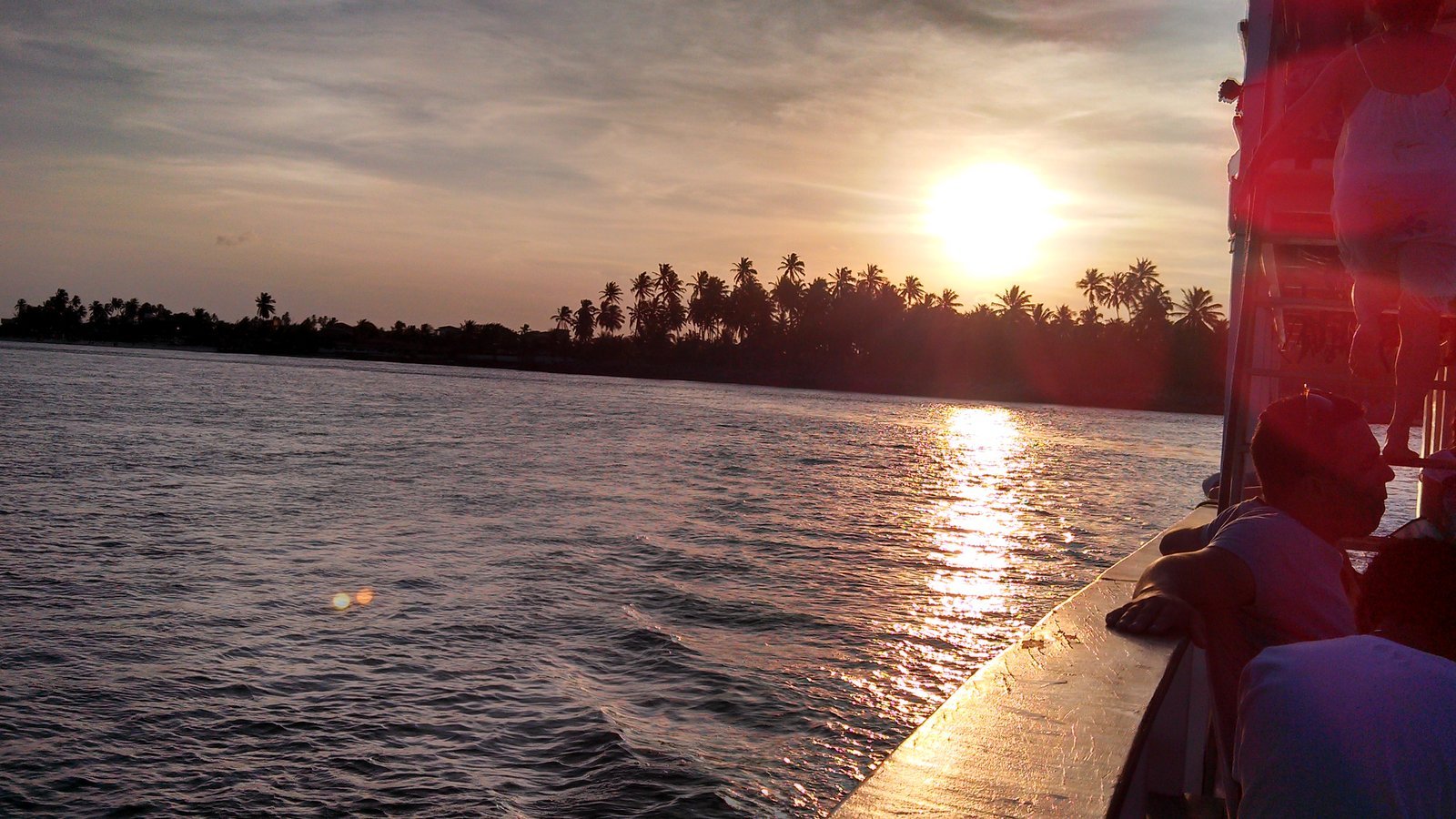
The nine islands trip leaves from Pontal da Barra and explores the channels and islands of the Mundaú lagoon, a system of lagoons, mangroves and channels connected to the sea. With the operator Maresul it lasts about 6 hours on a trimaran or catamaran, passes islands such as Ilha do Fogo, Andorinhas and Bora Bora and stops at Prainha da Barra Nova, where the water meets the ocean. Lunch is served on board. In 2026 it costs R$ 140 per person, or R$ 150 with hotel transport, and children under 4 go free. It is a relaxed trip, good for families and for days when the sea is rough.
Jaraguá and the Museum of Image and Sound
Jaraguá is the best place to understand old Maceió. The port mansions, some restored and some still waiting for work, make a pleasant morning walk before the heat builds. The Alagoas Museum of Image and Sound (MISA) is here and is included in agency city tours. At night, some of Jaraguá’s bars and music venues are the liveliest in town.
Théo Brandão Museum
The Théo Brandão Museum of Anthropology and Folklore, run by the Federal University of Alagoas, is at Avenida da Paz 1490, downtown, in a mansion facing the sea. Its collection covers Alagoas popular culture: folk festivals, masks, crafts and everyday objects. Entry is free, and it opens Tuesday to Friday, 9 am to 5 pm, with visits booked by email at museutheobrandao@gmail.com. In 2025 and 2026 the museum went through periods of partial opening and collection reorganization, so confirm before going.
Downtown: Teatro Deodoro, Palácio Floriano Peixoto and São Gonçalo lookout
Downtown has the capital’s main historic buildings. Teatro Deodoro is the city’s most traditional theater, and the Palácio Floriano Peixoto museum occupies the former seat of the state government. The São Gonçalo lookout gives a broad view over the city and the sea, and the Pavilhão do Artesanato gathers regional craft shops. All are part of the standard city tour, along with Jaraguá and MISA.
The north coast and the Mermaid lookout
On Maceió’s north coast, the Mirante da Sereia is a classic photo stop, with a mermaid statue on the rocks. Beyond it, Garça Torta, Riacho Doce and Ipioca have emptier beaches and seaside restaurants. In Ipioca, beach clubs charge R$ 60–85 for day use, and speedboat trips to the local natural pools cost R$ 70–110, according to Jornal Extra in October 2025.
Day trips from Maceió: distances, prices and how much time to allow
Direct answer: the most popular day trips from Maceió are Praia do Gunga (about 45 minutes south), Praia do Francês with the colonial town of Marechal Deodoro (about 25 minutes), Maragogi (about 2 hours north) and São Miguel dos Milagres (about 2 hours). With more time, add the São Francisco river mouth and Penedo. All work as day trips with an early hotel pickup.
Praia do Gunga and Barra de São Miguel
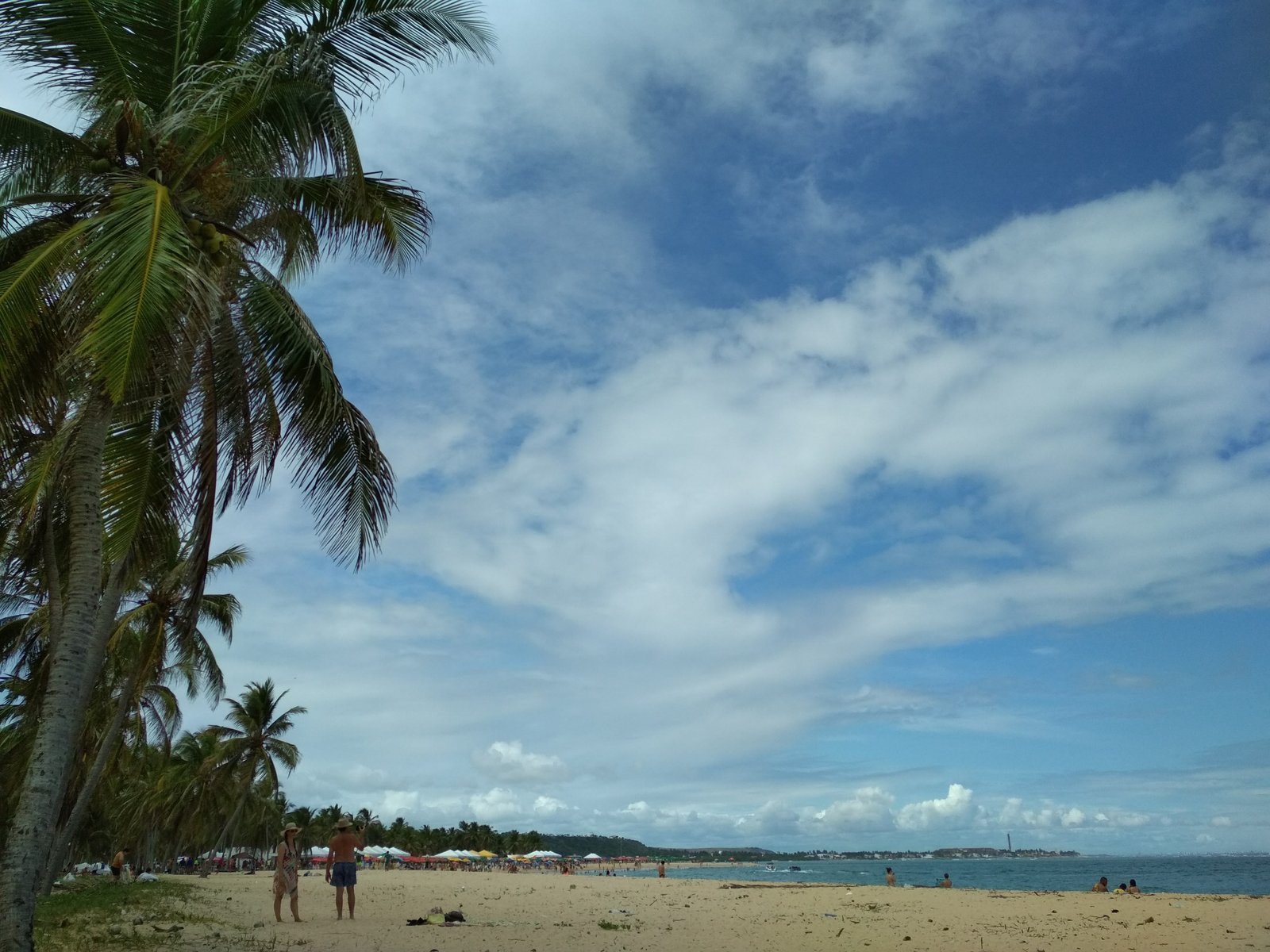
Praia do Gunga sits in the municipality of Roteiro, on a sand spit between the sea and the Roteiro lagoon, backed by coconut groves and colored cliffs. It is one of the classic images of Alagoas. Luck Receptivo’s day trip costs R$ 75 per person in 2026, runs daily with hotel pickup from 7:10 am and lasts about 9 hours. The boat crossing over the lagoon is compulsory and costs R$ 55, paid on site in cash or Pix, so bring reais. At Gunga you can add a catamaran ride from R$ 90 (Monday to Friday, about 1 hour) or a small boat from R$ 80.
Barra de São Miguel, next to Gunga, has a calm reef-sheltered beach that is good for children. With a car, you can combine the two in one day.
Praia do Francês and Marechal Deodoro
Praia do Francês is in Marechal Deodoro, about 25 minutes south of Maceió, with a calm stretch sheltered by the reef and a more open stretch with waves. Luck sells a R$ 70 trip that combines a Maceió city tour (Jaraguá, MISA, downtown, the São Gonçalo lookout and the Pavilhão do Artesanato) with an afternoon at Francês. The optional boat to the natural aquariums costs R$ 85 and takes about 1.5 hours, tide permitting.
Marechal Deodoro was the first capital of Alagoas and the birthplace of Deodoro da Fonseca, Brazil’s first president. Its historic center, with colonial churches and convents, is protected by IPHAN, Brazil’s national heritage agency. Allow an hour to walk around before or after the beach.
Marapé dunes
In Jequiá da Praia, about 1 hour 15 minutes south of Maceió, the Marapé dunes sit between a river and the sea, with dunes, coconut palms and a short boat crossing. Luck’s trip costs R$ 85, and the crossing, day use and lunch package on site costs R$ 150.
Maragogi and its offshore pools
Maragogi, on the north coast of Alagoas, is about 2 hours from Maceió and famous for its offshore natural pools, the galés. Luck’s trip costs R$ 125, runs daily from 6 am, lasts about 10 hours and includes the Pontal do Maragogi Beach Club. The catamaran to the pools costs R$ 140 and only goes out at tides of 0.5 m or lower. You can also add a dive (R$ 160), a beach buggy ride (R$ 360) or a coastal catamaran trip (R$ 90).
Access to the galés is controlled by ICMBio, Brazil’s federal conservation agency, because the pools lie within the Costa dos Corais Environmental Protection Area. Trips run from two hours before to two hours after low tide, and there are daily boat limits: 10 catamarans, 10 schooners and 8 speedboats at the Galés. During neap tides there may be no trips. The Maragogi city government set minimum per-person prices in December 2024: R$ 120 for a jangada and R$ 150 for a speedboat, with no maximum. On top of that, the municipal environmental fee for boat trips rose to R$ 7 per person in February 2025, according to Maragogi News. Confirm prices before you book.
If you are heading on to Pernambuco, read our guide to the Porto de Galinhas natural pools.
São Miguel dos Milagres and the Ecological Route
São Miguel dos Milagres and Porto de Pedras form the so-called Rota Ecológica dos Milagres, a stretch of the north coast with near-empty beaches, coconut groves and boutique inns. The sea is calm, and at low tide natural pools form close to shore. Luck’s trip costs R$ 125, runs on Mondays, Wednesdays and Fridays, lasts about 10 hours and includes day use at Milagres do Porto. The jangada to the pools costs R$ 100 and needs a tide of 0.8 m or lower; a buggy ride costs R$ 300.
Manatee sanctuary
In Porto de Pedras, the Associação Peixe-Boi, a community association of riverside residents of Porto de Pedras and São Miguel dos Milagres, takes visitors by paddled canoe along the Tatuamunha River to watch West Indian manatees, a species critically endangered in Brazil. The trip takes about 1 hour and costs R$ 100, booked on the association’s website. Departures run in slots between 10 am and 1 pm, and daily numbers are capped, so book early. Sightings are not guaranteed. The association says 18,516 people made the visit in 2025.
São Francisco river mouth and Penedo
The mouth of the São Francisco, one of Brazil’s great rivers, is at Piaçabuçu in the far south of Alagoas, about 1 hour 50 minutes from Maceió. Luck’s trip costs R$ 125, runs on Fridays and lasts about 9 hours. At the river mouth, a R$ 75 boat ride takes you to the shifting dunes where the river meets the sea, in a protected area that is a sea turtle habitat. If you drive, add Penedo, a riverside town whose architectural and landscape ensemble was listed by IPHAN in 1996, with baroque churches and colonial houses.
Xingó canyons
The Xingó canyons on the São Francisco River, on the border between Alagoas and Sergipe, make a full-day trip with a very early start. The canyon catamaran is paid separately, and Luck estimates it at R$ 150. It is a long day that makes most sense on trips of 6 or 7 days or more.
What to eat in Maceió
Direct answer: in Maceió, try sururu, a small mussel from the Mundaú lagoon officially recognized as intangible heritage of Alagoas, served as a broth or in coconut sauce; fresh tapioca from the seafront stalls; grilled fish and shrimp at the beach kiosks; and coconut water with everything.
- Sururu: a small mussel harvested from the mud of the Mundaú and Manguaba lagoons. On December 11, 2014, the Alagoas State Culture Council unanimously registered it as intangible cultural heritage of the state, according to the newspaper Gazeta de Alagoas. Whole lagoon-side communities live from harvesting and selling it. Order it as caldinho (a small cup of thick broth, a typical bar snack), in coconut sauce, in a moqueca stew or inside an omelet or tapioca.
- Tapioca: a crêpe-like snack made from cassava starch, cooked to order at seafront stalls and filled with coconut, coalho cheese, sun-dried beef, chicken, or banana and cinnamon. Cheap, quick and gluten-free.
- Fish and seafood: fried or grilled fish with rice, beans, salad and pirão (a fish-broth porridge), garlic shrimp and agulhinha, a small fried fish served as a snack, are on almost every beach menu. Many dishes serve two, so ask about portion size.
- Sweets and drinks: cocada (coconut candy), cassava cake, and fresh juices of cashew fruit, cajá, acerola and mangaba. Coconut water is sold ice-cold all along the promenade.
At beach kiosks, look at the menu with prices before you sit down, and politely refuse snacks you did not order.
Nightlife in Maceió
Direct answer: Maceió’s nightlife centers on the Pajuçara, Ponta Verde and Jatiúca seafront, with bars, restaurants and kiosks open late, and on the historic Jaraguá district, with bars and music venues. Weekends are much busier.
If you stay on the seafront, the evening starts early with a walk along the promenade after sunset and dinner on the avenue. Ponta Verde and Jatiúca have the widest choice, from casual bars with live music to more upscale restaurants. Jaraguá has a more bohemian, local feel and a changing lineup, so check venues’ social media for the week’s program. To get back to your hotel late, use Uber or a taxi even for short distances.
Is Maceió safe?
Direct answer: Maceió’s tourist seafront, from Pajuçara to Jatiúca, is busy and generally calm during the day and early evening. Take the same precautions you would in any large Brazilian city: don’t leave belongings unattended on the sand, keep your phone and jewelry out of sight on empty streets, and use Uber or a taxi at night.
- On the beach: bring only what you need and don’t leave bags alone while you swim.
- At night: the promenade stays busy near the bar clusters but empties in other stretches. After 10 pm, take a car between neighborhoods.
- ATMs: use machines inside bank branches or shopping malls, in daylight.
- In the water: follow lifeguard flags. Open beaches such as Cruz das Almas can have currents. At the natural pools, respect the tide schedule, because the water rises fast once the tide turns.
- Sun: Maceió is less than 10 degrees south of the equator. Use high-SPF sunscreen, reapply after swimming and avoid the strongest sun between 10 am and 3 pm.
- Subsidence zone: the neighborhoods evacuated because of salt mining (Pinheiro, Mutange, Bebedouro, Bom Parto and part of Farol) are residential areas outside the tourist circuit, and there is no reason to visit them.
- Emergencies: police 190, ambulance 192, fire department 193.
How much does a trip to Maceió cost in 2026?
Direct answer: Maceió is a mid-priced destination for northeastern Brazil. A city bus costs R$ 4.00, a jangada to the Pajuçara pools R$ 40–60 per person, and full-day tours R$ 70–125 per person before optional boat rides. For hotels, check each official website, since rates swing widely with the season.
These are the prices we checked with official sources and tour operators in October 2026. Optional extras are paid on site and can change without notice.
| Item | Price in 2026 | Notes |
|---|---|---|
| Brazil eVisa (US, Canada, Australia) | US$ 80.90 | Official fee, paid online |
| City bus | R$ 4.00 | R$ 3.49 with the local Vamu Cidadão card |
| Light rail (VLT) | R$ 2.50 | CBTU line from downtown |
| Taxi flag fall | R$ 4.79 | Plus R$ 3.34/km (rate 1) or R$ 4.00/km (rate 2) |
| Taxi, airport to Pajuçara | R$ 90–110 | Our estimate from official meter rates |
| Shared arrival transfer | R$ 128 | Luck Receptivo, July 1–December 18, 2026, per person |
| Jangada to the Pajuçara pools | R$ 40–60 | Range reported by Jornal Extra; can be higher in high season |
| Ferris wheel | R$ 63 | Full-price ticket sold by Luck |
| Nine islands boat trip | R$ 140 | Maresul, lunch included; R$ 150 with transport |
| Praia do Gunga tour | R$ 75 | Plus R$ 55 compulsory crossing |
| City tour and Praia do Francês | R$ 70 | Boat to the aquariums: R$ 85 |
| Marapé dunes tour | R$ 85 | Crossing, day use and lunch: R$ 150 |
| Maragogi tour | R$ 125 | Catamaran to the offshore pools: R$ 140 |
| São Miguel dos Milagres tour | R$ 125 | Jangada to the pools: R$ 100 |
| Manatee sanctuary visit | R$ 100 | Associação Peixe-Boi, booking required |
| São Francisco river mouth tour | R$ 125 | Boat to the dunes: R$ 75 |
On a budget trip, excluding hotel and paid tours, allow R$ 250–400 per person per day for simple restaurant meals, snacks, coconut water, ride-hailing and small purchases. That is our estimate. For a five-day trip with three full-day tours and the optional boat rides, set aside roughly R$ 700–1,000 per person for tours alone, based on the prices above.
Maceió itineraries: 3, 5 and 7 days
Direct answer: in 3 days you can see the seafront, the Pajuçara pools and Jaraguá and take a day trip to Gunga. In 5 days, add Maragogi or São Miguel dos Milagres and the nine-islands trip. In 7 days, there is time for the São Francisco river mouth, Penedo or a lazy day on the north coast.
3-day itinerary
- Day 1: morning at the Pajuçara natural pools at low tide. Afternoon on Ponta Verde beach, photos at the lighthouse and a walk along the promenade to Jatiúca. Evening at the craft market and dinner on the seafront.
- Day 2: day trip to Praia do Gunga, with the lagoon crossing and, if the weather helps, the boat to the natural aquariums.
- Day 3: morning in Jaraguá and downtown, with MISA, Teatro Deodoro and the Théo Brandão Museum (confirm opening). Afternoon at Pontal da Barra to see the filé embroidery and lacemakers.
5-day itinerary
- Days 1–3: follow the 3-day plan.
- Day 4: Maragogi, with the catamaran to the galés if the tide is low enough, or São Miguel dos Milagres, with the jangada to the pools and, if booked, the manatee sanctuary.
- Day 5: nine-islands trip on the Mundaú lagoon, with lunch on board and the sunset on the way back.
7-day itinerary
- Days 1–5: follow the 5-day plan.
- Day 6: Praia do Francês and Marechal Deodoro, with an hour in the historic center, or the Marapé dunes.
- Day 7: the São Francisco river mouth (Fridays on Luck’s tour), or by car with a stop in Penedo. To slow down instead, spend the day at a beach club in Ipioca or on the beaches of Garça Torta and Riacho Doce.
With a week, consider splitting your stay: four nights in Maceió and three at an inn in São Miguel dos Milagres or a resort in Maragogi. You enjoy the pools at leisure and skip four hours of round-trip driving.
Where to stay in Maceió
Direct answer: for a first trip, stay in Pajuçara or Ponta Verde, close to the jangadas, the craft market and restaurants. Jatiúca and Lagoa da Anta suit travelers who want a resort with big pools and kids’ facilities. Cruz das Almas is cheaper. To unwind, São Miguel dos Milagres and Maragogi have boutique inns and all-inclusive resorts. Every link below goes to the hotel’s official website and was checked in October 2026; we don’t use agency or booking-site links.
Rates vary a lot by season, and December, January, Carnival and July are the most expensive periods. Check prices directly on each official website and book early for those dates.
Hotel Enseada (mid-range, Pajuçara)
Hotel Enseada is at Avenida Dr. Antônio Gouveia 171 on the Pajuçara seafront, a few meters from where the jangadas leave for the natural pools and close to the craft market and the Ferris wheel. It has a pool with a bar and rooms from singles to quadruples, handy for families and groups of friends.
Best Western Premier Maceió (upscale, Pajuçara)
Best Western Premier Maceió is at Avenida Dr. Antônio Gouveia 925, also on the Pajuçara seafront. An upscale hotel of the Best Western chain, it suits travelers who want the most practical location with extra comfort.
Maceió Mar Hotel (mid-range, Ponta Verde)
Maceió Mar Hotel is at Avenida Álvaro Otacílio 2991 in Ponta Verde, near the Marco dos Corais and the lighthouse. It has sea-view rooms and a pool, on the prettiest part of the city seafront.
Hotel Ponta Verde Maceió (mid-range, Ponta Verde)
Hotel Ponta Verde Maceió is at Avenida Álvaro Otacílio 2933 on the Ponta Verde seafront, with a restaurant and pool. The same group runs a hotel at Praia do Francês if you want to split your stay.
Hotel Jatiúca (resort, Jatiúca)
Hotel Jatiúca is at Avenida Álvaro Otacílio 5500, between the Lagoa da Anta lagoon and the sea, and describes itself as the only beachfront resort in the heart of Maceió. It has 96 rooms, a spa and tennis and beach tennis courts, and children up to 12 stay free, according to the hotel.
Brisa Tower (mid-range, Jatiúca)
Brisa Tower is at Avenida Álvaro Otacílio 4201 in Jatiúca, with sea-view rooms, breakfast, a pool and a gym. A good pick for a modern hotel on a quieter stretch of the seafront.
Ritz Lagoa da Anta Hotel & SPA (resort, Lagoa da Anta)
Ritz Lagoa da Anta Hotel & SPA is at Avenida Brigadeiro Eduardo Gomes 546 in Lagoa da Anta. It has pools, the Zena Spa, a kids’ club, sports courts and mini golf, and is one of the city resorts most popular with families.
Conde Hotel (budget, Cruz das Almas)
Conde Hotel is at Rua Ouvidor Mendonça 111 in Cruz das Almas. A budget option with Suíte Plus rooms of about 22 m² (237 sq ft), for travelers happy to take an Uber to Pajuçara and Ponta Verde.
Pousada do Toque (boutique, São Miguel dos Milagres)
Pousada do Toque is in the village of Toque, São Miguel dos Milagres, on an almost deserted beach with natural pools at low tide. It belongs to the Roteiros de Charme association of boutique hotels. The restaurant serves guests only, and outside visitors are received from noon to 5 pm, according to the inn. Best for couples and for anyone who wants quiet.
Salinas Maragogi All Inclusive (all-inclusive, Maragogi)
Salinas Maragogi All Inclusive is on the AL-101 Norte highway, km 124, in Maragogi. It is a family-oriented all-inclusive resort where children up to 12 stay free, according to its website. When we checked in October 2026, the site showed nightly rates for two from R$ 3,276 in November 2026; check your own dates.
Video: a cultural walking tour of Black Maceió
In this short clip from Visit Brasil, the official tourism channel of Embratur, Brazil’s tourism promotion agency, you get a taste of a cultural walking tour focused on Afro-Brazilian history in Maceió. It is only about 30 seconds long, a quick preview before you go.
Frequently asked questions about Maceió
When is the best time to visit Maceió?
September to March, with the driest weather from October to February, when monthly rainfall averages under 100 mm (4 inches), according to INMET. October and November combine good weather, clear water at the natural pools and lower prices than December and January. April to August is the rainy season, peaking in June.
Do I need a visa to visit Maceió, Brazil?
US, Canadian and Australian citizens need a Brazilian eVisa, required since April 10, 2025. It is applied for online through the official provider linked from Brazil’s Ministry of Foreign Affairs, costs US$ 80.90 and allows stays of up to 90 days. Many European and South American travelers can enter visa-free; check your nationality before booking.
How do I get from Maceió airport to Pajuçara and Ponta Verde?
The airport (MCZ) is in Rio Largo, about 22 km from downtown. Take a cooperative taxi from the ground floor of the terminal, a shared transfer (R$ 128 per person with Luck Receptivo from July to December 2026), Uber or 99, or Viação Veleiro’s metropolitan bus to Ponta Verde. Based on official meter rates, a taxi to the seafront runs roughly R$ 90–110, which is our estimate.
How many days do I need in Maceió?
Three days cover the seafront, the Pajuçara pools, Jaraguá and a day trip to Gunga. Five days let you add Maragogi or São Miguel dos Milagres and the nine-islands boat trip. With seven, you can include Praia do Francês, Marechal Deodoro and the São Francisco river mouth.
Where should I stay in Maceió?
For a first visit, Pajuçara and Ponta Verde are the most practical: they are on the seafront, near the jangadas to the natural pools, the craft market and restaurants. Jatiúca and Lagoa da Anta have resorts with family facilities, and Cruz das Almas is cheaper.
How much is the jangada trip to the Pajuçara natural pools?
There is no official price. You agree it with the jangada owners on the beach; in October 2025 the newspaper Jornal Extra de Alagoas reported R$ 40–60 per person for the crossing only. It can cost more in high season, and mask rental is usually extra. The trip only runs at low tide.
Maragogi or São Miguel dos Milagres: which should I choose?
Maragogi has the most famous offshore pools, the galés, and more infrastructure, but also more crowds; the catamaran costs R$ 140 with Luck and needs a tide of 0.5 m or lower. São Miguel dos Milagres is quieter, with pools close to shore, boutique inns and the manatee sanctuary in Porto de Pedras. Both are about 2 hours from Maceió.
Is Maceió safe for tourists?
The tourist seafront from Pajuçara to Jatiúca is busy and generally calm during the day and early evening. Take normal big-city precautions: don’t leave belongings alone on the sand, avoid empty streets at night and use Uber or a taxi after 10 pm.
What food should I try in Maceió?
Sururu, a small lagoon mussel registered as intangible heritage of Alagoas in 2014, served as a broth or in coconut sauce. Also try tapioca made to order on the seafront, grilled fish and shrimp at beach kiosks, fried agulhinha, cocada and coconut water.
Can I see manatees near Maceió?
Yes. In Porto de Pedras, on the Milagres Ecological Route, the community-run Associação Peixe-Boi takes visitors by paddled canoe on the Tatuamunha River for R$ 100 per person. The trip lasts about an hour, must be booked in advance on the association’s website, and sightings are not guaranteed.
Is Maceió worth visiting?
Direct answer: yes, especially if you want calm, clear water, natural pools and a city with good infrastructure. Few Brazilian capitals have a city beach this clear, and within two hours you reach Gunga, Francês, Maragogi, Milagres and the São Francisco river mouth.
Maceió works well for couples, for families with children, who enjoy the wave-free water at Pajuçara and the Jatiúca resorts, and for travelers who want a little history in Jaraguá, Marechal Deodoro and Penedo alongside the beach. For a longer trip through northeastern Brazil, it sits between Recife and Salvador. See also our guides to Natal, Salvador, Porto Seguro and Fernando de Noronha, and our guide to the Porto de Galinhas natural pools, about 3 hours north.
Sources
- IBGE Cidades: Maceió (AL) overview (2022 census population and area)
- INMET: Brazilian climate normals (rainfall and highs 1991-2020, lows 1981-2010, Maceió station)
- Brazilian Ministry of Foreign Affairs: visitor visa requirement for nationals of Australia, Canada and the USA
- Wikipedia (Portuguese): Maceió (history, emancipation dates, etymology and INMET records)
- BBC News Brasil: neighborhoods affected by ground subsidence (Braskem)
- Aena Brasil: getting to Maceió airport (taxis and buses)
- Viação Veleiro: metropolitan bus timetable (Airport–Ponta Verde line)
- Gazetaweb: new Maceió taxi rates (February 2025)
- Vamu Mobilidade: Maceió public transport fare
- Jornal Extra Alagoas: how much jangada trips cost in Maceió (October 2025)
- Viagem Brasil: Pajuçara natural pools (tides, timing and high-season prices)
- Luck Receptivo: Praia do Gunga, Maragogi, São Miguel dos Milagres, city tour and Praia do Francês, São Francisco river mouth and arrival transfer (2026 rates)
- Maresul Turismo: nine islands boat trip (2026 price and route)
- Associação Peixe-Boi: manatee visit booking (price, duration and rules)
- Maragogi Guide: minimum boat-trip prices in Maragogi (2024 municipal ordinances)
- Maragogi News: environmental fee increase (February 2025)
- Gazeta de Alagoas: sururu registered as intangible heritage of Alagoas
- Federal University of Alagoas (UFAL): Théo Brandão Museum (visiting)
- IPHAN: Penedo (AL) and Marechal Deodoro (AL) (listed historic ensembles)