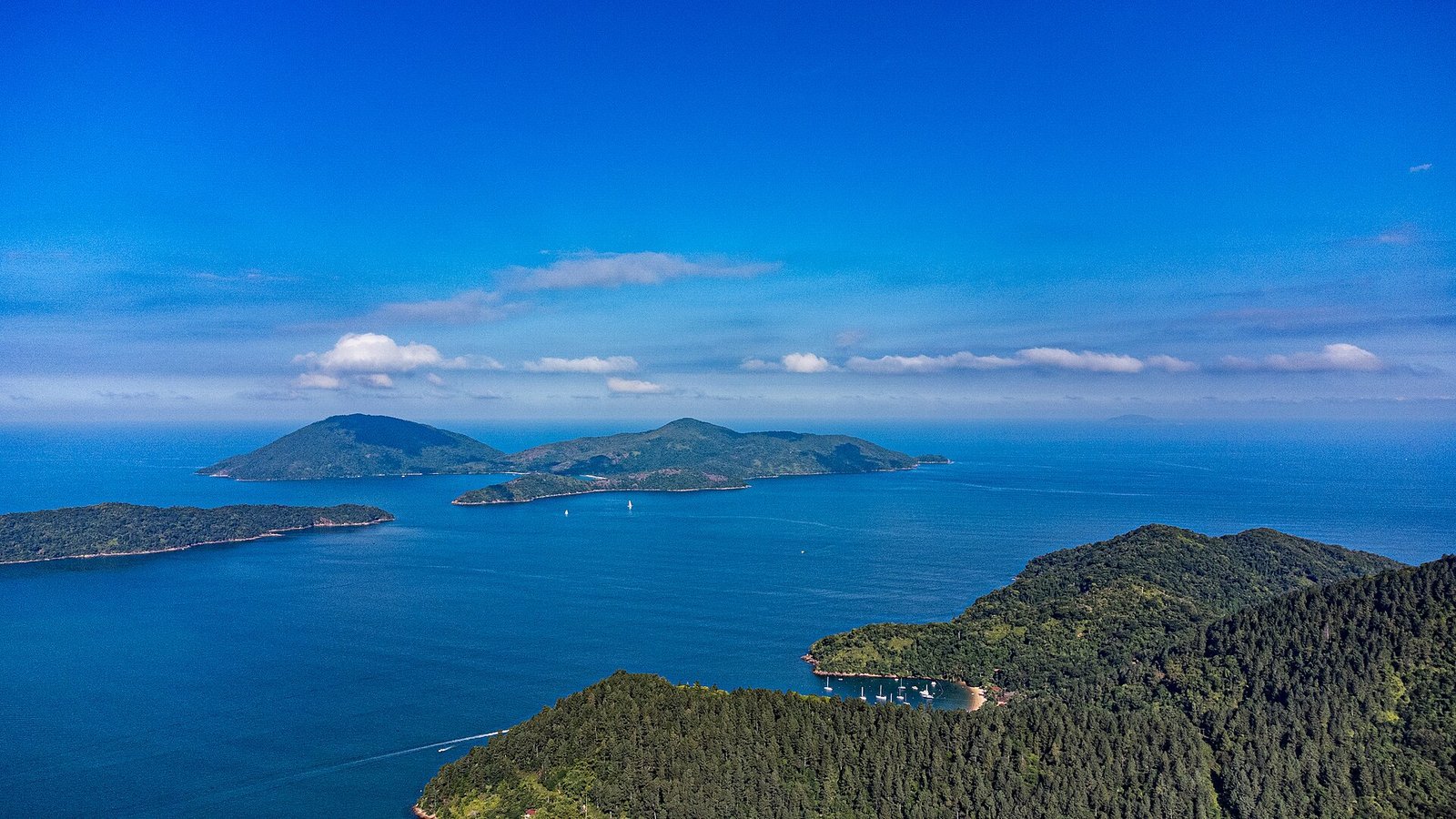
Ubatuba is the northernmost town on the São Paulo coast, right on the state line with Paraty in Rio de Janeiro. The town hall counts 102 beaches, there are more than 20 islands offshore, and the Atlantic Forest runs from the mountain ridge straight down to the sand: roughly four fifths of the municipality sits inside the Serra do Mar State Park. This Ubatuba travel guide is built around one simple idea. You don’t come here for a single famous beach. You come for the variety: a surf break at Itamambuca, glassy water at Félix, Domingas Dias or Fortaleza, a fishing village at Picinguaba with boats to the clear water of Ilha das Couves, a day among the ruins of an old island prison on Ilha Anchieta, sea turtles at Projeto Tamar, a bowl of azul-marinho, the local fish and green-banana stew, and at least one trail to a beach with no road. Night owls stay in the centre, around Itaguá and Praia Grande. People who want forest and quiet go north. Families looking for calm water usually pick the south, from Lázaro to Lagoinha.
Everything below was checked in October 2026 against official sources: the town hall, the municipal tourism portal, the São Paulo Forestry Foundation (Fundação Florestal), Projeto Tamar, the decree that sets the environmental car fee, and the websites of the hotels themselves. You’ll find the history, from the Tupinambá people to the 1563 Peace of Iperoig, a breakdown of the town by area so you can choose a base, the rain (there is a lot of it) month by month, routes from São Paulo, Rio and the Paraíba Valley, which sights charge admission and how much, itineraries from two to five days, safety and environmental rules, and ten places to stay with official websites. Where two sources disagree, we say so in the text.
Quick summary: Ubatuba (São Paulo, Brazil)
- Where it is: the north coast of São Paulo state, on the border with Paraty (Rio de Janeiro). It also borders Caraguatatuba, Cunha, São Luiz do Paraitinga and Natividade da Serra. The Tropic of Capricorn crosses the town in front of the airport runway.
- Size: 708 km², 92,981 residents in the 2022 census, 102 beaches by the town hall’s count and more than 20 islands. The town calls itself Brazil’s “Surf Capital”.
- Protected areas: the Picinguaba section of Serra do Mar State Park in the north and Ilha Anchieta State Park in the south. Both charge admission: R$37 at the general rate, R$28 for Mercosur citizens and R$19 for Brazilians, under the Fundação Florestal price table.
- Getting there: from São Paulo, take the Tamoios highway down to Caraguatatuba and then the coastal BR-101 (Rio-Santos) north, or the Dutra highway to Taubaté and the Oswaldo Cruz road. From Rio, drive the Rio-Santos via Paraty. Pássaro Marron buses leave São Paulo’s Tietê terminal eight times a day, and the ride takes about five hours.
- Car fee: out-of-town vehicles pay an Environmental Preservation Fee (TPA), read by plate cameras at the town limits. In 2026 it costs R$13.86 a day for a car and R$3.72 for a motorbike. Stays of under four hours are exempt.
- When to go: April to September brings less rain and clearer water. December to March is high season: hot, crowded and wet in the afternoons. There is no real dry season, which is why Brazilians joke about “Ubachuva”, roughly “Uba-rain”.
- How long: three days covers the centre, one northern beach and one southern beach. Five days lets you add Ilha Anchieta, Picinguaba with Ilha das Couves, and a long coastal trail.
- Don’t forget: strong insect repellent for the biting borrachudo flies, shoes you can hike in, small cash for boatmen and beach kiosks, and patience with BR-101 traffic on holiday weekends.
A short history of Ubatuba: from the Tupinambá to the Rio-Santos highway
Short answer: Ubatuba was Tupinambá land and the stage for the Tamoio Confederation and the Peace of Iperoig, negotiated by the Jesuits Manuel da Nóbrega and José de Anchieta in 1563. It became a town in 1637, lived off sugar and then off the coffee of the Paraíba Valley, which was shipped from its port, spent some sixty years almost cut off after the railway reached Santos, and only started growing again with the roads of the 20th century, above all the Rio-Santos highway in the 1970s.
You don’t need to be a history buff to enjoy Ubatuba, but the past explains a lot of what you’ll see: the caiçara fishing villages in the north, the big merchant house by the old port, the prison ruins on Ilha Anchieta, even the street names. Here it is in order.
The Tupinambá and the name Ubatuba
Before the Portuguese arrived, the whole stretch of coast between the Juqueriquerê river, in today’s Caraguatatuba, and Cabo de São Tomé, in northern Rio state, was Tupinambá territory. The great chief of the region in the 16th century was Cunhambebe, mentioned by the German gunner Hans Staden, who was held prisoner by the Tupinambá and wrote about a village he called “Uwatibi”. The most widely accepted meaning of Ubatuba, according to the Tupi scholar Eduardo Navarro, is “a gathering of river canes”, a reference to the reeds that grew along the riverbanks. Iperoig, the name of the village where the town centre stands today, means “river of sharks”.
The Tamoio Confederation
Between about 1554 and 1567, the Tupinambá of the coast between São Vicente and Rio de Janeiro joined forces against the Portuguese, who were seizing Indigenous people as slave labour for the sugar mills. The alliance went down in history as the Confederação dos Tamoios. The French of France Antarctique, the colony that Villegaignon had set up in Guanabara Bay, supplied the Tamoios with weapons. For the settlers of São Vicente the situation was desperate: constant raids and a real risk of losing the captaincy altogether.
Nóbrega, Anchieta and the Peace of Iperoig
On 18 April 1563 the Jesuits Manuel da Nóbrega and José de Anchieta left São Vicente for enemy territory. They reached Iperoig on 6 May and negotiated with the chiefs Cunhambebe (the son of the chief Staden wrote about) and Pindobuçu. When Nóbrega went back to São Vicente to take the terms to the Portuguese, Anchieta stayed behind in Iperoig as a hostage for about four months. The town’s best-loved story comes from those months: Anchieta is said to have composed his long “Poem to the Virgin” by writing the verses in the sand of the beach, today’s Praia do Cruzeiro according to the town hall, and committing them to memory.
The town hall dates the agreement to 14 September 1563 and calls it “the first peace treaty in the Americas”. The peace did not last. Part of the Tamoios, led by Aimberê, kept fighting alongside the French, and the confederation was defeated at the battle of Uruçumirim, in Rio de Janeiro, in 1567. After that, the Indigenous population of the coast was devastated by war, epidemics and enslavement. Ilha Anchieta, in the south of the municipality, is named after the Jesuit.
The town, sugar and a quarrel with Santos
Ubatuba became a vila, a chartered town, on 28 October 1637, under the long name Vila Nova da Exaltação à Santa Cruz do Salvador de Ubatuba. Its founder was Jordão Homem Albernaz da Costa, and 28 October is still the town’s anniversary. By the late 18th century, local mills were producing sugar and cachaça and the port was getting busy. Then came a blow: a decree by the governor, Bernardo José de Lorena, forced the captaincy’s trade to go through the port of Santos. Sources disagree on the year (1787 or 1789) but agree on the effect: Ubatuba went into decline. It only recovered when Brazil’s ports were opened to friendly nations in 1808.
Coffee and the Sobradão do Porto
The 19th century was Ubatuba’s heyday. Coffee from the Paraíba Valley came down the mountains on mule trains along the Taubaté road and was loaded onto ships in Ubatuba. According to Wikipedia, the municipality was at one point the top tax earner in the province of São Paulo. It was made a city in 1855 and the seat of a judicial district in 1872, when it had 7,565 residents.
The symbol of that era still stands in the centre: the Sobradão do Porto, at Praça Anchieta 38. According to Fundart, the town’s cultural foundation, the two-storey mansion was built in 1846 by Manoel Baltazar da Cunha Fortes. The ground floor was a warehouse for coffee and other goods, and the family lived upstairs. From 1926 it became the Hotel Budapest. It was listed by SPHAN (today’s IPHAN, the national heritage institute) in 1959 and also by the São Paulo state heritage council, and from 1987 it housed Fundart. It has been closed for restoration since 2018, so you can admire the façade but not go inside.
Sixty years of isolation
The boom ended abruptly. The Santos–Jundiaí railway, opened in 1867, began carrying inland coffee straight to Santos, and the plantations themselves moved west. Ubatuba’s port emptied. Between 1870 and 1932 the town was almost cut off, linked to the rest of the state only by trails and by sea. By 1940 it had just 3,227 residents, fewer than half its population in the 1870s. That isolation helped preserve caiçara culture: communities of fishermen and smallholders who lived off cassava plots, canoe fishing and trading with their neighbours.
The roads and the Rio-Santos
Reconnection came over the mountains. The road to Taubaté opened on 21 April 1933, according to Wikipedia, thanks to Mariano Montesanti, and later became the Oswaldo Cruz highway (SP-125). In the early 1950s a road to Caraguatatuba was opened. Ubatuba was also designated an official seaside resort town, though Wikipedia gives the year as 1948 and the town hall as 1967.
The real turning point was the Rio-Santos highway (BR-101). There is no single opening date: the Ubatuba town hall says 1975, the Paraty literary festival organisation records the Paraty stretch opening in 1974, and technical reporting from the period says the road was handed over in sections between 1973 and 1975 without an official ceremony. Either way, in the 1970s asphalt reached the northern beaches, villages that had only been accessible by boat or trail started receiving tourists, and the subdivisions and gated communities that now line much of the shore began to appear. The 49.1 km stretch between Ubatuba and the Rio state line is officially called the Governador Mário Covas highway.
The parks and Ilha Anchieta
The property boom ran into the creation of protected areas. Serra do Mar State Park was created in 1977, and its Picinguaba section took in the part of Ubatuba between the mountains and the sea, including beaches and traditional communities. Ilha Anchieta State Park was created the same year. The island had held a prison from 1908 to 1955. On 20 June 1952 an inmate uprising, remembered as the “escape from Brazil’s Alcatraz”, left prisoners and staff dead and was, according to Wikipedia, one of the worst in the history of the Brazilian prison system. The episode weighed on the decision to close the prison. Today its ruins are the park’s main historic attraction.
Where to stay in Ubatuba: north, centre or south
Short answer: choose the north (Itamambuca, Félix, Prumirim, Almada, Picinguaba) for surf, forest and beaches with fewer buildings; the centre (Itaguá, Iperoig, Praia Grande, Toninhas) for restaurants, nightlife and having everything close without a car; and the south (Lázaro, Enseada, Fortaleza, Lagoinha, Maranduba) for calm water, family-friendly infrastructure and easy access to Ilha Anchieta and the coastal trail known as the 7 Beaches Trail.
Ubatuba is long and thin. From the Paraty border to the Caraguatatuba border you drive dozens of kilometres of BR-101, and the tourism portal locates beaches by highway kilometre, counted from the Rio state line: Camburi is at km 1, Picinguaba at km 7, Itamambuca at km 35, Praia Grande at km 54, Lázaro at km 64 and Maranduba at km 76. On a holiday weekend, crossing the town from end to end can take a long time. Choosing the right area saves hours in the car.
The north: surf, caiçara villages and the park
The north runs from Praia Vermelha do Norte up to the Rio border. It is the greenest and least built-up part of town. Itamambuca is the big surf name, hosting national and world championship events according to the tourism portal. Félix has one calm corner and one with waves. Prumirim has an island offshore and a waterfall by the highway. Almada and Picinguaba are fishing villages with flat water. Accommodation is scattered pousadas (small guesthouses), many inside gated communities, and you’ll want a car for almost everything. Evenings are quiet.
The centre: Itaguá, Iperoig and Praia Grande
Urban life is concentrated in the centre. Itaguá has a long seafront with bars and restaurants, the aquarium and a calm beach. Before swimming at the town beaches, check the weekly water-quality bulletin from Cetesb, the state environmental agency. Iperoig, also called Praia do Cruzeiro, is the beach of the historic centre, with the craft fair and the Sobradão do Porto. Praia Grande, at km 54, is the busiest beach in town, with kiosks, surfers and big crowds in summer. Toninhas, just after it, is quieter and has hotels right on the sand. If you’re arriving by bus and don’t plan to rent a car, this is where to stay.
The south: calm water and family infrastructure
The south runs from Lázaro to Maranduba. Lázaro and Sununga sit side by side: the first has good facilities and food, the second is a skimboarding spot with a dripping sea cave called the Gruta que Chora, “the cave that cries”. Saco da Ribeira is the harbour where boats leave for Ilha Anchieta. Enseada has flat water and schooner departures. Fortaleza is calm and good for snorkelling. Lagoinha is the start of the 7 Beaches Trail. Maranduba, Sapê and Lagoinha form one continuous seafront with shops, pharmacies and a petrol station. Further south, Caçandoca is home to the first recognised quilombo, a community descended from people who escaped slavery, on the north coast.
Ubatuba weather and the best time to visit
Short answer: if you want less rain and clearer water, the best time to visit Ubatuba is April to September, especially May to August. Summer, December to March, is hotter and busier but also the wettest time of year. Ubatuba has a humid tropical Atlantic climate with no dry season, around 2,520 mm of rain a year, and a nickname to match: “Ubachuva”.
The reason is the mountains. The Serra do Mar rises almost straight out of the sea, so moist ocean air hits the slopes, climbs, cools and falls as rain. That’s why Ubatuba gets much more rain than the southern São Paulo coast and only about 1,700 hours of sunshine a year. It doesn’t mean your trip will be a washout: very often it pours in the late afternoon and the next morning dawns clear. But plan boat trips and long hikes with some flexibility.
Temperature and rainfall month by month
The figures below are the INMET (Brazil’s national weather institute) climate normals for Ubatuba, as reproduced on Wikipedia. “Rainy days” are days with at least 1 mm of rain.
| Month | Average high (°C) | Average low (°C) | Rain (mm) | Rainy days |
|---|---|---|---|---|
| January | 30.3 | 21.5 | 312.9 | 17 |
| February | 31.0 | 21.5 | 290.5 | 15 |
| March | 29.9 | 20.9 | 311.1 | 16 |
| April | 28.4 | 19.2 | 232.5 | 13 |
| May | 26.1 | 16.3 | 122.9 | 9 |
| June | 25.3 | 14.5 | 94.2 | 7 |
| July | 24.4 | 13.6 | 92.6 | 8 |
| August | 24.9 | 14.3 | 74.4 | 8 |
| September | 24.5 | 16.0 | 196.9 | 13 |
| October | 25.9 | 18.0 | 245.5 | 15 |
| November | 27.5 | 19.2 | 263.6 | 16 |
| December | 29.0 | 20.4 | 280.4 | 17 |
That adds up to 154 rainy days and 2,517.5 mm a year on average, with June to August under 100 mm a month and December to March above 280 mm. The mean annual temperature is 21.9 °C. The records: 40.8 °C on 9 September 1997 and 3.7 °C on 1 June 1979. The heaviest 24-hour rainfall was 344.1 mm, on 22 January 1976.
Season by season
December to March is high season. School holidays, New Year’s Eve and Carnival fill the town, room rates climb and the BR-101 jams on weekends. It is the hottest period and the one with the most rainy days, usually in afternoon downpours. The sea is warm for swimming, though rivers carry more debris into it after storms. April and May are, for many people, the best months: still warm, less rain, and the town empties outside public holidays. June to August is winter: days of 24 to 25 °C, cool nights, and colder but clearer water that is ideal for snorkelling at Ilha Anchieta and Fortaleza. It is also mullet season and the time of the traditional festivals. September to November is spring: the rain gradually returns and crowds build around the October and November holidays.
Festivals and dates that change your trip
The town’s anniversary is 28 October, with events in the centre. June and July bring the Festa de São Pedro Pescador, honouring the patron saint of fishermen, and the Festa do Divino, both with grilled mullet as the star. The Shrimp Festival takes place at Praia da Almada, and the town runs a Food Festival between August and September, according to the tourism portal. At the Quilombo da Fazenda, near Picinguaba, there is a celebration of quilombola culture with traditional food around September, at the Casa da Farinha, the old flour house. Dates change every year, so check the town hall’s events calendar before you book.
How to get to Ubatuba
Short answer: from São Paulo, the usual route is the Ayrton Senna/Carvalho Pinto highway to São José dos Campos, then down the mountains on the Tamoios highway to Caraguatatuba and north along the Rio-Santos (BR-101). The alternative is the Dutra highway to Taubaté and the Oswaldo Cruz road (SP-125), which comes down straight into central Ubatuba. From Rio de Janeiro, drive the Rio-Santos via Angra dos Reis and Paraty. By bus, Pássaro Marron links São Paulo’s Tietê terminal with Ubatuba in about five hours. There are no scheduled commercial flights to the town.
The distance from São Paulo depends on the source and on where in Ubatuba you’re going: Wikipedia gives 223 to 250 km, Projeto Tamar 262 km, and the Fundação Florestal 213 km to Ilha Anchieta and 263 km to Picinguaba. That makes sense once you see a map: the town is so long that its southern and northern ends are more than 50 km apart. Allow four to five hours on a normal day and a lot longer on the eve of a holiday.
By car via the Tamoios highway
The Tamoios (SP-099) links São José dos Campos with Caraguatatuba. In March 2022 the new mountain section, the Serra Nova, opened, with about 22 km of tunnels and viaducts according to the highway concessionaire. Since then the Serra Nova has carried uphill traffic only (towards São José dos Campos), while the old winding road, the Serra Antiga, is used only for going down. In practice that means you still descend the old road on the way to Ubatuba and climb through the tunnels on the way back.
When you reach Caraguatatuba you no longer have to drive through the city. Since December 2023 the Contorno Norte bypass has been open: 8 km of single carriageway and four tunnels, starting around km 82 of the Tamoios and joining the Rio-Santos heading towards Ubatuba. According to the news site G1, the stretch takes around eight minutes, against about thirty through central Caraguatatuba. After that, it’s a few dozen kilometres more on the BR-101 to Ubatuba’s southern beaches, which come first: Maranduba, Lagoinha, Enseada.
This is the best route if you’re staying in the south of Ubatuba. If you’re heading north, the BR-101 crosses the whole town, and in high season traffic through the centre can crawl.
By car via the Oswaldo Cruz road
The Oswaldo Cruz (SP-125) leaves the Dutra highway at Taubaté, passes through the pretty colonial town of São Luiz do Paraitinga and drops down the mountains straight into central Ubatuba. It is the successor to the road Mariano Montesanti opened in 1933. The descent is beautiful and full of bends, cutting through the Atlantic Forest of Serra do Mar State Park. Coming from the Paraíba Valley, from Minas Gerais or from Rio along the Dutra, it is usually the most direct route, and it’s also the better choice if you’re staying in the centre or the north. Drive carefully: fog is common on the mountain section, and after heavy rain there can be temporary closures. Check road conditions on the São Paulo highway department (DER-SP) website before you set off.
By car from Rio de Janeiro
From Rio, the Rio-Santos (BR-101) runs through Itaguaí, Mangaratiba, Angra dos Reis and Paraty before crossing the state line. The São Paulo section begins just after Paraty and enters Ubatuba from the north: Camburi, Picinguaba, Almada. On the São Paulo side, the stretch between the border and Ubatuba is 49.1 km long. It’s a winding single-carriageway road with plenty of speed cameras and sections where the mountains meet the sea. It’s well worth breaking the journey in Paraty, and our Paraty travel guide covers it in detail. If you’re coming from Angra or Ilha Grande, this is your road too.
The Environmental Preservation Fee (TPA)
Out-of-town vehicles pay the TPA to stay in Ubatuba. There are no barriers: cameras read number plates at the town limits and the system works out how many days you owe, according to Eco Ubatuba, the company that runs the collection. The 2026 rates were set by Decree 8,949 of 27 November 2025 and are per day:
| Vehicle | Daily rate in 2026 |
|---|---|
| Motorbike | R$3.72 |
| Car (small) | R$13.86 |
| Utility vehicle (pick-up, Kombi van) | R$20.78 |
| Tour van | R$41.56 |
| Minibus and truck | R$62.87 + tourism council fee |
| Coach | R$98.03 + tourism council fee |
You can buy days in advance on the website or app (unused days don’t expire), use a registered toll tag, which is debited 15 days after you leave, or pay within 30 days of leaving town with no interest or fine. After that, the debt can be passed to the municipality’s collections system. Cars registered in Ubatuba, Ilhabela, São Sebastião, Caraguatatuba, Paraty, Cunha, São Luiz do Paraitinga and Natividade da Serra are exempt automatically, as is anyone who spends less than four hours in town, which covers people just driving through to Paraty. Property owners and residents can apply for an exemption. If you’re in a rental car, ask the rental company how they handle the fee before you drive off, so it doesn’t turn into a surprise charge later.
By bus
Pássaro Marron runs the route between São Paulo’s Tietê bus terminal and Ubatuba bus station. The departures from São Paulo we found in October 2026 were 6:30, 8:30, 10:30, 12:30, 14:30, 16:30, 18:30 and 21:00, with journey times of 4 h 50 to 5 h 20 and fares from about R$131. Those details came from ticket-selling sites (DeÔnibus and Buson), not from the bus company’s own site, and they change on holidays, so double-check with Pássaro Marron before you travel. There are also buses from Taubaté and São José dos Campos in the Paraíba Valley. From Rio, we couldn’t confirm a direct service with up-to-date timetables. Many travellers go from Rio to Paraty and continue from there, but confirm at the bus station before relying on it.
By air
Ubatuba’s Gastão Madeira airport has no scheduled commercial flights. In December 2023 the town hall announced charter flights by Azul Conecta on nine-seat aircraft and estimated the cost at about R$700 per person from São José dos Campos and R$1,400 from São Paulo city. Those figures were estimates at the time, not published fares. For most travellers, the way in is to fly to São Paulo (Guarulhos or Congonhas) or Rio (Galeão or Santos Dumont) and continue by car or bus. International visitors will find the most flights at Guarulhos. If you’re spending a few days in the city first, our São Paulo travel guide will help, and if you’re flying into Rio, see our Rio de Janeiro travel guide.
Getting around Ubatuba
Short answer: a car is by far the easiest way to get around Ubatuba, because the beaches are spread over dozens of kilometres of BR-101 and many sit at the end of dirt roads or inside gated communities. Without a car you can base yourself in the centre and use local buses, taxis and boats, but trips to the far north and south need planning.
Car
With a car you can build your day however you like: Itamambuca in the morning, lunch at Almada, sunset at Picinguaba. Keep three things in mind. First, the BR-101 jams on holidays and summer weekends, especially in the centre and at the turn-offs to the famous beaches, so start early. Second, several beaches lie inside gated communities with a guardhouse. Beach access in Brazil is public by law, but parking can be limited or paid. At Félix, for example, you enter through the community gate, according to the tourism portal. Third, remember the TPA: every day in town adds a daily charge.
Local buses
Ubatuba has bus routes from the central area to neighbourhoods and beaches in the north and south. The tourism portal mentions buses to Almada and Camburi, for example. Timetables change with the season, so confirm at the terminal or with the operator before heading out. For beaches that need a trail or a boat, the bus only solves the first part of the journey.
Boats and schooners
Some of the best experiences here happen on the water. Boats and schooners (escunas, the wooden tour boats you’ll see everywhere) leave from Saco da Ribeira in the south for Ilha Anchieta. From Praia de Picinguaba in the north, small boats cross to Ilha das Couves in about 15 minutes. Schooners also leave from Enseada and Itaguá. Always use registered operators, ask for a life jacket and agree the return time before you board. For Ilha das Couves, only operators accredited with the North Coast Marine Environmental Protection Area (APAMLN) are allowed to land visitors.
On foot and by bike
Within each area, a lot can be done on foot. The seafront from Itaguá to the centre is flat. In the south, Lázaro, Sununga and Domingas Dias are close together. In the north, trails link neighbouring beaches, such as Almada and Brava da Almada. Bikes work well along the seafronts, but much of the BR-101 has no safe shoulder. Avoid cycling on the highway.
Rules, fees and tickets: what to know before you go
Short answer: in Ubatuba you pay the TPA if you’re driving an out-of-town car; admission of R$19 (Brazilians) to R$37 (general rate, which applies to most foreign visitors) for the trails and sights of the Picinguaba section and Ilha Anchieta State Park; plus entry to Projeto Tamar (R$44) and the aquarium (R$70). Ilha das Couves is capped at 177 people at any one time and only accepts visitors brought by accredited operators.
Fees and tickets at a glance
| Attraction | Price | Notes |
|---|---|---|
| TPA (out-of-town car) | R$13.86 per day | Decree 8,949/2025; exempt if you stay under 4 hours |
| Serra do Mar State Park, Picinguaba section | R$37 general / R$28 Mercosur / R$19 Brazilians | Fundação Florestal price table; children up to 12 go free |
| Ilha Anchieta State Park | R$37 general / R$28 Mercosur / R$19 Brazilians | Same table; the boat is paid separately |
| Projeto Tamar | R$44 full / R$22 concession / R$110 family | Thursday to Tuesday, 9:00 to 17:00 |
| Ubatuba Aquarium | R$70 full / R$35 concession | Daily, 9:00 to 22:00; family packages from R$150 to R$220 |
| Schooner to Ilha Anchieta | from R$109 | Price published by one operator in Enseada; park admission not included |
Park prices follow the Fundação Florestal ticket table, which is calculated in UFESP (a state reference unit) and can change every year. The schooner trip is an example of a published price: there are many operators with different routes and rates. “Concession” prices (meia-entrada) are generally for Brazilian students, seniors and other groups defined by law, so most foreign adults should expect to pay the full price.
The Picinguaba section of Serra do Mar State Park
Núcleo Picinguaba is the part of Serra do Mar State Park that reaches the sea. It covers 47,500 hectares, about 80% of the municipality, according to the state’s Protected Areas Guide. It protects five beaches (Brava da Almada, Fazenda, Picinguaba, Camburi and Brava do Camburi) and coexists with traditional communities: Vila de Picinguaba, Camburi, Sertão da Fazenda and Sertão do Ubatumirim. The headquarters is on the BR-101 at km 8. It’s open daily from 8:00 to 17:00, and trails should be booked in advance. Inside the park, smoking, leaving litter, bringing pets, drinking alcohol and lighting fires are all prohibited.
Ilha Anchieta State Park
Ilha Anchieta covers 828 hectares and is the second-largest island on the São Paulo north coast. It has 17 km of rocky shoreline and seven beaches, with monkeys, coatis, turtles and groupers. The park’s mainland base is at Avenida Plínio de França 85, in Saco da Ribeira. There’s a discrepancy here: the Protected Areas Guide lists opening hours as Thursday to Tuesday, 8:00 to 17:00, while Green Haven, the concessionaire that runs visits and a lodge on the island, says 9:00 to 17:00, closed on Wednesdays. Under Green Haven’s terms, Wednesday is closed to anyone not staying on the island, but in December, January, February and on long holiday weekends the park opens every day until 18:00. If in doubt, avoid Wednesdays.
Ilha das Couves
Ilha das Couves sits in the north, opposite Picinguaba, and is part of the North Coast Marine Environmental Protection Area. It’s one of the most sought-after islands in town because of its clear water. To prevent overcrowding, Fundação Florestal Ordinance 443/2024 caps the land capacity at 177 people at once and splits the day into shifts. In the morning, from 8:00 to 12:00, transport is reserved for operators from the traditional community of Picinguaba and the surrounding area. In the midday shift, places are split between schooners from the centre and Itaguá (50) and Picinguaba operators (127). The island is a listed heritage site. The Fundação Florestal guidelines, published by the town hall, are blunt: take your rubbish back to the mainland, go with a registered operator, swim only in the marked bathing areas, don’t bring pets or speakers, don’t climb or walk on the rocks, don’t take stones, plants or shells, and don’t feed the animals.
Some travel sites mention a landing fee of about R$10. We couldn’t find that charge in any official source, so we won’t state it as fact. Ask your operator what the price includes.
Environmental rules for the whole town
Ubatuba lives off its nature, and much of it is protected by law. Don’t take shells, coral, starfish or plants. Don’t feed monkeys, coatis or fish. Don’t play loud music on trail beaches. Take your rubbish home, cigarette butts and food scraps included. At waterfalls, don’t put on sunscreen or repellent just before getting in. Respect bird nesting areas and restriction signs. And never park on the sand or on the restinga, the low coastal scrub locals call jundu, which holds the beaches in place.
Things to do in Ubatuba: beaches, islands and tours
Short answer: the essentials in Ubatuba are picking two or three beaches with different personalities (one for surf, one with calm water, one you reach on foot), taking a boat to Ilha Anchieta or Ilha das Couves, visiting Picinguaba and Almada in the north, seeing Projeto Tamar and the aquarium in the centre, and swimming under the Prumirim waterfall. Below, each sight with how to get there and what to expect, from north to south.
Northern beaches
The north is where Ubatuba still looks like it did before the Rio-Santos highway. Beaches sit at the end of small roads off the BR-101, many with no kiosks, several inside the Picinguaba section of the state park. Go with time to spare and no rush to get back.
Picinguaba
Picinguaba is a fishing village inside Serra do Mar State Park, about 4 km off the BR-101 (turn-off at km 7.3). The tourism portal describes a small beach with a narrow strip of sand, calm water and lots of boats moored along the shore. This is where boats leave for Ilha das Couves, a crossing of about 15 minutes. According to Pousada Picinguaba, the name means “refuge of the fish” in Tupi. Have fish for lunch in the village and, if the sea is flat, take a boat across in the late morning.
Praia da Fazenda and the Fazenda river
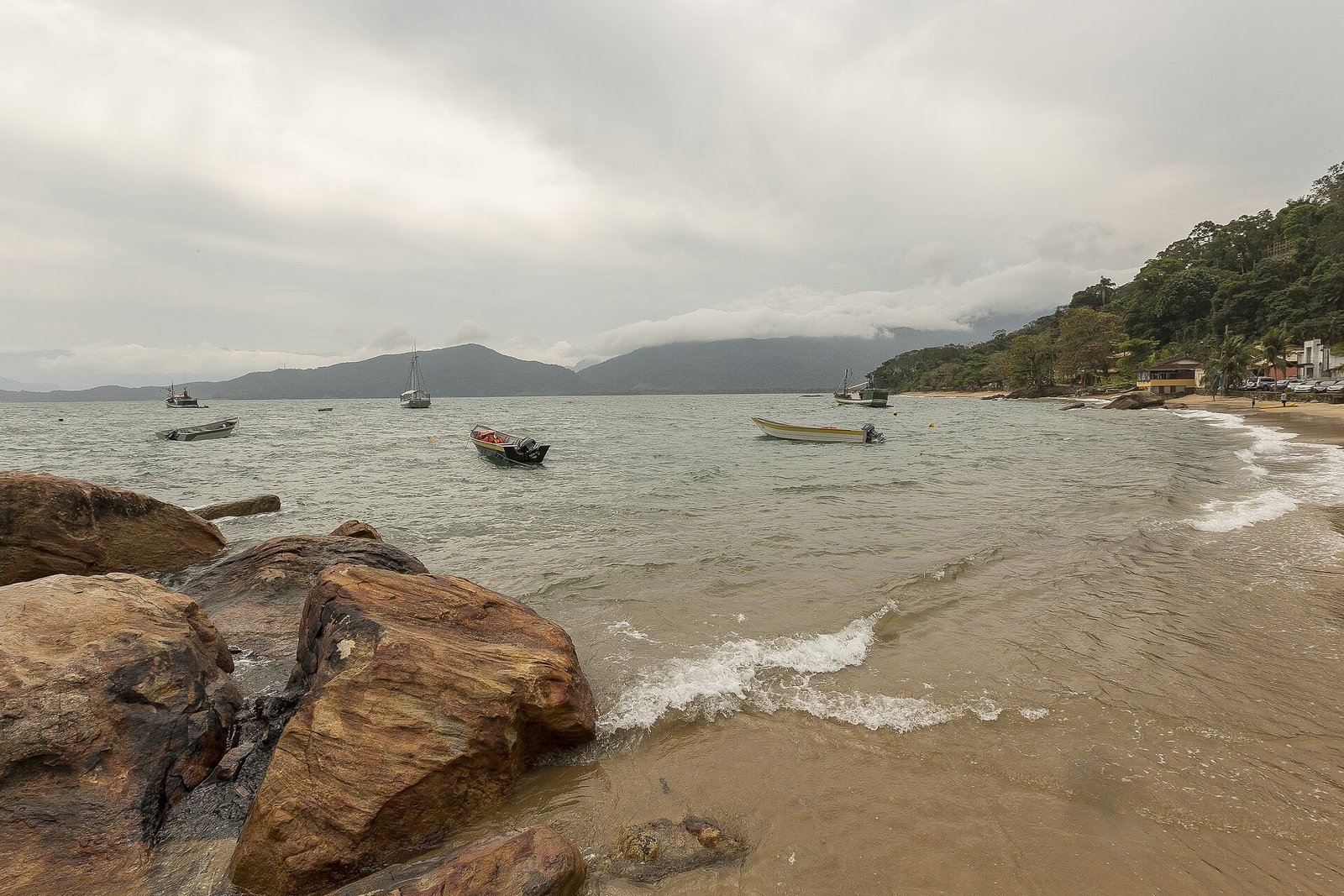
Praia da Fazenda lies just before Picinguaba, at the km 11 exit of the BR-101, after about 800 metres of dirt road to the Picinguaba park headquarters. It’s a wide beach of firm sand and lively surf, with no kiosk, guesthouse or restaurant. In the right-hand corner there’s a freshwater spout. In the left-hand corner, the Fazenda river meets the sea. The park runs a rowing-boat trip up the river, through mangrove and restinga, with a compulsory guide: 3 to 4 km and an hour and a half to two hours, according to the Protected Areas Guide. The Jatobá Trail, also with a guide, starts at the Casa de Farinha, an old cassava mill in Sertão da Fazenda, passes juçara palms and centuries-old jatobá trees and ends at a river pool. It’s 1 to 2 km and rated easy.
Camburi and the Escada waterfall
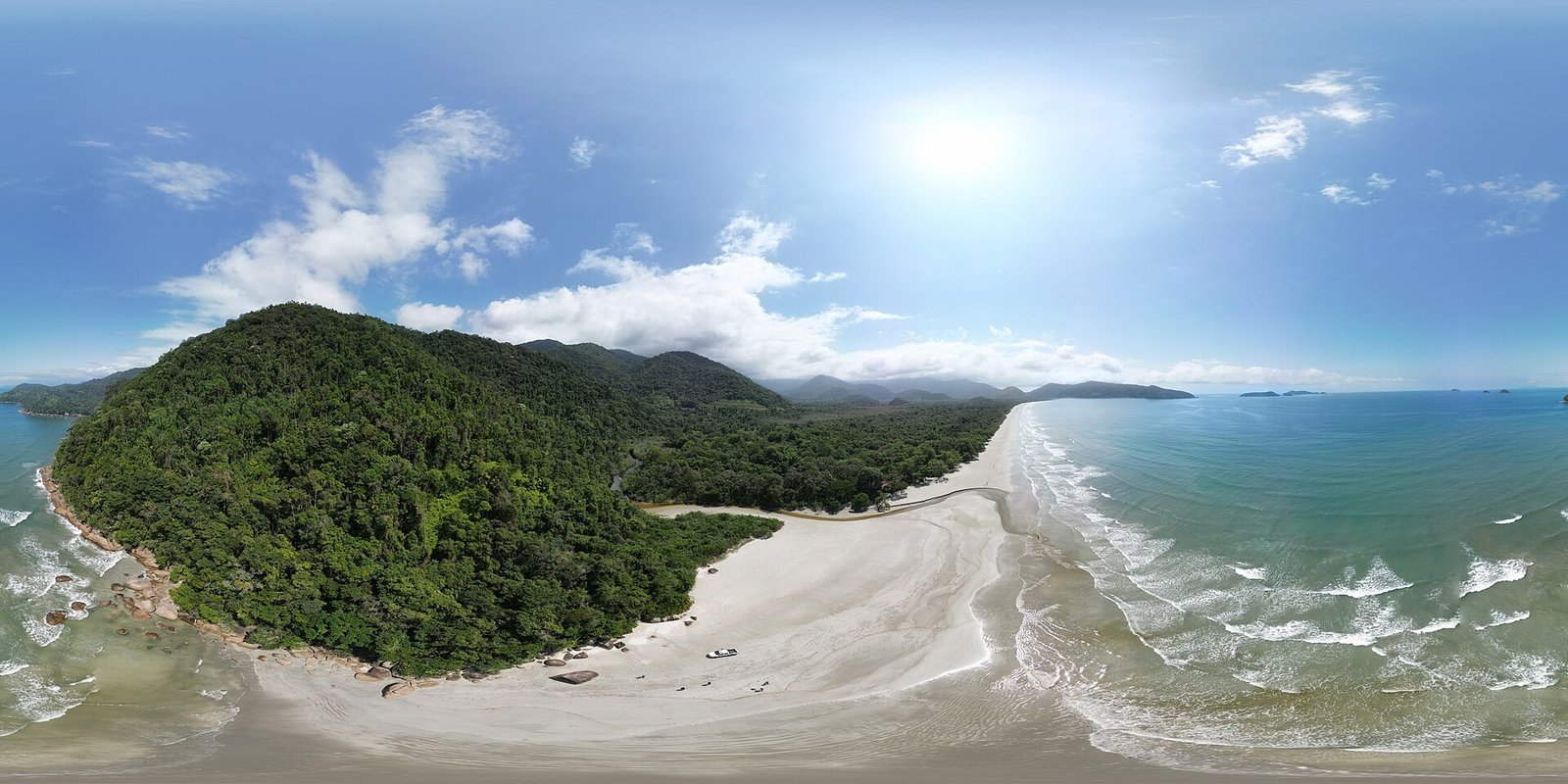
Camburi is the first São Paulo beach if you’re coming from Rio: the turn-off is at km 1.1 of the BR-101, followed by 7 km of side road. The tourism portal describes a wide beach with clear, usually calm water, a traditional community and good facilities for visitors. There’s a regular bus from the bus station. Nearby is the Escada waterfall trail, short (up to 1 km) but rated difficult, with a compulsory guide and hours from 8:00 to 14:00, according to the Protected Areas Guide. The park also lists trails linked to the Camburi quilombo and the Camburi–Trindade crossing, which takes you on foot to Paraty.
Almada
Almada is a small beach with fine sand and clear, calm water. It’s 7 km off the BR-101 (turn-off at km 13.1), and on the way you get a view of Ubatumirim bay. Because it faces west, it gets the light until late, according to the tourism portal, which makes it one of the best spots for sunset. The kiosks serve full meals. There’s parking and a regular intercity bus line. In high season it gets very full. It’s also where the Shrimp Festival is held.
Puruba
Puruba is a steep beach with about 1.5 km of soft sand, a shoreline shaded by abricó-da-praia trees, and the meeting point of the Quiririm and Puruba rivers. The turn-off is at km 24 of the BR-101, followed by 2 km to the village. The detail that makes the trip: you have to cross the river to reach the sand, and on holidays and in high season boatmen ferry people across. Facilities are minimal: a stall selling drinks and pastéis (fried pastries), two guesthouses, two campsites and a simple restaurant, all open only in season.
Prumirim and its waterfall
Prumirim has 1.2 km of sand, a steep shore break, rocky headlands and a lagoon in the left-hand corner. Next to it is Canto Itaipu, where boats leave for Ilha do Prumirim. Access is at km 29.4 of the BR-101. The Prumirim waterfall, by the highway, lies in the Boa Vista Guarani village, according to the website of Hotel Ponta das Toninhas, which describes three drops and pools, one with a natural rock slide. Bring small cash, respect the village’s rules, skip sunscreen before getting in the water and take your rubbish with you.
Itamambuca
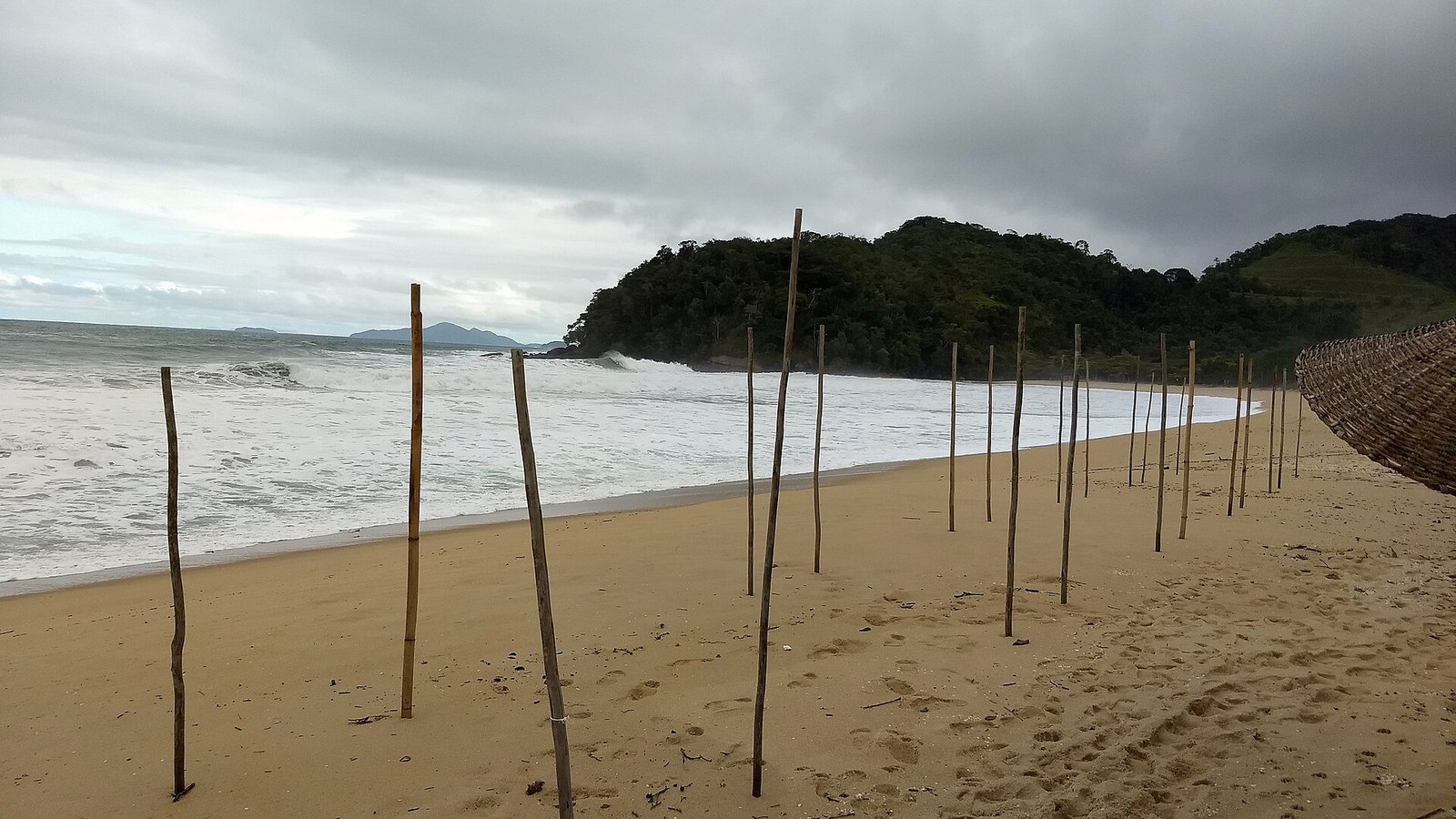
Itamambuca is Ubatuba’s surf beach. The tourism portal says it hosts major national and world championships and has powerful swell. The sand is white and soft, backed by coastal scrub. In the right-hand corner is the mouth of the Itamambuca river, good for children. In the left-hand corner, a demanding trail of about 40 minutes leads to Praia Brava de Itamambuca, which has no facilities at all. Kiosks line the beach from the middle to the right, and the village and gated community have restaurants, pizzerias, bakeries and supermarkets.
Félix
Félix has about 1.5 km of white sand. The right side has calm water and is where families gather. From the middle to the left the sea gets rougher and sometimes there’s a wave to surf. Access is at km 39.9 of the BR-101, through the gate of a gated community which, according to the tourism portal, is always open to visitors. It’s 1.5 km of paved road and a five-minute walk to the sand. There are stalls for drinks and snacks plus a few guesthouses and restaurants.
Vermelha do Norte
Vermelha do Norte, right by the BR-101 at km 41, has 1.2 km of soft sand and plenty of waves. It’s another well-known surf spot and popular for fishing from the rocks. It has kiosks, a well-known nightclub and a small water park.
Beaches in the centre
The centre doesn’t have the town’s prettiest beaches, but everything is close and most of the nightlife is here.
Iperoig (Cruzeiro) and Itaguá
Praia do Iperoig, also called Cruzeiro, is the beach of the historic centre. The tourism portal says it’s more for strolling than swimming. It has the craft fair, a shopping centre, a funfair, a concert area, a skate park and lots of restaurants. Itaguá continues the seafront south, with bars, the aquarium and schooner departures. Both are pleasant for an evening walk.
Praia Grande and Toninhas
Praia Grande, at km 54, is Ubatuba’s most visited beach, with about 1.6 km of fine sand, kiosks all along the shore and plenty of beach vendors. Its corners (Rock Point on the right, Baguari on the left) get good waves. Toninhas, at km 56, has 1.2 km of white sand. The left-hand corner, another Rock Point, belongs to the surfers. The right side, with calmer water, is better for swimming. The seafront is built up, with hotels and restaurants.
Southern beaches
The south has the sheltered coves with flat water, the schooners and the best beach-to-beach trails.
Lázaro, Sununga and Domingas Dias
Lázaro, at km 64, has pale sand, clear water and forested headlands. The tourism portal calls it the tourist hub of southern Ubatuba, with plenty of places to stay and eat. About 200 metres along from its left-hand corner is Sununga, internationally known for skimboarding, with the Gruta que Chora, a sea cave where water drips constantly, in its right-hand corner. A short trail also leaves from the left end of Lázaro to Domingas Dias, which you can also reach through the Pedra Verde gated community. It’s about 400 metres of sand with calm, clear water and forest all around. There are no facilities at all, so bring water and a snack.
Sete Fontes
Praia das Sete Fontes has around 900 metres of white sand, a steep shore break and a view of Ilha do Mar Virado. There are fishermen’s huts along the shore and kiosks in season. You get there by a 15-minute trail, short but very steep, which climbs from the middle of Praia do Flamengo.
Enseada and Saco da Ribeira
Enseada, at km 58, is one of the most popular beaches: firm sand, calm water, lots of holiday homes, kiosks and restaurants. Schooners leave from here for Ilha Anchieta. Next door, Saco da Ribeira is the town’s harbour, home to the Ilha Anchieta State Park base and most of the boats.
Fortaleza and Cedro
Fortaleza is a sheltered cove. Its left-hand corner, according to the tourism portal, has a wide variety of fish, turtles and starfish, making it one of the best places for snorkelling straight from the shore. Tradition says pirates and privateers once sheltered here. Today it has a fishing community, guesthouses and restaurants. Access is via the Praia Dura turn-off at km 68, then 7 km of paved road. Cedro is a deserted beach of white sand and lots of rocks, where locals farm mussels. You reach it on a trail of about 40 minutes from the left end of Praia Grande do Bonete, or by another trail from the right end of Fortaleza. The portal recommends going with a local guide.
Lagoinha and the 7 Beaches Trail
Lagoinha, at km 73, has about 3 km of sand running into Praia do Sapê, with hotels, restaurants, shops and pharmacies. On the northern headland you’ll find the crystal-clear Lagoinha river and the start of the trail that passes the beaches of Oeste, Peres, Bonete and Grande do Bonete on the way to Fortaleza. Many people call it the 7 Beaches Trail. Start early, carry plenty of water and arrange your return (by boat or car) before you set out.
Caçandoca
Caçandoca, 6 km down a dirt and gravel road from km 77 of the BR-101, lies within an area recognised as the first quilombo on the north coast, according to the tourism portal. Quilombola culture is part of everyday life here. There are kiosks, camping and holiday homes. In the right-hand corner, a stream marks the start of a historic trail to Caçandoquinha, Raposa and Saco das Bananas.
Ilha Anchieta
Ilha Anchieta is the most complete day out in Ubatuba. Boats leave from Saco da Ribeira and Enseada. One Enseada operator advertised a daily schooner trip of about five hours from R$109 per person, park admission not included. On the island you visit the ruins of the prison, which operated until 1955, and choose between the beaches. Praia das Palmas, almost 1 km long, is the island’s biggest beach and the best for swimming, according to Green Haven. You reach it on a 500-metre, ten-minute self-guided trail, or along the path from Praia do Sapateiro. The Praia do Sul trail is 2.2 km there and back, moderate, takes two hours and requires a guide. It’s limited to 149 people a day and must be booked two to seven days in advance. Praia do Leste can only be reached by boat. You can rent snorkelling gear in the park, and Green Haven also runs the only lodging on the island. For tickets, the number given on its website is +55 12 99649-2171.
Ilha das Couves
Ilha das Couves is famous for its clear water. It has two beaches. Prainha das Couves, according to the tourism portal, is a small strip of white sand surrounded by forest and rocks, with calm water that is good for snorkelling. A trail links it to Praia do Japonês. Visits are controlled: a maximum of 177 people at once, only with accredited operators, in shifts. In practice, if you leave Picinguaba early you’ll find the island emptier. In the midday shift, the ordinance allows 50 extra landings for customers of the island’s only restaurant.
Projeto Tamar
Projeto Tamar’s visitor centre in Ubatuba has been open since 1991 and is the sea turtle project’s only base in São Paulo state. It’s at Rua Antonio Atanázio 273, in Jardim Paula Nobre, close to the centre, and receives around 140,000 visitors a year on average. It has six sea turtle tanks, six enclosures with land and freshwater turtles, an enclosure for albino turtles and a main tank with an artificial beach and a panoramic viewing window, plus a caiçara museum. It’s open Thursday to Tuesday, 9:00 to 17:00. Tickets cost R$44 (full), R$22 (concession) and R$110 (family pass for two adults and two children). Children up to 5 go free. There are also programmes such as “Biologist for a Day” for small groups.
Ubatuba Aquarium
The aquarium is at Rua Guarani 859, in Itaguá. It has 26 tanks, 600 animals and more than 125 species, according to the aquarium itself. It’s open every day from 9:00 to 22:00, which makes it a good option on a rainy day or in the evening. Full price is R$70 and concession R$35. Children up to 3 go free, and family packages cost R$150 to R$220. Flash photography and tapping on the glass are not allowed.
The historic centre and the Sobradão do Porto
In the centre, stroll around Praça Anchieta, home to the 1846 Sobradão do Porto, and Praça do Cruzeiro, where the town hall marks the spot linked to the Peace of Iperoig. The Sobradão has been closed for restoration since 2018, but the façade is worth the stop. On Sundays and in high season, the craft fair along the Cruzeiro seafront gets busy.
Trails and waterfalls
Ubatuba has dozens of trails, from ten minutes to a full day. Those in the Picinguaba section require booking and a guide, and the Protected Areas Guide lists the hours and difficulty of each. Good starters: Domingas Dias (short, from Lázaro), Sete Fontes (short and steep), Itamambuca to Brava de Itamambuca (40 minutes, demanding) and the sequence from Lagoinha to Fortaleza (half a day). For waterfalls, Prumirim is the easiest, right by the road, and the Escada waterfall is at Camburi. After heavy rain, stay away from rivers and waterfalls: water levels rise very fast in the mountains.
What to eat in Ubatuba: azul-marinho and caiçara cooking
Short answer: the dish to try in Ubatuba is azul-marinho, a fish stew with green bananas that, according to the town’s tourism department, turns bluish from the tannins in the banana skin when it’s cooked in an iron pot. In winter the star is mullet (tainha). All year round you’ll find stuffed crab shells, moquecas (seafood stews), grilled grouper, arroz lambe-lambe (rice cooked with shellfish) and fried taioba fritters made from a local leafy green.
Caiçara cooking blends Indigenous, African, Portuguese and Spanish heritage, according to the tourism portal. Azul-marinho has Indigenous roots, and cooked green banana tastes more like cassava than fruit. A municipal law declared it part of the town’s historic and cultural heritage, as the local newspaper O Guaru reported in 2004. In winter, mullet migrate along the coast, and tradition calls for grilling them “sobrepau”, on green guava branches over the embers. Mullet is the centrepiece of the Festa de São Pedro Pescador and the Festa do Divino, along with consertada, a traditional caiçara drink, and coffee sweetened with sugarcane molasses. Juçara, the fruit of an Atlantic Forest palm, is served in bowls like açaí in many cafés.
For a good meal, the kiosks at Almada, Félix, Fortaleza and Lázaro serve fish and seafood facing the sand. The villages of Picinguaba and Camburi have simple restaurants with the catch of the day. In the centre, the Itaguá seafront has the most bars and restaurants for the evening. We don’t list meal prices because they vary a lot by season and there’s no up-to-date official source.
How much does a trip to Ubatuba cost?
Short answer: the fixed costs you can pin down precisely are the TPA car fee (R$13.86 a day for an out-of-town car in 2026), park admission (R$37 at the general rate that applies to most foreign visitors, R$19 for Brazilians), Projeto Tamar (R$44), the aquarium (R$70), the schooner trip to Ilha Anchieta (from about R$109 per person with one operator) and the bus from São Paulo (from about R$131 each way). Accommodation and food vary a lot with the season: in summer and on holidays, expect room rates well above what you’d pay in May or August.
Sample sightseeing costs for two people over 3 days, by car
| Item | Calculation | Total |
|---|---|---|
| TPA, car, 3 days | 3 × R$13.86 | R$41.58 |
| Projeto Tamar | 2 × R$44 | R$88 |
| Ubatuba Aquarium | 2 × R$70 | R$140 |
| Schooner to Ilha Anchieta | 2 × R$109 | R$218 |
| Ilha Anchieta State Park admission (general rate) | 2 × R$37 | R$74 |
| Total for sightseeing | R$561.58 |
Prices were checked in October 2026 and exclude accommodation, fuel, food and the boat to Ilha das Couves, whose price depends on the operator and group size. Brazilian residents pay R$19 for park admission instead of R$37. For a real accommodation benchmark: Nacional Inn Ubatuba, a beachfront hotel in Toninhas, showed a flexible rate from R$565 with breakfast when we checked its website. Simple pousadas cost less; resorts and boutique guesthouses, more.
How to save money
- Travel outside December to March and away from long holiday weekends. April, May, August and September tend to have lower rates and emptier beaches.
- Pick the right area and drive less: every crossing of town in high season costs time and fuel.
- Buy TPA days in advance or pay within 30 days of leaving, so there’s no interest. If you’re only passing through, leave within four hours and you’re exempt.
- Bring snacks and water to trail beaches such as Domingas Dias, Cedro and Brava de Itamambuca, which have no facilities whatsoever.
- For Ilha das Couves, get a group together: chartered boats are cheaper when the cost is shared.
- Save Tamar and the aquarium for cloudy days, so you don’t trade a good beach day for an indoor visit.
Ubatuba itineraries from 2 to 5 days
Short answer: with two days, stay in one area and combine a calm-water beach with a surf beach. With three, add the centre with Tamar and the aquarium. With four or five days, include a full day on Ilha Anchieta and another at Picinguaba with Ilha das Couves, plus a long hike such as Lagoinha to Fortaleza.
Ubatuba in 2 days
Day 1: arrive early from the south and head straight to Lázaro. Walk the short trail to Domingas Dias, swim, come back for lunch at Lázaro and spend the late afternoon at Sununga, watching the skimboarders and peeking into the Gruta que Chora. Day 2: head north. Morning at Itamambuca or Félix, lunch at Almada and sunset right there. If you have time, stop at the Prumirim waterfall on the way back.
Ubatuba in 3 days
Days 1 and 2 as above. On day 3, stay central: Projeto Tamar in the morning, azul-marinho for lunch, the aquarium in the early afternoon, then a walk along Itaguá and around Praça Anchieta to see the Sobradão do Porto, with dinner on the seafront. If the weather is good, swap the aquarium for a swim at the calmer right-hand end of Toninhas.
Ubatuba in 4 days
Add a full day on Ilha Anchieta. Leave in the morning from Saco da Ribeira or Enseada, visit the prison ruins, walk the short trail to Praia das Palmas for a swim and, if you’ve booked ahead, do the guided Praia do Sul trail. Remember the park is closed on Wednesdays to non-guests outside high season.
Ubatuba in 5 days
Add a day in the far north. Leave early for Picinguaba and take a boat to Ilha das Couves in the first shift, when the island is quietest. Back on the mainland, have lunch in the village, take the rowing-boat trip up the Fazenda river or the Jatobá Trail (both need booking) and finish at Camburi. If you’d rather walk, swap this day for the coastal trail from Lagoinha to Fortaleza, passing Oeste, Peres, Bonete and Grande do Bonete, with Cedro as an extra.
Is Ubatuba safe? Practical safety tips
Short answer: the most real risks in Ubatuba are the sea (rip currents on steep and surf beaches), flash floods in rivers and waterfalls after heavy rain, the BR-101 on holiday weekends and petty theft on crowded beaches. Swim near lifeguard posts, avoid waterfalls when it’s raining in the mountains, travel early on the roads and never leave valuables in sight in the car.
- Steep and surf beaches such as Prumirim, Puruba, Itamambuca, Vermelha do Norte and the left side of Félix have strong shore breaks and currents. With children, choose the right side of Félix, Almada, Domingas Dias, Fortaleza or Enseada.
- Ubatuba is one of the rainiest places in São Paulo state. After storms, rivers and waterfalls rise quickly. Get out of the water at the first change in colour or volume.
- Several trails in the Picinguaba section require a park guide. On the rest, start early, tell someone your route and carry a torch.
- Before swimming at town beaches, check the Cetesb water-quality bulletin, which rates the beaches every week.
- Use registered boat operators and wear a life jacket. For Ilha das Couves, the Fundação Florestal asks that trips be made only with registered operators.
- On crowded beaches, take only what you need and don’t leave phones and documents unattended on the sand.
- Outside the centre, English is not widely spoken. A translation app and a few words of Portuguese go a long way with boatmen and kiosk owners.
What to pack for Ubatuba
- Strong insect repellent. The borrachudo, a tiny biting blackfly, is a constant presence on beaches near forest and rivers, especially in the north.
- A rain jacket or light umbrella, even in winter.
- Trail shoes or sturdy sandals. Several beaches can only be reached on dirt and rock paths.
- Mask and snorkel, for Fortaleza and Ilha Anchieta (the park also rents gear).
- Sunscreen, ideally applied well before you get in the water, and a hat.
- Small cash as well as cards: boatmen and small kiosks don’t always take cards. Pousada da Praia do Félix, for example, says it doesn’t accept cards.
- A bag to carry your rubbish back from trail beaches and the islands.
- A light jacket for winter nights, when the average low is close to 14 °C.
Nearby destinations: Paraty, Ilhabela and Caraguatatuba
Short answer: Paraty is just across the Rio state line, heading north on the BR-101. Caraguatatuba is the neighbour to the south, which you pass if you come down the Tamoios. Ilhabela is reached by ferry from São Sebastião, south of Caraguatatuba. All three pair well with Ubatuba on a week-long trip.
Paraty
Paraty, in Rio de Janeiro state, has a historic centre of colonial houses, schooner trips around the bay and waterfalls on the road to Cunha. According to Pousada Picinguaba, the village is half an hour from Paraty, which shows how close Ubatuba’s far north is. See our full Paraty travel guide. Cars registered in Paraty are exempt from the TPA, and so is anyone who spends less than four hours in Ubatuba.
Ilhabela
Ilhabela is a mountainous island with beaches, waterfalls and trails. You get there by car ferry from São Sebastião. On holidays the queue can be long, so go early or book a crossing time when that option is available. It’s doable as a day trip from southern Ubatuba, but spending at least one night on the island is more relaxing.
Caraguatatuba
Caraguatatuba is the largest town on the north coast and the gateway for anyone coming down the Tamoios. Since 2023, the Contorno Norte bypass lets you skirt the city on the way to Ubatuba. It also has beaches and its own section of Serra do Mar State Park.
Ilha Grande and Rio de Janeiro
If you’re driving the whole Rio-Santos, Ilha Grande, with boats from Angra dos Reis and Conceição de Jacareí, and Rio de Janeiro round off a coastal road trip.
Where to stay in Ubatuba: 10 places with official websites
Short answer: for surf and nature, stay at Itamambuca or Félix. To have everything close by, Toninhas or Itaguá. For calm water and families, Lázaro, Lagoinha or Fortaleza. For a caiçara fishing village, Picinguaba. We picked ten places with their own websites. The links go to each one’s official site and were checked on 27 October 2026. There are no affiliate links. The services mentioned are those listed on each website, and prices and conditions can change, so confirm directly with the property.
One tip before you book: if you won’t have a car, choose the centre, Itaguá or Toninhas. In the north and south, many places are inside gated communities or at the end of small roads, and you’ll miss having wheels.
Itamambuca Eco Resort (resort, Itamambuca)
Itamambuca Eco Resort faces Itamambuca beach, in a 100,000 m² private Atlantic Forest reserve where the river meets the sea, according to its official website. It offers Luxo, Master and Bangalô suites, all with parking, air conditioning, cable TV, minibar and Wi-Fi, plus a campsite and hostel. Activities include kayaking, stand-up paddleboarding, yoga and birdwatching, and the ArmaZen spa sits in bamboo and piassava bungalows among koi ponds. Phone listed on the website: +55 12 3834-3000.
Pousada Canto de Itamambuca (guesthouse, Itamambuca)
Pousada Canto de Itamambuca describes itself as a family-style guesthouse with breakfast and free parking, according to its official website. A guest review published on the site mentions the pool and the distance to the beach: 10 minutes on foot, or 1.5 km by car along the gated community’s avenue. A good choice if you want to surf Itamambuca without paying resort prices.
Pousada da Praia do Félix (guesthouse, Félix)
Pousada da Praia do Félix says it is the only guesthouse right on the sand at Félix, with 11 rooms and 3,000 m² of gardens, 15 km from the centre, according to its official website. Check-in is at 15:00 and check-out at 12:00. Bookings require a 50% deposit, payment is in cash or by cheque (no cards), and pets are not accepted.
Pousada Picinguaba (guesthouse, Picinguaba village)
Pousada Picinguaba sits in the fishing village, 40 km from central Ubatuba and about half an hour from Paraty, according to its official website. The site says the food comes from the fishermen’s nets and that local residents supply the restaurant, and the whole house can be rented exclusively. Ideal if you want to wake up inside the Picinguaba park area and catch the first boat to Ilha das Couves.
Nacional Inn Ubatuba (hotel, Toninhas)
Nacional Inn Ubatuba is at Avenida Marginal 151, in Toninhas, right on the beach, according to its official website. The flexible rate started at R$565 with breakfast and Wi-Fi when we checked. Good if you want a chain hotel with the beach out front.
Hotel Ponta das Toninhas (hotel, Toninhas)
Hotel Ponta das Toninhas is at Rua Dr. Ary de Carvalho 136, 50 metres from the beach, according to its official website. It has an outdoor pool, a bar, Wi-Fi, a breakfast buffet and free parking. The site says it’s 5 km from the centre and bus station and 4 km from the aquarium and Projeto Tamar.
Ubatuba Praia Hotel (hotel, Itaguá)
Ubatuba Praia Hotel is at Avenida Leovigildo Dias Vieira 1336, on the Itaguá seafront, according to its official website. It has a pool with a sea view, continental breakfast, private parking monitored 24 hours, Wi-Fi, air conditioning, suites for up to three people and accessible suites. A good base if you’re arriving by bus and want to be close to the centre.
Pousada Albatroz (guesthouse, Lázaro)
Pousada Albatroz is at Rua Tapiá 156, close to Lázaro and Sununga beaches, according to its official website. It has rooms and chalets, a pool with bar service and breakfast included. A good pick for the southern itinerary, with Domingas Dias and Sununga within walking distance.
Solar do Forte (apartments, Lagoinha)
Solar do Forte is at Rua dos Cravos 139, at Praia da Lagoinha, according to its official website. It rents 20 m² apartments for two to four people, with air conditioning, an equipped kitchen, a double and a single bed, and a balcony. There’s a pool, pool table, table tennis, barbecue area and TV room. The website says it provides one pillow per person, pillowcases and a bottom sheet, while towels and the rest of the bedding are charged separately. Phone listed: +55 11 99673-5595. It’s close to the start of the trail to Fortaleza.
A Casa do Sol e da Lua (suites, Fortaleza)
A Casa do Sol e da Lua sits on Praia da Fortaleza, facing the sea, according to its official website. There are five independent units, four suites and one full apartment, each for two people. In the suites, guests make their own breakfast. There’s a natural rock pool and trails nearby. Best for couples who want peace and quiet and snorkelling along the Fortaleza rocks.
Video: Ubatuba through travellers’ eyes
This video from the travel channel Fi and Nick shows their trip to Ubatuba, which they call Brazil’s most underrated beach town: beaches, food and everyday life on the São Paulo north coast.
Ubatuba FAQ
What is there to do in Ubatuba?
In Ubatuba, visit beaches with different personalities (Itamambuca for surf, Félix and Almada for calm water in the north, Lázaro, Domingas Dias and Fortaleza in the south), take a boat to Ilha Anchieta or Ilha das Couves, explore the fishing village of Picinguaba, Projeto Tamar and the aquarium, swim at the Prumirim waterfall and try azul-marinho, the caiçara fish and green-banana stew.
When is the best time to visit Ubatuba?
April to September has less rain and clearer water. June, July and August average 7 to 8 rainy days a month, against 15 to 17 in summer, according to INMET climate normals. Summer, December to March, is hotter and busier, with frequent afternoon rain.
Why is Ubatuba called “Ubachuva”?
Because it rains a lot: around 2,517 mm a year over 154 days, according to INMET climate normals. The Serra do Mar mountains rise right behind the coast, and moist air climbing the slopes turns into rain. Even so, many showers are short afternoon downpours, and the next morning is often sunny.
Do I have to pay a fee to drive into Ubatuba?
Yes. In 2026 the Environmental Preservation Fee (TPA) costs R$13.86 a day for cars, R$3.72 for motorbikes and R$20.78 for utility vehicles, under Decree 8,949/2025. Cameras read your plate at the town limits. Cars from neighbouring towns and stays under four hours are exempt. You can pay up to 30 days after leaving with no interest.
How do I get from São Paulo to Ubatuba?
By car, take the Carvalho Pinto and the Tamoios highway to Caraguatatuba, use the Contorno Norte bypass and continue on the BR-101. Or take the Dutra to Taubaté and the Oswaldo Cruz road. By bus, Pássaro Marron leaves the Tietê terminal several times a day, and the trip takes about five hours.
How do I get to Ilha das Couves?
Take a boat from Praia de Picinguaba, in northern Ubatuba. The crossing takes about 15 minutes. Only accredited operators may land visitors, and the island takes a maximum of 177 people at once, in shifts. Take your rubbish back, don’t climb the rocks and stay within the marked bathing areas.
How much does it cost to visit Ilha Anchieta?
Ilha Anchieta State Park admission is R$37 at the general rate, R$28 for Mercosur citizens and R$19 for Brazilians, and children up to 12 go free. The boat is extra: one Enseada operator advertised a five-hour schooner trip from R$109 per person. The park is closed on Wednesdays to non-guests, except in high season.
Which is the most beautiful beach in Ubatuba?
It depends on what you’re after. For clear water, Ilha das Couves and Fortaleza. For wild scenery, Praia da Fazenda and Puruba. For surf, Itamambuca. For families, the right side of Félix, Almada and Domingas Dias. For sunset, Almada.
How many days do you need in Ubatuba?
Three days are enough for one northern beach, one southern beach and the centre with Tamar and the aquarium. With five days you can add Ilha Anchieta, Picinguaba with Ilha das Couves and a long trail such as Lagoinha to Fortaleza.
What is the typical food in Ubatuba?
The signature dish is azul-marinho, a fish stew with green bananas that turns bluish from the tannins in the banana skin when cooked in an iron pot. In winter, mullet grilled “sobrepau” over green guava branches is the star of the caiçara festivals. You’ll also find stuffed crab shells, moquecas, arroz lambe-lambe and taioba fritters.
Is Ubatuba worth visiting?
Yes, especially if you like forest and sea together and don’t mind a bit of rain. Ubatuba has more beaches than you can see in one trip, two islands whose visitor rules still keep the crowds in check, living caiçara and quilombola communities, and a history that runs from the Tupinambá to the coffee era. The downsides are holiday traffic and the distances between beaches: pick your base carefully and travel outside the peak. If you’re continuing along the coast, Ubatuba pairs well with Paraty and Ilha Grande to the north, and with São Paulo, where most visitors start. Coming from Rio? Start with our Rio de Janeiro travel guide.
Sources
- Wikipedia: Ubatuba
- Ubatuba town hall: about the town
- Ubatuba town hall: Environmental Preservation Fee (TPA)
- Eco Ubatuba: TPA portal
- Ubatuba town hall: Ilha das Couves visitor capacity
- Ubatuba tourism portal: beaches
- Ubatuba tourism portal: food
- São Paulo Protected Areas Guide: Serra do Mar State Park, Picinguaba
- São Paulo Protected Areas Guide: Ilha Anchieta State Park
- São Paulo Protected Areas Guide: tickets
- Green Haven: Ilha Anchieta State Park concessionaire
- Projeto Tamar Foundation
- Ubatuba Aquarium: prices
- Fundart: Sobradão do Porto
- Tamoios highway concessionaire: new mountain section
- G1: Tamoios bypass to Ubatuba opens (Portuguese)
- Wikipedia (Portuguese): Ubatuba, history and INMET climate normals
- Wikipedia (Portuguese): Peace of Iperoig
- Wikipedia (Portuguese): Tamoio Confederation
- Wikipedia (Portuguese): Ilha Anchieta State Park