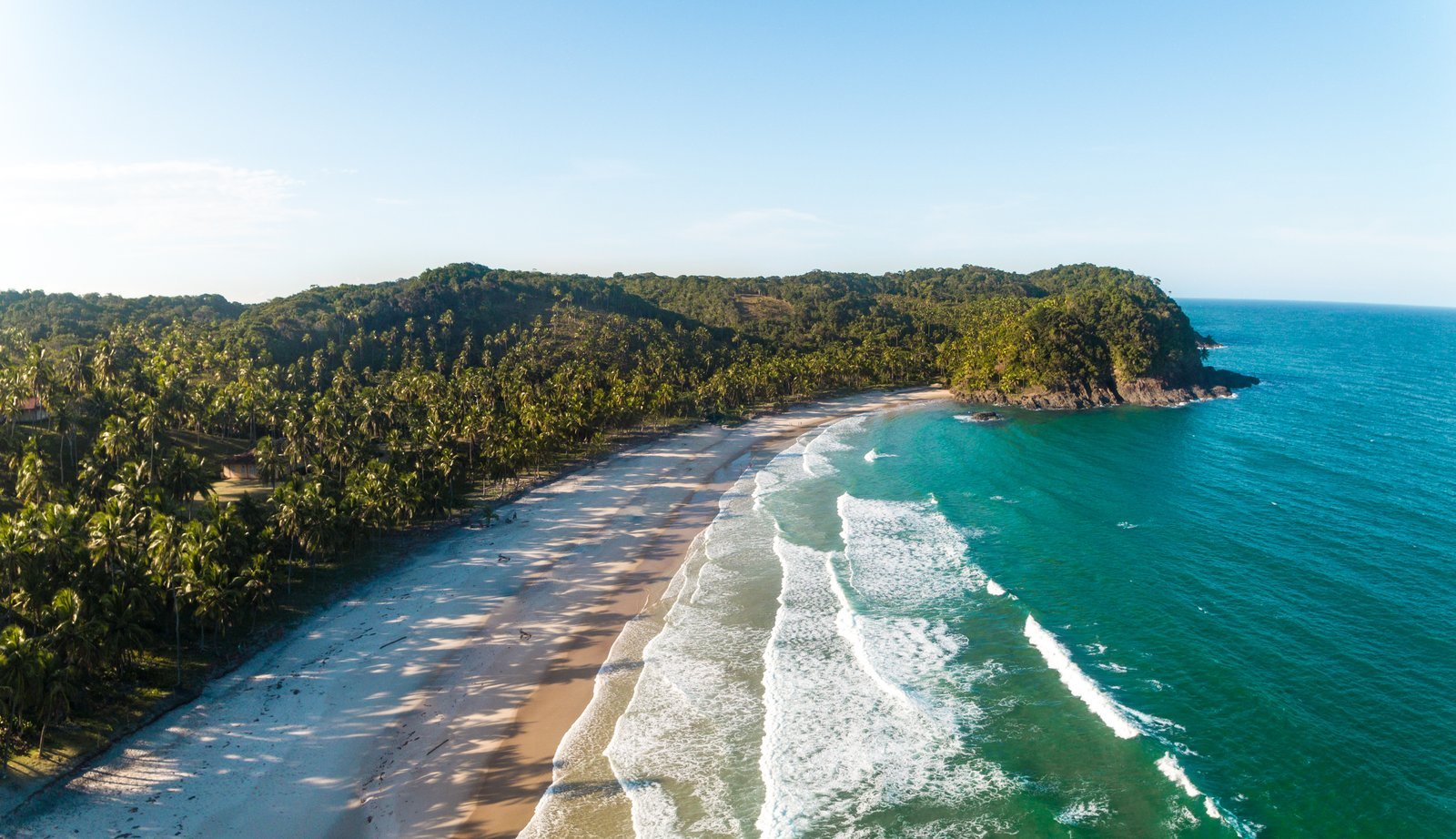
This Itacaré Brazil travel guide covers a small town on the southern coast of Bahia, on the Cocoa Coast (Costa do Cacau), about 70 km north of Ilhéus, where the Rio de Contas meets the Atlantic. It is one of the few stretches of northeastern Brazil where the Atlantic Forest still runs down the hills to the sand, and that explains most of what makes the place special. In short, here is what to do in Itacaré: enjoy the town beaches, Concha, Resende, Tiririca and Ribeira; hike to Prainha; walk the four-beaches trail down to Itacarezinho; surf or take a surf lesson; raft the rapids of the Rio de Contas at Taboquinhas; swim at Tijuípe waterfall; visit a cocoa farm; watch the sunset from Ponta do Xaréu; and, if you have a spare day, cross to Barra Grande on the Maraú Peninsula.
We put this guide together in November 2026 and checked the facts against official sources: Itacaré City Hall and its Tourist Service (beaches, historic centre, events, sports), the city’s 2026 Good Practice Guide for visitors, the Bahia Environment Department (Sema) and Inema, which manage Serra do Conduru State Park, the Brazilian statistics institute IBGE, the National Meteorology Institute (Ilhéus climate data), the official websites of Tijuípe waterfall and of the hotels themselves, and, for history, Wikipedia and the studies it cites. It explains the story of cocoa and the cabruca system, where to stay, when to go, how to get there from Ilhéus and Salvador, what to do in each part of town, what things cost, 2 to 4-day itineraries and the precautions Itacaré’s sea and trails call for.
Quick facts: Itacaré, Bahia
- Where: on the southern coast of Bahia, on the Cocoa Coast, at the mouth of the Rio de Contas, about 70 km from Ilhéus and 422 km from Salvador by road. The municipality covers 726.3 km² and had 27,704 residents in the 2022 IBGE census, about half of them in the countryside.
- Why go: beaches framed by Atlantic Forest, waves for every level, short trails between coves, rafting, waterfalls, cocoa farms, Afro-Brazilian quilombo communities and a riverside town with colonial houses.
- Getting there: fly to Jorge Amado Airport in Ilhéus (IOS), then drive about 1 hour to 1 hour 20 minutes on the BA-001, the Ilhéus–Itacaré park road. From Salvador it is about 5.5 to 6 hours by car using the ferry to Itaparica Island.
- Best time: September to March, when sunny days tend to be more frequent and the sea is warmer. There is no dry season: 2,000 to 2,400 mm of rain falls across the year. Humpback whales pass along the coast from July to October.
- How long: three days for the town beaches, Prainha and the four beaches; four or five to add rafting, Tijuípe and a day trip to Barra Grande.
- Pack: trail sandals or trainers, sunscreen, insect repellent, small notes for beach shacks and patience with mobile signal, which disappears in most rural areas.
History of Itacaré: from the Tupiniquim to cocoa and surfing
Direct answer: the name Itacaré comes from Tupi and means “stone alligator”. The settlement grew around a Jesuit chapel dedicated to Saint Michael, became a municipal seat in 1732 as São Miguel da Barra do Rio de Contas and only took its current name in 1931. It boomed with cocoa between 1890 and 1940, was cut off when its port silted up, and reinvented itself through tourism after the park road opened in 1998.
When the Portuguese arrived, this coast was Tupiniquim territory. According to the history compiled by City Hall and by Wikipedia, Tupi peoples had taken over this strip of coast around the year 1000, pushing speakers of Macro-Jê languages inland. English Wikipedia also lists the Pataxó and Aimoré among the groups living in the area. The place name is Old Tupi: itá, stone, and îakaré, alligator. Look at the dark rocks at Ponta do Xaréu, near the lighthouse, and the explanation seems obvious.
Jesuits, Saint Michael and the town of 1732
In the 16th century the Jesuit Luís da Grã founded a chapel dedicated to Saint Michael at the river mouth, and the settlement that grew around it became São Miguel da Barra do Rio de Contas. The region belonged to the Captaincy of São Jorge dos Ilhéus, one of the hereditary captaincies created in 1532. In 1732 the settlement became a municipal seat through Dona Maria Athaíde e Castro, Countess of Resende, who held the captaincy. The town’s anniversary is celebrated on 26 January. English Wikipedia says it was granted city status in 1881, and the name Itacaré only became official in 1931. Ubaitaba, then called Itapira and a district of Itacaré, was split off by decree no. 8,567 of 27 July 1933.
The Church of São Miguel Arcanjo, facing the riverfront, is the town’s oldest monument. There is a date discrepancy worth noting: City Hall’s text says it was founded by the Jesuits in 1723, while the attractions list on the same website gives 1793 next to the church’s name. It may be the difference between the founding and the construction of the current building, but we found no source that settles it. Inside there is a small museum with 18th-century relics.
Brazilwood, flour, whales and pirates
In the first centuries the local economy relied on brazilwood, shipped to Europe to make dye, and on cassava flour, which fed the sugar mills and the enslaved population around Salvador. English Wikipedia notes that the mouth of the Rio de Contas was a hideout for Dutch and Portuguese pirates in colonial times and later a port for whalers. Many of the stories guides tell in the historic centre date from that period.
Cocoa and the cabruca
The cycle that shaped Itacaré was cocoa. The town grew fast between 1890 and 1940, when cocoa was planted inland and shipped from the port at the river mouth to Europe. The riverside mansions and warehouses that still define the historic centre come from that time. The detail that changed the landscape was the planting system, called cabruca. Instead of clearing the forest, as was done for sugar cane and coffee, farmers thinned the understorey and planted cocoa trees in the shade of the tall Atlantic Forest trees. That is why, unlike much of the northeastern coast, the land around Itacaré reached the 21st century still covered in forest. City Hall puts it simply: cabruca cocoa “needs the shade of the Atlantic Forest to be planted”.
Isolation, witches’ broom and the park road
From the 1940s the port began to silt up. English Wikipedia attributes part of the problem to two dams built upriver in the 1960s, and the growth of roads and of the port of Ilhéus did the rest. Itacaré was left isolated, with poor roads, and growth stalled. In the 1980s, witches’ broom, a fungal disease, devastated cocoa crops across southern Bahia, ending an era for many local farms.
The turnaround came with surfing and, above all, with the road. In the 1980s and 1990s surfers and backpackers discovered the waves at Tiririca and the empty beaches south of town. In 1998 the Ilhéus–Itacaré park road opened, the stretch of the BA-001 linking the town to Ilhéus airport, which City Hall describes as “the first truly ecological road in the country”. According to City Hall, tourism now accounts for more than 90% of the municipality’s GDP. Tiririca beach hosted World Surf League (WSL) events in 2013, 2015 and from 2017 to 2019.
A town that is also quilombola
Itacaré is not only beaches. It has two urban quilombos, communities descended from people who escaped slavery, recognised by City Hall: Porto de Trás and Marimbondo. Samba de roda, capoeira, Epiphany processions and festivals such as the Bicho e o Caçador parade on 6 January are kept alive there. The Porto de Trás Cultural Centre offers capoeira classes and performances, and City Hall promotes quilombo experience routes with residents. English Wikipedia also mentions a recent fight that says a lot about the town: residents campaigned against landowners who wanted to charge for beach access, and today Prainha and São José beaches can be reached on foot, free of charge.
Serra do Conduru State Park: the forest behind the beaches
Direct answer: Serra do Conduru State Park was created in 1997 with 7,000 hectares and enlarged in 2003 to 9,275 hectares, spread across Itacaré, Uruçuca and Ilhéus. It is managed by Inema, part of the Bahia Environment Department, and protects one of Brazil’s richest stretches of Atlantic Forest. Visitor access is still limited, and its public use plan was under review in 2025.
The park was born as environmental compensation for the BA-001 itself: the road between Ilhéus and Itacaré, funded by the federal Prodetur programme, came with the decree creating the protected area in 1997. In 2003 the boundaries were redrawn and the area grew to 9,275 hectares, according to Wikipedia. English Wikipedia says the municipality of Itacaré holds 41% of the park. The name honours the conduru (Brosimum rubescens), a tree with valuable red wood found in the forests of southern Bahia.
Wildlife and plants
Surveys carried out between 1999 and 2002, cited by Wikipedia, recorded 175 bird species in the park, 27 of them endemic and six threatened, plus 30 species of medium and large mammals. The region’s emblem is the golden-headed lion tamarin, a small primate found only in the forests of southern Bahia. Wikipedia notes that the park is internationally recognised for having one of the highest levels of biodiversity on the planet and a large number of endemic species.
What this means for you
In practice, three things. First, the park does not have the visitor infrastructure of a famous national park: in 2025 Sema and Inema were holding workshops with local communities to update the management plan and draw up a public use plan with access rules. Before going, ask at City Hall’s Tourist Service (SAT) whether any trails are open and who can guide you. Second, even outside the park, most of Itacaré’s beaches, trails and waterfalls lie in Atlantic Forest protected by law, and City Hall’s guide asks visitors to use only authorised trails and accredited guides. Third, what you see from the road is the same forest: the BA-001 crosses the park, and you will pass wildlife signs and stretches of dense forest.
Where to stay in Itacaré: Concha, town centre, Tiririca or the coast road
Direct answer: stay at Praia da Concha or in the Conchas do Mar neighbourhood for calm water, guesthouses with pools and restaurants within walking distance. Choose the historic centre and Rua Pituba to be close to bars and nightlife. The Tiririca and Ribeira area is the surfers’ base. The luxury resorts are out on the BA-001, on beaches such as Itacarezinho and São José, and need a car or transfer.
Itacaré is compact. The town, the urban beaches and the main restaurant streets fit into a half-hour walk, and many visitors spend their whole trip without a car. Choosing a neighbourhood changes the atmosphere more than the logistics.
Praia da Concha and Conchas do Mar
This is where most guesthouses (pousadas) are. Concha has calm water, beach shacks and the river mouth, and the Conchas do Mar neighbourhood just behind it is full of quiet streets and pousadas with gardens and pools. From there you can walk to the centre in 10 to 15 minutes and to Resende and Tiririca beaches. It is the best choice for couples, families and first-time visitors.
Historic centre, riverfront and Rua Pituba
The historic centre sits by the river, with the São Miguel church, the old houses and the Coroinha waterfront. Rua Pituba and the streets around it gather restaurants, bars, shops and the evening crowd. Staying here is practical if you want to go out at night and walk home, but it can be noisy in summer and at New Year.
Tiririca, Costa and Ribeira
This is wave country. Tiririca has kiosks, a lawn and a young vibe, and Ribeira is the trailhead for Prainha. Accommodation here tends to be simpler, aimed at surfers and people who want to wake up and head straight into the sea.
The Ilhéus–Itacaré road: resorts and secluded beaches
South of town, along the BA-001, are the luxury hotels and the most secluded beaches, such as São José, Jeribucaçu, Engenhoca, Havaizinho and Itacarezinho. Stays here are quieter, with everything inside the hotel, but you need a car, taxi or transfer to get into town. It suits people who want rest and do not mind being far from the bars.
Weather and the best time to visit Itacaré
Direct answer: Itacaré has a humid tropical climate, warm all year, with an average temperature around 25 °C and rain spread across the months. For most people the best time is September to March, with more sun and warmer water. December, January and Carnival are the busiest and most expensive months. To avoid crowds with reasonable weather, try September, October, November or March. Humpback whales pass along the coast from July to October.
Itacaré has no long-running weather station of its own, so the usual reference is Ilhéus, 70 km away. According to Wikipedia, based on data from Brazil’s National Meteorology Institute (Inmet), the region gets 2,000 to 2,400 mm of rain a year, spread through the year, with an average temperature of about 25 °C. In winter the average is 21 °C, with highs of 26 °C and lows of 18 °C. In summer it rises to 26 °C, with highs of 29 °C and lows of 22 °C. The highest temperature in the Inmet series was 34.1 °C, in January 1994, and the lowest 12.8 °C, in August 1976.
In practice this means two things. First, there is no “forbidden” month. Even in the wetter months rain usually comes in showers and it stays warm enough for the beach. Second, there is no guaranteed month either. A cold front can bring three days of rain at any time of year, so have a plan B, such as a cocoa farm visit or a long lunch.
Month by month
| Period | What to expect | Best for |
|---|---|---|
| December to February | Hot, warm sea, busy New Year and Carnival, highest prices | People who want a lively scene and can book early |
| March to June | Off-season, more chance of several rainy days in a row, lower prices | Travellers with flexible dates |
| July and August | Milder temperatures, Brazilian school holidays in July, bigger waves, start of whale season | Surfers, families and whale watchers |
| September to November | More sunny days, fewer people, whales until October | Couples, quiet beaches and mid-range prices |
Whale season
Itacaré City Hall marks July as the start of humpback whale season; the whales pass the southern Bahia coast in winter and spring, from July to October. Some local agencies run whale-watching boat trips. We did not find a list of accredited operators on City Hall’s website, so ask at the Tourist Service (SAT) before booking and choose companies that keep the legal distance from the animals.
Festivals and events
City Hall’s 2026 events calendar helps you pick a date. Highlights: the Bicho e o Caçador parade in the Porto de Trás quilombo on 6 January; the town’s anniversary on 26 January; the Iemanjá festival on 1 and 2 February; Carnival; São João (Saint John’s festival) on 23 and 24 June, celebrated in Taboquinhas; the Sabores de Itacaré food festival, whose 12th edition ran from 10 to 27 July, and the Festa da Quebra do Cacau (cocoa-breaking festival) in Taboquinhas, also in July; the Acarajé Festival from 27 to 29 August; the feast of São Miguel, the patron saint, on 29 September; the Itacaré Literary Festival (Flicaré) from 28 to 31 October; the Quilombola Festival from 17 to 20 November; and New Year’s Eve. In July the town also tends to host stages of the Bahia and Brazilian surfing championships. Dates change from year to year, so check City Hall’s website before you book.
How to get to Itacaré
Direct answer: the easiest way is to fly to Jorge Amado Airport in Ilhéus (IOS) and travel about 70 km on the BA-001, the Ilhéus–Itacaré park road, by car, taxi, transfer or bus. From Salvador you can drive in about 5.5 to 6 hours, crossing by ferry to Itaparica Island, or take a bus. Itacaré has no commercial airport.
By air, via Ilhéus
Ilhéus – Jorge Amado Airport (IOS) has direct flights from cities such as São Paulo, Belo Horizonte, Brasília, Rio de Janeiro and Salvador, depending on the season and the airline. From the airport to Itacaré it is about 70 km on the BA-001, a drive of roughly 1 hour to 1 hour 20 minutes through the Atlantic Forest of Serra do Conduru State Park and past Serra Grande. You have four options for this leg:
- Rental car: rental desks are at the airport. This is the best choice if you want to explore the road beaches and Tijuípe on your own.
- Transfer: many Itacaré pousadas and agencies offer airport transfers; agree the price in advance.
- Taxi: there is a taxi rank at the airport; fares are per ride and worth agreeing before you set off.
- Bus: Rota Transportes runs the Ilhéus–Itacaré route, with departures throughout the day from Ilhéus bus station. Timetables change often, so check the company’s website or at the station.
By bus
Itacaré has its own bus station near the centre. Rota Transportes operates the regular regional routes, including Ilhéus–Itacaré and Itacaré–Camamu. Travellers coming from further away usually take a long-distance bus to Ilhéus, Itabuna or Salvador and connect. In November 2026, timetables shown on ticket-selling websites listed several daily departures between Ilhéus and Itacaré from early morning to late afternoon, but these are not official and change with the season.
From Salvador
It is 422 km by road, according to Itacaré City Hall. The most common route is to cross the Bay of All Saints by car ferry from Salvador to Bom Despacho, on Itaparica Island, and continue on the BA-001 via Valença and Camamu to Itacaré. Not counting the ferry wait, the drive takes around 5.5 to 6 hours. In high season and on holidays the ferry queue can exceed two hours, so it is worth buying a ticket in advance through the official system. The alternative is to drive around the bay on the BR-324 and BR-101, which is longer. By bus, there are connections via Ilhéus, Itabuna or Valença.
From Barra Grande and the Maraú Peninsula
Many people combine Itacaré with Barra Grande on the Maraú Peninsula, just to the north. Overland, the link is a dirt road that needs a high-clearance vehicle and is not recommended after heavy rain. Without a car, take a bus or taxi to Camamu, about an hour away on the BA-001, and cross Camamu Bay by speedboat to Barra Grande. Details are in the day trip section below.
Getting around Itacaré
Direct answer: you can walk around town and to the urban beaches, from Concha to Ribeira. Prainha is reachable only on foot, by trail. For the beaches further south, such as Jeribucaçu, Engenhoca, Havaizinho and Itacarezinho, and for Tijuípe and Taboquinhas, use a car, taxi, motorbike taxi or an agency tour. There is no regular public transport to all the beaches.
Itacaré’s centre is small and mostly flat. From Concha to Tiririca, via Resende, is a 20 to 30-minute walk with a few slopes. At night the centre is lively, and the walk between Concha and Rua Pituba is short and well lit. Outside town things change. The rural beaches lie along the BA-001, and access is usually by a dirt track and then a trail. Without a car, you can use taxis, motorbike taxis, which are common here, or organised agency tours that include transport and a guide.
Two practical notes from City Hall. First, mobile signal is weak or non-existent in rural areas. According to City Hall, only Claro works in Taboquinhas, Vivo has the best coverage on the urban beaches, and most businesses have wi-fi. Download offline maps before setting out. Second, on some road beaches, car access passes through gated communities or resorts that charge a day-use fee. On foot, by the trails, beach access is free.
Things to do in Itacaré: beaches, trails and adventure
Direct answer: things to do in Itacaré fall into three groups. First, the town beaches, all walkable. Second, the rural beaches, reached by trail or car, such as Prainha, São José, Jeribucaçu and the four beaches. Third, adventure inland: rafting on the Rio de Contas, Tijuípe waterfall, cocoa farms and quilombos. Set aside at least one day for each.
Town beaches
These are the beaches you can walk to from the centre and from Concha. Here they are in order, from the river southwards:
- Riverfront and Coroinha beach: by the river, next to the historic centre, with fishing boats at anchor and the best sunset in town. The place for an evening stroll.
- Praia da Concha: the most popular beach in town, with calm water, beach shacks, stand-up paddle and kayak rental and outrigger canoe lessons. It looks out to the lighthouse and is the best beach for children.
- Praia do Resende: small and lined with coconut palms, with natural pools at low tide. It has a few shacks and is very quiet on weekdays.
- Praia da Tiririca: the surf beach, with strong waves, competitions, kiosks and even a skate bowl. Not for swimming if you do not know the sea: watch the flags and the lifeguards.
- Praia da Costa: reached by a short trail from Tiririca. No facilities, and the sea is rough.
- Praia da Ribeira: a stream coming down the hill forms a natural pool before reaching the sea. It has shacks, a treetop course and a zip line, and is the start of the trail to Prainha.
- Praia do Pontal: across the Rio de Contas, reachable only by boat from the riverfront. No shacks: bring water and snacks.
Rural beaches and trails
South of Ribeira the coast gets wilder, with coves separated by rocky points and forested hills. City Hall calls these the rural beaches:
- Siriaco: a small beach on an easy trail from Ribeira, on the way to Prainha.
- Prainha: “the most beautiful” for many people, with pale sand, coconut palms and forest on the slopes. It is about a 40-minute walk from Ribeira and has no facilities. Bring water, food and cash in case a shack is open, but do not count on it.
- Praia de São José: reached by trail from Prainha or through a gated community. It has a restaurant and day use.
- Jeribucaçu: further south, off the BA-001 via a dirt track and then a trail. A river meets the sea at one end, there are beach shacks, and car access is through a resort’s day use.
- Arruda: next to Jeribucaçu, with coral and natural pools.
City Hall’s Good Practice Guide asks visitors to stick to authorised trails and, whenever possible, to hire an accredited guide. Many people walk to Prainha on their own, but a guide helps you pick the right tide and tells you the story of the place.
The four-beaches walk
This is the classic agency tour, done on foot from the BA-001 south of town. It strings together four beaches:
- Engenhoca: good, consistent waves, one of the best for beginner surfers. It has kiosks.
- Havaizinho: has a lookout and beach shacks serving fish grilled on a hot stone (peixe na pedra).
- Camboinha (or Gamboa): reachable only by trail, no facilities, rougher sea.
- Itacarezinho: a long beach with paved access and an upmarket beach restaurant. On foot entry is free; arriving by car you pay day use.
With a guide the walk takes a morning or a full day, depending on stops. You can also visit each beach separately by car or taxi from the road.
Tijuípe waterfall
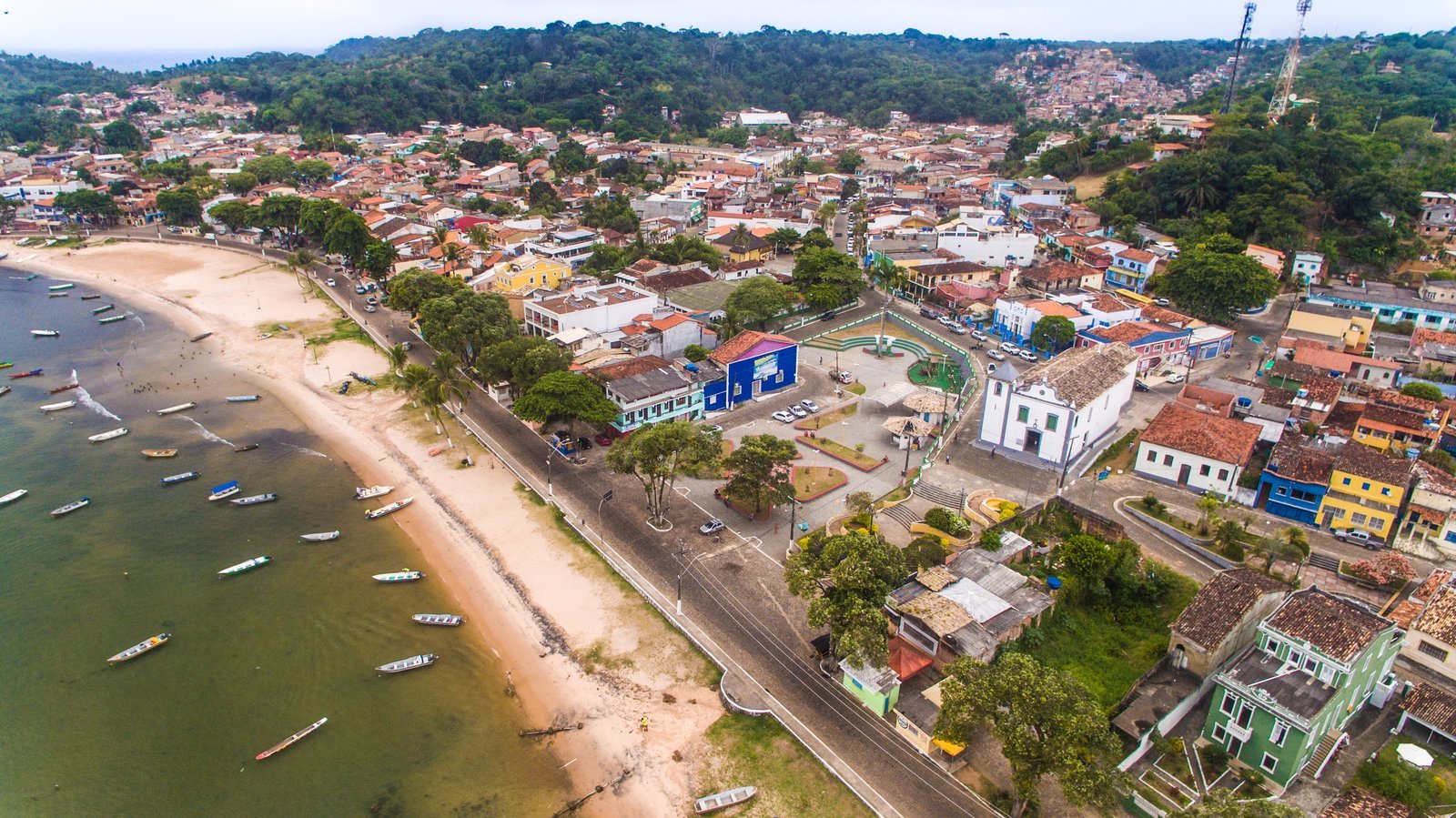
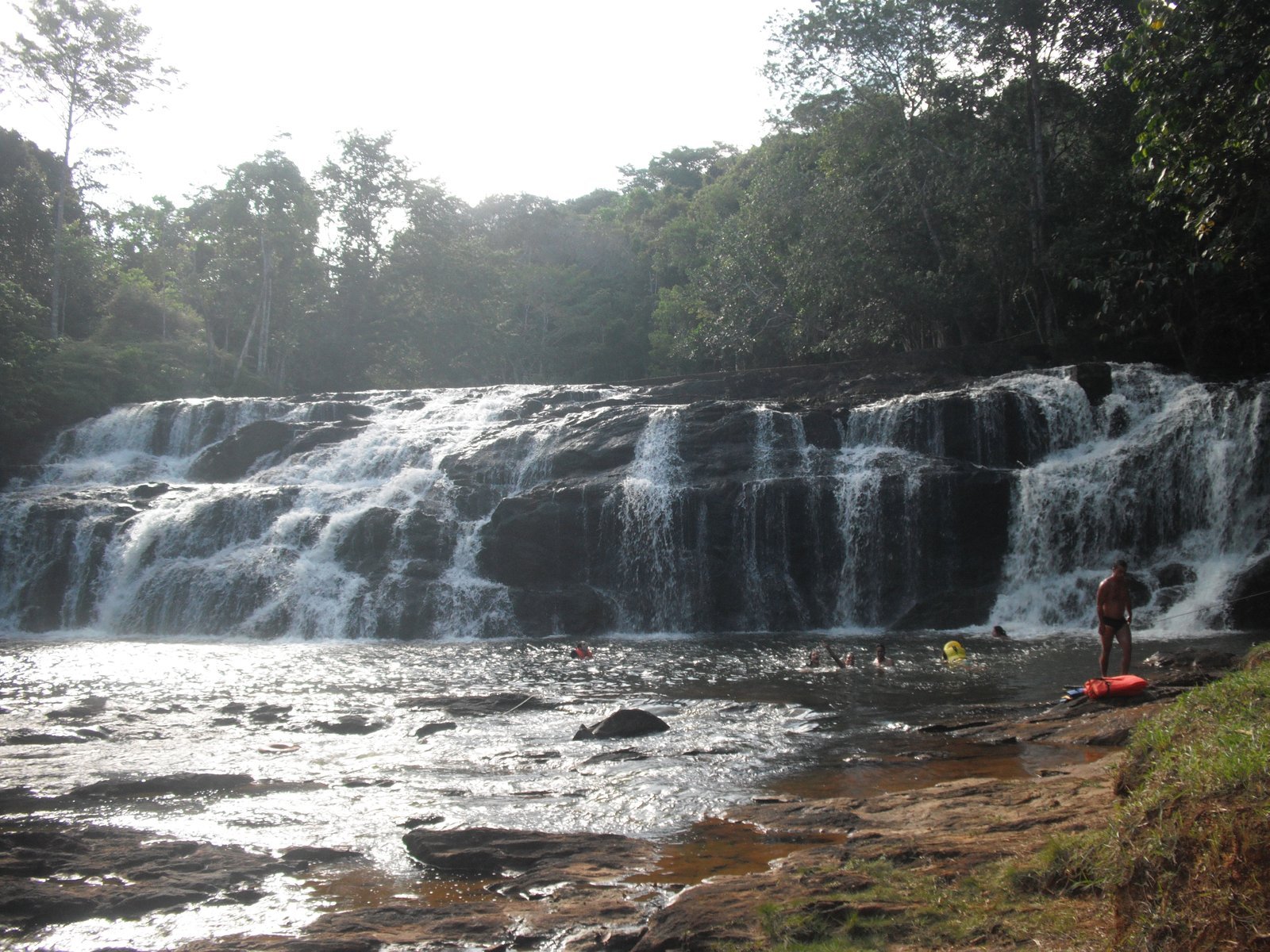
Cachoeira do Tijuípe is the most visited waterfall in the area. It is on the Ilhéus–Itacaré road at km 44, according to its official website (some agencies say km 46), just inside the municipality of Uruçuca, between Itacaré and Serra Grande. The falls are wide and low, over dark rocks, and form a large pool of tea-coloured water, stained by tannins from the forest. According to the official website, in November 2026 entry cost R$30 per person, children up to 8 went free, and it was open daily from 9am to 5pm. There is a restaurant and kayak rental for paddling on the river above the falls. Listed phone: +55 73 99995-1229.
From Itacaré it is about 30 minutes by car. You can go by taxi, rental car or on agency tours that combine Tijuípe with the road beaches. The water is dark and the rocks are slippery: go in slowly and never jump where you cannot see the bottom.
Rafting on the Rio de Contas
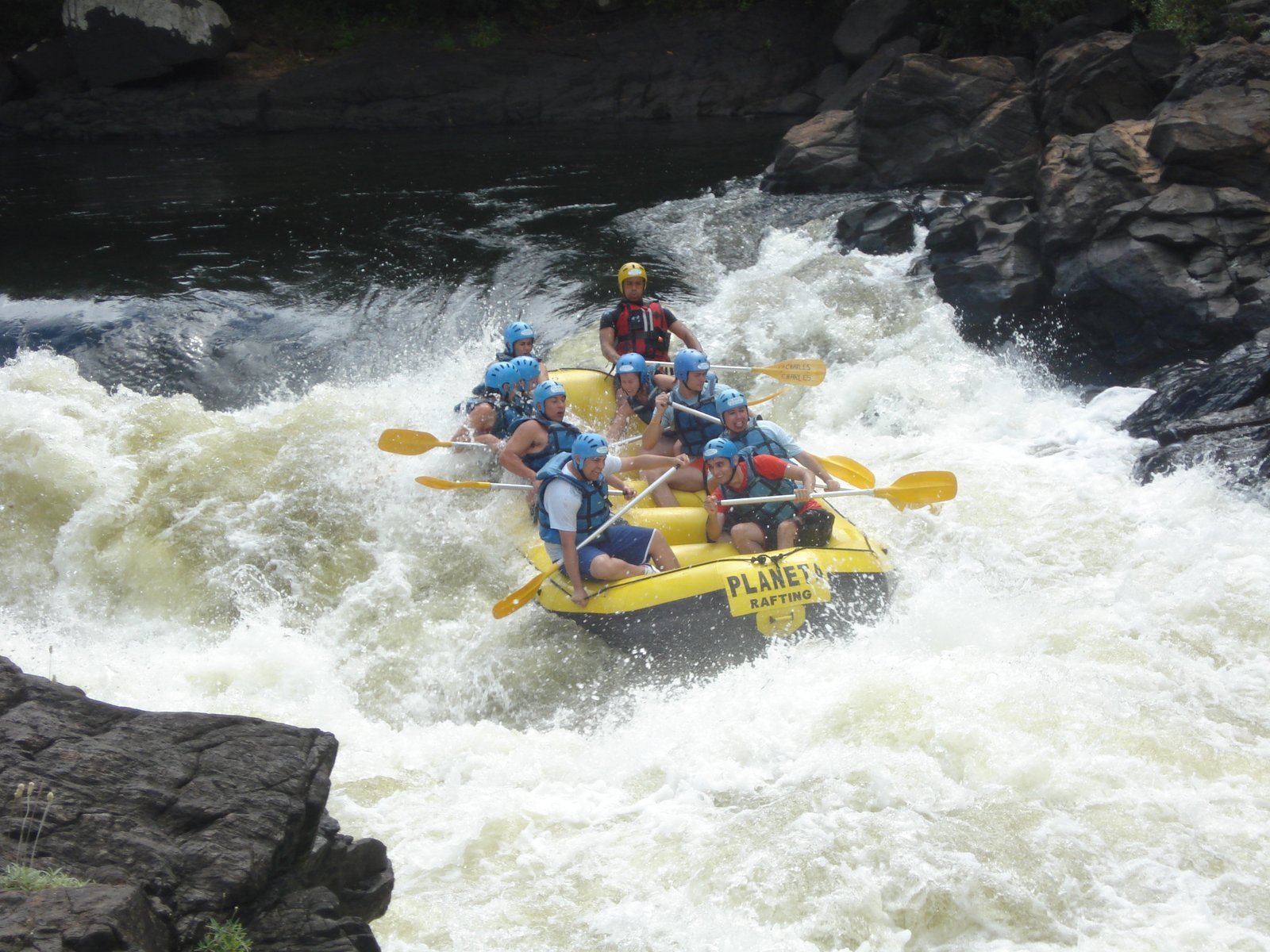
The Rio de Contas rises in the Serra da Tromba, in the Chapada Diamantina, runs for about 620 km and reaches the sea at Itacaré. Its basin is the largest lying entirely within Bahia, according to Wikipedia, and this river is what makes Itacaré a rafting destination. Trips start in Taboquinhas, a district about 30 km from town on a dirt road. According to the agencies selling the trip, the run has class III and IV rapids with names such as Carrossel, Funil and Corredor Pôlones, and ends near the Salto da Pancada falls. Many agencies pair rafting with a zip line over the river. In November 2026 a package with transport from Itacaré cost, on average, R$200 to R$300 per person, depending on the agency and what is included.
River levels change with rainfall and with releases from dams upstream, and some agencies adjust the route by season. Insist on a life jacket, helmet and instructor, and ask about the minimum age. Taboquinhas also has Prainha de Taboquinhas and Pé da Pancada, river beaches listed by City Hall, and hosts the cocoa-breaking festival (Festa da Quebra do Cacau) in July.
Surfing
Itacaré is one of the best-known surf destinations in Bahia. Tiririca is the most famous beach and hosted World Surf League (WSL) events in 2013, 2015 and from 2017 to 2019, according to City Hall. For learners, Engenhoca, Resende and parts of Concha usually have easier waves, and the town’s surf schools give lessons with board and rash vest included. City Hall lists surfing, treetop courses, canoeing and rafting among the town’s adventure sports. More experienced surfers also head to Jeribucaçu, Itacarezinho and Costa.
Historic centre, church and quilombos
Save a late afternoon for the historic centre. The route suggested by City Hall takes in the Church of São Miguel Arcanjo, with its small museum of 18th-century pieces, the cocoa-era mansions and the riverfront, where the Pôr do Sol no Forte sunset spot sits at the end of the avenue. At low tide you can walk out to the lighthouse. Another classic is the Ponta do Xaréu lookout at the start of Concha, where you can watch the sun set over the river.
The urban quilombos of Porto de Trás and Marimbondo are a few minutes from the centre. City Hall promotes quilombo experience routes with samba de roda, capoeira, food and stories told by residents, and the Porto de Trás Cultural Centre offers capoeira classes. The Quilombola Festival in November and the Bicho e o Caçador parade in January are the highlights of the calendar. Book these visits with community members and agree the price beforehand: this is community-based tourism, and the income stays with residents.
In the countryside there is also the Church of Bom Jesus da Lapa (1948) in Taboquinhas and the Church of Senhor do Bonfim (1950) in Água Fria, according to City Hall. At Carnival in February, the Caretas, masked revellers, take to the streets.
Cocoa and chocolate on the farm
To understand Itacaré, visit a cocoa farm. City Hall’s “Cocoa Experiences Map” lists Fazenda Taboquinhas, Fazenda Vila Rosa, Fazenda Santa Ana, Café com Cacau, Experiência Seo Cacau, Chocolate Hotel and the Pancada Grande community. Visits usually include a walk through the cabruca, an explanation of how the pods are harvested, fermented and dried, and a tasting of chocolate made on the farm. It is the best plan for a rainy day and a way to see the Atlantic Forest from the inside. Times and prices vary, and most require booking.
Day trip to Barra Grande and the Maraú Peninsula
Just north of Itacaré begins the Maraú Peninsula, with the village of Barra Grande and the natural pools of Taipu de Fora. Between the two lies Piracanga, an alternative community that City Hall lists among the municipality’s beaches. You can go with an agency, on a jeep or 4×4 tour along the dirt road, or on your own via Camamu.
The Camamu route works like this: from Itacaré to Camamu on the BA-001 is about an hour by car, according to the agency Maraú Travel, and the bus fare was around R$25. In Camamu, the Associação Marítima runs speedboats to Barra Grande, according to the same source, hourly from 6:10am to 5:10pm plus a 5:30pm departure, with sailings from 7:10am to 5:10pm on Sundays and holidays. The crossing takes 30 to 35 minutes and cost R$60 per person over 5 years old. Check times the day before, as they change. To really enjoy it, spend at least one night in Barra Grande.
Where to eat in Itacaré
Direct answer: in the centre, Rua Pituba and the surrounding streets are packed with Bahian restaurants, pizzerias, healthy food and bars. On the beaches, the shacks at Concha, Ribeira and Havaizinho serve fish, moqueca and snacks. Try moqueca (fish stew with coconut milk and palm oil), acarajé, peixe na pedra and the region’s cocoa chocolate.
Itacaré’s food blends coastal Bahian cooking, with palm oil (dendê), coconut milk and seafood, with the influence of the many residents who moved here from elsewhere. The result is a wide choice for a town this size.
- Rua Pituba and the centre: the main street for restaurants and bars, a short walk from Concha. At night this is where the town meets.
- Beach shacks: at Concha and Ribeira, for lunch with your feet in the sand. At Havaizinho the shacks serve fish grilled on a hot stone.
- Road restaurants: an upmarket beach restaurant at Itacarezinho, and the waterfall’s own restaurant at Tijuípe.
- Acarajé: the town even has a festival for it, in August. In the late afternoon, baianas set up their stalls around the centre.
- Cocoa and chocolate: look for bean-to-bar chocolate made on local farms, sold in shops in the centre and at the farms themselves.
One practical rule: at simpler shacks, check the price of fish per kilo before ordering, and ask whether they take cards or Pix (Brazil’s instant payment). In rural areas the mobile signal can drop and take the card machine with it.
How much does a trip to Itacaré cost?
Direct answer: the best-known fixed prices are Tijuípe waterfall entry at R$30, the Camamu–Barra Grande speedboat at R$60 and the Itacaré–Camamu bus at about R$25. Rafting with transport costs R$200 to R$300. Accommodation and food vary a lot by season. New Year and Carnival usually cost far more than the rest of the year.
| Item | Reference price (November 2026) | Source |
|---|---|---|
| Tijuípe waterfall entry | R$30 per person; children up to 8 free | Official waterfall website |
| Camamu–Barra Grande speedboat | R$60 per person over 5 | Maraú Travel (Associação Marítima) |
| Itacaré–Camamu bus | about R$25 | Maraú Travel |
| Rafting on the Rio de Contas with transport | about R$200 to R$300 per person | Local agencies |
| Beaches and trails on foot | free | Itacaré City Hall |
| Day use at beaches with car access (Itacarezinho, Jeribucaçu, São José) | varies, charged by condos and resorts | Itacaré City Hall |
| Accommodation, restaurants, taxis and transfers | varies by season and category | Check with each business |
Prices can change at any time. Always confirm before you go.
How to spend less
- Travel between March and June or between September and November, avoiding holidays, when rates usually drop.
- Stay at Concha or in the centre and walk to the town beaches. You save on taxis and do not need a car.
- Reach the road beaches by trail. On foot access is free; by car many charge day use.
- Take the Rota bus between Ilhéus and Itacaré if you have time and light luggage.
- For Barra Grande, bus to Camamu plus speedboat usually costs less than a 4×4 tour, especially for solo travellers.
- Eat lunch at beach shacks and set-meal (prato feito) restaurants in the centre, and save the special dinner for one night.
Itacaré itinerary: 2, 3 or 4 days
Direct answer: in 2 days, do the town beaches and the Prainha trail. In 3 days, add the four-beaches walk to Itacarezinho. In 4 days, include rafting at Taboquinhas and Tijuípe waterfall, or swap one for a day trip to Barra Grande.
Itacaré in 2 days
- Day 1: morning at Concha, lunch at a beach shack, afternoon at Resende and Tiririca, and sunset at Ponta do Xaréu or on the riverfront. Dinner on Rua Pituba.
- Day 2: trail from Ribeira to Prainha, stopping at Siriaco, leaving early for low tide and less sun. Back in the afternoon, then late afternoon in the historic centre with a visit to the São Miguel church.
Itacaré in 3 days
- Days 1 and 2: as in the 2-day plan.
- Day 3: the four-beaches walk, Engenhoca, Havaizinho, Camboinha and Itacarezinho, with a guide. Lunch of peixe na pedra at Havaizinho. If you have energy left, a surf lesson at Engenhoca.
Itacaré in 4 days
- Days 1 to 3: as in the 3-day plan.
- Day 4: rafting on the Rio de Contas in the morning at Taboquinhas and Tijuípe waterfall in the afternoon. For a slower pace, swap rafting for a cocoa farm visit or Jeribucaçu.
- With an extra day: go to Barra Grande via Camamu by bus and speedboat, and stay the night.
Safety in Itacaré
Direct answer: the biggest risk in Itacaré is the sea. Swim only at beaches with lifeguards, who generally work from 9am to 5pm, and respect the flags. Walk the trails in daylight, with water, and preferably with an accredited guide. In town, take the same care as in any tourist destination: do not leave belongings on the sand and avoid deserted paths at night.
In the sea
City Hall’s guide is direct: follow the lifeguards’ instructions (on the main beaches they generally work from 9am to 5pm), watch out for rip currents and avoid swimming alone. Surf beaches such as Tiririca, Costa, Camboinha and Itacarezinho have strong seas and currents. If you are caught in a rip current, do not swim against it: swim parallel to the shore until you are out of the outflowing water, then head back in. If in doubt, raise your arm and call for help.
On the trails
The trails between beaches are short but have climbs, rocks and muddy stretches after rain. Leave early, carry water and sunscreen, wear closed shoes or trail sandals and be back before dark. City Hall’s guide asks visitors to use authorised trails and accredited guides, especially in Atlantic Forest areas. There is no phone signal on most of the route, so tell your pousada where you are going.
In town
Itacaré is small and lively, but the usual precautions apply: do not leave phones and wallets unattended on the sand, stick to busy streets at night and take a taxi back from remote spots. City Hall’s guide also reminds visitors that portable speakers on the beach can lead to fines, that rubbish is collected at night and that toilet paper should not be flushed.
Useful numbers
- Emergencies: Military Police 190, SAMU ambulance 192, Fire Brigade 193.
- SAT – Tourist Service: Rua Dr. Edgar Alves dos Reis, 57, Centro, Monday to Friday, 8am to 2pm, phone +55 71 99953-6032, according to City Hall.
- Tijuípe waterfall: +55 73 99995-1229.
Destinations near Itacaré
Direct answer: Itacaré pairs well with the rest of the Bahia coast. Salvador is the gateway to the north, Porto Seguro lies further south, and Chapada Diamantina is the highland option if you want a change of scene.
- Salvador: Bahia’s capital, with the Pelourinho and the food you will meet again in Itacaré.
- Porto Seguro: further south, with Arraial d’Ajuda and Trancoso.
- Chapada Diamantina: waterfalls, caves and hiking in inland Bahia.
- Maragogi and Pipa: more northeastern beaches for a second trip.
- Ilhabela: Atlantic Forest, waterfalls and sea on the São Paulo coast.
See also our Brazil travel tips, the guide to getting around Brazil and our Brazilian food guide.
Where to stay in Itacaré: 10 hotels with official websites
Direct answer: to stay within walking distance of Praia da Concha and Rua Pituba, look at Pousada Piratas, Pousada Portal da Concha, Pousada Bambu, Pousada Abaré, Pousada Burundanga, Terra Boa Hotel Boutique and Pousada Vira Canoa. For a design hotel near Resende, Barracuda Hotel & Villas. Out on the road, with an almost private beach, Txai Resort Itacaré at Itacarezinho and Itacaré Eco Resort near Praia de São José. The links go to each property’s official website and were checked in November 2026. There are no affiliate links. The facilities mentioned are those listed on each website; confirm prices and conditions directly with the hotel.
A tip before booking: ask whether breakfast is included, whether there is parking and how far the nearest beach is on foot. In Itacaré, staying in town means walking everywhere, while staying on the road means relying on a car or transfer.
Txai Resort Itacaré (luxury resort, Itacarezinho beach)
Txai Resort Itacaré is on the BA-001 at km 48, facing Itacarezinho beach, south of town. According to its official website, it belongs to Relais & Châteaux and has bungalows and apartments with sea or forest views, decorated with Indonesian inspiration, plus the Shamash spa. It is Itacaré’s best-known address for seclusion and full service. Listed phone: +55 73 2101-5000.
Itacaré Eco Resort (resort, Praia de São José)
Itacaré Eco Resort is at km 64 of the BA-001, in the Villa de São José gated community, 100 metres from Praia de São José. According to its official website, it has suites of 36 to 45 m² and the “Oxente” beach service. It suits travellers who want forest and a quiet beach without being too far from town. Listed phone: +55 73 3251-3133, WhatsApp +55 73 99849-2313.
Barracuda Hotel & Villas (design hotel, Costa do Resende)
Barracuda Hotel & Villas is on the Resende coast. According to its official website, it has a 17-suite hotel, villas with four to eight suites, the OKA residence with nine suites and an 800 m² pool, and the Oiti guest house with 11 suites in the historic centre, all in a Scandinavian-inspired minimalist style, with an artist residency programme. We did not find a phone number published on the website; contact is via the form and channels listed there.
Pousada Piratas (beachfront pousada, Praia da Concha)
Pousada Piratas sits right on the sea at Praia da Concha. According to its official website, it has chalets, flats, apartments and a master suite. It is for people who want to wake up and step straight onto the sand. Listed phone: +55 73 99965-8187.
Pousada Portal da Concha (pousada, Ladeira da Concha)
Pousada Portal da Concha is on Avenida Castro Alves, on the Ladeira da Concha. According to its official website, it is 300 metres, or about 4 minutes’ walk, from Praia da Concha, 1.5 km from Tiririca and 1.2 km from the historic centre, and has a pool, a children’s playroom, a coworking space, 24-hour reception and a regional breakfast. Good for families with children and for remote workers. Listed reservation phones: +55 73 99919-1252 and +55 73 3251-3064.
Pousada Bambu (pousada, Conchas do Mar)
Pousada Bambu is at Rua Alpínia, 149, in Conchas do Mar. According to its official website, it is 100 metres from Praia da Concha and 600 metres from the centre, with 10 suites in four categories, a pool and a playground called Casinha da Árvore (the tree house). Listed phone: +55 73 99997-2377.
Terra Boa Hotel Boutique (boutique hotel, Conchas do Mar)
Terra Boa Hotel Boutique is on Avenida Pau Brasil, in Conchas do Mar, 500 metres from Praia da Concha. According to its official website, it has a restaurant and spa and belongs to the Aguilar Lima group, which has worked in Itacaré for 20 years. Listed phone: +55 73 3083-4902.
Pousada Vira Canoa (pousada, Conchas do Mar)
Pousada Vira Canoa is on Rua C, in Conchas do Mar, near Concha, Coroa and Resende beaches. It belongs to the same group as Terra Boa and, according to its official website, has bungalows set in a garden. Listed phone: +55 73 3083-4902.
Pousada Burundanga (pousada, Praia da Concha)
Pousada Burundanga is at Praia da Concha. According to its official website, it has suites of about 35 m² in a rustic-chic style and only accepts children aged 14 and over, which makes it a choice for couples. Listed phone: +55 73 99977-8899.
Pousada Abaré (pousada, Praia da Concha)
Pousada Abaré is on Rua Helicônia, at Praia da Concha. According to its official website, it is 250 metres from the beach and 250 metres from Rua Pituba, where the restaurants are, and has a pool with a shallow beach area, a 14-jet hot tub and a gazebo. Listed phones: +55 73 99906-3725 and +55 73 99997-7227.
Video: Itacaré, from the TurismoBahia channel
The video below was published on YouTube by TurismoBahia, the official channel of the Bahia state government’s tourism body. It is one minute of aerial footage of beaches, forest and river, with no narration, released in April 2020 with the message “Don’t cancel, reschedule!”.
Itacaré FAQ
What is there to do in Itacaré, Brazil?
Enjoy the town beaches, Concha, Resende, Tiririca and Ribeira, hike to Prainha and walk the four beaches to Itacarezinho. Away from the sea, raft the Rio de Contas at Taboquinhas, swim at Tijuípe waterfall, visit a cocoa farm and watch the sunset from Ponta do Xaréu.
What is the most beautiful beach in Itacaré?
Prainha is the one most often named, including by City Hall, which calls it “the most beautiful”. It is about a 40-minute trail from Ribeira beach and has no facilities. Jeribucaçu, Havaizinho and Itacarezinho also make every list.
When is the best time to visit Itacaré?
September to March, when sunny days tend to be more frequent. It rains all year, with no clear dry season. December, January and Carnival are the busiest and most expensive months, while September to November combine good weather with fewer people.
How do I get to Itacaré?
Fly to Jorge Amado Airport in Ilhéus (IOS) and travel about 70 km, 1 hour to 1 hour 20 minutes, on the BA-001 by car, transfer, taxi or Rota Transportes bus. From Salvador it is about 422 km, usually with a ferry crossing to Itaparica Island.
Do I need a car in Itacaré?
Not for the town and the urban beaches, which are walkable. For the road beaches, Tijuípe and Taboquinhas a car helps, but taxis, motorbike taxis and agency tours work too.
How much does Tijuípe waterfall cost?
According to its official website, entry was R$30 per person in November 2026, with children up to 8 free. It was open daily from 9am to 5pm, at km 44 of the Ilhéus–Itacaré road.
What is rafting like in Itacaré?
It runs on the Rio de Contas at Taboquinhas, about 30 km from town, with class III and IV rapids according to agencies. With transport from Itacaré it cost R$200 to R$300 per person in November 2026.
How do I get from Itacaré to Barra Grande?
By bus or car to Camamu, about an hour on the BA-001, then by speedboat to Barra Grande, about 30 to 35 minutes, for R$60 per person. There are also 4×4 tours along the dirt road of the Maraú Peninsula.
Is Itacaré good if you don’t surf?
Yes. Concha and Resende have calm water, and there are trails, waterfalls, rafting, cocoa farms and a historic centre with urban quilombos. Surfing is only one part of the town.
How many days should I spend in Itacaré?
Three days are enough for the town beaches, Prainha and the four beaches. With four or five days you can add rafting, Tijuípe, a cocoa farm and a day trip to Barra Grande.
Is Itacaré worth visiting?
Yes, especially if you like beaches surrounded by forest and do not need a resort to feel on holiday. Few places in northeastern Brazil pack so many cove beaches, waves for every level, a waterfall, a rafting river and a forest that survived because of cocoa into such a small area. The trade-off is getting around: the airport is in Ilhéus, most beaches need a trail or a car, and the phone signal fades outside town. Stay at Concha, get up early for the Prainha trail, set aside one day for the interior and another for doing nothing on the sand. That is the pace at which Itacaré makes sense.
Sources
- Itacaré City Hall: the town and its history (Portuguese)
- Itacaré City Hall: beaches
- Itacaré City Hall: history and Afro-Brazilian culture
- Itacaré City Hall: events
- Itacaré City Hall: sports and adventure
- Itacaré City Hall: rural and community-based tourism
- Itacaré City Hall: Good Practice Guide for visitors (PT/EN)
- Bahia Environment Department (Sema): Serra do Conduru management plan update
- IBGE Cidades: Itacaré
- Tijuípe waterfall (official website)
- Rota Transportes (buses)
- Maraú Travel: Camamu–Barra Grande speedboat
- Maraú Travel: Itacaré to Barra Grande
- Wikipedia: Itacaré
- Wikipedia (Portuguese): Itacaré
- Wikipedia (Portuguese): Serra do Conduru State Park
- Wikipedia (Portuguese): Rio de Contas
- Wikipedia (Portuguese): Ilhéus (climate, Inmet data)
- Wikipedia (Portuguese): Maraú