Florianópolis is a state capital that happens to sit on an island, and the island is the reason to come. On one side there’s a compact downtown, a bayfront promenade and a century-old suspension bridge that has become the symbol of Santa Catarina. On the other there are surf beaches backed by sand dunes, a big saltwater lagoon, fishing villages with Portuguese-Azorean houses, hiking trails that end on beaches with no road, and oyster farms floating in calm bays. Brazilians call it Floripa, and for many of them it’s the dream place to live. The municipality had 537,211 residents in the 2022 census, most of them on the Ilha de Santa Catarina.
For an international visitor, Floripa is a different Brazil from Rio or Salvador: cooler in winter, greener, more relaxed, with a strong surf and outdoor culture and some of the best seafood in the country. It also takes a bit of planning. The island is long, summer traffic is heavy, buses no longer take cash on board, and some of the best spots (Campeche Island, the old fortresses) have their own tickets and rules. This guide covers when to go, how to get from the airport, what each part of the island is like, the hikes worth doing, the Campeche Island voucher, where to eat oysters, what things cost in 2026, a 3–4 day itinerary and a list of real hotels and guesthouses linked to their official websites.
Quick facts: Florianópolis
- Best time to go: December to March for beach weather, with the sea at about 24–26 °C (75–79 °F), but also peak prices and crowds. March, April, October and November are the sweet spot for fewer people and decent weather. Winter (June to August) is mild, with average highs around 21–22 °C (70–72 °F) and the sea at about 18 °C (65 °F).
- How many days: 3 full days for downtown, Lagoa da Conceição and one beach in each part of the island; 4–5 days to add Campeche Island, the Lagoinha do Leste hike and sunset oysters in Santo Antônio de Lisboa or Ribeirão da Ilha.
- Getting there: fly into Florianópolis, which has domestic and international flights; or drive or take a long-distance bus on the BR-101 highway and cross to the island on the Colombo Salles and Pedro Ivo Campos bridges.
- Airport: Florianópolis–Hercílio Luz International Airport (FLN), in the south of the island, about 12 km (7.5 miles) from downtown. City bus 431 runs between the airport and the TICEN terminal downtown.
- Budget: beaches, dunes, viewpoints and walking across the Hercílio Luz Bridge are free. A bus ride costs R$6.20–7.70, the tourist boat to Costa da Lagoa R$15 each way, the UFSC fortresses R$20 and the Campeche Island voucher was R$15 in the 2025/26 season, not counting the boat.
- Where to stay: Lagoa da Conceição or Barra da Lagoa for a central base; Jurerê, Canasvieiras or Ingleses for calm water and families; Campeche or Armação for nature in the south; downtown and the Beira-Mar Norte for short trips without a car.
A short history: from Desterro to Florianópolis
Short answer: Europeans settled the island around 1675, when the explorer Francisco Dias Velho founded the village of Nossa Senhora do Desterro (“Our Lady of Exile”). The city took its current name in 1894, after President Floriano Peixoto, and much of its culture, from the local accent to the food and the architecture, comes from Azorean settlers who arrived from 1748 onward.
People lived here thousands of years before the Portuguese. Brazil’s statistics institute, IBGE, records archaeological sites, including shell mounds known as sambaquis, dating back to around 4800 BC, and the rock carvings on Campeche Island are protected by Iphan, Brazil’s national heritage agency. When the first European ships sailed past in the 16th century, the island was home to the Carijó, a Guarani people of the coast.
Desterro became a town in 1726. From 1737–1738 the Portuguese crown turned the island into a military outpost to guard southern Brazil against Spain and built the forts that still stand in the bays, including Anhatomirim, Ratones and São José da Ponta Grossa. To settle the region, more than 5,000 people from the Azores and Madeira islands arrived between 1748 and 1756. The first settlements were at Lagoa da Conceição and Santo Antônio de Lisboa, followed by Ribeirão da Ilha and other parishes.
The Azoreans brought small-scale fishing, cassava flour mills, bobbin lace (renda de bilro) and a sing-song accent that locals proudly call “manezinho”. Whaling left its mark too: the whaling stations, or armações, gave their name to today’s Armação neighborhood in the south. Desterro became a city and provincial capital in 1823. After the Federalist Revolution, in 1894, the forces of President Floriano Peixoto crushed the rebels and the capital was renamed in his honor, a choice that still divides opinion locally.
The nickname “Ilha da Magia” (Magic Island) comes from the tales of witches and ghosts collected in island communities by the 20th-century artist and folklorist Franklin Cascaes. In December 2014, Florianópolis became the first Brazilian city named a UNESCO Creative City of Gastronomy, largely thanks to its oysters, fresh fish and Azorean home cooking.
When to visit Florianópolis: weather, sea and crowds
Short answer: for beach time, go between December and March, when the sea is about 24–26 °C (75–79 °F) and daytime highs pass 28 °C (82 °F). To avoid peak-season crowds and prices, aim for March, April, October or November. Winter is mild and often sunny between cold fronts, with average highs of 21–22 °C (70–72 °F): good for hiking and seafood, less so for swimming.
Florianópolis has a humid subtropical climate with four real seasons, which surprises visitors who picture Brazil as hot all year. According to Brazil’s national weather service, Inmet (1991–2020 averages), January and February average highs of about 29.5 °C (85 °F), while July averages a high of 21.1 °C (70 °F) and a low of 12.9 °C (55 °F). There’s no dry season: January is the wettest month (about 241 mm of rain) and June the driest (86 mm). The southern wind, cold and strong, can change a beach day in a couple of hours at any time of year.
| Months | Air temperature (avg high / low) | Sea temperature (avg) | What to expect |
|---|---|---|---|
| December–February | 28–29.5 °C / 20.5–21.7 °C (82–85 °F / 69–71 °F) | 24–26 °C (75–79 °F) | Peak season, New Year’s and Carnival, packed beaches and roads, afternoon summer showers |
| March–May | 24–28.7 °C / 15.7–20.7 °C (75–84 °F / 60–69 °F) | 22–25.6 °C (72–78 °F) | Warm sea in March and April, fewer people, falling prices |
| June–August | 21–22 °C / 12.9–13.8 °C (70–72 °F / 55–57 °F) | about 18.6–21 °C (65–70 °F) | Mild winter, clear days after cold fronts, whale season on the coast south of the island |
| September–November | 22.4–26.1 °C / 15.4–18.8 °C (72–79 °F / 60–66 °F) | 18.8–22.3 °C (66–72 °F) | Windy spring, cool sea in September, great hiking weather |
Table sources: Inmet 1991–2020 climate normals (air) and long-term averages from SeaTemperature.org (sea). The city’s heat record is 40 °C (104 °F), logged by Inmet on January 3, 2019.
Timing matters as much as weather. Between Christmas and Carnival (Tuesday, February 9, 2027), the island fills up with visitors from southern Brazil and neighboring countries, and the main highways, SC-401 to the north and SC-405/SC-406 to the south and east, jam up, especially on weekends. If you travel in peak season, base yourself near the beaches you actually want to use and head out early. In October, the city hosts Fenaostra, the national oyster and Azorean culture festival; the 2026 edition ran October 6–12 at the CentroSul convention center.
Is Florianópolis worth visiting in winter?
Yes, if swimming isn’t your priority. Clear days after a cold front are perfect for hikes, viewpoints and the bridge walk, oysters are at their best, and prices drop. From July to November, with a peak from August to October, southern right whales come close to shore at Garopaba and Imbituba, about two hours’ drive south, inside the Right Whale Environmental Protection Area.
How to get to Florianópolis
Short answer: fly into Florianópolis–Hercílio Luz International Airport (FLN), in the south of the island. From there, city bus 431 goes to the TICEN bus terminal downtown, taxis run around the clock and there are signposted pickup points for ride-hailing apps like Uber. By road, you arrive on the BR-101 highway and cross to the island on one of the bridges.
The airport, run by Zurich Airport Brasil, opened a new terminal on October 1, 2019, and set a record in 2025 with 5.1 million passengers, 1.2 million of them on international flights. It’s at Rodovia Acesso ao Aeroporto 6200, in the Carianos neighborhood, about 12 km from downtown. The airport’s official site lists three bus lines (431, V-468 and 477); line 431 (TICEN–Aeroporto) is the most useful for visitors and, per the Consórcio Fênix timetable updated in October 2026, leaves the airport on weekdays between 6:47 a.m. and midnight, every 30 to 45 minutes. There’s a 24-hour taxi rank and a free bike rack.
If you’re driving from Porto Alegre or Curitiba, you’ll come in on the BR-101. Car traffic crosses to the island on the Colombo Salles and Pedro Ivo Campos bridges. The Rita Maria long-distance bus station is downtown, right by the bridges.
Getting around the island
Short answer: a car, whether rented or ride-hailed, is the most flexible way to explore, because the beaches are spread along the whole length of the island. Buses work if you have time, but since January 2026 drivers no longer accept cash on board, so sort out a card or app payment first.
Public buses are run by Consórcio Fênix through a network of transfer terminals, such as TICEN (downtown), TITRI (Trindade), TILAG (Lagoa da Conceição), TICAN (Canasvieiras) and TISAN (Santo Antônio de Lisboa). In 2026 a ride costs R$6.20 with the resident Cartão Cidadão, R$7.20 with the Cartão Turista (tourist card) and R$7.70 paid by cash, Pix or QR code, and express long-distance lines cost R$20. Since January 5, 2026, cash is only accepted at terminal ticket windows, not on the bus. For visitors, the easiest options are the Cartão Turista or paying by QR code in the FloripanoPonto app. A three-hour transfer window lets you change buses without paying again.
On Lagoa da Conceição, boats are real public transport. The Cooperbarco cooperative runs boats from the lake terminal next to the old Lagoa bridge (demolished in late 2025) to Costa da Lagoa, a village with no road access. The regular line costs R$4.25 and gives priority to residents; the tourist line costs R$15 each way and takes Pix, debit cards or cash. Another cooperative, Coopercosta, runs boats from Rio Vermelho every 15 minutes between 9 a.m. and 5 p.m. for R$25 round trip, cash only (figures from February 2026, reported by NSC Total).
A practical note: Pix, Brazil’s instant payment system, is everywhere, but it requires a Brazilian bank account. International visitors should rely on credit cards, which are widely accepted, and keep some cash for boats and small beach kiosks.
Can you walk across the Hercílio Luz Bridge?
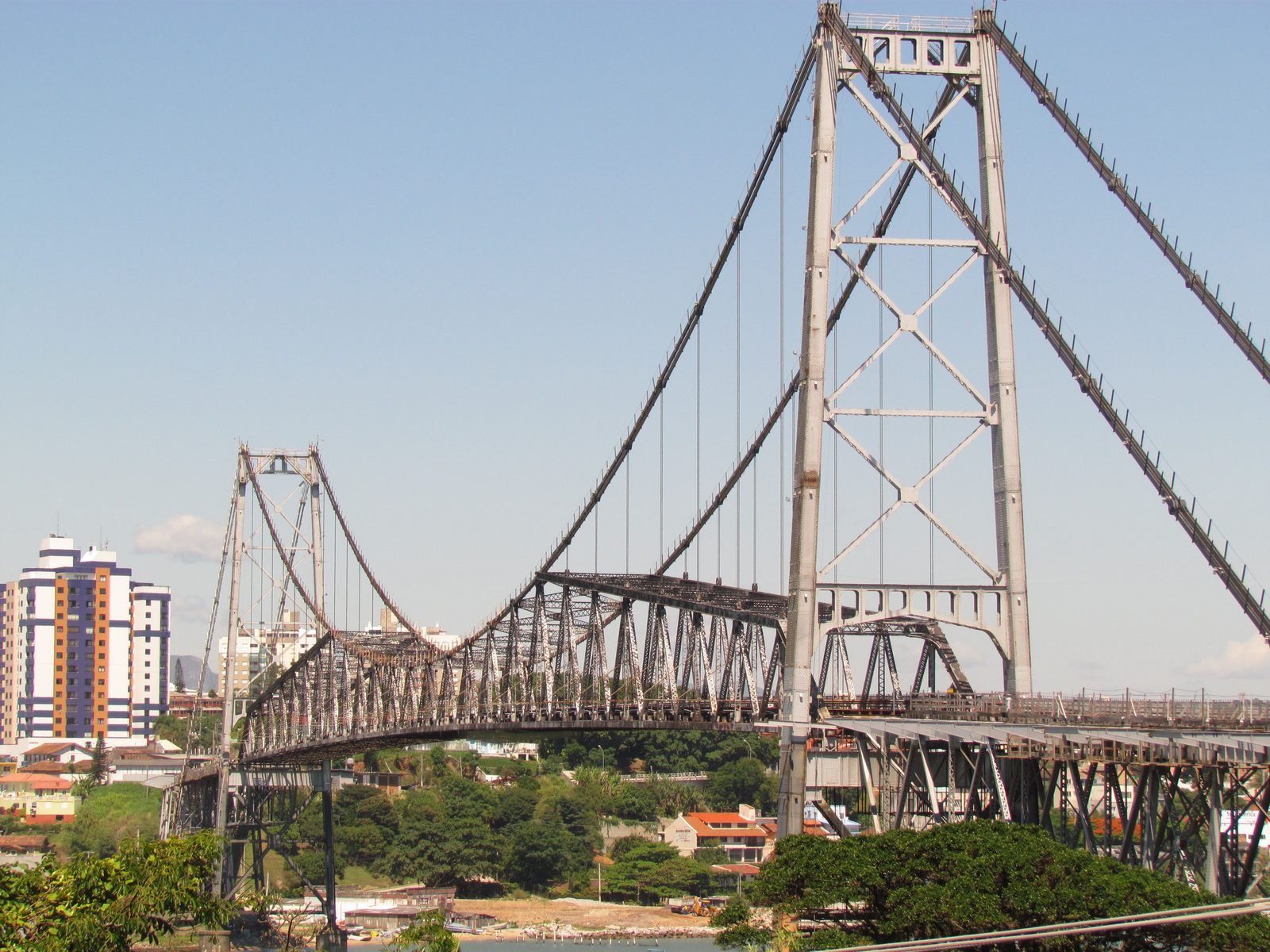
Yes. The Hercílio Luz Bridge opened on May 13, 1926, closed in 1991 and reopened on December 30, 2019, after 28 years. It has pedestrian and bike walkways on both sides. At 821 meters (2,693 feet) long, with a 339.5-meter main span and 74-meter towers, it’s the largest suspension bridge in Brazil. On weekends the deck is closed to cars at set times and becomes a public promenade, and since July 2026 it also closes to vehicles on Tuesdays and Thursdays from 8 p.m. to midnight for maintenance, with the walkways kept open. Walking across at sunset, with the sun dropping behind the mainland, is one of the best free things to do in the city.
Florianópolis by area: where everything is
Short answer: think of the island in four parts. Downtown (Centro) has the history, shopping and the bridge. The north has calm water, resorts and the most tourist infrastructure. The east has Lagoa da Conceição, the dunes and the surf beaches. The south is the wildest part, with fishing villages, hiking trails and oyster farms.
Downtown and the Beira-Mar Norte
Downtown is the city’s administrative heart, with Praça XV de Novembro and its huge old fig tree, the Metropolitan Cathedral, the Public Market, the Rua Felipe Schmidt shopping street and the old Customs House. The Beira-Mar Norte avenue, with a long waterfront path along the bay, is lined with business hotels and the tallest apartment towers on the island. It’s a good base for short stays or travelers without a car, close to the bus station, the TICEN terminal and the bridge, but there’s no swimming beach.
North Island: Jurerê, Canasvieiras, Ingleses and Santinho
The north has the calmest water on the island, because many of its beaches face the North Bay. Jurerê Internacional is the planned neighborhood of big houses, beach clubs and upscale hotels. Canasvieiras and Ingleses are busy family beach towns full of vacation rentals and restaurants. Santinho faces the open ocean, with dunes and the Costão do Santinho resort. Little Lagoinha do Norte (also called Lagoinha da Ponta das Canas) is a cove with clear water framed by hills. The north is also home to Praia do Forte, with the São José da Ponta Grossa fortress, and Daniela, a long, quiet bay beach.
East Island: Lagoa da Conceição, Joaquina, Mole and Barra da Lagoa
The east is the most versatile area for a first visit. Lagoa da Conceição has the Avenida das Rendeiras, restaurants, bars and the island’s liveliest nightlife, and it’s only minutes from Joaquina, Praia Mole and Barra da Lagoa. Joaquina is famous for surfing and for the dunes of the Lagoa da Conceição Dunes Municipal Park, a protected area of about 463 hectares created in 1988, with sand hills up to 20 meters high. Praia Mole, wrapped in green hills, draws surfers and a young crowd. Barra da Lagoa is a fishing village where the lagoon channel meets the sea, with the Projeto Tamar sea turtle center and natural rock pools across a small wooden suspension bridge.
South Island: Campeche, Armação, Pântano do Sul and Ribeirão da Ilha
The south is where Florianópolis still feels like a fishing island. Campeche has a long open-ocean beach facing Campeche Island. Armação is the main departure point for boats to Campeche Island and for several trails. Pântano do Sul is a fishing village with seafood restaurants on the sand and the start of the Lagoinha do Leste hike. On the South Bay side, Ribeirão da Ilha is one of the oldest Azorean parishes, with colorful houses and oyster restaurants, and at the southern tip Caieira da Barra do Sul is the starting point for the Naufragados trail. The area also has Lagoa do Peri, the largest freshwater lake on the island.
The best beaches in Florianópolis
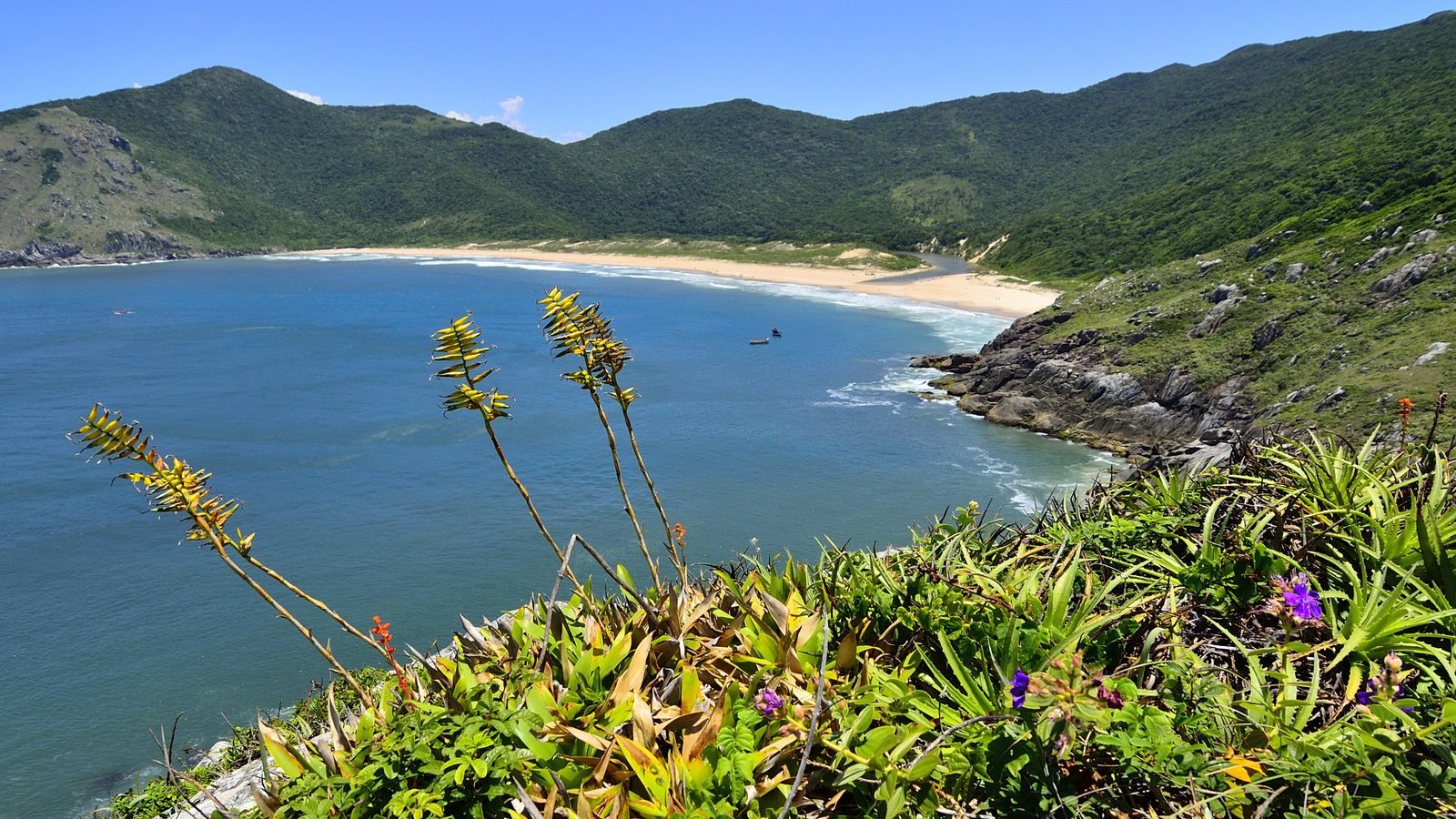
Short answer: for calm water and kids, pick Jurerê, Daniela, Canasvieiras or Lagoinha do Norte. For surf, Joaquina, Mole, Moçambique and Campeche. For unspoiled nature with no buildings, Lagoinha do Leste, Naufragados and Campeche Island, all reached by trail or boat.
Florianópolis is often sold as the island of “42 beaches”, but that number is tradition rather than fact: the city’s beach-naming law (Law 5,847 of 2001) lists around a hundred names, counting coves and named stretches. What really matters is which side of the island a beach is on. Beaches on the North and South bays have small waves and warmer water; those on the east side, open to the Atlantic, have strong surf, currents and cooler water.
- Jurerê Internacional: calm sea, wide sand and beach clubs. Great for families by day and for beach-club partying in summer.
- Daniela and Praia do Forte: quiet neighbors of Jurerê, with the São José da Ponta Grossa fortress on the point.
- Canasvieiras and Ingleses: busy town beaches with lots of restaurants and services.
- Lagoinha do Norte: a small, very pretty cove that fills up fast in high season.
- Santinho and Moçambique: open ocean, dunes and surf. Moçambique is a long, almost undeveloped stretch next to the Rio Vermelho State Park.
- Barra da Lagoa: a family beach in its sheltered corner, with seafood restaurants and natural pools a 15-minute walk away.
- Praia Mole: good surf, green hills and a young crowd.
- Joaquina: surf, dunes and sandboarding.
- Campeche: long and wave-exposed, with views of Campeche Island.
- Matadeiro and Pântano do Sul: fishing villages, beachfront restaurants and trailheads.
A word on safety in the water: the open beaches on the east and south get rip currents. Swim only in front of lifeguard towers and respect red flags. The emergency number for the fire and rescue service is 193.
Where can you go sandboarding in Florianópolis?
On the Joaquina dunes, between Avenida das Rendeiras and the beach, where, according to the city government, local surfers invented the sport in the 1980s. Access to the dunes is free and kiosks at the bottom rent boards for R$35–50 (NSC Total, January 2026). There are also gentler dunes for beginners at Santinho and between Ingleses and Moçambique. Go early or late in the day; the sand gets scorching at noon.
Hiking in Florianópolis
Short answer: the classic hike is Lagoinha do Leste from Pântano do Sul, 2.2 km (1.4 miles) and about 51 minutes each way, rated difficult by the city. For an easy walk, try the Barra da Lagoa natural pools (600 m, 15 minutes) or the Costa da Lagoa trail, which you can walk one way and return by boat.
About 41% of the island is protected land, and its trails are the best way to see it. The figures below come from the City of Florianópolis and its environmental agency, Floram, as published in October 2026.
| Trail | Area | Distance and time (one way) | Difficulty |
|---|---|---|---|
| Lagoinha do Leste (from Pântano do Sul) | South | 2.2 km, about 51 min | Difficult |
| Naufragados | Far south | 2.3 km, about 1 hr | Moderate |
| Costa da Lagoa | East | 7.5 km, about 2 hr 30 min (return by boat) | Moderate |
| Morro do Rapa (Praia Brava–Lagoinha do Norte) | North | 2.8 km, about 1 hr 30 min | Moderate |
| Barra da Lagoa natural pools | East | 600 m, 15 min | Easy |
| Poção (Córrego Grande) | Central | 710 m, 22 min | Easy |
You can also reach Lagoinha do Leste from Matadeiro beach on a longer coastal path. The city warns that the side trail to Pedra do Surfista is eroded and dangerous and that the Rigueirão trail is closed. In high season, fishermen in Pântano do Sul run boats to the beach for those who’d rather not hike. The Naufragados trail starts at Caieira da Barra do Sul and ends at a deserted beach with a lighthouse and the ruins of the Marechal Moura fort. The Costa da Lagoa trail is a historic path, heritage-listed in 1986, past fishermen’s houses, old flour mills and a waterfall before reaching the village restaurants.
A few rules apply everywhere: dogs are banned on trails inside conservation areas; bring water and start early; and check conditions before you go, since trails close for erosion or by court order. In 2026, for example, access to Morro do Lampião in Campeche was suspended by a court decision. In the Rio Vermelho State Park, the trail is open Tuesday to Sunday, 9:30 a.m. to 4 p.m., for R$15 (half price R$7.50). The Lagoa do Peri Municipal Park headquarters is open daily from 7 a.m. to 7 p.m.
Campeche Island: rules, voucher and how to get there
Short answer: you can only visit Campeche Island with an individual voucher bought in advance on the city’s official website, plus a licensed boat. In the 2025/26 season, the voucher cost R$15, visits were capped at 800 people a day and the island was open from 9 a.m. to 5 p.m. Check the official site for the 2026/27 rules before you buy.
Campeche Island sits off the beach of the same name in the south of Florianópolis, with clear water and very white sand, and it’s one of the most protected places in the city. It became a Municipal Natural Monument in 2025, and its rock carvings are archaeological heritage protected by Iphan. Visits are regulated by a 2021 agreement with Brazil’s Federal Prosecutor’s Office and by city rules that change every season.
For the 2025/26 season, according to the city government and reports by G1 and NSC Total, the rules were:
- An individual voucher is required, bought at ilhadocampeche.pmf.sc.gov.br for R$15, with no changes or refunds.
- A cap of 800 visitors a day, split among the boat cooperatives of Armação (410 spots), Campeche (73 and 62 spots, across two associations), Barra da Lagoa (135) and people arriving by private boat, kayak or swimming (120).
- Visiting hours from 9 a.m. to 5 p.m. The island closes in bad weather, rough seas or when monitors aren’t available.
- Trails and archaeological sites can only be visited with accredited guides.
- No speakers, barbecues, camping, feeding animals or taking anything natural away. Selling or renting kayaks and floats on the island isn’t allowed.
The boat is paid separately and last season cost roughly R$185–250 per person round trip, depending on where you leave from. Most visitors go from Praia da Armação, which has the shortest crossing. Buy your voucher well in advance, especially for January and public holidays, and agree on your return time with the boat operator before you board.
Things to do in Florianópolis beyond the beach
Short answer: the essentials off the sand are downtown with the Public Market and the Hercílio Luz Bridge, the Lagoa da Conceição lookout, a boat ride to Costa da Lagoa, the 18th-century forts in the bays, the Projeto Tamar turtle center in Barra da Lagoa, and sunsets with oysters in Santo Antônio de Lisboa and Ribeirão da Ilha.
Downtown and the Public Market
Start at Praça XV de Novembro, with its giant fig tree and the Metropolitan Cathedral above it. Walk down to the Mercado Público, a historic market hall with fish stalls, shops and bars. Hours vary by section: on weekdays the fishmongers open early, around 7 a.m., and the bars run into the evening; weekend hours are shorter and some shops close. Box 32, the market’s best-known bar, is open Monday to Friday 10 a.m. to 8 p.m. and Saturday 10 a.m. to 3 p.m., closed on Sunday. From there, it’s a walk to the island end of the Hercílio Luz Bridge.
Lagoa lookout and Costa da Lagoa
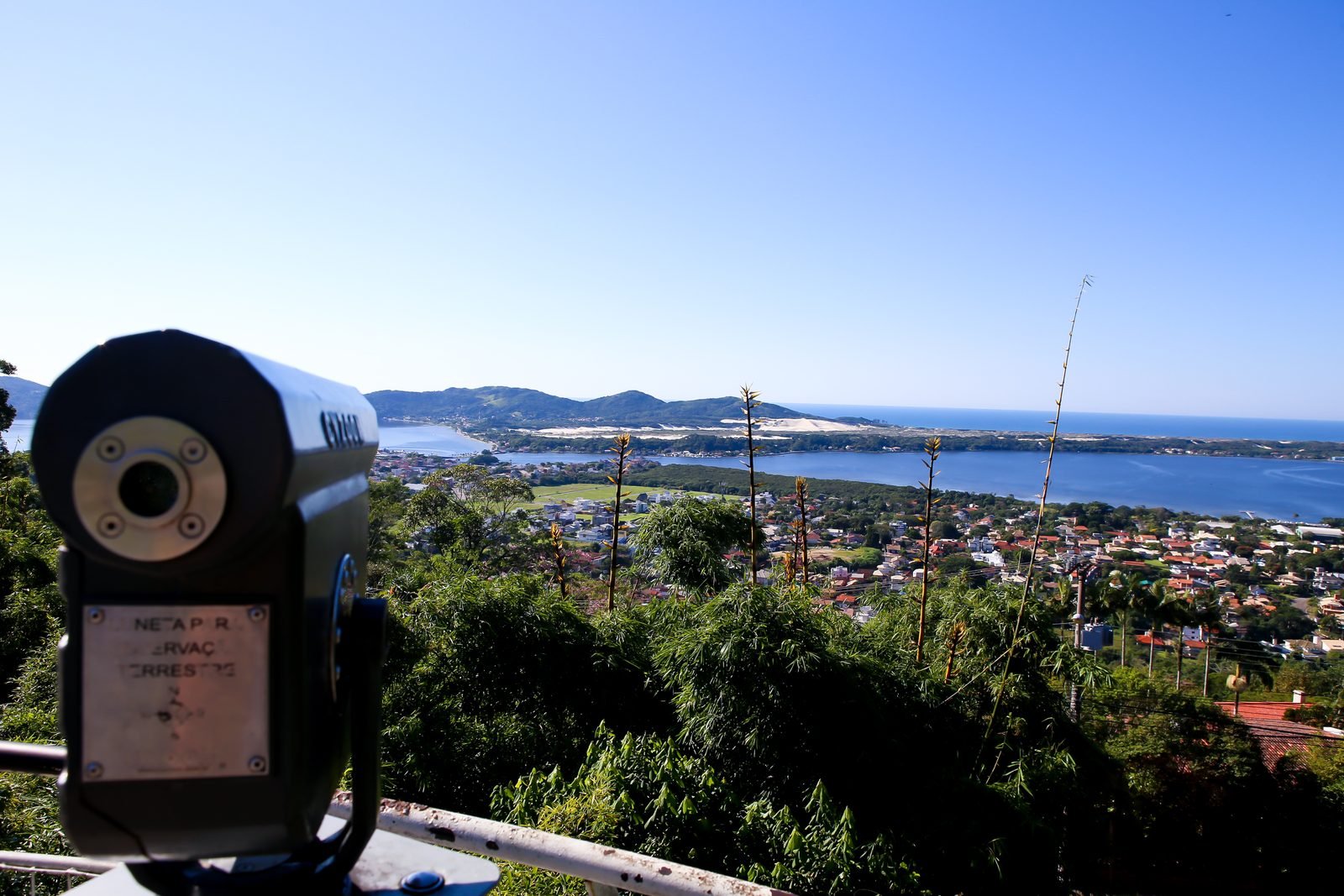
The Mirante da Lagoa, on the road from downtown down to Lagoa da Conceição, has the classic postcard view of the lagoon, the dunes and the ocean beyond. In Lagoa, take the boat from the lake terminal to Costa da Lagoa, a village of about a thousand people with no road access. Make it an afternoon: a seafood lunch at one of the restaurants by the jetties, a dip at the waterfall and a boat back at sunset. If you like walking, hike there and ride back.
The island’s 18th-century forts
The three forts run by the Federal University of Santa Catarina (UFSC), Anhatomirim, Ratones and São José da Ponta Grossa, are open Tuesday to Sunday, 8:30 a.m. to 6:30 p.m. (last entry 6 p.m.), holidays included. Admission is R$20 (half price R$10), or R$30 (R$15) for a Ratones + Anhatomirim combo. Entry is free on the last Sunday of each month from March to November, and always free for over-60s and children up to 5. São José da Ponta Grossa, at Praia do Forte, is the only one you can reach by road, and it accepts cash or Pix. Anhatomirim and Ratones are on small islands reachable only by private boat tours (the schooner trips leave from the north of the island); there you pay in cash at the gate or in advance on UFSC’s official site.
Projeto Tamar in Barra da Lagoa
The Projeto Tamar visitor center sits in Barra da Lagoa, 50 meters from the sea. It’s open Wednesday to Monday, 9:30 a.m. to 5 p.m., and tickets cost R$44 (half price R$22), free for children up to 5. Southern Brazil isn’t a nesting area, but it’s an important feeding ground for young sea turtles, and the local base works mainly to reduce the impact of fishing on them. The center is wheelchair accessible and makes a good rainy-day plan.
Santo Antônio de Lisboa
Santo Antônio de Lisboa, in the northwest of the island, was one of the first Azorean settlements. Its parish, Nossa Senhora das Necessidades, was created on April 27, 1750, and the white church above the square still keeps its Azorean character. The Caminho dos Açores, a cobblestone street along the North Bay, is lined with old houses, craft studios and oyster restaurants with tables facing the water. It’s the best sunset spot on the island, as the sun sinks behind the mainland mountains across the bay. On weekends, arrive early; waterfront tables fill up.
Ribeirão da Ilha
On the other side of the island, on the South Bay, Ribeirão da Ilha has the same Azorean houses and is one of the main oyster-farming areas in Florianópolis. Restaurants line the Rodovia Baldicero Filomeno road, many with decks over the water. It’s a perfect late-afternoon stop after a day in the south.
What to eat in Florianópolis: oysters and Azorean cooking
Short answer: oysters are the must, served raw, steamed (ao bafo) or gratinéed, in Santo Antônio de Lisboa and Ribeirão da Ilha. Then there’s the sequência de camarão (a multi-course shrimp feast), grilled mullet (tainha) in autumn and winter, and pirão, a fish-broth porridge thickened with cassava flour, all rooted in Azorean fishing traditions.
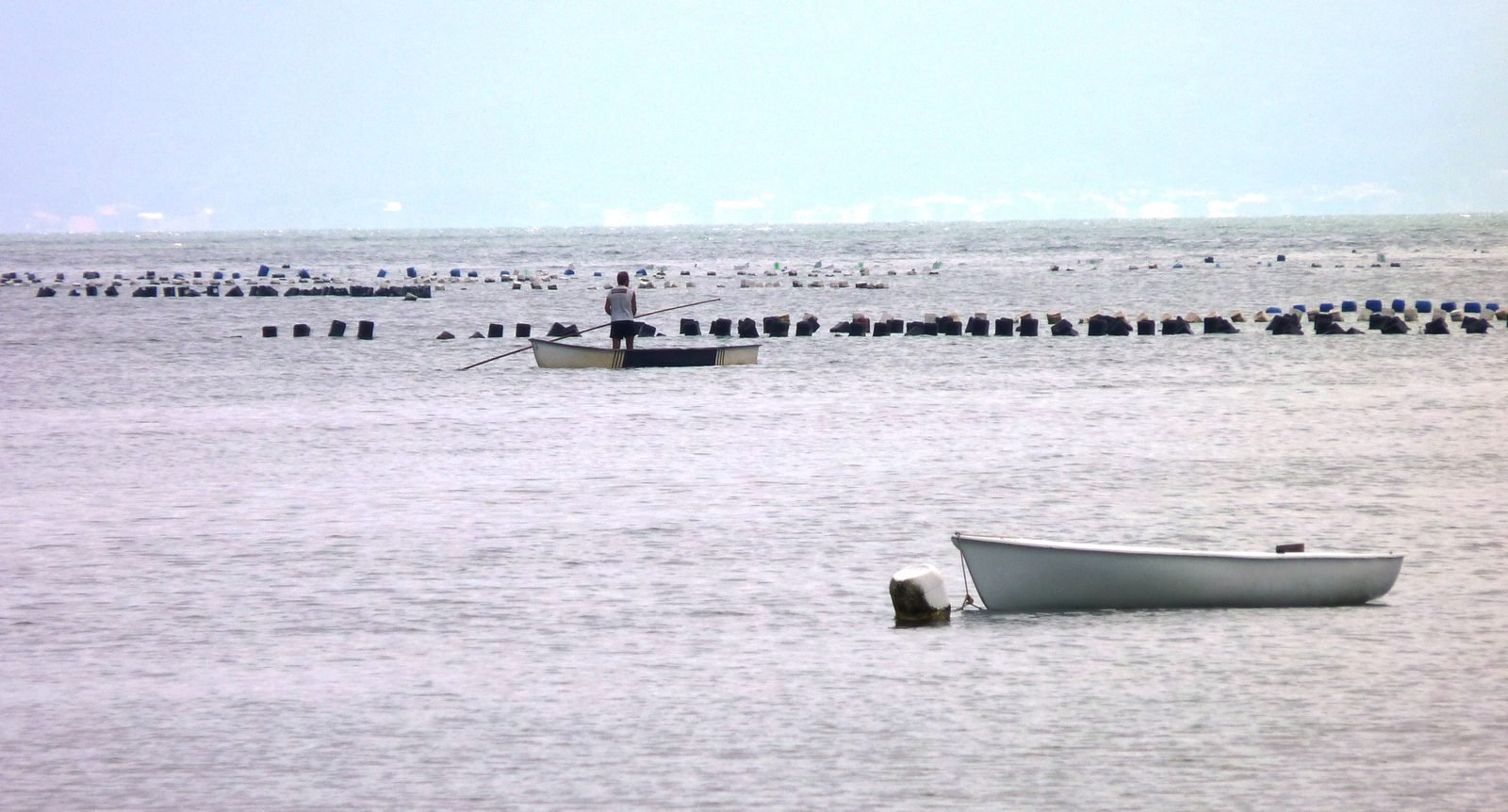
Santa Catarina produces about 91% of Brazil’s farmed mollusks, and Florianópolis is the state’s top producer: in 2023 the city farmed 1,312 of the state’s 1,707 tonnes, according to figures from the state agricultural agency Epagri reported by ND+. The farms sit in the calm waters of the bays, especially off Ribeirão da Ilha, Caieira da Barra do Sul, Santo Antônio de Lisboa and Sambaqui. That’s a big part of why UNESCO named Florianópolis a Creative City of Gastronomy in 2014.
The sequência de camarão is the island’s signature beach lunch: shrimp fritters, breaded shrimp, steamed shrimp, garlic shrimp, fish fillet with shrimp sauce, rice, pirão and fries, arriving in waves. Prices vary a lot. As a reference, at Sabor Ilhéu, a beachfront restaurant in Barra da Lagoa, it costs R$250 for two and R$290 for three (menu checked in October 2026), and grilled fish with sides starts at R$109.
Mullet is a winter fish: the artisanal beach-net season runs from autumn into early winter, and you may see fishermen hauling nets at Barra da Lagoa or Pântano do Sul. Downtown, the Public Market is the place for shrimp pastéis (fried pastries) and a cold draft beer after work. In Costa da Lagoa, the jetty restaurants serve seafood with water views.
- Oysters in Santo Antônio de Lisboa: restaurants along the Caminho dos Açores, with sunset over the North Bay.
- Oysters in Ribeirão da Ilha: places like Ostradamus and Rancho Açoriano, on Rodovia Baldicero Filomeno.
- Shrimp feast: Barra da Lagoa, Lagoa da Conceição and Pântano do Sul.
- Market food: the Mercado Público downtown.
Is Florianópolis safe?
Short answer: Florianópolis ranked as Brazil’s safest state capital in the 2025 Safest Cities in Brazil yearbook, with 10.7 homicides per 100,000 people, less than half the national average. The most common risks for visitors are the sea, the roads and petty theft on crowded beaches, not violent crime.
Low crime doesn’t mean no precautions. Don’t leave belongings unattended on the sand, don’t leave anything visible in a car parked near a beach, and use ride-hailing apps at night. The bigger dangers are natural: swim only near lifeguards on open beaches, and on trails start early, tell someone your plan, carry water and respect closures; the city has flagged eroded sections near Lagoinha do Leste. For any emergency, call the fire and rescue service on 193.
Outside hotels and bigger restaurants, don’t count on English being spoken. A translation app and a few words of Portuguese go a long way.
3- or 4-day Florianópolis itinerary
Short answer: with three days, do downtown and the bridge on day one, the east (Lagoa, Joaquina and Costa da Lagoa) on day two and the south (Lagoinha do Leste or Campeche Island, then Ribeirão da Ilha) on day three. Use a fourth day for the north: Barra da Lagoa, Jurerê and sunset in Santo Antônio de Lisboa.
- Day 1, Downtown: Praça XV, the Cathedral and the Public Market in the morning; lunch at the market; the Beira-Mar Norte in the afternoon and a sunset walk across the Hercílio Luz Bridge.
- Day 2, East: the Lagoa lookout early; sandboarding on the Joaquina dunes before the heat; beach time at Mole or Joaquina; boat to Costa da Lagoa for a late lunch; evening in Lagoa da Conceição.
- Day 3, South: hike to Lagoinha do Leste from Pântano do Sul or, with a voucher, take the boat to Campeche Island from Armação; fish on the sand at Pântano do Sul; sunset oysters in Ribeirão da Ilha.
- Day 4, North: Barra da Lagoa natural pools and Projeto Tamar in the morning; afternoon at Jurerê, Daniela or the São José da Ponta Grossa fort; sunset and dinner in Santo Antônio de Lisboa.
In summer, plan around traffic: head to the farthest spots from your base first thing and be back before 5 p.m. With extra time, add a boat trip to the forts or, from July to November, a day trip to Garopaba and Imbituba for whale watching. If Florianópolis is part of a longer trip around southern Brazil, pair it with our Gramado travel guide and our Iguaçu Falls travel guide.
How much does a trip to Florianópolis cost?
Short answer: many of the best things are free, including the beaches, dunes, city trails, viewpoints and the Hercílio Luz Bridge. Your main costs are accommodation, getting around and food. A bus ride is R$6.20–7.70, the forts R$20 and Projeto Tamar R$44.
| Item | 2026 price | Notes |
|---|---|---|
| City bus | R$6.20 (Cartão Cidadão), R$7.20 (Cartão Turista), R$7.70 (cash, Pix or QR code) | Cash only at terminal ticket windows |
| Express bus lines | R$20 | Long routes |
| Boat Lagoa–Costa da Lagoa | R$4.25 (regular) or R$15 each way (tourist) | Cooperbarco; Pix, debit or cash |
| Boat Rio Vermelho–Costa da Lagoa | R$25 round trip | Coopercosta; cash only |
| Campeche Island voucher | R$15 (2025/26 season) | Boat extra, about R$185–250 |
| UFSC forts | R$20 (half price R$10); Ratones + Anhatomirim R$30 | Free last Sunday of the month, March–November |
| Projeto Tamar | R$44 (half price R$22) | Free up to age 5 |
| Rio Vermelho State Park trail | R$15 (half price R$7.50) | Tuesday to Sunday |
| Sandboard rental | R$35–50 | Joaquina dunes |
| Shrimp feast (sequência de camarão) | R$250 for two | Example: Sabor Ilhéu, Barra da Lagoa |
Accommodation is the big variable. Between Christmas and Carnival, rates climb steeply and many hotels require minimum stays; New Year’s packages at Jurerê hotels checked in October 2026, for example, started at R$2,676 with a five-night minimum. Outside peak season, prices fall and it’s much easier to find a room at short notice.
Where to stay in Florianópolis
Short answer: for a first visit, Lagoa da Conceição is the most balanced base, close to the east, downtown and the south. For families, Jurerê, Canasvieiras or Ingleses, for the calm water. For nature and quiet, Campeche, Armação or Ribeirão da Ilha. For short trips without a car, downtown and the Beira-Mar Norte.
- Downtown and Beira-Mar Norte: business hotels, easy access to the airport and bus station, no swimming beach.
- Santo Antônio de Lisboa: small guesthouses, sunsets and oysters, close to the north and downtown.
- Jurerê, Canasvieiras and Ingleses: calm sea, resorts and vacation rentals.
- Lagoa da Conceição and Barra da Lagoa: central location, restaurants and nightlife.
- Campeche, Armação and Ribeirão da Ilha: wild beaches, trails and village life, close to the airport.
The list below covers real hotels and guesthouses across the island and at different price points. Every link goes to the property’s official website, checked in October 2026. We don’t use booking-site or affiliate links.
Majestic Palace Hotel (hotel, Beira-Mar Norte)
The Majestic Palace Hotel is on the Beira-Mar Norte waterfront (Avenida Jornalista Rubens de Arruda Ramos), next to Beiramar Shopping. It has 259 rooms, restaurants and The Roof, and serves both leisure and business travelers. A good pick if you want the bayfront promenade and quick access to downtown and the bridges.
ibis Florianópolis (budget, downtown)
The ibis Florianópolis, part of the Accor group, is at Avenida Rio Branco 37, downtown. It’s the practical choice for late arrivals, short stays or anyone getting around by bus from the TICEN terminal.
Pousada Mar de Dentro (guesthouse, Santo Antônio de Lisboa)
Pousada Mar de Dentro is at Estrada Caminho dos Açores 1929, in Santo Antônio de Lisboa, with views over the North Bay to the mainland mountains. It has a pool, breakfast included, and free parking and Wi-Fi, and it’s a walk from the oyster restaurants in the historic village.
Jurerê Beach Village (beachfront hotel, Jurerê Internacional)
Jurerê Beach Village sits right on Jurerê beach, at Alameda César Nascimento 646. Rooms come with full kitchens, handy for families on longer stays, and the hotel has leisure areas and its own activity program.
Il Campanario Villaggio Resort (upscale hotel, Jurerê Internacional)
Il Campanario is at Avenida dos Búzios 1760, in the heart of Jurerê Internacional, with Mediterranean-inspired design and food, a pool and a gym. It belongs to the same group as Jurerê Beach Village and offers half-board packages.
Costão do Santinho Resort (all-inclusive resort, Santinho)
Costão do Santinho is a resort on Praia do Santinho in the north of the island, at Estrada Vereador Onildo Lemos 2505. It runs on an all-inclusive basis and has a spa and event facilities. The option for travelers who want everything in one place.
Hotel Boutique Quinta das Videiras (boutique hotel, Lagoa da Conceição)
Quinta das Videiras is at Rua Afonso Luís Borba 81, in Lagoa da Conceição. It’s spread across three buildings in different styles, including the Casarão Lisboa, inspired by Portuguese architecture, and has the Sete Ais bistro and a spa. A romantic base right in Lagoa.
Pousada Barra da Lagoa (guesthouse, Barra da Lagoa)
Pousada Barra da Lagoa is at Rua José Serafim dos Santos 123, in the fishing village of Barra da Lagoa, close to the channel, the beach and Projeto Tamar. A simple choice for staying on the east side with a neighborhood feel.
Pousada Vila Tamarindo Eco Lodge (eco-lodge, Campeche)
Vila Tamarindo Eco Lodge has been running since 1999 at Avenida Campeche 1836, a few minutes’ walk from Campeche beach. It offers suites, a bungalow and a chalet set in gardens, plus a sustainability program, and it’s well placed for Campeche Island, the southern trails and the airport.
Pousada Ecomar (guesthouse, Ribeirão da Ilha)
Pousada Ecomar is in Ribeirão da Ilha, with sea views and Atlantic Forest all around, close to the oyster restaurants. The choice for peace and quiet in the most traditional part of the island.
Video: Florianópolis by the City of Florianópolis
This official video from the City of Florianópolis presents Floripa as a UNESCO Creative City, with its food, Azorean culture and island landscapes.
Florianópolis FAQ
When is the best time to visit Florianópolis?
For beaches, December to March, when the sea is about 24–26 °C (75–79 °F). For lower prices and fewer crowds, March, April, October and November. Winter, June to August, is mild (average highs around 21 °C / 70 °F) and good for hiking and oysters.
How many days do you need in Florianópolis?
Three full days cover downtown, Lagoa da Conceição and one beach in each part of the island. With four or five days you can add Campeche Island, the Lagoinha do Leste hike and sunsets in Santo Antônio de Lisboa and Ribeirão da Ilha.
How do I get from Florianópolis airport to downtown?
Hercílio Luz International Airport (FLN) is about 12 km from downtown. City bus 431 links the airport to the TICEN terminal, every 30 to 45 minutes on weekdays. There are also 24-hour taxis and signposted pickup points for ride-hailing apps.
What is the best area to stay in Florianópolis?
For a first trip, Lagoa da Conceição, for its central location. For families, the north (Jurerê, Canasvieiras, Ingleses), for the calm water. For nature, the south (Campeche, Armação, Ribeirão da Ilha). For short stays without a car, downtown and the Beira-Mar Norte.
Do you need a voucher to visit Campeche Island?
Yes. You need an individual voucher bought on the city’s official site, ilhadocampeche.pmf.sc.gov.br. In the 2025/26 season it cost R$15, with a cap of 800 visitors a day and visits from 9 a.m. to 5 p.m.; the boat is extra. Check the current season’s rules before you buy.
How much is the bus in Florianópolis?
In 2026, R$6.20 with the resident Cartão Cidadão, R$7.20 with the Cartão Turista and R$7.70 in cash, Pix or QR code. Express lines cost R$20. Since January 2026 you can’t pay cash on board, only at terminal ticket windows.
How do you get to Lagoinha do Leste beach?
On foot, either on the trail from Pântano do Sul (2.2 km, about 51 minutes, rated difficult) or on the longer route from Matadeiro beach. In high season, fishermen in Pântano do Sul also run boats there.
Where can I eat oysters in Florianópolis?
In Santo Antônio de Lisboa, in the north, with sunset over the North Bay, and in Ribeirão da Ilha, in the south, one of the main oyster-farming areas. Florianópolis is Brazil’s largest oyster producer.
Is Florianópolis safe for tourists?
Yes, by Brazilian standards. It was named the safest state capital in Brazil in the 2025 Safest Cities yearbook, with 10.7 homicides per 100,000 people. The main things to watch are the sea, the trails and petty theft on crowded beaches.
Can you visit Florianópolis without a car?
Yes, with some patience. Buses connect the terminals to most beaches, and boats serve Costa da Lagoa. If you’re short on time, combine buses with ride-hailing and stay somewhere central, like Lagoa da Conceição or downtown.
Is Florianópolis worth it?
Florianópolis rewards travelers who pick the right base and don’t try to see the whole island at once. Give each area its own day, accept that the southern wind will sometimes rewrite your plans, and save at least one late afternoon for oysters by the bay. If your trip continues around Brazil, see our guides to Rio de Janeiro and Salvador. Before you go, double-check hours, prices and visitor rules on the official sites below, since they change every season.
Sources
- IBGE Cidades: Florianópolis (2022 census) and IBGE Library (municipal history); Inmet, 1991–2020 climate normals
- Airport: Floripa Airport – getting here; public transport: Consórcio Fênix (line 431, 2026 fares), G1 SC and NSC Total
- Campeche Island: official city website, G1 SC and NSC Total (2025/26 season)
- Trails: City of Florianópolis and Floram, as published in October 2026
- Forts: Fortalezas da Ilha de Santa Catarina – UFSC
- Projeto Tamar: Florianópolis Visitor Center
- Hercílio Luz Bridge: City of Florianópolis, G1 SC and Visite Floripa
- Lagoa boats: NSC Total (February 2026); sandboarding: NSC Total (January 2026)
- Oysters: Epagri, via ND+ and NSC Total; UNESCO, Creative Cities Network – Florianópolis
- Safety: 2025 Safest Cities in Brazil yearbook (MySide), via De Olho na Ilha
- Santo Antônio de Lisboa: Archdiocese of Florianópolis, Nossa Senhora das Necessidades parish
- Whales: Instituto Australis, Projeto Baleia Franca
- Hotels: official websites linked in “Where to stay in Florianópolis”, checked in October 2026