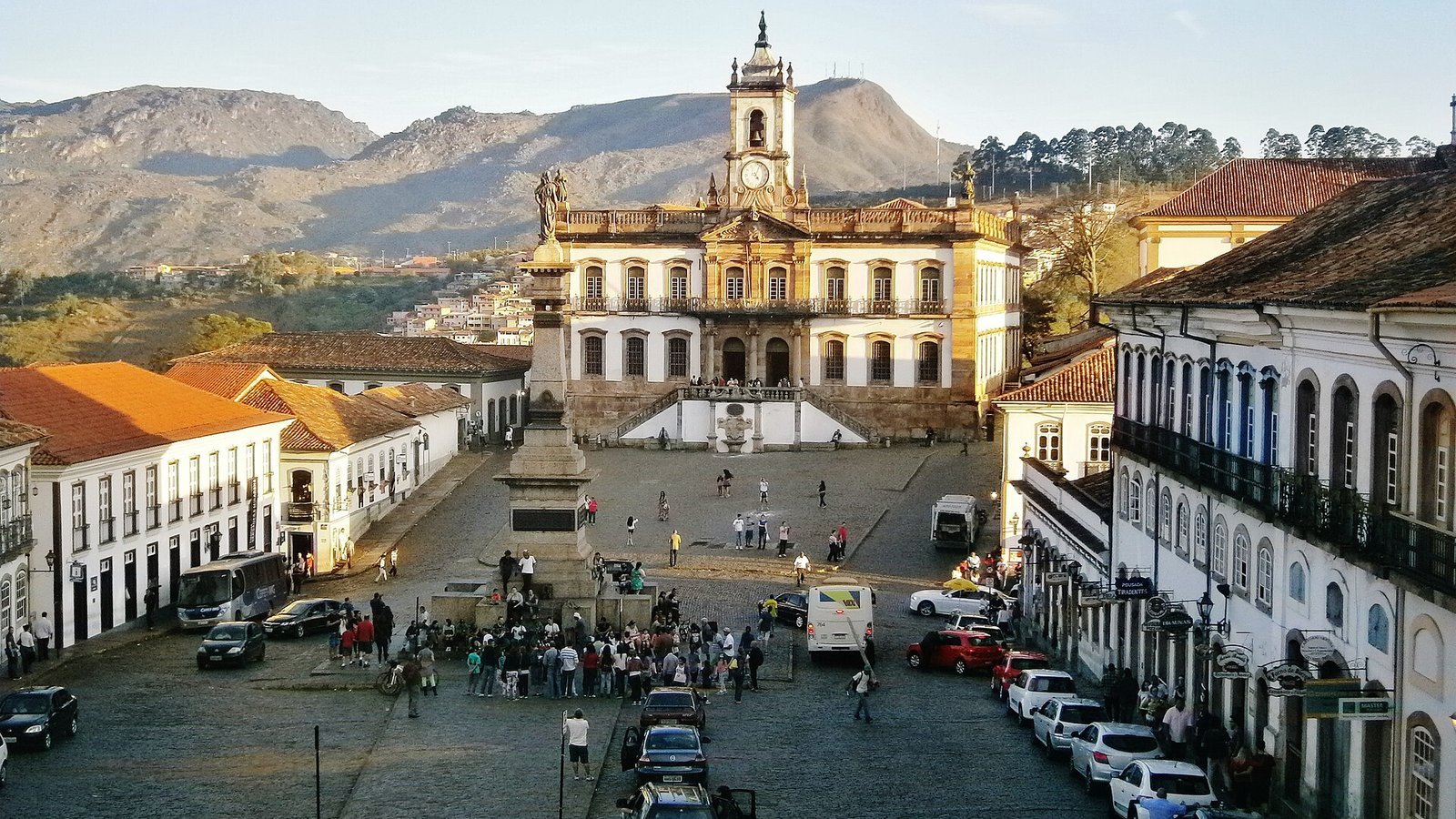
Ouro Preto sits about 100 km from Belo Horizonte, high in the hills of Minas Gerais, and in 1980 it became the first Brazilian place inscribed on UNESCO’s World Heritage List. It was Vila Rica, the boomtown of Brazil’s 18th-century gold rush, the capital of Minas Gerais for almost two centuries and the stage of the Inconfidência Mineira, the first serious plot for independence from Portugal. This Ouro Preto travel guide boils the visit down to a handful of essentials: walk the steep cobbled streets of the historic center, step inside the Church of São Francisco de Assis and the gilded Basilica of Pilar, spend a morning at the Inconfidência Museum, go down into a gold mine (Chico Rei in town, or Passagem on the road to Mariana), see the Casa dos Contos and the 1770 opera house, eat tutu, feijão tropeiro and chicken with okra, browse the soapstone market at Largo de Coimbra and, if you have time, hike in Itacolomi State Park or spend an afternoon in Mariana.
We put this guide together in October 2026 and checked the facts against official sources: Ouro Preto City Hall, the Inconfidência Museum (Ibram), the Parish of Nossa Senhora da Conceição (which runs the Aleijadinho Museum and the São Francisco church), the Minas Gerais State Forestry Institute, the Passagem Mine, UNESCO and the hotels themselves. It covers the town’s history, where to stay, when to go, how to get there from Belo Horizonte and Confins Airport, what each attraction costs, a two-to-four-day itinerary and ten hotels and guesthouses with their official websites. Where sources disagree, or an attraction is running on a special schedule, we say so.
Quick facts: Ouro Preto, Minas Gerais
- Where it is: central Minas Gerais, about 100 km from Belo Horizonte via the BR-040 and BR-356 highways. The neighboring colonial town of Mariana is 14 km away.
- Altitude and size: the center sits between roughly 1,100 and 1,200 meters above sea level. The municipality covers about 1,245 km² and had 74,821 residents in the 2022 census (IBGE estimated 77,914 in 2025), spread between the town and districts such as Lavras Novas, Cachoeira do Campo and São Bartolomeu.
- Best time to go: April to September, the dry season, with clear skies and cold nights (July averages lows around 8 °C / 46 °F). Special dates: Holy Week, Carnival and the Winter Festival. November to March is wet, with frequent afternoon storms.
- Getting there: by car from Belo Horizonte on the BR-040 and then the BR-356, about 1h40 to 2 hours. By bus, Pássaro Verde runs from Belo Horizonte’s bus station in 1h50 to 2h30. From Confins (Belo Horizonte International Airport) it is about 140 km, roughly 2 to 2.5 hours by car.
- Costs: Aleijadinho Museum circuit (includes the São Francisco church) R$30, Basilica of Pilar and Sacred Art Museum R$20, Chico Rei Mine from R$70, Itacolomi State Park R$28.75, Passagem Mine R$290 (cash only). The Inconfidência Museum and Casa dos Contos are free. Most sites offer half-price tickets for students and seniors.
- How many days: two days cover the historic center and the main museums. Three days let you add a gold mine and Mariana. Four days leave room for Itacolomi or Lavras Novas.
- Don’t forget: shoes with good grip (the stone streets are slippery), a jacket for the evening, some cash, and the fact that almost every church and museum closes on Mondays.
History of Ouro Preto: from Vila Rica to World Heritage Site
Direct answer: Ouro Preto was born from the gold rush of the late 1600s. The first mining camps, such as Antônio Dias and Padre Faria, date from 1698. On July 8, 1711 they were merged into the town of Vila Rica, which became the capital of the captaincy of Minas Gerais in 1720 and one of the richest towns in the Americas in the 18th century. The Inconfidência Mineira plot (1789) was hatched here, and the sculptor Aleijadinho worked here. It stayed capital of Minas until 1897, when the government moved to Belo Horizonte. It was declared a national monument in 1938 and a UNESCO World Heritage Site in 1980.
Almost everything you see in central Ouro Preto was built in little more than a century, between the early 1700s and the early 1800s. The town grew fast, got rich overnight, fell into poverty when the gold ran out and, precisely because it stopped in time, reached the 20th century almost intact. Knowing that sequence makes the churches and museums much easier to read.
The “black gold” behind the name
In the late 17th century, explorers from São Paulo, known as bandeirantes, found gold in the local streams. It was unusual gold, coated with a dark layer of iron oxide, and so people called it “ouro preto”, black gold. The news spread, and within a few years thousands of people from São Paulo, Bahia and Portugal, and enslaved Africans brought by force, were spread across the hills. The first settlements of the future town, such as Antônio Dias and Padre Faria, formed around June 24, 1698, the date the city uses as its founding.
Vila Rica, capital of gold
On July 8, 1711, the governor Antônio de Albuquerque merged the camps into the town of Vila Rica de Albuquerque, soon simply Vila Rica. Two other towns in Minas were created the same year, among them Ribeirão do Carmo, today’s Mariana. In 1720 Vila Rica became the seat of the new captaincy of Minas Gerais. The Crown charged the “quinto”, one fifth of all gold mined, and ran smelting houses to control production. According to official records, about 800 tonnes of gold were shipped to Portugal during the 18th century, not counting what was smuggled out.
That money turned into churches. Religious brotherhoods, organized by social group (wealthy whites, merchants, people of mixed race, free and enslaved Black people), competed to build ever richer temples. That is why Ouro Preto has so many churches so close together, and why each one tells a different part of the story of colonial society.
Slavery and the legend of Chico Rei
Much of the gold of Minas was dug out by enslaved Africans. The town still carries that history in the churches of the Black brotherhoods, such as Nossa Senhora do Rosário and Santa Efigênia, and in stories like that of Chico Rei. According to oral tradition, he was an African king brought to Vila Rica in chains, who managed to buy his own freedom, and that of his companions, with gold from a mine. No documents prove the story, and historians treat it as legend. Even so, it gives its name to one of the mines you can visit and is an important part of Ouro Preto’s Black memory.
The Inconfidência Mineira
By the late 18th century gold was running short, but the Crown kept demanding heavy taxes and threatened to collect all arrears at once, a measure known as the derrama. In 1789 a group of intellectuals, officers, priests and landowners from Vila Rica and nearby, including the poets Tomás Antônio Gonzaga and Cláudio Manuel da Costa and the cavalry ensign Joaquim José da Silva Xavier, known as Tiradentes, plotted an uprising for independence. They were betrayed before anything happened. The conspirators were arrested and sentenced, and Tiradentes was hanged in Rio de Janeiro on April 21, 1792. Parts of his body were displayed along the roads he had traveled, and his head was shown in Vila Rica, in the square that now bears his name. After Brazil became a republic in 1889, the plot became a national symbol, and April 21 is a public holiday.
Aleijadinho, Ataíde and the Minas Baroque
Antônio Francisco Lisboa, known as Aleijadinho (“the little cripple”), was born in Vila Rica, the son of a Portuguese architect and an enslaved woman. A sculptor, woodcarver and architect, he worked on churches in Ouro Preto, Mariana, Sabará, São João del-Rei and Congonhas, and got his nickname from a degenerative illness that deformed his body later in life. In Ouro Preto his most complete work is the Church of São Francisco de Assis, begun in 1766. He signed the design, the carved portal and the soapstone pulpits, and the painter Manuel da Costa Ataíde painted the nave ceiling. Aleijadinho died in 1814 and is buried in the Mother Church of Nossa Senhora da Conceição de Antônio Dias, which now houses the museum named after him.
From imperial city to lost capital
After independence, Vila Rica was renamed the Imperial City of Ouro Preto in 1823 and remained the provincial capital. It gained two schools that still shape the town: the School of Pharmacy, founded in 1839, and the School of Mines, founded on October 12, 1876 by the French mineralogist Claude-Henri Gorceix at the invitation of Emperor Pedro II. Together they became the Federal University of Ouro Preto (UFOP), which is why the town is full of students and their famous shared houses, the repúblicas. After the republic was proclaimed, the state decided to build a new, planned capital. In 1897 the government moved to Belo Horizonte, and Ouro Preto lost people, money and importance.
Heritage listing and UNESCO
Decline ended up saving the town. With no money to tear down and rebuild, Ouro Preto kept its colonial street plan and its townhouses. In 1933 it was recognized as state heritage, and in 1938 it was declared a national monument and its townscape was protected by the newly created national heritage service, today’s IPHAN. In 1980 UNESCO added it to the World Heritage List, the first Brazilian inscription. The listing recognized its churches, fountains, bridges and townhouses as one of the most complete examples of Baroque in the Americas.
Where to stay in Ouro Preto: historic center, Antônio Dias, Pilar or outside town
Direct answer: stay in the historic center, between Praça Tiradentes, Rua São José, Rua Direita and Largo de Coimbra, if you want to do almost everything on foot and go out at night. Choose Antônio Dias or Pilar for quieter streets that are still minutes from the churches. Hotels near the town entrance, in areas such as Rosário and Lajes, usually have parking and views but mean climbing hills. For nature and silence, try Lavras Novas, about 19 km away. Mariana, 14 km away, also works as a base.
Ouro Preto is a town of hills. Two places that look close on the map can be separated by a steep, uneven cobbled slope. When choosing where to sleep, look not only at the distance to Praça Tiradentes but also at how much climbing it takes to get there.
Historic center (Praça Tiradentes, Rua São José, Rua Direita)
This is where you find most restaurants, bars and shops, plus the Inconfidência Museum, the Casa dos Contos and the opera house. Many guesthouses occupy 18th- and 19th-century townhouses. The upside is walking everywhere. The downsides are noise on party nights and during Carnival, sometimes small rooms, and little or no parking. Good for travelers arriving by bus.
Antônio Dias and Largo de Coimbra
On the eastern side of the center, downhill from Praça Tiradentes toward the São Francisco de Assis church and the Antônio Dias mother church. It is a lovely area of well-preserved houses with a few traditional hotels. The Chico Rei Mine is here too. The walk back to the square is all uphill.
Pilar and Rosário
On the other side of the center, to the west, are the Basilica of Pilar and the Rosário church. These are quieter, more residential neighborhoods with guesthouses and hotels in old townhouses, 10 to 15 minutes’ walk from Praça Tiradentes.
Lajes and the town entrance
Along Rua Conselheiro Quintiliano, the road that arrives from Belo Horizonte, you’ll find hotels with parking, pools and panoramic views over the rooftops and church towers. They are good choices if you’re driving. The distance to Praça Tiradentes is around 500 to 800 meters, almost always uphill.
Lavras Novas and Mariana
Lavras Novas is a district of Ouro Preto known for romantic guesthouses, viewpoints and waterfalls, about 19 km from town, partly on dirt road. Mariana, 14 km away, has cheaper hotels and is a backup when Ouro Preto is full, as during Carnival and the Winter Festival.
Weather and the best time to visit Ouro Preto
Direct answer: the best time to visit Ouro Preto is April to September, the dry season. It barely rains (July gets about 15 mm in the whole month), skies are usually clear and nights are cold, with average lows near 8 °C (46 °F) in July. November to March is the rainy season, with December topping 300 mm. If you want festivities, go for Carnival or Holy Week. If you want peace and quiet, choose May, June, August or September outside public holidays.
Ouro Preto has a highland subtropical climate (Cwb in the Köppen classification): mild, rainy summers and dry, cool winters. Climate normals put July’s average temperature at 14.8 °C (59 °F), with an average low of 8.3 °C (47 °F). January, the warmest month, averages 20.8 °C (69 °F). Annual rainfall is above 1,500 mm, nearly all of it between October and March.
| Period | What it’s like | Best for |
|---|---|---|
| December to March | Rainy season (December tops 300 mm), afternoon storms, mild temperatures, Carnival in February or March | Carnival-goers and travelers who don’t mind rain |
| April and May | Rain tapering off, clearer skies, Holy Week in March or April | Seeing the Holy Week sawdust carpets or traveling in settled weather |
| June to August | Dry (July gets about 15 mm), sunny days, cold nights, Winter Festival | Walking all day and enjoying the cultural program |
| September to November | Warming up, rain returning from October | Lower prices outside public holidays |
Holy Week
One of the oldest celebrations in Brazil. For visitors, the highlight is the devotional carpets made of dyed sawdust, laid out by residents and volunteers overnight on Holy Saturday for the Resurrection Procession on Easter Sunday. City Hall and the parish publish the program every year. The town fills up, so book early.
Carnival
Ouro Preto’s Carnival mixes street blocos, samba schools and the student Carnival thrown by the repúblicas. Zé Pereira dos Lacaios, founded in 1867, is considered the oldest Carnival group in Brazil still parading, with giant puppets. During Carnival the streets are packed and the noise goes on late. Great if you want to party, terrible if you want to see the churches in peace.
Winter Festival
The Ouro Preto and Mariana Winter Festival, run by the Federal University of Ouro Preto (UFOP), has been going for decades with concerts, workshops, theater and exhibitions, much of it free. In 2026 the University Winter Festival opened on July 23 and ran events until September in Ouro Preto, Mariana and João Monlevade. Dates and format change every year, so check UFOP’s website.
What to pack
Closed shoes with grippy rubber soles: the stone paving (locally called “pé de moleque”) is slippery, especially in the rain. A jacket for the evening in any season, a heavier one from May to August, and a light rain jacket in summer. Sunscreen and a water bottle, because the high-altitude sun burns and the hills are tiring.
How to get to Ouro Preto
Direct answer: the nearest major airport is Confins (CNF), Belo Horizonte International, about 140 km from Ouro Preto, or 2 to 2.5 hours by car. From Belo Horizonte it is about 100 km on the BR-040 and BR-356, by car or on a Pássaro Verde bus, which takes 1h50 to 2h30 from Belo Horizonte bus station to Ouro Preto bus station. Rio de Janeiro is about 417 km away and São Paulo about 615 km, both with direct Útil buses.
By air: Confins Airport
Belo Horizonte International Airport in Confins has flights from all over Brazil and some international routes. From there to Ouro Preto is about 138 to 140 km, taking 2 to 2.5 hours depending on traffic on Belo Horizonte’s ring road. Your options are renting a car at the airport, booking a transfer, or taking the airport executive bus into central Belo Horizonte and catching the Ouro Preto bus from the bus station. Pampulha airport in the city has only a few regional flights.
Driving from Belo Horizonte
The usual route is the BR-040 toward Rio de Janeiro and, after Itabirito, the BR-356, known as the Rodovia dos Inconfidentes, which ends in Ouro Preto and continues to Mariana. It is about 100 km, normally 1h40 to 2 hours. The road is paved, with winding mountain stretches and plenty of trucks. Avoid driving at night in fog. Itabirito, 47 km from Ouro Preto, is a handy stop on the way.
By bus
Pássaro Verde runs the route between Belo Horizonte bus station (Praça Rio Branco 100, downtown) and Ouro Preto bus station (Rua Padre Rolim 16), with several departures a day and a journey time of 1h50 to 2h30. According to City Hall’s timetable, Útil runs buses to Rio de Janeiro (about 417 km) and São Paulo (about 615 km), and Transcotta to Mariana (14 km). Schedules and fares change, so check with the bus companies before you travel. Ouro Preto bus station sits at the top of Rua Padre Rolim, a 10 to 15 minute downhill walk from Praça Tiradentes. With luggage, take a taxi.
From Rio de Janeiro and São Paulo
By car from Rio, take the BR-040 to the Itabirito area and then the BR-356. From São Paulo, take the Fernão Dias highway (BR-381) toward Belo Horizonte and then the BR-040. These are long drives, best combined with other colonial towns such as Tiradentes and São João del-Rei, or with Belo Horizonte and the Inhotim art park.
Getting around Ouro Preto
Direct answer: on foot. The historic center is compact, but it is all steep hills and uneven cobbles, so wear sneakers and take your time. Taxis wait at Praça Tiradentes and the bus station and help with the worst climbs. Transcotta buses run to Mariana. For Itacolomi, Lavras Novas and the Passagem Mine, a car, taxi or guided tour is easiest. The Vale tourist train between Ouro Preto and Mariana has been suspended since 2020.
On foot, slowly
From Praça Tiradentes to the São Francisco de Assis church is a few minutes downhill. To the Basilica of Pilar, about 10 minutes. To the Antônio Dias mother church and the Chico Rei Mine, about 15 minutes, with a steep descent on the way and a steep climb back. Plan your days by area (the Antônio Dias side in the morning and the Pilar side in the afternoon, for example) so you don’t climb the same hill several times.
By car
Driving in the historic center is hard work: narrow one-way streets, slippery stones and very little parking. If you come by car, choose a place with parking and leave the car there, using it only for trips outside the center. Hills like Rua Conselheiro Quintiliano and the Pilar slope call for a firm handbrake and patience.
Taxis and ride-hailing
There are taxi ranks at Praça Tiradentes and the bus station. Ride-hailing apps work in town, but availability varies. For trips to Lavras Novas, Itacolomi or the Passagem Mine, arrange the return with your driver.
Vale tourist train: suspended
The 18 km tourist train between Ouro Preto and Mariana has been suspended since August 2020. According to an October 2026 report, work on the line is expected to continue until late 2028, with no date set for the ride to return. If an old guidebook mentions it, don’t count on it.
Tickets, opening hours and rules: what to know before you go
Direct answer: almost every church and museum in Ouro Preto is closed on Mondays and open Tuesday to Sunday, with a lunch break at the churches (roughly 11:30 am/noon to 1/1:30 pm). The Inconfidência Museum and Casa dos Contos are free. The Aleijadinho Museum circuit costs R$30 (R$15 half price) since July 2026 and includes three churches. The Basilica of Pilar with its Sacred Art Museum costs R$20 (R$10 half price). Flash photography is usually forbidden inside churches, and many ban photos altogether.
Monday is the day off
Plan your trip so Monday is your arrival day, or a day for a hike or anything that doesn’t depend on a museum. The gold mines, the Largo de Coimbra market, the streets themselves and the viewpoints are all open as usual.
The Aleijadinho Museum circuit
The Aleijadinho Museum is run by the Parish of Nossa Senhora da Conceição and works as a circuit of three churches: the Mother Church (Sanctuary) of Nossa Senhora da Conceição de Antônio Dias, where Aleijadinho is buried; the Church of São Francisco de Assis; and the Church of Nossa Senhora das Mercês e Perdões. The parish announced new prices from July 8, 2026: R$30 full price and R$15 half price. Lower figures (R$10 and R$6) found on older websites and guides are out of date.
Photos, dress and behavior
The churches are active places of worship, with Masses, weddings and funerals. In several of them photography is banned or allowed only without flash. Follow the signs and the staff. There is no formal dress code, but modest clothing is appreciated. Tourist visits are usually suspended during Mass.
Discounts
Students, teachers, people aged 60 and over and people with disabilities usually pay half price with ID. Ouro Preto residents get discounts at several sites, such as Itacolomi State Park. Rules vary from place to place, so carry photo ID and your student card. Foreign student cards are not always accepted.
Things to do in Ouro Preto: the sights worth the trip
Direct answer: the must-sees in Ouro Preto are Praça Tiradentes and the Inconfidência Museum, the Church of São Francisco de Assis (Aleijadinho’s masterpiece), the Basilica of Nossa Senhora do Pilar with its Sacred Art Museum, the Antônio Dias mother church and Aleijadinho Museum, the Casa dos Contos, the opera house, a gold mine (Chico Rei in town or Passagem on the way to Mariana) and the Largo de Coimbra soapstone market. With more time, add Itacolomi State Park, Mariana and Lavras Novas.
The list below roughly follows the order most people visit, starting from Praça Tiradentes. Prices and hours were checked in October 2026 against each site’s official source. Still, confirm before you go, because churches and museums change hours on holidays and religious dates.
Praça Tiradentes
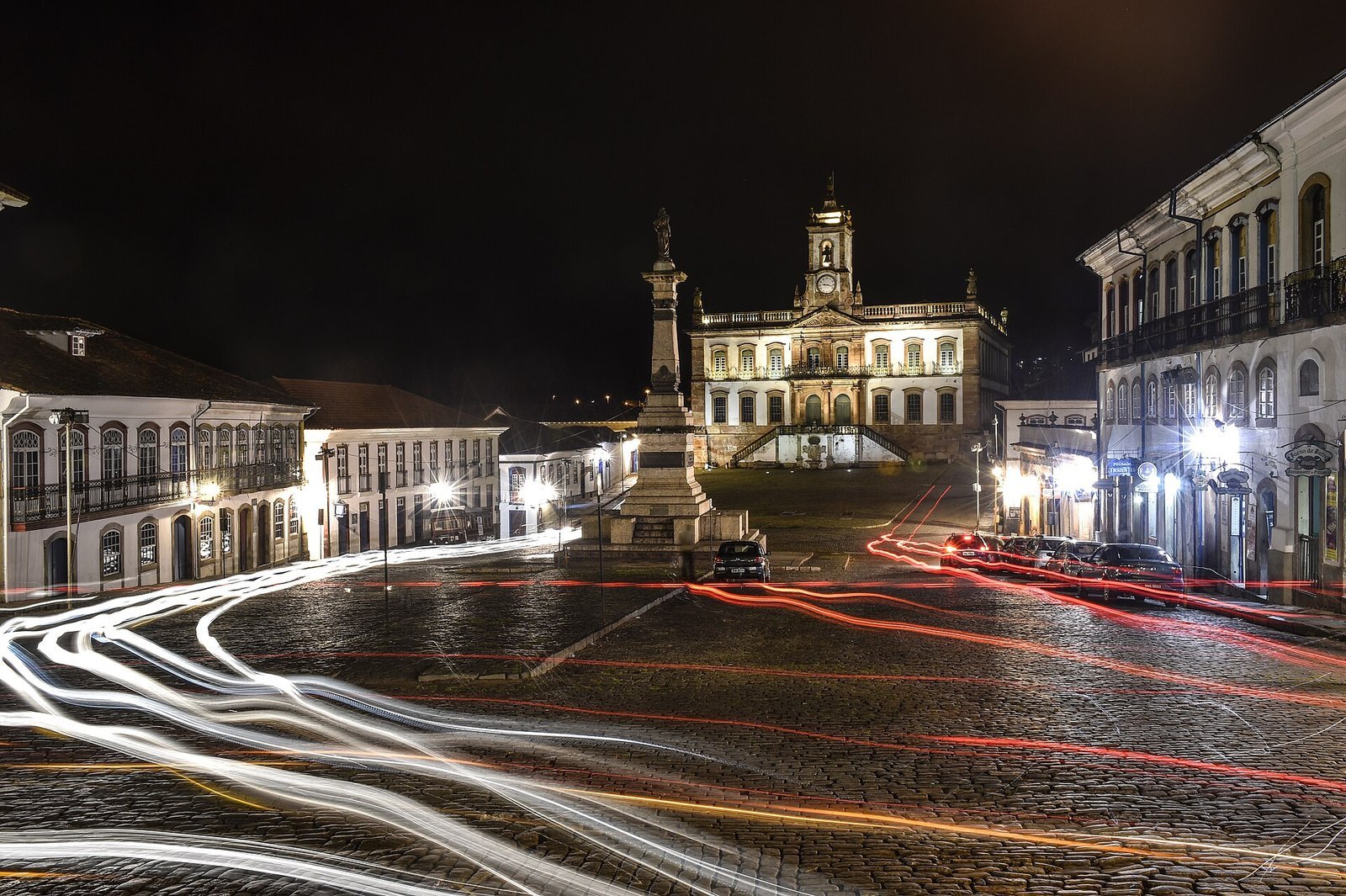
The heart of town and the best place to start. On one side is the old Governors’ Palace, now home to the School of Mines’ Museum of Science and Technology. On the other is the old town hall and jail, now the Inconfidência Museum. In the middle stands the Tiradentes monument, where the conspirator’s head was displayed in 1792. All around are colonial townhouses, restaurants, bars and a constant flow of students and visitors. Come back after dark: the lit-up square, with the townhouses and church towers glowing behind it, is one of the loveliest sights in Minas Gerais.
Inconfidência Museum
Housed in the old town hall and jail of Vila Rica on Praça Tiradentes, it is one of Brazil’s most visited museums and is run by the Brazilian Institute of Museums (Ibram). The collection covers religious art, furniture, everyday objects from the 18th and 19th centuries, works linked to Aleijadinho and Ataíde, and documents from the Inconfidência Mineira. The most moving room is the Pantheon of the Inconfidentes, which holds the remains of conspirators brought back from exile in Africa.
The official hours published by the museum are Tuesday to Thursday 10 am to 6 pm, Friday and Saturday 10 am to 8 pm and Sunday 10 am to 6 pm, with free admission. Be aware: since late July 2026, after its outsourced security service was interrupted, the museum has been running on a special visiting schedule. According to the local press, pre-booked groups enter at 10 am, 11 am and noon, and the general public in sessions at 2, 3, 4 and 5 pm, with tickets collected at reception on showing ID and visits of about 50 minutes. Check the museum’s official channels for the current arrangements in the week of your trip.
Church of São Francisco de Assis
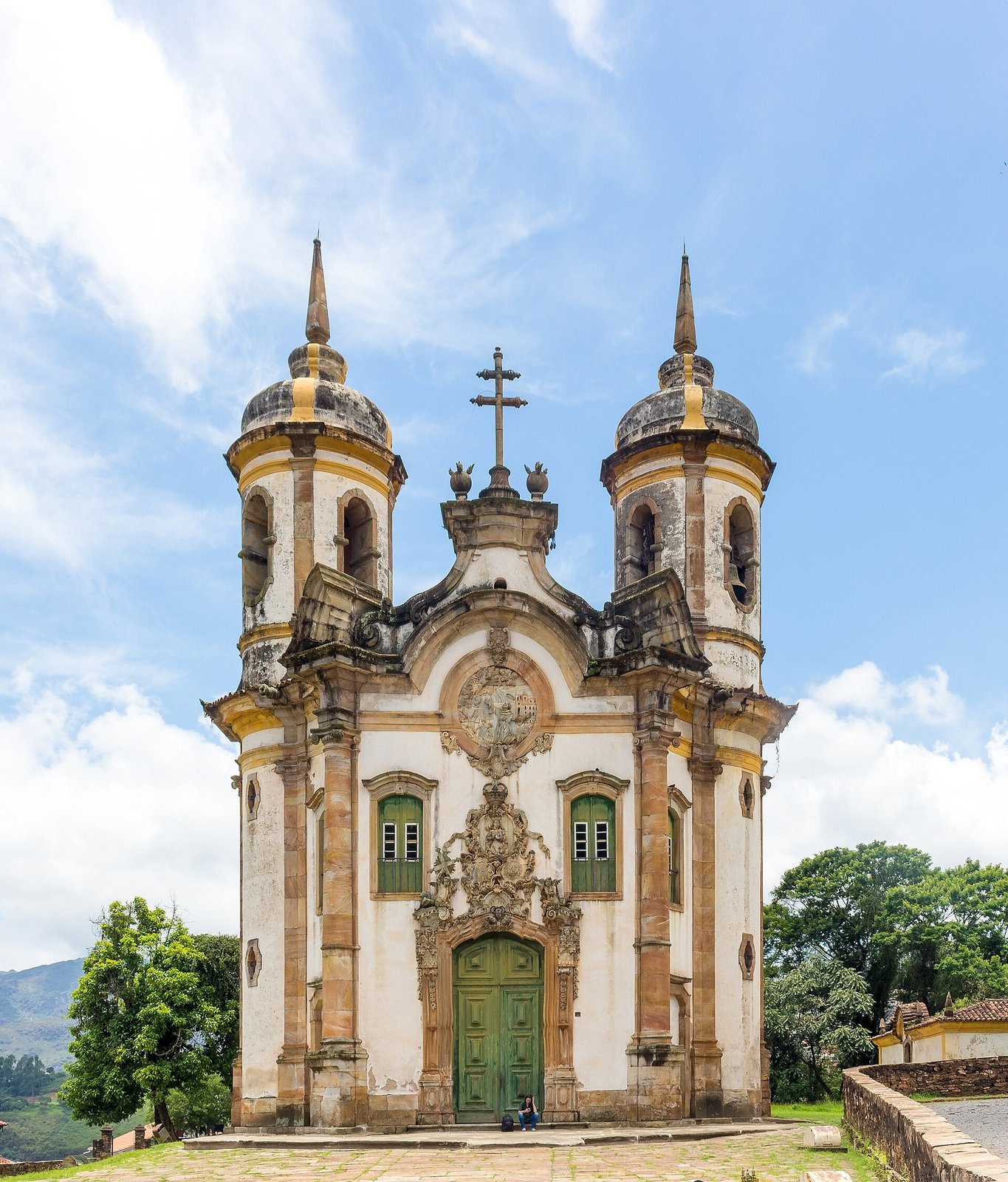
Many people think it is the most beautiful church in Brazil. Construction began in 1766 to a design by Aleijadinho, and building and decoration continued into the mid-19th century. The soapstone portal, the medallion on the facade and the two soapstone pulpits, from 1771, are by Aleijadinho. The nave ceiling, painted by Manuel da Costa Ataíde, shows the Assumption of the Virgin surrounded by musician angels, one of the high points of Brazilian colonial painting. Look at the mixed-race faces of the figures: tradition says Ataíde used local people as models.
The church stands on Largo de Coimbra, close to Praça Tiradentes, and is part of the Aleijadinho Museum circuit (R$30 full price, R$15 half price since July 2026). According to the parish website, visits run Tuesday to Sunday, 8:30 to 11:45 am and 1:30 to 4:45 pm. City Hall’s tourism page lists 8:30 am to 5 pm, so arrive early rather than risk the lunch break. Closed on Mondays.
Largo de Coimbra soapstone market
Right in front of the São Francisco church, the Largo de Coimbra craft market is open every day. According to City Hall, artisans have gathered there as an association since 1995, and there are now more than 50 stalls selling soapstone pieces (pots, sculptures, candle holders, chess sets), jewelry and souvenirs. City Hall gives opening hours of 7 am to 7 pm, while other guides say 7 or 8 am to 6 pm. Soapstone pots are heavy but travel well if wrapped. Polite haggling is part of the fun.
Basilica of Nossa Senhora do Pilar and Sacred Art Museum
This was the mother church of Vila Rica’s richest parish. Inside, the polygonal nave covered in gilded woodcarving is stunning, and it ranks among the most gold-laden churches in Brazil. The present church grew around a late-17th-century chapel. The nave was decorated between 1735 and 1737 and the chancel between 1741 and 1754, and the current facade dates from the mid-19th century. In 1733 the return of the Blessed Sacrament from the Rosário church to Pilar was celebrated with the Triunfo Eucarístico procession, one of the most famous festivals in the town’s history.
In the crypt below the sacristy, the Sacred Art Museum has displayed about 400 pieces from the 17th to 19th centuries since 2000. City Hall lists visiting hours as Tuesday to Sunday, 9 to 11:30 am and 1 to 5 pm, with tickets at R$20 (R$10 half price). It is on Praça Américo Lopes, in the Pilar neighborhood.
Antônio Dias mother church and Aleijadinho Museum
The mother church of the Antônio Dias neighborhood is the starting point of the Aleijadinho Museum, run by the parish. Antônio Francisco Lisboa, Aleijadinho, is buried here, and part of the museum’s collection of statues, oratories and religious art is on display. The same ticket gets you into the São Francisco de Assis church and the Mercês e Perdões church. If you want to understand Aleijadinho’s work, it makes sense to see all three on the same day.
Casa dos Contos
Built between 1782 and 1784 by the merchant and tax contractor João Rodrigues de Macedo, it was considered the most expensive house in the captaincy at the time. Macedo was a friend of several conspirators, and the house served as a meeting place and, after the plot was betrayed, as a prison. It was in a cell under the staircase that the poet Cláudio Manuel da Costa was found dead on July 4, 1789. Later the building housed the captaincy’s treasury, the smelting house and the mint. Today it is a cultural center linked to Brazil’s Ministry of Finance, with an exhibition on the gold cycle, coins, the slave quarters in the basement and a research center holding millions of documents.
It is at Rua São José 12, beside the Contos Bridge of 1744. Admission is free. Official sources give different hours: the federal services register says Tuesday to Saturday 10 am to 5 pm and Sundays and holidays 10 am to 3 pm, while City Hall says Tuesday to Saturday 10 am to 6 pm and Sundays 10 am to 2 pm. Aim for the middle of the day and check before you go.
Casa da Ópera (Municipal Theater)
Opened on June 6, 1770, the Casa da Ópera of Vila Rica is considered the oldest working theater in the Americas. The building is plain outside, with a lyre-shaped auditorium and wooden boxes inside, and reopened after restoration in 2007. Besides performances, the theater is open to visitors. City Hall lists daily visits from 10 am to 5 pm with a token fee (R$5, R$2.50 half price). It is on Rua Brigadeiro Musqueira, next to the Carmo church. Check before going, as rehearsals and events can close it to visitors.
Carmo, Rosário and Santa Efigênia churches
Ouro Preto has more than a dozen historic churches. Three stand out even if you’re not an expert. The Church of Nossa Senhora do Carmo, next to Praça Tiradentes, has a facade based on a design attributed to Manuel Francisco Lisboa, Aleijadinho’s father, and work by the son. The Church of Nossa Senhora do Rosário dos Pretos, in the Rosário neighborhood, has a rare curved, elliptical plan. The Church of Santa Efigênia dos Pretos, in Alto da Cruz, was built by a Black brotherhood and sits at the top of one of the steepest hills in town, with an excellent view. Hours and fees vary for each church, so check City Hall’s attractions page.
Chico Rei Mine
Right in town at Rua Dom Silvério 108, in the Antônio Dias neighborhood, this is the easiest way to get inside a gold mine in Ouro Preto. It is a network of narrow galleries dug by hand in the 18th century, linked by local oral history to the legend of Chico Rei. According to City Hall’s tourism page, it is open daily from 8 am to 5 pm. The basic visit costs R$70 and lasts 25 to 30 minutes, and there is a “radical” tour of 2 to 4 hours for R$300. Not for the claustrophobic: the tunnels are low and damp.
Passagem Mine
In the district of Passagem de Mariana, about 15 minutes’ drive from Ouro Preto on the way to Mariana. The mine describes itself as the largest gold mine open to visitors in the world. You go down in a small rail car along a 315-meter route to about 120 meters below ground, where there is an underground lake of crystal-clear water. The visit takes about 40 minutes. According to the official website, it is open Monday to Friday 9 am to 4 pm and on weekends and holidays 9 am to 5 pm. Tickets cost R$290 per person, cash only. Students, children aged 6 to 12, people over 60, people with disabilities and teachers pay half price, and children under 5 go free.
School of Mines Museum of Science and Technology
In the old Governors’ Palace on Praça Tiradentes, UFOP’s museum holds one of Brazil’s most important mineral collections, plus sections on mining, metallurgy, physics and astronomy. It is great with children or if you like gemstones. Opening hours follow the university calendar, so check UFOP’s website first.
Oratory Museum and other museums
The Oratory Museum, next to the Carmo church, collects household and traveling oratories from the 17th to 20th centuries, a quirky look at everyday faith in Minas. The town also has the Casa Guignard Museum, the house of the poet Tomás Antônio Gonzaga and other small venues. Pick two or three according to your interests instead of trying to see them all.
Horto dos Contos and fountains
Horto dos Contos, created in 1799 as a botanical garden, is now an urban park with a streamside trail of about 2.5 km between the center and the Pilar area. Around the center, look out for 18th-century fountains and bridges such as the Contos Bridge and Contos Fountain. They are quick stops that show how the town got its water.
Student repúblicas
Ouro Preto has Brazil’s strongest tradition of student houses, known as repúblicas, linked to UFOP. According to REFOP, the association of federal repúblicas, there are 67, many in historic townhouses and with colorful names. They throw famous parties, such as on October 12, the School of Mines’ anniversary, and April 21, as well as the student Carnival. Some open to visitors and host tourists on festival dates. Respect the residents’ routine: these are student homes, not attractions.
Itacolomi State Park
Created in 1967, the park covers about 5,971 hectares between Ouro Preto and Mariana and protects Itacolomi Peak (1,772 meters), the rock that guided the early explorers, along with forests, high-altitude grasslands, Lagoa da Capela and the São José do Manso farm, linked to a former tea-growing era. According to the State Forestry Institute (IEF), the park has reopened after works, but camping and lodging remain closed. It opens Tuesday to Sunday, 7 am to 5 pm, with last entry at 4 pm. Entry costs R$28.75 (R$14.37 half price) and parking R$20. The gate is at km 98 of the BR-356, opposite the Santa Casa hospital roundabout. The road is paved to the gate, followed by about 5 km of dirt road to the visitor center. The hike to the peak is long and demanding: start early and check conditions with the park first.
Mariana
Just 14 km from Ouro Preto, Mariana was the first town and first capital of Minas Gerais, and the captaincy’s first bishopric. Its historic center is flat compared with Ouro Preto and lovely to stroll. The classic view is Praça Minas Gerais, where the São Francisco de Assis and Nossa Senhora do Carmo churches stand side by side with the old town hall and jail. The Sé Cathedral has an 18th-century German organ still used for concerts; check the schedule. Transcotta buses run there, and you can combine it with the Passagem Mine on the way.
Lavras Novas and waterfalls
About 19 km from town, the Ouro Preto district of Lavras Novas is an old village that has become a weekend getaway, with guesthouses, restaurants and mountain views. Nearby waterfalls include Três Pingos (about 4 km from the village) and Namorados (about 5.5 km). According to City Hall, some access roads are recommended for 4×4 vehicles only, and a local guide is advised for other falls. Never go to waterfalls during heavy rain upstream, because of the risk of flash floods.
Where to eat in Ouro Preto: Minas Gerais cooking
Direct answer: in Ouro Preto, eat comida mineira, the home cooking of Minas Gerais: tutu (mashed beans thickened with cassava flour), feijão tropeiro (beans with cassava flour, egg, bacon and sausage), chicken with okra and angu (cornmeal mush), pork ribs with ora-pro-nóbis greens, crackling, pão de queijo and, for dessert, doce de leite with fresh cheese. Restaurants cluster on Praça Tiradentes, Rua Direita (Conde de Bobadela), Rua São José and on the way to Largo de Coimbra. Many serve pay-by-weight buffets at lunch and à la carte at dinner. Try a craft cachaça from Minas too.
Minas Gerais cooking was born in the gold rush. Muleteers and miners needed food that would survive the journey and fuel hard work, which gave rise to dishes built on beans, cassava flour, pork fat, collard greens and corn. At home, Portuguese, African and Indigenous traditions blended into recipes you still find on every table in the state.
Dishes to try
- Tutu de feijão: beans thickened with cassava flour, served with sausage, crackling, collard greens and egg.
- Feijão tropeiro: beans with cassava flour, eggs, bacon, sausage and greens, the food of the muleteers who carried goods along the gold roads.
- Frango com quiabo: chicken with okra, a Sunday lunch classic served with angu.
- Ora-pro-nóbis: a plant with fleshy leaves, common in Minas backyards, sautéed with pork ribs or chicken.
- Pão de queijo and queijo minas: cheese bread and fresh cheese, at guesthouse breakfasts and every bakery.
- Sweets: doce de leite, guava paste, pumpkin sweet, ambrosia and the classic “Romeu e Julieta” (guava paste with cheese).
- Cachaça: Minas has countless stills, and shops in the center sell regional labels. Drink in moderation: the hills don’t forgive.
Where to find it
Around Praça Tiradentes and the streets running down from it there’s something for every budget, from snack bars and pay-by-weight restaurants to pricier places in historic townhouses. At lunch, the “comida a quilo” buffet is the cheapest way to try several Minas dishes at once. At night, the bars on Rua Direita and Praça Tiradentes fill up with students. City Hall’s tourism portal and the restaurants’ own sites have current hours and menus. For more on the country’s dishes, read our Brazilian food guide.
Coffee and quitandas
In Minas, “quitanda” means the cookies, cornbread, rings and cakes served with afternoon coffee. Order broa de fubá (cornbread), biscoito de polvilho (cassava puffs) and pão de queijo with filtered coffee. The generous breakfast at Minas guesthouses is one of the joys of the trip.
How much does a trip to Ouro Preto cost?
Direct answer: the main tickets add up to about R$150 per person if you do the Aleijadinho Museum circuit (R$30), the Basilica of Pilar and Sacred Art Museum (R$20), the Chico Rei Mine (R$70) and the opera house (R$5), plus the free Inconfidência Museum and Casa dos Contos. The Passagem Mine (R$290, cash) and Itacolomi State Park (R$28.75 plus R$20 parking) are extras. Accommodation and food vary a lot by season, and Carnival, Holy Week and long weekends are much more expensive.
| Item | Price (Oct 2026, official sources) | Notes |
|---|---|---|
| Aleijadinho Museum (São Francisco de Assis, Antônio Dias mother church, Mercês e Perdões) | R$30 full / R$15 half | New prices since July 8, 2026 |
| Basilica of Pilar and Sacred Art Museum | R$20 full / R$10 half | Tuesday to Sunday |
| Inconfidência Museum | Free | Special schedule since July 2026: check |
| Casa dos Contos | Free | Sources disagree on hours |
| Casa da Ópera (visits) | R$5 full / R$2.50 half | May close on event days |
| Chico Rei Mine | R$70 (basic) / R$300 (radical tour) | Daily, 8 am to 5 pm |
| Passagem Mine (Mariana) | R$290 | Cash only; half price for students, ages 6 to 12, 60+, people with disabilities and teachers |
| Itacolomi State Park | R$28.75 full / R$14.37 half | Parking R$20; Tuesday to Sunday |
Accommodation
Ouro Preto has everything from simple guesthouses near the bus station to historic hotels and charming pousadas in old townhouses. Prices can jump between a normal weekend and a long holiday weekend, and at Carnival many places sell only fixed packages. Book directly on the official websites (there’s a list of ten places below) and reserve early for special dates.
How to save money
- Travel Sunday to Thursday outside public holidays: rates drop and the churches are empty.
- Have lunch at pay-by-weight restaurants and save à la carte dining for one special night.
- Take the Pássaro Verde bus instead of a private transfer from Belo Horizonte.
- Start with the free sights: the Inconfidência Museum (when open), Casa dos Contos, the Largo de Coimbra market, the church facades and the viewpoints.
- Bring proof of student, teacher or senior status: nearly every site offers half price.
Ouro Preto itinerary: 2, 3 or 4 days
Direct answer: with two days, cover the historic center (Praça Tiradentes, Inconfidência Museum, São Francisco de Assis, Pilar, Antônio Dias and Casa dos Contos). With three days, add the Passagem Mine and Mariana. With four, give a day to Itacolomi State Park or Lavras Novas. Don’t plan museums or churches for Monday.
Day 1: Praça Tiradentes, the Inconfidência and the Pilar side
Start at Praça Tiradentes and the Inconfidência Museum, checking its current visiting times first. Then head down to the Carmo church and the Oratory Museum. Have lunch near the square. In the afternoon, follow Rua São José to the Casa dos Contos and continue to the Basilica of Pilar and its Sacred Art Museum (arrive before 5 pm). In the late afternoon, walk up to the Rosário church. In the evening, have dinner in the center and go back to the illuminated square.
Day 2: Aleijadinho, Antônio Dias and Chico Rei
Early in the morning, visit the São Francisco de Assis church (opens 8:30 am) and browse the Largo de Coimbra soapstone market. Continue to the Mercês e Perdões church and the Antônio Dias mother church, where Aleijadinho is buried: one ticket covers all three. After lunch, tour the Chico Rei Mine nearby and, if your legs allow, climb to the Santa Efigênia church for sunset. In the evening, catch a show at the Casa da Ópera if there is one.
Day 3: Passagem Mine and Mariana
Leave in the morning for the Passagem Mine (bring cash). Then continue to Mariana, a few minutes away. Have lunch there, stroll around Praça Minas Gerais, Rua Direita and the Sé Cathedral, and return to Ouro Preto in the late afternoon. Transcotta buses connect the two towns.
Day 4: Itacolomi or Lavras Novas
For nature, head early to Itacolomi State Park (opens 7 am, Tuesday to Sunday) and hike to Lagoa da Capela or, if you’re fit, to the peak. Alternatively, spend the day in Lavras Novas, with lunch in the village and a waterfall swim in the dry season. Both trips are easier by car or with a guide.
Safety and practical tips in Ouro Preto
Direct answer: Ouro Preto is a calm town for visitors. The biggest risks are falls on the steep stone streets, especially in the rain and at night, and opportunistic theft on party days. Wear grippy shoes, take the descents slowly, don’t leave valuables visible in the car and carry only what you need at Carnival. On trails and at waterfalls, go with a guide and avoid days of heavy rain.
Hills and paving
The stone paving is beautiful and treacherous. In the rain the stones get slick as soap. Go down the steepest slopes sideways, use handrails where they exist and avoid smooth-soled shoes. If you have limited mobility, plan taxi rides between the highest and lowest points.
Rain and slopes
Ouro Preto sits in mountainous terrain and has had landslides in very wet summers. During heavy rain, follow Civil Defense alerts and stay away from trails, waterfalls and steep slopes.
Money, phones and parties
Cards are accepted at most restaurants and hotels, but carry cash for the Passagem Mine, some market stalls and tips for guides. At parties, Carnival and república nights, keep your phone in a front pocket and agree on meeting points with your group. Our Brazil travel tips cover money, safety and phones in more detail.
Tour guides
Hiring an accredited guide for half a day changes the visit: the churches make sense once someone explains who paid, who carved and why. City Hall’s tourism portal has information on tourist services. Many guides speak English or Spanish, but ask in advance.
Useful numbers
In an emergency, dial 190 (Military Police), 192 (SAMU ambulance) and 193 (Fire Department). Civil Defense answers on 199.
Nearby destinations to combine with Ouro Preto
Direct answer: Ouro Preto pairs naturally with Mariana, 14 km away, and with Belo Horizonte, the gateway for the trip. With more time, build a circuit of the colonial towns of Minas Gerais and then continue to Rio de Janeiro, Paraty or São Paulo.
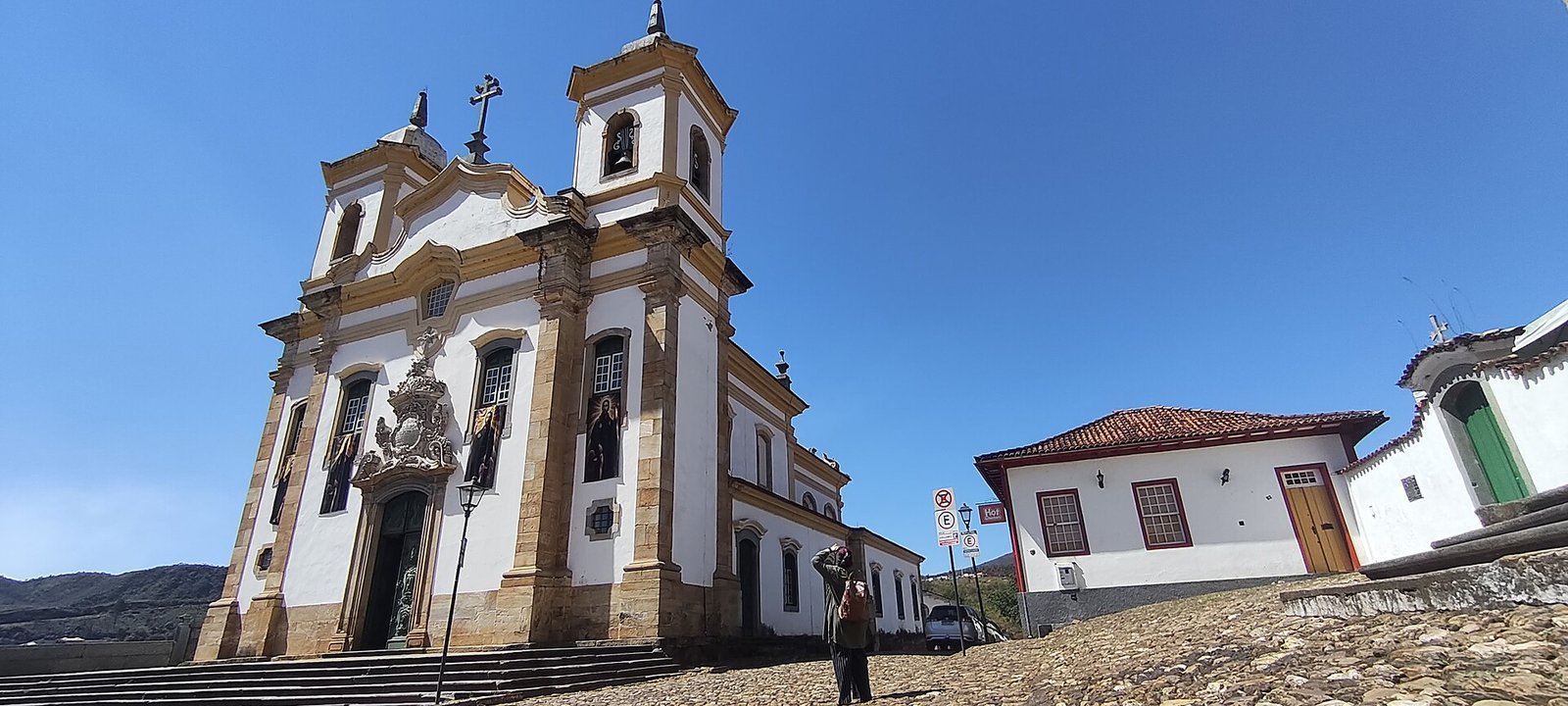
- Mariana: the first town and first capital of Minas, with a flat historic center and the Sé Cathedral. Plan it as a half-day trip, ideally with the Passagem Mine.
- Belo Horizonte: the state capital, with the modernist Pampulha complex (another UNESCO site), the Central Market and a strong food scene. Our guide to getting around Brazil explains flights and buses.
- Rio de Janeiro: about 417 km away, with direct buses. Read our Rio de Janeiro travel guide.
- Paraty: the port that shipped part of the Minas gold in the early 18th century, at the end of the old Estrada Real road. Read our Paraty travel guide.
- São Paulo: about 615 km away, with direct buses. See our São Paulo travel guide, and on the way consider the mountain town in our Campos do Jordão travel guide.
- Salvador: another historic center on the World Heritage List, with gold-covered churches. Read our Salvador travel guide and our list of UNESCO sites in Brazil.
Where to stay in Ouro Preto: 10 hotels with official websites
Direct answer: to stay in the center and walk everywhere, look at Grande Hotel Ouro Preto, Pousada Solar da Ópera, Luxor Hotel and Pousada do Mondego. If you’re driving and want views and parking, try Hotel Solar das Lajes, Pousada Solar da Inconfidência, Hotel Solar do Rosário and Hotel Pousada do Arcanjo. Outside town, there’s Hotel Providência in Mariana and Pousada Província in Lavras Novas. The links go to each property’s official website and were checked on October 28, 2026. There are no affiliate links. The facilities mentioned are those listed on each website, and prices and conditions can change, so confirm directly with the hotel.
A tip before booking: ask whether your room is on the ground floor or upstairs and whether there are stairs. Many historic townhouses have no elevator, and some guesthouses sit at the top of steep streets. If you’re driving, check that there’s on-site parking, because parking in the center is hard.
Grande Hotel Ouro Preto (historic hotel, Centro)
Grande Hotel Ouro Preto is a 1938 Oscar Niemeyer design at Rua Senador Rocha Lagoa 164, next to the Horto dos Contos park, according to its official website. Niemeyer later designed the pool and an annex with 29 rooms, and the hotel says it had Brazil’s first duplex suites. A great pick for fans of modernist architecture who want to be minutes from Praça Tiradentes. Listed phone: +55 31 3551-1488.
Hotel Solar do Rosário (19th-century mansion, Rosário)
Hotel Solar do Rosário occupies a 19th-century mansion at Rua Getúlio Vargas 270, in the Rosário neighborhood, according to its official website, which lists 38 rooms. It is close to the Rosário church and within walking distance of Praça Tiradentes. Listed phone: +55 31 3551-5040.
Pousada do Mondego (historic guesthouse, Largo de Coimbra)
Pousada do Mondego is at Largo de Coimbra 38, beside the São Francisco de Assis church and the soapstone market. It is one of the best locations in town if you want to wake up and walk straight into the churches. Phone: +55 31 3552-7700.
Pousada Solar da Ópera (townhouse, Rua Conde de Bobadela)
Pousada Solar da Ópera is in a 19th-century townhouse at Rua Conde de Bobadela 75, the old Rua Direita, near the opera house, according to its official website. Rooms have air conditioning, minibar, TV and safe. Good if you want to be in the middle of things, a few steps from Praça Tiradentes. Listed phone: +55 31 3551-6844.
Luxor Hotel (traditional hotel, Centro)
Luxor Hotel is at Rua Dr. Alfredo Baeta 16, about 450 meters from Praça Tiradentes, according to its official website. It has 19 rooms in three categories and has been running for more than five decades. A central option for doing everything on foot.
Hotel Pousada do Arcanjo (hotel with shuttle, São Miguel Arcanjo)
Hotel Pousada do Arcanjo is at Rua São Miguel Arcanjo 270 and offers a free round-trip shuttle to Praça Tiradentes, according to its official website. The shuttle solves the problem of the hills if you don’t fancy walking back up at the end of the day. Listed phone: +55 31 3551-4121.
Hotel Solar das Lajes (hotel with pool and view, Lajes)
Hotel Solar das Lajes is at Rua Conselheiro Quintiliano 604, about 800 meters from Praça Tiradentes, according to its official website. It has 21 rooms, a pool, a panoramic deck and a gold mine on the property that guests can visit. Good if you’re driving and want a view over the rooftops.
Pousada Solar da Inconfidência (guesthouse, Lajes)
Pousada Solar da Inconfidência is at Rua Conselheiro Quintiliano 395, about 500 meters from Praça Tiradentes, according to its official website. It has 13 suites and its own parking, a rare advantage this close to the center.
Hotel Providência (hotel in Mariana)
Hotel Providência is at Rua Dom Silvério 233, in central Mariana, according to its official website, with 39 rooms, a pool and sports courts. An alternative if you want to explore Mariana at leisure or can’t find a room in Ouro Preto on festival dates. Listed phone: +55 31 3557-1444.
Pousada Província (guesthouse in Lavras Novas)
Pousada Província is in Lavras Novas, a district of Ouro Preto. According to its official website, it has 17 suites with queen beds, a pool and a wood-burning stove. For couples who want quiet and mountains, with Ouro Preto less than half an hour away by car. Listed phone: +55 31 99392-2195.
Video: Ouro Preto
The video below was published on YouTube by Ouro Preto City Hall (Prefeitura de Ouro Preto) for the town’s 310th anniversary and tells its story from Vila Rica to World Heritage Site. It is in Portuguese; YouTube’s auto-translated captions can help.
Ouro Preto FAQ
What is there to do in Ouro Preto?
The main sights are Praça Tiradentes, the Inconfidência Museum, the Church of São Francisco de Assis, the Basilica of Pilar and its Sacred Art Museum, the Antônio Dias mother church (Aleijadinho Museum), the Casa dos Contos, the 1770 opera house, the Chico Rei Mine and the Largo de Coimbra soapstone market. With more time, visit the Passagem Mine, Mariana, Itacolomi State Park and Lavras Novas.
How many days do you need in Ouro Preto?
Two days are enough for the historic center and the main museums. Three days let you add the Passagem Mine and Mariana. With four, spend a day outdoors in Itacolomi or Lavras Novas.
When is the best time to visit Ouro Preto?
April to September, the dry season, with clear skies and cold nights. July gets about 15 mm of rain and average lows near 8 °C (46 °F). November to March is wet. Holy Week, Carnival and the Winter Festival are the liveliest and also the busiest dates.
How do I get from Belo Horizonte to Ouro Preto?
By car on the BR-040 and BR-356, about 100 km and 1h40 to 2 hours. By bus, Pássaro Verde runs from Belo Horizonte bus station to Ouro Preto bus station in 1h50 to 2h30. Confins Airport is about 140 km from Ouro Preto.
How much does it cost to visit the churches in Ouro Preto?
The Aleijadinho Museum circuit, covering the São Francisco de Assis church, the Antônio Dias mother church and Mercês e Perdões, costs R$30 (R$15 half price) since July 2026. The Basilica of Pilar with the Sacred Art Museum costs R$20 (R$10 half price). Other churches charge their own fees.
Is the Inconfidência Museum free?
Yes, admission is free. Since late July 2026, however, the museum has been on a special schedule, with timed visits and tickets collected at reception with ID. Check the museum’s official channels before you go.
Which gold mine should I visit in Ouro Preto?
The Chico Rei Mine is in town, costs R$70 for the basic visit and takes about half an hour. The Passagem Mine, 15 minutes away on the road to Mariana, takes you down by rail car to about 120 meters below ground, has an underground lake and costs R$290, cash only.
Is the Ouro Preto to Mariana train running?
No. Vale’s tourist train between Ouro Preto and Mariana has been suspended since August 2020. Work on the line is expected to last until late 2028, with no date for the ride to return. To reach Mariana, take a bus, taxi or car.
Is Ouro Preto suitable for people with limited mobility?
It’s challenging. The center is all steep hills with uneven stone paving, and many churches and townhouses have steps. It can be done with planning: choose a hotel with easy access and use taxis between the high and low parts of town.
Where should I stay in Ouro Preto?
In the historic center, between Praça Tiradentes, Rua Direita and Largo de Coimbra, to walk everywhere. In Lajes, near the town entrance, for parking and views. In Lavras Novas for peace and nature, and in Mariana when Ouro Preto is full.
Is Ouro Preto worth visiting?
Absolutely. Few places in Brazil pack so much history into such a small space: in two days you can step into churches by Aleijadinho and Ataíde, see where the conspirators met and were jailed, go down a gold mine and eat Minas cooking in an 18th-century square lit up at night. Ouro Preto is hard on the legs and needs some planning (Mondays closed, lunch breaks at the churches, museums on special schedules), but it rewards travelers who take their time. If you can, stay three days and include Mariana. Combine it with our Rio de Janeiro guide and our Paraty guide for a classic southeast Brazil route.
Sources
- Ouro Preto City Hall: Department of Culture and Tourism
- Ouro Preto City Hall: Chico Rei Mine
- Ouro Preto City Hall: Casa dos Contos
- Ouro Preto City Hall: Sacred Art Museum (Basilica of Pilar)
- Ouro Preto City Hall: Casa da Ópera
- Ouro Preto City Hall: Largo de Coimbra soapstone market
- Inconfidência Museum (Ibram)
- g1: Inconfidência Museum special schedule, July 2026 (Portuguese)
- Parish of N. S. da Conceição: Aleijadinho Museum
- Parish of N. S. da Conceição: 2026 ticket prices
- Parish of N. S. da Conceição: Church of São Francisco de Assis
- Passagem Mine: visiting information
- State Forestry Institute (IEF): Itacolomi State Park
- iG Turismo: Ouro Preto–Mariana train not expected back before late 2028 (Portuguese)
- UNESCO: Historic Town of Ouro Preto
- Wikipedia: Ouro Preto
- Wikipedia (Portuguese): Casa dos Contos
- Wikipedia (Portuguese): Basilica of Nossa Senhora do Pilar